If you do not get a place with a student housing body, the alternative is the private market: a room in a shared flat let by a private landlord or by the current tenant, or a flat of your own. The rules are federal: Title Eight of the Code of Obligations (Art. 253 and following) applies in every canton, while cantonal law and local custom add official forms, termination dates and, for deposits, further provisions. This page gives the rules that protect you, the documents landlords ask for, and the checks that keep you out of a scam. The non-profit route is described in student housing and how to apply.
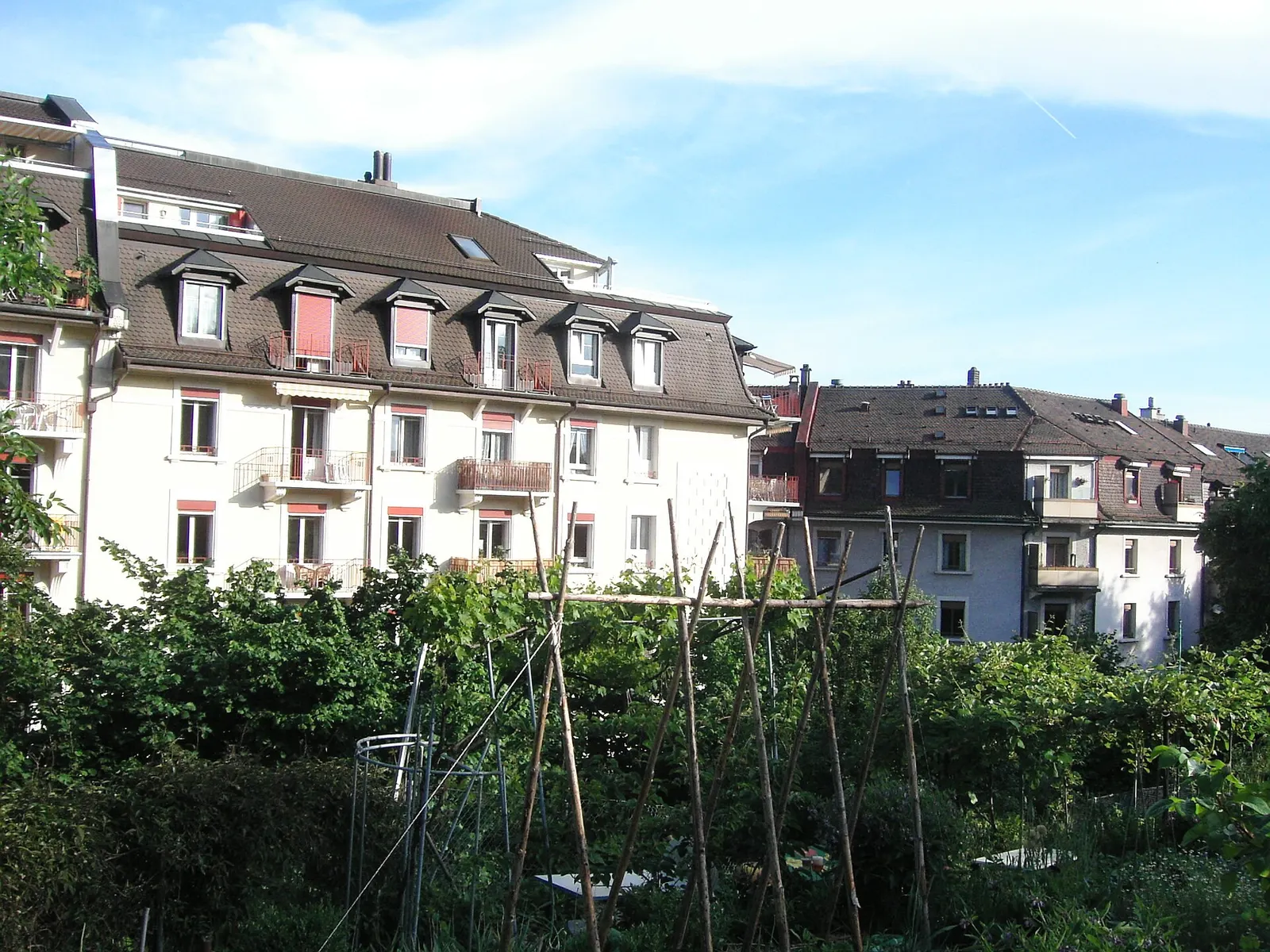
Renting in Switzerland as a student: aim for a room first
EPFL says it plainly. It advises all students not to look for flats or studios but only for rooms or flat-shares, because flat hunting in the region is long and complicated, and it tells international students that room adverts give much better chances. The University of Lausanne adds that estate agencies ask foreigners for many guarantees, among them a Swiss guarantor, and that agencies letting unfurnished flats do not consider applicants who have not visited. ETH Zurich calls the Zurich housing market extremely sparse and warns that the search can take several weeks after arrival.
| City | Official starting point | Who can use it |
|---|---|---|
| Zurich | Search portal of the Housing Office of the University of Zurich and ETH Zurich | The office describes its portal as arranging accommodation between private individuals and members of ETH and the University of Zurich |
| Lausanne | UNIL-EPFL housing database | Students with a UNIL or EPFL login; applicants can ask the housing service for a list or a temporary link by e-mail |
| Basel | Unimarkt of the University of Basel | Flats and rooms are advertised there; posting a small advert is free |
| Bern | Housing platform of the student union (SUB), listed by the university | Students; the university also lists independent flat-share platforms |
EPFL explains that most flat listings in the Lausanne database are handled by estate agencies even when a student posts them: they are often lease transfers, in which the current tenant arranges the viewings and passes a few applications on to the agency. The person who shows you the flat is therefore not the one who decides. The University of Lausanne warns that some advertisers forget to withdraw an advert once the room is let, so an advert that is still online may already be taken. City-specific addresses are in the city pages.
What agencies and landlords ask for
A complete rental file, as the University of Lausanne lists it for agencies
- The agency's application form, filled in after the visit
- Copy of the identity document of everyone who will live in the flat, and of the guarantor if there is one
- An extract from the debt collection office for everyone who signs; the university notes that it is asked only of people who have already lived in Switzerland for some months
- The most recent salary slips of the person who signs (or of the guarantor)
- Your confirmation of enrolment
- A dated and signed letter from a guarantor resident in Switzerland, where the agency requires one
- Debt collection extractBetreibungsauszug / extrait du registre des poursuites
- A certificate from the debt collection office of your commune of residence showing whether claims have been enforced against you. According to the University of Lausanne it is required only of people who have already lived in Switzerland for some months, so a new arrival has none to show; offer what you do have, such as proof of your funds or scholarship.
- Swiss guarantorBürge / garant
- A person living and working in Switzerland who is tied to your lease and pays if you do not, in the University of Lausanne's definition. The university lists it among the guarantees that estate agencies ask of foreigners: it is a condition set by the agency, so ask each agency before a visit whether it lets to foreigners without one.
EPFL's reason for recommending rooms is this file: flats advertised by students on the housing portal are still subject to the agencies' requirements, while a room is agreed with the person who lets it. Before visiting an agency flat, the University of Lausanne advises asking whether the agency lets to foreigners without a Swiss guarantor and how large a rent guarantee it wants.
The deposit: three months at most, in an account in your name
- Rent depositMietkaution / Mietzinsdepot (garantie de loyer)
- Security for unpaid rent and damage, owed only if the contract provides for it. In French-speaking Switzerland the same thing is called the garantie de loyer.
| Question | Rule |
|---|---|
| How much? | For a home, no more than 3 months of rent (Art. 257e para. 2). The University of Lausanne tells students to plan a rent guarantee within that limit. |
| Where does cash go? | The landlord must put it in a bank savings or deposit account in the tenant's name. Cash handed over without such an account is not what the law provides. |
| Who can take money out? | The bank releases it only with the consent of both parties, or on a final payment order or court decision. |
| What if the landlord stays silent after I leave? | 1 year after the end of the lease you may ask the bank to pay it back, provided the landlord has brought no claim against you. |
| Can the canton add rules? | Yes, the article lets the cantons enact further provisions. |
The Federal Office for Housing adds that the deposit is paid back with interest when you move out, and that housing cooperatives normally ask for a membership contribution instead of a deposit. Opening a deposit account takes time: FMEL in Lausanne says 10 to 20 days for its own procedure. Do not assume that a commercial deposit guarantee will be accepted in place of a deposit account: FMEL, for one, writes that Swiss Caution or any other such agency is not accepted.
The tenancy agreement
The federal portal ch.ch says a rental agreement is normally made in writing, and you should insist on that: the residents' office asks for it when you register. According to ch.ch it should name the parties, the property including cellar or laundry room, whether the term is limited or open-ended, the notice period and termination dates, the rent and the service charges, the deposit, and any individual arrangements such as house rules. When several people sign, all are jointly responsible for the rent.
- Service chargesNebenkosten (charges)
- Payments for heating, hot water and similar operating costs. Under Art. 257a of the Code of Obligations you owe them only where they have been specifically agreed; ch.ch notes that charges not mentioned in the contract may be assumed to be included in the rent. The landlord must let you see the underlying bills on request.
- Rent is due at the end of each month by law, unless otherwise agreed or required by local custom. WOKO and FMEL, for example, require payment in advance, so read the clause in your contract.
- The previous rent. You have the right to be told what the previous tenant paid (Art. 256a).
- Challenging the initial rent. Within 30 days of taking possession you may challenge the rent before the conciliation authority, if you were compelled to sign by personal hardship or by the state of the local market, or if the rent is significantly higher than the previous one (Art. 270). Cantons with a housing shortage may oblige landlords to use an official form for new leases.
- Rent increases must be notified on a form approved by the canton, with reasons and ahead of the notice period; an increase that is not on the form or gives no reasons is void (Art. 269d).
- Arrears. If you fall behind, the landlord must first set a time limit of at least 30 days for a home before terminating (Art. 257d).
Notice periods and leaving early
| What you rent | Notice by law | To which date |
|---|---|---|
| A flat or other home | 3 months (Art. 266c) | A date fixed by local custom, or failing that the end of a three-month period of the lease |
| A furnished room | 2 weeks (Art. 266e) | The end of a one-month period of the lease |
| A fixed-term lease | None: it ends on the agreed date | Leaving earlier requires a replacement tenant |
Notice for a home must be in writing; ch.ch advises registered mail and reminds tenants that everyone who signed the contract must sign the notice. A landlord must use a form approved by the canton that explains how to contest the termination, and a notice that ignores these rules is void (Art. 266l and 266o). If you want to challenge a termination, you must bring it before the conciliation authority within 30 days of receiving the notice (Art. 273).
- Replacement tenantNachmieter / locataire de remplacement
- If you return the property without observing the notice period or date, Art. 264 releases you only if you propose a new tenant who is acceptable to the landlord, solvent and willing to take over the lease on the same terms. Otherwise you owe rent until the lease could ordinarily have ended.
This is the rule behind many flat adverts on the universities' portals: EPFL notes that such listings are often lease transfers. For you as the newcomer it means that taking over a lease still requires the landlord's or agency's approval of your file.
Subletting and being a sub-tenant
- SubletUntermiete (sous-location)
- The tenant lets all or part of the home to someone else while remaining the landlord's contract partner and liable to the landlord for how the sub-tenant uses it.
A tenant may sublet with the landlord's consent, and under Art. 262 the landlord may refuse only if the tenant will not disclose the terms, if the terms are unfair compared with the main lease, or if the sublet causes the landlord major disadvantages. The statute names no figure. The federal portal ch.ch gives guidance on what unfair means in practice: the sub-tenant may be charged only what the tenant pays, plus a surcharge of at most 20% for a furnished apartment; that percentage is the portal's guidance, not a rule of the Code of Obligations. If you are the sub-tenant, the University of Lausanne's advice is to make sure the owner or agency has authorised the sublet, and to have a written contract with the start and end dates, the rent with or without charges, the deposit and the terms of termination.
Rental scams: the pattern and the checks
ETH Zurich describes the pattern on its accommodation page: a very cheap offer in a great location, a landlord who is abroad and cannot show the flat, and a request to pay a deposit and perhaps rent in advance to secure the contract or receive the key. The University of Lausanne reports that fraud attempts used to concern flats and now increasingly concern rooms.
Compare the price
Set the advert against the rents of the student housing body in the same city. An offer far below them in a central location is the first warning sign.
See the room
ETH's rule is never to transfer money before you have seen the flat or room. If you are still abroad, ask someone you trust to visit, or book temporary accommodation and search on the spot, as ETH suggests.
Find out who the landlord is
ETH advises finding out more about the potential landlord. Ask for the name on the main lease and, for a sublet, the landlord's written consent.
Pay only against a contract
Sign a written agreement first. The University of Lausanne's sequence for agency flats is: sign the lease, then pay the first month's rent before the start, and lodge the deposit in a deposit account.
Use the university's channels
The universities' own portals are restricted to their members. Apply the same checks there: the University of Lausanne's warning is on its own housing page.
In practice: moving in, living there, moving out
- Handover. The Federal Office for Housing explains that landlord and tenant check the home together and record defects in a written inventory report, at the start and again at the end. Read every line: by signing you accept what it records. You may ask to see the report from the previous tenant's departure.
- Insurance. The same office calls home contents and personal liability insurance highly recommended and notes that some contracts make them compulsory.
- Radio and television fee. Each private household pays CHF 335 per year, invoiced by Serafe, whether or not it has a device; from 1 January 2027 it is CHF 312. In a shared flat it is one fee for the household, not one per person.
- Registration. A signed lease or the landlord's confirmation is what the residents' office asks for when you register; see registration and the residence permit.
- Defects. The Federal Office for Housing says major damage must be reported to the caretaker or landlord immediately; if they do not act, report it in writing, preferably by registered letter.
- Disputes. Every canton has a conciliation authority for tenancy matters. Its consultations and hearings are free of charge, and it also answers questions about terminations and rent increases.
- Moving out. Hand the home back clean, attend the inspection, and keep your copy of the report. The landlord must tell you immediately of any defects you are held responsible for (Art. 267a).
Frequently asked questions
What is the maximum rent deposit in Switzerland?
For a home the landlord may not ask for more than 3 months of rent (Art. 257e of the Code of Obligations). A cash deposit must be placed in a bank savings or deposit account in the tenant's name, and the bank releases it only with both parties' consent or on a court or enforcement decision.
How do I get my deposit back after moving out of a Swiss flat?
The bank releases the deposit with the consent of both parties, or on a final payment order or court decision. If the landlord does nothing and has brought no claim against you, you may ask the bank to return the money 1 year after the end of the lease.
How much notice do I have to give for a furnished room in Switzerland?
By law 2 weeks, to the end of a one-month period of the lease, against 3 months for a flat. Contracts may agree longer periods, so check yours. A fixed-term lease simply ends on its date.
Can I rent a flat in Switzerland without a Swiss guarantor?
That depends on the landlord. The University of Lausanne warns that estate agencies ask foreigners for many guarantees, among them a Swiss guarantor, and advises asking each agency beforehand whether it lets to foreigners without one. EPFL adds that room listings are generally not subject to the agencies' requirements and recommends them to international students.
Is subletting legal in Switzerland?
Yes, with the landlord's consent, which may be refused only for the three reasons in Art. 262 of the Code of Obligations. According to the federal portal ch.ch the sub-tenant should not pay more than the main rent, plus at most 20% for a furnished apartment; the percentage is the portal's guidance and is not in the statute.
Can I leave a Swiss rental before the notice period ends?
Yes, if you propose a replacement tenant who is solvent, acceptable to the landlord and willing to take over on the same terms (Art. 264). Without one you owe rent until the next date on which the lease could have ended.
Sources
13 sources, 12 official
- Federal Act on the Amendment of the Swiss Civil Code (Part Five: The Code of Obligations), SR 220, Title Eight: The Lease (Art. 253 ff.)Swiss Confederation (Fedlex) (Official)
- Rental and leasing agreement in Switzerlandch.ch (Swiss Confederation, cantons and communes) (Official)
- Living in Switzerland: Everything you need to know about renting an apartmentFederal Office for Housing (BWO) (Official)
- Accommodation (Logement)University of Lausanne (UNIL) (Official)
- Housing database (UNIL-EPFL housing portal)EPFL (Official)
- Accommodation (after admission, international students)ETH Zurich (Official)
- About us: Housing Office of University / ETH ZurichHousing Office of the University of Zurich and ETH Zurich (Official)
- AccommodationUniversity of Basel (Official)
- Accommodation - livingUniversity of Bern (Official)
- FAQFondation Maisons pour Etudiants Lausanne (FMEL) (Institutional)
- Fee for private householdsFederal Office of Communications (OFCOM/BAKOM) (Official)
- Who pays? (radio and television fee for private households)Federal Office of Communications (OFCOM/BAKOM) (Official)
- Swiss collection agency for the radio and television fee (home page notice on the 2027 reduction)Serafe AG (collection agency commissioned by OFCOM) (Official)