A master's in Switzerland is a realistic plan if three things are true: your bachelor's degree matches a programme that a Swiss university offers in a language you can prove, you can show the canton the money for a year of living costs before you travel, and you do not need a job or a scholarship to make the budget work. Where one of the three is missing, the plan is at risk at a named point: the application deadline, the proof of financial means or the first months without income. This guide is built around those points.
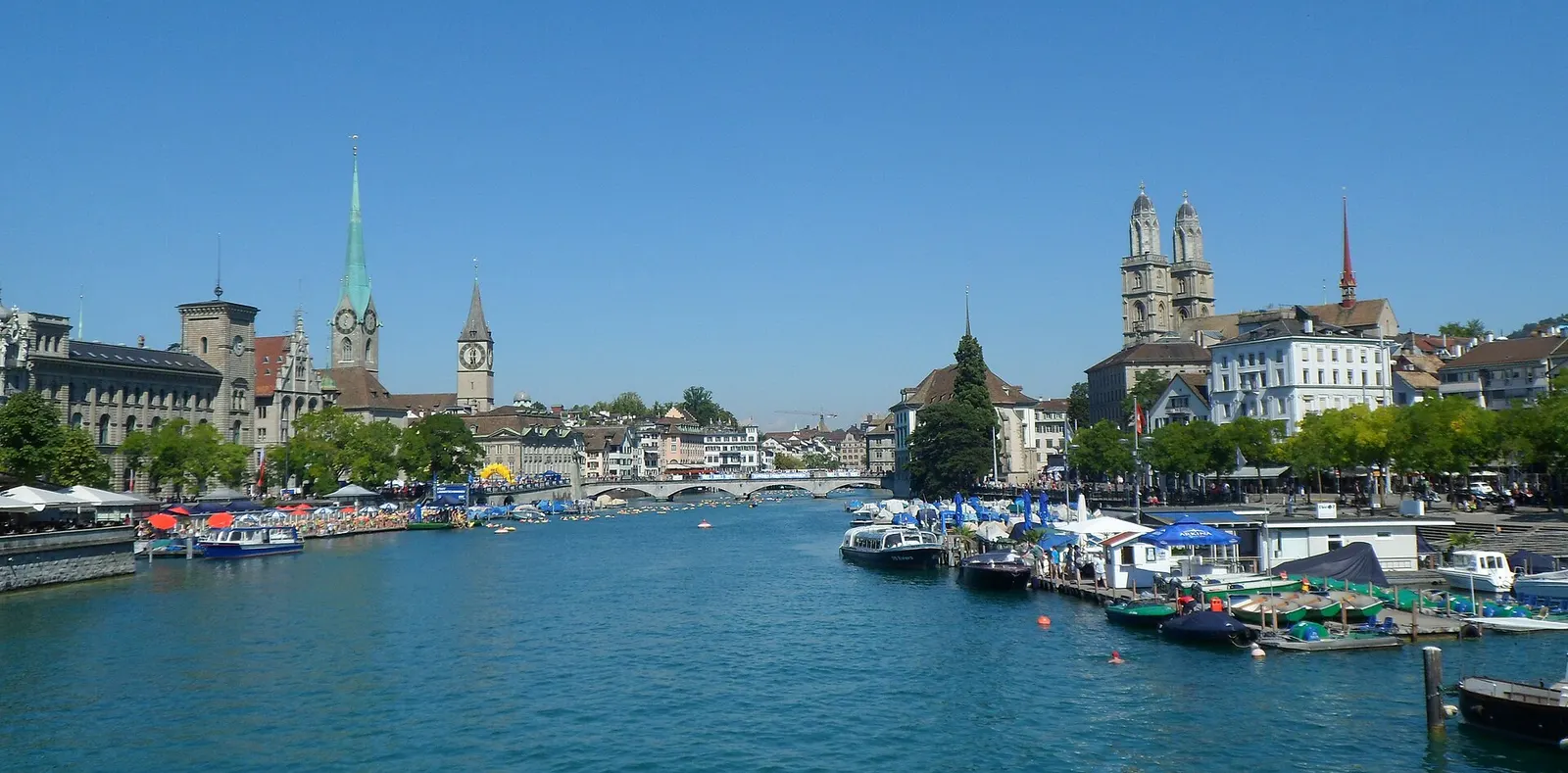
Almost nothing here is decided by 'Switzerland'. The Confederation writes the immigration and health-insurance law; the canton where you plan to live decides your residence authorisation and how much money you must prove; and each university sets its own fee, deadline and language rules. The guide is written for students from Türkiye who want a master's degree, and it gives every figure with the body that published it and the date it was read.
Study in Switzerland at a glance
| Question | Short answer | Who decides | Read |
|---|---|---|---|
| Can I get in with a Turkish bachelor's degree? | Each university assesses your degree for each programme; there is no national recognition. ETH Zurich publishes a minimum average of 3.5 out of 4 for applicants from Türkiye in 16 master's programmes | The university | Master's requirements |
| In which language? | German, French, Italian or English, programme by programme. At least 377 programmes of the 787 master's programmes in Scholway's catalogue list English | The university | Language requirements |
| When do I apply? | Close to a year ahead at the earliest institution: ETH Zurich accepts foreign bachelor's degrees only in 1 to 30 November 2026 for autumn 2027 | The university | Deadlines |
| What is the tuition? | CHF 2,190 per semester at ETH Zurich and EPFL for foreign students who move to Switzerland to study; CHF 820 per semester for a foreign master's student at the University of Zurich, before contributions; CHF 580 per semester in fees at the University of Lausanne. The highest of the six universities read is the University of Bern: CHF 2,550 per semester for students from abroad | The institution | Tuition fees |
| What does living cost? | ETH Zurich's Financial Aid Office estimates CHF 22,100 per year for an international student; the University of Zurich advises at least CHF 2,200 per month | Estimates of the universities | Cost of living |
| How much money must I prove for the visa? | There is no federal amount. The Canton of Zurich counts CHF 21,000 for twelve months as sufficient; Basel-Stadt asks for CHF 2,000 per month | The canton | Proof of financial means |
| Which visa? | A national (D) visa, applied for in person in Türkiye and issued only after the canton has authorised it; SEM says to expect one to several months | The canton, through the Swiss representation | Student visa |
| May I work? | Only with an authorisation for each job: at the earliest 6 months after the start of the studies, up to 15 hours per week outside the holidays | The canton, on the employer's application | Working hours |
| Is there a scholarship? | The Swiss Government Excellence Scholarships do not fund a regular master's. A few universities run their own schemes, decided with admission | The university | Scholarships |
| Health insurance? | Compulsory, to be arranged within 3 months of registering; an exemption with a student insurance needs the canton's decision | Federal law; the canton for exemptions | Health insurance |
| And after the degree? | 6 months to look for a job; a work permit then depends on the job and on quotas | Federal law; the canton and SEM | After graduation |
Who a Swiss master's suits, and who it does not
What follows is guidance drawn from the rules in this guide, not a statistic. No university in this guide publishes admission chances.
- It suits you if your field is one a Swiss university teaches at master's level in a language you already hold a certificate for. Engineering, natural sciences and computing in English at ETH Zurich and EPFL are the clearest cases; the University of Zurich adds law, economics, medicine and the humanities, partly in German.
- It suits you if your family or your savings can carry the whole budget. The canton wants to see the money before it authorises the visa, and the Canton of Zurich, for one, requires proof again with every application to extend the permit.
- It suits you if you can plan a year ahead. The earliest application window in this guide, ETH Zurich's, closes at the end of November for a semester that begins the following September: about ten months, by this guide's own count.
- It does not suit a plan that depends on wages. The waiting period, the weekly limit and the need for an authorisation mean that a side job can add to a budget and cannot be its base. See working in Switzerland as a student.
- It does not suit a plan that depends on a scholarship. The university-run schemes this guide covers at master's level are ETH Zurich's ESOP, EPFL's Master Excellence Fellowship and the University of Lausanne's master's scholarship; each is awarded competitively and none can be counted on in advance: see university scholarships.
- It does not suit you if you expect English outside the lecture hall. The commune, the migration office and their forms use the language of the region.
Three levels decide: Confederation, canton, institution
| Level | What it decides | Where this guide covers it |
|---|---|---|
| Confederation | The conditions for a stay for education, the usual maximum of 8 years, the rules on work during and after studies, and compulsory health insurance | Visa and residence permit, work, health insurance |
| Canton | The authorisation to issue your visa, the amount and form of the proof of means, the yearly extension of the permit, the authorisation of a side job and the exemption from compulsory insurance | Proof of means, residence permit, insurance exemption |
| Institution | Admission, the language proof, the deadline, the application fee and the tuition fee | How to apply, universities, costs |
- CantonKanton / canton
- One of the member states of the Swiss Confederation. For a student the canton is the authority that matters most after the university: its migration office decides the residence authorisation, and it names the office that grants insurance exemptions. Zurich, Vaud (Lausanne), Basel-Stadt and Bern are the four in this guide.
- Residence permit (B permit)Aufenthaltsbewilligung (Ausweis B) / autorisation de séjour (permis B)
- The permit a student receives after registering in the commune. It is granted for education, usually for a year at a time, and does not by itself allow you to work.
- Federal institute of technologyEidgenössische Technische Hochschule (ETH) / École polytechnique fédérale (EPF)
- ETH Zurich and EPFL, the two universities run by the Confederation. Switzerland also has 10 cantonal universities and universities of applied sciences; the types are explained in universities in Switzerland.
What it costs, and what you must be able to prove
Two different sums are involved, and confusing them is the commonest planning error. The first is what a year actually costs: tuition plus the university's own estimate of living costs. The second is what the canton wants to see before it authorises the visa. They are set by different bodies and need not match.
| Where | Tuition for a master's student from abroad | Living-cost estimate | Proof of means for the permit |
|---|---|---|---|
| ETH Zurich | CHF 2,190 per semester | CHF 22,100 per year (ETH Financial Aid Office) | CHF 21,000 for twelve months (Canton of Zurich) |
| University of Zurich | CHF 820 per semester | At least CHF 2,200 per month (UZH) | CHF 21,000 for twelve months (Canton of Zurich) |
| EPFL, Lausanne | CHF 2,190 per semester | CHF 2,107 per month (EPFL) | CHF 2,000 per month (as stated by EPFL for the Canton of Vaud) |
| University of Lausanne | CHF 500 per semester plus CHF 80 semester fees | About CHF 2,000 per month (the amount Unil says the authorities consider necessary) | CHF 2,000 per month (as stated by EPFL for the Canton of Vaud) |
| University of Basel | CHF 850 per semester | CHF 2,000 to CHF 2,100 per month, tuition included (University of Basel, sample budget of 2024) | CHF 2,000 per month (Canton of Basel-Stadt) |
| University of Bern | CHF 2,550 per semester | CHF 1,500 to CHF 2,200 per month (University of Bern) | At least CHF 18,000 (as stated by the University of Bern for degree students) |
The tuition column is tuition only; compulsory semester contributions come on top and are listed in the cost of studying in Switzerland. For comparison, the Federal Statistical Office's 2024 survey found median monthly expenses of CHF 2,023 per month among all master's students in Switzerland, Swiss and foreign together; it is not a figure for international students. Federal law names kinds of proof and prescribes no blocked account: what counts is the form of proof your canton accepts, in Zurich and Basel-Stadt for example the confirmation of a bank licensed in Switzerland or a guarantee from a resident of Switzerland. No figure in this guide is converted into euro or lira.
Language regions: the language of your programme and the language of your city
Switzerland's national languages are German, French, Italian and Romansh. Your master's may be taught in English, but the residents' office and the migration office work in the language of the region. In Zurich, for example, the University of Zurich notes that the official language is German and that the language spoken in daily life is the local Swiss German dialect.
| City | Language of the region | Universities with a page or section in this guide | City guide |
|---|---|---|---|
| Zurich | German | ETH Zurich, University of Zurich | Studying in Zurich |
| Lausanne | French | EPFL, University of Lausanne | Studying in Lausanne |
| Basel | German | University of Basel | Studying in Basel |
| Bern | German | University of Bern | Studying in Bern |
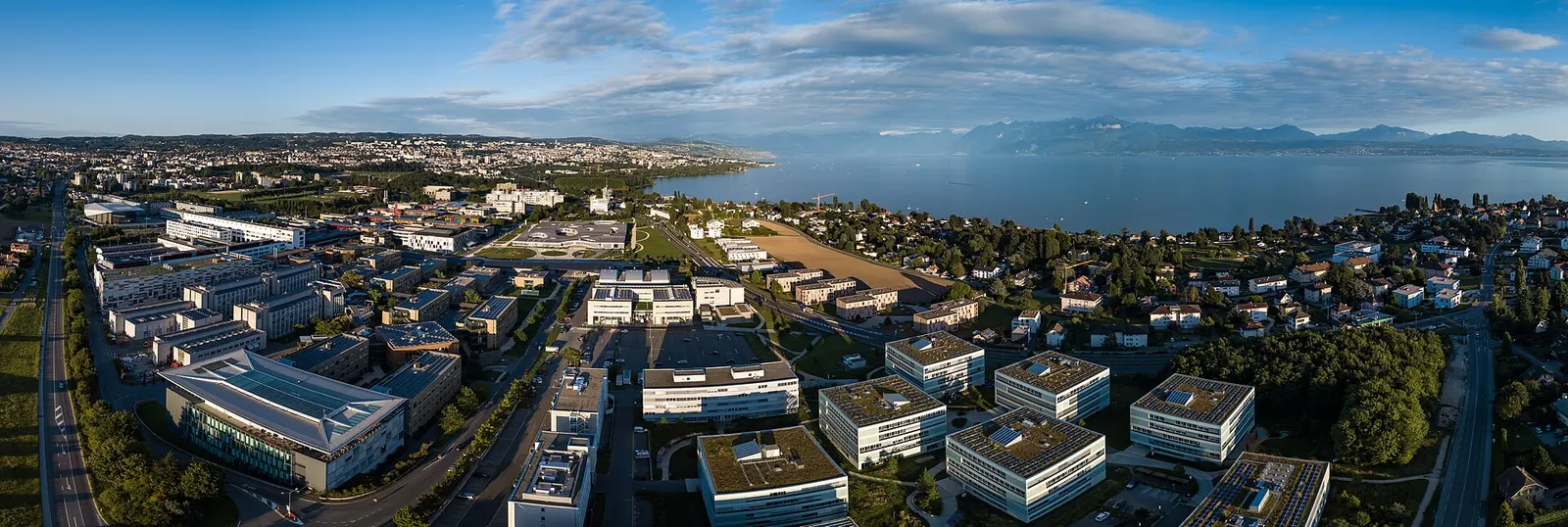
Geneva has no page in this edition. The student cities overview compares housing bodies, transport passes and registration offices, and English-taught master's programmes shows where English is the teaching language.
The journey, in order
More than a year before the semester
Choose programmes and book the language test
Shortlist by subject, language and published requirements: universities in Switzerland. ETH Zurich and the University of Zurich want the language proof with the application.
1 to 30 November 2026 to 31 March
Apply, university by university
ETH Zurich first, then EPFL by 15 December if you need a visa, then the University of Zurich in 1 January to 28 February. The file is described in application documents.
On admission
Start the visa procedure at once
ETH Zurich, the University of Zurich and EPFL tell their students to apply for the visa at least 3 months ahead. The housing search should already be running; if it is not, contact the housing body of your city now: student accommodation.
Before you travel
Arrange the money in the form the canton accepts
And a temporary address if you have no room yet. Never pay for a room you have not seen.
Within 14 days of arrival
Register in your commune
The residence permit follows from the registration: the B permit.
Within 3 months of registering
Health insurance
Join a Swiss insurer or file the exemption application: choosing an insurance.
After 6 months
A side job becomes possible
With an authorisation, up to 15 hours per week outside the holidays.
After the degree
Job search
6 months on a permit that cannot be extended: staying after graduation.
The same sequence, with what to prepare at each stage and the offices involved, is in your step-by-step plan.
In practice: the dates and limits that catch people out
| What | Date or limit | Why it catches people |
|---|---|---|
| ETH Zurich, foreign bachelor's degree | 1 to 30 November 2026 | The only window of the year, and the language certificate must exist by then |
| EPFL | 15 December or 31 March | The second date leaves little time for a visa |
| University of Zurich, applicants who need a visa | 1 January to 28 February | Two months earlier than the general window, and not extendable |
| Visa application | At least 3 months ahead, as ETH Zurich, the University of Zurich and EPFL advise | The canton, not the consulate, examines the file |
| Registration after arrival | 14 days | You register where you live, so you need an address by then |
| Health insurance | 3 months from registration | A deadline for action; joining late without excuse costs a premium surcharge |
| First side job | 6 months after the start of the studies | No work may start before the authorisation has been issued |
| Rent deposit | Up to 3 months of rent | The legal maximum for a home; FMEL in Lausanne and WoVe in Basel hand over no keys before the deposit has arrived |
| Permit extension | At the latest 14 days before expiry | It needs a current confirmation of enrolment |
| Stay for education | 8 years as a rule | Longer only in justified cases, with SEM's approval |
How to use this guide
The guide has nine sections. Each opens with an overview that stands on its own and links to the detailed articles. If you read in the order of the table you follow the order of the decisions.
Before you commit to the plan
- A programme found whose subject matches your bachelor's degree and whose language you can certify
- The earliest application window on your list in your calendar
- Tuition and compulsory contributions read on the institution's own fee page
- A year's living costs available, and the canton's form of proof understood
- No part of the budget resting on a job in the first 6 months or on a scholarship not yet awarded
- The language of your future city accepted as the language of its offices
Frequently asked questions
Is it free to study in Switzerland?
No. Every institution read for this guide charges tuition, and the amount differs widely: CHF 580 per semester in fees at the University of Lausanne, CHF 820 per semester for a foreign master's student at the University of Zurich before contributions, CHF 2,190 per semester at ETH Zurich and EPFL for foreign students who move to Switzerland to study, and CHF 2,550 per semester at the University of Bern for students from abroad, the highest of the six universities read. On the universities' own estimates, living costs are the larger part of the budget at each of them.
Can I study in Switzerland in English?
At master's level, often yes: ETH Zurich says most of its master's programmes are taught in English, and Scholway's catalogue counts at least 377 programmes in Switzerland that list English as a teaching language. It is decided programme by programme, and daily life and the authorities use the language of the region.
How much bank balance do I need for a Swiss student visa?
There is no single federal amount. Each canton sets its own: the Canton of Zurich counts CHF 21,000 for twelve months as sufficient, Basel-Stadt asks for CHF 2,000 per month, EPFL tells its students in Vaud to show CHF 2,000 per month, and the University of Bern tells degree students to show at least CHF 18,000. The form of the proof matters as much as the amount.
Can international students work while studying in Switzerland?
Students from outside the EU/EFTA can be authorised to work up to 15 hours per week outside the holidays, as a rule at the earliest 6 months after the start of the studies. The employer applies and the canton decides, job by job.
Are there scholarships for a master's in Switzerland for Turkish students?
Few, and none from the Swiss government: the Swiss Government Excellence Scholarships do not fund a regular master's, and for Türkiye the 2027–2028 round offers Research Fellowship and PhD scholarships only. At master's level the university-run schemes covered in this guide are ETH Zurich's ESOP, EPFL's Master Excellence Fellowship and the University of Lausanne's master's scholarship.
Can I stay in Switzerland after my master's?
A graduate of a Swiss higher-education institution is admitted for 6 months to look for a job, on a permit that cannot be extended. Staying after that needs a work permit, which depends on the job, the employer's application and the quotas.
Do Turkish citizens need a visa to study in Switzerland?
Yes: a national (category D) visa, applied for in person at the Swiss representation in Türkiye and issued once the canton has authorised it. The permit for a stay to study must be applied for before entry: ETH Zurich, the University of Zurich and EPFL all warn that a tourist visa cannot be converted afterwards.
Sources
31 sources, 30 official
- Higher Education and Research in Switzerland (2025)State Secretariat for Education, Research and Innovation (SERI/SBFI) (Official)
- Education SystemStudy in Switzerland+ (swissuniversities) (Official)
- Facts & FiguresStudy in Switzerland+ (swissuniversities) (Official)
- Accredited Swiss Higher Education Institutions in accordance with HEdAswissuniversities (Official)
- Relocation & Living in Zurich (UZH for International Students and Scholars)University of Zurich (Official)
- Application Dates Autumn Semester 2027ETH Zurich (Official)
- Minimum overall average gradesETH Zurich (Official)
- Master admission criteria & applicationEPFL (Official)
- Application DeadlinesUniversity of Zurich (Official)
- Scholway programme catalogue: Switzerland (programme index, state of 17 November 2026)Scholway (Institutional)
- Tuition feesETH Zurich, Student portal (Official)
- Tuition fee and other feesEPFL (Official)
- Fees and ContributionsUniversity of Zurich (Official)
- Tuition fees and semester feesUniversity of Lausanne (Unil) (Official)
- Tuition FeesUniversity of Basel (Official)
- Tuition and Semester FeesUniversity of Bern (Official)
- Study and Living Costs International students (approximate) (PDF)ETH Zurich, Financial Aid Office (Official)
- Conditions d'études et de vie dans les hautes écoles suisses. Rapport principal de l'enquête 2024 sur la situation sociale et économique des étudiantes et des étudiants (PDF)Federal Statistical Office (FSO/OFS), Neuchâtel 2025 (Official)
- List of all countries and territories with scholarship types and deadlines, A–Z (PDF, 26 October 2026)State Secretariat for Education, Research and Innovation (SERI) (Official)
- Swiss Government Excellence Scholarships 2027 – 2028State Secretariat for Education, Research and Innovation (SERI) (Official)
- Bundesgesetz über die Ausländerinnen und Ausländer und über die Integration (AIG / FNIA), SR 142.20Swiss Confederation (Fedlex) (Official)
- Verordnung über Zulassung, Aufenthalt und Erwerbstätigkeit (VZAE / OASA), SR 142.201Swiss Confederation (Fedlex) (Official)
- FAQ – EntryState Secretariat for Migration (SEM) (Official)
- Aufenthalt ohne Erwerbstätigkeit für Drittstaatsangehörige (Abschnitt Aus- und Weiterbildung)Kanton Zürich, Migrationsamt (Official)
- Einreise und Aufenthalt (Abschnitt Aus- und Weiterbildung Angehörige von Drittstaaten)Kanton Basel-Stadt, Migrationsamt (Official)
- Visa (Immigration formalities)EPFL (Official)
- Conditions relevant to entering and residing in SwitzerlandUniversity of Bern (Official)
- Information and recommendations for visa application (factsheet for regular incoming non-EU/EFTA students)University of Bern, UniBE International (Official)
- Verordnung über Zulassung, Aufenthalt und Erwerbstätigkeit (VZAE), SR 142.201Swiss Federal Chancellery, Fedlex (Official)
- Bundesgesetz über die Ausländerinnen und Ausländer und über die Integration (AIG / FNIA), SR 142.20Swiss Federal Chancellery, Fedlex (Official)
- Verordnung über die Krankenversicherung (KVV / OAMal), SR 832.102Swiss Federal Chancellery, Fedlex (Official)