An ETH Zurich master's is a research-oriented degree in engineering, natural sciences, mathematics, architecture or a small number of management and social-science fields, taught mostly in English and entered through a selective application that opens once a year for graduates of foreign universities. It is the right target if your bachelor's degree is in the same field, your grades are strong enough for a selective admission and you can fund living costs in Zurich; it is the wrong one if you are looking for a broad business, law or humanities degree, a spring start or a late deadline.
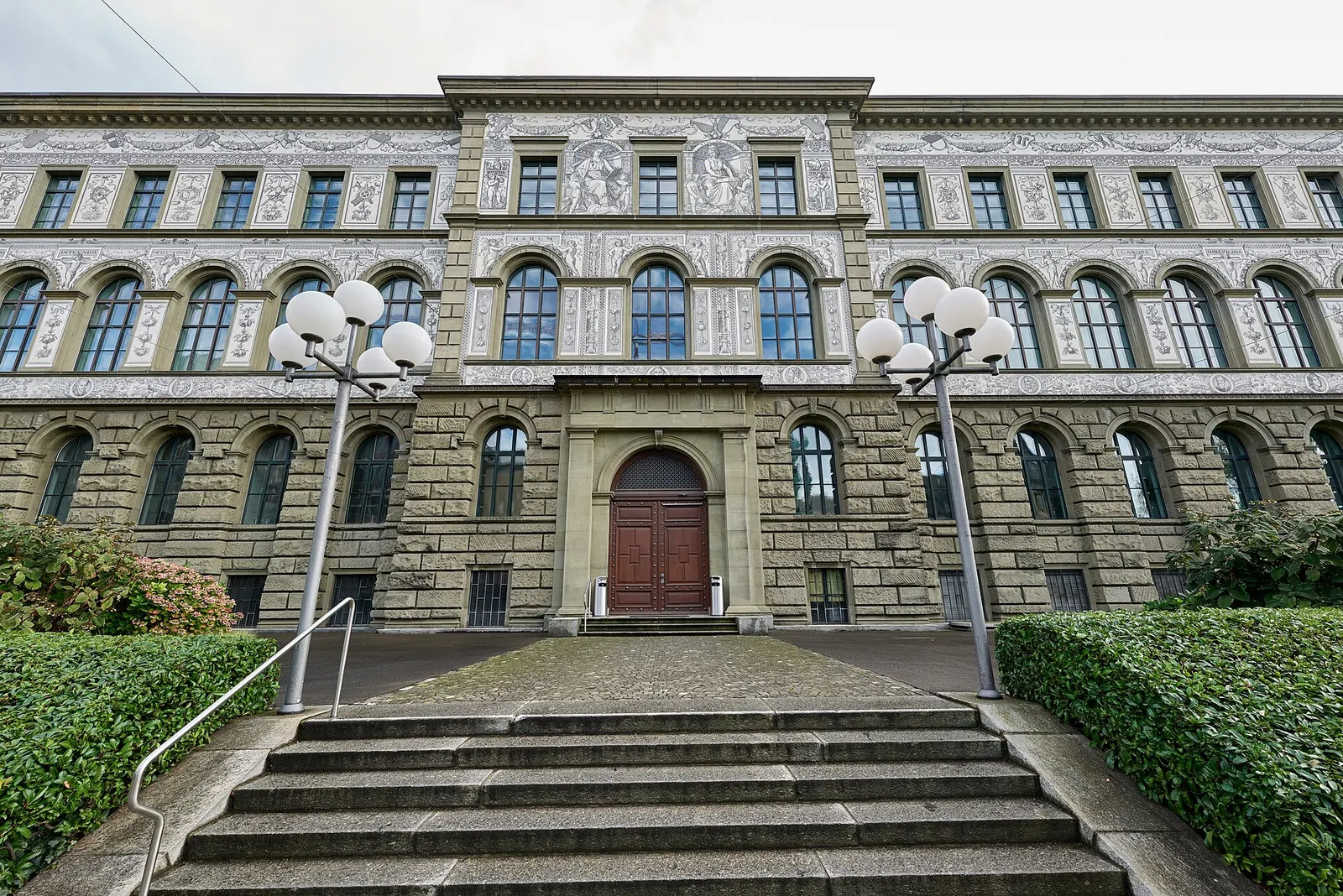
ETH is one of the two federal institutes of technology: the Confederation runs it, so its fees and admission rules are federal decisions and not those of the Canton of Zurich. Your residence permit, your proof of financial means and your health-insurance exemption, on the other hand, are handled by the canton where you live. Keeping those two levels apart explains most of what follows.
ETH Zurich at a glance
| Item | What ETH states |
|---|---|
| Founded | 1855, as the federal 'Polytechnikum' |
| Type | Federal institute of technology (Eidgenössische Technische Hochschule), governed by the federal FIT Act |
| Students, 2025 (headcount) | 26,942 students in total, among them 11,520 bachelor's students, 10,144 master's students and 4,266 doctoral students; ETH's table also lists MAS/MBA students, and its lines add up to slightly fewer than the total |
| Departments | 16 departments |
| Campuses | Zentrum, in the city centre, and Hönggerberg, in the north of the city |
| Master's teaching language | English for most programmes; German for Architecture and Science Didactics; German and English for Pharmacy |
| Length of a master's | 90 ECTS credits (3 semesters) or 120 ECTS credits (4 semesters), depending on the programme; Science Didactics is labelled 90 credits over 6 to 8 semesters |
| Start | Autumn semester only; ETH's page of application dates states that entry in the spring semester is not possible |
- Federal institute of technologyEidgenössische Technische Hochschule (ETH)
- One of the two universities run by the Confederation instead of a canton: ETH Zurich and, in French-speaking Switzerland, EPFL (École polytechnique fédérale de Lausanne). Both concentrate on engineering, natural sciences, mathematics and architecture. See the EPFL page for the French-speaking twin.
Master's programmes: what you can study and in which language
ETH groups its master's programmes into five areas and labels each programme with its credits, length and language. The table gives examples from each area's list; the list itself, with every programme, is on ETH's 'Range of degree programmes' page, and the programmes in Scholway's catalogue are linked from English-taught master's programmes in Switzerland.
| Area | Examples from ETH's list | Credits and language as labelled |
|---|---|---|
| Engineering sciences | Computer Science, Data Science, Cyber Security, Electrical Engineering and Information Technology, Mechanical Engineering, Robotics, Systems and Control, Quantum Engineering | 120 ECTS for most; 90 ECTS for Mechanical Engineering, Process Engineering, Robotics and Neural Systems and Computation; all labelled English |
| Architecture and civil engineering | Architecture, Civil Engineering, Environmental Engineering, Geomatics, Integrated Building Systems | 120 ECTS; Architecture is labelled German, the others English |
| Natural sciences and mathematics | Physics, Mathematics, Chemistry, Biology, Statistics, Computational Science and Engineering, Pharmacy | 90 ECTS for most; 120 ECTS for some, such as Computational Science and Engineering; Pharmacy is labelled German and English |
| System-oriented natural sciences | Environmental Sciences, Earth Sciences, Agricultural Sciences, Food Science and Nutrition, Health Sciences and Technology | 90 or 120 ECTS; all labelled English |
| Management and social sciences | Management, Technology and Economics; Science, Technology and Policy; Comparative and International Studies | 120 ECTS, English; Science Didactics is labelled German, with 90 ECTS over 6 to 8 semesters |
- Consecutive master's programmekonsekutiver Master
- A master's that continues a bachelor's programme in the same discipline. ETH states that it offers at least one consecutive master's for every bachelor's programme it runs. Gaps between your bachelor's degree and the programme's published requirement profile can lead to additional requirements or to refusal.
- Specialised master's programmespezialisierter Master
- A master's on one particular topic, taught from an interdisciplinary and international perspective, with its own admission profile.
Admission for graduates of foreign universities
ETH describes its master's admission as highly selective and assesses each application as a whole: your undergraduate record, the university you come from, your background in the field, scores in standardised tests such as the GRE where a programme requires them, your motivation letter and your recommendation letters. Meeting the published requirements does not guarantee a place. The full rules are in master's requirements and recognised degrees; the points below are the ones that decide whether an application from Türkiye is worth making.
| Point | ETH's rule |
|---|---|
| Application window with a foreign bachelor's degree | 1 to 30 November 2026; the second window in spring is open only to holders of a Swiss bachelor's degree |
| Programmes per entry semester | At most 2 master's programmes, one application each |
| Application fee | CHF 150 per programme, not refundable |
| Minimum average grade for Türkiye | 3.5 out of 4 in the 16 master's programmes that publish minimum grades; below it ETH says an application has no prospect of success, above it admission is not guaranteed |
| Additional requirements | For a consecutive master's, at most 30 credits with a university bachelor's degree; above that, admission is refused |
| Decision | Normally within 2 to 3 months of the deadline |
What it costs and how it can be funded
Since the autumn semester 2025 ETH charges two tuition levels. The lower one is for Swiss and Liechtenstein citizens and for students who lived in Switzerland or Liechtenstein when they obtained their university entrance qualification, with a few further listed cases that depend on a residence permit held before the studies start. Everyone else is assigned to the second fee group. A Turkish citizen who finished school in Türkiye and moves to Switzerland for the master's is in that group unless one of the listed cases applies; ETH checks the group during admission and does not change it during the studies. The definition and the exceptions are in tuition fees in Switzerland.
| Item | Amount | Whose figure |
|---|---|---|
| Tuition | CHF 2,190 per semester | ETH tuition fee page |
| Compulsory semester fees on top | CHF 74 per semester | ETH fee sheet (sports association, scholarship fund, student union services) |
| Tuition and compulsory fees together | CHF 2,264 per semester | Sum of the two lines above |
| Living costs | CHF 22,100 per year | Estimate of ETH's Financial Aid Office for an international student, without tuition |
| Study and living costs in total | CHF 28,100 per year | ETH Financial Aid Office, all programmes except architecture |
ETH's own scholarship for master's students is the Excellence Scholarship and Opportunity Programme (ESOP): from autumn 2027 it pays CHF 13,500 per semester and waives tuition, and about 60 scholarships are planned for a start in 2027/28. You apply for it in the same window as for admission, 1 to 30 November 2026, and ETH expects applicants to be in the top 10% of their bachelor's programme. The Swiss Government Excellence Scholarships are not an alternative: they do not fund a regular master's. Both are explained in university scholarships in Switzerland and the wider picture in the cost of studying in Switzerland.
Two campuses: Zentrum and Hönggerberg
ETH is based chiefly in Zurich, with one campus in the city centre and one in the Hönggerberg district; it also has external sites elsewhere in the canton, in Switzerland and in Singapore. Zentrum is built around the historic main building above the old town. From the main station, tram 6 or tram 10 stops at 'ETH/Universitätsspital', or you take the Polybahn funicular from Central up to the terrace in front of the main building.
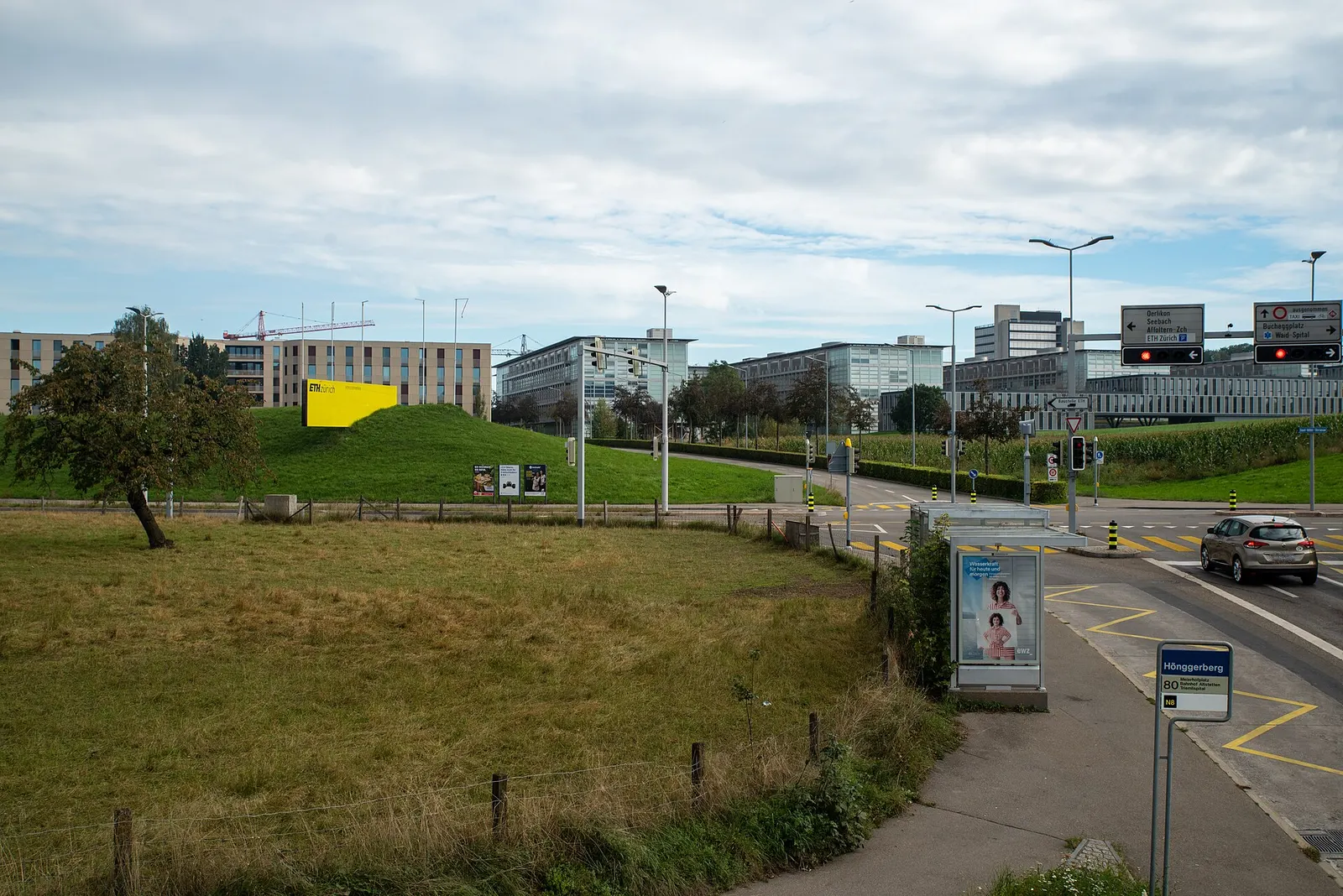
Hönggerberg, built from 1961, lies in the north of the city: bus 69 from Bucheggplatz or bus 80 from Oerlikon station stops at 'ETH Hönggerberg'. Between the two campuses ETH runs the eLink, a shuttle bus that is free for its students and staff and leaves from the passage under the Polyterrasse. Which campus you will spend your days on depends on your department, so check it before you choose where to live; the city itself is described in studying in Zurich.
In practice: from the admission letter to the first week
Accept the place in eApply
Confirm in ETH's application portal, eApply, by the deadline in your admission letter; after that date the offer expires. ETH's admission directive rules out postponing the start: if you cannot begin on the date named in the decision, you apply again.
Download the confirmation of registration
After you accept, the confirmation appears in eApply; ETH says processing takes a couple of weeks. This is the document you use for the visa application.
Apply for the visa
Turkish citizens need a national (D) visa. ETH tells students to apply at least 3 months before the planned entry. For the Canton of Zurich the amount that counts as sufficient means is CHF 21,000 for twelve months. Follow the student visa step by step and proof of financial means.
Send the degree documents ETH asks for
eApply lists which documents must arrive in the original or as photocopies certified by your university; ETH states that they are certified by the issuing institution, not by a notary. Originals are returned during the first semester. Registration must be complete, with the bachelor's degree obtained, by the beginning of the semester; ETH can grant a short extension in exceptional cases, and after that the admission offer expires.
Look for a room early
ETH tells new students to organise their own accommodation, to plan a temporary place for the first weeks and never to pay for a room they have not seen. The routes in Zurich are in student housing in Switzerland.
Set up your ETH account and enrol
The ETH user name and e-mail address arrive by e-mail from mid-July. You then enrol for the semester in myStudies; for the autumn semester 2026 the last day without a late fee was Sunday, 27 September 2026, the end of the second semester week. ETH does not permit a double matriculation at another university.
Arrive, register, insure
Register with the residents' office of your district or municipality within 14 days of arriving and arrange health insurance within 3 months of registering: see the residence permit and health insurance for international students.
ETH runs its own onboarding for new master's students. For the autumn 2026 intake the in-person 'Check-in ETH' day was on 11 September 2026 at the Zentrum campus, with group sessions led by experienced master's students and an information fair; each department then holds its own welcome and introduction day. For the autumn 2027 intake ETH has announced an in-person Onboarding Week on 13 to 17 September 2027, one week before the semester starts, with registration in advance. ETH also holds information events on the visa and entry in May, on registration in eApply, and on Swiss health insurance. A personal laptop is mandatory for students starting a degree programme, and ETH publishes minimum requirements for it.
Before you apply to ETH Zurich
- Programme page open: credits, language and the admission profile of your programme read in full
- Your average compared with 3.5 out of 4, if your programme is one of the 16 master's programmes with a minimum grade
- Language certificate booked so that it exists before the window closes
- Official transcripts requested from every university you attended
- Recommendation letters and, if your programme asks for it, the GRE arranged
- Funding plan for CHF 28,100 a year written down, including how you will prove means to the canton
Working while you study
ETH itself says that its studies are full-time and demanding and leave little time for outside employment. The legal frame is federal and the same at every university: a side job needs an authorisation, at the earliest 6 months after the start of the studies, for up to 15 hours per week outside the holidays. The rule, and the exception for master's students who work at their own institute, are in how many hours international students can work. Do not build a budget for Zurich on wages.
Frequently asked questions
Can I apply to ETH Zurich for a master's with a bachelor's degree from Türkiye?
Yes, if the degree is from a recognised university, took at least three years of full-time study and is in a field that matches the programme. For the 16 master's programmes with published minimum grades, ETH names 3.5 out of 4 as the minimum average for applicants who studied in Türkiye. ETH decides each case itself; there is no general recognition of a Turkish degree.
When is the ETH Zurich master's application deadline for international students?
For a start in autumn 2027 the only window for applicants with a bachelor's degree from outside Switzerland is 1 to 30 November 2026. The April window is for Swiss bachelor's degrees only, and ETH has no spring intake.
How much does a master's at ETH Zurich cost for a student from abroad?
Tuition in the second fee group is CHF 2,190 per semester, and with the compulsory semester fees CHF 2,264 per semester. ETH's Financial Aid Office estimates study and living costs together at CHF 28,100 per year for such a student.
Are ETH Zurich master's programmes taught in English?
Most are: on ETH's programme lists nearly every master's is labelled English. Architecture and Science Didactics are labelled German, and Pharmacy German and English. ETH's bachelor's programmes are a different matter and are not covered here.
Does ETH Zurich offer scholarships for master's students?
Its central scheme is ESOP, which from autumn 2027 pays CHF 13,500 per semester and waives tuition. About 60 scholarships are planned for 2027/28, and the application runs in the admission window of 1 to 30 November 2026.
Can I start an ETH Zurich master's in the spring semester?
No. ETH states that entry in the spring semester is not possible, and its admission directive rules out postponing the start of studies. If you miss the November window you apply again a year later.
Sources
31 sources, all official
- ETH Zurich (overview, key statistics)ETH Zurich (Official)
- PortraitETH Zurich (Official)
- History of ETH Zurich: Leading the way since 1855ETH Zurich (Official)
- Master's degree studiesETH Zurich (Official)
- Range of degree programmes (Master's degree studies)ETH Zurich (Official)
- Master's degree programmes: Engineering SciencesETH Zurich (Official)
- Master's degree programmes: Architecture and Civil EngineeringETH Zurich (Official)
- Master's degree programmes: Natural Sciences and MathematicsETH Zurich (Official)
- Master's degree programmes: System-oriented Natural SciencesETH Zurich (Official)
- Master's degree programmes: Management and Social SciencesETH Zurich (Official)
- CampusETH Zurich (Official)
- Getting to the campus: ZentrumETH Zurich (Official)
- Getting to the campus: HönggerbergETH Zurich (Official)
- Admitted: what next? (Beginning your Master's studies)ETH Zurich (Official)
- Information & Check-in (Onboarding at ETH, Master's)ETH Zurich (Official)
- Welcome & onboarding events (Master's)ETH Zurich (Official)
- Master's degree studies – autumn 2026 (first enrolment, student portal)ETH Zurich (Official)
- Application MasterETH Zurich (Official)
- Application Dates Autumn Semester 2027ETH Zurich (Official)
- Language requirements (Master's application)ETH Zurich (Official)
- Directive: Admission to Master's degree programmes (version 04.07.2024)ETH Zurich, Executive Board (Official)
- Minimum overall average gradesETH Zurich (Official)
- Profiles of requirementsETH Zurich (Official)
- Admission prerequisites (International Bachelor's degree)ETH Zurich (Official)
- How do I apply? (International Bachelor's degree)ETH Zurich (Official)
- Tuition feesETH Zurich, Student portal (Official)
- Tuition, semester and other fees (PDF)ETH Zurich (Official)
- Study and Living Costs International students (approximate) (PDF)ETH Zurich, Financial Aid Office (Official)
- Excellence Scholarship & Opportunity ProgrammeETH Zurich, Student portal (Official)
- Immigration with a visaETH Zurich (Official)
- Accommodation (after admission, international students)ETH Zurich (Official)