Whether you can work alongside your studies in Austria depends first on your citizenship, not on your university or programme. Citizens of the EU, the EEA and Switzerland have free access to the labour market and can take a job like any Austrian. Everyone else who is in Austria on a student residence permit can work too, but only within the Foreign Employment Act (Ausländerbeschäftigungsgesetz, AuslBG): each job needs a permit that the employer obtains before you start.
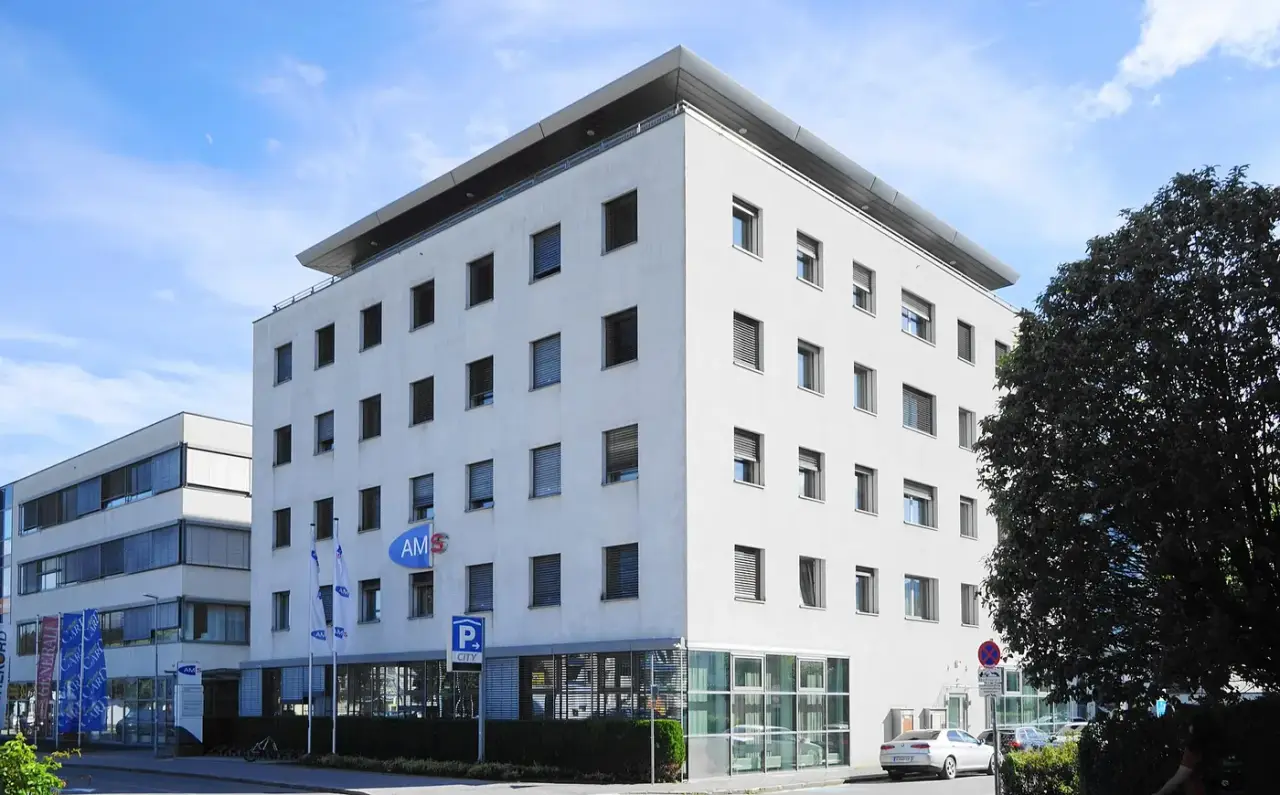
Working as a student in Austria: who needs a permit
Find the row that matches your citizenship and the kind of work; the sections below explain each rule.
| Your situation | Permit needed? | Hours | Who deals with the AMS |
|---|---|---|---|
| EU, EEA or Swiss citizen | No labour-market permit | No hour limit from immigration law; normal labour law applies | Nobody |
| Third-country student, job of up to 20 hours per week | Beschäftigungsbewilligung, issued without a labour-market test | Up to 20 hours per week | Employer applies |
| Third-country student, job of more than 20 hours per week | Beschäftigungsbewilligung with a labour-market test | More hours only if the AMS finds no suitable registered jobseeker | Employer applies |
| Third-country student, marginal job (up to €551.10 per month) | Yes — a low wage does not remove the permit requirement | Up to 20 hours per week without a test | Employer applies |
| Third-country student, internship required by an Austrian curriculum | No permit; the host company must notify the AMS and the anti-fraud office at least 3 weeks before the start | As agreed for the internship | Host company notifies; AMS confirms |
| Third-country student, scientific work in research or teaching, or work inside an EU education or research programme | No permit — the AuslBG does not apply to this work at all (§ 1 (2) lit. i and j) | No limit from the AuslBG; studies must stay the purpose of your stay | Nobody |
| Third-country student, genuine self-employment under a contract for work (Werkvertrag) | No employment permit; tax, social insurance and trade rules apply | Studies must stay the purpose of your stay | Nobody (but check the contract type first) |
EU, EEA and Swiss students: free labour-market access
Citizens of the EU member states and of Iceland, Liechtenstein and Norway enjoy the free movement of workers. They need no authorisation from the labour-market authorities to start work, and Swiss citizens are treated the same way for access to the Austrian labour market. The AuslBG says so itself: under § 1 (2) it does not apply to foreign nationals who have free movement of workers under EU law.
Social insurance, tax, collective agreements and working-time law still apply to them as to Austrians. One piece of paperwork does: EU, EEA and Swiss citizens staying longer than three months must register with the settlement authority within four months of arriving, and are issued a registration certificate (Anmeldebescheinigung).
Non-EU students: the employment permit and the weekly hour rule
If you hold a residence permit "Student" (Aufenthaltsbewilligung Student), you are covered by the AuslBG. You need an employment permit for any job in Austria. Official sources make a point of adding: even for marginal employment. The permit is not something you apply for yourself — your prospective employer applies to the Public Employment Service, the AMS.
- Employment permitBeschäftigungsbewilligung
- Permission from the AMS for an employer to employ a specific third-country national. It is granted for one workplace — defined by the occupation and the named employer — and is valid across Austria for that job. It lasts at most 1 year and must be applied for by the employer. If you change employer or take a second job, a new permit is needed.
- Public Employment ServiceArbeitsmarktservice (AMS)
- Austria's public employment agency. Besides helping jobseekers, its regional offices decide on employment permits and receive internship notifications under the AuslBG. In Vienna this is handled by the Service AusländerInnenbeschäftigung.
Under AuslBG § 4 (7) no. 2, the labour-market test is dropped for pupils' and students' jobs of up to 20 hours per week. This is the provision behind the student hour rule, and it covers holders of the residence permit "Student" as well as students on an EU mobility programme. It has changed before: before 1 October 2017, students in the early semesters were limited to 10 hours per week, until a 2017 reform deleted that lower tier and left one threshold for everyone. Articles and forum posts that still quote the old figure are out of date. Our guide to how many hours students can work goes through the details.
Working on a student permit: the key numbers
Non-EU students, 2026
- A week, no labour-market test
- 20 hours
- Employment permit still needed
- For the AMS to decide
- 6 weeks
- Statutory maximum
- Marginal-employment limit
- €551.10
- Per month; below it only accident insurance
- Tax-free income a year
- €13,539
- Taxable income, 2026
The employer applies for the permit before you start, even within the weekly limit. EU and EEA students need no permit.
Source: RIS, oesterreich.gv.at, AMS +4 more. Last checked:
Image (PNG)Working beyond the weekly limit
Twenty hours is not an absolute ceiling written into your residence permit. A job with more hours is not ruled out, but the AMS can only approve it after a labour-market test (Arbeitsmarktprüfung): the position must be one that cannot be filled by registered jobseekers from Austria or by foreign workers already integrated into the labour market. Because approval above the threshold depends on this test, plan your job around the test-free limit.
Work the AuslBG does not cover at all
A few activities fall outside the Act, so no permit and no notification are needed: scientific work in research and teaching at public or private institutions, and work within EU education, training or research programmes. That is why a research post at your institute is handled differently from a shift in a café. Do not assume it — ask the department to confirm in writing which exemption it relies on, because the same person doing administrative rather than scientific work needs the ordinary permit.
How the permit process works
Tell the employer early that you need a permit
Many employers have never hired a non-EU student. Explain that they apply to the AMS office responsible for the place of work, and that the application fee of €41 is charged to them as the applicant — it is due whether the permit is granted, refused or the application is withdrawn.
Provide your documents
The AMS lists the application form, a valid residence permit, current proof of enrolment, your passport and your registration of address (Meldezettel).
Wait for the decision
By law, the AMS must decide within 6 weeks. The decision goes to the employer.
Start only once the permit is granted
A foreign national may only take up employment once the permit has been issued, and a permit cannot be granted for work that has already begun. There is one narrow exception: if the AMS serves no decision within the six-week deadline, the employer may start employing you and can demand a certificate confirming that — but that is the employer's call to make, in writing, not a gap to slip through — and the provision (AuslBG § 20b) speaks of foreign nationals 'settled' in Austria, so whether the AMS applies it to student-permit holders is not stated anywhere official. Treat it as uncertain; see the employment permit guide.
Renew in time
A permit lasts at most 1 year. If the employer applies for an extension before it expires, it stays valid until the decision on that application is final (AuslBG § 7 (7)).
The step-by-step permit guide covers the forms, the fee and what happens if the AMS refuses.
Turkish citizens and the EEC–Turkey Association Agreement
Turkish students are third-country nationals, so on a student residence permit the same rules apply: an employment permit applied for by the employer, test-free up to 20 hours per week. The EEC–Turkey Association Council Decision No. 1/80 (ARB 1/80) does not give Turkish students easier access to their first job. The WKO states explicitly that there are no concessions for first admission to the Austrian labour market.
What the decision does is reward continued lawful employment over time, and AuslBG § 4c puts it into Austrian law: a Turkish national who meets the conditions of Article 6 (1) ARB 1/80 has an employment permit issued or renewed ex officio, and one who meets the longest of them is issued an exemption certificate (Befreiungsschein), valid for 5 years at a time and allowing work anywhere in Austria. Article 6 (1) sets three steps, and the wording of the first one matters: after 1 year of legal employment you are entitled to renewal of your permit for the same employer, if a job is available; after 3 years you may take another offer in the same occupation with an employer of your choice, subject to priority for EU workers; after 4 years you have free access to any paid employment. Throughout, the work must have been lawful employment on the regular labour market.
Does a student job count towards those periods? It can. In Payir the Court of Justice of the EU held that entering a member state as a student or au pair cannot deprive someone of the status of worker "duly registered as belonging to the labour force" under Article 6 (1) — and two of the claimants were students who had worked part-time for the same employer for over a year within a 20-hour term-time limit. The work must still be genuine and effective economic activity and lawful under national rules, which in Austria means employment covered by a valid Beschäftigungsbewilligung.
Marginal employment and social insurance
- Marginal employmentgeringfügige Beschäftigung
- An employment relationship in which you earn no more than €551.10 per month (2026 figure, unchanged from 2025). Special payments such as holiday and Christmas bonuses are not counted. Marginally employed people are covered only by accident insurance, which the employer pays for.
Mini-jobs are popular with students because nothing is deducted for health, pension or unemployment insurance. The flip side is that the job gives you no health cover. If you are not already compulsorily insured through other work, you can opt into health and pension self-insurance for €83.49 per month. International students normally already need their own health insurance anyway — see health insurance for students. As soon as your earnings from one employer exceed the threshold in a month, you are fully insured and contributions are deducted. If several marginal jobs together exceed it, all of that income becomes contributory and the ÖGK bills you afterwards for the health and pension contributions.
For a third-country student, marginal employment changes only the insurance position, not the permit rule. The employer still needs a Beschäftigungsbewilligung. Our guide to geringfügige Beschäftigung explains the monthly test, multiple jobs and self-insurance in detail.
| Up to the marginal threshold | Above the marginal threshold | |
|---|---|---|
| Monthly gross pay | Up to €551.10 per month | More than €551.10 per month |
| Insurance cover | Accident insurance only (paid by employer); optional self-insurance | Health, pension, accident and unemployment insurance |
| Your unemployment insurance share | None | 0% on monthly pay up to €2,225 per month, rising in steps above that |
| Income tax | 0% while your annual taxable income stays within €13,539 per year | 0% within €13,539 per year; 20% on the next slice |
Pay: collective agreements instead of a minimum wage
Austria has no statutory minimum wage that applies to all employees. Minimum pay is set sector by sector in collective agreements, negotiated between trade unions and employers without the state. According to the Social Affairs Ministry, about 95% of employees are covered by one. The collectively agreed minimum cannot be undercut by an employment contract. Underpayment is an administrative offence: the Social Affairs Ministry puts the fine at up to €50,000 as a rule.
- Collective agreementKollektivvertrag (KV)
- A sector-wide agreement setting minimum pay and working conditions. Which agreement applies depends on the employer's sector, not on your job title: an electrician employed by a hotel falls under the hotel and catering agreement, not the metalworking one. The applicable agreement must be named in your written statement of employment terms (Dienstzettel). Holiday and Christmas bonuses come from collective agreements, not from statute.
For students this has two practical consequences. First, "minimum wage" questions have no single answer: look up the agreement for your employer's sector and your pay grade. Second, part-time and marginal workers are not second-class employees. The AK stresses that regularly marginally employed people have the same rights to paid leave, sick pay and notice periods as full-timers, and to the special payments that most agreements provide. For how to find your pay grade and enforce your rights, read your rights at work.
Income tax and the employee tax assessment
Income tax in Austria is progressive. For 2026, annual taxable income up to €13,539 per year is taxed at 0%, and the next slice, up to €21,992, at 20%. Whether you owe income tax therefore depends on your total taxable income for the year, not on a single payslip. Once your monthly pay exceeds the marginal threshold, social insurance contributions are deducted regardless.
This is where the annual employee tax assessment matters. If more wage tax was withheld than you owe, it is refunded. Employees whose income tax works out below zero can also get part of their social insurance contributions back — 55% of them, up to a cap that is reset for each assessment year. For the 2025 assessment year that cap was €487, or €608 with a commuter allowance, plus an SV bonus of up to €790 for low incomes. People often call this refund "negative tax" (Negativsteuer).
- Employee tax assessmentArbeitnehmerveranlagung
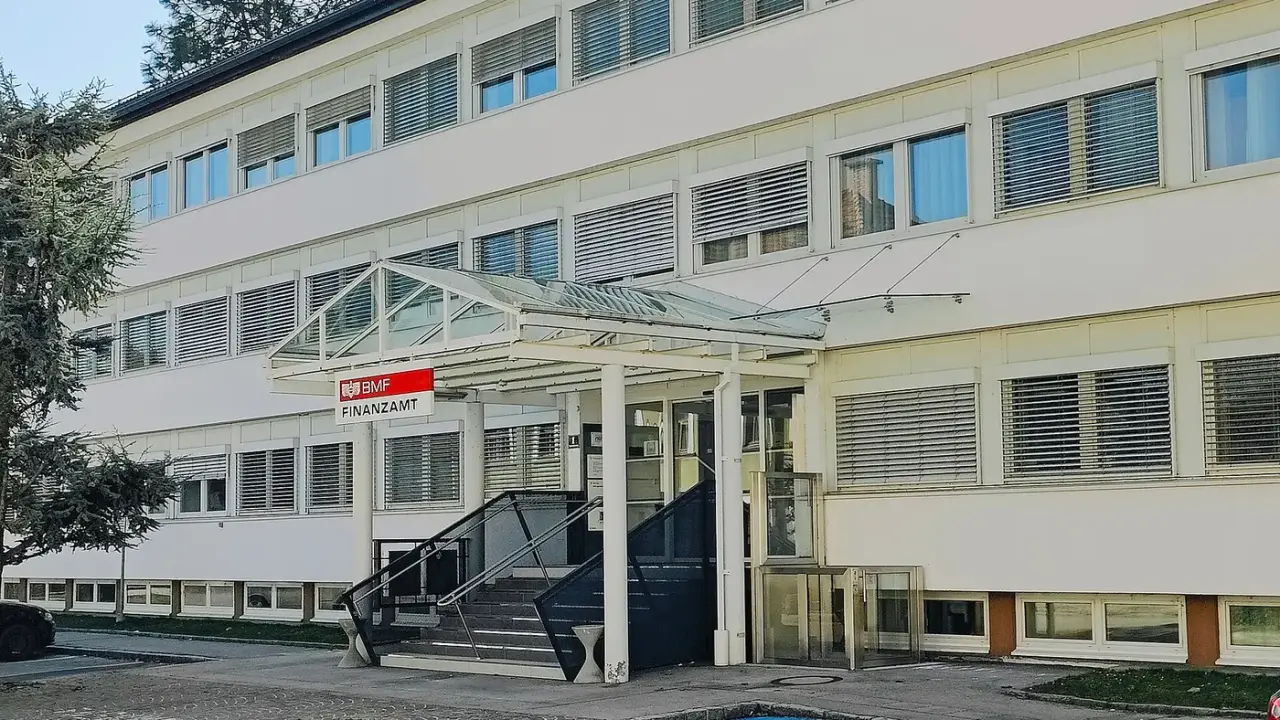
- The annual tax return for employees, filed online via FinanzOnline or on form L1. It refunds overpaid wage tax and, for low earners, part of their social insurance contributions. You can file for up to 5 years after the end of the tax year. If you have filed nothing by the end of June, the tax office may carry out an automatic assessment in the second half of the year, but only where your file shows wage-taxed income alone and a credit of at least €5.
A refund can only be paid if the tax office has your account details, so keep them current in FinanzOnline — our banking guide covers opening an Austrian account. Student taxes and claiming a refund walks through FinanzOnline registration, deductible expenses and the current refund caps.
Internships: mandatory and voluntary
The AuslBG treats internships differently depending on why you do them. An internship required by the curriculum of your Austrian programme counts as a Ferial- or Berufspraktikum — the AMS applies this to anyone on a course at an Austrian institution with public status that prescribes a placement. It needs no employment permit, but the host company must notify both the AMS and the anti-fraud office (Amt für Betrugsbekämpfung) at least 3 weeks before it starts, paying a fee of €40. The AMS then has 2 weeks to issue a confirmation (Anzeigebestätigung); after that deadline the placement may begin even without it. An unpaid Volontariat — no duty to work, no right to pay, at most 3 months per calendar year, and no simple or construction-site work — follows the same route.
An internship you take voluntarily does not fall under that exemption, which covers only Volontariate, curriculum-required placements and the EU-directive internship. The AMS may confirm a notification only if the real economic substance of the work matches one of those, and can revoke a confirmation when it does not. Since training relationships count as employment under the Act, a paid voluntary internship needs a Beschäftigungsbewilligung like any other job. Labour law follows the same logic: the Social Affairs Ministry notes that a compulsory internship is usually an employment relationship, with collective-agreement pay, unless it is genuinely a training arrangement. The internships guide compares the options.
Freelancing and self-employment
NAG § 64 (3) makes any paid activity on a student permit subject to the AuslBG, and that Act covers only employment, employee-like and training relationships. Genuine self-employment under a contract for work (Werkvertrag) is none of those, which is why the OeAD tells students it needs no work permit — though social insurance, tax and trade law still apply, and your studies must remain the purpose of your stay. The catch is the definition: under a Werkvertrag you owe a result, set your own hours and place, and could hand the work to someone else. If you in fact work fixed hours, at a set place, under instructions, it is employment whatever the contract says — and an employee-like "free service contract" (freier Dienstvertrag) is caught by the AuslBG too. The OeAD advises checking with the AK, the AMS or the Chamber of Commerce first. Freelancing and remote work on a student permit explains the tests and the insurance consequences.
Your rights and the Chamber of Labour
Employees in Austria become members of the Chamber of Labour (Arbeiterkammer, AK) automatically, and that includes marginally employed people, apprentices and people on free service contracts. Members earning below the marginal threshold pay no AK levy but are still entitled to the full range of services. If you are paid below the collective agreement, denied paid leave or unsure whether your contract is really a Werkvertrag, the AK in your federal state is the first place to ask. Ask your employer for a written Dienstzettel at the start. It records your working hours and the applicable collective agreement, which avoids disputes later.
Finding a student job
For non-EU students the practical challenge is less finding vacancies than finding an employer willing to handle the permit. Mention your permit situation openly and early, and explain that for jobs up to the hour threshold no labour-market test is involved. Expect the start date to depend on the AMS decision. Finding student jobs in Austria covers where to look, German-language expectations and application norms. To see how far part-time earnings go, compare them with the real cost of studying in Austria; our guide to studying in Austria sets out how work fits alongside admission, fees and residence rules.
In practice: from job offer to first payslip
The rules above reach you as four small pieces of paper or screen time. Knowing where each one happens saves weeks.
The AMS counter (employer's errand)
Your employer files the application; you only supply the documents. In Vienna the permit desk is the Service Ausländer_innenbeschäftigung at the AMS Landesgeschäftsstelle, Ungargasse 37, 1030 Vienna, open Monday to Thursday 08:00–16:00, Friday 08:00–13:00. The AMS says every federal state has a central Ausländerfachzentrum that accepts applications and questions directly; the addresses are listed in the employment permit guide.
The Dienstzettel (first day)
Ask for the written statement of your terms before you start, and compare the pay and hours with the copy of the permit decision (which states the promised pay) and with the collective agreement. The rights guide explains what it must contain.
The first payslip (end of the first month)
Your employer must hand over a written or electronic payslip when pay falls due (§ 2f AVRAG). Check that the gross pay matches your contract before anything else, and whether your collective agreement adds holiday and Christmas pay (the "13th and 14th salary"); the rights guide walks through the fields line by line.
FinanzOnline (after the tax year ends)
Log in with ID Austria, file the Arbeitnehmerveranlagung for the year and make sure the tax office has your IBAN. Nothing has to be attached, but keep receipts for 7 years. The tax guide has the steps.
After graduation
Third-country graduates of an Austrian university, university of applied sciences or accredited private university may have their student permit extended once, by 12 months, to look for work or start a business. It is not automatic: the authority may grant it where you still meet the general residence conditions and are aiming for a work-related permit. During that year the same test-free permit for up to 20 hours per week remains available, because the law's student category expressly includes this extension. Graduates who find a job matching the level of their qualification, paid at the going rate for comparable Austrian graduates, can switch to the Red-White-Red Card for graduates, for which the labour-market test is waived. See staying in Austria after graduation.
Staying in Austria after your degree
The main residence titles for non-EU graduates, 2026
| Job-search year | Red-White-Red Cardfor graduatesUsual choice | EU Blue Card | Permanent residenceDaueraufenthalt – EU | |
|---|---|---|---|---|
| Valid for | 12 monthsonce, as an extension | 24 months | 24 months | Unlimited; card every 5 years |
| Key condition | Degree; means and insurance | A job at your degree level | €55,678gross a year, at least | 5 years settled, German B1 |
| Labour-market test | Not applicable | No | Yesat the first application | No |
| Free choice of employer | Noa permit for each job | PartlyCard plus after 2 years | Partlyno test after 12 months | Yes |
| Decision within | Like any renewal | 8 weeks | 8 weeks | 6 months |
Valid for
- Job-search year
- 12 monthsonce, as an extension
- Red-White-Red Card (Usual choice)
- 24 months
- EU Blue Card
- 24 months
- Permanent residence
- Unlimited; card every 5 years
Key condition
- Job-search year
- Degree; means and insurance
- Red-White-Red Card (Usual choice)
- A job at your degree level
- EU Blue Card
- €55,678gross a year, at least
- Permanent residence
- 5 years settled, German B1
Labour-market test
- Job-search year
- Not applicable
- Red-White-Red Card (Usual choice)
- No
- EU Blue Card
- Yesat the first application
- Permanent residence
- No
Free choice of employer
- Job-search year
- Noa permit for each job
- Red-White-Red Card (Usual choice)
- PartlyCard plus after 2 years
- EU Blue Card
- Partlyno test after 12 months
- Permanent residence
- Yes
Decision within
- Job-search year
- Like any renewal
- Red-White-Red Card (Usual choice)
- 8 weeks
- EU Blue Card
- 8 weeks
- Permanent residence
- 6 months
Apply for the next title before your current permit expires. Student years count only half towards permanent residence.
Source: RIS, oesterreich.gv.at, Stadt Wien +2 more. Last checked:
Image (PNG)What you need to work as a student in Austria does not change with your level: working during a master's or a doctorate runs on the same permit and the same weekly limit as during a bachelor's. The short list is below; the hours rule in detail is on how many hours students can work in Austria.
What you need to work as a student in Austria
- Check your status: EU/EEA/Swiss (no permit) or third-country (permit needed for every job)
- Confirm the weekly hours — up to 20 hours per week avoids the labour-market test
- Make sure the employer will apply to the AMS, and do not start before the permit is granted
- Ask whether the contract is an employment contract or a genuine Werkvertrag
- Find out which collective agreement applies and your pay grade
- Ask for a written Dienstzettel with hours and the collective agreement
- Check your monthly pay against the marginal threshold of €551.10 per month and sort out health insurance
- Keep your studies on track for your residence permit renewal
Frequently asked questions
Can international students work full-time during the summer holidays in Austria?
The AuslBG has no separate holiday allowance for students. A permit without a labour-market test covers jobs of up to 20 hours per week, at any time of year. More hours, including in the holidays, are possible only if the AMS approves the permit after a labour-market test, so ask the AMS before agreeing to longer hours. EU, EEA and Swiss students are not affected.
Do I need a work permit for a mini-job as a non-EU student in Austria?
Yes. Third-country students need a Beschäftigungsbewilligung for every job, including marginal employment paying up to €551.10 per month. The low wage changes your social insurance position, not the permit requirement. Your employer applies for the permit at the AMS.
Can I start working while my employer's permit application is still pending?
As a rule, no: under the AuslBG a third-country national may only take up employment once the permit has been issued, and the AMS cannot authorise work that has already started. The only exception is that if the AMS misses its 6 weeks deadline, the employer may begin employing you and can request written confirmation of that — though the provision is worded for foreign nationals settled in Austria, and no official page confirms it is applied to student-permit holders. Working before either of those points can lead to fines and put your residence permit at risk.
Do international students pay tax on a part-time job in Austria?
Income tax only starts once annual taxable income exceeds €13,539 per year (2026). If your total for the year stays below that, no income tax is due, although social insurance is deducted once monthly pay exceeds €551.10 per month. Filing an employee tax assessment (Arbeitnehmerveranlagung) via FinanzOnline can refund overpaid wage tax and part of those contributions.
What happens if a non-EU student in Austria works without a permit?
Employing a third-country national without the required permit breaches the Foreign Employment Act. The OeAD warns that the student risks a heavy fine or even losing the residence permit. If you are unsure whether a job or contract needs a permit, check with the AMS or the Chamber of Labour before you start.
Does a student job count towards Turkish nationals' rights under ARB 1/80?
It can. The Court of Justice of the EU held in Payir that being admitted as a student does not stop someone counting as a worker under Article 6 (1) of Decision 1/80, and the two students in that case worked part-time within a 20-hour term-time limit. The work must still be genuine and effective and lawful — in Austria, covered by a Beschäftigungsbewilligung — and the first step of Article 6 (1) only entitles you to renewal with the same employer. Get individual advice from the AK or the AMS before relying on it.
Sources
34 sources, 33 official
- Ausländerbeschäftigungsgesetz (AuslBG), consolidated version of 19 September 2026Rechtsinformationssystem des Bundes (RIS) (Official)
- Niederlassungs- und Aufenthaltsgesetz (NAG), consolidated version of 19 September 2026 (§ 64 Studenten)Rechtsinformationssystem des Bundes (RIS) (Official)
- Studieren und Arbeiten für Drittstaatsangehörigeoesterreich.gv.at (Bundesministerium für Arbeit, Soziales, Gesundheit, Pflege und Konsumentenschutz) (Official)
- EU citizens* and Swiss nationals – Application for a registration certificate and certificate of permanent residenceoesterreich.gv.at (Bundesministerium für Inneres) (Official)
- Beschäftigung ausländischer Schüler_innen und Student_innenArbeitsmarktservice Österreich (AMS) (Official)
- Volontariat, Ferial- oder Berufspraktikum und Au-pairArbeitsmarktservice Österreich (AMS) (Official)
- Gebühren in der AusländerbeschäftigungArbeitsmarktservice Österreich (AMS) (Official)
- Beschäftigungsbewilligung – Schüler und StudierendeUnternehmensserviceportal (USP) (Official)
- Citizens of EU/EEA countriesUnternehmensserviceportal (USP) (Official)
- Study in Austriamigration.gv.at (Austrian Federal Government migration portal) (Official)
- Frequently asked questionsmigration.gv.at (Austrian Federal Government migration portal) (Official)
- Neu im Sozialausschuss (Parlamentskorrespondenz Nr. 203 vom 03.03.2017)Parlament Österreich (Official)
- Working – Who is allowed to work in Austria? (information sheet, April 2025)OeAD – Austria's Agency for Education and Internationalisation (Official)
- BeschäftigungsbewilligungArbeiterkammer (AK) (Official)
- Geringfügige BeschäftigungArbeiterkammer (AK) (Official)
- AK MitgliedschaftArbeiterkammer (AK) (Official)
- KollektivvertragArbeiterkammer (AK) (Official)
- Steuerwertetabelle 2026 (PDF)Arbeiterkammer (AK) (Official)
- Mindestlohn in ÖsterreichSozialministerium (BMASGPK) (Official)
- Freedom of movement for workersSozialministerium (BMASGPK) (Official)
- InternshipsSozialministerium (BMASGPK) (Official)
- Beschäftigung türkischer StaatsangehörigerWirtschaftskammer Österreich (WKO) (Institutional)
- Judgment of 24 January 2008, Payir, Akyuz and Ozturk, C-294/06, EU:C:2008:36Court of Justice of the European Union (via EUR-Lex) (Official)
- Geringfügige BeschäftigungÖsterreichische Gesundheitskasse (ÖGK) (Official)
- Selbstversicherung bei geringfügiger BeschäftigungÖsterreichische Gesundheitskasse (ÖGK) (Official)
- Veränderliche Werte 2026Österreichische Gesundheitskasse (ÖGK) (Official)
- SteuertarifBundesministerium für Finanzen (BMF) (Official)
- Absetzbeträge bei niedrigen Einkünften (SV-Rückerstattung)Bundesministerium für Finanzen (BMF) (Official)
- Antragslose Arbeitnehmerveranlagung – einfach automatischBundesministerium für Finanzen (BMF) (Official)
- AMS Ausländer_innenfachzentren: KontaktdatenArbeitsmarktservice Österreich (AMS) (Official)
- Arbeitsmarktservice Wien » LandesgeschäftsstelleArbeitsmarktservice Wien (AMS) (Official)
- BerufsInfoZentrum - BIZ VillachArbeitsmarktservice Kärnten (AMS) (Official)
- Meine Lohnabrechnung 2026 – Was bleibt mir unterm Strich?Arbeiterkammer Wien (Official)
- Das Verfahren beim FinanzamtBundesministerium für Finanzen (BMF) (Official)