Austria has no single anti-discrimination code. The Equal Treatment Act (Gleichbehandlungsgesetz, GlBG) covers some grounds everywhere and others only at work, disability sits in a separate act, and violence is handled by police powers and victim-protection centres rather than equality law. This page maps who is protected where, names the offices that help each group and sets out what to do if something happens. It explains the rules and is not legal advice; the offices below give that advice, most of them free.
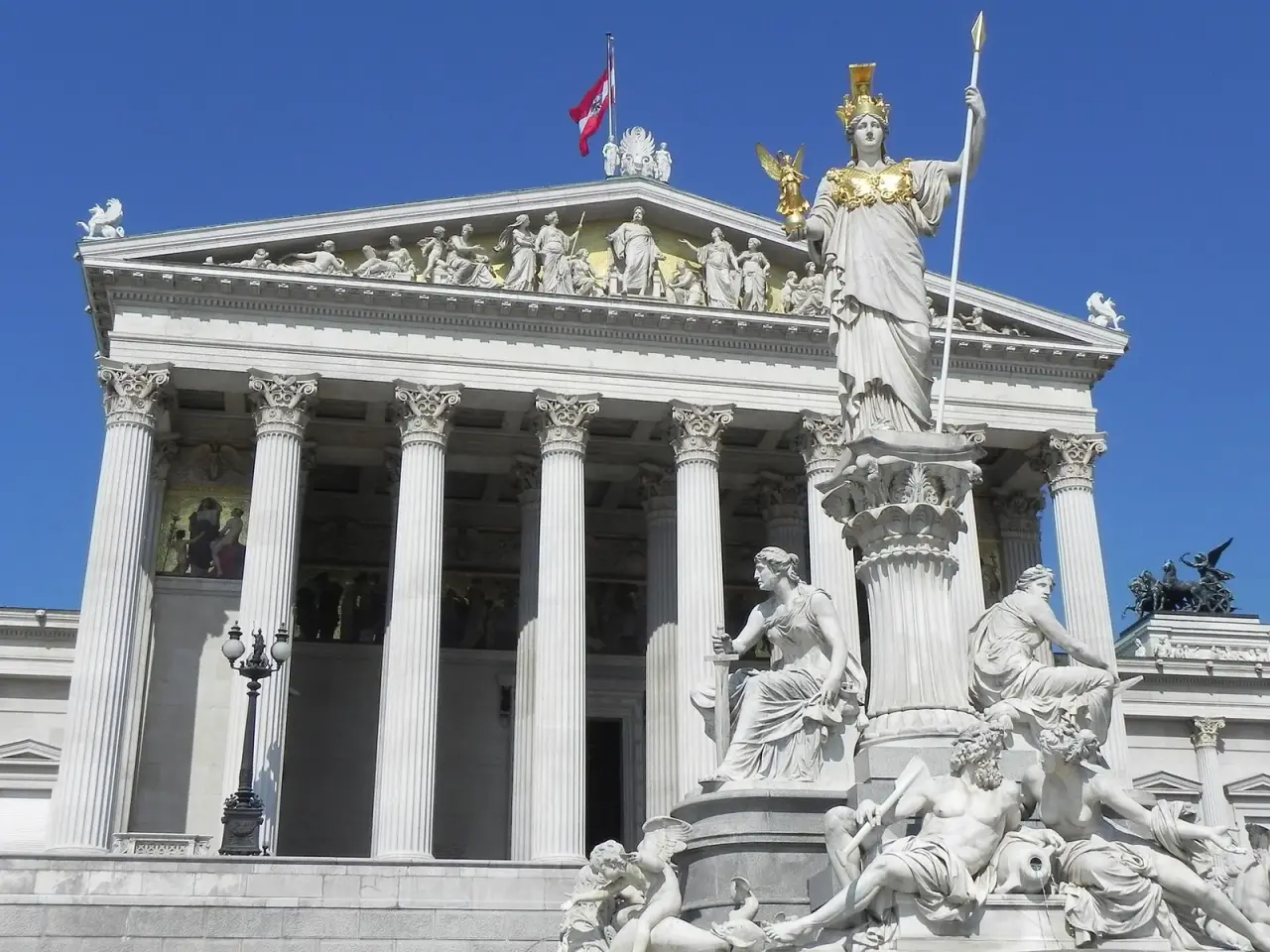
Who is protected where
The table gives the federal position, by ground and setting. The discrimination guide has the remedies and court deadlines for ethnic origin, religion, age and sexual orientation, and the table of offices below says whom to call.
| Ground | At work | Shops, housing and services |
|---|---|---|
| Ethnic origin (racism) | Yes, GlBG Part II | Yes, GlBG Part III, which also reaches education and social protection |
| Gender, including trans, inter and non-binary people | Yes, GlBG Part I | Yes, GlBG Part III; discrimination because of pregnancy or maternity counts as direct sex discrimination |
| Religion or belief | Yes, GlBG Part II | No |
| Sexual orientation | Yes, GlBG Part II | No |
| Disability | Separate act: §§ 7a ff. of the Behinderteneinstellungsgesetz | Yes, under the Bundes-Behindertengleichstellungsgesetz (BGStG), for the federal administration and for goods and services open to the public |
Three limits cut across the table. The GlBG covers private-law employment, including training and practical work experience, so internships and student jobs at private employers are inside it; public-sector employment has separate acts, and at public universities UG § 44 applies the federal public-sector equality act to university members. It leaves untouched entry and residence rules for third-country nationals and treatment that follows from their legal status, so a visa condition is not discrimination in this sense. And the federal acts apply only where the federal government has competence; Land laws fill some of the rest, and Vienna's own act lists all five grounds plus age and gender identity.
LGBTIQ+ students: marriage, legal gender and protection
Same-sex couples have been able to marry in Austria since 1 January 2019, after a Constitutional Court judgment of December 2017. The residence-law definition of a family member names spouses and registered partners without reference to sex; whether MA 35 recognises a foreign same-sex marriage or partnership certificate is not addressed on the official pages, so ask before you apply (family members and the student permit). Safety data are in the LGBTQ+ students guide.
Legal gender is more restricted than marriage. The central civil-status register holds the births of Austrian citizens and of everyone born in Austria. For a person who is neither an Austrian citizen nor a recognised refugee, the law of their country of citizenship governs a change of civil status in principle, although that law may refer back to Austrian law, so for most international students the first step is to check their home state's rules. Where Austrian law applies, the procedure runs like this:
Get the right expert opinion
A trans person needs a medical expert opinion showing a settled, serious mismatch with the registered gender; surgery is not required. For the entries 'divers', 'inter' or 'offen', an expert opinion must show that the person's chromosomal, anatomical or hormonal development fits neither male nor female (Constitutional Court, 2018). The official page offers no entry by self-declaration, so these entries do not cover non-binary identity as such.
Apply to the civil-status authority
That is the Standesamt of the municipality, the Standesamt of the Magistrat in a statutory city, or the Standesämter in Vienna.
Appeal if refused
An appeal to the Landesverwaltungsgericht goes in within 4 weeks, lodged with the authority that issued the decision.
Update your documents
After approval the register entry changes and a new birth certificate can be issued on request; with it you can apply for new documents such as a passport. A new first name needs a separate name-change procedure, which for foreign nationals is open only to stateless people and refugees, among others.
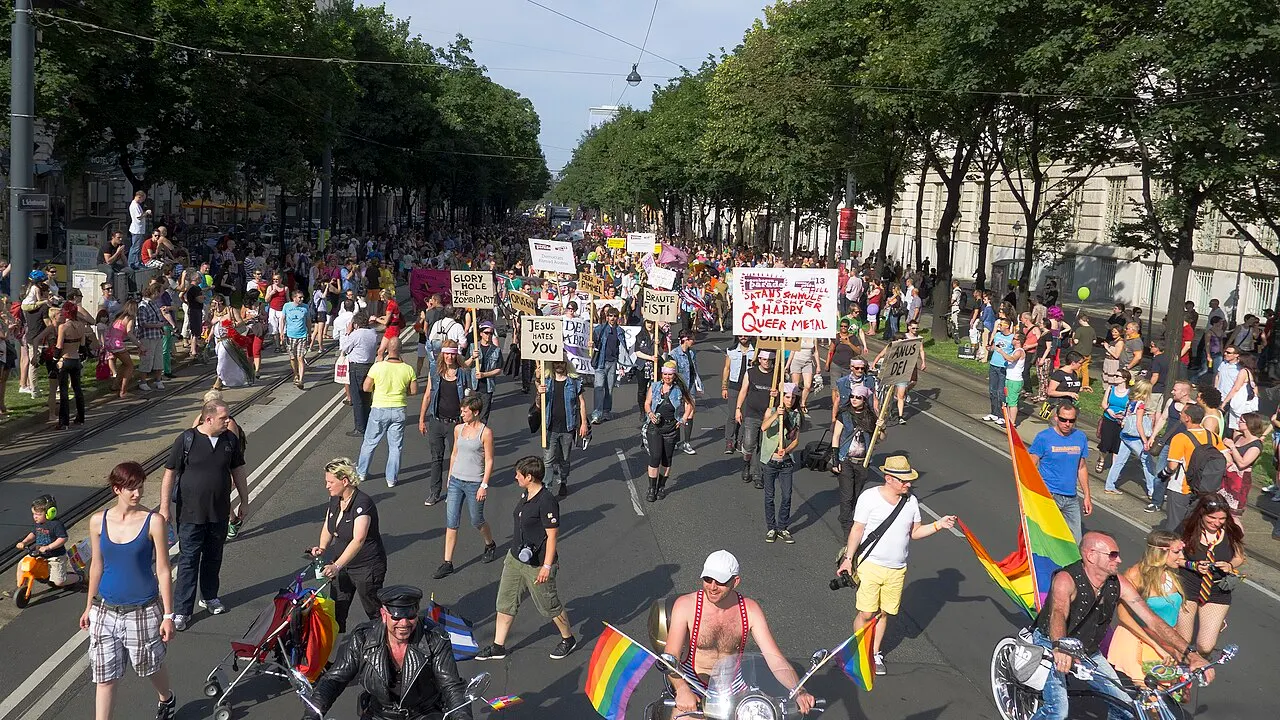
Sexual orientation is protected under the GlBG in working life only, including internships and student jobs. Trans, inter and non-binary people are protected under the gender ground, which also reaches goods, services and housing. Publicly inciting hatred or violence against a group defined by sexual orientation is an offence (§ 283 StGB, Verhetzung), and a racist, xenophobic or similarly reprehensible motive is an aggravating circumstance (§ 33 StGB). Support starts with your ÖH's Queer-Referat, the free COURAGE* counselling centres (anonymous, with a waiting list; website in English and Turkish) and, in Vienna, the city's WASt (free, anonymous).
Women: protection from violence, and equal treatment at work
- Police ban on entering and approachingBetretungs- und Annäherungsverbot
- A police power under § 38a of the Sicherheitspolizeigesetz. Where an attack on life, health or freedom is to be expected, officers can bar a person from the dwelling in which the endangered person lives and from the area within 100 metres of it. It lasts 2 weeks, or up to 4 weeks if the protected person applies to a court for an interim injunction in time.
If a partner, ex-partner, flatmate or relative threatens you at home, call 133 or 112. The ban attaches to the dwelling and the danger; § 38a names no condition about nationality or residence status. Police must tell you about the interim injunction and about suitable victim-protection bodies, and the ministry says the regional Gewaltschutzzentren then contact victims themselves after a ban. A Gewaltschutzzentrum (violence-protection centre) exists in every Land; it is free and confidential, helps with court applications, accompanies you to police questioning and trials, and can arrange native-language counselling or interpreters. Women who need to leave can turn to a Frauenhaus: the ministry states that nationality, religion and income play no role, and that the shelters also take the woman's children. After a ban, this is what happens:
At the scene
Officers have the person leave, take the keys to the dwelling and must tell you about the interim injunction at court and about victim-protection bodies.
In the first days
Officers must check at least once within the first 3 days that the ban is observed, and the security authority reviews the order within 3 days. If it should not have been ordered it is lifted, and you are told first where possible.
The centre contacts you
The Gewaltschutzzentrum helps you file the court application and deal with authorities, accompanies you to police questioning and hearings, offers psychosocial and legal Prozessbegleitung and can bring in an interpreter.
The clock
The ban ends after 2 weeks. If you apply to a court for an interim injunction in time, it lasts until the decision is served, at most 4 weeks after the order, so the application is the step that matters.
For advice that is not an emergency, the Frauenhelpline (0800 222 555) is open around the clock, free, anonymous and multilingual. After sexual violence the ministry lists free counselling centres in every Land, and the City of Vienna's 24-hour Frauennotruf (01 71 71 9) takes calls from women and girls from 14. The ministry's Frauenservice (0800 20 20 11) refers women to the right office, in English and Turkish where needed. Deaf women and girls can call the police by SMS to 0800 133 133, according to the ministry. See the safety guide and women's health in Austria.
At work, Part I of the GlBG bans discrimination because of sex in hiring, pay, benefits, training, promotion, working conditions and dismissal, with express reference to marital status and having children. If you are paid less than a colleague of the other sex for equal or equivalent work, you can claim the difference plus compensation. A job advert may not seek only men or only women and must state the minimum pay under the collective agreement or by law. Sexual harassment includes harassment by third parties such as customers, which matters in hospitality and retail; employers must take appropriate remedial action, and damages are at least €1,000 where the harm is not only financial. The court deadlines are short:
| Claim | Time limit |
|---|---|
| Not hired or promoted because of sex | 6 months from the rejection |
| Dismissal because of sex or because you asserted your rights | 14 days from receiving the notice |
| Sexual harassment | 3 years |
| Gender-related harassment that is not sexual | 1 year |
| Unequal pay, benefits, training, working conditions | 3 years (limitation period) |
Applying to the Equal Treatment Commission suspends these deadlines, and the Gleichbehandlungsanwaltschaft helps you do so. Labour rights in Austria covers the rest of employment law. At university, the route depends on the institution.
- Equal-treatment working groupArbeitskreis für Gleichbehandlungsfragen
- A body every university Senate must set up to counter discrimination by university bodies on grounds of gender, ethnic origin, religion or belief, age or sexual orientation, and to advise members of the university, which include students (UG §§ 42 and 94). Its members are not bound by instructions.
At a public university, start with that working group. Students at a Fachhochschule, a private university or a private teacher-training college have a private-law contract with the institution, so the GlBG and the Gleichbehandlungsanwaltschaft apply, according to the federal Ombudsstelle für Studierende. If you are pregnant or have children, studying with a partner or children covers leave, childcare and funds.
Disabled students: the Disability Equality Act and getting around
The Bundes-Behindertengleichstellungsgesetz bans direct and indirect discrimination because of disability, harassment included, in the federal administration and in goods and services open to the public; working life falls under the separate Behinderteneinstellungsgesetz. A barrier is not indirect discrimination if removing it would be unlawful or a disproportionate burden, but the provider must still take reasonable steps towards the closest possible equal treatment (§ 6). The federal Ombudsstelle für Studierende names the Act and the Behindertenanwaltschaft as the route at any institution.
- Disability OmbudBehindertenanwaltschaft
- The federal office that advises people on discrimination because of disability and is told the result of every conciliation procedure. It is separate from the Equal Treatment Ombud, which does not handle disability cases.
A court claim comes only after a free conciliation procedure at the Sozialministeriumservice: if no settlement is reached within 3 months of its start, you may sue, and starting the procedure suspends the deadlines. The limitation period is 1 year for harassment and 3 years for other claims. The Behindertenanwaltschaft can conduct the conciliation for you or in your name. To ask for an exam adjustment, which is a right under UG § 59 Abs. 1 Z 12, work with your university's disability officer (the accessibility guide has funding and the Behindertenpass):
Write early
TU Wien's FAQ names at least 3 weeks before the first meeting with the officer, and Universität Wien warns that replies can take several weeks.
Attach proof
TU Wien requires a specialist medical confirmation, and Universität Wien asks for proof with your first e-mail. The pages read do not say whether a certificate issued abroad is accepted, so ask.
Name the format you need
The right covers a different form of the same exam, such as written instead of oral, longer time or technical aids; the exam's content and requirements do not change.
If it is refused
Turn to the ÖH Referat für Barrierefreiheit, then to the Behindertenanwaltschaft. Tell its office in advance of any access needs for an in-person visit.
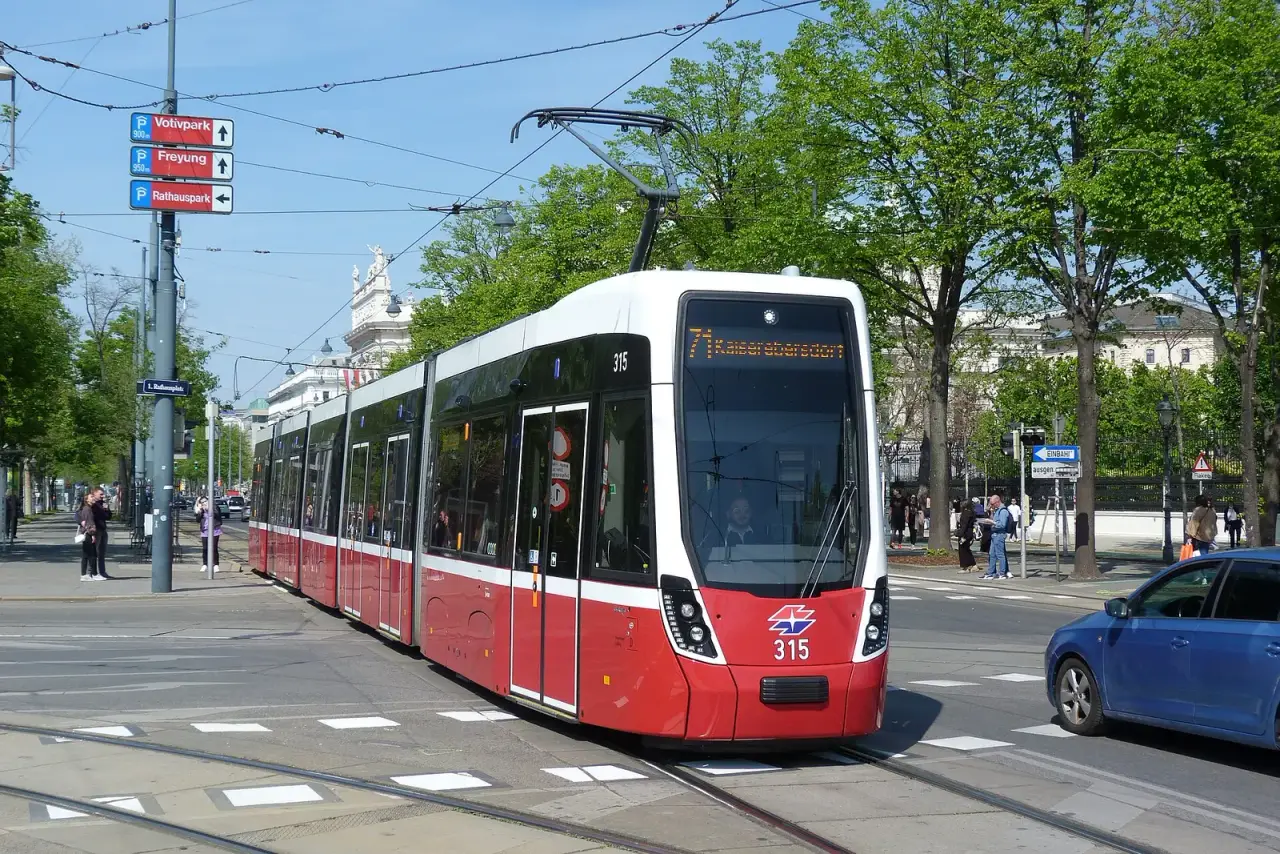
In Vienna, wien.info says low-floor vehicles run on all bus lines and nearly all tram lines (90% of tram journeys), buses carry ramps and every U-Bahn station has step-free access by lift or ramp. Lifts are sometimes out of service, so before you travel you can check on +43 1 7909-100 or on the Wiener Linien's barrier-free pages. For railway journeys, register with the ÖBB Mobilitätsservice (+43 (0)5 1717 5 (Mobilitätsservice, daily 06:00–21:00)) ahead; student tickets in Austrian cities explains local fares.
Ethnic and religious minorities
Ethnic origin has the widest protection of any ground: at work, in access to goods and services including housing, and in education and social protection within federal competence. The Equal Treatment Ombud reads 'ethnic origin' as linked to attributed origin, culture, mother tongue, skin colour, customs or religion, and at its core being treated as someone who does not belong. It accounted for 33% of the cases the office supported in 2024/25, second only to gender. Religion and belief, by contrast, are protected in working life only.
For racist incidents, you can call the Federal Chancellery hotline (0800 222 666), which refers you on, or ZARA (01 929 13 99), which counsels victims and witnesses of racism. For anti-Muslim racism there is also the Dokustelle Österreich in Vienna (+43 676 40 40 005), a civil-society documentation and counselling service whose site lists counselling in English and Turkish. Crimes go to any police station; the discrimination guide explains hate crime and housing cases.
As a factual reference only: the Islamic Faith Community in Austria (IGGÖ) describes itself as a state-recognised religious society, and the Islamgesetz 2015 gives Islamic religious societies the status of recognised religious societies and public-law corporations. It is a religious body, not an equal-treatment office, so complaints go to the offices above. Its work on halal accreditation, which touches daily shopping, is covered in the halal and ethnic shops guide.
Where to get help
| Organisation | What it does | Contact | Cost |
|---|---|---|---|
| Gleichbehandlungsanwaltschaft (GAW) | Advice and support on GlBG discrimination: gender, ethnic origin, religion, age, sexual orientation | 0800 206 119; online form in German and English | Free |
| Behindertenanwaltschaft | Advice and support on disability discrimination at work and elsewhere; can run the conciliation procedure for you | 0800 80 80 16 (daily 09:00–12:00) | Free |
| Federal Chancellery hotline | Hears cases based on ethnic origin, descent or religion and refers you to the right body | 0800 222 666, weekdays | Free |
| ZARA | Counselling for victims and witnesses of racism; documents incidents | 01 929 13 99 | Free counselling |
| Dokustelle Österreich | Documentation and counselling on anti-Muslim racism; English and Turkish among its languages | +43 676 40 40 005; Marxergasse 24/2, 1030 Vienna | Not stated on its site |
| Gewaltschutzzentren | Protection and support after domestic violence or stalking; court applications, interpreters | One in every Land; the police can point you to yours | Free and confidential |
| Frauenhelpline gegen Gewalt | First and crisis counselling for women, with referral to local services | 0800 222 555, around the clock | Free, anonymous |
| COURAGE* counselling centres | Counselling on sexuality, same-sex lives, trans and inter topics, violence | Centres in eight cities; site in English and Turkish | Free and anonymous; waiting list |
| ÖH referate | Referat für ausländische Studierende und antirassistische Politik, Queer-Referat, Referat für Barrierefreiheit, Referat für feministische Politik | oeh.ac.at/referate; your own ÖH | Free counselling at the foreign-students referat; check the others |
| Volksanwaltschaft | Complaints about how an authority handled your case, for example a delayed permit | 0800 223 223 (Monday to Friday, 08:00 to 16:00) | Free of charge |
Which line answers in which language
Only what each office publishes is listed; where nothing is stated, ask at the start of the call.
| Office | Languages as published | Other ways in |
|---|---|---|
| Frauenhelpline | Several languages as needed; the ministry page does not list them | Online chat (HelpCh@at) on weekday evenings at haltdergewalt.at |
| Frauenservice (women's ministry) | English, Spanish, Turkish and Kurdish where needed, besides German | Telephone, e-mail or post |
| Gewaltschutzzentren | Native-language counselling or an interpreter where needed | You can contact them directly |
| Dokustelle Österreich | Albanian, Arabic, Bosnian/Serbian/Croatian, English, German, Italian, Kurdish (Kurmanji), Russian, Somali, Chechen and Turkish | Online reporting form; telephone |
| Gleichbehandlungsanwaltschaft | Reporting and contact form in English; leaflets in English, Turkish and other languages; the hotline's languages are not stated on the pages read | Telephone Monday to Thursday 09:00 to 15:00, Friday 09:00 to 12:00; five regional offices |
| Behindertenanwaltschaft | Not stated | Written enquiry by contact form or e-mail; consultation days in every Land and online |
In practice: reporting an incident
A report to the police and a complaint to an equal-treatment office are separate steps, and you can do both. The Federal Criminal Police Office describes the police side like this:
Decide whether it is a crime
The police take reports only of criminal or administrative offences. If unsure about something online, send a description to the cybercrime reporting office ([email protected]) for an assessment; it does not replace a report.
Go to any police station
Every Polizeiinspektion takes a report, and an online report is currently possible only for theft. Bring time, an official photo ID, dated notes and screenshots (printed or on a USB stick) and, if easy, the device concerned; delete or alter nothing. The page does not say whether an interpreter is provided, so ask on arrival.
Expect these questions
Where and when, who is affected, what you know about the perpetrator, what happened, and whether anyone was hurt or lost money. Medical records of injuries help.
Afterwards
The police document the report and investigate; a specialised unit may take over and contact you. The file then goes to the public prosecutor, who closes the case, orders more investigation or brings charges; as a victim you are told when a case is closed or charged.
Report discrimination separately
The Gleichbehandlungsanwaltschaft takes reports online in German and English. The Dokustelle and ZARA run online forms for racism, and the Interior Ministry points to the police and the BanHate app for hate postings.
If something happens
Get safe first
In danger, call 133 or 112. Afterwards, the Opfer-Notruf (0800 112 112) and the European victim helpline (116 006) give support and referral.
Record it
Note date, time and place, witnesses and their contact details; keep screenshots, messages and adverts.
Pick the right door
Violence: police, then a Gewaltschutzzentrum or the Frauenhelpline. Discrimination at work, in housing or services: the Gleichbehandlungsanwaltschaft. Disability: the Behindertenanwaltschaft. A university body: the Arbeitskreis or your ÖH. An authority: the Volksanwaltschaft. Unsure: the Federal Chancellery hotline refers you.
Watch the clock
A dismissal must be contested within 14 days, a failed application within 6 months, and a disability claim must go through conciliation first. The Gleichbehandlungsanwaltschaft's advice is free, so ask before a deadline passes.
Look after yourself
The ÖH Helpline offers anonymous telephone counselling on 01 585 33 33; mental health support for students lists other options.
Frequently asked questions
Does Austrian law protect me from discrimination because of my religion or sexuality?
Only at work. The Equal Treatment Act covers religion, belief and sexual orientation in employment, including internships and student jobs, but not in housing, shops or services. Ethnic origin and gender are protected in those areas as well.
Can I change my gender marker in Austria as an international student?
In principle, your home country's law decides. For anyone who is neither an Austrian citizen nor a recognised refugee, the law of the country of citizenship governs a change of civil status, although that law may refer back to Austrian law. Where Austrian law does apply, a medical expert opinion is required, and 'divers' is open only to intersex people.
What can I do if my partner threatens me and I do not speak German?
Call 133 or 112. The police can bar the person from your home, and the regional Gewaltschutzzentrum then contacts you and can arrange interpreters. The Frauenhelpline (0800 222 555) is free, anonymous and offers counselling in several languages.
Where do I report racism at a bar, a club or a flat viewing?
Refusal of entry or a flat because of your ethnic origin is covered by the Equal Treatment Act, so contact the Gleichbehandlungsanwaltschaft (0800 206 119) or ZARA (01 929 13 99). Keep screenshots of adverts and messages, and note witnesses.
Who deals with disability discrimination?
The Behindertenanwaltschaft, not the Equal Treatment Ombud. Its advice is free. A court claim under the Disability Equality Act requires a conciliation procedure at the Sozialministeriumservice first.
Is a visa decision or a residence rule covered by the Equal Treatment Act?
No. The Act leaves untouched the rules on entry and residence of third-country nationals and treatment arising from their legal status. For a delayed or badly handled file, a free complaint to the Volksanwaltschaft is the route.
Sources
49 sources, 43 official
- Gleichbehandlungsgesetz (GlBG), I. Teil: Gleichbehandlung von Frauen und Männern in der Arbeitswelt — Gesamte RechtsvorschriftRIS (Rechtsinformationssystem des Bundes) (Official)
- Gleichbehandlungsgesetz (GlBG) — Gesamte RechtsvorschriftRIS (Rechtsinformationssystem des Bundes) (Official)
- Bundes-Behindertengleichstellungsgesetz (BGStG) §§ 2, 4, 5, 6, 9, 10 und 14 — konsolidierte FassungRechtsinformationssystem des Bundes (RIS) (Official)
- Sicherheitspolizeigesetz § 38a (Betretungs- und Annäherungsverbot zum Schutz vor Gewalt)RIS – Rechtsinformationssystem des Bundes (Official)
- Universitätsgesetz 2002 § 42 (Arbeitskreis für Gleichbehandlungsfragen), konsolidierte FassungRechtsinformationssystem des Bundes (RIS) (Official)
- Universitätsgesetz 2002 § 94 (Angehörige der Universität), konsolidierte FassungRechtsinformationssystem des Bundes (RIS) (Official)
- Universitätsgesetz 2002 § 44 (Anwendung des B-GlBG)RIS (Rechtsinformationssystem des Bundes) (Official)
- Strafgesetzbuch § 33 (Besondere Erschwerungsgründe)RIS (Rechtsinformationssystem des Bundes) (Official)
- Strafgesetzbuch § 283 (Verhetzung), konsolidierte FassungRechtsinformationssystem des Bundes (RIS) (Official)
- Niederlassungs- und Aufenthaltsgesetz (NAG) § 2 Abs. 1 Z 9 (Familienangehöriger) und § 8 Abs. 1 Z 12 (Aufenthaltsbewilligung), konsolidierte FassungRechtsinformationssystem des Bundes (RIS) (Official)
- Presseinformation G 258/2017 ua: Unterscheidung zwischen Ehe und eingetragener Partnerschaft verletzt DiskriminierungsverbotVerfassungsgerichtshof (VfGH) (Official)
- Eheschließung in Österreich ohne Wohnsitzoesterreich.gv.at (Federal Ministry of Justice) (Official)
- Änderung der Geschlechtszugehörigkeitoesterreich.gv.at (Federal Ministry of the Interior) (Official)
- LGBTQIA+Gleichbehandlungsanwaltschaft (federal Equal Treatment Ombud) (Official)
- Geschlecht (Themenseite Geschlechterdiskriminierung)Gleichbehandlungsanwaltschaft (federal Equal Treatment Ombud) (Official)
- (Sexuelle) BelästigungGleichbehandlungsanwaltschaft (federal Equal Treatment Ombud) (Official)
- Rassismus/EthnieGleichbehandlungsanwaltschaft (federal Equal Treatment Ombud) (Official)
- Religion oder WeltanschauungGleichbehandlungsanwaltschaft (federal Equal Treatment Ombud) (Official)
- Kontakt — Beratung und Vorfall meldenGleichbehandlungsanwaltschaft (Federal Equal Treatment Ombud) (Official)
- Gleichbehandlungsbericht für die Privatwirtschaft 2024 und 2025, Teil II — Anwaltschaft für Gleichbehandlung (III-399 der Beilagen XXVIII. GP)Parlament der Republik Österreich / Gleichbehandlungsanwaltschaft (Official)
- Hotline gegen Diskriminierung und IntoleranzBundeskanzleramt Österreich (Official)
- ZARA — Zivilcourage und Anti-Rassismus-Arbeit, BeratungsstellenZARA (Institutional)
- Gleichbehandlungsgebot und Diskriminierungsverbot im Studium – Anlaufstellen und BesonderheitenOmbudsstelle für Studierende (Bundesministerium für Frauen, Wissenschaft und Forschung) (Official)
- Stelle zur Bekämpfung von Diskriminierungen - AntidiskriminierungsstelleStadt Wien (Official)
- MeldestellenBundesministerium für Inneres (BMI) (Official)
- Wie erstatte ich AnzeigeBundeskriminalamt (Austrian Federal Criminal Police Office) (Official)
- Barrierefrei StudierenTU Wien (Official)
- Barrierefrei Studieren (Team Barrierefrei)Universität Wien (Official)
- Universitätsgesetz 2002 § 59 (Rechte und Pflichten der Studierenden), konsolidierte FassungRechtsinformationssystem des Bundes (RIS) (Official)
- Vorurteilskriminalität – Hass im Netz bekämpfenBundesministerium für Inneres (Öffentliche Sicherheit 5-6/2022) (Official)
- Frauenhelpline gegen Gewaltoesterreich.gv.at (Federal Chancellery) (Official)
- Beratung für Verbrechensopferoesterreich.gv.at (Federal Chancellery) (Official)
- HalalIGGÖ (Islamische Glaubensgemeinschaft in Österreich) (Institutional)
- Islamgesetz 2015 § 1 (Körperschaft öffentlichen Rechts)Rechtsinformationssystem des Bundes (RIS) (Official)
- Dokustelle Österreich (Dokumentations- und Beratungsstelle Islamfeindlichkeit und antimuslimischer Rassismus)Dokustelle Österreich (Institutional)
- Häusliche Gewalt/Gewalt in der Privatsphäre und Stalking (Gewaltschutzzentren)Bundesministerium für Frauen, Wissenschaft und Forschung (BMFWF) (Official)
- Frauenhäuser und andere SchutzunterkünfteBundesministerium für Frauen, Wissenschaft und Forschung (BMFWF) (Official)
- Frauenhelpline gegen Gewalt - 0800 222 555Bundesministerium für Frauen, Wissenschaft und Forschung (BMFWF) (Official)
- Frauenservice 0800 20 20 11Bundesministerium für Frauen, Wissenschaft und Forschung (BMFWF) (Official)
- Sexuelle Gewalt (Frauenberatungsstellen)Bundesministerium für Frauen, Wissenschaft und Forschung (BMFWF) (Official)
- Anwältin des Bundes für Gleichbehandlungsfragen für Menschen mit Behinderungen (Bundesbehindertenanwältin)oesterreich.gv.at (Federal Ministry of Labour, Social Affairs, Health, Care and Consumer Protection) (Official)
- Rechtsdurchsetzung im Diskriminierungsfalloesterreich.gv.at (Federal Ministry of Labour, Social Affairs, Health, Care and Consumer Protection) (Official)
- Referate der ÖH-BundesvertretungÖsterreichische Hochschüler_innenschaft (ÖH) (Official)
- COURAGE Beratungsstellen: AngeboteCOURAGE* (Partner*innen-, Familien- und Sexualberatungsstellen) (Institutional)
- LGBTIQ: Lesben, Schwule, Bisexuelle, transgender, intergeschlechtliche und queere Menschen in Wien (WASt)Stadt Wien (Official)
- HOSI Wien (Homosexuelle Initiative Wien)HOSI Wien (Institutional)
- Barrierefrei unterwegs durch Wien (Öffis)WienTourismus (wien.info) (Institutional)
- MobilitätsserviceÖBB (Official)
- Beschwerdewegweiser – VolksanwaltschaftVolksanwaltschaft (Official)