Austria concentrates its higher education into a handful of places, and they are not interchangeable. Vienna holds 55% of all public-university students in the country; Leoben holds fewer than three thousand. The most common mistake international applicants make is to pick a city first and then look for a programme in it — which usually means applying to a weaker fit, or to a programme that does not exist there.
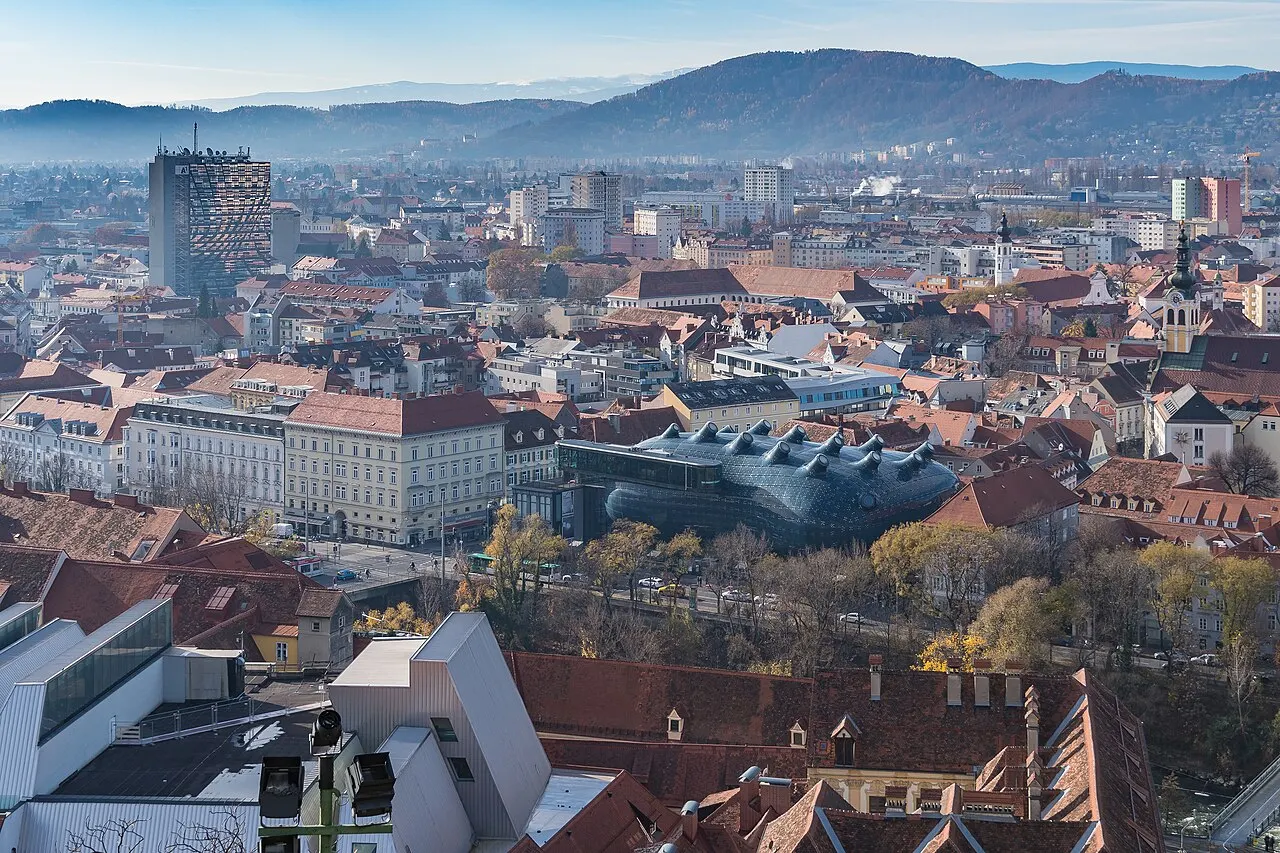
The second most common mistake is to rule out Vienna on cost. That does not survive contact with the national Studierenden-Sozialerhebung, the student social survey run for the science ministry, which asks students what they actually pay. Its 2025 round put housing at smaller higher education locations at €630 per month — the highest of any location group in Austria — against €596 per month in Vienna, €604 per month in Klagenfurt and €545 per month in Graz, on a national average of €586 per month. This page compares the main student cities on what genuinely differs between them; for everything else, start from the complete guide to studying in Austria.
Austria's eight student cities compared
The eight below are the seven cities with a public university teaching regular degree programmes, plus St. Pölten, the largest Austrian city whose higher education is entirely non-university. They are not the only places you can study: Krems and Wiener Neustadt each host several thousand Fachhochschule students, and the student survey groups both with St. Pölten in its "smaller locations" category. Student numbers below are degree students at public universities by place of study, winter semester 2025/26, with Fachhochschule figures given separately because the two sectors are counted differently. Housing figures are the 2025 survey averages for students who do not live with their parents, recorded by the location of the institution rather than the student's home.
| City | Institutions | Students | Average housing cost (2025) | Where the campuses are | The honest trade-off |
|---|---|---|---|---|---|
| Vienna (2,040,914 residents) | University of Vienna, TU Wien, WU, BOKU, MedUni Vienna, Vetmeduni and the three public arts universities; FH Campus Wien, FH Technikum Wien, FHWien der WKW, FH des BFI Wien and Lauder Business School; seven of Austria's nineteen private universities, more than any other city | 148,813 students; a further 18,750 students at Fachhochschulen | €596 per month | Faculties scattered across the whole city, all reachable on the U-Bahn, tram and bus network | Every subject is available and there is a large international community — but the housing search is the hardest in the country |
| Graz (306,971 residents) | University of Graz, TU Graz, Medical University of Graz, University of Music and Performing Arts Graz; FH JOANNEUM, FH CAMPUS 02 | 41,604 students; 5,673 students at FH JOANNEUM and 1,462 students at CAMPUS 02 | €545 per month | A compact university quarter; FH JOANNEUM's other campuses are in Kapfenberg and Bad Gleichenberg | The cheapest housing of any large Austrian city and a compact student town — in a city far smaller than Vienna, with a correspondingly smaller job market |
| Linz (214,272 residents) | Johannes Kepler University, University of Art and Design Linz, IT:U; Anton Bruckner and Catholic private universities; FH Oberösterreich and FH Gesundheitsberufe OÖ | 24,177 students; only 703 students of FH Oberösterreich's 5,539 students are on its Linz campus, plus 1,641 students at the health-professions FH | €573 per month | JKU sits on the northern edge of the city; FH Oberösterreich teaches informatics at Hagenberg, engineering at Wels and business at Steyr, while FH Gesundheitsberufe OÖ has its head office and most of its teaching sites in Linz | Technical, artistic and digital options in one mid-sized city — but the Fachhochschule that carries the region's name teaches most of its subjects elsewhere |
| Salzburg (157,834 residents) | University of Salzburg, Mozarteum; Paracelsus Medical Private University; FH Salzburg | 14,077 students; 3,531 students at FH Salzburg | €584 per month | University faculties in the city; FH Salzburg's main campus is at Urstein in Puch, about 18 minutes by train from the main station | Strong in music, the arts and the life sciences — but the largest Fachhochschule campus is a train ride outside the city |
| Innsbruck (132,820 residents) | University of Innsbruck, Medical University of Innsbruck; MCI – Management Center Innsbruck, fh Gesundheit | 30,599 students, of whom 16,036 students hold a foreign passport; 3,760 students at MCI and 1,507 students at fh Gesundheit | €575 per month | Unusually compact: university, medical university and MCI are all inside the city, on the tram and bus network | The highest share of foreign citizens of any Austrian university location, 52.4% — though most hold another EU passport |
| Klagenfurt (105,734 residents) | University of Klagenfurt; Gustav Mahler Private University for Music; FH Kärnten | 8,475 students; 3,099 students across FH Kärnten's four Carinthian campuses | €604 per month | The university is on the western edge of the city on the main bus route; FH Kärnten's largest campus is in Villach, not Klagenfurt | Small, calm and lakeside, with one compact campus — and the second-highest student housing costs of any location in the survey |
| Leoben (24,455 residents) | Montanuniversität Leoben — the only higher education institution in the town | 2,798 students | €531 per month | A single campus, in much the smallest of the eight towns | The lowest housing costs of any location in the survey — but only worth considering if your subject is mining, materials, metallurgy, energy or industrial logistics |
| St. Pölten (60,112 residents) | USTP – University of Applied Sciences St. Pölten (formerly FH St. Pölten), New Design University, Bertha von Suttner Private University. No public university | 3,825 students at USTP | €630 per month (survey group of smaller locations) | USTP teaches on one campus at Campus-Platz; the city is a stop on ÖBB's Western Line between Vienna and Salzburg | Applied media, digital technology and rail engineering taught in a small city — with the survey's highest housing costs and almost no research-university options |
Austria's university cities and their housing costs
Average € per month for students' housing · 2025
| City | Value |
|---|---|
| Vienna | €596 |
| Graz | €545 |
| Linz | €573 |
| Salzburg | €584 |
| Innsbruck | €575 |
| Klagenfurt | €604 |
| Leoben | €531 |
Source: BMFWF / IHS. Map: Natural Earth. Last checked:
Image (PNG)Choose the programme first, the city second
This is the single most important thing on this page. Austria is a small country with a small number of institutions, and most subjects are concentrated in one or two of them: veterinary medicine is taught at one university, in Vienna; mining and metallurgy at one, in Leoben; the full range of arts and humanities essentially at the four large general universities. The national programme database lists over 2,500 degree programmes, of which only around 600 programmes are taught in English. Once you filter for your subject, your degree level, your language and the entry requirements you can actually meet, the list of cities usually chooses itself.
Work outwards in that order: find the programmes that fit, check admission and deadlines in the admissions guide, then use this page to judge the cities left standing. Reversing it — settling on Vienna or Graz and then hunting for something to study there — is how applicants end up in a programme they did not want, in a language they cannot yet work in.
Vienna: the largest choice, and the hardest housing market
Vienna is the default for a reason. It holds 148,813 students public-university students — 55% of the national total — plus 18,750 students at Fachhochschulen and more private universities than any other Austrian city. It also holds by far the largest international community: 55,876 students of Austria's foreign degree students at public universities study there. Practically, that means more English-taught master's programmes, more societies and student groups in your own language, more opportunity to find part-time work, and the widest range of subjects anywhere in the country.
The cost is the housing search, not the housing price. Vienna's student halls are the most expensive in Austria at €522 per month, which the survey's authors attribute to the number of commercial operators there — yet Vienna's overall student housing average of €596 per month sits barely above the national €586 per month, because so many Viennese students share flats. What is genuinely hard is finding a room at all in September, when tens of thousands of new students arrive at once. Start months earlier than feels necessary: finding accommodation in Vienna deals with the city specifically, and our Vienna city guide covers districts and daily life.
Are smaller cities actually cheaper?
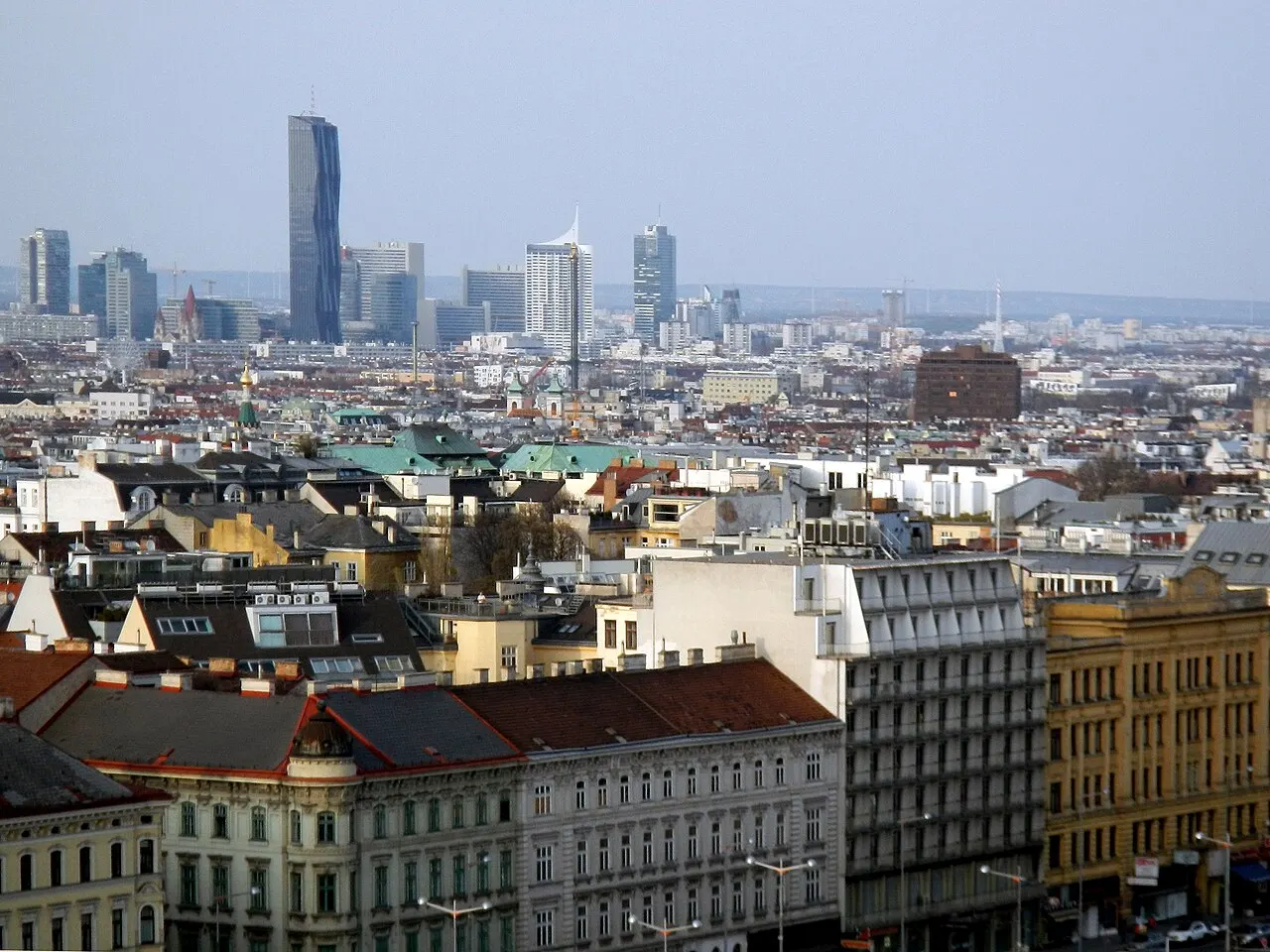
Usually not, and this is the finding most guides get wrong. In the 2025 survey, students at institutions in smaller locations — St. Pölten, Krems, Dornbirn, Wiener Neustadt, Kufstein and similar — paid €630 per month a month for housing, more than in any large city, and above the national average of €586 per month. Students living alone in those locations paid the most of anyone in the country. Graz, the second-largest student city, was the cheapest of the large locations at €545 per month; Leoben, at €531 per month, was the cheapest of all. Salzburg, at €584 per month, came in just under the national average rather than above it. The full location table is in our comparison of living costs across Austrian cities.
Two things explain the pattern, and both matter when you read any city cost comparison. First, the survey records where the institution is, not where the student lives, so each average describes a student body rather than a rental market — a student enrolled at FH Salzburg but living in Puch counts towards Salzburg. Second, the averages reflect how students in each place live: where many share a flat or take a hall place the figure falls, and where more live alone or with a partner it rises. Klagenfurt's high figure of €604 per month comes largely from its unusually high share of students living with a partner. Small towns have fewer shared flats and fewer halls, so more students end up in their own flat — the most expensive way to live anywhere.
Vienna, Graz or Innsbruck: three monthly budgets
Worked examples for a non-EU student at a public university, 2026
| Vienna · hall of residence | Graz · shared flat | Innsbruck · living alone | |
|---|---|---|---|
| Living costs per month | €1,186 | €1,170 | €1,332 |
| With tuition, ÖH fee and insurance | €1,390 | €1,375 | €1,537 |
| Of the living costs: transport pass | €25 | €33.25 | €29.45 |
| Cash around arrival: permit, fees, deposit, first rent | €2,616 | €3,042 | €3,706 |
Living costs per month
- Vienna · hall of residence
- €1,186
- Graz · shared flat
- €1,170
- Innsbruck · living alone
- €1,332
With tuition, ÖH fee and insurance
- Vienna · hall of residence
- €1,390
- Graz · shared flat
- €1,375
- Innsbruck · living alone
- €1,537
Of the living costs: transport pass
- Vienna · hall of residence
- €25
- Graz · shared flat
- €33.25
- Innsbruck · living alone
- €29.45
Cash around arrival: permit, fees, deposit, first rent
- Vienna · hall of residence
- €2,616
- Graz · shared flat
- €3,042
- Innsbruck · living alone
- €3,706
Scholway's worked examples from the 2025 student survey and 2026 prices. Only the Vienna housing figure is city-specific; Graz and Innsbruck use the national average for their type of housing, which drives most of the difference.
Source: BMFWF / IHS, VOR, Verbundlinie +5 more. Last checked:
Image (PNG)What you trade away outside the big cities
The honest case against a small city has little to do with rent. It is about the thickness of everything else:
- Less English in daily life. The largest institutions run English-taught programmes and English-speaking international offices; the bakery, the letting agent, the doctor's receptionist and the residence authority do not. Outside Vienna and the big university cities you will use German sooner and more often.
- Smaller international communities. Innsbruck is the exception, with 52.4% of its public-university students holding a foreign passport — but nearly nine in ten of those hold another EU passport, so the non-EU community is smaller than the headline share suggests. In small towns the non-EU community can be very small indeed, which matters for food shopping, religious life and simply not being the only one.
- Fewer part-time jobs. Student jobs cluster where the employers are. A town of 24,455 people has a thin market for the flexible evening and weekend work students rely on, and almost all of it requires German. See finding a student job in Austria before you assume you can earn your way through.
- Thinner everything else. Fewer specialist doctors, fewer societies, fewer flights home. None of it is decisive alone; together it decides whether you are still happy there in your third semester.
Against that, small cities offer a real academic advantage: smaller cohorts, easier access to teaching staff, departments where the professors know who you are. That follows directly from the numbers in the table above, and if you learn well in that environment it can outweigh the whole list.
The specialists: Leoben and St. Pölten
- MontanuniversitätMontanuniversität Leoben
- Austria's mining university, and the only public university in Leoben. It covers the full chain from raw materials to processing: mining and tunnelling, applied geosciences, metallurgy, materials science, petroleum engineering, industrial energy technology, polymer engineering and industrial logistics. It is a public university under the same law and the same fee scale as the University of Vienna — small, but not a lesser institution.
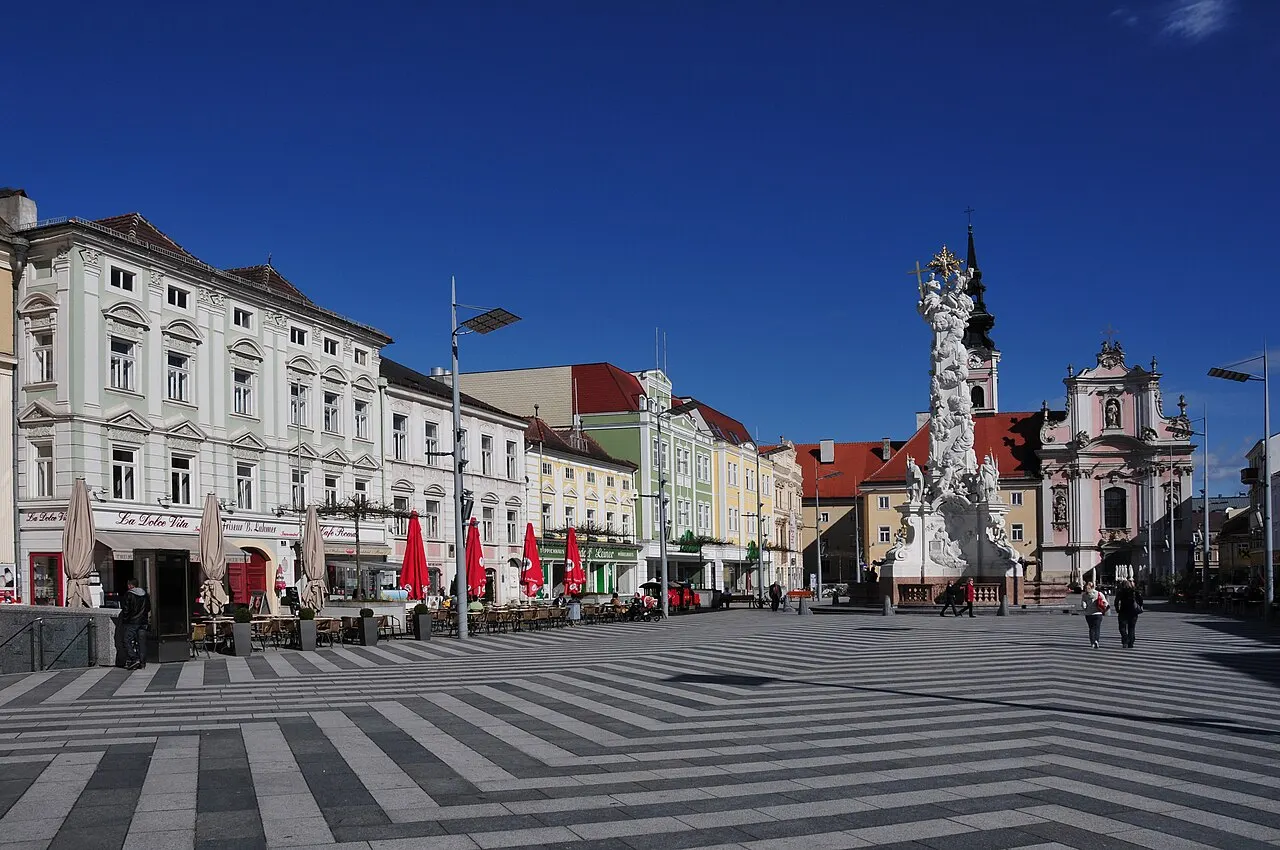
Leoben suits you if your field is on that list and almost nobody otherwise. With 2,798 students in a town of 24,455 residents, roughly one resident in nine is a student, and the university's concentration on a single industrial field is the whole point of going. It is not a place to study business or humanities and hope to transfer later — the Leoben city guide is honest about who thrives there. Note that the university's own website rounds its student body to about 3,000; the figure used here is the national statistics count for Leoben as a place of study, which counts each student in Austria once.
St. Pölten is a different kind of specialist. It has no public university at all: its main institution is USTP, the university of applied sciences formerly called FH St. Pölten, with 3,825 students degree students across media, digital technologies, informatics and AI, security, rail engineering, health and social work, alongside the small New Design University and Bertha von Suttner Private University. Fachhochschule programmes are vocational by design, with fixed timetables and close ties to employers — an excellent fit if you want to enter the Austrian labour market, and a weaker one if you are aiming at a research career. The guide to Austria's Fachhochschulen explains the sector, and the St. Pölten guide covers the city. On the name: § 8 of the Fachhochschulgesetz gives any Fachhochschule accredited under the quality-assurance act the right to call itself either a Fachhochschule or a Hochschule für Angewandte Wissenschaften, and several have switched — St. Pölten's old fhstp.ac.at address now redirects to ustp.at. Only the name changes: the accreditation, the degrees and the fee rules are the same.
Can you live in one city and study in another?
Rarely, and you should not plan on it. Austrian intercity rail is fast and frequent — St. Pölten, for instance, sits on the Western Line between Vienna and Salzburg — and a few corridors genuinely work as commutes, such as St. Pölten to Vienna or Wels and Steyr to Linz. Most attempts fail on the timetable rather than the journey: laboratory sessions, seminars with compulsory attendance and the fixed weekly schedules of Fachhochschule programmes leave little room for a long round trip, and a missed connection can cost you an attendance mark.
Where it does work, the economics depend on which ticket you hold, and those rules change: the annual nationwide travel pass and the semester tickets sold by each city have different age limits, prices and conditions. Check them in the KlimaTicket guide and student transport tickets by city before assuming a commute is affordable, and see the transport section for how the networks fit together. Note too that your registered address decides which residence authority handles your permit, so crossing a provincial border is an administrative event, not just a longer journey.
In practice: your first week, city by city
The cities differ less in price than in small daily mechanics: where a student pass is sold, whether the last bus runs after a late seminar, and how far the campus is from the station. The table gathers what each city's own operator, city or university says; the city guides give the sources and the caveats, and timetables change, so treat the night-service column as a pattern to confirm in the operator's app.
| City | Where tickets are sold | Late at night | Station to campus |
|---|---|---|---|
| Vienna | Multilingual machines in U-Bahn stations, most Trafiken and the WienMobil app; stamp a paper ticket at the blue validators in front of U-Bahn and S-Bahn entrances | U-Bahn all night on Friday, Saturday and pre-holiday nights every 15 minutes; otherwise Nightline buses from about 00:30 every 30 minutes | University of Vienna main building: U2 to Schottentor. TU Wien Admission Office: U4 to Karlsplatz |
| Graz | GrazMobil app, machines on trams and at stops, about 100 kiosks; Top-Ticket in the ÖBB shop and apps and at the Graz Linien Service Center | Night buses N1 to N8 on Friday, Saturday and pre-holiday nights, starting at 00:30 from Jakominiplatz | Main building at Universitätsplatz 3; the campus is spread over several nearby buildings |
| Linz | LinzMobil app or the Infocenter at Hauptplatz 34; the student pass needs a printed enrolment proof, the Meldezettel, a photo and photo ID | Three night lines on Friday, Saturday and pre-holiday nights, about 00:20 to 05:00 every 30 minutes | JKU: tram 1 or 2 to the last stop, from about 16 minutes from Hauptplatz |
| Salzburg | KlimaTicket Salzburg ordered through Salzburg Verkehr | Obus until 01:00 on Friday, Saturday and pre-holiday nights; BusTaxi and Night S-Bahn after that | Unipark Nonntal: bus 5 or 25 to Justizgebäude, or bus 20 |
| Innsbruck | VVT Ticket App for MCI and University of Innsbruck students; order form by email for others; VVT and IVB customer centre | Nightliner is included in the semester tickets; city taxi services 22:00 to 04:00 at a fixed €7 per trip | Campus Innrain: stop Klinik/Universität |
| Klagenfurt | Kärntner Linien app (the Semesterticket U26 is digital only), webshop, customer office at Bahnhofplatz 5 | Announced in 2023: lines until about 23:30, until about 01:30 on Friday, Saturday and the day before holidays | Line C from the main station via Heiligengeistplatz to the university |
| Leoben | On the bus, at the Stadtwerke Leoben Service Center, at station ticket machines and in Trafiken | No evening service listed; the Rufbus runs to 18:00 on weekdays and 16:00 on Saturdays | University less than 5 minutes on foot from the station |
| St. Pölten | VOR ServiceCenter at BahnhofCity Wien West, stations and ticket machines, VOR and ÖBB apps | Not verified for this guide | USTP: 10 to 15 minutes on foot, or about 5 minutes by bike |
Two patterns follow. First, the big cities with an all-night U-Bahn or Nightline are a different proposition from the small ones, where the last bus can be before midnight; if your plan involves evening work or lab sessions, read the late-night column before the rent column. Second, who may buy the student pass differs by city, as the student-tickets guide explains in full, so check the proof you need before you queue.
German decides more than the city does
German is Austria's official language and the predominant language of instruction. English-taught programmes exist — around around 600 of them — but they are concentrated at master's level and at the larger institutions, and they are a small minority of what is on offer. Even inside an English-taught programme, the administration, your residence permit appointment, your tenancy agreement and any part-time job will run in German.
This interacts with city choice more than applicants expect. In Vienna you can survive a first year in English while you learn; in Klagenfurt, Leoben or St. Pölten that margin is much thinner. Starting from no German, either choose a large city or accept that language learning is part of the first year rather than something to postpone. What the universities require is in language requirements for Austrian universities; learning German as a student in Austria covers courses and everyday practice.
How to narrow it down
List the programmes, not the cities
Search the national database by subject, degree level and language of instruction. Whatever cities come back are your real shortlist — see Austria's universities and other institutions for how the sectors differ.
Check the entry requirements you can actually meet
Access-regulated programmes, entrance examinations and language certificates eliminate options faster than cost does. Check each one against the admission requirements guide.
Price the city you would actually live in
Treat the survey averages above as a floor, not a target, and add tuition and insurance: the full cost of studying in Austria and worked student budgets turn this into a monthly figure.
Test the housing market before you commit
Search hall and flat listings for that city now, out of season. If nothing is available in a quiet month, September will be worse — arranging accommodation before you arrive explains the sequence.
Be honest about German and about jobs
If your plan depends on part-time earnings, weigh the local labour market and the rules in working alongside your studies. If your German is weak, weight the larger cities.
Read the city guides for the two or three places left on your list — Vienna, Graz, Linz, Salzburg, Innsbruck, Klagenfurt, Leoben and St. Pölten each have one — and then decide on the programme.
Frequently asked questions
Which is the cheapest city to study in Austria?
On the 2025 national student survey, Leoben had the lowest average student housing costs at €531 per month, followed by Graz at €545 per month. Smaller locations such as St. Pölten and Krems were the most expensive at €630 per month, above Vienna's €596 per month. Tuition and the ÖH fee are set nationally and do not vary by city at public universities.
Is Vienna too expensive for international students?
Not on the housing evidence. Students at Vienna institutions averaged €596 per month a month for housing, close to the national average of €586 per month and below several smaller locations, because so many share flats. Vienna's student halls are the country's most expensive at €522 per month, and the real difficulty is finding any room in September rather than the price of it.
Vienna or Graz — which is better for international students?
Vienna offers far more programmes, the largest international community and the best part-time job market; Graz is cheaper for housing, more compact and easier to search for a room in. If your subject is taught in both and you are confident about housing, the decision comes down to whether you want a capital city or a student town. Both are covered in detail in our Vienna and Graz city guides.
Can I study in Austria without speaking German?
In some programmes, yes: around around 600 degree programmes are taught in English, mostly at master's level and mostly at the larger institutions. Daily life is another matter — administration, tenancy agreements, residence-permit appointments and almost all student jobs run in German, and that gap is widest in the smaller cities.
Which Austrian city has the most international students?
Vienna in absolute numbers, with 55,876 students foreign degree students at its public universities. Innsbruck has the highest proportion, at 52.4% of its public-university students — though the great majority of those hold another EU passport rather than coming from outside Europe.
Do I have to live in the city where I study in Austria?
No, and there is no rule requiring it, but daily commuting between cities works only on a few short corridors such as St. Pölten to Vienna. Compulsory attendance at laboratory sessions and seminars, and the fixed timetables of Fachhochschule programmes, make longer commutes impractical. Your registered address also determines which authority handles your residence permit.
Sources
35 sources, 27 official
- Ordentliche Studierende an öffentlichen Universitäten im Wintersemester 2025/26 (Tabellenband, Tabellen 1, 4 und 5)Statistik Austria (Official)
- Ordentliche Studierende an Fachhochschulen im Wintersemester 2025/26 (Tabellenband, Tabellen 1 und 2)Statistik Austria (Official)
- Belegte ordentliche Studien an Privathochschulen 2025/26 nach Studienart und Hochschule (Tabelle 1)Statistik Austria (Official)
- Bevölkerung am 01.01.2026 nach Katastralgemeinden (Gebietsstand 01.01.2026)Statistik Austria (Official)
- Bevölkerung zu Jahres-/QuartalsanfangStatistik Austria (Official)
- Universitätsgesetz 2002 (UG) § 6 Geltungsbereich — the statutory list of Austria's 22 public universitiesRIS — Rechtsinformationssystem des Bundes (Official)
- Facts & FiguresFH Oberösterreich (Official)
- Locations | FH Gesundheitsberufe OÖFH Gesundheitsberufe Oberösterreich (Official)
- Standorte / LocationsFH JOANNEUM (Official)
- Locations — Life on CampusFH Salzburg (Official)
- CU Carinthia University by the NumbersCU Hochschule Kärnten (formerly Fachhochschule Kärnten) (Official)
- About Us — USTP – University of Applied Sciences St. PöltenHochschule für Angewandte Wissenschaften St. Pölten (USTP) (Official)
- Facts and Figures | Technical University of Leoben at a glanceMontanuniversität Leoben (Official)
- Fachhochschulgesetz (FHG), consolidated text — § 8 Abs. 8 (institutional designation)RIS — Rechtsinformationssystem des Bundes (Official)
- Western Line Vienna–SalzburgÖBB-Infrastruktur AG (Official)
- Neues Busnetz und neue Taktung machen Busfahren in Klagenfurt schneller, einfacher und umweltfreundlicherStadtwerke Klagenfurt / Klagenfurt Mobil (KMG) (Institutional)
- Obus Salzburg — Entspannt am Stau vorbeiSalzburg AG (Salzburg Linien) (Institutional)
- Über uns — die Innsbrucker VerkehrsbetriebeInnsbrucker Verkehrsbetriebe (IVB) (Institutional)
- Private Universities — the full list of Austria's accredited private universitiesOeAD — Study in Austria (Official)
- Gustav Mahler Private University for Music (GMPU)OeAD — Study in Austria (Official)
- Campus | Bertha von Suttner PrivatuniversitätBertha von Suttner Privatuniversität St. Pölten (Official)
- Betriebszeiten der Wiener Verkehrsmittel (U-Bahn, Straßenbahn, Bus, Nightline)WienTourismus (wien.info, the Vienna Tourist Board) (Institutional)
- Kontakt & Anfahrt (Universität Wien, Hauptgebäude, Universitätsring 1)Universität Wien (Official)
- Admission Office (Karlsplatz 13, front office hours and directions)TU Wien (Official)
- FAQs on Graz Linien (tickets, ticket machines, GrazMobil app, night buses N1 to N8)Holding Graz (operator of the Graz Linien) (Institutional)
- Nachtverkehr LINZ AG LINIEN (night lines N82, N83, N84 and Nacht-AST)LINZ AG LINIEN (Official)
- Green mobility at JKU (tram directions, journey time, city bike station)Johannes Kepler University Linz (Official)
- Area map (Language Centre contact: how to reach the Unipark Nonntal, Erzabt-Klotz-Straße 1)Paris Lodron University of Salzburg (Official)
- Nachtangebote (Nightliner, Anrufsammeltaxi ASTI and Frauennachttaxi in Innsbruck)Innsbrucker Verkehrsbetriebe (IVB) (Institutional)
- Innrain (Campus Innrain, Innrain 52: location and public transport)Universität Innsbruck (Official)
- Public Buses & Bus on Demand (Leoben city bus lines, Rufbus, fare zone 102, ticket sales points)City of Leoben (Stadtgemeinde Leoben) (Official)
- Contact and travelling to the Montanuniversität LeobenMontanuniversität Leoben (Official)
- Getting Here (USTP campus, Campus-Platz 1: from the station on foot, by bike, by bus and by train from Vienna)USTP – University of Applied Sciences St. Pölten (Official)
- Ticketautomat der Wiener Linien / Tickets (single ticket, validation, where to buy)WienTourismus (wien.info, the Vienna Tourist Board) (Institutional)
- Night S-Bahn, Night Bus, Night Express, Night Star & BusTaxi (night transport in Salzburg)Salzburger Verkehrsverbund (Salzburg Verkehr) (Institutional)