You will need an Austrian or at least a SEPA bank account almost immediately: to pay your first month's rent, receive a scholarship instalment, pass a financial-means check, or get paid for a student job. The paperwork is lighter than most guides suggest. What genuinely costs students money is not the opening process but what happens afterwards — the fees that appear once a student package lapses, and the exchange-rate margin on money sent from home.

What you need to open a bank account
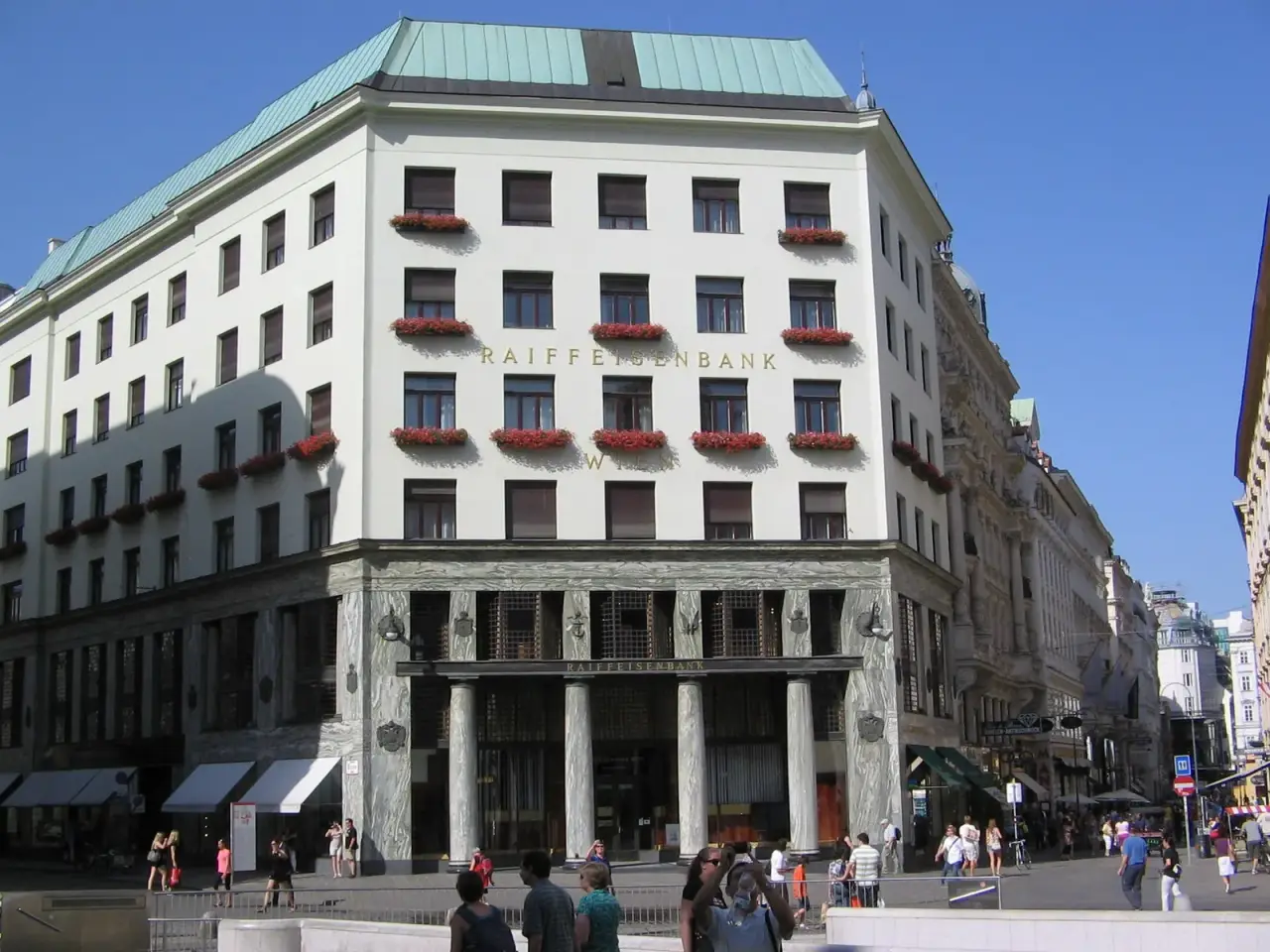
Of Austria's three largest retail banking groups, only Raiffeisen publishes a document checklist for its student account at all, and it asks for two things: a valid photo ID or an ID Austria digital identity, and an Inskriptionsbestätigung — a current confirmation of enrolment — from an Austrian university or Fachhochschule. Erste Bank and Sparkasse's student-account page and UniCredit Bank Austria's both publish no checklist whatsoever. None of the three names a Meldezettel, the confirmation of registered address, as a condition of opening an account.
That matters, because the claim that every Austrian bank demands a Meldezettel is repeated almost everywhere and is not supported by the banks themselves. No Austrian statute requires one to open a bank account. What banks must do is identify you under Austria's anti-money-laundering legislation — the Verbraucherzahlungskontogesetz expressly leaves those duties untouched — and a branch may ask for proof of an address as part of its own onboarding process. Treat an address request as that bank's policy, not as the law, and ask whether another form of proof will do. The same Act also forbids a bank from discriminating against a consumer lawfully resident in the EU who applies for a payment account on grounds of nationality or domicile, among others.
A Meldezettel still matters for plenty of other things, so the sequencing problem is real even if banking is not its sharpest edge. You register your address with the Meldezettel, during your first days in Austria, and that registration needs signed confirmation from whoever is renting you a room or flat — so you normally need accommodation arranged before you can register. A mobile contract and some administrative steps wait on it. Line up temporary accommodation for your first weeks with a landlord willing to sign; the housing guide covers how to arrange that before term starts, and collecting your residence permit card has its own sequence.
Opening a bank account in Austria walks through the paperwork bank by bank, including what changes if you arrive before your residence permit is issued.
The legal right to a basic account (Basiskonto)
If a bank refuses to open an account for you — no credit history, no Austrian employer, an unfamiliar passport — you are not out of options. Under § 23 of the Verbraucherzahlungskontogesetz (VZKG), every consumer lawfully resident in the European Union has the right to open and use a Zahlungskonto mit grundlegenden Funktionen, a basic payment account, at a credit institution established in Austria. The statute's words are "unabhängig von seinem Wohnort" — irrespective of place of residence. The right extends further still, to consumers with no fixed abode, to asylum seekers, and to people with no right of residence who cannot lawfully or practically be deported. The responsible ministry confirms it reaches non-EU nationals holding a right of residence in an EU state, and names students explicitly.
- Basic payment accountBasiskonto / Zahlungskonto mit grundlegenden Funktionen
- A euro debit account with no overdraft: opening and closing, deposits, cash withdrawals at counters and ATMs, direct debits, card payments including online, and transfers and standing orders — all usable an unlimited number of times anywhere in the European Economic Area, not just the EU. A bank must open the account or reject the application within 10 business days of receiving a complete application. A credit card is not included.
The grounds for refusal are narrow and exhaustive: either you already hold a payment account with those services at a credit institution established in Austria (unless you declare that you have been told it is being closed), or you have been charged with or convicted of an intentional criminal offence against that bank or one of its staff. Nothing else qualifies under the VZKG, although the bank must still be able to identify you under anti-money-laundering law. Note the first ground is limited to an Austrian account — holding a German or Lithuanian digital-bank account does not disqualify you. A bank may require you to sign a declaration of honour that you have no such Austrian account, and if it rejects you it must tell you why in writing, and tell you that you can complain to the Finanzmarktaufsichtsbehörde (FMA) or go to the free FIN-NET dispute-resolution network.
On price, be precise about what is law and what is not. The statute caps the annual fee at €80, and at €40 for consumers in groups the social ministry has designated particularly vulnerable — a list that includes students receiving Austrian Studienbeihilfe, people on means-tested social assistance, homeless people and asylum seekers. The VZKG then provides for those amounts to be indexed every two years and republished in the Bundesgesetzblatt. The Sozialministerium's consumer portal states the current ceilings as €83.45 a year and €41.73 a year, so those are the figures to quote back to a bank — but they are the ministry's indexed values rather than the statute's own, and no indexation notice could be traced in the Bundesgesetzblatt itself. Most non-EU students will not hold Studienbeihilfe, which is restricted by nationality, so the standard rate is the relevant one.
A Basiskonto comes with no overdraft and no credit card, but it works for rent, a direct debit and a salary, and the bank may not label it or your card in any way that reveals what it is. If a bank refuses one without a statutory ground, misses the deadline, or charges above the cap, that is an administrative offence the FMA prosecutes. Keep a written record of the refusal, and quote the statute back to the bank when you complain.
Student accounts at the main Austrian banks
"Free" always has conditions attached: an age ceiling, enrolment at an Austrian university or Fachhochschule, and at Bank Austria a balance that stays in credit. What the banks do not publish is just as notable. None of the three states that you must re-submit your enrolment confirmation each year or each semester to keep the account free, and the Arbeiterkammer's own student-account guidance does not mention such a requirement either. Assume your bank may ask, keep a current Inskriptionsbestätigung to hand, and ask your branch directly rather than trusting a figure from a comparison site.
| Bank | Free until | Documents the bank's page names | What the bank's page says happens next |
|---|---|---|---|
| Erste Bank / Sparkasse | 27th birthday | No checklist published | Silent on the account itself; only the Smartcard credit card is stated to convert to non-student conditions |
| Raiffeisen | 27th birthday | Valid photo ID or ID Austria, plus an Inskriptionsbestätigung | Silent; Raiffeisen is a group of independent regional banks, so local conditions can differ |
| UniCredit Bank Austria | 30th birthday | No checklist published; the balance must stay positive | Converts automatically to the standard Online-Konto once the holder turns 30 |
There is no single published national figure for what an ordinary Austrian current account costs per month, and it would be misleading to invent one — Erste and the Sparkassen explicitly refer customers to their local branch, because the price depends on which discount conditions you meet. What is documented is the individual charges. In the Arbeiterkammer's January 2026 survey of Vienna banks, a debit card not bundled into the account price costs up to €38.98 a year; a paper transfer placed at the counter costs up to €4.90 per transfer against nothing to €0.77 online; and being told that a payment bounced for lack of funds costs up to €12.05. Five of the eleven banks surveyed raised prices over the year. Compare the Entgeltinformation — the standardised fee-information sheet every bank must give you before you sign — rather than a headline rate, and do everything in online banking.
- Account statementKontoauszug
- A record of transactions on your account, available at a branch, from a statement printer in the banking hall, or downloadable through online banking. Keep these: a landlord, the tax office or a visa renewal can all ask for several months of them as proof of regular income or rent payment.
In practice: opening online or at a branch, and using the Bankomat
The three large groups describe the route differently, and the differences are worth knowing before you choose. Checked on 28 October 2026: Raiffeisen asks you to pick your regional Raiffeisenbank first, then offers either an online opening (the page says about ten minutes) or a branch appointment booked through its "Beratungstermin vereinbaren" button. Erste Bank and Sparkasse describe an online opening in about seven minutes through the website or the George app; the page does not describe a branch procedure, and its time-limited sign-up bonus applies to online openings but not to an account opened in George at a branch. Bank Austria's page blocked automated access, so its route could not be re-read.
| Route | What the page says | Have ready | What it does not say |
|---|---|---|---|
| Online, Raiffeisen | Choose a regional bank, then "Studentenkonto online eröffnen"; about ten minutes | Photo ID or ID Austria, and an Inskriptionsbestätigung | How identity is verified online; when the card arrives |
| Branch, Raiffeisen | Book a "Beratungstermin" at a branch near you | The same two items | Whether the branch will ask for more under its own policy |
| Online, Erste/Sparkasse | Website or George app; about seven minutes; student must be an ordentliche Hörer:in at an Austrian university or Fachhochschule | A current enrolment confirmation is the safe assumption | The page's own "what do I need" heading is empty, so no document list |
Before you commit, use the Arbeiterkammer's own checklist for student accounts. It tells you to compare the annual total cost, the interest rates and the services included, to read the statutory Entgeltinformation, and to ask about extra charges for counter transactions, paper-based bookings and account statements. It also warns that a start credit or opening gift is used up quickly and should not decide the choice, that a failed standing order or direct debit can cost money, that many student accounts convert to an ordinary current account or lose their benefits at the age limit, and that you should agree an overdraft only for the amount you really need, since going over it adds a surcharge to the debit interest.
The Bankomat itself is simple, and the consumer portal's rules are worth knowing before the first withdrawal. You insert the card and enter the PIN; a contactless withdrawal always requires the PIN. The default limit is €400 per day, and at the foyer machines of your own bank an agreement can raise it to as much as €5,000 per day. Outside Europe, most withdrawals are blocked by the Geo-Control function unless your bank switches it off for your trip, and it switches itself back on afterwards, so ask your bank before any trip outside Europe. If the card is lost or stolen, call the Payment Services Austria blocking hotline on 0800 204 8800 from within Austria or +43 1 204 8800 from abroad, or your own bank. The number is also shown on the start screen of at least some Austrian machines.
Austrian banks versus digital banks
A branch bank account and a digital-only one (N26, Revolut, bunq and similar) solve different problems. The digital banks onboard remotely by video or app, without any Austrian address step, which makes them the practical first account for someone who has not yet arrived. Their downside shows up later: most issue an IBAN registered in the country where they hold their banking licence — commonly Germany, Lithuania or the Netherlands — rather than an Austrian one, and their cards are not accepted everywhere a Bankomatkarte is.
- IBAN
- The International Bank Account Number identifying your account. An Austrian IBAN always has 20 characters and begins AT; a German, Lithuanian or Dutch one does not. For a transfer within the euro area, the EU or the EEA, the recipient's IBAN alone is enough. For a SEPA country outside the EEA, or any country outside SEPA, you also need the recipient bank's BIC — the code also known as the SWIFT code.
Austrian banks versus digital banks goes through the practical trade-offs product by product — which digital banks Austrian landlords and employers accept without friction, deposit protection, and where a hybrid approach (an Austrian account for rent and payroll, a digital one for everyday spending and travel) tends to work best.
Account types at a glance
| Austrian student account | Austrian standard account | Digital bank (N26, Revolut, bunq…) | |
|---|---|---|---|
| Opening requirements | Photo ID and current enrolment proof; no bank's page requires a Meldezettel | Photo ID; a branch may ask for proof of address as its own policy | Passport or ID, remote video/app verification; no Austrian address step |
| IBAN | Austrian (AT) | Austrian (AT) | Usually the provider's home country (e.g. Germany, Lithuania, Netherlands) |
| Typical cost | Free while conditions are met (age limit, current enrolment, sometimes a positive balance) | No single national figure is published; compare each bank's Entgeltinformation | Free basic tier is common; paid tiers add benefits, with card/ATM limits on the free tier |
| Cash access | Usually included, but check — some accounts charge per withdrawal or after a set number | Usually included, with the same caveat | Often limited free withdrawals per month, then a per-withdrawal or percentage fee |
Cash: still central, but no longer free by default
Austria is one of the more cash-attached economies in the euro area, though less so each year. The Oesterreichische Nationalbank's 2025 payment-habits study found cash still accounted for 55% of in-person payments by number — down from 63% in 2022 — and 45% by value, down from 48%. Separately, 94% of people surveyed said they do not want to give cash up, which is a stated preference rather than a measure of behaviour. Some small sellers still prefer or only take cash, and the survey does not say which, so carry some day to day, particularly outside city centres.
Cash still matters in Austria
In-person payments · OeNB payment survey 2025
- Of payments made in cash
- 55%
- By number, in person
- Of the money spent
- 45%
- By value, in person
- Cash share, ages 16 to 29
- 38%
- The rest is paid by card or phone
- Do not want to give up cash
- 94%
- Survey respondents
Keep a card and some cash: small shops, market stalls and some cafés still prefer notes and coins.
Source: OeNB. Last checked:
Image (PNG)
Withdrawing it is where a common assumption has gone out of date. Independent operators charge their own fee on top — Euronet, the one you will most often meet, currently €1.95 per withdrawal, and the Arbeiterkammer reports some processing companies charging as much as €6.50 — shown on screen before you confirm, so you can still cancel. But your own bank's machines are no longer automatically free either. A bank may charge for withdrawals at its own ATMs only where that has been individually agreed with you, yet the Arbeiterkammer found banks increasingly do exactly that, either from the first withdrawal or once a contractually fixed number is exceeded; across the banks it surveyed in January 2026 the per-withdrawal charge ran from nothing to €0.77 per withdrawal, with most still charging nothing. Austria did briefly ban such charges: § 4a VZKG prohibited them until the Verfassungsgerichtshof struck that provision down with effect from 26 October 2018, holding that it violated the banks' constitutional right to property. Read your own account's fee sheet rather than assuming.
- Debit cardBankomatkarte
- Austria's everyday term for a debit card linked to your current account, used for in-store payment and ATM withdrawal (a Bankomat). Most now double as contactless Visa Debit or Debit Mastercard cards, but the Austrian name for the card itself is older than those schemes and still what people ask for.
Cash in Austria goes further into how much cash is still used, what your card and the cash machines will and will not do, and the tipping custom, alongside the rest of your monthly costs.
Sending money into and out of Austria
Whether a transfer is cheap and fast depends almost entirely on whether both ends sit inside SEPA. The Single Euro Payments Area covers the 27 EU member states, Iceland, Liechtenstein and Norway, and also Albania, Andorra, Moldova, Monaco, Montenegro, North Macedonia, San Marino, Serbia, Switzerland, the United Kingdom and Vatican City. Turkey is not in SEPA. Inside it, a euro transfer may not cost more than the equivalent domestic one — the rule the Arbeiterkammer summarises as "SEPA-Überweisungen in Euro dürfen nicht mehr kosten als Inlandsüberweisungen", and which EU guidance states as banks having to charge the same for euro payments across the EU as for equivalent national ones.
A transfer from a Turkish bank to your Austrian account is therefore an ordinary international wire, and its cost has three parts rather than one: the sending bank's fee, a possible deduction by an intermediary bank along the way, and the margin the sending bank adds to the exchange rate it quotes instead of passing on the mid-market rate. The third is usually the largest and is the one you cannot see, because it is never itemised as a fee. Austrian official sources do not publish fee ranges or typical margins for these transfers — the OeNB explains the mechanics but quotes no prices, and the Arbeiterkammer gives none for non-SEPA transfers — so treat any single figure you find, especially one published by a company that sells transfers, as marketing rather than measurement.
The way to compare honestly is to ignore headline fees entirely and ask one question of each provider: for the exact amount you want to send, how many euros will actually arrive? That single number captures the fee, the intermediary deduction and the exchange-rate margin together, and it is the only fair basis for comparing a bank against a transfer app. Ask for it in writing before you commit. Sending money to Austria without losing money sets out how to run that comparison step by step and what to watch for with a Turkish lira transfer specifically.
- Standing orderDauerauftrag
- An instruction to your bank to pay a fixed amount to the same recipient on a repeating schedule — the usual way to pay rent in Austria when the landlord doesn't collect by direct debit. You set it up once in online banking; it keeps running until you change or cancel it, so update it the moment your rent changes.
- Direct debitSEPA-Lastschrift / Einzugsermächtigung
- An authorisation letting a company — a phone provider, insurer or utility — collect a variable amount directly from your account on its own schedule. Under SEPA rules you can reclaim a debit within eight weeks of it being taken, no questions asked, which makes it a reasonably safe way to pay recurring Austrian bills once you trust the biller.
Your account also needs to be ready to receive money, not just send it: a part-time job can only pay you once the employer has your IBAN, and a tax refund needs current account details on file with the tax office. Get the account open and the details into the right systems (university, landlord, employer, FinanzOnline) as early as you can — much of the rest of your move to study in Austria quietly depends on it.
Before you arrive
- Bring your passport and a current Inskriptionsbestätigung (or admission letter if not yet enrolled)
- Arrange at least temporary accommodation so you can register a Meldezettel quickly — needed for other steps, even if no bank's page requires it
- Decide whether you want an Austrian student account, a digital bank, or both from day one
- Check whether your scholarship or family will send money by SEPA transfer (cheap) or from outside SEPA (budget for a fee and an exchange-rate margin)
- Ask each provider what will actually arrive in euros, not what the fee is
- If a bank refuses you, remember the Basiskonto is a legal right, not a favour
Frequently asked questions
Do I need a Meldezettel to open a student bank account in Austria?
No Austrian law requires one, and none of the three largest banks lists a Meldezettel among the requirements on its student-account page — Raiffeisen asks only for a photo ID or ID Austria plus an enrolment confirmation, and Erste and Bank Austria publish no checklist at all. A branch may still ask for proof of an address as part of its own anti-money-laundering process, in which case ask whether another document will do. The statutory basic account is expressly available regardless of where you live.
Can I open an Austrian bank account before I arrive in Austria?
For a full branch account, usually not in practice — most Austrian banks want to verify your identity in person or by video. Some digital banks (N26, Revolut and similar) let you open an account remotely before you travel, which is why many students use one to receive money and pay an initial deposit before adding an Austrian account once settled. The statutory basic account is legally available irrespective of your place of residence, so it is worth asking about if you are refused.
What if no bank will open an account for me?
Ask for a Basiskonto. Under § 23 of the Verbraucherzahlungskontogesetz, any consumer lawfully resident in the EU has the right to one, and the bank must open it or reject the application within 10 business days of a complete application. It may refuse only if you already hold an equivalent account at an Austrian bank or have been charged with or convicted of a deliberate offence against that bank. A refusal must be explained in writing, and you can complain to the FMA or to FIN-NET.
How much can a Basiskonto cost in Austria?
The statute caps the fee at €80 a year, and at €40 for consumers in designated vulnerable groups, which include students receiving Austrian Studienbeihilfe. The social ministry's consumer portal publishes the indexed ceilings as €83.45 a year and €41.73 a year, and those are the figures to cite to a bank. Within that single annual fee the bank may not charge extra for the included services, however often you use them.
Is N26 or Revolut a good replacement for an Austrian bank account?
For everyday spending, often yes. For rent, salary and anything with an Austrian counterparty who insists on a local IBAN it can create friction, even though refusing a foreign EU IBAN for a euro payment breaches Article 9 of Regulation 260/2012. Many students keep both: a digital bank for daily spending and travel, an Austrian account for rent and payroll. Holding a foreign EU account also does not disqualify you from an Austrian Basiskonto, since that exclusion covers Austrian accounts only.
Why do some ATMs in Austria charge a withdrawal fee?
Independent operators such as Euronet charge their own fee — currently €1.95 per withdrawal — under a separate contract you accept on screen before the withdrawal completes. Your own bank's machines are not guaranteed free either: a bank may charge per withdrawal where that was individually agreed with you, and consumer researchers found charges of up to €0.77 per withdrawal at some banks in January 2026, though most still charge nothing. A 2018 constitutional court ruling struck down the statutory ban on such charges.
What is the cheapest way to send money from Turkey to Austria?
There is no single cheapest option, and no Austrian official source publishes comparative figures, so be sceptical of any ranking — particularly one published by a company that sells transfers. The total cost combines the sending bank's fee, any intermediary deduction and the exchange-rate margin, which is usually the biggest part and is never itemised. Ask each bank and transfer service what will actually arrive in euros for your exact amount, and compare those numbers.
Sources
18 sources, 13 official
- Debitkarte (Bankomatkarte)Konsumentenfragen.at (Sozialministerium) (Official)
- Verbraucherzahlungskontogesetz (VZKG) — Bundesrecht konsolidiertRIS (Rechtsinformationssystem des Bundes) (Official)
- Verordnung zur Festlegung von Gruppen sozial oder wirtschaftlich besonders schutzbedürftiger Verbraucher (VZKG-V), BGBl. II Nr. 255/2016RIS (Rechtsinformationssystem des Bundes) (Official)
- Zahlungsdienstegesetz 2018 (ZaDiG 2018) — Bundesrecht konsolidiertRIS (Rechtsinformationssystem des Bundes) (Official)
- Regulation (EU) No 260/2012 establishing technical and business requirements for credit transfers and direct debits in euroEUR-Lex (Publications Office of the European Union) (Official)
- FAQ: BasiskontoKonsumentenfragen.at (Sozialministerium) (Official)
- Payments, transfers and chequesYour Europe (European Commission) (Official)
- Zahlungen in Europa (SEPA)Oesterreichische Nationalbank (OeNB) (Official)
- Internationale ZahlungenOesterreichische Nationalbank (OeNB) (Official)
- Nationalbank: Bargeld bleibt beliebt und für die Bevölkerung unverzichtbar (Zahlungsmittelstudie 2025)Oesterreichische Nationalbank (OeNB), distributed via APA-OTS (Institutional)
- Entgelte für BankomatbehebungenArbeiterkammer Wien (Official)
- Bankenmonitoring über Spesen 2026 — Wie sich die wichtigsten Bankspesen im Neugeschäft von 2025 bis 2026 entwickelt habenArbeiterkammer Wien (Verlag Arbeiterkammer Wien) (Official)
- StudentInnenkonto: Gratis ist nicht immer kostenlos!Arbeiterkammer (Official)
- Zahlungsanweisung & ÜberweisungArbeiterkammer Niederösterreich (Official)
- Studentenkonto » Gratis-Konto für StudierendeErste Bank und Sparkasse (Institutional)
- s Plus Konto mit ermäßigter Gebühr für KontoführungErste Bank und Sparkasse (Sparkassengruppe) (Institutional)
- Studentenkonto eröffnenRaiffeisenbank (Institutional)
- Gratis StudentenkontoUniCredit Bank Austria (Institutional)