A new arrival can usually get by with a debit card, yet Austria is a country where cash has not disappeared. This page covers how much cash Austrians use according to the central bank's own survey, what your card can do, the ATM costs that catch people out, and the tipping custom. The account side is in the guide to opening an account, and the wider picture is in the banking overview.
How much cash Austrians still use
The Oesterreichische Nationalbank's Zahlungsmittelstudie 2025, published in April 2026, found cash in 55% of point-of-sale transactions and 45% of turnover, both lower than in 2022 (63% and 48%). Among 16 to 29-year-olds the OeNB reports 38% of point-of-sale payments in cash and 62% digital. Separately, 94% of respondents say they do not want to give up cash, which is an attitude rather than a measure of behaviour.
Cash still matters in Austria
In-person payments · OeNB payment survey 2025
- Of payments made in cash
- 55%
- By number, in person
- Of the money spent
- 45%
- By value, in person
- Cash share, ages 16 to 29
- 38%
- The rest is paid by card or phone
- Do not want to give up cash
- 94%
- Survey respondents
Keep a card and some cash: small shops, market stalls and some cafés still prefer notes and coins.
Source: OeNB. Last checked:
Image (PNG)For a student the lesson is not that Austria is cash-only. It is that you should not arrive with only an app. A card covers most everyday purchases, but you will meet situations in which a small cash reserve saves an awkward moment. The survey itself does not break down which shops or venues refuse cards, so any list of such places is guidance rather than data.
| Situation | What usually works | Why |
|---|---|---|
| Supermarkets, chains, transport machines | Debit card, contactless | Card terminals are widespread; check the symbols at the till |
| Small businesses, markets, a tip at the table | Carry some cash | Some small sellers prefer or only take cash; the OeNB survey does not say which |
| Paying a friend back | A bank transfer, or cash | SEPA transfers are covered in the transfers guide |
| Rent | Standing order from your account | A standing order leaves a record; if a landlord asks for cash, ask for a written receipt |
Your debit card: Bankomat card and contactless
- BankomatBankomat
- The Austrian word for a cash machine, from which the Bankomatkarte takes its name: the debit card linked to your current account. The Sparkassengruppe describes the Bankomatkarte as Austria's name for a debit card.
The Sozialministerium's consumer portal says a debit card is accepted worldwide at ATMs and terminals marked with the symbol shown on your card, and that for euro transactions in the EU you generally pay no more than in Austria. Outside the EU or in another currency, fees often apply and are listed in your bank's price list. Look at the logos on your own card to see which schemes it carries, since a terminal that does not display your scheme's logo may not take it.
Contactless works without a PIN up to €50 per single payment, according to the same portal; consecutive PIN-free payments can total at most €125 before the terminal asks for the PIN. Raiffeisen adds that its cards may ask for the PIN after some payments even below the limit, as a security measure, without naming a number. Raiffeisen can switch contactless off on a debit card free of charge, but switching it back on requires a replacement card, so ask before you decide.
Cash machines: where the fees come from
Withdrawing cash is where a surprise cost most often appears. Third-party operators such as Euronet charge their own fee, currently €1.95 per withdrawal, shown on the screen before you confirm, so you can cancel. Your own bank's machines are not guaranteed free either: the Arbeiterkammer's January 2026 survey found a per-withdrawal booking charge of up to €0.77 per withdrawal at some banks, with most charging nothing. The consumer portal adds that a bank may charge a withdrawal fee only where a tariff without such a fee was available to you at account opening. Read your tariff sheet rather than assuming.
Use your own bank's machines
Withdrawals at the machines of the bank that holds your account are the ones your own tariff sheet covers, so start there.
Read the screen before you confirm
An independent operator's fee appears before the withdrawal completes. If you do not accept it, cancel; no money has left your account.
Take larger sums less often
A fee per withdrawal makes many small withdrawals costly. The consumer portal gives a default daily limit of €400 per day, and banks may set a different one, so ask your bank before you plan a large withdrawal.
Pay by card where you can
A debit-card payment in euro within the EU generally costs no more than in Austria, so it avoids the withdrawal fee altogether.
In practice: your first week with a Bankomat card
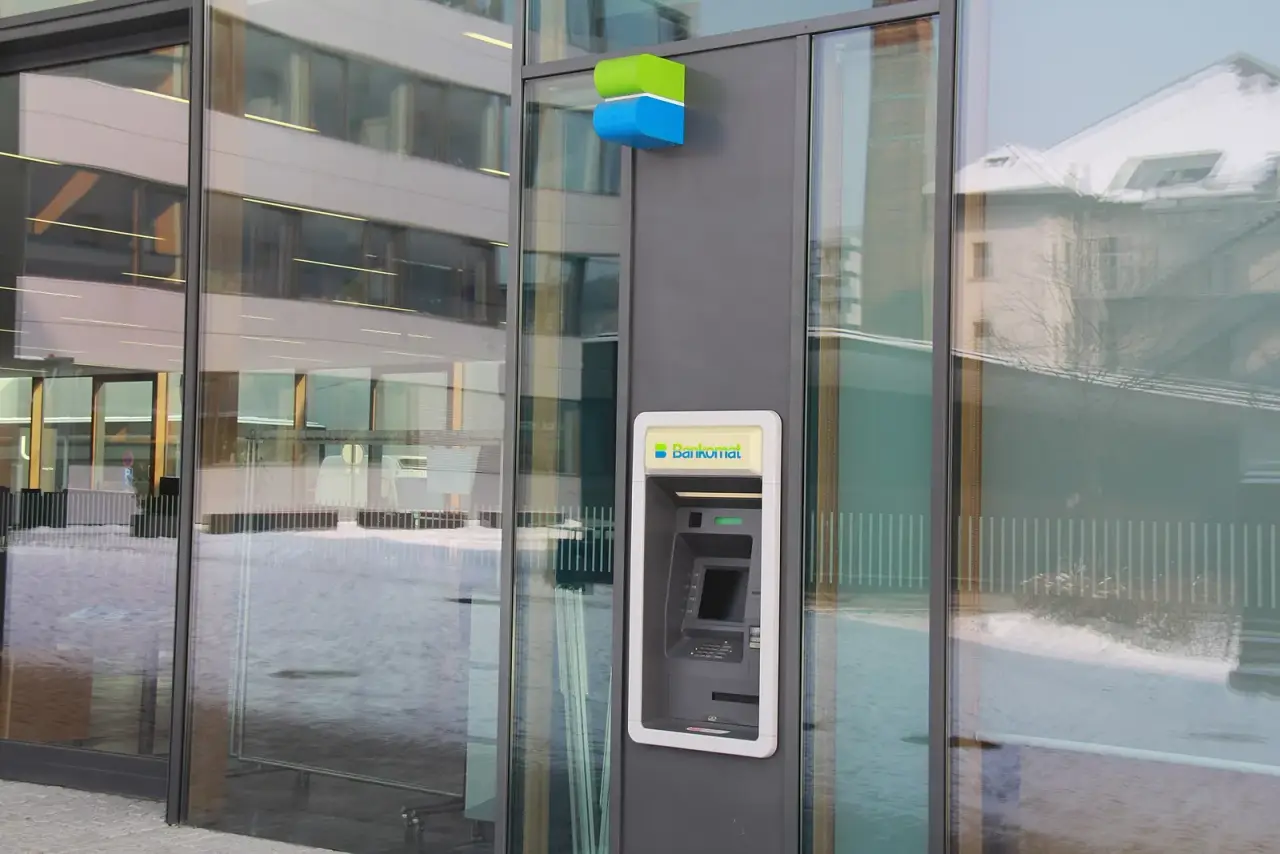
Cash machines are easy to spot: the green-and-blue Bankomat sign on bank fronts, in station concourses and, at some institutions, on campus. Insert the card, choose a language, enter the PIN and the amount. What catches new arrivals is not the procedure but the limits around it, which the Sozialministerium's consumer portal lists together.
| Situation | What applies | What to do |
|---|---|---|
| Contactless payment in a shop | No PIN up to €50 per single payment per payment; PIN-free payments in a row total at most €125 | If the terminal asks for the PIN or the card, enter it; that is normal |
| Contactless withdrawal at a machine | Always requires the PIN | Do not expect to tap and go at a cash machine |
| Daily cash limit | Default €400 per day; at your own bank's foyer machines up to €5,000 per day if you agree it | Ask the bank before you need a large sum, for example a deposit paid in cash |
| Travel outside Europe | Geo-Control blocks most withdrawals unless the bank deactivates it; it reactivates itself afterwards | Ask the bank to switch it off before the trip |
| Lost, stolen or misused card | Block it at once with your bank or the Payment Services Austria hotline | Call 0800 204 8800 within Austria or +43 1 204 8800 from abroad |
Tipping in Austria
- TipTrinkgeld
- A voluntary extra for service, mostly in restaurants, cafés and bars. No law requires it, and the amount is left to you.
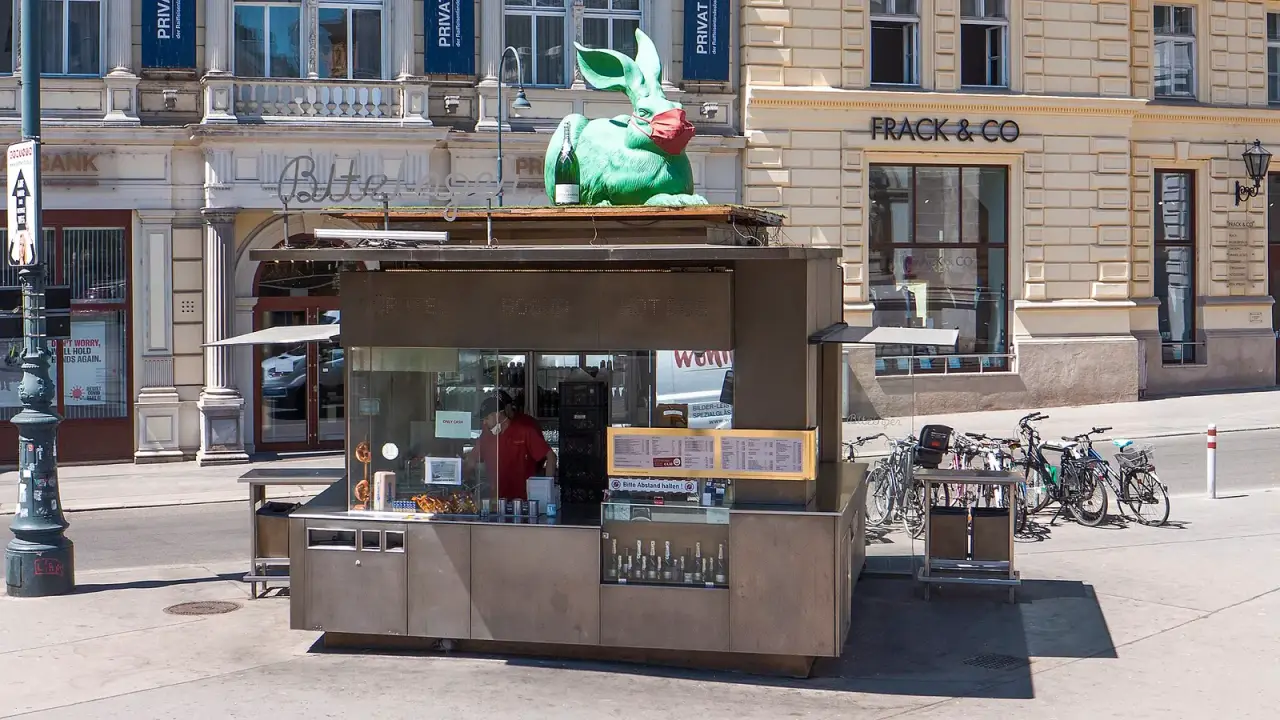
There is no official rule, so this is guidance from press reports. A survey by the hoteliers' association (ÖHV) with 1,000 respondents, reported in May 2025, found that 72% tip often and 26% occasionally; about a quarter give a little over 10% of the bill, nearly another quarter 5%, and a fifth vary with the service. Der Standard describes about ten per cent as the usual amount, with rounding up as the alternative. A simple way to do it is to say the total you want to pay when you hand over the money.
Card terminals increasingly offer preset tip amounts or a tip button, according to Der Standard, so you can choose the amount or decline. If the bill is paid by card and you prefer cash for the tip, keep a few small notes and coins for this.
Cash habits for your first weeks
- Withdraw a small cash reserve from your own bank's ATM on arrival
- Keep a few coins and small notes for tips and small purchases
- Check your tariff sheet for the per-withdrawal fee before you rely on one machine
- Check the contactless setting on your card, and know the PIN
- Save your bank's card-blocking number in your phone
Larger cash sums bring other questions, such as the €10,000 declaration threshold when crossing the EU border; those are covered in the transfers guide. Daily costs are put in context in the cost of living guide.
Frequently asked questions
Is Austria a cash society?
Cash is still used widely: the OeNB's 2025 survey found it in 55% of point-of-sale transactions, down from 63% in 2022. Cards and contactless payment are standard in most shops, but some small businesses may prefer cash, so carry a small reserve.
What is the contactless limit in Austria?
According to the Sozialministerium's consumer portal, a contactless debit-card payment up to €50 per single payment needs no PIN, and consecutive PIN-free payments may total at most €125. Banks may ask for the PIN earlier for security reasons.
Do Austrian ATMs charge fees?
Independent operators such as Euronet charge their own fee, currently €1.95 per withdrawal, shown before you confirm. Your own bank may charge as well: the Arbeiterkammer found charges of up to €0.77 per withdrawal at some banks in January 2026, though most charge nothing.
How much should I tip in Austria?
There is no rule; tipping is voluntary. Press reports of an industry survey describe about 5 to 10% of the bill as typical, and rounding up is common. Saying the total you want to pay when you hand over the money is a simple way to do it.
Which shops in Austria do not accept cards?
No official source lists them. The OeNB survey does not break down card acceptance by shop type, so the safe approach is to carry some cash for small businesses and markets and to check the payment symbols at the till.
Sources
9 sources, 4 official
- Nationalbank: Bargeld bleibt beliebt und für die Bevölkerung unverzichtbar (Zahlungsmittelstudie 2025)Oesterreichische Nationalbank (OeNB), distributed via APA-OTS (Institutional)
- Nationalbank: Bargeld bleibt beliebt und für die Bevölkerung unverzichtbar (Zahlungsmittelstudie 2025), Abschnitt AltersgruppenOesterreichische Nationalbank (OeNB), distributed via APA-OTS (Institutional)
- Debitkarte (Bankomatkarte)Konsumentenfragen.at (Sozialministerium) (Official)
- Unterschiede zwischen Debitkarten und KreditkartenSparkassengruppe (Erste Bank und Sparkassen) (Institutional)
- Entgelte für BankomatbehebungenArbeiterkammer Wien (Official)
- Bankenmonitoring über Spesen 2026 — Wie sich die wichtigsten Bankspesen im Neugeschäft von 2025 bis 2026 entwickelt habenArbeiterkammer Wien (Verlag Arbeiterkammer Wien) (Official)
- Trinkgeld in Österreich immer noch UsusSalzburg24 (report on a survey by the Österreichische Hoteliervereinigung, 1,000 respondents) (Secondary)
- Zehn, 15 oder 20 Prozent: Wird das Trinkgeld bald überall vorgegeben?Der Standard (Secondary)
- Mitnahme von Bargeld bei Reisen aus der bzw. in die EUoesterreich.gv.at (Federal Ministry of Finance) (Official)