The best evidence on what students in Austria spend is the national Studierenden-Sozialerhebung 2025 (Student Social Survey), run by the Institute for Advanced Studies (IHS) for the science ministry among degree students in summer semester 2025. Its headline: degree students had average total costs of €1,294 per month a month, of which €1,227 per month was living costs and €67 per month study costs. The median was €1,152 per month, because a minority with high costs pulls the average up. These are averages of the students surveyed, not a price list, and they include money that parents or partners pay on a student's behalf.

Those averages understate what a newly arrived non-EU student pays. Most students in Austria pay no tuition, many live with relatives, and the survey did not record one-off spending such as holidays, larger purchases or repairs. The tables below start from the survey and then add the fee and insurance lines that apply to you. Fees themselves are explained in the tuition fee guide and the cost overview; this page does not repeat them.
What students in Austria actually spend each month
| Category | Average over all students | Average among students who have the cost |
|---|---|---|
| Housing (rent, utilities) | €497 per month | €586 per month (students not living with parents) |
| Food | €273 per month | €273 per month (every student has this cost) |
| Mobility | €82 per month | €90 per month |
| Phone, internet, media | €33 per month | €36 per month |
| Health | €54 per month | €85 per month |
| Clothing and shoes | €59 per month | €69 per month |
| Leisure | €109 per month | €115 per month |
| Miscellaneous | €100 per month | €126 per month |
| Other study costs (materials) | €11 per month | €20 per month |
Read the two columns differently. The middle column spreads each cost over every student, including those who pay nothing for it; the right column shows what the students who do have the cost pay. If you will certainly have a cost, as an independent international student will for housing, transport and a phone, the right-hand figure is the better guide. Housing is the largest line: students not living with parents spend 38% of everything available to them on it, and the lower the budget, the higher the share.
Spending also rises with age, mostly because of housing: the survey found average total costs of €931 per month for students under 20, €1,280 per month at 26 and €1,807 per month above 30.
- Student Social SurveyStudierenden-Sozialerhebung
- A periodic national survey of degree students' living and financial situation, carried out by the IHS for the science ministry. The 2025 edition covers summer semester 2025. It reports averages across respondents, so it describes the typical student, not the cheapest or the most expensive case.
A realistic monthly budget: lower, typical, higher
The survey publishes housing costs by type of housing but only averages for the other categories, so the three budgets below vary housing and the lifestyle lines in a sourced way and nothing else. They are Scholway's own arithmetic on published averages, not scenarios the survey itself defines.
- Lower: a shared flat (Wohngemeinschaft, WG) at €498 per month, with every other line at the all-student average. A hall of residence is about the same, at €501 per month on average.
- Typical: housing at the average of students who do not live with parents, €586 per month, with every other line at the all-student average.
- Higher: living alone at €664 per month, with every other line at the average of students who have that cost (right-hand column above).
| Line | Lower | Typical | Higher |
|---|---|---|---|
| Living costs and study materials from the survey | €1,219 per month | €1,307 per month | €1,478 per month |
| Tuition and ÖH fee, one-twelfth of the annual total | €125.49 per month | €125.49 per month | €125.49 per month |
| ÖGK student self-insurance, if you qualify | €78.84 per month | €78.84 per month | €78.84 per month |
| All-in total, rounded | €1,423 per month | €1,511 per month | €1,682 per month |
What a monthly student budget is made of
Share of average living costs · summer semester 2025
Housing takes the largest share of a student's living costs, food the second; leisure and transport are much smaller.
- Housing€49740%
- Food€27322%
- Leisure€1099%
- Transport€827%
- Clothing, health, phone, other€26622%
| Item | Value | Share |
|---|---|---|
| Housing | €497 | 40% |
| Food | €273 | 22% |
| Leisure | €109 | 9% |
| Transport | €82 | 7% |
| Clothing, health, phone, other | €266 | 22% |
| Total | €1,227 | 100% |
Source: BMFWF / IHS. Last checked:
Image (PNG)What the table leaves out matters. The fee line assumes the third-country rate at a public university, and EU/EEA students and the exempt groups described in the tuition guide pay less; at an FH or private university, replace it with the institution's own figure. The insurance line applies only if you meet the conditions of ÖGK student self-insurance, set out in the student health insurance guide. The survey's own health line is small because health insurance contributions are largely covered by co-insurance or self-insurance and are not itemised there. The table also leaves out loan repayments and childcare, which apply to few students, and any tuition at a private institution.
OeAD, Austria's agency for education and internationalisation, publishes a non-binding guideline of about €1,300 per month a month for a student, with €450 to €700 per month for a place in a hall of residence and €300 per month for food. It sits close to the survey average and well below the all-in totals above, since it excludes fees and insurance. For worked student profiles built on these numbers, see the budget examples guide.
One-off costs when you arrive
Monthly averages hide the money you need in the first weeks. Four items can be priced from sources; furnishing is the exception.
| Item | Amount or rule | Comment |
|---|---|---|
| Rental deposit (Kaution), private flat | Customary: 3 gross monthly rents; up to 6 gross monthly rents still regarded as permissible | Custom and case law, not a statutory cap. For illustration, three months at the survey's average housing cost would be €1,758 |
| Deposit, student residence | At most 2 monthly fees | Limit set by the Studentenheimgesetz for residences that fall under it; check your contract |
| Estate-agent commission | Up to 1 gross monthly rent for a lease fixed up to three years; up to 2 gross monthly rents for longer or open-ended leases; VAT is added | Payable by the tenant only where the tenant commissioned the agent. See the accommodation guide |
| Student residence permit application fee | €218 | Due on submission and not refunded; charged again at each renewal. See the residence permit guide |
Add the first month's rent, and the first semester's fees if your institution invoices them early. Furniture and household goods are the unknown: no official source gives a reliable first-flat figure, so this guide does not invent one. Furnished rooms, halls and second-hand shops all move the number, as the second-hand guide explains, and the hidden costs guide covers other surprises.
Does the city change the budget?
Less than most students expect. The survey's housing averages, grouped by where the student's institution is, sit in a narrow band for the five biggest student cities:
| City | Average housing cost |
|---|---|
| Vienna | €596 per month |
| Salzburg | €584 per month |
| Innsbruck | €575 per month |
| Linz | €573 per month |
| Graz | €545 per month |
These are not rent comparisons. The survey records where the institution is, and each average reflects how students there tend to live, whether in halls, shared flats or alone. A student hall place in Vienna averaged €522 per month, the highest hall figure of any location. The survey gives city detail for housing only, so this guide does not claim city gaps for food or transport. For the same flat, rents in the wider market are higher: the national average rent for a main-tenancy flat, with operating costs, was €694.70 per month in the second quarter of 2026 across all contracts, including long-running ones. That is a whole-flat average, not an asking rent for a new lease. More on the cities is in the city comparison.
Student housing costs by city
Average € per month, students who pay for their own housing · summer semester 2025
Housing costs differ little between Austrian university cities: from €531 in Leoben to €630 at smaller locations, with Vienna at €596.
- Smaller locations€630
- Klagenfurt€604
- Vienna€596
- Salzburg€584
- Innsbruck€575
- Linz€573
- Graz€545
- Leoben€531
| Item | Value |
|---|---|
| Smaller locations | €630 |
| Klagenfurt | €604 |
| Vienna | €596 |
| Salzburg | €584 |
| Innsbruck | €575 |
| Linz | €573 |
| Graz | €545 |
| Leoben | €531 |
By the location of the university, not of the home. Smaller locations: e.g. St. Pölten, Krems, Dornbirn.
Source: BMFWF / IHS. Last checked:
Image (PNG)Inflation: how old are these numbers?
Austrian consumer prices (Statistik Austria's Verbraucherpreisindex) were 3.6% higher in September 2026 than a year earlier, up from 3.2% in August. Statistik Austria attributes the rise mainly to fuel and heating oil, and rents including new lettings rose by 4.1%. The survey was taken in summer 2025, so prices have moved since. Between the 2023 and 2025 surveys, average student costs rose 6% in nominal terms while consumer prices rose 6.4%, so in real terms costs were roughly flat. Treat the budgets above as a starting point and leave a margin rather than planning to the euro.
A tight budget is common: 25% of students said they were strongly or very strongly affected by financial difficulties, and among students who went to school abroad and hold non-EU citizenship it was 55%.
What you spend versus what you must prove for the permit
These are two different numbers. The permit minimum is a legal threshold set by immigration law for the student residence permit. Your budget is what life costs. For 2026 the reference rate is €722.58 per month a month for applicants who have not yet completed their 24th year and €1,308.39 per month for applicants aged 24 and over. The age band is assessed over the whole period for which the permit is granted, not on the decision date, so someone turning 24 during the permit should plan for the higher rate from their birthday.
Compare that with the typical all-in budget of €1,511 per month. The under-24 rate is far below it, and the rate for 24 and over is below it too, but the authority adds rent above a disregarded amount to the reference rate, so for applicants aged 24 and over the floor can end up above this budget, as the budget examples work out. The authority calculates means in its own way, with rules on income, assets and rent, laid out in the guide to proving financial means. Meeting the threshold lets you apply; it does not mean your money will last a month. Plan on what you will spend, and use the legal figure only to confirm you clear the bar.
In practice: everyday prices and where students cut costs
OeAD's living-costs page for international students gives a few sample prices that make the budget concrete. The page is undated and names no city, so read them as orders of magnitude, not as a price list.
| Item | OeAD's sample price |
|---|---|
| Coffee or tea in a café | €3.50 |
| A sandwich from a bakery | €4.50 |
| Dinner in a typical student restaurant | €12 |
| A cinema ticket | €10 |
| A museum ticket | €14 |
On food, OeAD makes three points: discount supermarkets sell food at reasonable prices, many universities run self-service student cafeterias (Mensa) that serve "a good meal at a good price", and cooking for yourself is the cheapest way to eat. It adds that public-transport operators and many museums, cinemas and theatres give student discounts when you show a student card, so carry the card and ask at the counter.
For students who are struggling, the ÖH's savings page lists social markets (Sozialmärkte). In Vienna it says the Sozialmarkt Wien is open to students with a student ID, and it names others, among them soogut in Lower Austria and Burgenland, the Sozialmarkt Kärnten, the Vinzi Markt in Styria, the Laubemarkt in Salzburg and Tischlein deck dich in Vorarlberg. Opening conditions are each market's own, so check the market's website before you go. The ÖH Bundesvertretung lists its own office at Taubstummengasse 7-9, 4th floor, in Vienna's fourth district, with telephone hours Monday to Friday, 9 to 13.
Ways to spend less that you can verify
Housing choice is the largest lever: a shared flat or hall averaged €498 per month and €501 per month, against €664 per month for living alone. Transport is the second. Several cities sell a student or under-26 pass, and prices differ a lot by city, as the table shows.
| City or region | Pass | Price |
|---|---|---|
| Vienna | Jahreskarte Jugend, core zone, passengers under 26 | €300 per year |
| Graz and Styria | Top-Ticket Studierende, Styria-wide, students under 26 whose place of study is in Styria | €199.50 per semester |
| Linz | MEGA-Ticket Studierende, price for a registered main residence in Linz or Leonding; a promotional price until the end of 2026 | €89 per semester |
| Salzburg | KlimaTicket Salzburg Semester, whole of Land Salzburg | €170 per semester |
| Innsbruck | Semesterticket Innsbruck, core zone only, students under 27 | €176.70 per semester |
The survey average for mobility is €82 per month a month, so a pass often costs less than the average student spends. The student ticket guide gives conditions and the rest of the Austrian cities. For rail between cities, the ÖBB Vorteilscard Jugend costs €21 per year for under-26s and gives 50% off ÖBB standard fares within Austria.
Food is a cost every student has, at €273 per month on average. At the Johannes Kepler University in Linz, under the ministry's Mensa 2030 programme, the ministry has funded a higher subsidy since 5 October 2026: per student per day, dishes up to €9.90 are subsidised at 55% and dishes from there up to €14.90 at 40%. JKU describes itself as the first university to apply the concept. Whether your own university takes part is a question for its Mensa operator, and this guide found no source for typical Mensa prices elsewhere.
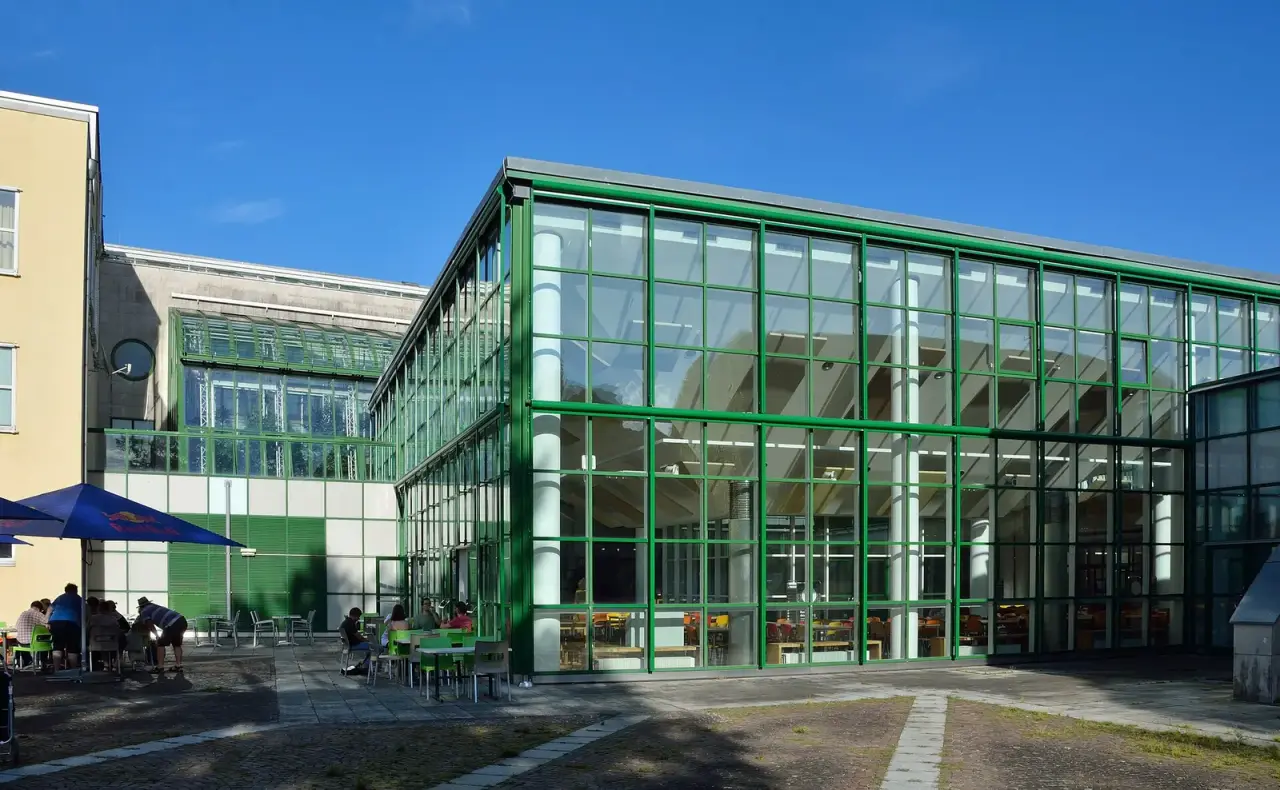
The ÖH (Austrian Students' Union) offers advice on grants, taxes and student life through its counselling pages. For a genuine emergency it runs the Sozialfonds, a one-off grant every 12 months for ÖH members in serious financial hardship who meet its conditions, among them recent study progress, and it is not available to everyone: students who receive the full study grant (Studienbeihilfe) do not qualify. The ÖH page does not state an amount or restrict by nationality, so ask before you count on it. The ÖH also lists social markets, and says the one in Vienna admits students with a student ID.
Build your own monthly budget
- Start from the housing form you will actually have: hall, shared flat or alone, and replace the survey figure with your real rent including utilities.
- Add your fees and health insurance as separate lines; do not rely on the survey's small health and study figures.
- Price a transport pass for your city instead of using the average.
- Keep a margin for price rises: consumer prices were still rising 3.6% a year in September 2026.
- Set aside the one-off costs for the first month: deposit, any agent commission, the permit fee and furnishing.
- Check that your funds also clear the legal figure for your age band in the financial proof guide.
Frequently asked questions
How much money do I need per month to live in Austria as a student?
Students in Austria spent €1,294 per month a month on average in 2025, with a median of €1,152 per month. A non-EU student paying public-university fees and ÖGK student insurance should plan on about €1,423 per month to €1,682 per month depending on housing and lifestyle. These are Scholway calculations from the survey averages, not a guarantee.
Is the amount needed for the visa enough to live on?
Not necessarily. The legal minimum for 2026 is €722.58 per month a month for applicants who have not yet completed their 24th year and €1,308.39 per month for those aged 24 and over, and it is a condition of the permit, not a budget. Students typically spend more, especially if they also pay fees and insurance.
Is Vienna much more expensive than other Austrian cities for students?
On housing, only a little. The 2025 survey found averages of €596 per month in Vienna, €545 per month in Graz, €573 per month in Linz, €575 per month in Innsbruck and €584 per month in Salzburg. These reflect how students live in each place, not pure rent differences.
How much is a deposit for a student flat in Austria?
Three gross monthly rents are customary for a private flat, and up to 6 gross monthly rents are still regarded as permissible, but there is no statutory maximum. Student residences under the Studentenheimgesetz may demand at most 2 monthly fees.
Has inflation made studying in Austria more expensive?
Consumer prices were 3.6% higher in September 2026 than a year before, according to Statistik Austria. Between the 2023 and 2025 surveys, student costs rose 6%, about in line with prices at that time. Leave a margin when you plan.
Can I get help from the ÖH if I run out of money?
Possibly. The ÖH Sozialfonds gives a one-off grant every 12 months to ÖH members in serious financial hardship who meet its conditions. It is an emergency fund, so it should not be part of a monthly budget.
Sources
9 sources, all official
- Studierenden-Sozialerhebung 2025 – Kernbericht (Dibiasi et al., IHS, March 2026; updated version of 24 April 2026 published by the ministry)Federal Ministry of Women, Science and Research (BMFWF) / Institut für Höhere Studien (IHS) (Official)
- Living costsOeAD (Study in Austria) (Official)
- Inflation in Österreich im September 2026 bei 3,6 % (Pressemitteilung 14 300-219/26)Statistik Austria (Official)
- Selbstversicherung für StudierendeÖsterreichische Gesundheitskasse (ÖGK) (Official)
- Programm „Mensa 2030“: Genießen – Wohlfühlen – Fit sein. Leistbares Essen für StudierendeJohannes Kepler Universität Linz (JKU) (Official)
- SozialfondsÖsterreichische Hochschüler_innenschaft (ÖH) (Official)
- Rund ums SparenÖsterreichische Hochschüler_innenschaft (ÖH) (Official)
- ÖH-BeitragÖsterreichische Hochschüler_innenschaft (ÖH) (Official)
- Studienbeitragsverordnung (StubeiV), konsolidierte Fassung vom 23.10.2026 mit Anlage (Staaten gemäß § 92 Abs. 1 Z 3a UG und § 71 Abs. 1 Z 5 HG)Rechtsinformationssystem des Bundes (RIS) (Official)