You will almost certainly need a public transport pass in your first week in Austria, because every Austrian city is built around trains, trams, buses and the U-Bahn or Straßenbahn rather than cars. The good news is that every pass worth having is cheaper under 26: city and regional operators sell youth-rate annual or semester tickets, and the nationwide KlimaTicket's youth rate, €1,050 per year, is a quarter cheaper than the €1,400 per year adult rate. The complication is that every region runs its own tickets, under its own rules, through its own operator — so the right choice depends on which city you study in and how often you leave it.
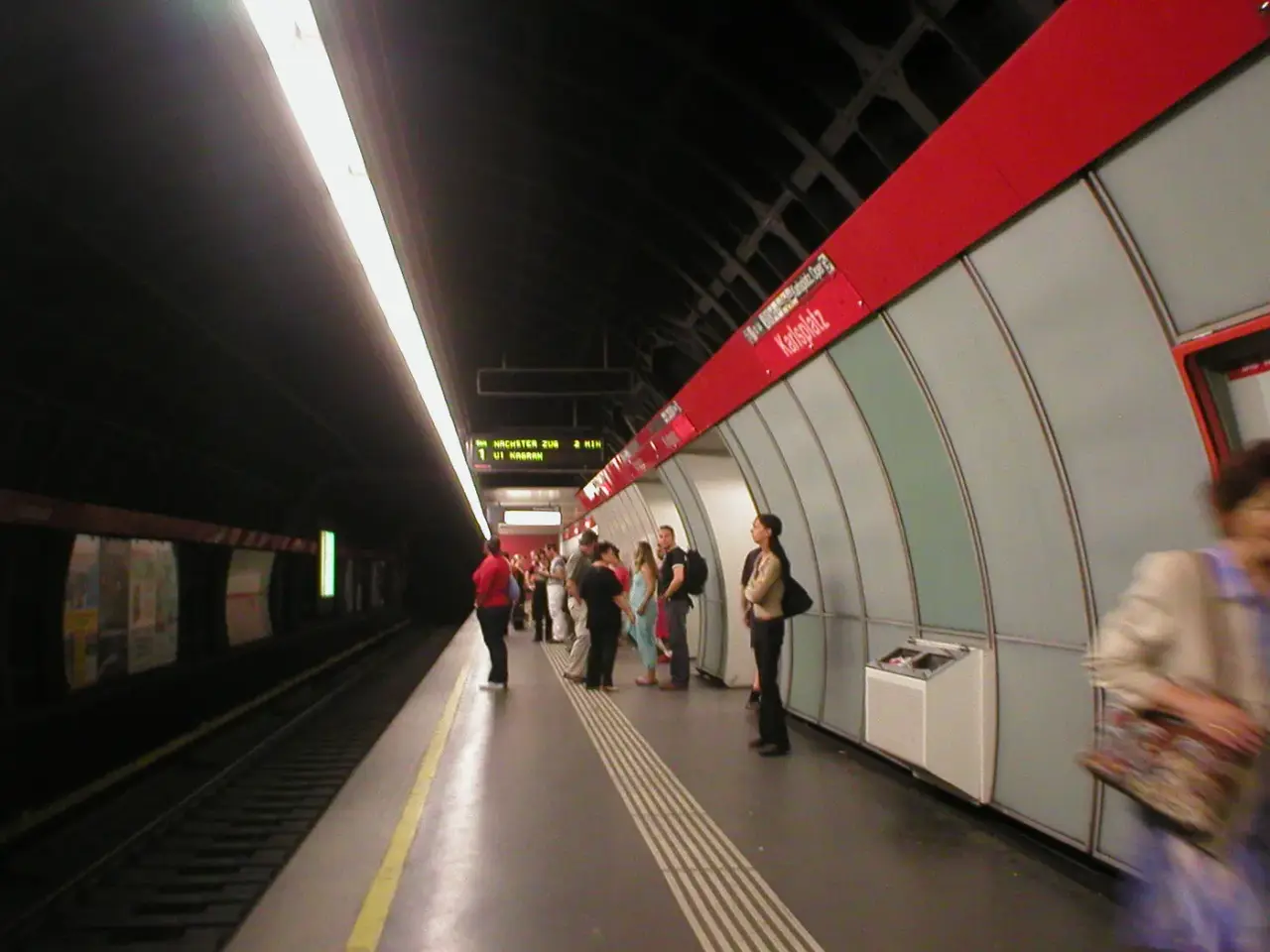
KlimaTicket or a city ticket: the real decision
- KlimaTicketKlimaTicket Ö
- Austria's nationwide public transport pass, valid for one year on essentially all scheduled public and private transport in the country — regional and city buses and trams, regional and long-distance trains including ÖBB, and the Vienna network — bought as a single annual ticket rather than one per operator. It excludes a short list of tourist-only lines such as the Schafbergbahn.
The national KlimaTicket Ö costs €1,400 per year at the standard rate, or €1,050 per year for anyone whose ticket starts no later than the day before their 26th birthday — the same reduced rate also covers travellers aged 65 and over and disabled travellers. A family supplement lets you bring up to four children from their sixth birthday up to the day before their 15th birthday for €140 per year. These prices apply to tickets whose validity begins on or after 1 January 2026, and they were the second of two increases rather than the first change since the ticket launched in 2021: the price rose once already for tickets starting from 1 August 2025. A KlimaTicket already running keeps the price it was bought at.
For most students, the national KlimaTicket is not the right first purchase. It is built for people who cross Austria regularly, not for getting around one city day to day. Every state also runs its own cheaper regional KlimaTicket, priced by the state rather than the national scheme, and most cities layer a further discounted student or youth product on top. Work out your city option first; add the national ticket only if you can already see you will be crossing state borders often. Our full KlimaTicket guide works through the maths.
KlimaTicket: nationwide or just your region?
Annual public transport passes for under-26s, € per year, 2026
The nationwide KlimaTicket Ö for under-26s costs €1,050 a year; regional passes cost far less, from €299 in Salzburg to €714 for Vienna, Lower Austria and Burgenland.
- KlimaTicket Ö (all of Austria)€1,050
- Vienna, Lower Austria, Burgenland€714
- Upper Austria (incl. Linz)€586
- Styria (incl. Graz)€386
- Tyrol (incl. Innsbruck)€319
- Salzburg€299
| Item | Value |
|---|---|
| KlimaTicket Ö (all of Austria) | €1,050 |
| Vienna, Lower Austria, Burgenland | €714 |
| Upper Austria (incl. Linz) | €586 |
| Styria (incl. Graz) | €386 |
| Tyrol (incl. Innsbruck) | €319 |
| Salzburg | €299 |
Each regional pass covers only its own province or network; KlimaTicket Ö covers the whole country. Ages: the youth rate applies until the day before the 26th birthday.
Source: KlimaTicket Ö (Federal Ministry for Climate Action / ÖBB / Verkehrsverbünde), KlimaTicket Ö, SVV +4 more. Last checked:
Image (PNG)Vienna: the student ticket changed in 2026
The Jahreskarte Jugend costs €300 per year as a physical card paid up front, or €294 per year for the digital version in the WienMobil app — both one-off prices are cheaper than paying by monthly direct debit, which Wiener Linien prices higher over the year. It covers a year of unlimited travel on the U-Bahn, trams, buses and the Badner Bahn as far as Vösendorf-Siebenhirten, within Vienna's core zone, running from the first day of the month printed on it. For comparison, the equivalent full-price adult Jahreskarte is €461 per year, and a single digital ride costs €3. One caveat on the digital price: Wiener Linien describes the €6 saving on the digital card as a time-limited rebate to push people onto digital tickets, so it may not last.
Two things are worth planning around. First, Vienna no longer sells anything sized to a single semester — the shortest rolling core-zone pass is the €65.20 31-day ticket, and five of those cost more than the annual card, so even a one-semester student is usually better off with the Jahreskarte Jugend. But that annual card is not a twelve-month commitment, which is the part most summaries of the change get wrong. Under the binding tariff rules, any Vienna Jahreskarte including the Jugend version can be cancelled without giving reasons once it has run for 7 months, by handing the card back; the months you have not started are then refunded pro rata, less a cancellation charge of one twelfth of the fare. An exchange student arriving in October can therefore end the contract at the end of April and get a meaningful part of the price back.
What the change did take away is the genuinely cheap option: students used to buy two semester cards plus monthly tickets for the holidays — four products a year, as Wiener Linien itself described it — and the single annual card costs more than that combination did. Second, because the Jahreskarte Jugend needs no student status, it is sold and priced identically to anyone else under 26, so there is nothing Vienna-specific to apply for beyond photo ID. If you commute in from outside the city, note that the VOR association still sells discounted monthly tickets for students under 26, but these are route-based passes for your own start and destination stops, need a Vorteilscard Jugend and student ID alongside them, and are not issued in July or August — they complement the core-zone card rather than replacing it. Our city-by-city ticket guide has the full mechanics of buying either.
Student tickets in other university cities
- Semesterticket
- A public transport pass priced and timed to match one academic term (roughly six months), sold against proof of enrolment, used in most Austrian cities. Vienna is the exception: since 1 January 2026 it no longer sells one at all, having replaced it with the year-round Jahreskarte Jugend described above. Elsewhere — Graz, Innsbruck and Salzburg among them — a genuine Semesterticket is still the standard student product.
- Verkehrsverbund
- A regional transport association that sets one shared tariff and ticket range across all the bus, tram and train operators within a state or region, so a single ticket works on every service: VOR (Vienna, Lower Austria, Burgenland), Verbundlinie (Styria), VVT (Tyrol), the Salzburger Verkehrsverbund, Kärntner Linien (Carinthia) and the OÖVV (Upper Austria). Student tickets are normally sold through the Verkehrsverbund, not the city operator alone — which is why most of them cover a whole state.
Outside Vienna, most cities still run a recognisable Semesterticket. The price and the rules — especially whether what counts is where you study or where you are registered — vary more than you would expect, and several of these passes cover a whole state rather than just the city.
| City (region) | Product | Price | Who qualifies |
|---|---|---|---|
| Vienna | Jahreskarte Jugend | €300 per year | Anyone under 26; no study proof needed; cancellable after 7 months |
| Graz (Styria) | Top-Ticket Studierende | €199.50 per semester | Ordinary students under 26 whose place of study is in Styria, with an Inskriptionsbestätigung — your registered address doesn't matter. Valid Styria-wide, and not refundable early |
| Linz (Upper Austria) | MEGA-Ticket Studierende | €89 per semester if your Hauptwohnsitz is registered in Linz or Leonding, otherwise up to €269.60 per semester | Students under 26 studying in Linz; the subsidised rate then depends on your Meldezettel. Not cancellable |
| Salzburg | KlimaTicket Salzburg SEMESTER | €170 per semester | Students, 6-month validity, whole of Land Salzburg; a year-round U26 pass is also sold for €299 per year |
| Innsbruck (Tyrol) | Semesterticket Innsbruck or Semesterticket Tirol | €176.70 city zone only, or €229.90 Tyrol-wide | Students under 27 at an Austrian university or Fachhochschule, with an Inskriptionsbestätigung |
| Klagenfurt (Carinthia) | Semesterticket U26 | €201 for 6 months | Anyone under 26, flexible start date, no proof required; Carinthia-wide, digital only |
Read that table carefully before assuming your situation matches a friend's in another city. Linz is the one to watch: the subsidised €89 price applies only once your main residence is registered in Linz or Leonding on your Meldezettel. Students registered in a directly adjoining municipality pay €214.90 per semester, and then only if their nearest stop falls inside the Linz core-zone catchment; everyone else pays the full €269.60 per semester. That lowest rate also rests partly on a promotion running only to the end of 2026, so treat it as a current offer, not a fixed price. Graz applies a different test: what matters is where you study, not where you live.
Klagenfurt and Vienna have both dropped the enrolment-proof requirement for their main under-26 product, as have the KlimaTicket U26 options in Salzburg and Tyrol: Tyrol's year-round KlimaTicket Tirol U26 costs €319 per year, and Carinthia's annual equivalent, the Kärnten Ticket Jugend, costs €335 per year for the whole state. In Innsbruck, check which zone you actually need: the city-only Semesterticket is noticeably cheaper than the Tyrol-wide version, and plenty of students never leave the core zone. The full ticket guide covers how and where to apply in each city.
If you are choosing a student city partly on cost, transport is a small but real line in the budget: see how it fits into a full monthly cost-of-living picture.
A year of local transport, city by city
Student or under-26 passes for twelve months, € · 2026
Twelve months of student transport cost €300 in Vienna, €340 in Salzburg, €353.40 in Innsbruck, €399 in Graz and €402 in Klagenfurt; in Linz it is €178 with a main residence in Linz or Leonding and €539.20 without.
- Linz, main residence in Linz€178
- Vienna, annual youth pass€300
- Salzburg€340
- Innsbruck, city zone€353.40
- Graz and Leoben€399
- Klagenfurt€402
- Linz, list price€539.20
| Item | Value |
|---|---|
| Linz, main residence in Linz | €178 |
| Vienna, annual youth pass | €300 |
| Salzburg | €340 |
| Innsbruck, city zone | €353.40 |
| Graz and Leoben | €399 |
| Klagenfurt | €402 |
| Linz, list price | €539.20 |
Vienna: the annual youth pass for under-26s. Elsewhere: two semester tickets. Annual under-26 passes are cheaper in Salzburg (€299), Tyrol (€319) and Carinthia (€335). The subsidised Linz price includes a promotion that runs until the end of 2026.
Source: VOR, Wiener Linien, SVV +4 more. Last checked:
Image (PNG)In practice: which app, which machine, and validating your ticket
The sales channel depends on the region, because each operator or Verkehrsverbund runs its own app. The table lists what the operators' own pages name; none of the pages says that one app works in another region, so install the one for the city where you will actually ride.
| Region | App or shop | Machines and counters |
|---|---|---|
| Vienna (Wiener Linien) | WienMobil app | Multilingual machines in U-Bahn stations and most Trafiken (tobacco shops) |
| Vienna region, Lower Austria, Burgenland (VOR) | VOR AnachB app, VOR online ticket shop, and the ÖBB ticket shop and app | VOR ServiceCenter at BahnhofCity Wien West, railway-station machines, drivers on regional bus lines |
| Styria, including Graz (Verbundlinie) | GrazMobil app, which Holding Graz says sells all common tickets for the whole of Styria; the Top-Ticket also in the ÖBB ticket shop and ÖBB app | Machines on Graz trams and at stops, about 100 kiosks, the Graz Linien Service Center |
| Upper Austria, Linz (Linz AG) | LinzMobil app | LINZ AG LINIEN Infocenter at Hauptplatz 34 |
| Salzburg | Salzburg Verkehr app for real-time departures; the KlimaTicket Salzburg is ordered on the operator's ticket pages | Check the operator's pages; this guide did not verify machine locations |
| Tyrol, including Innsbruck (VVT) | VVT Ticket App (the Semesterticket for MCI and University of Innsbruck students) | VVT and IVB customer centre, ÖBB Lounge at Innsbruck Hauptbahnhof |
| Carinthia, including Klagenfurt (Kärntner Linien) | Kärntner Linien app (the Semesterticket U26 is digital only) and webshop | Customer office at Bahnhofplatz 5, ticket machines at stations, bus drivers for single tickets |
Validation is where newcomers get fined. In the VOR area, the tariff rules say a ticket with a validation strip must be stamped before the journey; validators exist only in Vienna's core zone and on buses that run into it, and outside the core zone a ticket cannot be stamped. If no working validator is available, the rules say to buy a ticket from the driver or a mobile ticket instead. In Vienna the validators stand in front of the entrances to U-Bahn and S-Bahn stations, and on trams and buses you stamp on board; a paper single costs €3.20, against €3 for a digital one, and is valid for 80 minutes after stamping.
Two more rules from the VOR tariff apply to anyone using their phone. Online tickets, whether Print-at-Home or Mobile-Tickets, must be shown together with photo ID, and a scan, photo or other image of a ticket does not count as a valid ticket, except a faithful copy of a Print-at-Home ticket. A screenshot of a mobile ticket is therefore not a safe substitute for the ticket in the app. Mobile tickets must be bought in an app that VOR has accredited. In Klagenfurt, by contrast, a single ticket sold on the vehicle is valid from the moment of issue, so there is nothing to stamp. Other regions publish their own conditions, so read the one for the pass you buy.
Keep the ticket until you have left the station
ÖBB says a ticket can be checked even after the journey, up to the moment you leave the platform access. Inspectors scan the code and, if you are asked, you show a photo ID or your discount card; they identify themselves to you on request.
If you have no valid ticket
ÖBB charges a Fahrgeldnachforderung of €110 on the train; you get a receipt that lets you continue in second class as far as the end of the line or the last stop in Austria. Paying later adds a €50 processing fee, needs your photo ID and address, and is due within 14 days of the receipt, with an objection possible within one month. On VOR buses, the Badner Bahn and NÖVOG railways the increased fare is €135 if paid on the spot, €145 within two weeks and €185 later. Wiener Linien sets its own rate for the U-Bahn and trams in its conditions of carriage, which this guide could not read.
If you have a personal ticket but forgot it
Show it afterwards and the increased fare is waived: ÖBB charges a €11 fee for the later check, and the VOR a €15 processing fee. The waiver does not cover a ticket you bought after the journey began.
Do not ignore the letter
ÖBB's conditions describe travelling without a valid ticket as an administrative offence that it may report to the authority. If you neither pay nor object, ÖBB sends a reminder with further costs and, if you do not react within four weeks of that, passes the claim to a debt-collection agency.
Train travel: ÖBB, the Vorteilscard and night trains
- Vorteilscard
- A discount railcard sold by ÖBB, Austria's national rail operator. It is not a ticket itself — it simply cuts the price of ordinary fares you then buy separately, and it pays for itself after only one or two longer trips.
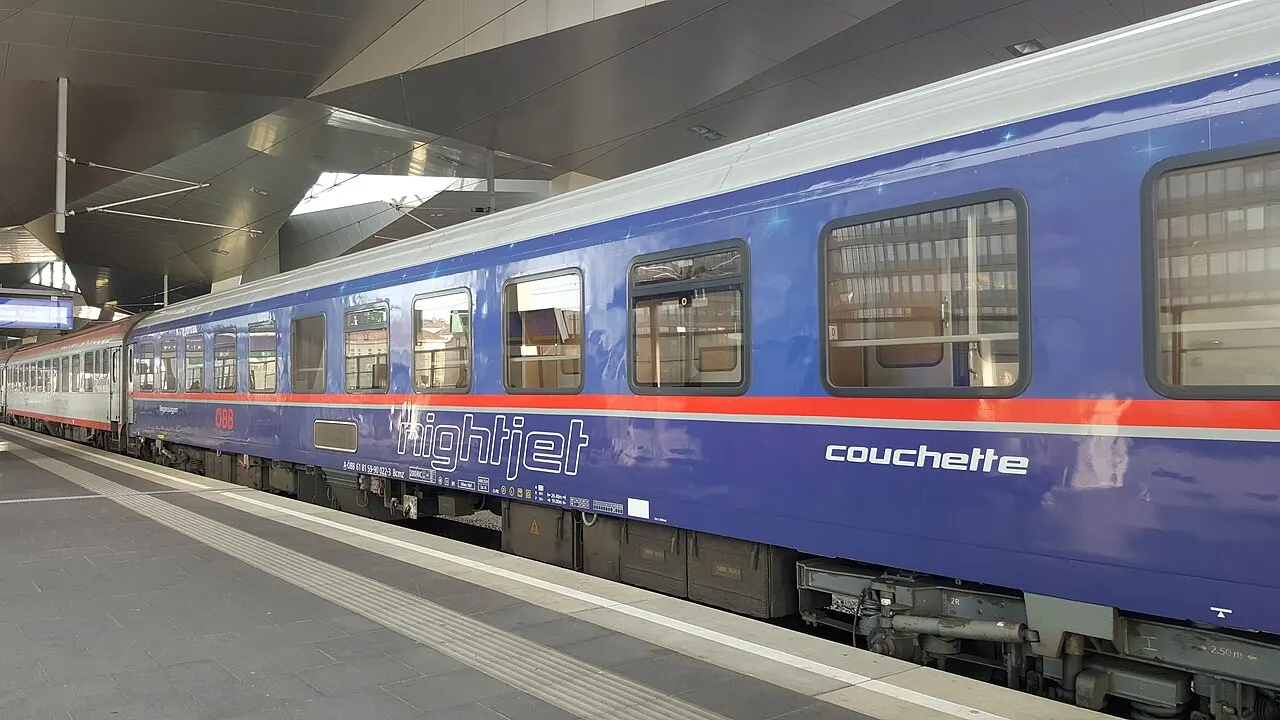
The Vorteilscard Jugend costs €21 per year for anyone under 26 — buyable up to one day before your 26th birthday, then valid a full 12 months — and cuts 50% off ÖBB standard fares within Austria; within a regional transport network the network fare applies and the saving can be smaller. Seat reservations are cheaper only with the dearer Vorteilscard Comfort, not with the Jugend card. Once you turn 26, the Vorteilscard Classic at €73 per year gives the same discount. It applies to standard fares only, so it does not stack on top of the cheapest advance tickets, and it never replaces your city ticket.
For the cheapest long-distance trips, use ÖBB's advance-purchase Sparschiene fares: domestic 2nd-class tickets are advertised from €9.90, released up to 180 days before departure. Treat that as a 'from' price rather than the fare you will pay — the cheap allocation per train is limited and prices climb as it sells. Sparschiene tickets also cannot be refunded, exchanged or moved to another train or date, which makes them a poor choice if your plans might shift; the Sparschiene Komfort variant includes a seat reservation and allows a refund. For overnight trips, ÖBB's Nightjet network reaches Germany, Italy, Switzerland and beyond in seat, couchette or sleeper classes, and opens for booking considerably earlier than ordinary Sparschiene fares. Our train travel guide covers Westbahn, booking, bikes and luggage on trains, and missed connections.
Cycling as a student
Cycling is a genuinely practical way to get around every Austrian university city — largely flat terrain, protected bike lanes and, in Vienna, a city-run bike-share scheme called WienMobil Rad, with around 3,000 bicycles and 300 e-bikes spread over 250 stations across all 23 districts; the city also lends cargo bikes free through Grätzlrad Wien. Its subscription and per-minute prices change often and are published only in the operator's own app, so check them there. Linz, Salzburg, Innsbruck and Klagenfurt each run schemes of their own; our cycling guide compares them.
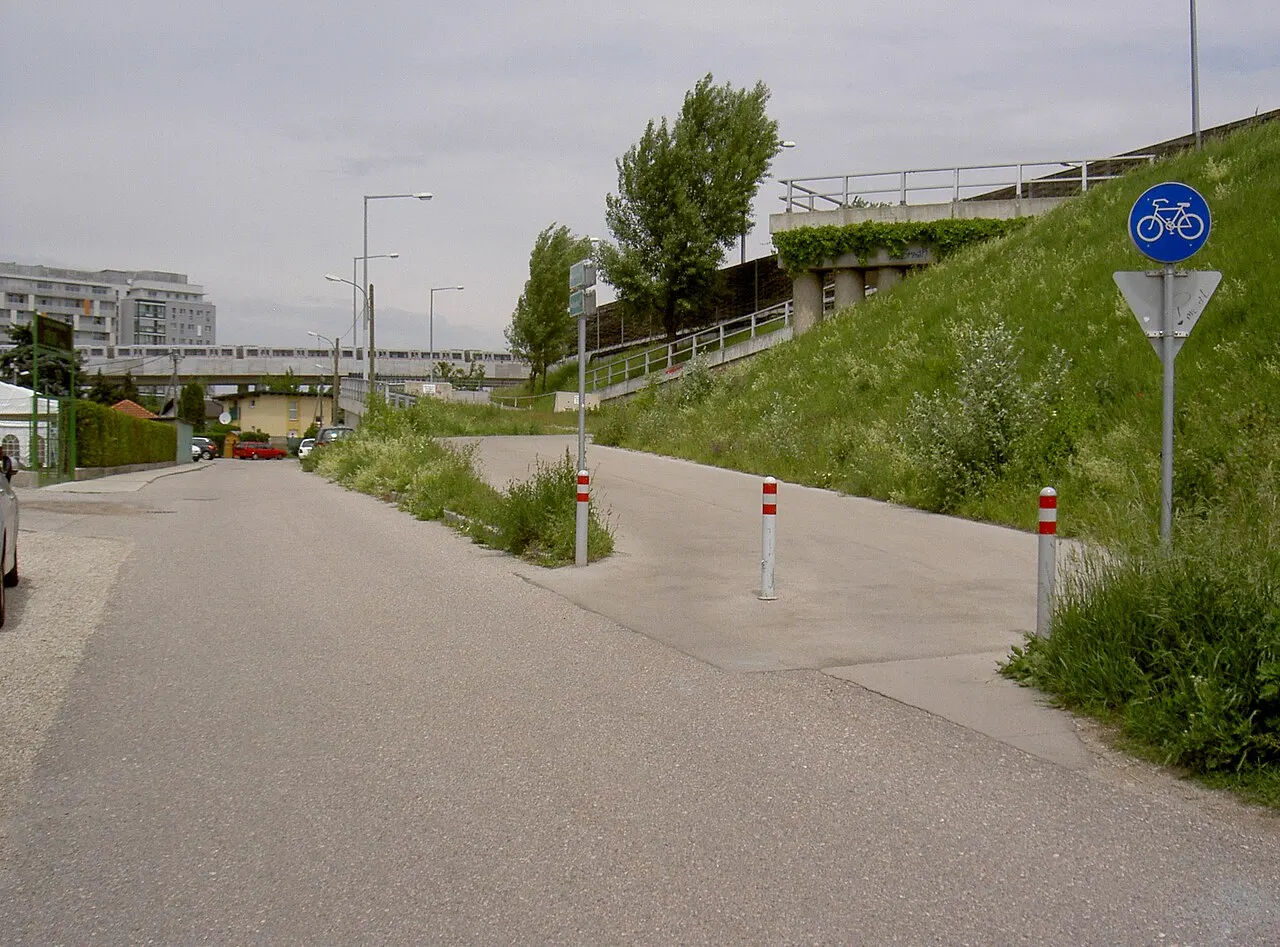
Buying your own is normally better value for daily use, and second-hand bikes are easy to find through online marketplaces and university noticeboards at the start of each semester. Bike theft is common in every Austrian city, especially around stations and university buildings: a solid lock matters more than the bike's value, and having the frame number recorded helps if it is recovered.
Austria's road rules for cyclists surprise a lot of newcomers. Riding on the pavement (Gehsteig) is not allowed except to cross it — you must use the road or a cycle path, and push the bike by hand to reach a bike rack across a pavement. Anyone pushing a bike is not legally a cyclist. The exception is toy-sized children's bikes, which the law does not treat as vehicles at all. Lights are a legal requirement in the dark or in poor visibility, and the reflectors and brakes must be fitted at all times.
Helmets and alcohol are where the detail matters, and where many secondary summaries get it backwards. A helmet is compulsory for children under 12 years on any bicycle — including when they are carried as a passenger or in a bike trailer, with the supervising adult legally responsible — and, since the 36th amendment to the road traffic act took effect on 1 May 2026, for anyone under 14 years on an e-bike and under 16 years on an e-scooter. Adults on an ordinary bicycle are still not legally required to wear one. The same amendment set a lower alcohol limit of 0.5‰ that applies to e-scooters only: riding an ordinary bicycle or an e-bike still falls under the general 0.8 per mille blood alcohol limit while cycling — the same threshold as driving a car, with fines that start in the hundreds of euros and scale steeply above it. Riding drunk can also count against your road-traffic reliability (Verkehrszuverlässigkeit), and if the authority finds it lacking, a car driving licence can be withdrawn. Our cycling guide goes through buying, locking and winter riding in full.
Getting in from the airport
Most international students arrive through Vienna International Airport. The rail link into town is disrupted: during the Stammstrecke closure, 7 September 2026 to the end of October 2027, the S7 only runs as far as St. Marx, so the direct trains into the centre are the REX7 and the Railjet, both to the Hauptbahnhof, at about €5.50 for an adult according to the Vienna Tourist Board. The premium City Airport Train (CAT) is not running as a train either: the airport describes it as temporarily operating with premium coaches, at €14.90 one way. For most students the ordinary rail ticket is the better value.
The regional airports serving Graz, Linz, Salzburg, Innsbruck and Klagenfurt are all smaller and closer to their city centres than Vienna's, and each is reached differently. Salzburg Airport, for instance, is linked to the main station by city bus line 2, running every 15 to 20 minutes and taking about 23 minutes, and to the city centre by line 10 every 15 minutes from Monday to Saturday, in about 15 minutes. Connections at the other regional airports vary enough that it is worth checking your own airport's page before you land; our airport transfer guide works through each one, including taxi options for late arrivals when buses and trains have stopped for the night.
Which ticket is actually worth it?
It depends on whether you mostly stay in your university city or travel often.
| If you… | Best value | Why |
|---|---|---|
| Stay mostly in one city | The city's own under-26 ticket (table above) | Cheapest way to cover daily trips; the national KlimaTicket only pays off once you add regular inter-city travel |
| Travel between two or more cities regularly | The national €1,050 KlimaTicket Jugend | One ticket replaces both the city pass and separate train fares if the trips are frequent enough |
| Only visit other cities occasionally | City ticket + ÖBB Vorteilscard Jugend (€21 per year) | Keeps the lower fixed cost of a local ticket while still cutting 50% off occasional standard long-distance fares |
| Are only in Austria for one semester | Your city's semester product where one exists; in Vienna, the annual card cancelled early | Graz, Innsbruck, Salzburg and Klagenfurt all sell six-month tickets. Vienna only sells an annual one, but it can be ended after 7 months with the unused months refunded less one twelfth |
Budget your pass alongside the rest of your monthly costs — it is a fixed, predictable expense next to the less predictable ones covered in daily life in Austria. Our first-30-days guide covers when in that first month to buy it, alongside registering your address. For the wider decision of where to study, start with the complete guide to studying in Austria.
Frequently asked questions
Did Vienna really replace the student Semesterticket in 2026?
Yes, on 1 January 2026 — not 1 February, as is often reported. Wiener Linien stopped selling the Semesterkarte and the Ferien-Monatskarte and replaced them with a single Jahreskarte Jugend, open to anyone under 26 for €300 per year a year, or €294 per year digitally, with no student status or enrolment proof required.
Am I locked into a full year if I only study in Vienna for one semester?
No. Vienna no longer sells a semester-length pass, but the Jahreskarte Jugend can be cancelled without giving a reason once it has run for 7 months, by returning the card. The months you have not started are refunded pro rata, minus a cancellation charge of one twelfth of the fare, so a seven-month stay costs well under the full annual price.
Is the national KlimaTicket worth it for a student?
Usually not, unless you travel between cities regularly. At €1,050 per year a year even at the reduced under-26 rate, it costs more than any single city's student ticket. It becomes worthwhile once you add frequent inter-city trips on top of daily local travel, because it replaces both.
Do I need to be registered (have a Meldezettel) in the city where I study to get the student discount?
It depends on the city. In Linz, the lowest MEGA-Ticket price of €89 per semester requires your main residence to be registered in Linz or Leonding; students registered elsewhere pay more. In Graz, what matters is where you study, not where you're registered. Vienna and Klagenfurt's main under-26 tickets need no residence or enrolment proof at all.
What does the ÖBB Vorteilscard actually save me?
The Vorteilscard Jugend costs €21 per year a year for anyone under 26 and cuts 50% off ÖBB standard fares within Austria; seat reservations are discounted only with the dearer Vorteilscard Comfort. It isn't a ticket on its own, and it doesn't reduce already-discounted fares such as Sparschiene, which are advertised from €9.90 and bookable up to 180 days before departure.
What is the alcohol limit for cycling and e-scooters in Austria?
They are different, and this is widely reported incorrectly. Since 1 May 2026 an e-scooter may only be ridden below 0.5‰ blood alcohol, but ordinary bicycles and e-bikes remain under the general 0.8 per mille blood alcohol limit while cycling, the same threshold that applies to driving. Fines above that threshold run into the hundreds and thousands of euros.
Can I cycle on the pavement in Austria?
No, not on an ordinary bicycle — you may cross a pavement but not ride along it, and only toy-sized children's bikes are exempt, because the law does not count them as vehicles. If you need to reach a bike rack across a pavement, push the bike: anyone pushing a bike counts as a pedestrian rather than a cyclist.
Sources
29 sources, 28 official
- KlimaTicket — official overview and pricesKlimaTicket Ö (Federal Ministry for Climate Action / ÖBB / Verkehrsverbünde) (Official)
- Allgemeine Geschäftsbedingungen — KlimaTicket Ö (prices valid from 1 January 2026)KlimaTicket Ö (Official)
- Neue Tarifstruktur Wiener Linien — Factsheet (new fare structure from 1 January 2026; Wiener Linien is named as owner/publisher in the document imprint, dated 09.2025, obtained via the Austrian Disability Council's mirror because wienerlinien.at bot-walls automated requests)Wiener Linien (Official)
- VOR-Tarifbestimmungen v5.1 — binding tariff rules in force from 1 July 2026 (Pkt. 2.5.1.9 Kündigung; Pkt. 2.5.7.3 Jahreskarte WIEN Jugend; Pkt. 2.4.1.1 Monatskarte VOR Studierende; Fahrpreistafel für Wien Kernzone)Verkehrsverbund Ost-Region (VOR) (Official)
- Änderungsdokumentation VOR-Tarifbestimmungen v5.0 (31 October 2025) — introduces Pkt. 2.5.7.3 Jahreskarte WIEN Jugend / Jahreskarte Digital WIEN Jugend 'ab Gültigkeitsbeginn 01.01.2026'Verkehrsverbund Ost-Region (VOR) (Official)
- Tarifanpassung im Verkehrsverbund Ost-Region (VOR) ab Juli und September 2026 — confirms Vienna core-zone fares were adjusted on 1 January 2026 and are otherwise unchangedVerkehrsverbund Ost-Region (VOR), issued via APA-OTS (Official)
- Tickets für Studierende — VOR student monthly tickets and the reduced Wiener Linien annual card for the Vienna core zoneVerkehrsverbund Ost-Region (VOR) (Official)
- Top-Ticket StudierendeVerbundlinie (Verkehrsverbund Steiermark) (Official)
- MEGA-Ticket Studierende (Semesterticket)Linz AG Linien (Official)
- KlimaTicket Salzburg — SEMESTER und U26Salzburger Verkehrsverbund (SVV) (Official)
- Schule, Lehre & Studium — Semesterticket Tirol und KlimaTicket Tirol U26Verkehrsverbund Tirol (VVT) (Official)
- VVT-Tickets ab April 2026: moderate Anpassung unterhalb der InflationsentwicklungVerkehrsverbund Tirol (VVT) (Official)
- Kärnten Ticket — Jahreskarte für alle Öffis in ganz KärntenKärntner Linien (Official)
- Ticketübersicht — Semesterticket U26Kärntner Linien (Official)
- ÖBB Vorteilscard — all variants and pricesÖBB (Official)
- Sparschiene AustriaÖBB (Official)
- Fahrrad im Straßenverkehroesterreich.gv.at (Federal Chancellery) (Official)
- 36. StVO-Novelle: neue Regeln für E-Scooter, E-Bikes und E-MopedsBundesministerium für Inneres, Mobilität und Infrastruktur (BMIMI) (Official)
- BGBl. I Nr. 17/2026 — Bundesgesetz, mit dem die Straßenverkehrsordnung 1960 (36. StVO-Novelle), das Kraftfahrgesetz 1967 und das Führerscheingesetz geändert werden (authentic text, issued 23 April 2026; new § 68 Abs. 6 helmet duties, new § 68a Rollerfahren incl. Abs. 3 alcohol limit and Abs. 7 helmet duty, commencement in § 103 Abs. 29)Bundesgesetzblatt für die Republik Österreich / RIS (Bundeskanzleramt) (Official)
- StVO 1960 § 5 — Besondere Sicherungsmaßnahmen gegen Beeinträchtigung durch Alkohol (consolidated text in force from 24 April 2026, as amended by BGBl. I Nr. 17/2026): general threshold 0.8 g/l blood / 0.4 mg/l breathRIS (Bundeskanzleramt) (Official)
- StVO 1960 § 99 — Strafbestimmungen (consolidated text in force from 30 July 2026, as amended by BGBl. I Nr. 62/2026): alcohol fine bands in Abs. 1, 1a and 1bRIS (Bundeskanzleramt) (Official)
- Radfahren in Wien — Radwege, Routenplanung, Umleitungen (incl. WienMobil Rad stations in all 23 districts and Grätzlrad Wien cargo bikes)Stadt Wien (wien.gv.at) (Official)
- Arrival & Parking — Vienna Airport (confirms the City Airport Train is 'temporarily operating with premium coaches' and lists S-Bahn, Railjet and bus connections)Flughafen Wien AG (Vienna Airport) (Official)
- Public Transportation — getting to/from Salzburg AirportSalzburg Airport (Official)
- City Airport Train / CAT — temporarily operating with premium coaches (fares, hours, validity)Flughafen Wien AG (Vienna Airport) (Official)
- Bauarbeiten Wien Stammstrecke — Hauptsperre Wien Hauptbahnhof – Wien Praterstern, 7 September 2026 to end of October 2027 (Anbindung Flughafen Wien)ÖBB (Official)
- Mit der Schnellbahn S7 vom Flughafen in die Stadt (Vienna Tourist Board; closure notice, route and adult fare EUR 5.50)WienTourismus (Vienna Tourist Board) (Official)
- Ticketautomat der Wiener Linien / Tickets (single ticket, validation, where to buy)WienTourismus (wien.info, the Vienna Tourist Board) (Institutional)
- Handbuch für Reisen mit den ÖBB in Österreich — Tarifbestimmungen mit den Allgemeinen Geschäftsbedingungen, Version 2026.05, gültig ab 15.10.2026 (A.3.1 tickets, A.3.2 travelling without a valid ticket, A.4.2 bicycles, E.1 fees)ÖBB-Personenverkehr AG (Official)