The same inter-city journey in Austria can cost very different amounts depending on the operator, the fare type and how early you book, and most cheap fares have strings attached. This guide covers inter-city rail; for daily travel inside one city start with student tickets by city, and for how the nationwide pass fits in, see the KlimaTicket guide.
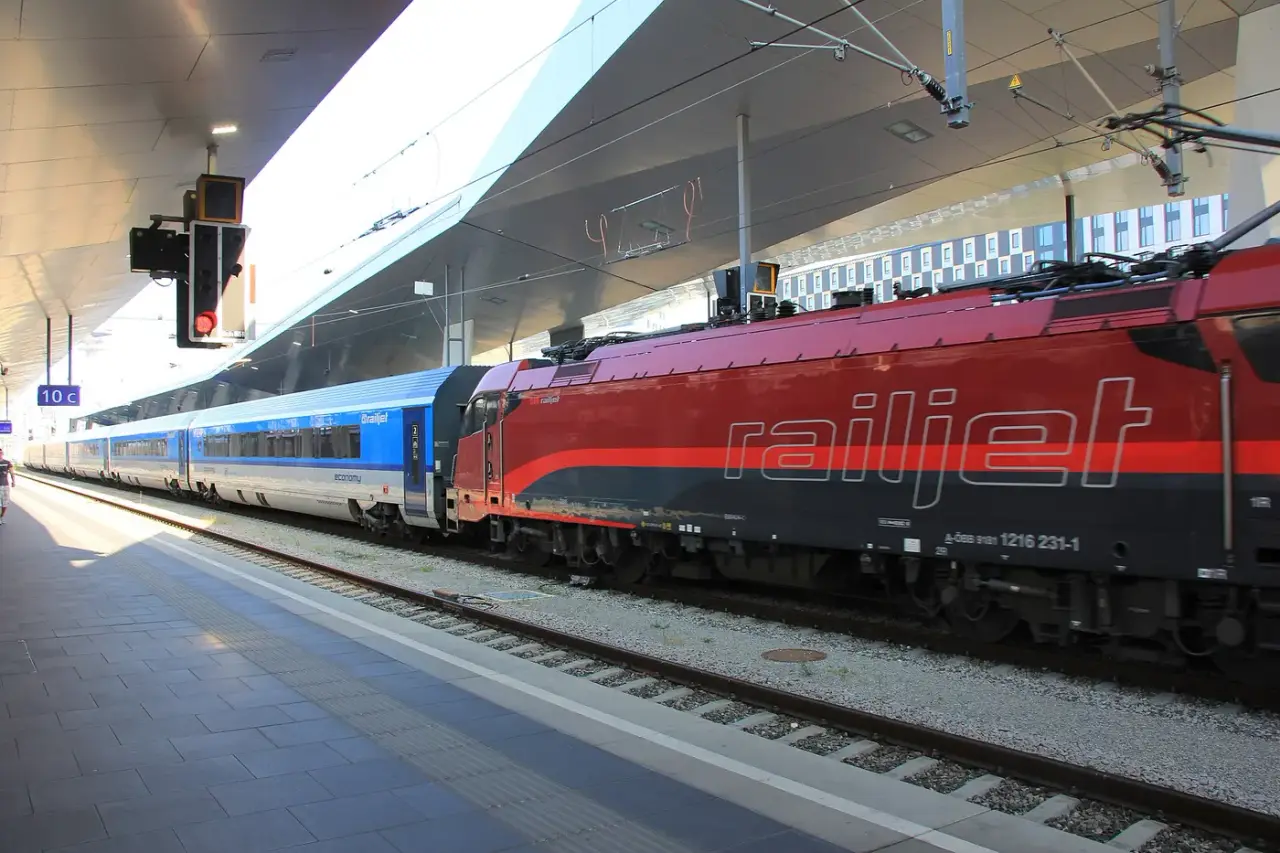
ÖBB and Westbahn: two operators, different rules
- Railjet
- ÖBB's long-distance express train brand. ÖBB lists the faster RJX variant on its Vienna routes to Venice and Trieste via the new Koralm Railway.
ÖBB sells most tickets in the country, including for the regional and S-Bahn trains. Westbahn is a private company that competes on the western main line with double-decker trains. The two sell and price their tickets separately. Two things link them: the KlimaTicket Ö is accepted on Westbahn trains, where pass holders can reserve a seat for free once the pass is added to a Westbahn account, and Westbahn recognises an ÖBB Vorteilscard for its own reduced fare.
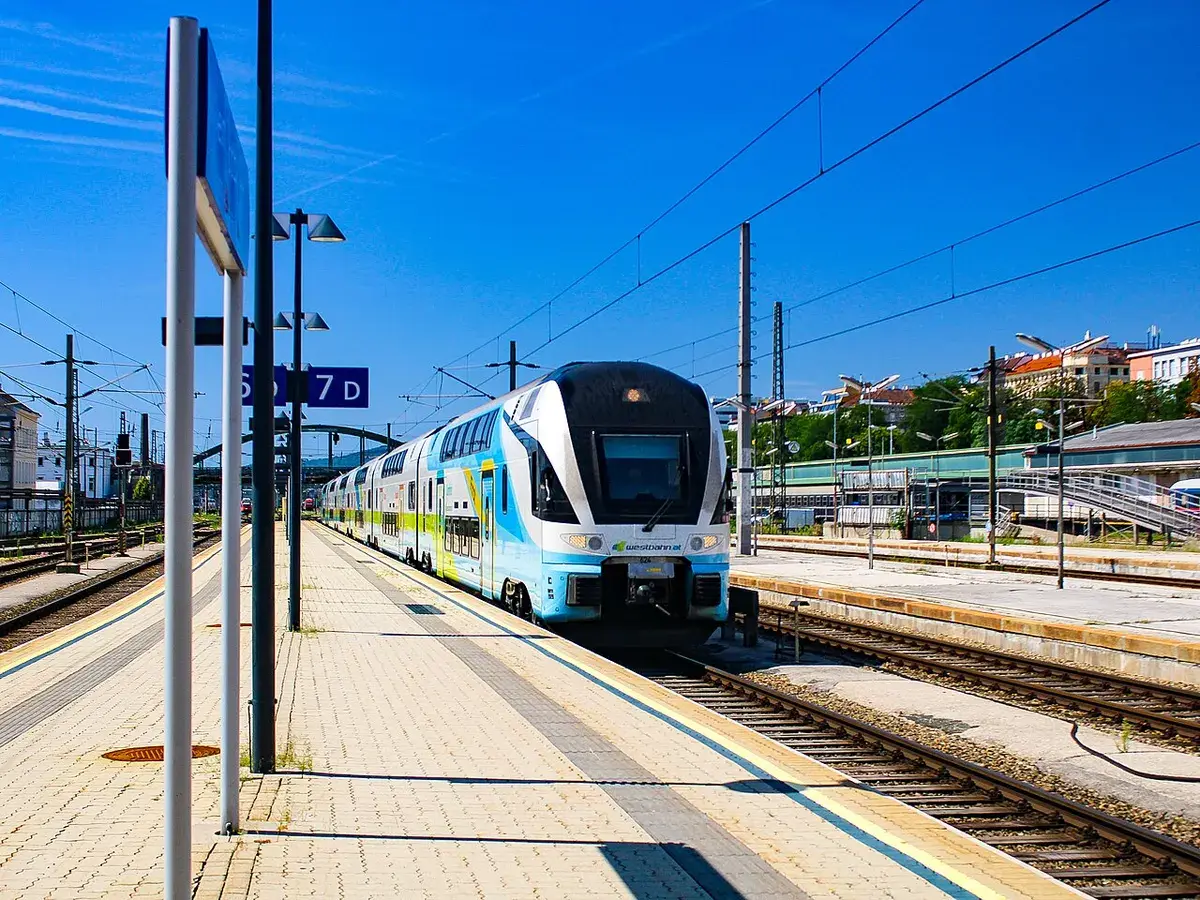
| ÖBB | Westbahn | |
|---|---|---|
| Network | Nationwide, plus Germany, Italy, Hungary, Czechia and more | Vienna via Salzburg to Innsbruck / Bregenz, and on to Munich / Stuttgart |
| Cheapest fare | Sparschiene, from €9.90, on sale up to 180 days before departure | West Superpreis, online only, on sale up to 6 months before departure |
| Regular fare | Standard ticket, 50% off with a Vorteilscard | West Flexpreis: any Westbahn train on the day |
| Railcard | Vorteilscard, from €21 per year for under-26s | Accepts a personalised ÖBB Vorteilscard: up to 50% off the Flexpreis (West Vorteilspreis) |
| Student discount | No separate student railcard; the Jugend card is by age | 10% off the Flexpreis with a student ID, online or in West Shops |
| Seat reservation | Optional, from €3 | Free on Superpreis and online Flexpreis bookings in Standard Class |
Vorteilscard and Sparschiene: how they combine
- Vorteilscard
- ÖBB's discount railcard. It is not a ticket: it cuts the price of the standard tickets you buy separately.
- Sparschiene
- ÖBB's limited-availability advance fare, valid only on the train you pick when booking. The domestic version is sold online and in the app only.
The Vorteilscard Jugend costs €21 per year, is open to anyone under 26 and can be bought up to the day before your 26th birthday, after which it runs for 12 months. It takes 50% off ÖBB standard tickets; because it saves half the fare, it pays for itself once the standard tickets you buy add up to more than twice its price. Two limits matter. Sparschiene fares come with no discounts at all, and seat reservations are halved only on the Vorteilscard Comfort at €89 per year, not on the Jugend or Classic card. Once you are 26, the Classic card costs €73 per year.
| Your situation | Fare to look at | Catch |
|---|---|---|
| Fixed date, booked weeks ahead | Sparschiene, or West Superpreis on the Westbahn corridor | Tied to one train; Sparschiene has no cancellation or refund |
| Plans might change, but you want some security | Sparschiene Komfort, from €4.90 | Includes a seat reservation; refund is free up to 15 days before the first travel date, then a 50% fee until the day before |
| Spontaneous trips | Standard ticket with Vorteilscard, or West Flexpreis | Full price before the discount; not tied to one train |
| Lots of inter-city travel | KlimaTicket Ö | Compare it first with the break-even illustration |
Booking, step by step
Find the connection
Use the ÖBB app or ticket shop, or the Westbahn site if you travel on its corridor. Check the date on the day itself in the app, because works can change a route.
Pick the fare
Sparschiene goes on sale up to 180 days before departure; Westbahn's Superpreis up to 6 months before departure. The cheapest allocation sells out first.
Add a seat if you want one
ÖBB reservations start at €3. Nightjet tickets already include a reservation.
Carry the proof
Keep the ticket in the app. A Vorteilscard or student discount must be shown at the ticket check, with photo ID where required.
In practice: the ticket machine, ticket checks and what a fine costs
On ÖBB's local trains (R, REX, CJX and S-Bahn) you need every ticket for the whole journey before you board, and that includes any bike or dog you bring. Long-distance and night trains work differently: you can buy from the staff on board, as long as you tell them at the first check, without being asked.
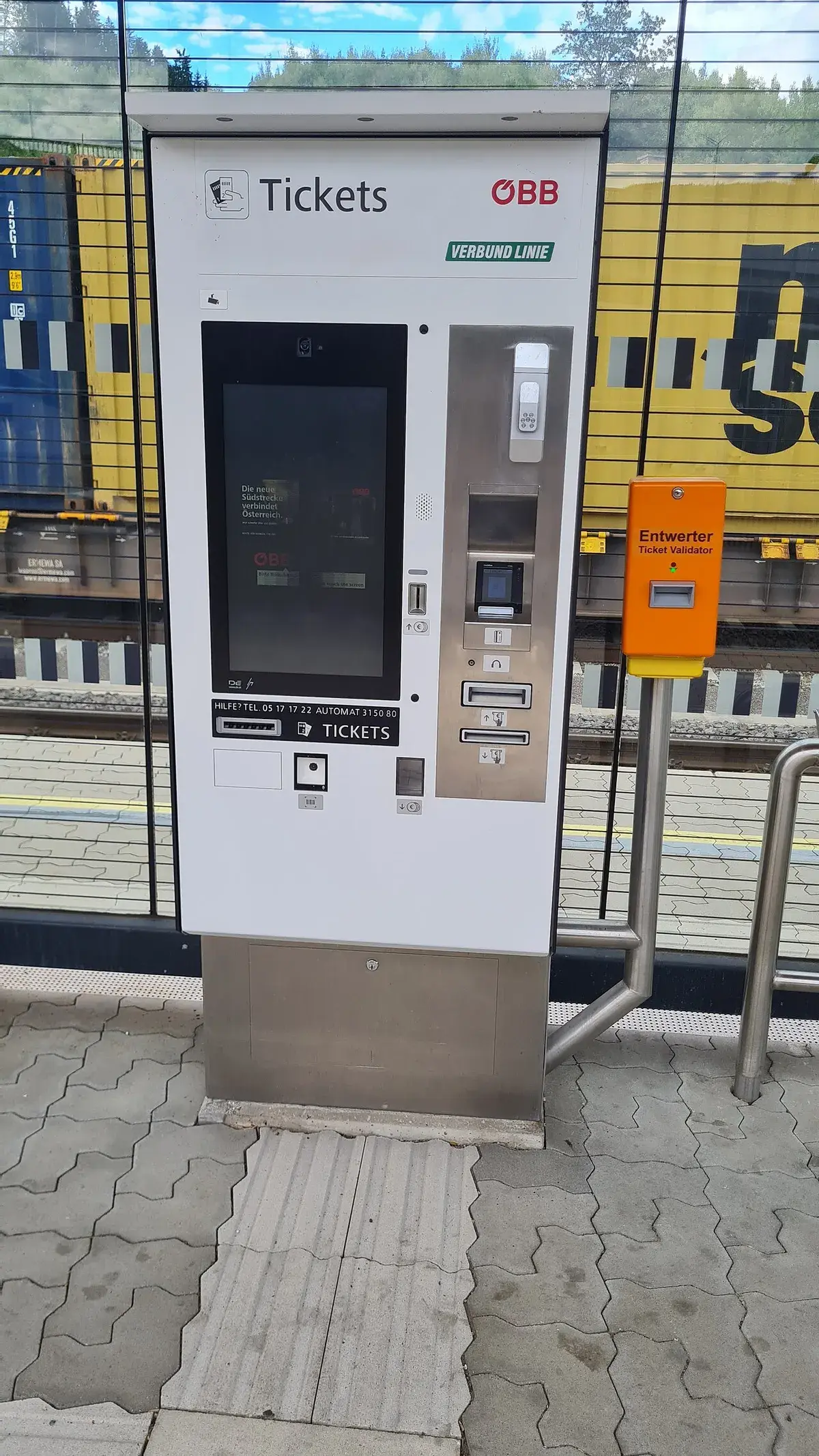
Buy before you board
ÖBB tickets are sold at ticket counters, at the station's ticket machine, in the ÖBB shop and app and by the ÖBB customer service line. For a local train, do it before you step on.
Pay by card if you can
A machine or conductor can take a banknote only if the change due is at most €9, and ÖBB recommends exact or cashless payment. A broken card reader does not count as a machine defect, so it does not entitle you to buy on the train.
Collect an online booking
If you book online and choose to collect the ticket, you get a twelve-character pick-up code that prints it at any ÖBB machine or counter. For a mobile ticket, make sure it has reached your phone before departure.
If the machine is out of order or there is none
At a station with no counter, agency or machine, you may board and buy on the train at the machine price, straight after boarding. If all machines at a station are broken, ÖBB asks you to call the fault hotline, whose number is printed on the machine, before boarding: you get a fault number and buy from the conductor at the machine price. If you board without calling, you receive a Fahrgeldnachforderung marked with the fault, which ÖBB reduces to the machine price if it can confirm the fault after your objection.
On a long-distance train
Tell the staff at the first check, unprompted, that you need a ticket. For a ticket that is not an ÖBB standard ticket, the on-board price is the fare plus a service fee of €4; ÖBB standard tickets have their own on-board price on its website.
If you are found without a valid ticket, ÖBB's charge is a Fahrgeldnachforderung of €110. You can pay on the spot, or later, when ÖBB takes your photo ID and address and adds a €50 processing fee; the transfer is due within 14 days and an objection within one month. The receipt lets you continue in second class to the end of the line. A discount card or student ticket you hold but cannot show on the train costs a €11 fee for the later check. Journeys inside the Vorarlberg network follow that network's own tariff, and Wiener Linien and the regional associations set their own amounts; the VOR figures are in the transport overview.
International trains from Vienna
ÖBB's overview of European services lists these direct connections from Vienna. Other Austrian cities such as Salzburg, Graz and Innsbruck have their own connections to German and Italian cities.
| Country | Destinations | Overnight option |
|---|---|---|
| Germany | Munich, Frankfurt, Cologne, Hanover, Hamburg, Berlin, Dresden | Nightjet to Hanover, Cologne, Dresden, Hamburg and Berlin |
| Italy | Venice, Trieste, Rome, Florence, Bologna | Nightjet to Venice, Rome, Florence and Bologna |
| Hungary, Czechia, Slovakia | Budapest, Prague, Bratislava | None on that page; the Nightjet menu does list Hungary and Slovakia |
- Nightjet
- ÖBB's night-train brand, with seat, couchette and sleeper places. Nightjet tickets include a seat reservation; with a Sparschiene fare, couchette and sleeper places carry a surcharge.
The Nightjet destination menu also lists Switzerland, the Netherlands, Belgium, Croatia, Poland, Slovenia and more. Direct Nightjet tickets can be booked up to 360 days before departure, and Sparschiene fares start at €24.90 for a seat car. ÖBB has announced construction restrictions on some Italian Nightjet services in the 2027 timetable, so check the dates before you book a trip to Venice or Rome.
Bikes, luggage and delays
Bikes travel on local trains and S-Bahn with a bicycle ticket on top of your fare. Spaces there cannot be reserved, so a full carriage can mean waiting for the next train. On long-distance trains such as the Railjet you also need a reservation, €3 online. The bicycle ticket itself is distance-based, costs at least €1.40 and does not change with a Sparschiene or a Vorteilscard. Replacement buses during the Vienna closure (see the warning below) do not take bikes; see our cycling guide for the rest.
Check that the train carries bikes
ÖBB's timetable on oebb.at shows which trains take bikes; the same information is on the posted timetables at the station and from ÖBB customer service.
Buy the bike ticket, and reserve if the train is long-distance
You can take one bike per person, including an e-bike with a pedal-assist drive of at most 25 km/h. Local trains need no reservation; long-distance and night trains do, one reservation per bike ticket, and ÖBB asks you to attach it visibly to the bike.
Check the size
A bike must be no more than 185 cm long, 110 cm high and 60 cm wide and weigh at most 30 kg. Larger bikes and trailers go only in long-distance trains with special luggage compartments.
Load it yourself
Remove your bags first, load the bike yourself into the marked area and secure it with the hooks and eyes. The e-bike battery must stay fixed to the bike and must not be charged. On local trains the number of bikes is limited, wheelchairs and prams have priority, and the staff decide if there is doubt.
Never send a bike on its own
ÖBB does not carry bikes without a travelling passenger. If you try, you are charged a Fahrgeldnachforderung plus a processing fee and a fee for unaccompanied luggage.
For a move-in at the start of term, ÖBB's door-to-door luggage service costs from €24.90 per piece within Austria, for pieces up to 30 kg. It can be booked only together with a valid ÖBB ticket, by phone or at a ticket counter, at least three working days before collection.
On delays, ÖBB says it will take reasonable measures when a delay of more than 60 minutes is expected, but no compensation, refund or cost reimbursement is due if you were told of the delay before buying, or if the delay arose on a service outside your contract of carriage. In practice, put a connection on one booking rather than on separate tickets.
Before a long journey
- Ticket and Vorteilscard are in the ÖBB app, with photo ID to hand
- Connection rechecked on the day, because of the Vienna works
- Seat reservation booked if you want one, or a Nightjet place
- Bike or extra luggage arranged with the right ticket
- Connections booked on one ticket
Frequently asked questions
Is the ÖBB Vorteilscard Jugend worth it for a student?
It costs €21 per year and halves standard ticket prices, so it pays back as soon as the standard tickets you buy total more than twice that amount. It does not reduce Sparschiene fares, so check the cheapest advance fare against the half-price standard fare for each trip.
Does the Vorteilscard make Sparschiene cheaper?
No. ÖBB prints 'No discounts' against every Sparschiene fare. The Vorteilscard applies to standard tickets, and the seat reservation discount comes only with the Comfort card at €89 per year.
Can I use my KlimaTicket on Westbahn?
Yes. Westbahn accepts the KlimaTicket Ö, and you can register it in a Westbahn account to reserve a seat for free. Check the validity map on klimaticket.at if your journey leaves Austria, because the pass only extends to a few named border sections.
Is there a train from Austria to Türkiye?
ÖBB's international pages and the Nightjet destination list show no service to Türkiye. Plan on flying or on separate tickets for each leg.
Can I take my bike on an Austrian train?
Yes, with a bicycle ticket. On long-distance trains such as the Railjet a reservation is also mandatory, €3 online, while on local trains spaces cannot be reserved and a full train can refuse the bike.
Do Westbahn tickets have a student discount?
Students at an Austrian or German university get 10% off the West Flexpreis fare, with a valid student ID and with no age limit. The discount is sold online, in West Shops and at selected tobacconists, not on the train.
Sources
14 sources, all official
- ÖBB Vorteilscard — all variants and pricesÖBB (Official)
- Sparschiene AustriaÖBB (Official)
- Reserve your seat from € 1.50! (ÖBB seat reservations, prices and cancellation)ÖBB (Official)
- Taking your bike on the train: how it works with ÖBBÖBB (Official)
- Train services in Europe (ÖBB overview of international connections from Vienna, Salzburg, Graz and Innsbruck)ÖBB (Official)
- Nightjet (destination menu, 2027 advance sales, 360-day booking horizon)ÖBB Nightjet (Official)
- Passengers' rights (ÖBB: delay, cancellation, missed connection)ÖBB (Official)
- ÖBB luggage service (door-to-door luggage, prices per piece)ÖBB (Official)
- Bauarbeiten Wien Stammstrecke — Hauptsperre Wien Hauptbahnhof – Wien Praterstern, 7 September 2026 to end of October 2027 (Anbindung Flughafen Wien)ÖBB (Official)
- Partner & Student Discounts (WESTbahn)Westbahn Management GmbH (Official)
- West Superpreis — the online supersaver fare for early bookersWestbahn Management GmbH (Official)
- West Vorteilspreis — the reduced fare for everyone with a rail discount cardWestbahn Management GmbH (Official)
- Traveling with KlimaTicket Österreich (WESTbahn)Westbahn Management GmbH (Official)
- Handbuch für Reisen mit den ÖBB in Österreich — Tarifbestimmungen mit den Allgemeinen Geschäftsbedingungen, Version 2026.05, gültig ab 15.10.2026 (A.3.1 tickets, A.3.2 travelling without a valid ticket, A.4.2 bicycles, E.1 fees)ÖBB-Personenverkehr AG (Official)