A bicycle is a vehicle under Austria's road traffic act, the StVO, so many of the rules that apply to a car driver apply to you too: you give way where the signs say so, keep to speed limits and can be fined. This guide covers the rules students most often get wrong, then bike-share, buying and locking, and winter riding. It follows the version of the StVO in force since the 36th amendment took effect on 1 May 2026. For using your bike together with trains, see the train travel guide; for the days you leave the bike at home, student tickets and the KlimaTicket cover public transport.
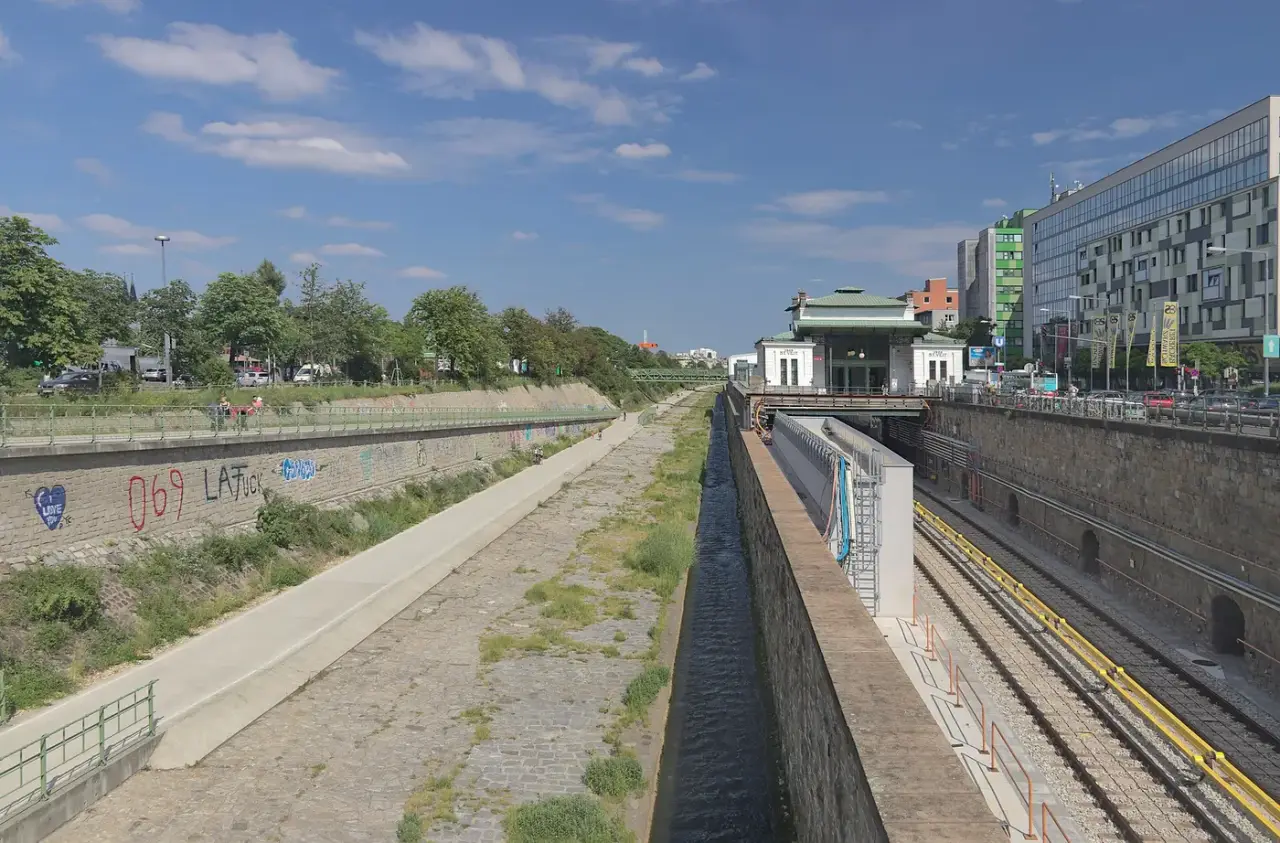
The rules that matter most
- Radfahranlage
- A cycle facility: a cycle path (Radweg), a combined foot and cycle path (Geh- und Radweg) or a marked cycle lane (Radfahrstreifen). Where one exists, a single-track bicycle without a trailer must normally use it, with exceptions the law spells out.
| Topic | What the rule says |
|---|---|
| Helmet | Compulsory for children under 12 on any bicycle, as a passenger or in a trailer, with the adult in charge responsible; for anyone under 14 on an e-bike; and for anyone under 16 on an e-scooter. There is no statutory helmet duty for adults |
| Alcohol | 0.8 per mille on a bicycle or e-bike, with fines from €800. An e-scooter may only be ridden below 0.5 per mille |
| Phone | Phoning while cycling is allowed only with a hands-free device |
| Where to ride | On the road or a cycle facility; not on the pavement, except to cross it. Someone pushing a bike is not legally a cyclist |
| Equipment | Two independent brakes, a bell, a white front light and a red rear light, a white front and red rear reflector, yellow pedal reflectors and reflectors in the wheels. In daylight with good visibility the lights may be left off, but everything else must be fitted |
| Parking | Park so the bike cannot fall or block traffic. Parking on a pavement wider than 2.5 m is allowed, but not at a public transport stop unless there are racks |
Two details catch newcomers. oesterreich.gv.at lists a hand signal when turning among the key rules. And a bicycle without brakes, such as a fixed-gear bike without a brake, is not legal on the road. The age rules are exact: the statute says children 'under 12', and 'under 14' and 'under 16' for e-bikes and e-scooters, so a 12-year-old on an ordinary bicycle is outside the helmet duty. Many secondary summaries mix up the e-scooter and bicycle alcohol limits; the lower figure applies to e-scooters only.
Bike-share schemes by city
Prices and rules change often, so treat the figures as a snapshot and check the app before you subscribe. Most schemes work through an app, and returning a bike away from a station can cost a service fee.
| City | Scheme | Price snapshot | Notes |
|---|---|---|---|
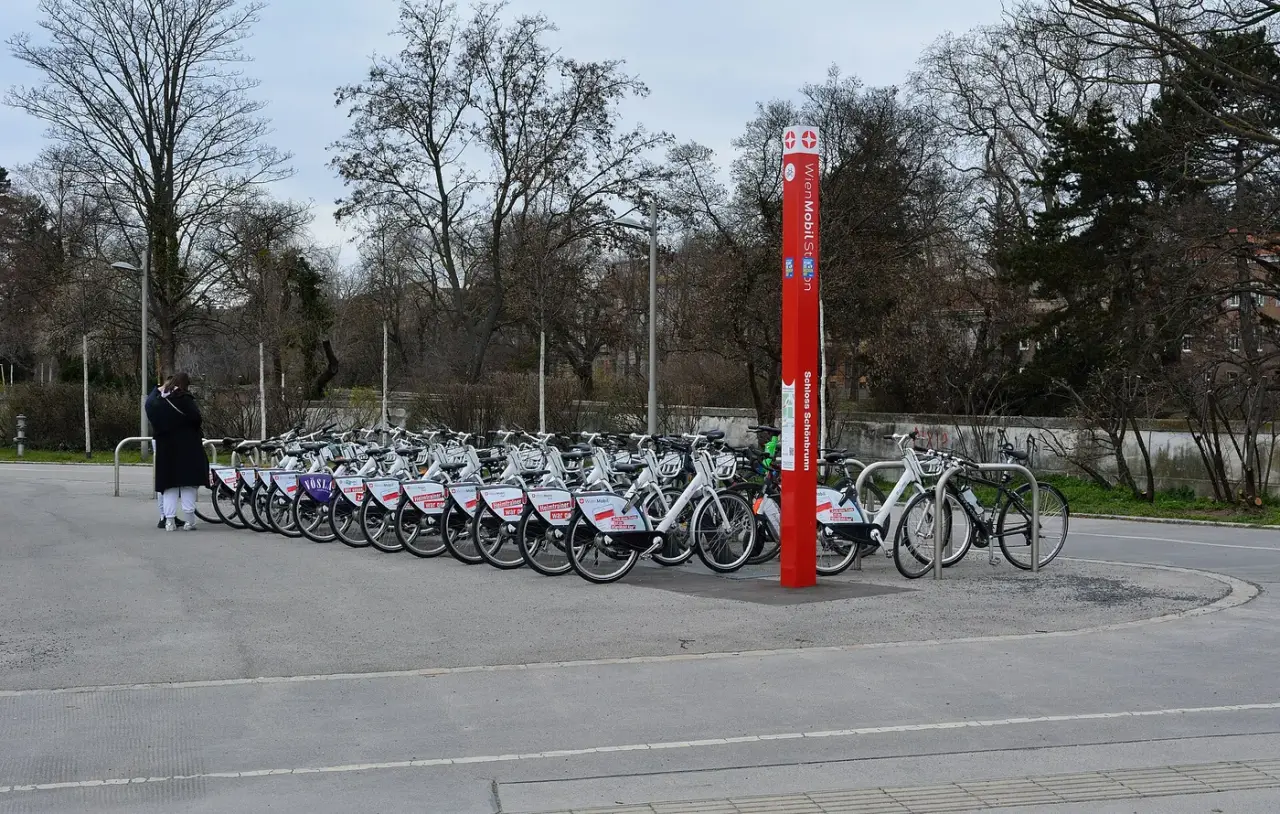
| Vienna | WienMobil Rad | In the operator's app | 250 stations across all 23 districts, about 3,000 bikes; the city lends cargo bikes free through Grätzlrad Wien. Prices could not be read from the operator |
| Linz | City Bike Linz (nextbike) | First 30 minutes of each rental free | About 50 stations growing to 63 in autumn 2026; one account can rent up to four bikes |
| Salzburg | S-bike (e-bikes, wegfinder app) | €3 per 30 minutes; annual pass €100 per year | KlimaTicket holders ride the first 30 minutes free; maximum rental four hours; stations opening in stages through 2026 |
| Innsbruck | Stadtrad Innsbruck (nextbike app) | Under-26 annual tariff €24.90 per year; basic €1.30 per 30 minutes | Registration through the nextbike app; returning a bike away from a station costs a €20 fee |
| Klagenfurt | nextbike Klagenfurt | Annual subscription from €59 | Students get STUDIbike with 30 free minutes per rental |
| Graz | No city scheme confirmed | — | The city's cycling portal (rad.graz.at) lists no rental service; ask Graz Linien before you rely on one |
Buying, locking and recording your bike
- Fahrradpass
- A bicycle passport from the Federal Criminal Police Office, downloadable or available at police stations while stocks last. You record the frame number, make and model, colour and distinguishing marks, and keep a photo. The police call it proof of ownership. It is a record you keep yourself, not a registration with an authority.
A new bike from a shop must come with the equipment listed above, because sellers are obliged to sell only fully equipped bicycles. On a second-hand bike, check the brakes, bell, lights and reflectors yourself, because the rider is responsible for keeping them working. There is no number plate: nothing in the equipment rules asks for one.
The Federal Criminal Police Office says thieves take poorly secured bikes regardless of age or value, and that locks with a thin steel core are too easy to crack for long stops. Lock the frame and the rear wheel to a fixed object, choose a busy, well-lit spot, change the spot from time to time, and take off the bike computer and the e-bike battery. Write down the frame or serial number, usually on the underside of the bottom bracket, and keep the receipt and a photo with it.
Report it to the police
File a report and bring the frame number from your Fahrradpass, the purchase receipt and any photos, which the police can use in a search.
Call 133 if a room was broken into
If a bike room or cellar compartment was forced, call the emergency number 133 so traces can be secured.
Keep the paperwork
Keep the police report, receipt and photos together in case you need them for an insurer or to identify a recovered bike.
In practice: taking your bike on a train or the U-Bahn
Check that the ÖBB train carries bikes
ÖBB's timetable on oebb.at shows which trains take them; the same information is on the posted timetables at stations and from ÖBB customer service. You may take one bike per person, including an e-bike with an assist drive of at most 25 km/h.
Local trains: ticket, no reservation
On R, REX, CJX and S-Bahn trains you buy a bicycle ticket before boarding but need no reservation. Spaces are limited, wheelchairs and prams have priority, and the staff decide if there is doubt, so a full carriage can mean waiting for the next train.
Long-distance trains: reserve
On long-distance and night trains a bike travels only with a reservation, one per bike ticket; ÖBB asks you to attach the reservation visibly to the bike. The bike may be at most 185 cm long, 110 cm high and 60 cm wide and weigh at most 30 kg.
Load it yourself and secure it
Take your bags off the bike, stand it in the marked area and fasten it to the hooks and eyes, which you can also use for a bicycle lock. The e-bike battery must stay fixed to the bike and must not be charged on board.
Vienna U-Bahn: check the time
ORF Wien reported in August 2026 that bicycles may travel on the U-Bahn on weekdays between 09:00 and 15:00 and from 18:30 until the end of service, and all day on weekends and public holidays. Wiener Linien's own conditions could not be read for this guide, so check them in the app before a rush-hour journey. The same report says e-vehicles are no longer carried on Vienna's trams and buses.
The ticket prices and the exact fees, including what ÖBB charges if you travel without a valid ticket, are in the rail guide. ÖBB's conditions treat a bike you look after yourself as hand luggage, for which it is liable only for intent or gross negligence, so lock it to the carriage's hooks and keep it in sight.
Cycling in winter
Riding through winter is common and workable with some preparation. The City of Vienna's winter advice is to brake earlier and gently, slow down in bends, and watch for frozen ruts and ice; on slippery ground use the rear brake more than the front. In snow or slush, tyres with a coarse tread or spike-free winter tyres are enough, and spiked tyres help on ice. Letting a little air out improves grip. Check your lights because it gets dark early, add reflective clothing, and wear a helmet, since falls are more likely on ice. Lowering the saddle slightly lets you put both feet down quickly.
Vienna publishes a map of the cycle paths it clears first in winter, but other cities were not checked, so look at your city's own pages. If a stretch looks icy, getting off and pushing is a legitimate choice.
Winter-ready bike
- Front and rear lights work and the reflectors are clean
- Brakes adjusted and brake pads free of grease
- Chain lubricated; lock treated with spray so it does not freeze
- Tyres with tread, or spiked tyres if your route is icy
- Helmet and reflective clothing ready
Frequently asked questions
Do I have to wear a helmet when cycling in Austria?
Not as an adult on an ordinary bicycle. The duty covers children under 12 on any bicycle, anyone under 14 on an e-bike and anyone under 16 on an e-scooter. A helmet is still sensible, especially in winter.
What is the alcohol limit for cycling in Austria?
On a bicycle or e-bike it is 0.8 per mille, with fines from €800. An e-scooter rider must be below 0.5 per mille. Cycling drunk can also be counted against your road-traffic reliability.
Can I use my phone while cycling?
Only with a hands-free device. The StVO forbids phoning while cycling without one.
Do I need to register my bicycle in Austria?
There is no legal registration or number plate for a normal bicycle. The Federal Criminal Police Office offers a Fahrradpass in which you record the frame number and a photo, which helps the police if the bike is stolen.
What should I do if my bike is stolen?
Report it to the police with the frame number, the purchase receipt and photos. If a bike room or cellar was broken into, call 133 so traces can still be secured.
Is there bike-share in my university city?
Linz, Salzburg, Innsbruck, Klagenfurt and Vienna each have a scheme, summarised in the table above. No city scheme in Graz could be confirmed on the city's cycling portal.
Sources
18 sources, 17 official
- StVO 1960 § 68 — Fahrradverkehr (consolidated text in force from 1 May 2026, as amended by BGBl. I Nr. 17/2026): Abs. 1 cycle-path duty, Abs. 3 lit. e hands-free phoning, Abs. 4 parking, Abs. 6 helmetsRIS (Bundeskanzleramt) (Official)
- StVO 1960 § 65 — Benützung von Fahrrädern (a cyclist must be at least 12, or supervised; someone pushing a bicycle is not a cyclist)RIS (Bundeskanzleramt) (Official)
- BGBl. I Nr. 17/2026 — Bundesgesetz, mit dem die Straßenverkehrsordnung 1960 (36. StVO-Novelle), das Kraftfahrgesetz 1967 und das Führerscheingesetz geändert werden (authentic text, issued 23 April 2026; new § 68 Abs. 6 helmet duties, new § 68a Rollerfahren incl. Abs. 3 alcohol limit and Abs. 7 helmet duty, commencement in § 103 Abs. 29)Bundesgesetzblatt für die Republik Österreich / RIS (Bundeskanzleramt) (Official)
- StVO 1960 § 5 — Besondere Sicherungsmaßnahmen gegen Beeinträchtigung durch Alkohol (consolidated text in force from 24 April 2026, as amended by BGBl. I Nr. 17/2026): general threshold 0.8 g/l blood / 0.4 mg/l breathRIS (Bundeskanzleramt) (Official)
- StVO 1960 § 99 — Strafbestimmungen (consolidated text in force from 30 July 2026, as amended by BGBl. I Nr. 62/2026): alcohol fine bands in Abs. 1, 1a and 1bRIS (Bundeskanzleramt) (Official)
- Fahrrad im Straßenverkehroesterreich.gv.at (Federal Chancellery) (Official)
- Fahrradverordnung — required equipment of a bicycle (two brakes, bell, white front light, red rear light, reflectors; lights may be omitted in daylight and good visibility)oesterreich.gv.at (Federal Ministry of Innovation, Mobility and Infrastructure) (Official)
- Fahrraddiebstahl – Tipps zur Vorbeugungoesterreich.gv.at (Federal Ministry of the Interior) (Official)
- Fahrraddiebstahl (Bundeskriminalamt: lock advice, frame number, Fahrradpass as proof of ownership, reporting to the police)Bundeskriminalamt (Federal Ministry of the Interior) (Official)
- Fahrradpass (Bundeskriminalamt template for recording frame, coding or registration number, make, photo)Bundeskriminalamt (Federal Ministry of the Interior) (Official)
- Radfahren in Wien — Radwege, Routenplanung, Umleitungen (incl. WienMobil Rad stations in all 23 districts and Grätzlrad Wien cargo bikes)Stadt Wien (wien.gv.at) (Official)
- Sicheres Radfahren im Winter (Stadt Wien: riding, tyres, lights, helmet; winter-priority cycle network)Stadt Wien (wien.gv.at) (Official)
- Stadtrad Innsbruck — tariffs (basic, monthly, annual, U26 annual) and registration from age 16Stadtrad Innsbruck (IVB / nextbike) (Official)
- S-bike Salzburg — tariffs, KlimaTicket benefit, stations (launched August 2026)Salzburger Verkehrsverbund / Stadt und Land Salzburg (Official)
- Linzer Fahrradverleih auf Wachstumskurs (City Bike Linz powered by nextbike: stations, first 30 minutes free)Stadt Linz (linz.at) (Official)
- Fahrradfahren in Klagenfurt (nextbike Klagenfurt: tariffs and STUDIbike)Stadt Klagenfurt am Wörthersee (Official)
- Handbuch für Reisen mit den ÖBB in Österreich — Tarifbestimmungen mit den Allgemeinen Geschäftsbedingungen, Version 2026.05, gültig ab 15.10.2026 (A.3.1 tickets, A.3.2 travelling without a valid ticket, A.4.2 bicycles, E.1 fees)ÖBB-Personenverkehr AG (Official)
- Wiener Linien: new carriage conditions for bicycles and e-scooters from 1 September 2026 (ORF Wien, 30 August 2026)ORF Wien (Secondary)