A student account at one of the large Austrian banks is a short, mostly online procedure: the bank needs to identify you and, for the student product, to see that you are enrolled. The banking overview explains the landscape and the legal background; this page is the practical walk-through — which documents to bring, what the banks themselves say about their student accounts, what to do about the paperwork loop around your address, and how to read the card and fee terms before you sign.
Documents you need to open an account
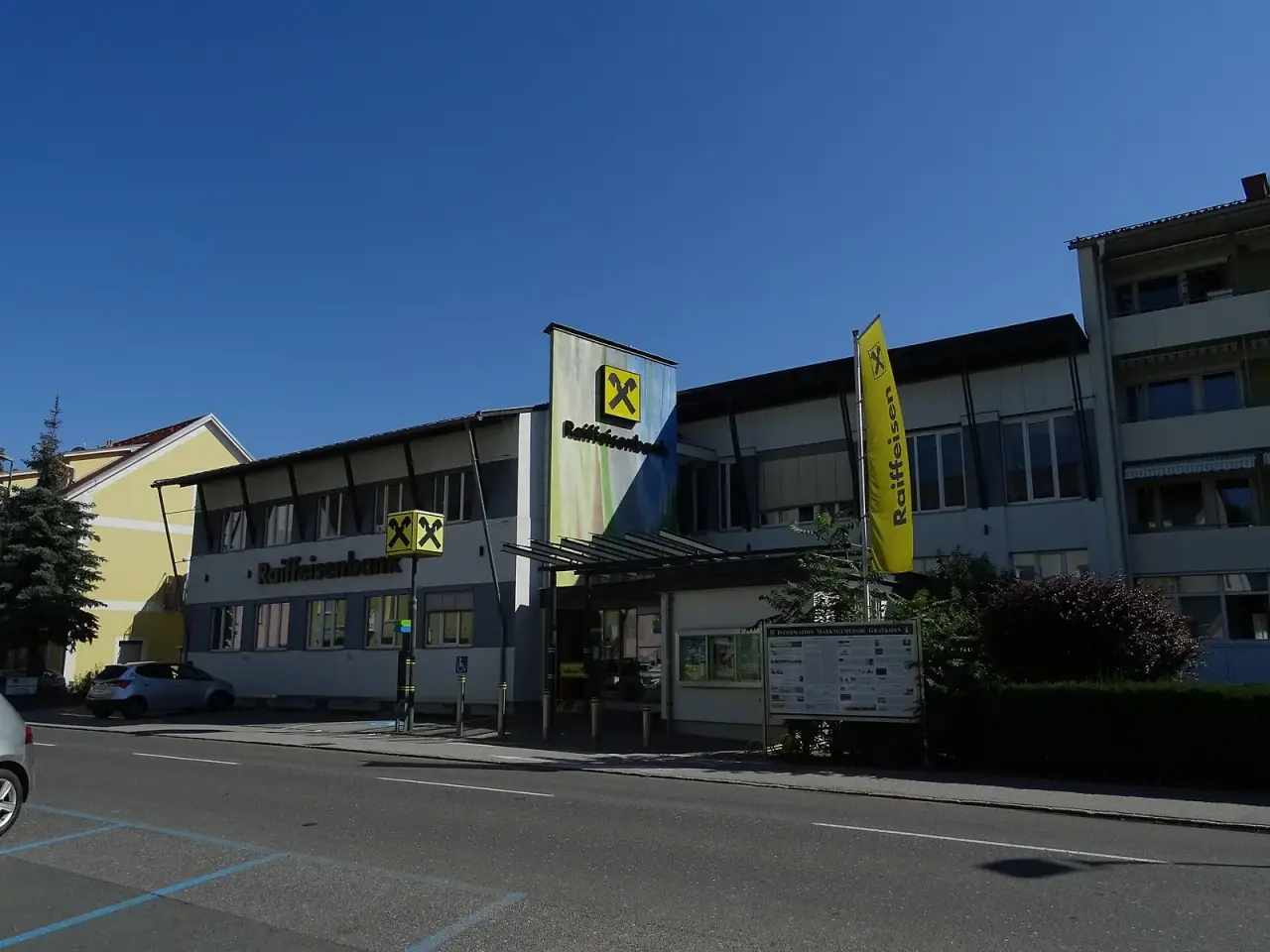
What is certain depends on what the bank itself publishes. Raiffeisen's student-account page names two things: a valid photo ID (Lichtbildausweis) or ID Austria, and an Inskriptionsbestätigung from an Austrian university or Fachhochschule. Erste Bank and Sparkasse's page asks you to be an ordinary student (ordentliche Hörer:in) at an Austrian university or Fachhochschule and promises an online opening of about seven minutes, but it does not list the documents. Bank Austria's page lists none either. When these pages were read in October 2026, none of the three mentioned a Meldezettel.
- Enrolment confirmationInskriptionsbestätigung
- The document from your university or Fachhochschule that proves you are currently enrolled. Download it from your student portal each semester; the banks' student products are tied to this status, so keep a current copy.
Bring or upload these
- Your passport (the bank must identify you; Raiffeisen names a valid photo ID or ID Austria)
- Your current enrolment confirmation (Inskriptionsbestätigung) — or, if you are not yet enrolled, ask whether the bank will open a standard account instead and convert it later
- Your visa D or residence permit card, if you already have one: no student-account page requires it, but a branch may ask to see your residence title, so carry it
- Your Meldezettel, if you already have it — not named by the three banks, but a branch can ask for proof of address under its own onboarding policy
- An Austrian phone number or email you can receive codes on, and your ID Austria if you have set one up (see the digital ID guide)
The Meldezettel, the landlord and the account: which comes first?
The loop students worry about runs like this: the landlord wants a bank account for rent, the bank wants an address, the address registration wants a signed rental agreement or landlord signature, and you need a rental agreement before you arrive. In practice the loop is shorter than it sounds. You must register your address within 3 days of moving in (calendar days, as the Meldezettel guide explains), and that step does not depend on having a bank account. The bank step does not legally depend on the registration either, though a particular branch may ask for it.
Before you travel: arrange the first payments without an Austrian account
A landlord or student residence may want a deposit before you arrive. Pay it by an ordinary international transfer from your home bank or from a digital bank account; the transfers guide covers costs and proof of funds. If the landlord insists on an Austrian IBAN, the comparison with digital banks explains why that is contrary to EU rules for euro payments.
In your first days: register the address
Get the landlord's signature on the registration form and register within 3 days of moving in. The accommodation side is described in arranging housing before you arrive.
Open the student account
Open it online or book a branch appointment, with your passport and enrolment confirmation ready. If the bank asks for the Meldezettel by then, you will usually already have it.
Update the landlord, employer and university
Give your Austrian IBAN to anyone who pays you or collects from you, and set up the rent as a standing order (Dauerauftrag) once the bank confirms the account is active.
If a bank refuses: the Basiskonto
Under the Verbraucherzahlungskontogesetz (VZKG), every consumer lawfully resident in the EU has the right to a basic payment account at a credit institution established in Austria, regardless of where they live (§ 23). The right also covers homeless consumers and asylum seekers. A bank must open the account or refuse within 10 business days of receiving a complete application, and it may refuse only for the grounds in § 24: you already hold an Austrian account with the same services (unless you declare that you have been notified it is being terminated), or there are criminal charges or a conviction for an intentional offence against that bank or its staff. A bank may check for an existing account and ask you to sign a declaration that you hold none.
The account has to offer at least opening, maintenance and closure, cash deposits, cash withdrawals at counters and ATMs within the EEA, direct debits, card payments including online, and transfers including standing orders, with no limit on how many you make (§ 25). Fees for those services may not exceed €80 a year by statute; the ministry's consumer portal states the indexed ceilings as €83.45 a year for most consumers and €41.73 a year for the groups designated as particularly vulnerable, which include Studienbeihilfe recipients. The hub explains why those indexed values are the ministry's figures rather than the statute's own. Credit-card payments are not covered by the cap.
Two points catch students out. First, if you already hold an Austrian student or current account, you cannot demand a Basiskonto from a second bank; the right is for people without a suitable Austrian account. Second, a Basiskonto is a plain account, not a student package: it does not include a credit card or the extras that student packages bundle in. If a bank refuses, it must tell you immediately, in writing and free of charge, give the precise reasons (unless anti-money-laundering or security rules prevent it), and name the complaint routes: the Finanzmarktaufsicht (FMA) and the FIN-NET dispute body.
Student accounts at the three largest banks
These are the conditions as each bank's own page states them when checked in October 2026; they change, and Raiffeisen's regional banks may differ. The student accounts are free while you meet the age and enrolment conditions, not indefinitely.
| Bank | Free until | Opening channel named on the page | Notes from the page |
|---|---|---|---|
| Erste Bank / Sparkasse | 27th birthday | Online (about seven minutes) via the website or George app; branch visits mentioned | For ordinary students at Austrian universities and Fachhochschulen. The Smartcard credit card is free for students, and then reverts to standard terms. Eligibility wording uses "Deviseninländer:innen" without explaining how it applies to new arrivals; ask the branch |
| Raiffeisen | 27th birthday | Online via a chosen regional Raiffeisenbank, or a branch appointment | Photo ID or ID Austria plus an Inskriptionsbestätigung; no Meldezettel named. Mein ELBA is free until the same birthday |
| UniCredit Bank Austria | 30th birthday | Not re-checked on 26 October 2026, because the page blocked automated access; the 8 October reading was used | Free if the balance stays positive; converts automatically to an Online-Konto at 30 |
Two things none of the banks' pages state: that you must re-submit the enrolment confirmation each year, and what the account turns into at the age limit (apart from Bank Austria's automatic conversion). This guide cannot confirm a re-submission rule either way. Keep a current confirmation to hand and read your contract. Erste's page also advertises a time-limited online sign-up bonus with conditions; treat any such bonus as an extra rather than the reason to choose.
IBAN, BIC and your cards
Your account number is an IBAN. An Austrian IBAN has 20 characters: AT, two check digits, the five-digit former Bankleitzahl and the eleven-digit former account number, per the finance ministry's information portal. For a domestic payment or a euro payment within the EEA you do not need a BIC (the 8- or 11-character bank code, also called the SWIFT code); for payments outside that area you do. Online banking and the card normally come with the account; the IBAN appears in the app as soon as the account is active.
- Debit card (Bankomatkarte)Bankomatkarte / Debitkarte
- The Sparkassengruppe's own explainer says the debit card is known in Austria as the Bankomatkarte, and that its payments are charged to your account at once. A credit card is billed later, in a monthly total, up to five weeks after a purchase. Contactless payments under €50 need no PIN, per the same explainer.
For a student the practical conclusion is simple. Use the debit card for everyday spending, since it draws on your balance and cannot put you into credit-card debt. A credit card is a separate product; Erste's page lists a free Smartcard credit card for students, and no page makes a credit card a condition of the account. A Basiskonto does not include one. If your card is delayed, ask the branch how it is delivered, because none of the three pages states a delivery time.
Fees to watch after the first year
| Charge | Highest found | Note |
|---|---|---|
| Debit card not included in the account price | €38.98 a year | A free student account normally includes the card; this is the cost to expect once the package lapses |
| Paper-based transfer at the counter | €4.90 per transfer | Electronic transfers cost €0.00 to €0.77 at the same banks |
| Notice that a payment failed for lack of funds | €12.05 | A bounced rent standing order costs this on top of what the landlord charges |
| ATM withdrawal at a bank's own machine | €0.77 per withdrawal | Most surveyed banks charge nothing, but inclusion is no longer automatic |
Before you sign anything, ask for the Entgeltinformation: the standardised fee sheet the bank must give you. It is the document to compare banks on, rather than a headline price.
- Fee information sheetEntgeltinformation
- The standardised document in which a bank lists the main charges on a payment account in a fixed format. Compare it between banks, and keep it for the day a fee appears that you did not expect.
In practice: online or at a branch counter
Both routes are described on the banks' own pages, and each page says something the other does not. Read on 28 October 2026, Raiffeisen's page has you choose a regional Raiffeisenbank first and then either click "Studentenkonto online eröffnen" (about ten minutes, according to the page) or book a "Beratungstermin" at a branch near you. Erste Bank and Sparkasse describe an online opening in about seven minutes through the website or the George app, and do not describe a branch procedure; opening in George at a branch is mentioned only to say that the page's sign-up bonus does not apply to it. Erste's student debit card, the Debitkarte StudentID, is described as doubling as an international student ID with ISIC discounts. None of the pages says how your identity is checked online or how long the card takes to arrive.
Download the enrolment confirmation first
Get the current Inskriptionsbestätigung as a PDF from your university's student portal before you start, and keep your passport to hand. Raiffeisen names a photo ID or ID Austria as the identity document, so if you do not have ID Austria yet, the passport is the document to prepare.
Pick the channel that fits your situation
If you are already in Austria and the online form accepts your documents, the online route is the fast one. If it asks for something you cannot supply, or you want the card and PIN arrangements explained, book the branch appointment instead; at Raiffeisen that is one button on the student-account page. Bank Austria's page blocked automated access when it was last checked, so ask its branch directly.
At the counter, ask for the paperwork before you sign
Ask for the Entgeltinformation, the age until which the account stays free and what it turns into afterwards, whether the debit card is contactless, and how and when card and PIN will reach you, since no page states it.
If the answer is no, ask for it in writing
A refusal to open a payment account has to be explained in writing, as the Basiskonto section above sets out. Note the date and the reason given, then send the Basiskonto request.
| What you mean | What to say or look for |
|---|---|
| I would like to open a student account | Ich möchte ein Studentenkonto eröffnen. |
| Here is my enrolment confirmation | Hier ist meine Inskriptionsbestätigung. |
| Please give me the fee sheet | Können Sie mir bitte die Entgeltinformation geben? |
| Until when is the account free? | Bis wann ist das Konto kostenlos? |
| I am requesting a basic account | Ich beantrage ein Zahlungskonto mit grundlegenden Funktionen nach § 23 VZKG. |
A sensible timeline for the first weeks
Before departure
Pick how to pay the first rent and deposit
Transfer from home or from a digital bank; keep the receipt. Ask the landlord for the IBAN and the name to match against.
Days 1 to 3 days
Register the address
Meldezettel, signed by the landlord. Keep the confirmation: some banks and many services ask for it.
Week 1 to 2
Open the student account
Online or at a branch, with passport and enrolment confirmation. If refused, send the Basiskonto request and note the date.
After activation
Set up payments
Standing order for rent, IBAN to the employer if you work (see marginal employment), and your IBAN with the university for any refunds. Proof of financial means for the permit is covered in the financial proof guide.
Frequently asked questions
Can I open a bank account in Austria without a Meldezettel?
Possibly. No statute makes the Meldezettel a condition of opening a payment account, and none of the three largest banks lists it on its student-account page. A branch may still ask for proof of address as its own onboarding policy. If a bank refuses, a Basiskonto is available regardless of where you live.
Which documents do I need for an Austrian student account?
Raiffeisen's page names a valid photo ID or ID Austria and an Inskriptionsbestätigung (enrolment confirmation). Erste Bank and Sparkasse and Bank Austria publish no document list on their student-account pages, so bring your passport and enrolment confirmation anyway, and ask the branch about anything else.
Can a bank refuse to open a Basiskonto for a student?
Only on the two grounds in § 24 VZKG: you already hold an Austrian account with the same services, or there are criminal charges or a conviction for an intentional offence against that bank or its staff. It must decide within 10 business days of a complete application and give reasons in writing; you may complain to the FMA or FIN-NET.
How long does a student account stay free?
Until your 27th birthday at Erste Bank/Sparkasse and Raiffeisen, and until your 30th at Bank Austria, according to each bank's own page. Bank Austria also requires a positive balance, and its account converts automatically to an Online-Konto at 30.
What is the difference between a Bankomatkarte and a credit card?
The Bankomatkarte is Austria's name for a debit card: payments are charged to your account at once. A credit card is billed later, monthly, with up to five weeks between purchase and charge. A student account usually comes with the debit card; a credit card is a separate product.
Do I need a BIC to receive money from abroad?
Not for euro payments within the EEA, where the IBAN alone is enough. From outside that area, for example from Türkiye, the sender may be asked for the BIC (SWIFT code) as well as your IBAN.
Sources
9 sources, 5 official
- Verbraucherzahlungskontogesetz (VZKG) — Bundesrecht konsolidiertRIS (Rechtsinformationssystem des Bundes) (Official)
- FAQ: BasiskontoKonsumentenfragen.at (Sozialministerium) (Official)
- Studentenkonto eröffnenRaiffeisenbank (Institutional)
- Studentenkonto » Gratis-Konto für StudierendeErste Bank und Sparkasse (Institutional)
- Gratis StudentenkontoUniCredit Bank Austria (Institutional)
- Allgemeines zu IBAN und BICoesterreich.gv.at (Federal Ministry of Finance) (Official)
- Unterschiede zwischen Debitkarten und KreditkartenSparkassengruppe (Erste Bank und Sparkassen) (Institutional)
- Bankenmonitoring über Spesen 2026 — Wie sich die wichtigsten Bankspesen im Neugeschäft von 2025 bis 2026 entwickelt habenArbeiterkammer Wien (Verlag Arbeiterkammer Wien) (Official)
- Entgelte für BankomatbehebungenArbeiterkammer Wien (Official)