Registering your address is the first hard deadline you meet after arriving in Austria, and it is one of the simplest pieces of paperwork you will do — a single form, two signatures and no fee. What actually trips students up is not the form but the timing and the signatures: you may not register before you have moved in, and the person providing your accommodation has a statutory duty to sign. This guide is the complete step-by-step, including the edge cases the arrival hub only summarises, and the deregistration you owe when you leave.

What the Meldezettel is
- MeldezettelMeldezettel
- The registration form you and your accommodation provider complete and sign to register your address with the registration authority (Meldebehörde). Its content and layout are fixed by law (Annex A to the Meldegesetz, § 9), so the paper form is the same across the country.
- Registration confirmationBestätigung der Meldung
- The written confirmation, stamped with the official registration note, that the authority hands you once your address has been entered in the Central Register of Residents (Zentrales Melderegister, ZMR) — free of charge. This is what banks, insurers and the residence authority ask to see. It is often still called a "Meldezettel" colloquially. Do not confuse it with a Meldebestätigung: that is a separate certificate of your current or past registrations which you apply for later, when you need one, and which carries a fee.
- UnterkunftgeberUnterkunftgeber
- The accommodation provider who must sign your Meldezettel — in the law's words, whoever grants someone accommodation, for whatever reason. In practice that is the owner, the main tenant if you are subletting, a subtenant who lets you share their room or flat, or the operator of a student residence. Their signature is what evidences to the authority that you have moved in.
Every person who takes up accommodation in a dwelling in Austria must register, whatever their nationality. Each person needs their own form, so a shared flat means one signed Meldezettel per occupant. Children are registered by whoever is responsible for their care. One narrow exception matters to new arrivals: someone who is put up in a dwelling for no longer than 3 days does not need to register at all — so a weekend on a friend's sofa while you collect keys needs no paperwork, but a longer stay does.
When you must register: three calendar days
The law is specific: whoever takes up accommodation in a dwelling must register with the registration authority "innerhalb von drei Tagen" — within 3 days, counted in calendar days, not working days. Some study-abroad material phrases this as "three working days"; that is imprecise, and a registration arriving on day five because you waited out a long weekend is late.
Registering your address (Meldezettel)
Everyone who moves into a home in Austria
Move in
The deadline counts calendar days, not working days.
3 days
Fill in the form
Your landlord or hall signs it as the accommodation provider.
Hand it in
First-time arrivals register in person or by post; online needs an earlier Austrian registration.
Keep the confirmation
Late or missing registration can cost up to €726.
Source: RIS, oesterreich.gv.at. Last checked:
Image (PNG)Two timing rules catch people out. First, the clock starts only when you have actually moved in — not when you signed the lease, not when you collected the keys. Second, you may not register in advance: a registration before you have genuinely taken up the accommodation is not permitted, and registering an address where you have not taken up accommodation is a punishable offence in its own right (see below).
| Situation | Deadline | Legal basis |
|---|---|---|
| Moving into a flat, shared flat or student residence | Within 3 days of moving in | § 3 Abs. 1 |
| Staying in someone's home for a few days | No registration if the stay is no longer than 3 days | § 2 Abs. 2 Z 1 |
| Hotel, hostel or other accommodation business | Guest register on arrival; ordinary registration once the stay exceeds 2 months, at the latest within 3 days after | § 5 |
| Moving out (including leaving Austria) | Deregister within 3 days before or after moving out | § 4 Abs. 1 |
| Switching which address is your main residence | Within 1 month | § 11 Abs. 4 |
The two signatures — and why no contract is needed
The national required-documents list is narrower than most arrival checklists suggest, and it contains no tenancy agreement of any kind. What the law requires is a fully completed Meldezettel signed by both of you, plus public documents proving your identity:
- You, as the person subject to registration, sign to confirm that the personal details are correct (§ 7 Abs. 4 Meldegesetz).
- The Unterkunftgeber signs, adding their name legibly (§ 8 Abs. 1). The provider's signature is the evidence of accommodation, which is why a dormitory place is no harder to register than a flat — the hall of residence signs as your Unterkunftgeber, just as a landlord or main tenant would.
This is the point most guides get wrong. The Meldezettel does not need a rental contract because the signature does that job. What an authority may additionally ask for is a separate matter: Vienna lists a rental or purchase contract, or a current land-register extract, as documents that may "eventuell" be requested, and the office can ask for further documents whenever your details do not match or raise doubts. Treat those as "sometimes", not "always".
| Your housing | Who signs as Unterkunftgeber |
|---|---|
| Flat rented directly from the owner | The owner |
| Room sublet from a main tenant | The main tenant (Hauptmieter) |
| Sharing a room or flat with a subtenant | That subtenant (Untermieter) |
| Student residence (Studentenheim) | The residence operator or its management |
| Hotel, hostel, guesthouse (first 2 months) | No Meldezettel — you are entered in the guest register |
Where to register, and that it is free
Registration is handled by the registration authority for your new address: the Gemeindeamt (municipal office), in a statutory city the Magistrat, and in Vienna the Meldeservice of the district offices. In Vienna you can go to any Meldeservice location, whichever district you live in. Registration is free of charge, and so is the confirmation you receive. Some official pages still mention a fee for presenting a foreign passport to an Austrian authority for the first time; the Fees Act expressly exempts foreign documents presented for registering, changing or cancelling an address (Gebührengesetz § 14), so you should not be charged for showing your passport at the Meldeservice.
You do not have to appear in person. You may send the completed, signed form and your documents by post, or have another person hand them in; in Vienna that person needs no power of attorney from you. Either way the documents must be originals or certified copies. What you cannot do is register by fax or email — neither is a legally valid route. If you send original documents by post, the risk of loss in the post is yours, not the authority's; in Vienna they come back by registered letter. Many people therefore prefer to have someone drop the form off in person.
The registration process, step by step
Move in first
The 3 days clock starts only when you have actually taken up the accommodation. Registering before you have moved in is not permitted.
Fill in the Meldezettel
One form per person. Complete your personal details and the address, and state whether it is your main residence (Hauptwohnsitz) or another residence (Nebenwohnsitz) — see below. Sign as the person subject to registration. The religion field may be filled in after the provider has signed, or left blank.
Get the Unterkunftgeber's signature
Whoever grants you the accommodation signs as Unterkunftgeber: the owner, the main tenant if you sublet, a subtenant you share with, or the dormitory operator. This signature is the proof that you have moved in.
Submit it in time
Hand the signed form and your passport in at the registration office within 3 days — in Vienna at any Meldeservice — or send them by post or with another person.
Keep the confirmation
The authority enters you in the Central Register of Residents and gives you the stamped registration confirmation. Keep it: banks, insurers, your university and the residence authority may all ask for it.
Documents to bring
- A fully completed Meldezettel, signed by you and by the Unterkunftgeber (one per person)
- Non-Austrians: a travel document (passport) — always required; Vienna also accepts the current card issued in an asylum procedure
- Austrian citizens: public documents showing name, date and place of birth and citizenship, typically passport and birth certificate
- Originals or certified copies only — faxed or emailed copies are not accepted
- Possibly: a rental or purchase contract, or a current land-register extract, if the authority asks
- Optional: the certificate for any academic degree you want entered in the register
In practice: a visit to a Vienna Meldeservice
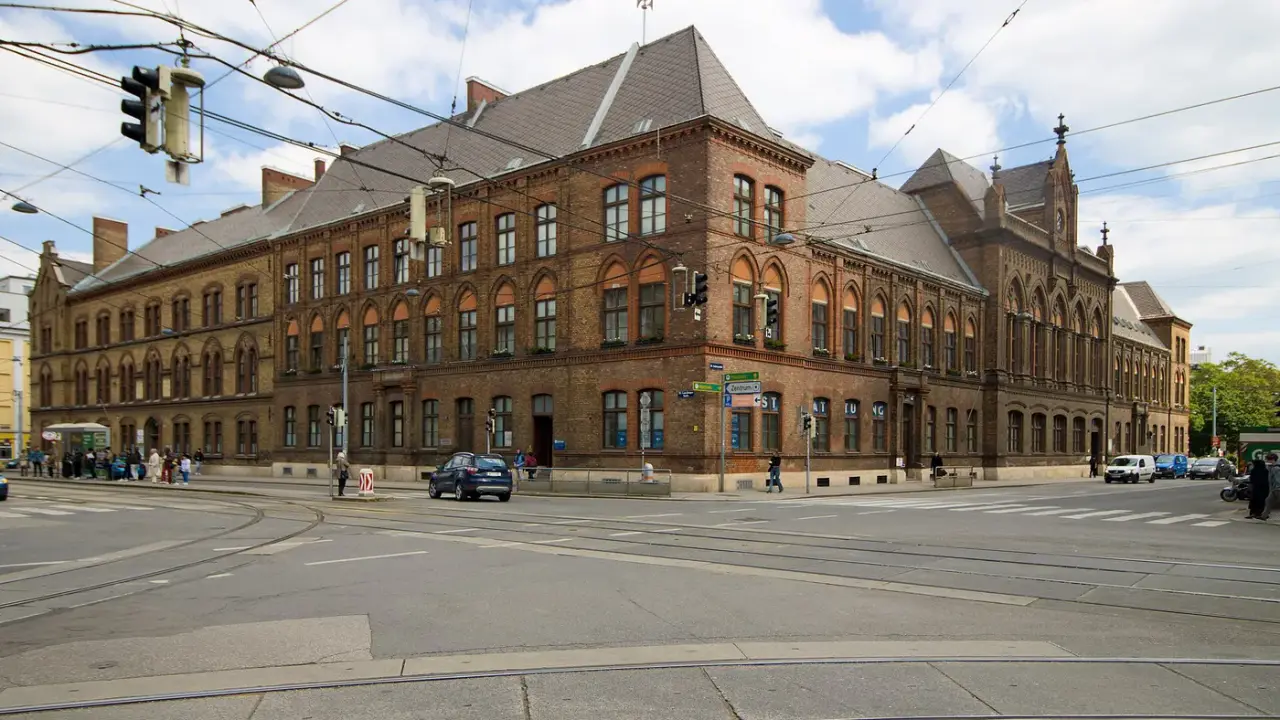
In Vienna the registration counters are the Meldeservice desks, most of them inside the Magistratische Bezirksämter (district offices). Because any of them will register you, choose the one on your route rather than the one in your postcode. The City of Vienna's list gives the address, floor and room of each; as listed on 22 October 2026 they include 1., Wipplingerstraße 8 (ground floor), 10., Laxenburger Straße 43–45 (ground floor, rooms 1–4) and 21., Am Spitz 1 (first floor, Top 108–110).
| Session | Hours | Appointment? |
|---|---|---|
| Morning | Monday to Friday, 8:00 to 11:30 | Not needed |
| Afternoon | Monday to Friday, 12:00 to 15:30 (Thursday until 17:30) | Required — reserved online with the City of Vienna |
| Holidays | Closed on public holidays and on 24 December; open 8:00 to 11:30 only on Good Friday and 31 December | Not applicable |
The 3 days are counted in calendar days, but the counters open only on working days, so plan the visit for the first working day after you move in rather than for the last day of the window.
Before you go. The City of Vienna links the Meldezettel as a PDF, so you can print and complete it with your provider in advance. Each person needs a separate form, and two boxes matter: you sign as the person registering, and the provider signs in the Unterkunftgeber field (an owner moving into their own flat signs in both). Who signs as Unterkunftgeber depends on your position: if you are the main tenant moving in yourself, the owner or the property management (Hausverwaltung) signs; if you move in with a main tenant, they sign for you. Your landlord or Hausverwaltung does not register you — that remains your task. Name parts that Austrian naming law does not have, such as a patronymic, go in the "other name" (sonstiger Name) field according to oesterreich.gv.at, and the details you enter must match your documents: the office may ask for further papers when they do not.
At the counter. Bring your passport and the signed form, as originals or certified copies. The City of Vienna lists the details that must appear in your documents — family name, first names, name before first marriage, date and place of birth, sex, citizenship and any other names — and gives "Reisepass und Geburtsurkunde" (passport and birth certificate) as its example, so bring a birth certificate if your passport does not show everything on that list. The staff check the documents, enter your address in the Central Register of Residents and give you the "Bestätigung der Meldung". Civil-status documents such as a birth certificate that you hand in are stored in the Standarddokumentenregister, which normally spares you from presenting the original again in later official procedures.
Mistakes the official pages name. Registering before you have moved in is not allowed. Registering a secondary residence needs a new, fully signed Meldezettel for that address — the old form from another address is not enough. And you do not need to register again simply because your landlord or Hausverwaltung changes, or because you receive a new passport. Outside Vienna the same national rules apply, but the registration authority is your Gemeindeamt or, in a statutory city, the Magistrat, whose counters, hours and booking arrangements you should check on its own website.
Main residence or secondary residence?
- Main residenceHauptwohnsitz
- The address you have settled at with the intention of making it the centre of your life interests. The law names the factors that decide this, among them how long you stay, where you work or study, and where your family lives. You can have only one Hauptwohnsitz.
- Other residenceweiterer Wohnsitz / Nebenwohnsitz
- Any further address at which you have a point of connection to your life "until further notice" — the federal portal's own example is living somewhere in order to study. You may hold any number of these.
The form asks you to tick one, and the choice is not a formality. The law does not let you pick freely: it depends on where the centre of your life actually is, and if two addresses qualify, on the one to which you have the closer ties. A student who has moved to Austria for a full degree, studies and lives here, will often find that the Austrian address is the main residence; a student on a one-semester exchange whose life remains at home may reasonably register a Nebenwohnsitz. If your situation changes later, you re-designate the address (Ummeldung) within 1 month.
| Hauptwohnsitz | Nebenwohnsitz | |
|---|---|---|
| How many you can have | Exactly one | Any number |
| Test | Centre of your life interests | A point of connection, e.g. studying there |
| ID Austria validity for a foreign national | 5 years if registered before you apply | 3 years, fixed at registration and not extendable |
| Land and municipal benefits | Many Land subsidies and some local tariffs depend on it | Usually not enough |
Where your main residence is registered affects more than the register: Land subsidies and some city discounts are tied to it, and so is your digital identity, as the next section explains. Answer the question honestly — if the authority doubts a Hauptwohnsitz designation, the municipality can open a formal review procedure.
Online registration — only after a first registration
Adults with ID Austria or an EU Login can register, re-designate or deregister an address online through the federal "Meldewesen" service; instead of the provider's signature, you confirm that the Unterkunftgeber has been told you have moved in. But there is a hard condition built into the statute: online registration is only available when your identity data is already stored in the Central Register of Residents from an earlier Austrian registration (§ 3 Abs. 1a Meldegesetz). Your first registration in Austria therefore has to be done in person, by post or through another person.
Sequencing matters here too. A foreign national can obtain ID Austria only with a sufficient connection to Austria evidenced by residence, employment or business activity; a registration confirmation is one of the documents the interior ministry lists as proof. Its validity is fixed at the moment you register for it: 3 years without a registered Hauptwohnsitz, 5 years with one, and it cannot be extended. So complete your Meldezettel first, and if your Austrian address is your main residence, register it as such before applying.
Hotels, hostels and student residences
A hotel, hostel or other accommodation business handles you differently at first: instead of a Meldezettel, it enters you in its guest register when you check in. That covers stays of up to 2 months. If you stay longer, the ordinary registration rules apply, and you must register like any other resident no later than 3 days after those 2 months end.
If your landlord or main tenant won't sign
If you genuinely live there, signing is not a favour your provider can withhold. Meldegesetz § 8 Abs. 1 obliges the Unterkunftgeber to sign every Meldezettel you have signed, legibly adding their name. The same paragraph obliges them to refuse where they have reason to believe that you have not actually moved in or will not move in within 7 days. So a provider cannot stall on accommodation you do occupy — and equally cannot be pressured into signing for an address you have not taken up.
Refusing without good reason is itself an offence: a provider who will not sign a completed Meldezettel faces a fine of up to €360, or €1,090 for a repeat breach (§ 22 Abs. 2) — the same range applies to a provider who signs for someone they believe has not moved in. Your practical route if they still refuse: go to the registration authority within the deadline with your form and passport and explain that the provider will not sign. If the authority concludes that the provider is refusing wrongly, it can register you officially and then itself confirms on the Meldezettel that you have moved in (§ 15 Abs. 4). Separately, a provider who suspects a resident has not registered must tell the authority within 14 days (§ 8 Abs. 2).
A refusal can be a sign that the let itself is irregular — for instance a sublet the owner has not agreed to. For how to check a listing before you move in, see our guide to rental scams and the student accommodation hub.
Moving out and leaving Austria: deregistration
Registration has a mirror image. Whoever gives up accommodation in a dwelling must deregister (Abmeldung) within 3 days before or after moving out (§ 4 Abs. 1) — and that includes leaving Austria at the end of your studies. Failing to deregister carries the same fines as failing to register. Deregistration is simpler than registration: it is free, needs no signature from the Unterkunftgeber, and can be done at any registration authority in Austria, not only the one for your old address.
Moving within Austria
Register at the new address within 3 days. If the new address becomes your main residence, the authority can deregister (or re-designate) the old one in the same step, so no separate Abmeldung is needed.
Leaving Austria
Deregister within 3 days before or after you move out: fill in a Meldezettel for the Abmeldung and take it with official photo ID to any registration office, send it by post, or — because you have been registered before — do it online with ID Austria or an EU Login, even after you have left.
Keep the proof
You receive a written confirmation of the deregistration. Keep it with your records; it documents the end of your Austrian residence.
A Meldezettel is not a residence permit
Keep the two evidence chains separate. The Meldezettel records your address, and its only "proof" of accommodation is the Unterkunftgeber's signature — no contract needed. Your residence permit is a different application with different documents: Vienna's student-permit page accepts a rental contract or a contract with a Studentenheim as evidence of your regular expenses for the permit, which has nothing to do with the Meldezettel's signature requirement. Registering your address does not grant you any right of residence, and a permit application is not satisfied by a Meldezettel. Both tracks are set out in the student residence permit guide.
EU/EEA and Swiss citizens have their own separate step: if they stay longer than three months, they must apply for a registration certificate (Anmeldebescheinigung) from the residence authority within 4 months of entry. That is in addition to the Meldezettel, not a replacement for it — see the visa and residence hub.
What your registration unlocks next
Your registration confirmation opens the rest of your first month — banks, insurers and the residence authority all use it as proof of your Austrian address, and you need it before you can get ID Austria. If a document later asks for a "Meldebestätigung", you can request one from any registration office, or online once you have ID Austria; unlike the registration itself, it carries a fee.
And if you are caught the other way round — needing a bank account before you have a registered address, to pay a deposit or first month's rent — Austrian law gives every consumer lawfully resident in the EU a right to a basic payment account (Basiskonto) regardless of where they live. So a bank account does not legally depend on holding a Meldezettel, even if individual banks ask for one in practice.
Frequently asked questions
How soon do I need to register my address after moving into Austria?
Within 3 days of moving into accommodation, counted in calendar days rather than working days. The clock starts only when you have actually moved in, and you may not register in advance. Missing the deadline can lead to a fine of up to €726.
Do I need a rental contract to register a Meldezettel?
No. The national required-documents list contains no tenancy agreement: what the law requires is a completed Meldezettel signed by you and by your Unterkunftgeber, plus identity documents — for a non-Austrian, a travel document. The provider's signature is the proof of accommodation, so a dormitory place registers exactly like a flat. An authority may still ask to see a contract or land-register extract in particular cases.
Can I register my address online?
Only if you have been registered in Austria before. The online Meldewesen service requires your identity data to be stored already in the Central Register of Residents from an earlier registration, and you need ID Austria or an EU Login. Your first registration in Austria therefore has to be done in person, by post or through another person.
What if my landlord or main tenant won't sign my Meldezettel?
If you genuinely live there, signing is a statutory duty under Meldegesetz § 8 Abs. 1, and a provider who refuses without reason faces a fine of up to €360. Go to the registration authority within the deadline and explain the refusal: if the refusal is unjustified, the authority can register you officially and confirm your move-in itself. A refusal can also signal an irregular let, so check the arrangement.
Do adult students living in a student residence have to register?
Yes. The Meldegesetz exemption for Studentenheime applies only to minors who are already registered elsewhere in Austria. An adult student registers within 3 days of moving in, with the residence operator signing as Unterkunftgeber; no rental contract is needed for the Meldezettel.
Do I have to deregister when I leave Austria?
Yes. Whoever gives up accommodation must deregister within 3 days before or after moving out, and failing to do so is an offence with the same fines as failing to register. Deregistration is free, needs no landlord signature and can be done at any registration office, by post, or online with ID Austria or an EU Login.
What is a Scheinmeldung?
A sham registration: registering at an address where you have not actually taken up accommodation. It is an offence by the person registering under Meldegesetz § 22 Abs. 1 Z 2, punishable by a fine of up to €726, or €2,180 for a repeat breach. Anyone who arranges such a registration for money faces a separate fine of up to €1,500.
Sources
14 sources, all official
- Meldegesetz 1991 (consolidated version)RIS — Rechtsinformationssystem des Bundes (Official)
- Anmeldung eines Hauptwohnsitzes oder weiteren „Nebenwohnsitzes“oesterreich.gv.at (Bundesministerium für Inneres) (Official)
- Abmeldung eines bestehenden Hauptwohnsitzes oder „Nebenwohnsitzes“oesterreich.gv.at (Bundesministerium für Inneres) (Official)
- Ummeldung – bisheriger Hauptwohnsitz soll zum „Nebenwohnsitz“ werden oder umgekehrtoesterreich.gv.at (Bundesministerium für Inneres) (Official)
- Hauptwohnsitz/weiterer Wohnsitz („Nebenwohnsitz“)oesterreich.gv.at (Bundesministerium für Inneres) (Official)
- Meldebestätigungoesterreich.gv.at (Bundesministerium für Inneres) (Official)
- Anmelden eines WohnsitzesStadt Wien (Official)
- Öffnungszeiten und Adressen des Wiener MeldeserviceStadt Wien (Official)
- Aufenthaltsbewilligung für Studenten beantragenStadt Wien (MA 35) (Official)
- Gebührengesetz 1957 § 14 (Tarife), consolidated versionRIS — Rechtsinformationssystem des Bundes (Official)
- E-Government-Gesetz § 4a (Registrierung und Widerruf des E-ID), consolidated versionRIS — Rechtsinformationssystem des Bundes (Official)
- Generelle Infos zur ID AustriaDigitales Amt / Bundesministerium für Digitalisierung und Wirtschaftsstandort (Official)
- Verbraucherzahlungskontogesetz (VZKG) — Bundesrecht konsolidiertRIS (Rechtsinformationssystem des Bundes) (Official)
- Antrag auf Anmeldebescheinigung und Bescheinigung des Daueraufenthalts (last updated 10.08.2026)oesterreich.gv.at (content responsibility: Federal Ministry of the Interior) (Official)