You can buy a SIM card in Austria on your first day, but it will not work until a provider has recorded who you are. Since 1 January 2019 anonymous activation has been impossible for prepaid cards and contracts alike, so the practical question is how you will identify yourself with the documents you arrive with. Where the SIM fits in your first month is in the first 30 days checklist; the wider picture is in the arrival hub.
Prepaid or contract: how the two differ
- Prepaid cardWertkarte
- A SIM you top up with credit instead of paying a monthly bill. Many providers sell it as a starter pack (Starterpaket) that often includes some starting credit.
- Minimum contract termMindestvertragsdauer
- The period during which you cannot terminate a contract. It is often advertised as a waiver of your right to cancel for a number of months (Kündigungsverzicht).
- Contract summaryVertragszusammenfassung
- The standardised summary a provider must normally give you before a contract is concluded. It states the product, the minimum term, the main charges, the notice period and the promised quality.
| Prepaid (Wertkarte) | Contract (Vertrag) | |
|---|---|---|
| How you pay | Top up credit; some products need a top-up before the SIM can be used | Monthly bill |
| Commitment | None stated by the regulator; check each product's terms | A minimum term of at most 24 months, and 24 months only if the provider gives something in return, such as a subsidised device or a waived activation fee |
| Leaving | Check the product's own terms; the regulator's page does not describe prepaid expiry | Consumer notice period of at most 1 month; ending early within the minimum term usually means paying the remaining base fees at once |
| Before you commit | Buy a starter pack in a shop or supermarket and activate it by phone or internet | The provider must normally hand you a contract summary before the contract is concluded; read the term, base fee, call charges, annual fees and notice period |
| Cancelling after signing | Not applicable | No general right of withdrawal; a limited right exists for contracts made by phone or online |
For a first month prepaid is the lower-risk choice: it commits you to nothing while you learn where you live and which network works there. A contract suits you once you know that, but it is the one step here where a signature binds you, so treat the minimum term as the real price of the plan. The regulator's page does not list a provider's own requirements beyond identification, so ask before you sign.
Registration: the ID rule and how to meet it
The regulator, RTR, is explicit: since 1 January 2019 no contract can be activated anonymously, prepaid or postpaid. The provider must record your name, any academic degree and your date of birth, not your address, and a provider that fails to identify its customers faces penalties of up to €50,000, so do not expect a shop to skip the step.
The identification regulation allows methods from showing an ID document in a shop to online routes: RTR names photo-ident with a webcam and confirmation by a bank or financial institution where you are already identified, and providers may offer other equally reliable methods. RTR adds that providers may charge for identification, that most offer a free online route, and that a retailer identifying you on a provider's behalf may charge a fee the provider does not know about. Ask about the cost before you buy.
| Provider (example) | Methods its own page names | What it says about cost |
|---|---|---|
| A1 (B.free) | A1 shops, selected retailers and tobacconists; online by photo-ident, Handy-Signatur, online banking with a participating Austrian bank, or an already registered B.free card. You need a photo ID and the card's PUK | No fee stated on the page |
| Magenta | Magenta shop; partner shops; online by banking login, Handy-Signatur/Bürgerkarte, or photos of your face and ID. Accepted IDs include passport and identity card | Partner shops may charge extra fees; none stated otherwise |
| Drei | Online or in the Wertkarte app by Austrian bank account, photo-ident (photos of the ID and a short video of your face), or ID Austria | Registration is free of charge |
In practice: buying and activating a prepaid SIM
The pages the regulator and the providers publish describe the sequence well enough to plan it. Nothing here is a promise about any one shop, because each point of sale sets its own routine.
Choose where to buy
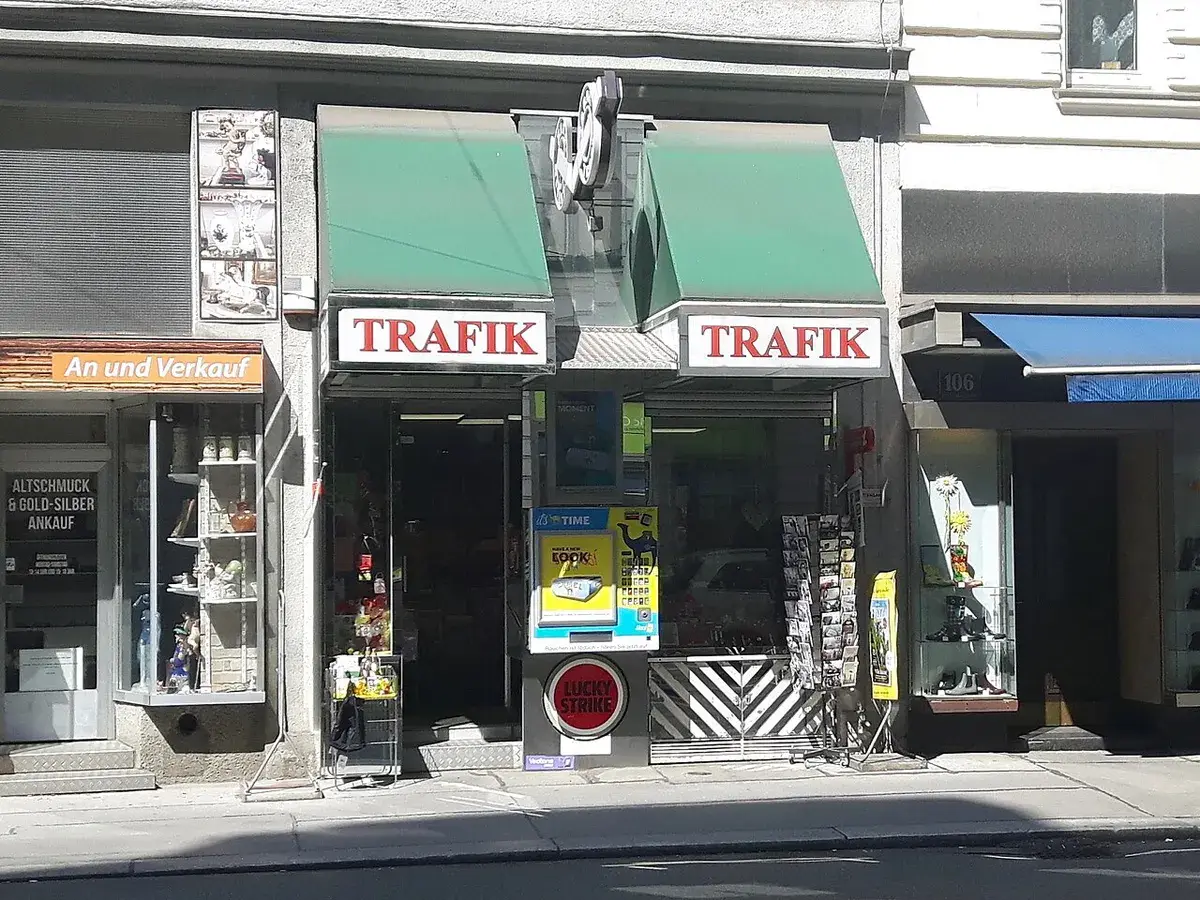
RTR describes starter packs sold in shops or supermarkets and activated by phone or internet. A1 says its B.free cards can be registered at A1 shops, selected retailers and tobacconists (Trafiken); Magenta lists its own shops and partner shops. A tobacconist is the small shop that also sells newspapers.
Ask three things before you pay
Which documents are needed, since RTR notes that the PUK code may have to be given at registration; whether the seller charges for identifying you, since RTR says a retailer acting for the provider may charge a fee the provider does not know about; and whether the card works at once or needs a top-up first.
Identify yourself with your passport
The provider records your name, any academic degree and your date of birth, not your address. Drei's page states that a tariff cannot be used without registration in your name, so an unidentified card is dead weight.
Keep the card carrier and the PUK
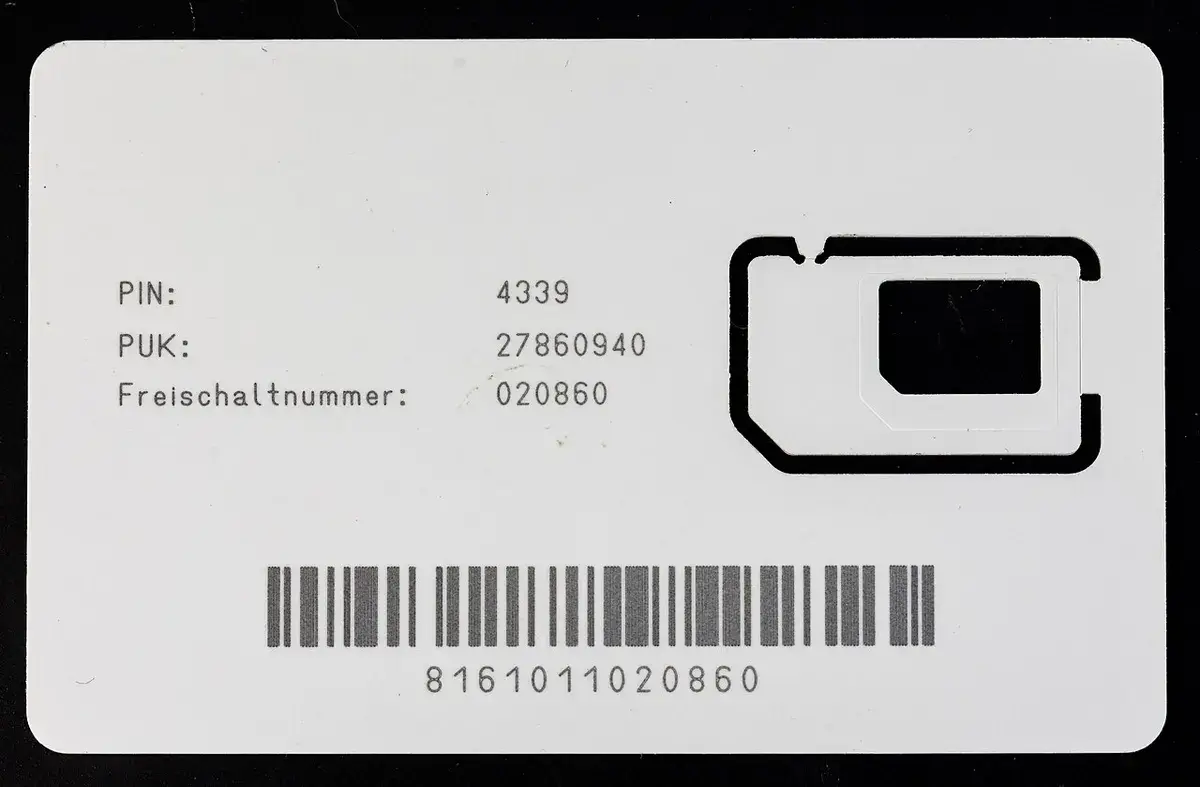
The PUK is printed on the plastic carrier the SIM is punched from. Providers can ask for it during registration, and you need it if the PIN is blocked, so keep the carrier with your documents.
Check it before you leave
Make a call or open a web page at the counter, and ask how to top up. That way any problem is raised while the seller is in front of you.
Networks and brands: comparing without a ranking
RTR's April 2026 spectrum award names three network operators: A1, T-Mobile and Hutchison. Most consumers meet a larger set of retail brands. RTR's registration page lists, among others, bob, B.free, Drei, HoT, Magenta, S-Budget Mobile, Spusu, WOWWW! and yesss!. These are examples drawn from that list, not recommendations, and which network a brand uses is stated by the brand itself, not by RTR. The same RTR information warns that a brand is not the provider: its example is bob, whose provider is A1 Telekom Austria AG. That matters because the contract, the terms and the identification are with the provider.
A student's comparison can be short: monthly price and what it includes, minimum term and notice period, EU roaming and its data cap, whether you can top up or pay without an Austrian bank account, and whether eSIM is sold. Coverage needs care: RTR points out that provider coverage maps describe outdoor reception only and that a provider need not guarantee reception inside your flat. RTR's Netztest can measure the quality you actually get.
EU roaming, and calling home
Since 15 June 2017 a provider may not add a roaming surcharge in EU member states, plus Norway, Liechtenstein and Iceland, within fair use, so your Austrian SIM works elsewhere in the EU at its domestic price. RTR lists the limits. A provider may ask for proof of habitual residence or a stable tie to Austria, with a registration confirmation and attendance of recurring full-time study courses among its examples; it may cap data roaming on cheap or unlimited packages and on prepaid tariffs charged per unit; and it may check for misuse, such as a SIM mostly used abroad.
eSIM
An eSIM is a digital SIM: a profile loaded onto a chip built into the phone instead of a plastic card. A1 says most newer smartphones support it, that you receive a QR code by email and scan it over a WLAN connection, and that new contract customers can choose it at sign-up; whether your phone supports it is set by its manufacturer. The registration duty is unchanged, since no contract can be activated anonymously. A1's page does not say whether prepaid eSIM is offered, so ask. If your Turkish bank or other services send SMS codes to your old number, consider keeping that SIM or an eSIM profile active alongside the Austrian one.
If you sign a contract
Before you sign a contract
- Read the contract summary the provider must give you before conclusion
- Note the minimum term, the notice period and the base fee
- Ask whether price changes under an index clause can happen, because RTR says they are lawful and give you no right to cancel when agreed in the contract
- Check the roaming and fair-use limits, and the price of calls to Türkiye
Frequently asked questions
Do I need ID to buy a SIM card in Austria?
Yes. Since 1 January 2019 every new SIM, prepaid or contract, has to be registered to an identified person, and the provider records your name, any academic degree and your date of birth. Bring your passport to the shop or expect an online identification step such as photo-ident.
Is prepaid or a contract better for an international student?
Prepaid is the lower-risk option for the first weeks because it carries no minimum term. A contract can lock you in for up to 24 months, with a consumer notice period of at most 1 month, so choose one only once you know where you will live and which network works there.
Can I use my Austrian SIM in other EU countries?
Within fair use you pay your domestic price in other EU states, Norway, Liechtenstein and Iceland, with no roaming surcharge. Providers may ask for proof of habitual residence or a stable tie to Austria, may cap data on some packages and may check for misuse. Calls from Austria to Türkiye are international calls and are priced by the provider.
Does identifying myself for a SIM cost money?
RTR says the law does not regulate who bears the cost, so providers may charge, although most offer a free online method. A shop doing the identification on a provider's behalf may charge a fee the provider does not know about, so ask before you buy.
Can I get an eSIM in Austria?
Providers sell eSIMs; A1, for example, describes it as a digital SIM that you activate by scanning a QR code, and offers it to new contract customers. The same identification duty applies, and its page does not say whether prepaid eSIM is available, so ask your provider.
Can I cancel a mobile contract after signing it?
RTR says there is no general right of withdrawal, so a signed contract binds you. A limited right exists for contracts concluded by phone or online. After the minimum term you can give notice, which for consumers may be at most 1 month.
Sources
9 sources, 5 official
- Alle Telefonwertkarten müssen registriert werdenRTR — Rundfunk und Telekom Regulierungs-GmbH (Official)
- Verträge (Telefon- und Internetverträge) — KonsumentenserviceRTR — Rundfunk und Telekom Regulierungs-GmbH (Official)
- „Roam like at Home“ – Die neuen EU-Roaming-Regelungen im DetailRTR — Rundfunk und Telekom Regulierungs-GmbH (Official)
- Telekom-Regulierungsbehörde vergibt Frequenzen aus den Bereichen 2300 MHz und 2600 MHzRTR — Rundfunk und Telekom Regulierungs-GmbH (Official)
- eSIM — A1A1 Telekom Austria (Secondary)
- B.free RegistrierungA1 Telekom Austria (Secondary)
- Wertkarte registrieren — MagentaMagenta Telekom (Secondary)
- Wertkartenregistrierung — DreiHutchison Drei Austria (Secondary)
- Online-Umstellung von Handy-Signatur zu ID AustriaID Austria (Bundesministerium für Inneres / Bundeskanzleramt) (Official)