A student dormitory (Studentenheim) is the easiest way to arrange housing before you arrive: you apply online, receive a furnished room with utilities in one monthly fee, and your contract can double as proof of accommodation for your permit file. The catch is supply. Universities do not allocate rooms, the cheap places belong to a handful of operators, and for the 2026 winter semester several of them had already stopped taking new applicants or were marked fully booked. This guide covers who the operators are, what they charge, what the law says about your contract, and how to apply. The wider choice between dorm, shared flat and private rental is in the student accommodation hub.
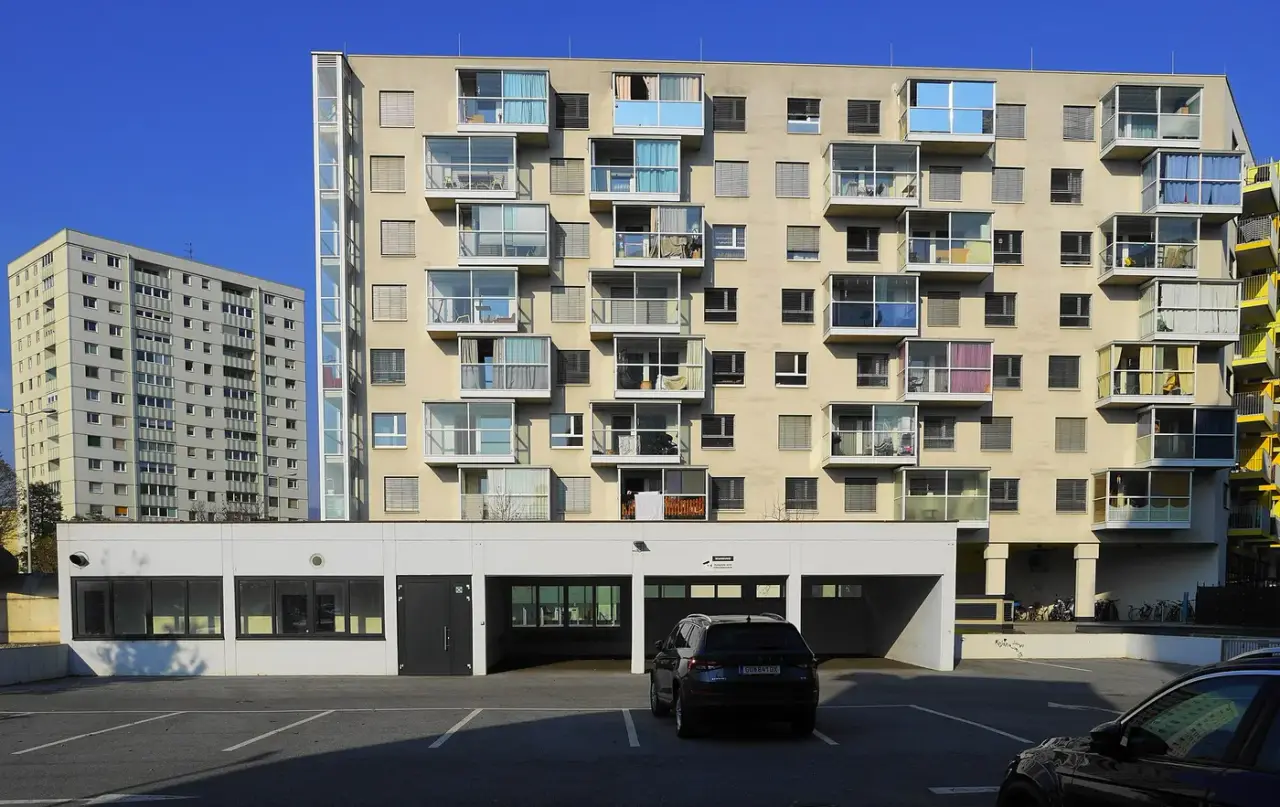
Who runs student dormitories in Austria
Most of the operators below describe themselves as non-profit. Each operator has its own application portal, its own waiting list and its own contract terms, so applying to one does not queue you at another. The table lists the main ones, the cities they say they serve, and what their own pages publish about cost.
| Operator | Status as stated by the operator | Cities named | Cost information on their pages |
|---|---|---|---|
| OeAD student housing (OeAD-Wohnraumverwaltungs GmbH) | Subsidiary of OeAD, Austria's agency for education and internationalisation; primarily houses international students | Vienna, Graz, Salzburg, Innsbruck, Linz, Klagenfurt, Leoben, Dornbirn | Winter semester 2026 'from' prices: Vienna €340 to €1,290 per month, outside Vienna from €290; guide prices only |
| Home4students | Describes itself as a non-profit organisation | Vienna, Graz, Innsbruck, Klagenfurt, Salzburg | All-inclusive pricing; one-off processing fee of €100; prices shown per house |
| STUWO (Gemeinnützige Studentenwohnbau AG) | Calls itself Austria's largest student-hall operator, with 20 locations in 6 federal states | Vienna, Graz, Innsbruck, Linz, Krems, Lambach, Villach, Klosterneuburg | All-in monthly rent; no application or processing fee; deposit €750 or at most twice the monthly fee, depending on the house |
| WIHAST | Student-hall operator in Vienna and Lower Austria | Vienna, St. Pölten, Wiener Neustadt | 2026/27: single rooms from €388 to €467 per month, double-room places from €330 to €374, utilities included |
| Akademikerhilfe | Describes itself as one of Austria's largest non-profit hall operators, with about 40 residences | Vienna, Graz, Innsbruck, Salzburg, Linz, Leoben, Klagenfurt, Eisenstadt | Prices per house on its site; one-off registration fee €20 and processing fee €30, plus a deposit |
| ÖJAB (Österreichische JungArbeiterBewegung) | Non-profit association; 23 halls for students and young people | Vienna, Salzburg, Graz and other places in Austria | Prices per house on its site; not quoted here |
| Commercial all-inclusive residences (e.g. THE FIZZ) | Privately operated studios with their own kitchen and bathroom | Vienna (as listed by WU Vienna) | Listed by WU Vienna from €672 per month for a single studio on a one-year booking |

Two operators deserve a note for international students. OeAD student housing states that it primarily accommodates international students, and WU Vienna lists it on its accommodation page. WU Vienna and TU Wien also publish their own lists of partner residences, but the contract is always between you and the operator, not the university. Vienna-specific advice, including which districts and houses suit which campus, is in our guide to student accommodation in Vienna.
Prices are guide figures from the winter semester 2026 or study year 2026/27 and are reviewed every year. WIHAST states that its price list shows standard room types, that the fee is set anew each study year, and that an increase should be expected from the next September; OeAD student housing states that website prices are indicative and that the binding price is in your offer and contract. Treat any number here as a range to plan with, not a quote. Compare it with the other options in the student cost of living guide.
What is included in the price
Dorm rooms come furnished, which saves you buying a bed, desk and wardrobe, but you normally bring your own bedding, crockery and cutlery. What the monthly fee covers differs by operator, and the law requires the contract to say which services it includes and to price any optional extras separately. Read that clause before you compare prices, because an all-in fee and a base fee plus extras are not comparable.
What students pay for housing, by type
Average € per month, students who pay for their own housing · summer semester 2025
Living alone costs students €664 a month on average, far more than a place in a student hall (€501; €522 in Vienna) or a room in a shared flat (€498).
- Living alone€664
- Student hall, Vienna€522
- Student hall, all of Austria€501
- Shared flat (WG)€498
| Item | Value |
|---|---|
| Living alone | €664 |
| Student hall, Vienna | €522 |
| Student hall, all of Austria | €501 |
| Shared flat (WG) | €498 |
Rent, utilities and any loan instalments; students who live with their parents are left out. The average across all housing types is €586.
Source: BMFWF / IHS, Parlament Österreich. Last checked:
Image (PNG)| Operator | Utilities | Internet | Cleaning and extras |
|---|---|---|---|
| WIHAST | Electricity, heating and other running costs included | Not stated on the price page; check the house page | A special cleaning fee of €90 is billed on room change and move-out |
| STUWO | Operating costs, heating, hot water and electricity included | Free Wi-Fi in the whole house | Regular apartment cleaning and fitness areas included; washing machines and dryers cost extra |
| Akademikerhilfe | Electricity, water, heating and waste disposal included | A voluntary service, not part of the contract | Laundry billed separately; end-of-stay cleaning contribution deducted from the deposit |
| Home4students | Heating, electricity, hot water and internet described as included | LAN and/or Wi-Fi in every house, shared | Cleaning of rooms, kitchens and common areas is handled differently house by house |
Kitchens are the other variable. In a room-only dorm you share a floor kitchen and bathroom; in a dorm flat (a WG within the hall) you have your own room and share bath, toilet and often the kitchen with one to three others; in a studio or apartment category you have your own kitchenette. Home4students and STUWO both describe these categories, and STUWO assigns people who do not know each other to shared apartments of the same gender by default. If you would rather arrange your own shared flat later, see shared flats (WG) in Austria.
Your rights under the Studentenheimgesetz
- Student residence actStudentenheimgesetz (StudHG)
- The federal law that governs the contract between a student-hall operator (Studentenheimbetreiber) and a resident. It applies to places in student halls, whether the operator is non-profit (gemeinnützig) or not, and replaces ordinary tenancy rules for those places. The version in force on RIS on 24 October 2026 is the one last amended by BGBl. I Nr. 15/2019.
The law requires a written usage contract (Benützungsvertrag) that states the room, the contract period, extension options, notice periods, the fee, payment terms, the deposit and the arbitration clause. It also makes the house statute (Heimstatut), which sets the house rules and the dates of the hall year, part of the contract, and requires the operator to publish it on its website. Read both before you pay anything.
| Topic | What the law says | Section |
|---|---|---|
| Standard term | 12 months, running from the start to the end of the hall year the operator fixes in the house statute. A contract signed mid-year ends with that hall year. | § 5a Abs. 1, 3 |
| First-year students | If you expressly ask for it, the contract must be for 24 months. The operator must demonstrably tell first-year students about this option. | § 5a Abs. 2 |
| Shorter stays | On the student's request a shorter contract can be agreed. | § 5a Abs. 5 |
| Deposit | Maximum 2 monthly fees; invested and returned under the tenancy-law rules on deposits. | § 14 |
| Your notice | You may terminate to the end of the following calendar month. A longer notice period may be agreed, but notice given by 30 November or 30 April is effective at the end of that semester anyway. | § 12 Abs. 3 |
| Fee | The contract must state what the fee includes and the fee for the study year; in-year increases only to pass on higher tariffs, taxes and charges. In non-profit halls the fee is set on a cost-covering basis after consulting the residents' council. | § 13 |
| Disputes | Free conciliation (Schlichtung) for the resident; participation is voluntary for both sides. Where none is in place, the Ombudsstelle für Studierende acts as conciliator. | § 18 |
How long you can stay
After the initial contract period the operator must extend your contract by another 12 months at your written request, and it may set a deadline in the house statute for that request. The right is not unlimited. Once you exceed one and a half times the official duration of your programme, there is no entitlement to an extension, and the operator may tie extensions to a minimum study success defined in the house statute, which it must also publish on its website. In halls that were built or renovated with federal funds, the entitlement applies only if you are socially needy and make good study progress; receiving a state study grant counts as proof of both, though that grant is restricted to Austrians and equal-treated groups and most international students will not have one. In practice, Akademikerhilfe states that renewals run in spring through its online portal and require study progress under the Act.
Operators can also end your contract, but only on listed grounds, such as finishing or abandoning your studies, not actually living in the room, letting someone else live there against the house statute, rent arrears of two months after a written warning and threat of termination, or serious breaches. Some grounds require the residents' council to be heard first.
Leaving early and cancelling before you arrive
Once you live in the hall, the statutory right is notice to the end of the following month, subject to the semester dates above. Operators often agree longer periods: Akademikerhilfe states 2 months, WIHAST 2 months and STUWO 3 months after move-in, and STUWO adds that a semester abroad does not suspend the contract. Where the contract sets a longer period, the semester-end rule still protects you, and the Act separately allows termination to the end of the following month where you prove an important reason, such as a change of study location, dropping out, graduating, pregnancy, caring for a close relative or a sudden social emergency.
Non-profit halls versus private residences
The Act distinguishes non-profit operators, which provide places to support students without a profit motive, from other operators. The difference shows in the fee rule: non-profit halls must set the usage fee on a cost-covering basis and take public subsidies into account, while the fee in a for-profit hall is a matter for the contract. Non-profit operators are also allowed to charge higher fees for short-term guest contracts, which may be offered to non-students when a hall is under-occupied.
| Point | Non-profit halls | Commercial residences |
|---|---|---|
| Price | Lower 'from' prices in the operator lists above | Higher; THE FIZZ was listed by WU from €672 per month for a single studio |
| Rooms | Single and double rooms, hall flats and some apartment categories | THE FIZZ is described as studios with a private kitchen and bathroom |
| Contract | Usage contract and house statute under the StudHG; deposit capped by the Act | Check whether the contract is a Benützungsvertrag with a house statute; ask if unsure |
| Availability | OeAD student housing and Home4students were full or on waiting lists for winter semester 2026 | Ask the operator directly; compare the all-in monthly price for a full year |
| Rights as a resident | Residents' council, free conciliation, extension rights | Depend on the contract and on whether the Act applies to the building |
Whether the Act applies to a particular commercial building depends on whether it is run as a student hall within the meaning of the law, and operators' own pages do not always say. If a private residence gives you a tenancy lease or a short-term accommodation agreement instead of a usage contract with a house statute, treat it as a normal private rental and read Austrian rental contracts before signing.
Application timing and waiting lists
Every operator above lets you register long before you need the room, and earlier is better. Home4students tells applicants they can register at any time, that registration is free and non-binding, and that it applies only to the move-in month entered on the form, so you must register again for a different month. STUWO says you can apply at any time, even before finishing school, that one application is enough because a second one is placed at the back of the queue, and that it sends an offer by e-mail when a place in your category and period becomes free. Akademikerhilfe likewise accepts applications for houses that are fully booked, since alternatives often appear. Home4students says that you usually learn the outcome between two and six months before the desired start, and that short-notice offers come mostly from cancellations.
For the 2026 winter semester, OeAD student housing stopped accepting Vienna applications because of demand, moved applicants onto a waiting list and pointed them to alternative residences, and Home4students displayed a notice that it was fully booked for that semester. That is the normal state of the market for autumn starts in Vienna and Innsbruck. If you are late, apply anyway, tick any option to be considered for other houses of the same operator, check the operators' lists of free places (Home4students and STUWO both publish one), and have a short-term stay ready for the first weeks. The sequence from admission to registered address is also laid out in the accommodation hub, and finding housing before you arrive covers bridging stays.
Admission letter received
Register with several operators
Use each operator's online form, name every house or city you would accept and, where offered, the neighbouring month.
Offer by e-mail
Pay the deposit before the deadline
Operators set a short payment deadline and release the room if you miss it. At OeAD student housing, the contract comes into being when the deposit arrives on time.
After signing
Know your withdrawal window
OeAD student housing and STUWO state a short free withdrawal period after signing (at STUWO only for contracts concluded well ahead of the start); later cancellation costs follow their schedules.
Before the permit application
Use the contract as accommodation proof
See the next section.
Move-in day
Inventory, keys and Meldezettel
Sign the inventory, collect the keys and have the registration form signed.
Booking from abroad and the residence permit
You can book a dorm place from abroad, and doing so before you apply for your permit is sensible. The student residence permit carries no statutory housing condition, but OeAD's checklist asks for documentation of accommodation in Austria for at least 3 months, and a dorm booking or usage contract is among the documents it accepts. The rent you state also feeds the financial-means calculation. The mechanics are in the student residence permit guide and how financial proof is calculated.
Two practical points. First, a paid deposit usually binds you before the visa is decided, so ask the operator what happens if the permit is delayed. Second, STUWO notes that residents without a bank account in an EU or EFTA state must open an Austrian account for the SEPA direct debit and submit the mandate within a week after moving in; ask other operators about payment methods before you arrive. Book for the earliest realistic start date and ask how the operator handles a late arrival.
In practice: move-in day at a hall
Operators publish more about move-in day than most students read. The routines differ, but the points where plans go wrong are the same: the date, the day of the week, the payments due beforehand and the inventory.
Agree the date with the house management
STUWO asks you to arrange a move-in date with the house management so that your key can be handed over. Home4students says the house management normally contacts you before the contract starts with the details and a date; if the date does not suit, agree another one outside the main move-in periods, and do it before you book a flight or train ticket.
Check which day of the week it falls on
OeAD student housing's terms say rooms and keys are handed over only on working days. If your contract starts on a Saturday, Sunday or bank holiday, the handover moves to the next working day, during the opening hours the operator announces. A weekend arrival therefore needs a bridge; see housing before you arrive.
Pay what falls due before you arrive
At Home4students the deposit and the first monthly fee are due before the contract starts, and payment is by SEPA direct debit. STUWO asks for a signed SEPA form, and a resident without a bank account in an EU or EFTA state must open an Austrian one.
Bring the basics
A photo ID and your own bedding and crockery, which both STUWO and Home4students list. STUWO also lists detergent and a network cable if you want a wired connection; its washing machines and dryers cost extra.
On the day: tour, inventory, keys, registration form
STUWO's introduction runs as a tour of the house, signing the inventory list, key handover by the resident managers and then the Meldezettel, which the house manager signs. At Home4students you receive an inventory protocol at move-in: note every defect in it at once, because defects you do not record count as taken over free of defects and repair costs are deducted from the deposit when you leave.
If you arrive late, say so first
OeAD student housing's terms start the period of use even if you do not move in on the first day. If you are absent on the agreed date and no key has been handed over, the first charge and the booking fee fall due by the 5th of the first month and later charges until you arrive are due in advance; if they are not paid, the operator can terminate with one month's notice and keep the deposit and what has been paid.
At the end, expect the deposit back in weeks
OeAD student housing says it pays the deposit back, minus outstanding charges, within 6 weeks after a proper move-out. Other operators state their own terms.
Registering your address in a dorm
A dorm room is a dwelling, so you must register within 3 days of moving in. In a hall this is simple because the operator signs the form: STUWO's move-in routine is a tour, the inventory, the key handover and then the registration form, which needs the signature of the house manager. Bring your passport and permit, and read how to register your address with the Meldezettel for the form, office and fines.
Scams to watch for
Genuine dorm bookings are made through the operator's own portal, and that is the most reliable defence. STUWO warns explicitly that it concludes contracts almost exclusively through its own booking portal, that payments run through a named payment provider, that it has no brokerage agreement with foreign institutions, and that you should not transfer money to outside companies claiming to arrange a place. Arbeiterkammer Vorarlberg and Watchlist Internet, Austria's online fraud warning service, document housing scams aimed at students: fake adverts, often with copied photos, ask for a deposit before any viewing, sometimes with a story that the owner is abroad. Dorm places advertised on social media or marketplaces, or offered by a middleman, with a transfer to a foreign account, should be treated the same way.
Steps to apply for a dorm
Shortlist operators by city
Use the table above and the operator's house list. Your university's international office may name partner residences, which do not guarantee a place.
Check price and what it covers
Look at the house page, the included services and any one-off fees. Compare all-in monthly cost, not just the 'from' price.
Apply online to several operators
Name your preferred houses, the move-in month, room type and any friend you want to share with.
Read the offer, contract and house statute
Check the contract period, notice period, deposit, cancellation costs and the rules on guests and subletting.
Pay the deposit and first fee on time
Use only the payment link or account in the operator's own offer.
Send the documents operators ask for
Typically admission or enrolment proof and identification; the operator's portal lists what is needed.
Arrange arrival and keys
Agree a move-in appointment. Key handover usually happens in office hours, so plan your arrival, and ask about early arrival: WU Vienna states that OeAD student housing charges €33 to €50 per day for arriving two or three days early.
Register your address
Have the house manager sign the registration form and complete it within the deadline.
Before you sign
- The contract is a Benützungsvertrag, with the house statute attached or linked.
- Deposit is no more than twice the monthly fee, and the contract says how and when it is returned.
- Included services (utilities, internet, cleaning) are listed, and extras have prices.
- Notice period and cancellation costs before move-in are clear.
- Moving-in date matches your arrival and permit timing.
- Payment goes to an account or link in the operator's own offer.
- You know who signs your Meldezettel and when.
Frequently asked questions
What is OeAD Student Housing and how do I apply?
OeAD Student Housing is the housing subsidiary of the OeAD, Austria's agency for education and internationalisation, and mainly houses international students, with residences in Vienna, Graz, Salzburg, Innsbruck, Linz, Klagenfurt, Leoben and Dornbirn. You apply online, pay the deposit on time once you receive an offer, and the contract is concluded when the deposit reaches the operator; you can withdraw from a contract made at a distance within 14 days without giving reasons. The minimum stay is, as a rule, one semester. For winter semester 2026 it stopped taking Vienna applications because of demand and opened a waiting list, so apply early.
How much does a student dorm cost in Austria?
It depends on operator, city and room type. For study year 2026/27 WIHAST lists single rooms from €388 per month to €467 per month and double-room places from €330 per month, utilities included. OeAD student housing's Vienna residences started from €340 per month for the winter semester 2026, and private all-inclusive studios cost noticeably more. Treat these as guide prices.
Can I stay in a student dormitory in Austria for my whole degree?
Possibly. The standard contract runs 12 months and must be extended by 12 months at your request, but there is no entitlement once you exceed one and a half times the official programme duration, and operators may require minimum study progress in their house statute. In federally subsidised halls the extension right also depends on need and progress.
How big a deposit can a student hall ask for?
At most 2 monthly fees under the Studentenheimgesetz. Operators' own figures sit within that, such as €600 at WIHAST on first occupancy or STUWO's €750 (or at most twice the monthly fee) depending on the house. The deposit must be handled and returned under the tenancy-law deposit rules.
Can I leave a student dorm early?
Yes. By law you can give notice to the end of the following calendar month, and notice given by 30 November or 30 April is effective at the end of the semester even if a longer period was agreed. Operators often state longer periods in the contract, and cancelling before move-in is governed by the operator's own cost schedule.
Can I book a dorm before I have my visa?
Yes, operators accept applications from abroad. The student permit has no statutory housing condition, but OeAD's checklist asks for accommodation documented for at least 3 months, and a dorm booking can serve. Ask what happens to your deposit if the permit is delayed, since a refused visa is not a listed reason for termination in the Act.
What if all the dorms are full?
Register anyway: operators run waiting lists and cancellations free up places, and Home4students and STUWO publish lists of currently free places. Apply to several operators and houses, and arrange a short-term stay for the first weeks. Private options are covered in the guides on shared flats and private rentals.
Do I have to register my address if I live in a dorm?
Yes. Moving into a dorm room counts as taking up accommodation, so you register within 3 days. The house manager signs the form, which many halls handle in the move-in routine.
Sources
20 sources, 9 official
- Studentenheimgesetz (StudHG) – geltende Fassung (§§ 5a, 12, 14, 21)RIS – Rechtsinformationssystem des Bundes (Official)
- Vienna - OeAD student housing (residence listing)OeAD student housing (OeAD-Wohnraumverwaltungs GmbH) (Official)
- About us - OeAD student housingOeAD student housing (OeAD-Wohnraumverwaltungs GmbH) (Official)
- General Terms And Conditions - OeAD student housingOeAD student housing (OeAD-Wohnraumverwaltungs GmbH) (Official)
- Applications for the winter semester 2026 now closedOeAD student housing (OeAD-Wohnraumverwaltungs GmbH) (Official)
- Preise: Studentenheime in Wien und Niederösterreich für das Studienjahr 26/27WIHAST (Institutional)
- Studentenheime in Wien, St. Pölten & Wr. NeustadtWIHAST (Institutional)
- FAQs - Was wir oft gefragt werdenHome4students (Institutional)
- Home4students - Studentenheime in ÖsterreichHome4students (Institutional)
- FAQ – Häufige FragenSTUWO (Institutional)
- STUWO Studentenheime in ÖsterreichSTUWO (Institutional)
- FAQ - Akademikerhilfe StudentenwohnheimeAkademikerhilfe (Institutional)
- Die Studentenwohnheime der AkademikerhilfeAkademikerhilfe (Institutional)
- ÖJAB - Österreichische JungArbeiterBewegungÖJAB (Institutional)
- Accommodation - Welcome to Vienna - International StudentsWU (Vienna University of Economics and Business) (Official)
- Accommodation in Vienna | TU WienTU Wien (Official)
- Aufenthaltsbewilligung – Student kein Mobilitätsprogramm (Checkliste Erstantrag)OeAD (Official)
- Falsche Wohnungen: Betrüger kassieren Studenten ab (06.07.2023)Arbeiterkammer Vorarlberg (Official)
- Betrügerische Wohnungsinserate erkennen: So geht’sWatchlist Internet (ÖIAT) (Institutional)
- Vorsicht vor Betrug bei der Wohnungssuche im AuslandWatchlist Internet (ÖIAT) (Institutional)