A private flat gives you privacy and a base that outlasts a semester, but it is the most paperwork-heavy way of living in Austria. This guide walks through the process in order: where to search, how agents are paid, what a viewing should tell you, which information landlords commonly ask for, how long the whole thing takes, what you pay on the way in, and why cooperative and municipal flats usually do not work for new arrivals. The legal rules inside the lease (rent caps, fixed terms, deposit return, free advice) are in Austrian rental contracts and are only summarised here. For the other housing options, start from the student accommodation hub.
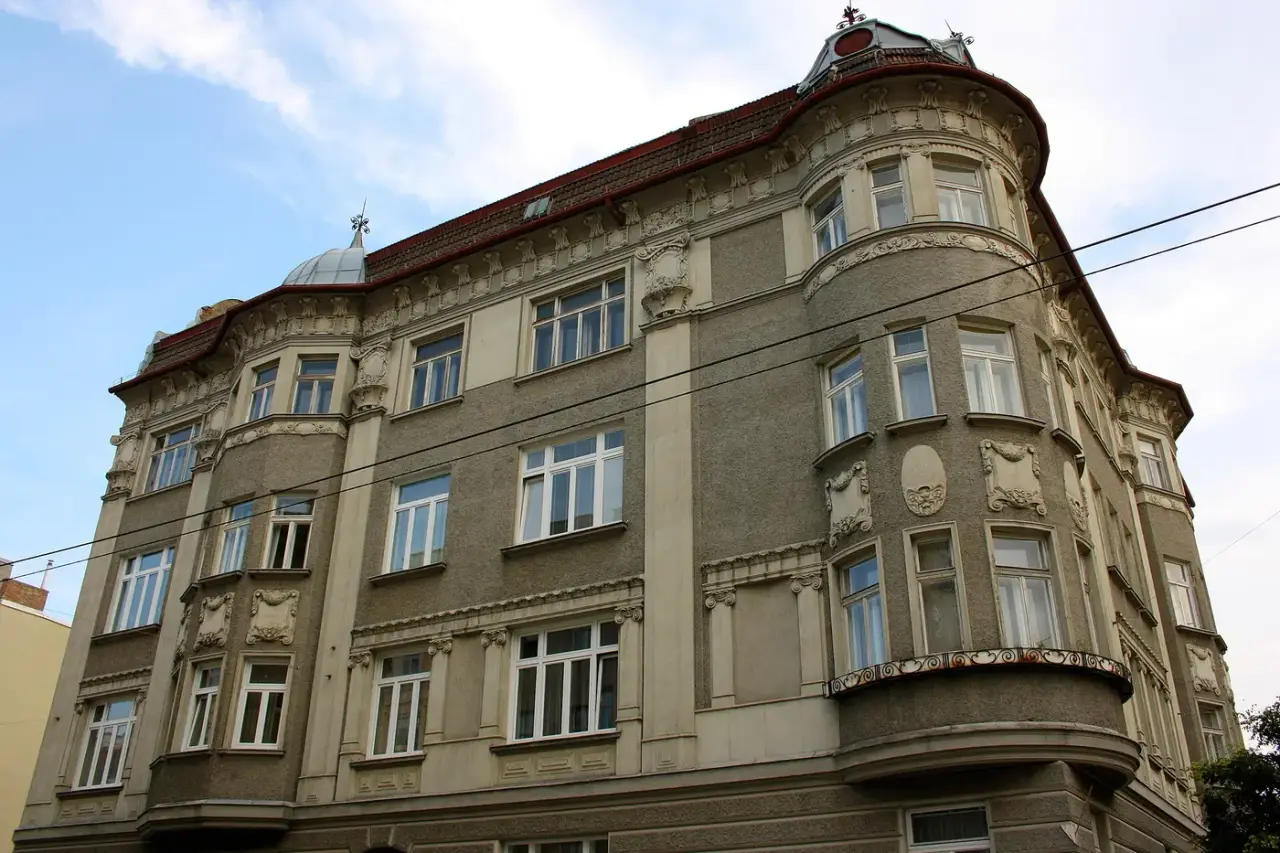
Where to search for a private flat
Private flats are advertised on property and classified portals, in agents' listings and by word of mouth. ImmoScout24 and willhaben are examples of general portals with rental listings in Austria; WG-Gesucht, which has an Austria section, is mainly for shared rooms. These are examples only, not a ranking, and the same checks apply on every platform. Your university's international office and student union may share leads, and non-profit housing associations publish their own offers (see the section on cooperative flats below).
Set a budget before you search. Statistik Austria's figure for private-sector tenancies running for under two years, the closest official proxy for what a newcomer pays, was €13.50 per m² per month including operating costs in 2025, or €845.30 per month per flat per month. That is a national average across all sizes and regions. The state-by-state figures are in the hub, and the broader budget is in the cost of living guide. A listing far below the market level is a warning sign: read housing scams in Austria before you answer one.
Rent per square metre by federal state
Average rent incl. operating costs, € per m² a month, main tenancies · 2025
Rents are highest in Salzburg (€12.20 per m²) and Tyrol (€12); Vienna averages €10.60 and Carinthia is lowest at €8.10. A new private lease costs more: €13.50 on average.
- New private leases, Austria€13.50
- Salzburg€12.20
- Tyrol (Innsbruck)€12
- Vienna€10.60
- Styria (Graz, Leoben)€9.80
- Upper Austria (Linz)€9.30
- Carinthia (Klagenfurt)€8.10
| Item | Value |
|---|---|
| New private leases, Austria | €13.50 |
| Salzburg | €12.20 |
| Tyrol (Innsbruck) | €12 |
| Vienna | €10.60 |
| Styria (Graz, Leoben) | €9.80 |
| Upper Austria (Linz) | €9.30 |
| Carinthia (Klagenfurt) | €8.10 |
State averages cover all existing main tenancies, including long-running, council and cooperative flats, so they sit below what a newcomer pays. The new-lease bar is private tenancies running for less than two years, Austria-wide. Heating and hot water are not included.
Source: Statistik Austria. Last checked:
Image (PNG)Agents (Makler) and the Bestellerprinzip
- BestellerprinzipBestellerprinzip
- The principle, in force for residential tenancies since 1 July 2023, that whoever commissions an agent pays that agent. If the landlord engaged the agent, the landlord pays.
Since 1 July 2023 a tenant normally pays nothing if the landlord engaged the agent or the agent advertised the flat with the landlord's consent. If you commissioned the agent yourself, for instance to search for you, the Standes- und Ausübungsregeln cap the commission at 1 gross monthly rent for leases fixed for up to three years and 2 gross monthly rents for longer or open-ended ones, plus 20% VAT on the commission. The rental contracts guide has the base and the legal references. The practical rule follows: do not sign anything an agent hands you at a viewing before you have read it.
The viewing: what to check
View in person if you can, in daylight and on a weekday, because the Mietervereinigung notes that artificial light can hide defects and that weekend visits may not show weekday traffic noise. Bring a second person, take photos and write down your impressions straight afterwards, which AK Oberösterreich recommends when comparing several flats. Do not let anyone rush you into a decision.
Viewing checklist
- Damp, mould, musty smells; windows close properly; heating, water, sanitary facilities and electricity work.
- Noise from the street and the neighbours; the condition of the stairwell, lift, bike storage and laundry facilities.
- How the rent is made up: net rent, operating costs, heating, VAT, charges for furniture or appliances.
- Who does any repairs or cosmetic work before you move in, and whether the electricity contract can be switched to your name. Get answers in writing.
- The floor area in the contract, the type of lease (see the contracts guide for the MRG scope) and the end date if it is fixed-term.
- Whether the landlord will sign your registration form on the day you move in.
- Whether the person showing the flat is the owner or has written authority to let it. For checks on this, see the scams guide.
Documents and information landlords ask for
No official Austrian source lists the documents a landlord may demand from a tenant, and none that I found says that a particular document is required by law. What the Mietervereinigung does say is that questions about your job and net income can be legitimate, because the landlord wants to know whether you can pay the rent over time, and that you should answer them truthfully. Questions about pregnancy, sexual orientation, religion, skin colour, nationality, personal preferences and illness are, in its words, inadmissible, and you need not answer them or need not answer truthfully.
| Item | Why it is asked | If you are a student |
|---|---|---|
| Photo ID and, for non-EU students, residence permit or visa | To identify the tenant | Your passport and student residence permit once issued; before that, the visa decision or admission letter |
| Enrolment or admission confirmation | To show why you are in Austria and for how long | University admission letter or enrolment certificate |
| Proof of income or of funds | To show you can pay the rent | A scholarship letter, employment contract or payslips if you work, bank statements; this overlaps with the proof of funds for your permit (see the visa guides) |
| Guarantor or co-signer | Extra security for the landlord | A parent or relative; a guarantee is a binding obligation for them, so read what they would be signing |
| Deposit | Security against rent arrears or damage | See the costs table below |
Handle documents with the same care as money. Send copies only to a landlord or agent you have identified, and hold back anything not needed yet, such as account numbers. Do not send documents to a person who refuses to show the flat or to explain who owns it.
From search to keys: how the process runs
There is no official timetable for a private rental; how long it takes depends on the city, the season and how quickly landlords reply. What is fixed are the points where deadlines or legal steps arrive, so plan backwards from them.
Before you arrive
Book a first address
Arrange a hall place, a WG room or short-term accommodation. OeAD's checklist for the student permit asks for accommodation documented for at least 3 months, which a dorm contract can cover; the permit itself has no statutory housing condition.
After arrival
Search and view
Browse listings, contact landlords and view in person. Keep a log of flats, contacts and what was agreed.
After a viewing
Application and decision
The landlord asks for information on you, and may ask for documents once you are a serious candidate. Do not pay anything yet.
Before signing
Have the lease checked
Compare it with the checklist in the contracts guide. In Vienna, MieterHilfe offers tenancy advice including a contract check.
Signing
Pay deposit and first rent
Pay only to the landlord's own account named in the contract, and get receipts.
Key handover
Handover protocol
Record meter readings, defects and every key with photos; both sides sign. AK Oberösterreich recommends one copy each.
Within 3 days of moving in
Register your address
The landlord signs the Meldezettel form. See the registration guide.
Costs at move-in
The Austrian rules give a clear picture of what you can be asked to pay before the first night. The amounts below are built from the rules in the contracts guide, which explains the legal basis of each.
| Item | What the rules say | Note |
|---|---|---|
| First month's rent | Gross rent: net rent plus operating costs plus VAT (10% on the rent, 20% on furniture charges and heating) | Ask what is included before you compare listings |
| Deposit (Kaution) | No statutory cap. 3 gross monthly rents is customary and up to 6 gross monthly rents is still permissible according to the Ministry of Justice | Must be kept separate and returned with interest after the lease, minus justified claims |
| Agent commission | Only if you commissioned the agent: at most 1 gross monthly rent (short fixed term) or 2 gross monthly rents (longer or open-ended), plus 20% VAT on the commission | Normally nothing since 1 July 2023 if the landlord commissioned the agent |
| Rental-contract fee | Residential leases are exempt | A demand for one has no basis |
| Contract-drafting fee | No legal basis | The Ministry of Justice says it is forbidden in the full MRG scope and can be reclaimed |
| Ablöse (payment to the previous tenant or landlord) | Acceptable only for items of real value such as furniture at their current value | A prohibited payment can be reclaimed within 10 years in the full scope |
| Utilities, internet, household insurance | Set up in your name | AK Oberösterreich lists these among the costs that follow the move; it also recommends a financial cushion |
In practice, the largest cash outlay is the deposit plus the first rent, so budget for at least that before you start viewing, together with moving and furnishing costs. Do not pay anything in cash or to a private account that is not named in the contract. Scams often start with a request to pay the deposit before viewing; see the scams guide.
In practice: viewing day, handover and the first utility steps
The Mietervereinigung's viewing checklist goes into more detail than most students use. Beyond the points above, it lists what to ask and write down: what kind of heating the flat has (gas, oil, electric or district heating) and whether every room can be heated; whether the flat faces the street or the courtyard; whether there is a cellar compartment, a washing-machine connection, a bicycle room, a laundry room or a lift; how the house is locked; who the landlord and the Hausverwaltung are; whether there is a caretaker (Hausbesorger) and whether the landlord lives in the building; and what kind of flat it is, a normal rental, an owner-occupied flat, a cooperative flat or a council flat. AK Oberösterreich adds two tests on the spot: turn the heating on and listen for noise, and check that the windows close properly, looking for mould in the corners.
Do the handover with the landlord or their representative present
AK Oberösterreich recommends a takeover protocol (Übernahmeprotokoll) once you have decided on a flat. Make two copies: you keep one and the landlord gets one.
Read and write down the meters
Record the electricity, gas and water meter readings at takeover. These readings are what your first bills and the previous tenant's final bill are measured from.
Walk through every room
Record the exact condition of the flat and any defects, and the condition of any furnishings you have been given to use. Photograph them. Count and note every key.
Both sides sign before you accept the keys as final
If the landlord resists a protocol, the contracts guide treats that as a reason to slow down.
Set up your own contracts, and check what you inherit
Electricity, gas where it applies and internet are set up in your name. Where existing connections are taken over from the landlord or the previous tenant, AK Oberösterreich advises checking that all outstanding costs have been paid.
Know the ORF-Beitrag
The broadcasting contribution is €15.30 per month per address with at least one adult registered there with a main residence, not per person. The collection service says registration data reach it the month after you register, so it follows from your Meldezettel, and a move into a Studentenheim ends it automatically. Secondary residences have owed nothing since 2024.
Heating is the other recurring surprise in an older flat. Whether you pay a central-heating statement or your own energy bill depends on how the building is heated; the contracts guide explains the heating statement, the operating-cost statement and who pays for repairs.
Furnished or unfurnished?
| Unfurnished | Furnished | |
|---|---|---|
| Availability | WU Vienna says most flats come unfurnished | Less common; check what is actually included |
| Rent | Rent only | A separate charge for furniture or appliances is possible; VAT on it is 20% according to the Ministry of Justice |
| Ablöse risk | Can be asked for fittings | Can be asked for furniture; it is acceptable only at current value and must be itemised |
| Leaving | You take your belongings | Inventory and condition determine the deposit return |
| Best for | Stays of a degree or longer | Short stays; list the inventory and keep photos |
Whichever you choose, get furniture and appliances listed one by one with a price that matches their value, as the contract checklist suggests, and photograph them at handover. A furnished flat with a high furniture charge can end up costing more than an unfurnished one that you furnish yourself, so compare the total monthly cost.
Genossenschaft and Gemeindewohnung: access for new arrivals
Cooperative (Genossenschaft) and municipal (Gemeinde) flats are cheaper than many private rentals, which is why students ask about them. For a student who has just arrived they are usually out of reach, for reasons that are set in the application rules.
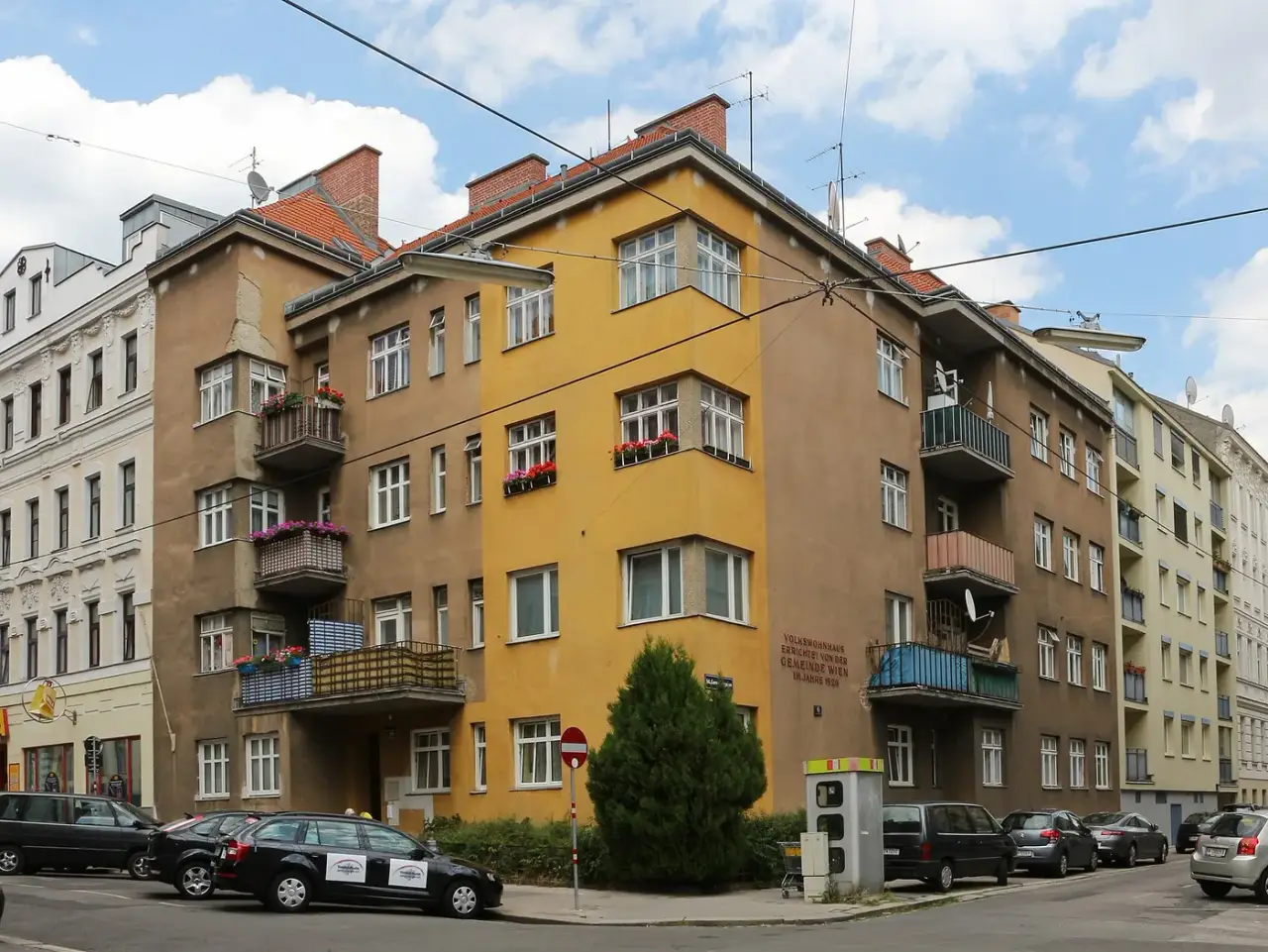
- Gemeindewohnung / GemeindebauGemeindewohnung (Wiener Wohnen)
- A flat owned by the City of Vienna and let through the Wiener Wohn-Ticket system run by Wohnberatung Wien. Access depends on residence in Vienna, status and income.
| Condition | What the 2026 form says |
|---|---|
| Age | 17 (18 at signing the contract) |
| Residence in Vienna | 2 years of continuous main residence (Hauptwohnsitz) in Vienna; for a Gemeindewohnung (Wohn-Ticket with documented housing need) also without a secondary-residence registration |
| Status | Austrian citizenship or equivalent: EEA or EU citizens, Swiss citizens, recognised refugees or long-term residents under the NAG |
| Income | Within the net income limits, for example €61,280 net per year for one person (exceptions for some programmes) |
| Reason | For a Gemeindewohnung, one of the listed housing-need reasons, such as setting up a first household, overcrowding or housing costs |
The form lists the status groups that qualify; a student residence permit is not among them. If you hold one, do not assume you qualify, and ask Wohnberatung Wien, which describes itself as a free service point for Gemeindewohnungen and subsidised flats, before applying. The Vienna-specific details are in finding student accommodation in Vienna.
Cooperative flats are let by non-profit housing associations. The Ministry of Justice says you must become a member and that eligibility rules vary by federal state: its examples include Austrian, EU and EEA citizens, non-EU nationals with a residence permit and recognised refugees, a minimum age of 18 (registration from 17), a net household income within a minimum and maximum limit and no use as a secondary residence. This is broader than the Vienna form above, so the conditions that count are those of the state and the association you apply to. Cooperative flats typically require a one-off Finanzierungsbeitrag (equity contribution) that lowers the rent. It is refunded when the tenancy ends, minus 1% per year depreciation. AK Wien's worked example for a 30 m² flat in Vienna comes to €13,147.50; real amounts differ by project. That sum, plus a registration wait for flats under construction (and few older flats becoming free), is why this route suits people planning to stay for years, not a first-year student.
Steps for renting privately
Secure a first address
A dorm place, WG room or short-term stay gives you time to search in person.
Set your budget and criteria
Use the state-level rent figures and the cost-of-living guide; decide on commute, size, furnished or not.
Search and screen listings
Use several portals. Ignore offers that ask for money before a viewing.
View in daylight and bring a second person
Use the viewing checklist and take photos.
Check who is letting
Find out whether you are dealing with the owner, a main tenant or an agent, and who engaged the agent.
Prepare your information
Have ID, enrolment proof and proof of income or funds ready for a serious candidate stage.
Have the contract checked
Use the contract checklist and, in Vienna, MieterHilfe or the Arbeiterkammer.
Pay, take over and register
Pay deposit and first rent to the named account, sign the handover protocol and register within the deadline.
Frequently asked questions
Do I have to pay an estate agent when renting a flat in Austria?
Normally not. Since 1 July 2023 the person who commissions the agent pays, which is usually the landlord. You pay only if you engaged the agent yourself, and then at most 1 gross monthly rent or 2 gross monthly rent depending on the lease length, plus VAT on the commission.
How much deposit do I need for an apartment in Austria?
There is no legal maximum. The Ministry of Justice calls 3 gross monthly rents customary and up to 6 gross monthly rents still permissible. Add the first month's rent and any furniture payment when budgeting your move-in cash.
What documents do landlords in Austria ask students for?
There is no official list. Commonly requested items are ID, a residence permit or visa for non-EU students, an enrolment or admission confirmation, proof of income or funds and sometimes a guarantor. The Mietervereinigung says questions about your job and net income can be legitimate, while questions about nationality, religion or illness are inadmissible.
Can an international student get a Gemeindebau flat in Vienna?
Rarely. The Wiener Wohn-Ticket requires 2 years of continuous main residence in Vienna, a qualifying status and income within the limits, and the 2026 form does not list a student residence permit among the qualifying statuses. Ask Wohnberatung Wien before applying.
Should I look for a flat before I arrive in Austria?
You can browse, but TU Wien's page for incoming students in Vienna says you will have to search for a flat after you arrive, because landlords generally want to meet tenants personally. Book a hall place, a WG room or short-term accommodation first, and never pay a deposit for a flat you have not seen.
Is a furnished flat better for a student?
It can be for a short stay, but most flats in Austria are unfurnished according to WU Vienna. Check whether furniture is charged separately (VAT on that charge is 20%), insist on an itemised inventory and compare the total monthly cost.
Sources
20 sources, 18 official
- Kautionoesterreich.gv.at (Bundesministerium für Justiz) (Official)
- Daten & Wohnsitz (Umzug, Haushalt, Meldedaten)ORF-Beitrags Service GmbH (OBS), the statutory collection body (Official)
- ORF-Beitrag (within the moving guide, oesterreich.gv.at; last updated 09.04.2025)oesterreich.gv.at (Official)
- Provisionoesterreich.gv.at (Bundesministerium für Justiz) (Official)
- MaklerprovisionenArbeiterkammer (Official)
- Maklergesetz – geltende Fassung (§ 17a Bestellerprinzip, § 31 Abs. 5 Inkrafttreten)RIS – Rechtsinformationssystem des Bundes (Official)
- Standes- und Ausübungsregeln für Immobilienmakler – geltende Fassung (§§ 20, 24)RIS – Rechtsinformationssystem des Bundes (Official)
- Gebührengesetz 1957 – geltende Fassung (§ 33 TP 5 Abs. 4 Z 1)RIS – Rechtsinformationssystem des Bundes (Official)
- Ablöseoesterreich.gv.at (Bundesministerium für Justiz) (Official)
- Mietvertragserrichtungskosten (Bearbeitungshonorar)oesterreich.gv.at (Bundesministerium für Justiz) (Official)
- Ergebnisse im Überblick: Wohnkosten für Hauptmietwohnungen – Mikrozensus (Tabellen 1–4)Statistik Austria (Official)
- Checkliste Wohnungsbesichtigung: Worauf Sie unbedingt achten solltenMietervereinigung Österreichs (Institutional)
- Wohnungssuche (Checkliste)Arbeiterkammer Oberösterreich (Official)
- Accommodation - Welcome to Vienna - International StudentsWU (Vienna University of Economics and Business) (Official)
- Accommodation in Vienna | TU WienTU Wien (Official)
- Aufnahmeblatt Wiener Wohn-Ticket (Stand 2026)Wohnberatung Wien (Stadt Wien) (Official)
- Wohnberatung Wien – Servicestelle für Gemeindewohnungen und geförderte WohnungenWohnberatung Wien (Stadt Wien) (Official)
- Genossenschaftswohnung (gemeinnützige Bauvereinigung)oesterreich.gv.at (Bundesministerium für Justiz) (Official)
- GenossenschaftswohnungenArbeiterkammer Wien (Official)
- WG-Gesucht: the marketplace for flats and roomsWG-Gesucht (platform's own site) (Secondary)