Moving money to Austria means choosing between three systems: SEPA for euros inside Europe, a SWIFT payment from a bank outside it, or a transfer service that works with local accounts at each end. The banking overview covers the basic comparison; this page covers the mechanics, the numbers that banks publish, and the points that matter for a student who is paying a first deposit, receiving family support or showing funds for a residence permit.

SEPA transfers: free, fast and checked
Within SEPA a euro transfer needs only the recipient's IBAN. The Arbeiterkammer states the cost rule plainly: "SEPA-Überweisungen in Euro dürfen nicht mehr kosten als Inlandsüberweisungen", and the Arbeiterkammer adds that Austrian banks generally charge nothing for a domestic transfer, so a euro SEPA transfer usually costs little or nothing. Check your own fee sheet. Electronic euro transfers are credited by the next business day at the latest, paper ones by the second; an order placed after your bank's cut-off time counts as given on the next business day.
Instant payments are the faster route. According to the European Commission, euro-area providers must offer them, receiving has been mandatory since January 2025 and sending since 9 October 2025. They work at any time, including nights and weekends, they cannot cost more than a standard credit transfer, and the check that the recipient's name matches the IBAN must be free. Instant payments cannot be recalled once sent, a point the hub explains, so read the name warning before confirming a deposit to a landlord.
Sending money from Türkiye
Türkiye is outside SEPA, so a transfer from a Turkish bank account is an ordinary international payment. FAST and EFT are domestic lira systems: İş Bankası's FAST page describes sending lira to recipients at other banks and points to Döviz Havalesi/SWIFT for sending abroad. You therefore send euros, or another currency, by SWIFT to your Austrian IBAN; for a payment from outside the euro area the sender may also be asked for your bank's BIC, the SWIFT code, which your Austrian bank can give you.
| Cost | What it is | What Turkish banks' own pages say |
|---|---|---|
| Sending bank's fee | A charge for the outgoing transfer | Yapı Kredi's tariff for an outgoing foreign-currency transfer via internet, mobile or phone, same-day value: minimum 1,547.62 TL, maximum 3,033.33 TL, maximum rate 0.7%, excluding BSMV (rows effective 8 January 2026); higher at a branch |
| Intermediary deductions | Correspondent banks on the route may deduct their own charge, depending on whether the payer or the recipient bears costs (OUR, SHA, BEN) | İş Bankası: extra correspondent-bank deductions may apply depending on the cost option chosen |
| Exchange-rate margin | The difference between the rate you get and the mid-market rate; not shown as a fee | Yapı Kredi: the branch exchange rate of the day is used for foreign-currency transfers |
Two details from those pages are worth acting on. Yapı Kredi's tariff states that up to 5% commission may be charged on Turkish-lira transfers sent abroad, so ask your bank about sending foreign currency from a foreign-currency account instead of lira. And İş Bankası says an international transfer usually takes 1–2 business days. These are two banks' own pages, quoted as examples; other Turkish banks may differ, and Austrian official sources publish no fee ranges for this route.
Wise and similar services
A transfer service moves money without a SWIFT payment, usually by paying out from a local account in the destination country. Wise's own help pages say what applies to customers in Türkiye. International transfers from a Turkish bank account remain available, but accounts whose registered address is in Türkiye face restrictions: no TRY top-ups and no new account details since 31 May 2023, and further limits, such as receiving or converting money, from a date Wise sets in an email. For a first TRY transfer Wise asks for the 11-digit Turkish ID number, and it says transfers to Turkish savings accounts are rejected under Turkish regulations. The pages do not fully agree on how a transfer can be funded in lira, so check the app for your route.
The pages this guide found for Wise and for Remitly price other routes, such as sending from the UK or from Austria to Türkiye, so no fee for the Türkiye-to-Austria route is quoted here. Run the same test as with banks, "how many euros arrive", and treat any ranking published by a company that sells transfers as marketing.
| Job | Route that usually fits | What to check |
|---|---|---|
| Paying a deposit before you arrive | SWIFT from your Turkish account, or a service; ask the landlord to accept a foreign IBAN | Total euros arriving, and the date it lands |
| Monthly support from family | A recurring foreign-currency transfer to your Austrian account | Intermediary deduction; keep records of each transfer |
| Moving money between your own accounts in the euro area | SEPA or instant transfer | No more than a domestic transfer under the SEPA rule; confirm the name check |
| Cash in your suitcase | Only for small amounts; declare €10,000 or more | See the section below |
In practice: what to give the sender, step by step
A transfer from Türkiye fails or arrives short most often for want of the right details. İş Bankası's page on foreign-currency transfers lists what a sender at that bank has to supply, and the same items are a sensible checklist for any sender. You can start the transfer at a branch during opening hours or through the bank's mobile app or internet branch.
| Detail | What to give | Where to find it |
|---|---|---|
| Recipient name | Your full name and address, complete, as the Austrian bank has them | Your account contract or online banking |
| IBAN | Your Austrian IBAN, which has 20 characters and starts with AT | The banking app once the account is active |
| Recipient bank | The bank's SWIFT/BIC code, its name and its city | The app, the account contract or the branch |
| Cost option | The sender picks one of OUR, SHA or BEN; İş says correspondent-bank deductions depend on this choice | Ask the sending bank what each option means and what will arrive |
Collect the details from your Austrian account first
Copy the IBAN, BIC, bank name and city and your name exactly as the bank spells it, and send them to the sender in writing, not by voice message.
Ask the sender to confirm the euro amount that will arrive
State the exact figure you need, for example a deposit, and ask the sending bank which cost option gives that result. Ask for the answer in writing.
Allow for the days it takes
İş Bankası says an international transfer usually takes 1–2 business days, and that cut-off hours and public holidays can change that. Austrian and Turkish holidays fall on different days, so leave room before a deposit deadline.
Keep the proof of every transfer
Save the sender's confirmation and, when the money lands, the booking on your Austrian statement. If the transfer is part of showing funds for your permit, the paper trail is the evidence; see the proof-of-funds section below.
Proving funds for the residence permit by transfer
Transfers are how most students build the balance that MA 35 or OeAD checks, so the paper trail matters as much as the amount. The authority asks for the origin of savings and statements covering recent months, and parental support counts only as far as it is actually paid; the details, including which sources count, are in the financial proof guide. In practice: pay into an account in your own name, keep the transfer receipts and the sender's statements, and note the purpose on each transfer. Moving the money before you apply gives you a statement that shows it in your account rather than a promise.
Currency exchange, limits and anti-money-laundering questions
- Exchange. Whoever converts the money, the margin is part of the price. A bank's exchange rate of the day is a rate set by the bank; compare it with the mid-market rate you see on a neutral source and ask the provider to quote the euros it will deliver.
- Cash. Entering or leaving the EU with €10,000 or more in cash requires a declaration to customs, per person, per the Ministry of Finance's page. Undeclared cash of that size can be withheld or seized. The page does not address travel between EU countries. Carrying large sums is rarely the sensible way to move a student's funds.
- Questions. Banks and transfer firms may ask who sends the money and why, especially for larger or irregular amounts. That is their anti-money-laundering duty, not a sign of a problem. Have a short explanation and a document ready: a family support letter, a scholarship notice or a payslip.
- Limits. Limits depend on the provider and on the route. Wise's page for TRY transfers states a limit per transfer; for a bank transfer ask your bank for its daily and per-transfer limits before you need a large payment.
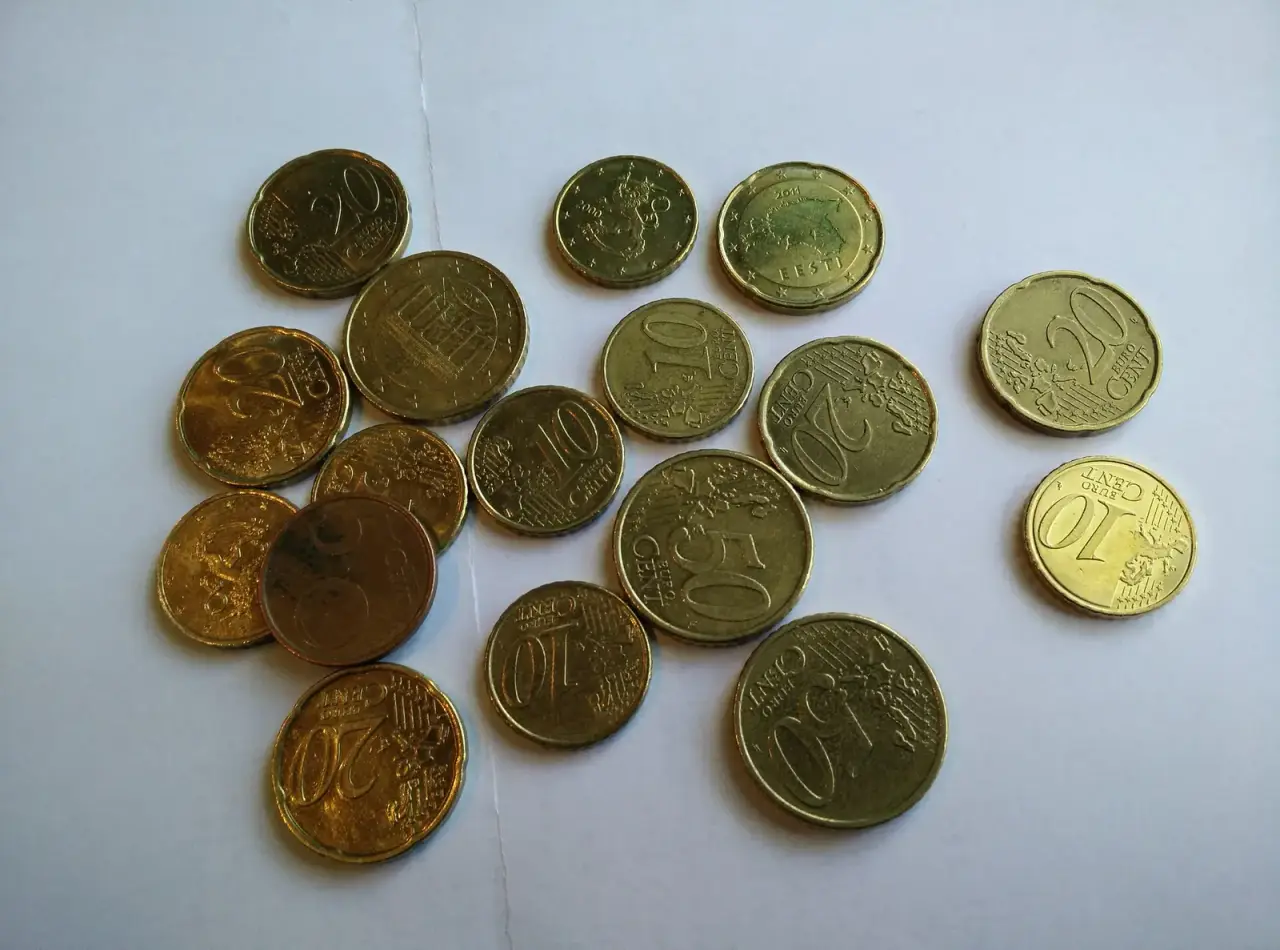
Receiving money is easier once the account is open and active; opening an account covers the order of steps, and digital banks covers using a foreign account for the first deposit. For where the money goes after it arrives, see the costs guide.
Frequently asked questions
Is a SEPA transfer to Austria free?
A euro SEPA transfer cannot cost more than an equivalent domestic transfer, according to the Arbeiterkammer, which adds that Austrian banks generally charge nothing for domestic transfers. Your own bank's fee sheet decides the exact price, so check it before you send.
Can I use FAST or EFT to send money from Türkiye to Austria?
No. FAST and EFT are domestic lira systems, and İş Bankası's FAST page points to Döviz Havalesi/SWIFT for sending abroad. You need an international transfer to your Austrian IBAN, and the sender may also be asked for the BIC.
How long does a transfer from Türkiye to Austria take?
İş Bankası says an international transfer usually takes 1–2 business days, and that cut-off times and holidays can extend it. Other banks and services differ, so ask the provider for a date as well as an amount.
Does Wise work from Türkiye?
Wise's own help page says international transfers from a Turkish bank account remain available, while accounts with a Türkiye registered address are restricted in other ways, such as TRY top-ups and receiving money. Check the app for your situation, because the restrictions depend on the registered address and on dates Wise notifies by email.
Do I have to declare cash when I fly to Austria?
Yes, if you carry €10,000 or more in cash into or out of the EU: the declaration is made to customs, per person. Undeclared cash of that size can be withheld or seized. Bank transfers do not need a customs declaration.
Sources
11 sources, 6 official
- Zahlungsanweisung & ÜberweisungArbeiterkammer Niederösterreich (Official)
- New EU rules make instant euro payments faster and saferEuropean Commission (Directorate-General for Financial Stability, Financial Services and Capital Markets Union) (Official)
- Internationale ZahlungenOesterreichische Nationalbank (OeNB) (Official)
- Zahlungen in Europa (SEPA)Oesterreichische Nationalbank (OeNB) (Official)
- FAST: Anlık Para TransferiTürkiye İş Bankası (Institutional)
- SWIFT: Nedir, Nasıl Yapılır, İş Bankası SWIFT KoduTürkiye İş Bankası (Institutional)
- Bireysel Ürün ve Hizmet ÜcretleriYapı ve Kredi Bankası (Institutional)
- Restrictions for customers based in TürkiyeWise (Institutional)
- Guide to TRY transfersWise (Institutional)
- Mitnahme von Bargeld bei Reisen aus der bzw. in die EUoesterreich.gv.at (Federal Ministry of Finance) (Official)
- Allgemeines zu IBAN und BICoesterreich.gv.at (Federal Ministry of Finance) (Official)