Most students do the weekly basics at a discounter and top up at whichever supermarket is nearest. The only official price evidence is the Arbeiterkammer (AK) Wien's price survey: in September 2026 the cheapest version of 40 everyday items cost about €74 across seven chains, and supermarkets were on average 11% dearer than discounters. On food overall, the 2025 student social survey puts average spending at €273 per month, and OeAD's budgeting guideline is €300 per month; the wider budget is in the cost-of-living guide.
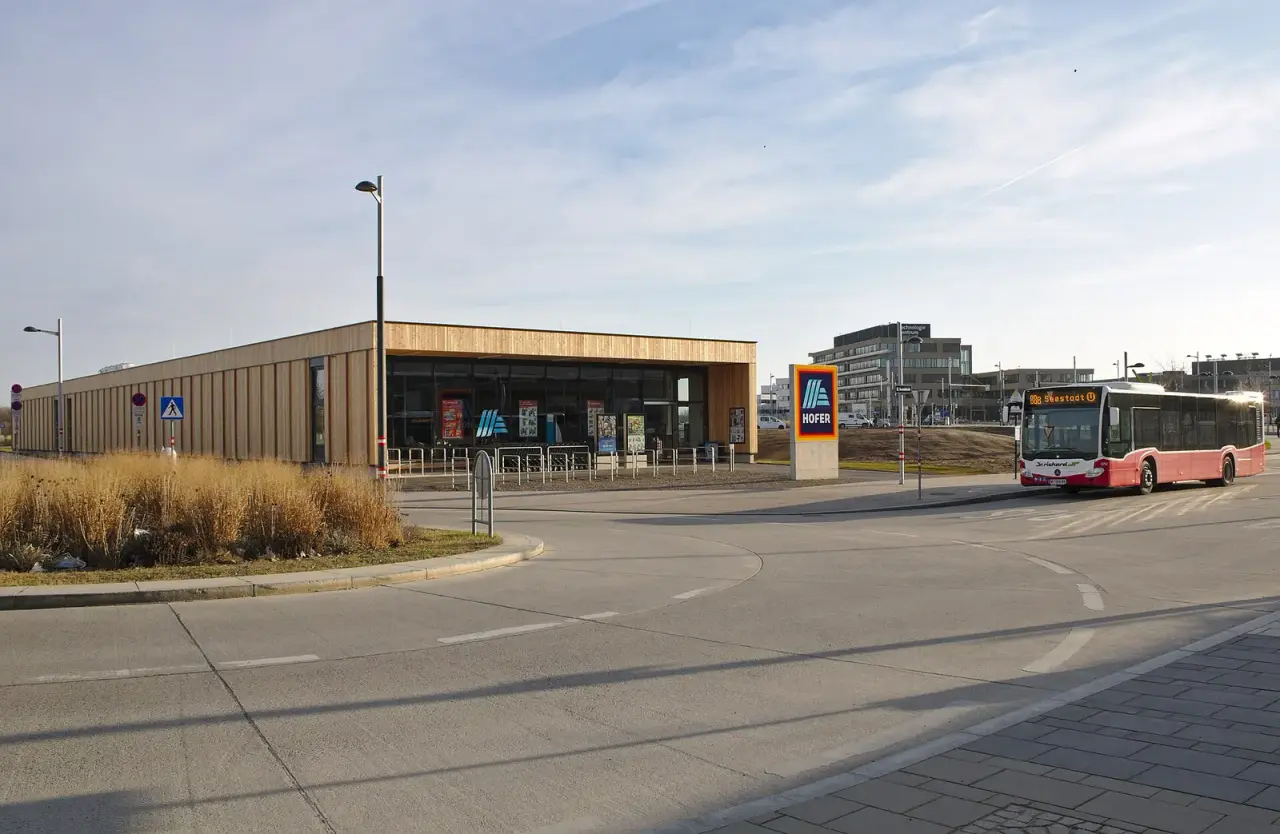
The main chains and how the AK groups them
- DiskonterDiskonter
- A discount supermarket: a smaller store with a narrower range, aimed at the lowest prices. The AK's price surveys count Hofer, Lidl and Penny as discounters and Billa, Billa Plus, Spar and Interspar as ordinary supermarkets (Supermärkte).
| Chain | AK group | What to expect (guidance) |
|---|---|---|
| Hofer | Discounter | Compact stores and a narrower range; a common first choice for weekly basics |
| Lidl | Discounter | Same logic as Hofer: compact stores and a narrower range |
| Penny | Discounter | Counted with the discounters by the AK; guides differ on where it sits, so treat the label loosely |
| Billa | Supermarket | Neighbourhood stores in most towns; usually a wider range than a discounter |
| Billa Plus | Supermarket | A further Billa format that the AK surveys separately |
| Spar | Supermarket | Neighbourhood stores in most towns; usually a wider range than a discounter |
| Interspar | Supermarket | A further Spar format that the AK surveys separately |
Regional and independent chains, such as MPreis, also exist and are not part of the AK survey, so nothing here compares their prices. Drugstores such as dm and Bipa mainly sell toiletries and household goods.
Discounter or supermarket: what the price evidence shows
| Question | Result |
|---|---|
| What was measured | Shelf base prices of the cheapest product for 40 everyday foods and a few cleaning products, in three Vienna branches of each of seven chains |
| Basket total | About €74, against almost €82 in September 2025, a record; 9% cheaper |
| Supermarkets against discounters | Supermarkets 11% dearer on average |
| Brand-name foods | 31 brands checked in the Billa and Interspar online shops were 5.3% dearer than a year earlier |
Read this carefully. The survey picks the cheapest product for each item, so it shows what the cheapest shopping costs, not what a typical basket costs. It covers Vienna only, and it is an average across items, not a ranking of single chains. Its two measurements also point in opposite directions: the cheapest basket fell while brand-name products rose, so the gap between a store's cheapest lines and the brands is where most of a student's saving or overspending happens.
Part of the fall is tax. Since 1 July 2026 a reduced VAT rate of 4.9% applies to selected basic foods, listed by code in an annex to the VAT Act, and the AK says this explains some of the drop in its basket. Restaurant meals are excluded, and mixed items such as a sausage roll stay at 10%. Rules like this can change, so treat the prices above as a September 2026 snapshot.
What the cheapest grocery basket costs in Vienna
Arbeiterkammer Wien price check, cheapest product per item · September 2026
- Cheapest basket, September 2026
- €74
- AK Wien's rounded figure
- The same basket a year earlier
- €82
- September 2025, a record
- Cheaper than a year before
- 9%
- Supermarkets dearer
- 11%
- Than discounters, cheapest products on average
Shelf prices in Vienna branches of the main supermarket and discount chains. Part of the fall comes from the lower VAT rate of 4.9% on basic foods since July 2026.
Source: Arbeiterkammer Wien, Unternehmensserviceportal. Last checked:
Image (PNG)Comparing prices on the shelf
- GrundpreisGrundpreis
- The unit price. For goods sold by volume, weight, length or area, shops must show the price per kilogram, litre, metre or square metre next to the selling price (Preisauszeichnungsgesetz § 10a); it can be left out where it equals the selling price. It is the only fair way to compare packs of different sizes, and it is what the AK compares in its own survey.
Compare the Grundpreis, not the pack price. A larger pack is not automatically cheaper per kilogram, and a brand and an own-label (Eigenmarke) version of the same staple can differ widely in price.
Student budget tips (guidance, not rules)
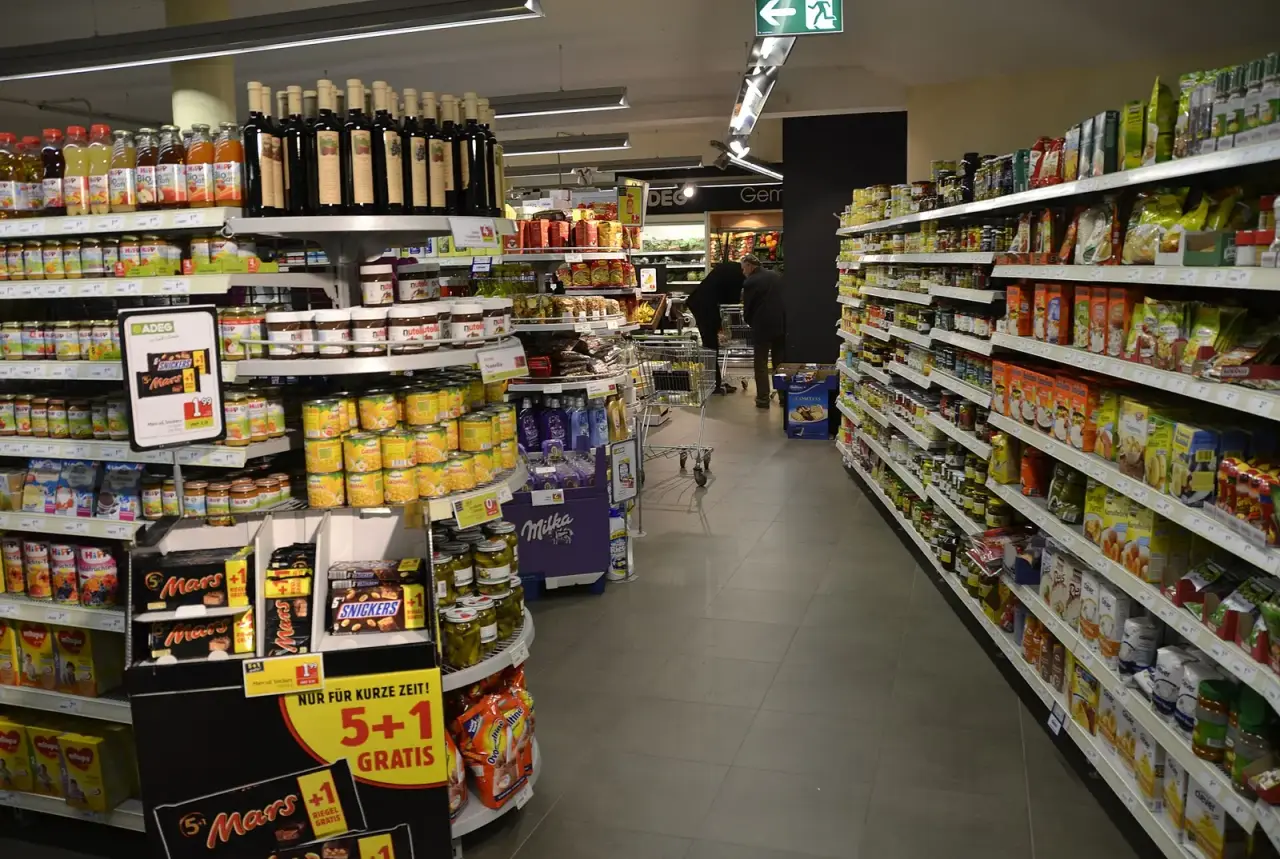
- Do the weekly basics at a discounter and compare the Grundpreis before trusting a "deal".
- Buy the cheapest line of staples such as pasta, rice, flour, tinned tomatoes and milk, and keep brands for the few items where you notice the difference.
- Plan the main shop for Friday or Saturday morning, because everything closes on Saturday evening; see the Sunday closures guide.
- Look for reductions on items near their date, and cook or freeze them the same day.
- Share staples such as oil, rice and cleaning products with flatmates; see shared flats.
- Keep your drinks containers and return them for the deposit; see below.
Because the AK survey cannot tell you what your own basket costs in your own town, the most reliable comparison is one you build yourself. It takes two shopping trips.
Pick ten staples
Choose the items you really buy every week, such as milk, bread, pasta, rice, eggs, vegetables and one or two brands you will not give up.
Write down the Grundpreis
At the discounter and at the supermarket nearest you, note the price per kilogram or litre of each, not the pack price.
Add them up
Total each shop's list. If the gap is small, shop wherever is closest; if it is large, shift the staples to the cheaper store and keep the other for top-ups.
Check again each semester
Prices move: the AK's own basket fell 9% in a year, partly because of a tax change, so an old comparison goes out of date.
In practice: your own bag, the self-checkout and paying
Bring a bag
Placing plastic carrier bags on the market has been banned since 1 January 2020 (§ 13j of the Abfallwirtschaftsgesetz 2002). Exceptions are very light bags of predominantly renewable raw materials suitable for home composting and sturdy reusable bags. The 2019 act sets no price, so what a shop charges for a paper or reusable bag is its own decision; no official price was found.
Choose a till
Some stores have self-checkout terminals. ORF Wien reported that Billa had them in 82 of 338 Vienna stores (May 2024), and Spar in about 20 Vienna locations. The Tiroler Tageszeitung reported on 20 October 2026 that Hofer plans them in more than 170 of its 540 Austrian stores by the end of 2027. These are press reports, not a current count, so expect many stores to have only staffed tills.
Use the terminal
You scan each item's barcode yourself, enter produce and bakery items without a barcode on the display, then pay. Staff supervise, for example for age checks on alcohol, and the chains say staffed tills remain.
Know what the reports do not say
Neither report says which payment methods the terminals accept, so look at the sign on the terminal and keep a card or cash for the staffed till. Paying by card or cash more widely is covered in the cash culture guide.
Redeem your deposit voucher
A Pfandbon from the return machine is redeemed at the checkout of the branch that issued it; see the recycling and Pfand guide for how the machine and the voucher work.
In practice: dates on the pack and reduced stickers
Reduced items near their date are where a student budget gains most, and two printed dates mean different things. The Arbeiterkammer Wien explains the difference; it does not mention reduced-price stickers, so how a given chain marks them is for the shelf to tell you.
| Wording on the pack | What it means | What you do |
|---|---|---|
| Mindestens haltbar bis (Mindesthaltbarkeitsdatum, MHD) | The date to which the producer guarantees at least that an unopened, properly stored product is in good condition; passing it does not make the food inedible | Look, smell and taste before you throw it away. A shop may keep selling expired MHD food if this is clearly marked. The date stops applying once the packaging is opened |
| Zu verbrauchen bis (Verbrauchsdatum) | Marks hygienically sensitive food such as minced meat, poultry and fish | Not sold after the date and not to be eaten at home after it |
The AK's test for MHD food is simple: if it is discoloured, smells odd or tastes off, discard it, and if spoilage is already visible or smellable do not taste it. A reduced pack of minced meat or chicken at its Verbrauchsdatum therefore has to be used by that date, while a reduced pack of pasta or yoghurt past its MHD is a judgement call you can make with your senses.
Pfand and opening hours
Single-use plastic and metal drinks containers carry a €0.25 deposit per container, which you get back by returning the empty container to a machine or counter; the rules, including what is excluded, are in the recycling and Pfand guide. Opening hours are set by law, not by each chain. Shops may open only within 06:00–21:00 Monday to Friday and 06:00–18:00 on Saturday, and must stay shut from Saturday 18:00 until Monday 06:00 and on public holidays, so most chains use only part of the window. The exceptions, public holidays and what is open on a Sunday are in the Sunday closures guide. How you pay is covered in the cash culture guide.
Frequently asked questions
Which is the cheapest supermarket in Austria?
No official survey names a single cheapest chain. AK Wien's September 2026 survey of seven chains found supermarkets (Billa, Billa Plus, Spar, Interspar) 11% dearer on average than discounters (Hofer, Lidl, Penny) for the cheapest version of 40 everyday items. It covers Vienna only and says nothing about regional chains.
How much do students spend on food in Austria?
Students surveyed in summer semester 2025 spent an average of €273 per month on food. OeAD's budgeting guideline for a student is €300 per month, excluding luxuries and tobacco. Your own figure depends mostly on whether you cook and where you shop.
Are supermarkets open on Sundays in Austria?
No. Shops must close from Saturday 18:00 until Monday 06:00 and on public holidays, with narrow exceptions such as station and airport shops. Do your main shop by Saturday morning or Friday.
Do I pay a deposit on bottles and cans in Austria?
Yes. Single-use plastic and metal drinks containers carry a €0.25 deposit per container that you get back when you return the empty container. Glass and beverage cartons are outside this system.
Did food VAT fall in Austria in 2026?
Since 1 July 2026 a reduced rate of 4.9% applies to selected basic foods, down from 10%. Restaurant meals are excluded, and mixed items such as a sausage roll stay at 10%.
Can Austrian shops sell food after its best-before date?
Yes, if it is clearly marked as past its Mindesthaltbarkeitsdatum, according to the Arbeiterkammer Wien. Food with a "zu verbrauchen bis" date, such as minced meat, poultry and fish, may not be sold after that date and should not be eaten at home after it.
How do I compare prices between different pack sizes?
Use the Grundpreis, the price per kilogram or litre that shops are required to display next to the selling price for goods sold by weight or volume. It is the fair comparison across pack sizes and brands.
Sources
12 sources, 10 official
- AK Preismonitor: Billig-Lebensmittel günstiger, Marken teurer!Arbeiterkammer Wien (press release, 13.10.2026) (Official)
- Neuer Umsatzsteuersatz von 4,9 ProzentUnternehmensserviceportal (usp.gv.at) (Official)
- Preisauszeichnungsgesetz § 10a (Grundpreis)RIS – Rechtsinformationssystem des Bundes (Official)
- Abgelaufenes gleich in den Müll?Arbeiterkammer Wien (Official)
- Bundesgesetzblatt I Nr. 71/2019 — AWG-Rechtsbereinigungsnovelle 2019 (§§ 13j–13m AWG 2002, Kunststofftragetaschen)RIS (Rechtsinformationssystem des Bundes) (Official)
- Selbstbedienungskassen in Wiener SupermärktenORF Wien (Secondary)
- Einkauf selbst scannen: Hofer führt Selbstbedienungs-Kassen einTiroler Tageszeitung (APA report) (Secondary)
- Öffnungszeitengesetz 2003 — Gesamte RechtsvorschriftRIS (Rechtsinformationssystem des Bundes) (Official)
- Pfandverordnung für Einweggetränkeverpackungen (BGBl. II Nr. 283/2023) — Gesamte RechtsvorschriftRIS (Rechtsinformationssystem des Bundes) (Official)
- Seit Jänner 2025: Neues Pfandsystem in Österreichoesterreich.gv.at (Federal Chancellery) (Official)
- Studierenden-Sozialerhebung 2025 – Kernbericht (Dibiasi et al., IHS, March 2026; updated version of 24 April 2026 published by the ministry)Federal Ministry of Women, Science and Research (BMFWF) / Institut für Höhere Studien (IHS) (Official)
- Living costsOeAD (Study in Austria) (Official)