Nearly every single-use plastic bottle and drinks can you buy in Austria carries a deposit of €0.25 per container, which you recover only by returning the empty container. The rest of your rubbish is sorted under municipal rules, so what is right in Vienna differs in detail from Graz. The wider picture is in the daily life guide; grocery costs are in the supermarkets guide.
How the bottle and can deposit works
- PfandPfand
- A refundable deposit added to the price and repaid when you bring the item back. The national scheme for single-use drinks containers is set by the Pfandverordnung (ordinance on deposits for single-use beverage packaging). The seller adds the deposit at the till; the same amount is repaid on return.
The scheme covers closed single-use drinks containers made of plastic or metal with a fill volume of 0.1 to 3 litres, whatever the drink. What decides it is the material and the Austrian deposit logo, not the contents. Milk and milk-based drinks are carved out whatever they are packed in, and the official page also excludes beverage cartons. A transition period for old stock without the logo ended on 31 December 2025.
| Container | Deposit? |
|---|---|
| Single-use plastic bottle, 0.1 to 3 litres, with the Austrian deposit logo | Yes, €0.25 each |
| Metal drinks can, 0.1 to 3 litres, with the Austrian deposit logo | Yes, €0.25 each |
| Milk and milk-based drinks, in any packaging | No |
| Beverage cartons (Tetra Pak type) | No; yellow bin |
| Glass bottles | Not under this scheme; glass goes to the glass container. Reusable (Mehrweg) bottles have a separate deposit |
| Containers bought abroad or without the logo | No deposit and not accepted; yellow bin |
| Drinks consumed on the premises of a restaurant, bar or café | No deposit; takeaway drinks do carry it |
Check the logo and barcode
Only containers with the Austrian deposit logo carry the deposit. The machine identifies a container from the logo and the barcode, so both must still be readable.
Keep it empty and uncrushed
Do not flatten bottles and cans. A container whose logo or barcode can no longer be read cannot be matched to the system, and no deposit is paid.
Use a supermarket machine
The ministry calls the supermarket the easiest route. A return machine takes every deposit bottle and can, whatever the number, size or brand.
Take the credit or ask for cash
The machine gives you a deposit credit (Pfand-Gutschrift). The ministry's FAQ says it must be paid out in cash if you ask for that.
If a shop refuses a valid container
If the container is uncrushed, logo and barcode are intact and no exemption applies, the ministry asks you to report it to the system operator EWP at [email protected].
In practice: at the return machine, and what the receipt is
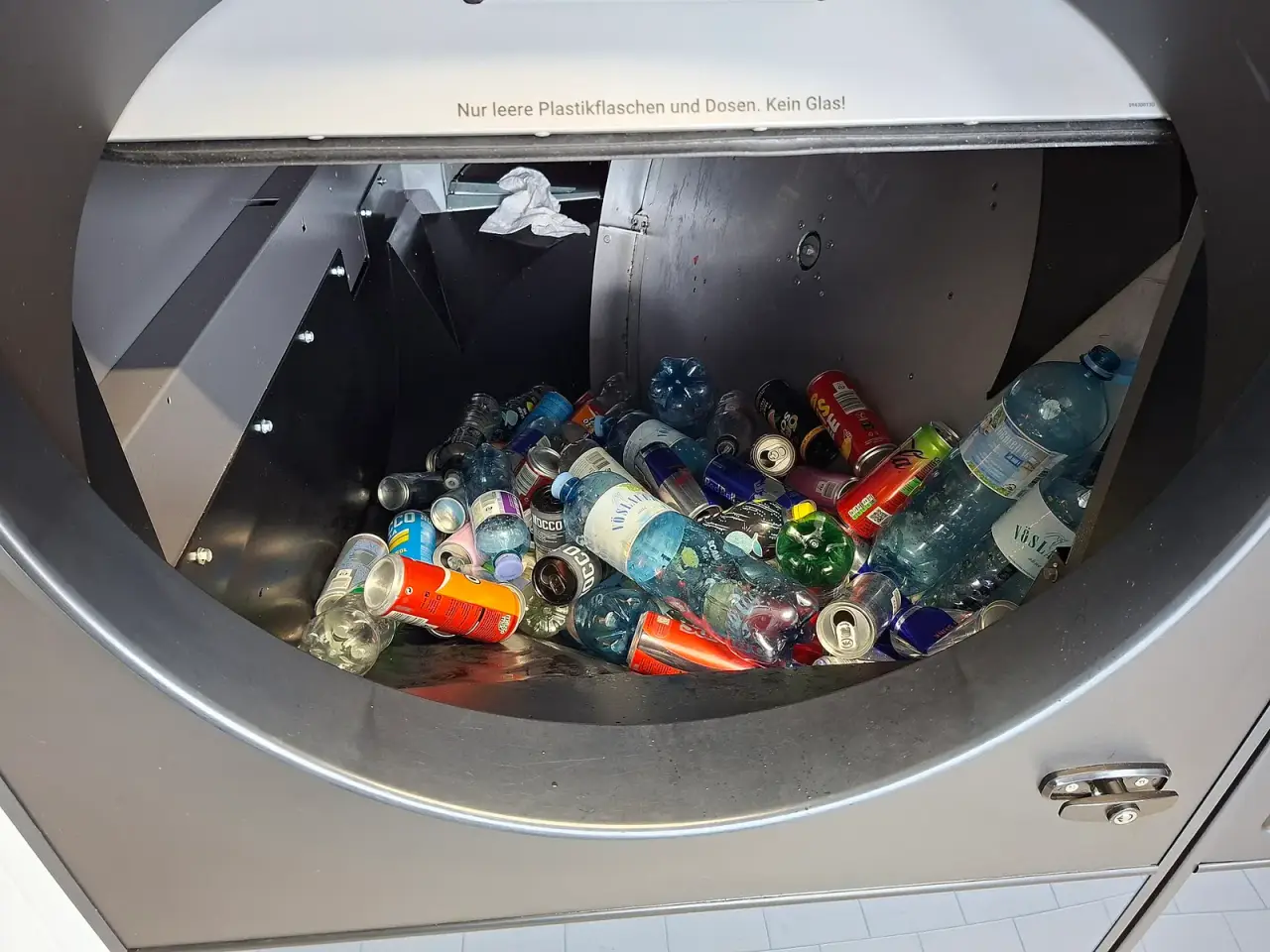
You feed the containers in one by one. The machine checks that each belongs to the deposit system and is in an acceptable condition; the bottle cap may stay on or come off. When you press finish, it prints a voucher for the total (a Pfandbon; the central deposit body EWP calls it a Gutschein). EWP's rules require the voucher to carry a unique barcode, the number of containers accepted, the deposit amount and the place where it is paid out. You hand it in at the checkout of the branch that issued it, and EWP confirms you can ask for cash there. None of the pages read states an expiry date or a rule for a lost voucher, so cash it in on the same trip.
- Plant-based drinks carry the deposit. EWP says soya and oat drinks are not exempt, while milk and milk products and syrups are, so an oat drink in a plastic bottle with the logo is a deposit container.
- A deposit you should not have paid. If a shop charged a deposit on a product without the Austrian logo, EWP asks for the shop details, the receipt showing the deposit and a photo of the product at [email protected].
- A machine that cannot take your containers. EWP's FAQ says that where return at the machine is not possible, containers must be taken back by hand, and asks you to speak to the checkout staff. If the machine rejects a crushed can but its logo and barcode are still clearly readable, staff can accept it by hand; if not, no deposit is paid and it goes in the yellow bin.
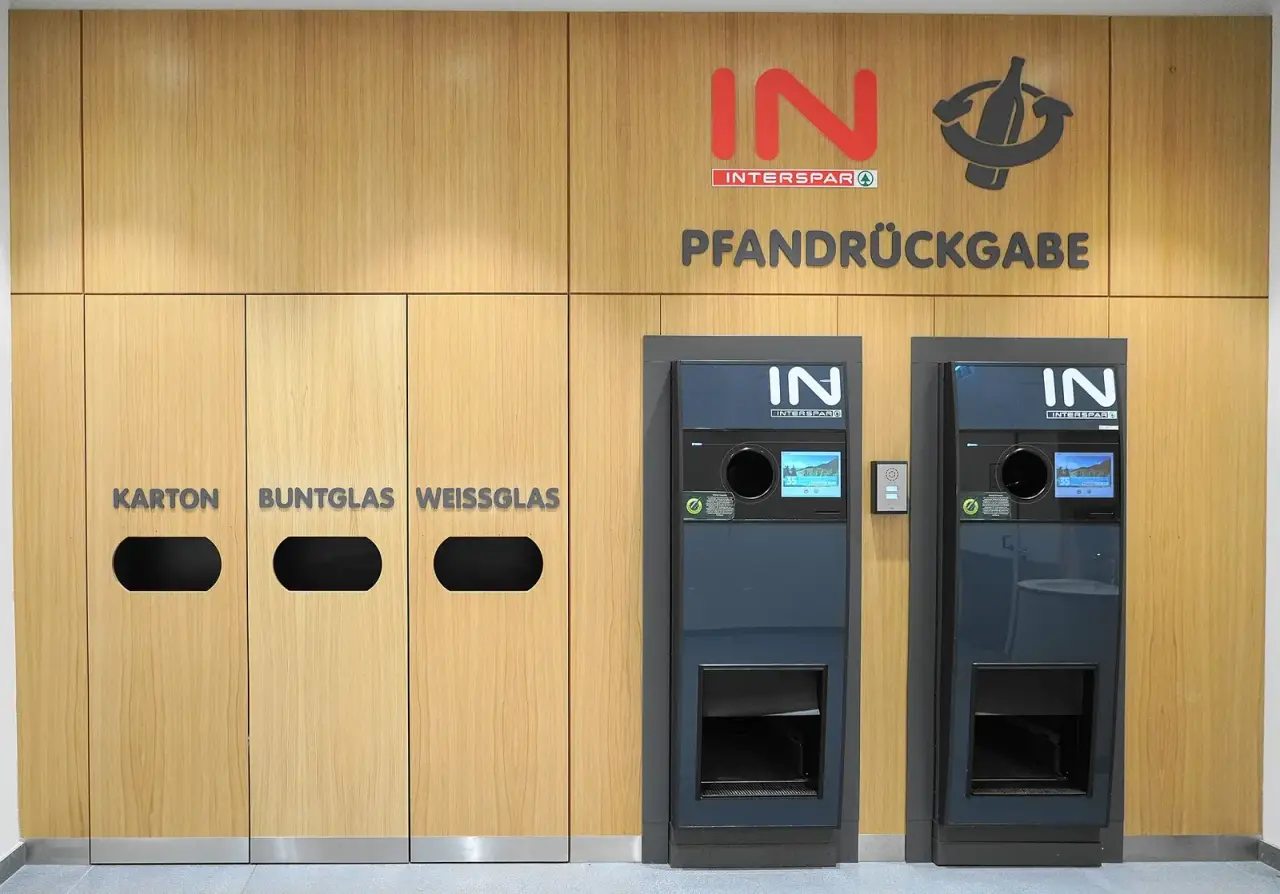
- Where the machine stands. The ministry says return machines are available throughout the supermarket sector in all of Austria. Look for a Pfandrückgabe sign, as at the Graz point in the first photo; a shop without a machine takes containers at the till, but only the kinds it sells.
- Glass bottles are a different system. A single-use glass bottle goes into the glass container, where it is melted down. A reusable (Mehrweg) glass bottle carries its own deposit, which EWP says depends on the packaging and is not the flat €0.25, and MA 48 says such a bottle can be refilled up to 50 times. EWP says reusable glass can often be returned only where it was bought, and says the take-back rules for reusable bottles are unchanged. The pages read give no amount for crates, so read the price label.
- See the deposit on your receipt. EWP's guidance for retailers requires the deposit to appear in its own line on the till receipt, so you can check on the paper what you paid and what you get back.
Where you can return containers
| Where | What they must accept |
|---|---|
| Supermarket with a return machine | Every deposit bottle and can, in any quantity, size or brand |
| Shop without a machine, such as a bakery or kiosk | Only the container types and sizes it sells itself, and only the quantity a customer would normally buy there, whatever the brand. The ministry's example is a bakery selling 0.5 litre PET bottles, which takes one or two such bottles of any brand but no cans |
| Busy sites such as stations and shopping streets | Several shops may name one joint return point nearby (about 300 metres at most) and must tell customers where it is |
| Restaurant, bar or café (drinks drunk on the premises) | No deposit and no take-back. Takeaway drinks keep both duties |
| Online grocery delivery | The provider must take containers back and refund the deposit on delivery |
| Restaurant food delivery, parcel services and vending machines | Not required to take containers back; return the empties to a supermarket machine |
The shop's duty applies during its normal opening hours (§ 5 of the Pfandverordnung), so a machine in a shut shop is of no use on a Sunday; the closing rules are in the Sunday closures guide.
Sorting household waste: your city decides
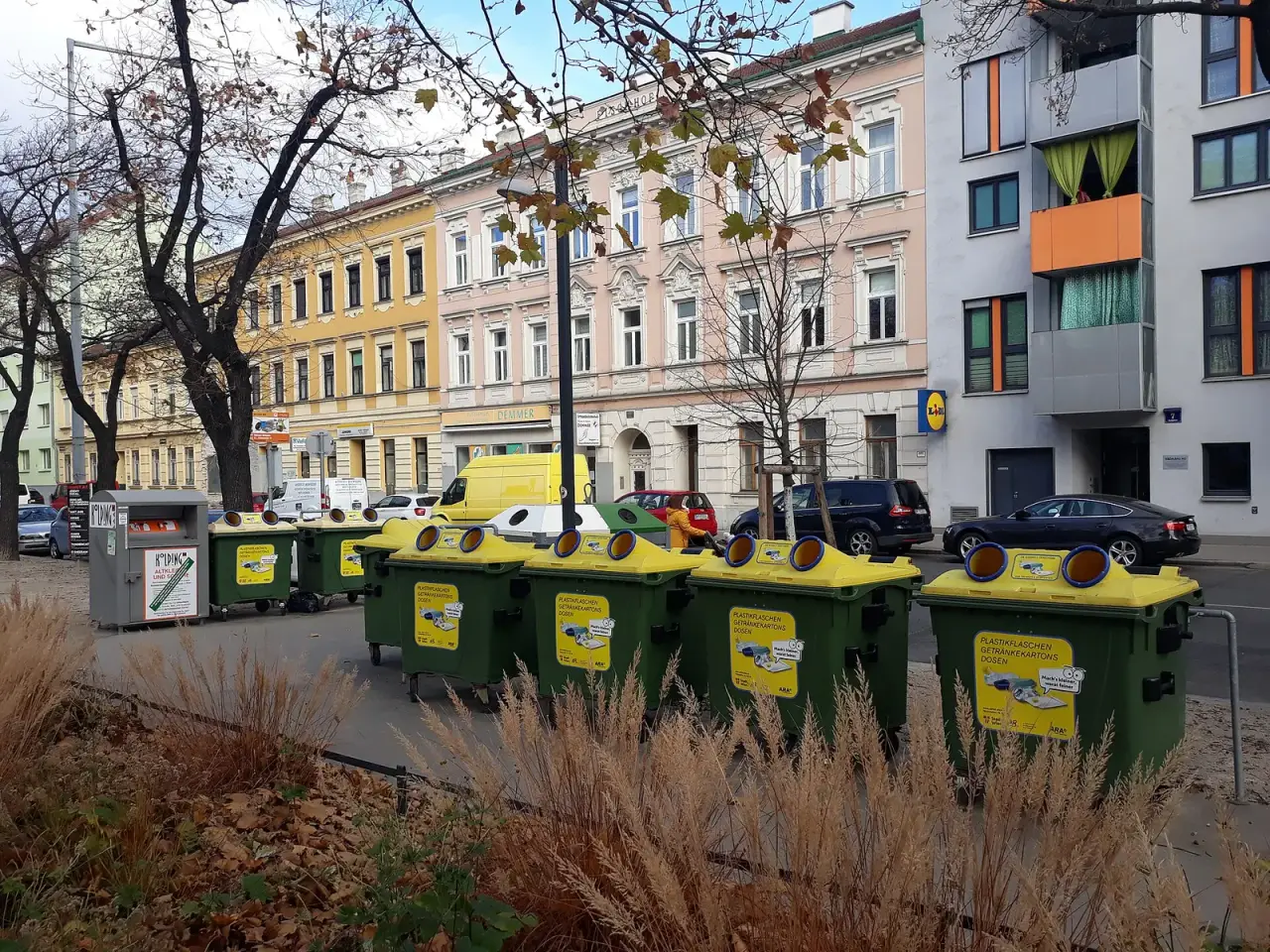
Everything else is sorted under rules your municipality sets. Vienna (MA 48) and Graz (Umweltamt) both publish sorting guides; Graz's one-page sheet exists in English and in Türkçe, among more than twenty languages. Both cities also state lid colours on their waste-advice pages, used in the table below; the Vienna pages do not name the yellow bin consistently, and a given building may still differ, so go by the label on the bin and your building's instructions.
| What | Vienna (MA 48) | Graz (City Umweltserver, 2025 sheet and city news) |
|---|---|---|
| Paper and cardboard | Red lid: clean paper and uncoated cardboard | Red lid: paper and cardboard packaging, newspapers, books. Fold cartons flat and never leave them next to the container |
| Plastic packaging, drinks cartons, metal packaging | Yellow bin (Gelbe Tonne) or Gelber Sack for plastic bottles, metal packaging and drinks cartons; one MA 48 page calls it the Gelb-Blaue Tonne | Yellow bin or yellow sack; metal packaging joined light packaging there on 1 January 2025, and the city announced that the blue bins would be withdrawn |
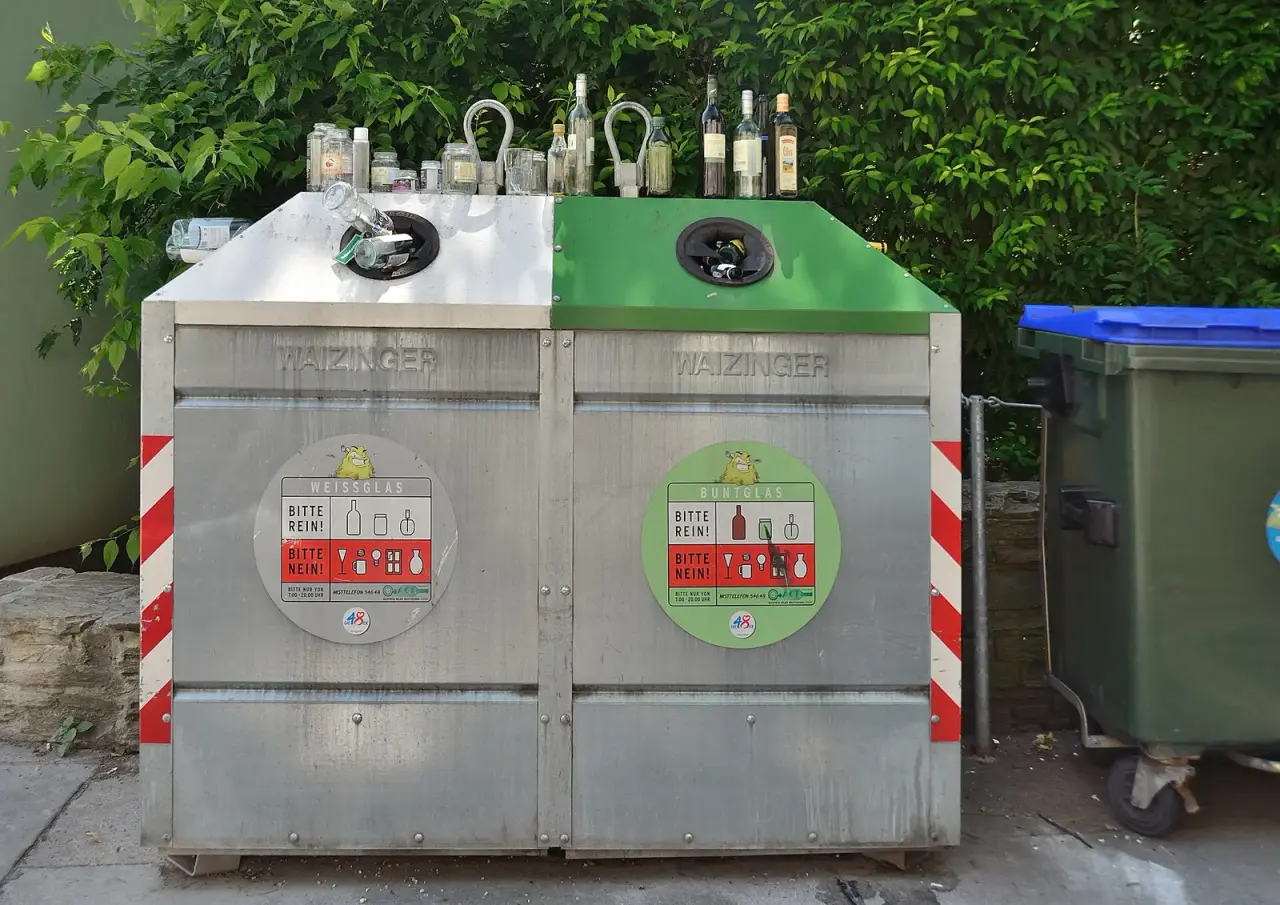
| Glass | Street containers: white lid for clear packaging glass, green lid for coloured. Drinking glasses and window glass are Restmüll | White lid for white glass, green lid for coloured glass, at collection points on public ground and on private properties |
| Food and garden waste | Brown lid (Biotonne) | Brown bin (Bioabfall); no organic collection on public ground |
| Deposit bottles and cans | Returned for the deposit | The sheet asks you not to put returnable drinks packaging in the yellow bin |
| Everything else | Black bin: Restmüll | Black bin: Restmüll (the City's own wording) |
Vienna's Mistplätze (collection centres) take household quantities of paper, organic waste, glass, plastic, cartons and cans free of charge, and take residual waste for a fee. Batteries can be handed in at many shops without buying anything, and old electrical appliances when you buy an equivalent new one. Clothing and shoes go to a textile collection or a Mistplatz.
In practice: glass, lids and the street containers
Packaging glass only
MA 48 collects hollow glass with a screw cap: jam jars, pickle jars, bottles and perfume flasks. Mirrors, window glass, drinking glasses, ceramics, porcelain and light bulbs go into the Restmüll, or to a Mistplatz depending on amount. LED and energy-saving lamps and mercury thermometers go to a Mistplatz or a Problemstoffsammelstelle.
Take the lid off
Metal lids go into the yellow bin. Plastic screw caps can go there too, but check whether it is a deposit bottle.
Clear to white, coloured to green
Even slightly coloured glass belongs in the green-lid container. Each container has an inner divider, and MA 48 says the collection trucks do too, so the two colours are not mixed again.
Empty, not washed
Jars must be emptied but need not be washed; a quick rinse can help against smell and mould in summer. Spoiled solid remains go into the Restmüll.
Mind the hours
MA 48 asks you to throw glass in only within 06:00–22:00, to avoid noise. Stickers on individual containers can show other hours, as the photo shows, so follow the one in front of you.
Cooking fat
Do not pour fat down the drain. At every Mistplatz you can collect a free 3-litre WÖLI bucket and swap it for a clean one.
Outside Vienna and Graz the equivalent of a Mistplatz is usually called an Altstoffsammelzentrum (ASZ), run by a municipality or a waste-management association. Rules differ from place to place. At the one example read, the ASZ in Purgstall in the Scheibbs district, every entry must be registered at the office, free bulky-waste handover in household quantities runs through mobile collections in the municipalities, and the ASZ itself has a price list. Ask your municipality or association for the hours, fees and any entitlement card.
Bulky waste and moving out
- SperrmüllSperrmüll
- Bulky waste: items that, because of their size and nature, do not belong in ordinary bins, such as mattresses and sofas. Vienna's MA 48 says they do not belong in the residual bin.
- MistplatzMistplatz
- A municipal collection centre in Vienna for bulky waste, hazardous household waste and sorted materials. Graz has a comparable facility, the Ressourcenpark.
Vienna offers three routes:
- Mistplatz: bring household quantities yourself, free of charge; the Mistplatz acceptance rules apply.
- MA 48 Entrümpelungsdienst and Sperrmüllabfuhr: collection from the flat, cellar or attic, for a fee.
- MA 48 Muldendienst: a skip you fill yourself, for a fee, for household quantities and not whole-flat clearances.
The Vienna page gives no prices, so ask MA 48 before booking. In Graz the 2025 sheet lists the Ressourcenpark and a container service. Furniture that still works can go to the 48er-Tandler boxes at Vienna's Mistplätze, or be sold or given away; see the second-hand guide.
In practice: taking a mattress or sofa to a Vienna Mistplatz
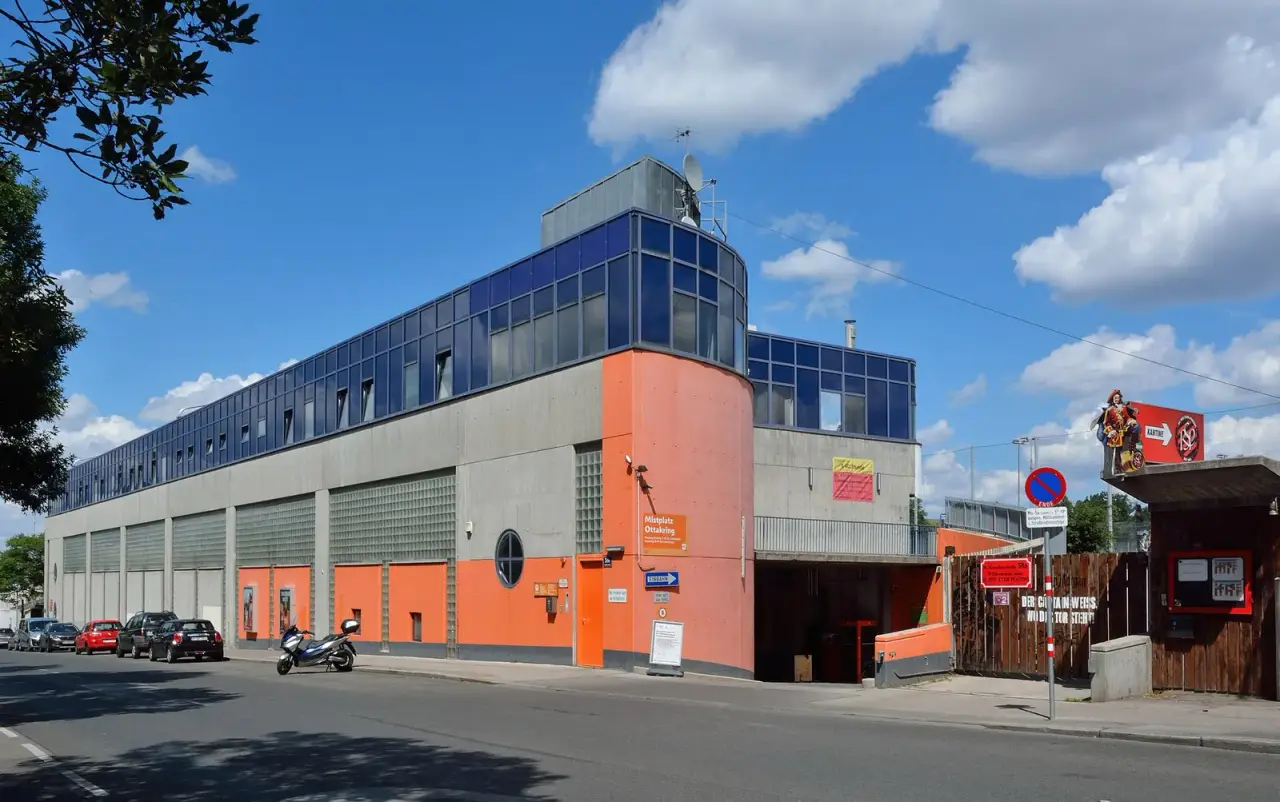
MA 48 lists 13 locations Mistplätze, open Monday to Saturday, 07:00–18:00 and closed on public holidays; Ottakring and Heiligenstadt open from 08:00 on Saturdays. Examples are Favoriten (10., Eva-Zilcher-Gasse 3), Ottakring (16., Kendlerstraße 38a) and Liesing (23., Seybelgasse 7); the City's page has all addresses.
Check you may use it
Use is limited to people registered in Vienna and to businesses seated there. The page does not say what proof staff ask for; if you have just moved, your registration should be in place first, see the arrival guide. Ottakring takes only Vienna-registered cars, pedestrians and cyclists.
Stay within the limits
One Mistplatz entry per day and in general 1 m³ per delivery. On foot or by bike you may make several drops if the total stays within that. A large single item such as a couch may exceed it, but whole-flat clearances are refused. Vehicles up to 3.5 tonnes are accepted, and rental vehicles whatever the plate. Partial unloading is not allowed, and unloading outside the gate and carrying items in does not get round the limit.
Know what goes where
Furniture, carpets, mattresses, windows and doors count as bulky waste. Household electrical appliances are accepted, but only two fridges or freezers per delivery. Household building rubble is capped at ten bags or half a cubic metre loose, and plasterboard is no longer taken at the Mistplätze.
Residual waste costs money
Restmüll goes into coin-operated presses at €2 for up to 150 litres, which MA 48 describes as the outlet for one-off extra amounts such as a move. For household quantities of bulky waste, recyclables, electrical appliances and hazardous waste the City says the handover is free.
Give still-usable things a second life
Intact furniture, books and appliances can go into the 48er-Tandler-Box on site instead of the bulky-waste skip; see the second-hand guide.
Clearing a whole flat
Large quantities of non-hazardous waste, for example from a flat clearance, can be handed in for a fee at the Rinter site (22., Percostraße 4, entrance Großmengen). Alternatively MA 48 collects for a fee, and its page links an online contact form; it gives no prices, so ask before booking.
A routine for a new flat
In your first week
- Ask your landlord, building manager or flatmates where the bins are and which the building uses.
- Download your city's sorting sheet in a language you read.
- Keep a separate bag for deposit bottles and cans, and do not crush them.
- Return containers before Saturday evening, when shops close.
- Find your nearest Mistplatz or Ressourcenpark for anything that does not fit a bin.
- Take spent batteries to a shop that accepts them.
Frequently asked questions
How much is the Pfand on bottles and cans in Austria?
The deposit is €0.25 per container on single-use plastic bottles and metal cans of 0.1 to 3 litres that carry the Austrian deposit logo, and the same amount is repaid on return. It has applied nationwide since 1 January 2025.
Where can I return deposit bottles and cans in Austria?
In general, shops that sell single-use drinks must take containers back during their opening hours, with exemptions such as restaurants serving on the premises. Supermarkets with a return machine accept every deposit bottle and can in any quantity or brand, while shops without a machine only take the types and quantities they sell themselves.
Can I return bottles I bought in Germany or another country?
No. According to the ministry's FAQ, containers bought abroad without the Austrian logo cannot be returned in Austria, and Austrian deposit containers cannot be returned abroad. Put them in the yellow bin or sack.
What do I do if a deposit machine rejects a crushed can?
Ask a member of staff. If the logo and barcode are still clearly readable, the container can be accepted by hand. If they are not readable, no deposit can be paid and the container goes in the yellow bin or sack.
Do glass bottles and drinks cartons carry the deposit?
Not under the national scheme, which covers plastic and metal containers. Glass goes to the glass container and cartons go in the yellow bin; reusable (Mehrweg) bottles have their own separate deposit.
How do I get rid of old furniture in Vienna?
You can take household quantities of bulky waste to a Mistplatz free of charge, or pay MA 48 for a collection from your flat or a skip you fill yourself. Furniture that still works can go to the 48er-Tandler boxes at the Mistplätze.
Can I use a Vienna Mistplatz if I am not registered in Vienna?
MA 48's rules limit the use of the Wiener Mistplätze to people registered in Vienna and to businesses with a seat in Vienna. The page does not say what proof is requested, so register your address first if you have just moved. Large quantities such as flat clearances go to the Rinter site for a fee.
Sources
18 sources, 16 official
- Pfandverordnung für Einweggetränkeverpackungen (BGBl. II Nr. 283/2023) — Gesamte RechtsvorschriftRIS (Rechtsinformationssystem des Bundes) (Official)
- Seit Jänner 2025: Neues Pfandsystem in Österreichoesterreich.gv.at (Federal Chancellery) (Official)
- FAQ – oft gestellte Fragen (Einwegpfand)BMLUK (Federal Ministry of Agriculture, Forestry, Climate and Environmental Protection, Regions and Water Management) (Official)
- Das Mist-ABC — Müll richtig trennen und entsorgenStadt Wien (MA 48) (Official)
- Mülltrennung in WienStadt Wien (MA 48) (Official)
- 48er-Abfallberatung der Stadt Wien: Mülltrennung und MüllvermeidungStadt Wien (MA 48 Abfallberatung) (Official)
- Altglas - Siehst du durch?Stadt Wien (MA 48 Abfallberatung) (Official)
- Richtige Trennung nach AbfallartStadt Graz (Umweltserver) (Official)
- AltstoffsammelzentrumGVU Scheibbs (municipal waste-management association of the Scheibbs district) (Institutional)
- Sperrmüll - MülltrennungStadt Wien (MA 48) (Official)
- WasteWatcherStadt Wien (Official)
- Annahmebestimmungen der Mistplätze der MA 48Stadt Wien (MA 48) (Official)
- Das A bis Z für den Mistplatz der MA 48Stadt Wien (MA 48) (Official)
- Mistplätze - Öffnungszeiten und AdressenStadt Wien (MA 48) (Official)
- Mistplatz Liesing - Standort, Öffnungszeiten und ServiceangeboteStadt Wien (MA 48) (Official)
- FAQ — Recycling Pfand ÖsterreichEWP Recycling Pfand Österreich gGmbH (central deposit body) (Institutional)
- Gelbe Tonne und PfandsystemStadt Graz (Umweltamt) (Official)
- Correct separation of waste (Abfalltrennblatt, English edition 2025)Stadt Graz (Umweltservice / Holding Graz) (Official)