The official pages read for this guide list no Turkish, Middle Eastern, South Asian or East Asian food shops and map none of them by district. In practice students find them in two steps: the big city markets first, then a map search for the specialist shops near their own address. The ordinary chains and what they cost are in the supermarkets guide, which makes no price comparison for the shops covered here.
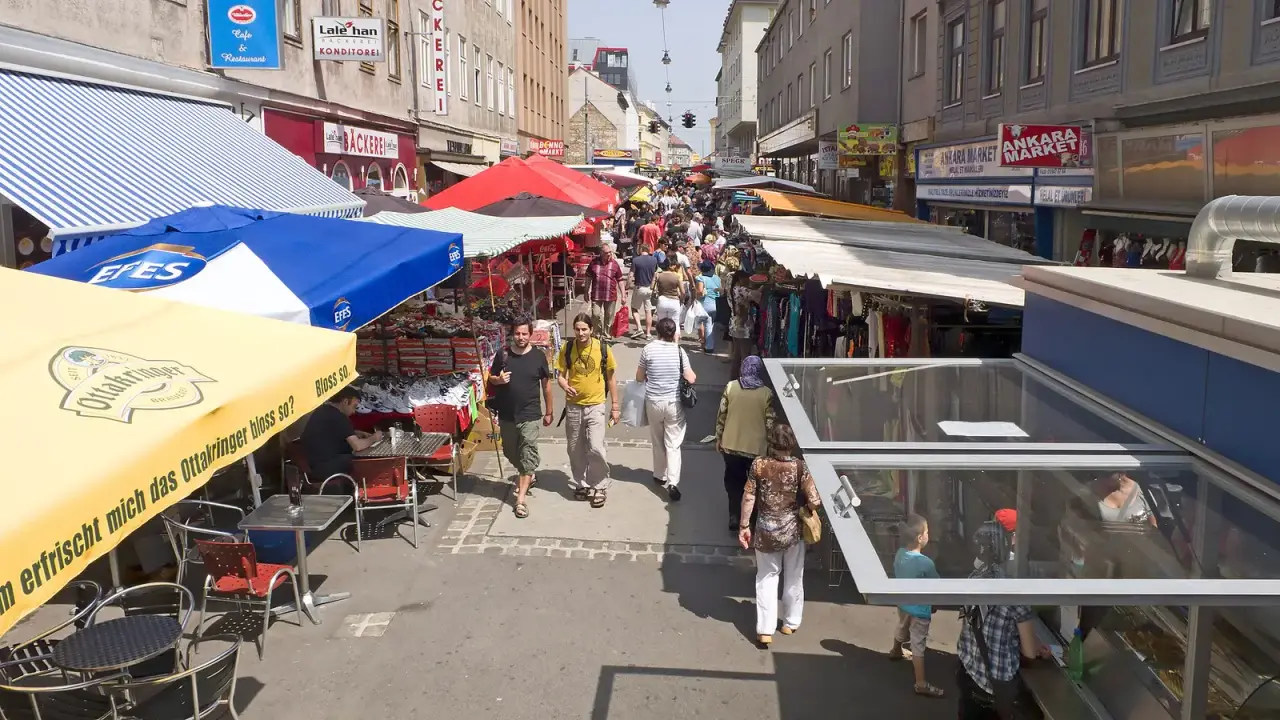
Where to find Turkish, Middle Eastern and other international food
| Market | What the City of Vienna says | Practical note |
|---|---|---|
| Brunnenmarkt (16th district, from Brunnengasse to Yppenplatz) | The offer runs from cafés, bars and Near Eastern cuisine to regional food, souvenirs and designer products. It is nicknamed "Orient ums Eck" for its colourful, multicultural atmosphere and is called one of Vienna's cheapest markets | Stall hours are capped at 06:00–21:00 Monday to Friday and 06:00–18:00 Saturday. The page lists no Sunday hours for stalls, only for restaurants and bars |
| Naschmarkt (6th district, Wienzeile between Getreidemarkt and Kettenbrücke) | Delicacies from different countries and regions: fruit, vegetables, spices, fish, meat, cheese and dried fruit | The same maximum stall hours apply. The Saturday flea market is covered in the second-hand guide |
The hours are ceilings, not promises, so individual stalls may close earlier, and market stalls follow different rules from supermarkets; what is open on a Sunday is explained in the Sunday closures guide. For Graz, Linz, Salzburg and Innsbruck no official page describing international food shops was found, so the map search below matters most there.
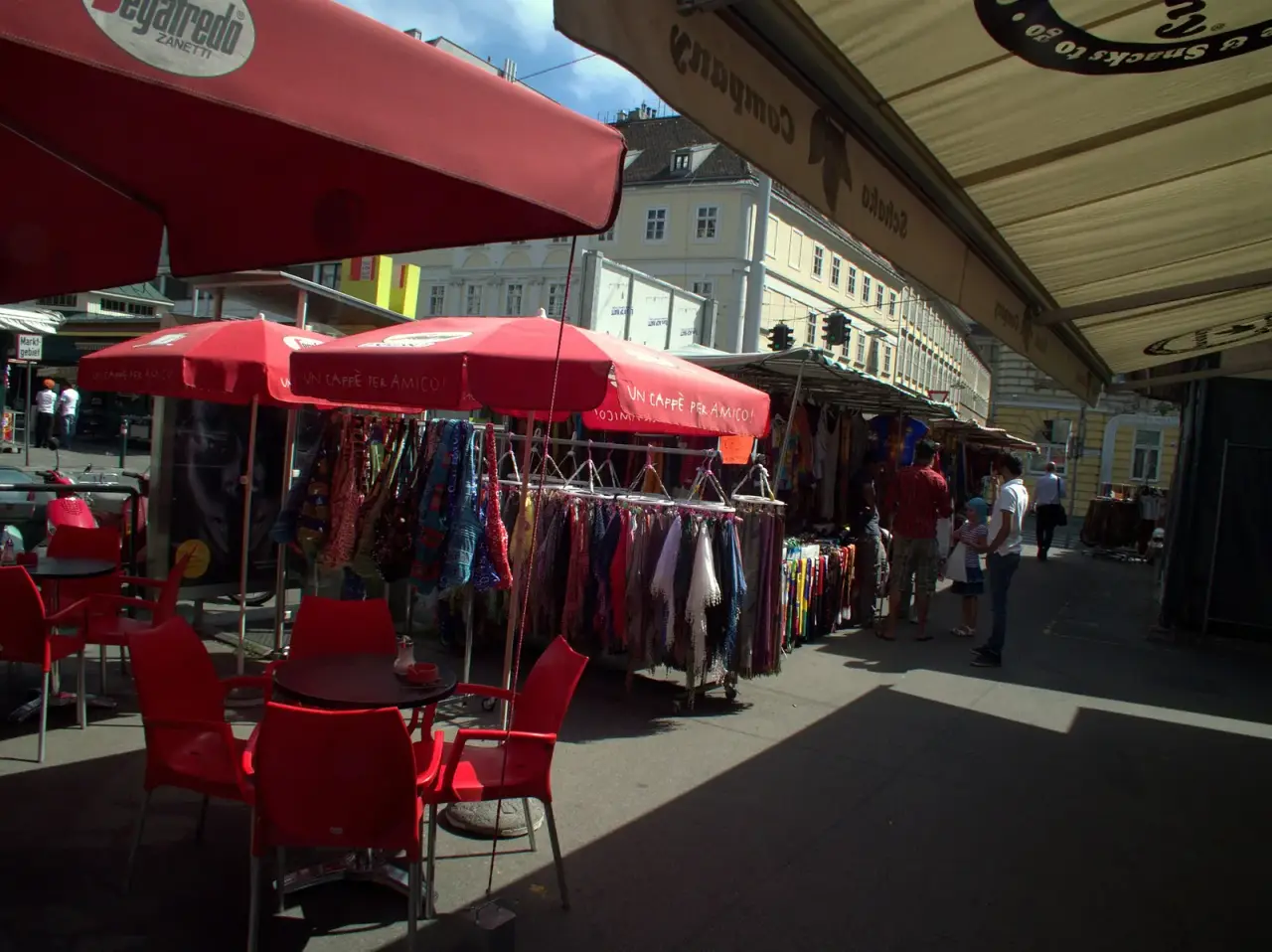
- Search a map app for "türkischer Supermarkt", "orientalischer Supermarkt", "asiatischer Supermarkt" or "Halal Fleischerei" around your address (guidance: no official list exists).
- Ask students and flatmates from your home country which shops they use.
- Check a small shop's opening hours before you go, because it sets its own within the legal limits.
In practice: when to go to the Brunnenmarkt and Naschmarkt
Both markets belong to the City's Marktamt, whose pages publish maximum hours by type of business, not fixed ones. Read together, they give a few rules of thumb.
| Type of business | Brunnenmarkt (16th) | Naschmarkt (6th) |
|---|---|---|
| Market stalls | 06:00–21:00 Monday to Friday and 06:00–18:00 Saturday | 06:00–21:00 Monday to Friday and 06:00–18:00 Saturday |
| Farmers' and traders' market places | Friday and Saturday, 06:00–13:00 | Monday to Friday 06:00–19:30, Saturday 06:00–18:00 |
| Restaurants and bars on Sundays and public holidays | 09:00–17:00 | 09:00–21:00 |
| All stalls and venues must be open | Tuesday to Friday, 15:00–18:00 | Tuesday to Friday, 15:00–18:00 |
Time your first visit
The window in which every stall and venue must be open is Tuesday to Friday, 15:00–18:00, so that is the surest slot for seeing the full range. Stalls may open from 06:00, so mornings suit fresh produce.
Do not count on stalls on Sunday
The pages give Sunday hours only for restaurants and bars, so plan the grocery shop before then; the City allows florists to open on Valentine's Day, Mother's Day and All Saints. The general rule is in the Sunday closures guide.
Walk the Brunnenmarkt end to end
The City counts about 170 stalls over 948 metres, running from Brunnengasse to the Yppenplatz in the north, where it says the only brick-built stalls stand.
At the Naschmarkt, use the Saturday
A large flea market runs alongside on Saturdays and the Bauernmarkt stalls trade mainly on Fridays and Saturdays, identifiable by their table flags. The flea market is covered in the second-hand guide.
Know who to contact
The City's Brunnenmarkt page names the Marktamt, with a contact form, as the point of contact for the market.
Halal food and certification in Austria
- Halalhalal
- Arabic for "permitted". For food it means products, and above all meat, that meet Islamic rules. Whether a product is halal is a religious question; the food-law provision read for this guide does not define the word.
- AkkreditierungsstelleAkkreditierungsstelle
- An accreditation body: an organisation that approves other bodies to certify. The Islamic Faith Community in Austria (IGGÖ) says it acts in this role for halal certifiers that follow its Halal-Richtlinien (halal guidelines).
- Halal-ErmächtigungHalal-Ermächtigung
- An authorisation from the IGGÖ that, according to the IGGÖ, a business needs before the authorities can approve ritual slaughter. It is about slaughter, not about the shelf labels on packaged food.
The IGGÖ describes itself as a state-recognised religious society and cites § 12 (1) of the Islamgesetz 2015 as its right to organise food production under its religious rules. It says it first planned to certify products itself and then repositioned as an accreditation body for halal certifiers; accredited bodies undertake to put a halal seal only on products whose status is assured under the IGGÖ guidelines, which its Supreme Council (Oberster Rat) adopted in September 2022. The IGGÖ also publishes a directory of businesses that hold an IGGÖ halal certificate. No state-run halal label turned up in the sources read, so a "halal" sticker means what the body behind it means.
Ask who certified it
A shop or butcher that sells halal meat should be able to name the certifying body. If it cannot, treat the claim as the seller's word only.
Look at the certificate itself
The IGGÖ stresses that only the valid certificate is authoritative, and that certifying a company does not make all its products, sites or activities certified.
Check the scope and dates
A certificate names what it covers and for how long. A listing in the IGGÖ directory confirms certification only for the scope stated there.
Ask the IGGÖ if in doubt
The IGGÖ says questions about the authenticity, validity or scope of one of its certificates can be put to its Halal Department.
| What you see | What it tells you |
|---|---|
| A business is listed | It holds a valid IGGÖ halal certification, for the scope stated on that listing and for the dates shown |
| The listing names a company | That does not make all of its products, sites or activities certified; only the valid certificate counts |
| A business is not listed | The directory covers IGGÖ certificates only, so a certificate from another body has to be checked with that body |
The IGGÖ says the question of standards matters most around the Opferfest (Eid al-Adha). Guidance: butchers are likely to be busy then, so order meat ahead rather than expecting stock on the day.
Prayer spaces and food on campus
Only one university page describing a prayer space turned up in the research for this guide. WU Vienna's page names a Room of Silence (Raum der Stille) in building D2, entrance D, room D2.0.151, which it says offers room for prayer, faith, silence and retreat, and a separate ecumenical room run by its chaplaincy. The page does not mention a Muslim prayer room, opening hours or rules. For other universities, including the University of Vienna, no prayer-room page was found, so ask your student services or your ÖH. Whether a canteen offers halal meals is not stated on any page read; ask the canteen operator.
A starter routine
- Visit the Brunnenmarkt or Naschmarkt once to see what is available, then find the specialist shop nearest your address.
- If halal matters to you, ask the certifying body of any meat and look at the certificate.
- Plan your shop around closing days and the Saturday-evening close, see the Sunday closures guide.
- Ask your university's student services where a quiet or prayer room is.
- If you are refused service or treated badly in a shop, see the discrimination guide.
Frequently asked questions
Where can I buy Turkish and Middle Eastern groceries in Vienna?
The City of Vienna describes the Brunnenmarkt in the 16th district as having Near Eastern cuisine among its offers, and the Naschmarkt in the 6th district as selling delicacies from different countries and regions. Specialist shops are found with a map search, because no official list exists.
Is there an official halal label in Austria?
No state-run halal label turned up in the sources read. The IGGÖ says it accredits halal certifiers that follow its guidelines and also issues its own certificates, so ask which body stands behind a halal claim.
How can I check whether a halal certificate is genuine?
Ask to see the certificate and check its scope and dates, because the IGGÖ says certifying a company does not make all its products or sites certified. For an IGGÖ certificate, its directory lists certified businesses and its Halal Department can be asked about authenticity.
Are there prayer rooms at Austrian universities?
WU Vienna's page names a Room of Silence that offers room for prayer, and a separate ecumenical room run by its chaplaincy. No such page was found for other universities, so ask your student services or your ÖH.
Are Brunnenmarkt stalls open on Sundays?
The City of Vienna's page lists stall hours for Monday to Saturday only, and gives Sunday hours only for restaurants and bars. Shop opening rules are explained in the Sunday closures guide.
Sources
6 sources, 4 official
- Brunnenmarkt und Yppenplatz - Öffnungszeiten, Lage, AngebotStadt Wien (Official)
- Naschmarkt - Öffnungszeiten Montag bis Samstag, Adresse, AngebotStadt Wien (Official)
- HalalIGGÖ (Islamische Glaubensgemeinschaft in Österreich) (Institutional)
- Zertifizierte Betriebe (IGGÖ Halal)IGGÖ (Islamische Glaubensgemeinschaft in Österreich) (Institutional)
- Lebensmittelsicherheits- und Verbraucherschutzgesetz § 5 (Allgemeine Anforderungen)RIS (Rechtsinformationssystem des Bundes) (Official)
- Räume für Stille, Meditation und Gebet am CampusWU Wien (Vienna University of Economics and Business) (Official)