Austria ranks among the safest countries on composite measures: its rank in the 2026 Global Peace Index is 6 of 163 countries, although that index is not a crime rate. The police's own statistic is more concrete. In 2025 they recorded 538,656 offences and cleared 53.6% of them. What follows is written for a student's daily life, not as a ranking of places.
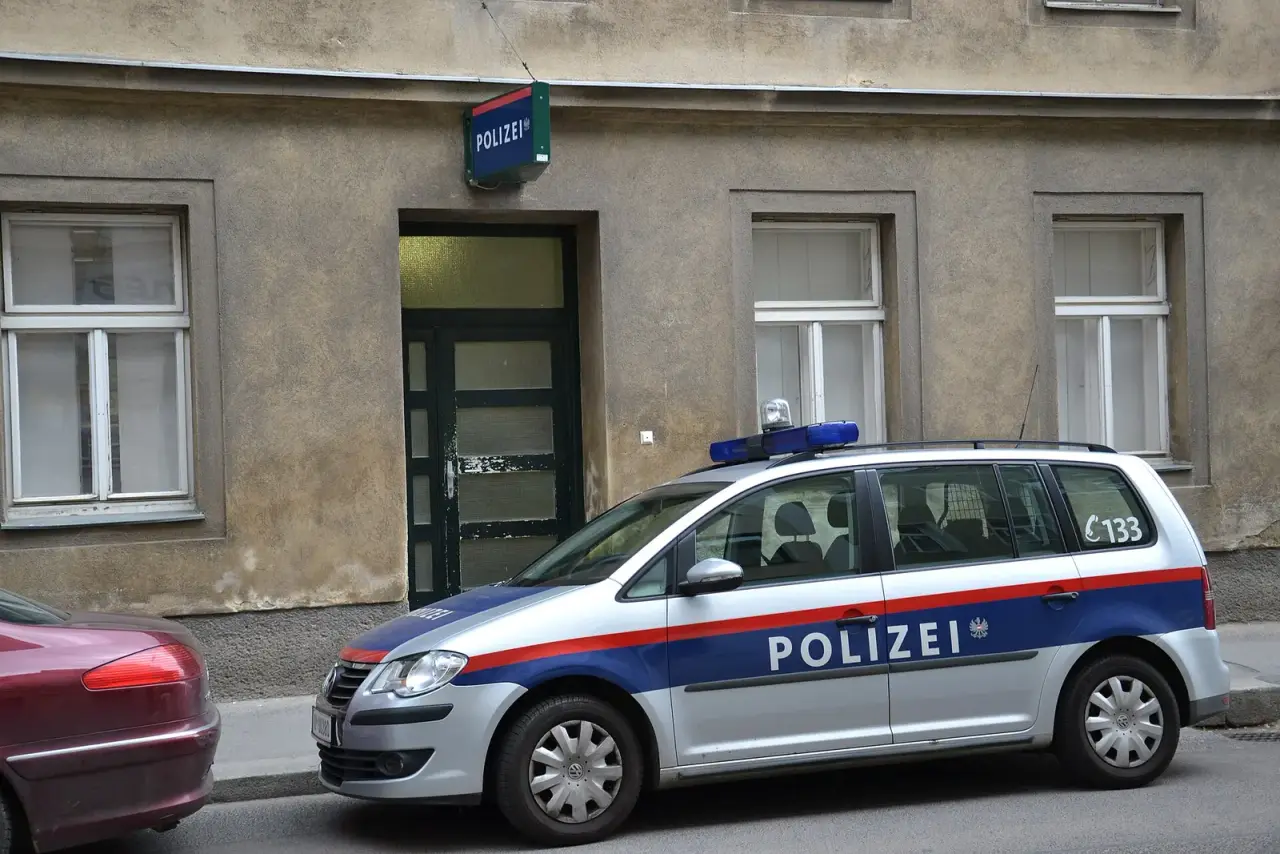
What the official crime figures say
The Bundeskriminalamt's 2025 report counts offences reported to the police. It does not measure the risk any one person runs, and the report itself notes that willingness to report and the difference between city and countryside shape the numbers. Read it as a map of what is reported, not of where you will be targeted.
| Category (police term) | Reported | Cleared | Worth knowing |
|---|---|---|---|
| All offences | 538,656 | 53.6% | Close to the 2024 level; the report calls the overall situation stable |
| Violent crime (Gewaltkriminalität) | 88,133 | 85.7% | The highest count in 25 years, on a level broadly stable since 2023 |
| Property crime (Eigentumskriminalität) | 163,685 | 30.4% | Slightly down; fewer than a third of offences are cleared |
| Pocket and trick theft (Taschen- und Trickdiebstahl) | 9,105 | 10.5% | Down on 2024 and far below a decade earlier |
| Cellar burglary (Einbruchsdiebstahl in Keller) | 10,135 | – | Rising again, while residential burglary keeps falling |
| Internet fraud (Internetbetrug) | 31,001 | – | Slightly down on 2024 |
Two readings are both honest. Violent-crime reports are at their highest in 25 years, yet the same report describes the security situation as stable, and in 58.7% of the victim-suspect relationships it records for violent crime the two were acquainted. For a student that means a risk profile dominated by property and online crime, plus violence that in a majority of recorded cases is between people who know each other, which is why the support lines below matter.
Pickpocketing, bike theft and scams: the police's own categories
- Taschen- und TrickdiebstahlTaschen- und Trickdiebstahl
- The police category for theft from clothing or from bags and containers worn on or near the body, roughly within an outstretched arm's length, where the thief exploits a lapse in attention. The "trick" is usually a distraction: one person engages you while another reaches in.
Police name settings rather than landmarks: markets of every kind, public transport with its stops and stations, festivals and large events, and bars, restaurants and clubs. Typical openers are a stranger asking for the time, directions or change, or holding up a map, newspaper or jacket as cover, and the loss is often noticed only when you next try to pay. The advice is concrete: carry bags closed and in front of you, use inner pockets, split cash and cards, never leave a bag in a shopping trolley or on a chair back, and do not let your phone or headphones distract you in a crowd. After a theft, report it at the nearest station and block your bank cards at once.
| Police name | What it is | What the police advise |
|---|---|---|
| Fahrraddiebstahl (bicycle theft) | Bikes, e-bikes and e-scooters taken because they are badly locked and ownership is hard to prove | A heavy key lock rather than a combination lock, the frame locked to a fixed object, a Fahrradpass and a noted frame number; see the cycling guide |
| Einbruchsdiebstahl in Keller (cellar burglary) | 10,135 cases in 2025; relevant if your bike lives in a cellar or bike room | If a bike room or cellar compartment is broken into, call 133 so traces can be secured |
| Vorauszahlungsbetrug (advance-payment fraud) | A promised prize, loan or flat that you must pay for first; the contact usually comes by email or messenger | An offer that sounds too good to be true probably is; check the platform and look for warnings, and report to the police if you have paid; see rental scams |
Reporting a crime and your rights as a victim
In an emergency call 112 for any emergency or 133 for the police; the ambulance is 144. The medical side is in the emergency care guide. For an offence that has already happened:
Get safe first
If anyone is in danger or injured, call 112 or 133 before doing anything else.
Collect what you have
Write down what happened while you remember it. Keep screenshots, printed or on a USB stick, and the device itself if the offence happened on it.
Go to any police station
Every Polizeiinspektion takes a report, so you need not find the "right" one. Bring an official photo ID. Theft is currently the only offence you can report online.
Block cards and accounts
After a stolen wallet or phone, block your bank cards straight away. Being able to say roughly where it happened helps, because many public places and vehicles have video surveillance.
After an offence, the Opfer-Notruf on 0800 112 112 is toll-free on working days (08:00 to 20:00), and the European victim helpline is 116 006. The Ministry of Justice contracts facilities to provide Prozessbegleitung, support through the criminal process, once the legal conditions are checked, and the Verbrechensopfergesetz gives crime victims a claim to certain assistance. The official page does not say whether foreign nationals qualify for either, so ask the Opfer-Notruf rather than assuming.
In practice: a theft report, a confirmation and lost property
The oesterreich.gv.at page on theft reports (updated 16 February 2026, content by the Interior Ministry) answers the questions that come up after a stolen phone, wallet or bike. A theft report can be made at any police station and the report itself is free. In general there is no deadline for reporting a theft, but stolen identity cards, passports, driving licences, registration certificates and number plates must be reported without delay. The page's list does not mention residence permit cards, so check the visa guides for those.
| Situation | Where to go | What to know |
|---|---|---|
| Something was stolen | Any police station, with an official photo ID if you have one | The report is free. Online reporting exists, but only with ID Austria and a registered residence in Austria, against unknown perpetrators, for an offence in Austria, with no investigative lead and nobody else affected, so a new arrival will usually go in person |
| You need proof for an insurer or an authority | Ask for a written confirmation of the report | It costs €21 on request for you, and is free if addressed to an authority or a legal entity such as an insurer. The page advises asking only where it is needed, for example for a duplicate document |
| You lost something and it was not stolen | The Fundbehörde, with a Verlustanzeige | A loss report is a different procedure from a theft report; the page does not describe it, so ask the lost-property office |
Getting home at night
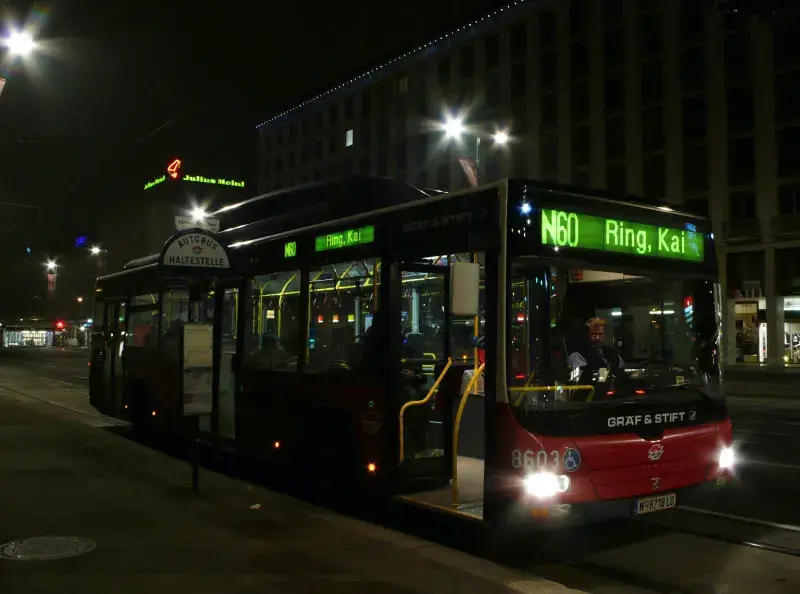
In Vienna the U-Bahn runs all night on Friday and Saturday nights and before public holidays, every 15 minutes. On other nights it runs from about 05:00 to about midnight, and the NightLine buses cover roughly 01:00 to 05:00. The S-Bahn runs every 30 minutes on weekend nights and through the night before public holidays. Check exact departures in the transport app before you go out, and see student tickets for what your fare covers. Night services outside Vienna are not covered here and differ by city, so look at the local operator's timetable.
Police advice for walking home
- Choose lit streets and squares after dark.
- Keep headphones out or low; they dull your awareness of what is around you.
- Trust your instinct: at the first sign of danger, widen the distance, cross the street or take another route.
- Know where the exits and safe places are, such as open shops and stations.
- If you need help, shout clearly ("Nein!", "Stopp!") and speak to one bystander directly, for example "You in the red shirt, please call the police."
Women's safety and domestic violence
| Service | Number | When and how |
|---|---|---|
| Police, immediate danger | 133 | Always |
| Frauenhelpline gegen Gewalt | 0800 222 555 | Around the clock, free, confidential and anonymous on request; advice in several languages (the official page does not list them); for women who experience or have experienced violence, and for people worried about them |
| Opfer-Notruf | 0800 112 112 | Working days 08:00 to 20:00, toll-free; support after any offence |
| European victim helpline | 116 006 | Support and onward referral after an offence |
| Gewaltschutzzentren | regional | Victim-protection centres named in the police's 2025 report; start with the police or the lines above to find yours |
- Betretungs- und AnnäherungsverbotBetretungs- und Annäherungsverbot
- A police power under § 38a of the Sicherheitspolizeigesetz. Where an attack on life, health or freedom is to be expected, officers can bar a person from entering the dwelling in which the endangered person lives, and a radius of 100 metres around it, and from approaching the endangered person within 100 metres. The ban ends after 2 weeks unless the protected person applies to a court for an interim injunction in time; it then lasts until the court decides, at most 4 weeks after it was ordered. Officers must tell the protected person about the injunction and about suitable victim-protection bodies.
Violence is not only physical, and harassment tied to ethnic origin or religion has its own channels in the discrimination guide. For stress and crisis support, see mental health support.
Frequently asked questions
Is Austria safe for international students?
By international comparison, yes: its rank in the 2026 Global Peace Index is 6 of 163 countries, a composite measure rather than a crime rate. The police recorded 538,656 offences in 2025, and the common student risks are pickpocketing, bicycle and cellar theft and online fraud. Violent-crime reports were the highest in 25 years, but in a majority of recorded cases victim and suspect knew each other.
How common is pickpocketing in Austria?
The police recorded 9,105 offences of pocket and trick theft in 2025, down on 2024 and far below a decade earlier, and cleared only 10.5% of them. Police name markets, public transport and stations, festivals and large events, and bars and clubs as typical settings.
Which number do I call in an emergency in Austria?
Call 112 for any emergency, 133 for the police and 144 for an ambulance. The 112 number can be called from a locked phone without entering the PIN. Our emergency care guide lists the rest.
Is there a free helpline for women who experience violence?
Yes. The Frauenhelpline gegen Gewalt on 0800 222 555 is free, open around the clock and confidential, anonymous on request, with advice in several languages. If you are in immediate danger, call 133 instead.
Can I report a crime online in Austria?
Currently only theft can be reported online, and oesterreich.gv.at sets conditions: ID Austria, a registered residence in Austria, a report against unknown perpetrators and no investigative lead. For anything else, and for most new arrivals, go to any Polizeiinspektion with an official photo ID and whatever documents the incident, such as notes, printed screenshots and the device involved.
Does the Vienna U-Bahn run at night?
On Friday and Saturday nights and before public holidays it runs all night, every 15 minutes. On other nights it stops around midnight and NightLine buses run from roughly 01:00 to 05:00, so check the transport app for exact departures.
Sources
12 sources, 10 official
- Kriminalpolizeiliche Anzeigenstatistik — Kriminalitätsbericht 2025Bundesministerium für Inneres, Bundeskriminalamt (Official)
- Taschendiebstahl — PräventionBundeskriminalamt (Austrian Federal Criminal Police Office) (Official)
- Fahrraddiebstahl — PräventionBundeskriminalamt (Austrian Federal Criminal Police Office) (Official)
- Wie erstatte ich AnzeigeBundeskriminalamt (Austrian Federal Criminal Police Office) (Official)
- Diebstahlsanzeigeoesterreich.gv.at (Federal Ministry of the Interior is responsible for the content) (Official)
- Emergency numbersoesterreich.gv.at (Federal Chancellery) (Official)
- Frauenhelpline gegen Gewaltoesterreich.gv.at (Federal Chancellery) (Official)
- Beratung für Verbrechensopferoesterreich.gv.at (Federal Chancellery) (Official)
- Sicherheitspolizeigesetz § 38a (Betretungs- und Annäherungsverbot zum Schutz vor Gewalt)RIS – Rechtsinformationssystem des Bundes (Official)
- U-Bahn (Wien Tourismus, Reiseinfos Verkehr)WienTourismus (wien.info) (Institutional)
- S-Bahn WienÖBB (Austrian Federal Railways) (Official)
- Why Iceland Stretched Its Lead Among the World's 10 Most Peaceful Countries in 2026Institute for Economics & Peace (Vision of Humanity, Global Peace Index) (Institutional)