Austrian law protects you against discrimination, but how far depends on the ground, the setting and the institution. Ethnic origin has the widest protection; under the federal act, religion, belief, age and sexual orientation are protected in employment only. This page sets out what the law covers, how housing, jobs and universities differ and whom to call. The overview and the official caseload figures are in the daily life guide, and sexual-orientation questions are in the LGBTQ+ students guide.
What the law covers
- Gleichbehandlungsgesetz (GlBG)Gleichbehandlungsgesetz
- The federal Equal Treatment Act. Part II covers the world of work and Part III access to goods and services, including housing. Both ban direct and indirect discrimination and harassment.
- BelästigungBelästigung
- Harassment: unwanted conduct connected with a protected ground that violates your dignity and creates an intimidating, hostile, degrading, humiliating or offensive environment. It counts as discrimination, and so does being harassed because you are close to someone of the protected group.
- GleichbehandlungskommissionGleichbehandlungskommission
- The Equal Treatment Commission, which examines in a non-public, free procedure whether discrimination occurred. Its result is not legally binding and it cannot award damages, but you can start a procedure alone or with support from the Gleichbehandlungsanwaltschaft.
| Setting | Grounds protected | Notes |
|---|---|---|
| Work, vocational training, practical experience (Part II) | Ethnic origin, religion or belief, age, sexual orientation (and gender, in Part I) | Excludes employment with the Bund, a Land or a municipality, which have their own laws |
| Shops, restaurants, bars, clubs and other services open to the public, including housing (Part III) | Ethnic origin and gender only | Does not reach private and family life, or media content and advertising |
| Education, social protection, social benefits (Part III) | Ethnic origin | Only where federal competence applies |
| Disability, in any setting | Separate law (Bundes-Behindertengleichstellungsgesetz) | The Behindertenanwaltschaft advises; disability is not among the grounds listed on the Gleichbehandlungsanwaltschaft's page |
| Matters regulated by a Land | Land law, for example Vienna's act lists ethnic affiliation, religion, belief, disability, age, sexual orientation, gender and gender identity | For some such matters the GlBG sets only principles |
Housing and jobs
A landlord or agency that refuses you because of your ethnic origin falls under Part III, because housing offered to the public is covered; religion, age and sexual orientation are not grounds there. Advertising is covered directly: nobody may advertise housing in a discriminatory way, and a repeat offender can be fined up to €360 on the application of a prospective tenant or the Gleichbehandlungsanwaltschaft. Keep screenshots of the advert and the messages. Tenancy rules are in the private rental guide.
At work, you only have to make the discrimination credible; the employer must then prove that another motive was more likely decisive or that a justification applies. The remedies and court deadlines for ethnic origin, religion or belief, age and sexual orientation are short:
| Claim | What the Act provides | Court deadline |
|---|---|---|
| Not hired | at least two monthly salaries if you would have got the job; up to €500 if the employer proves your only harm is that your application was not considered | 6 months from the rejection |
| Not promoted | Damages for pecuniary loss and personal impairment | 6 months from the rejection |
| Harassment at work | Damages, at least €1,000 where the harm is not only financial | 1 year |
| Dismissal because of a protected ground | Contest the dismissal in court | 14 days from receiving the notice |
| Pay, training, working conditions | The difference, equal conditions or damages | Three-year limitation period |
At university
| Institution | Law | First contact |
|---|---|---|
| Public university | The Bundes-Gleichbehandlungsgesetz, which the Universitätsgesetz applies, with some exceptions, to all university members and to applicants for admission as students | The university's Arbeitskreis für Gleichbehandlungsfragen |
| Fachhochschule, private university, private Pädagogische Hochschule | The GlBG, because the student has a private-law contract | The Gleichbehandlungsanwaltschaft |
| Public Pädagogische Hochschule | Checked case by case | Its working group and the Gleichbehandlungsanwaltschaft |
| Disability, any institution | Bundes-Behindertengleichstellungsgesetz | The Behindertenanwaltschaft |
The Arbeitskreis für Gleichbehandlungsfragen is set up by each university's Senate to counter discrimination by university bodies on grounds of gender, ethnic origin, religion or belief, age and sexual orientation, and to advise and support university members. Its members are not bound by instructions. The Ombudsstelle für Studierende (0800 311 650, free) and your ÖH also advise and are among the contacts the science ministry lists. Public universities are covered in the public universities guide.
Who to contact
| Body | What it does | How to reach it |
|---|---|---|
| Gleichbehandlungsanwaltschaft | Free, confidential legal advice on the GlBG grounds at work, in housing and in services; supports you before the Commission | 0800 206 119; an online reporting form in German and English; offices in Vienna, Graz, Linz, Innsbruck and Klagenfurt |
| Federal Chancellery hotline | Hears cases of discrimination by ethnic origin, descent or religion and refers you to the right body | 0800 222 666, on weekdays |
| ZARA | Free counselling for victims and witnesses of racism; documents incidents and supports legal steps | 01 929 13 99; an online form for reporting racism |
| City of Vienna anti-discrimination office | Free, confidential advice in matters regulated by Land Wien law; a conciliation procedure under the Vienna act | Online first consultation on wien.gv.at |
Write it down at once
Note where and when it happened, with date and time. For continuing harassment, a diary can help.
Collect witnesses and proof
Ask witnesses for their name, address and phone number, and keep screenshots of adverts, messages and emails.
Get advice before deciding
A call to the Gleichbehandlungsanwaltschaft or ZARA costs nothing and does not oblige you to take further steps.
Mind the deadlines
At work they are as short as the table above shows, so do not wait to see whether the problem goes away.
In practice: reporting to the Gleichbehandlungsanwaltschaft, step by step
Make contact
Call the free line 0800 206 119 (Monday to Thursday 09:00–15:00, Friday 09:00–12:00) or use the online Melde- und Kontaktformular, which exists in German and in English. The form serves both to report an incident and to ask for advice in any Land.
Arrange an appointment
The office agrees a personal or telephone appointment with you. For a personal meeting a telephone first conversation on the free number is required. The Vienna office, which also covers Lower Austria and Burgenland, is at Leopold-Moses-Gasse 4/1/2, 1020 Wien; other offices are in Graz, Linz, Innsbruck and Klagenfurt.
Bring your record
Your notes with place, date and time, the witnesses' names, addresses and phone numbers, and screenshots of adverts or messages. If the treatment is continuing, a diary of incidents.
Decide how far to go
You can only report: the office says a report helps show in which areas of life unequal treatment occurs and where protection is lacking, even if you start nothing else. You can ask the Equal Treatment Commission, which is free, non-public and non-binding and can run before or alongside a court case, or you can sue at the Arbeits- und Sozialgericht or Bezirksgericht, where costs arise; damages for the personal impairment caused by harassment are at least €1,000.
Report the advert as well
Any applicant, or the office itself, can start an administrative penalty procedure over a discriminatory job advert. Flat adverts saying "nur Inländer" or "keine Ausländer" are banned; a first offence leads to a warning and a repeat offender can be fined up to €360.
If the law does not reach your case
The office says it documents discrimination in areas the Equal Treatment Act does not yet cover and helps you find the competent advice centre.
Hate crime and hate speech
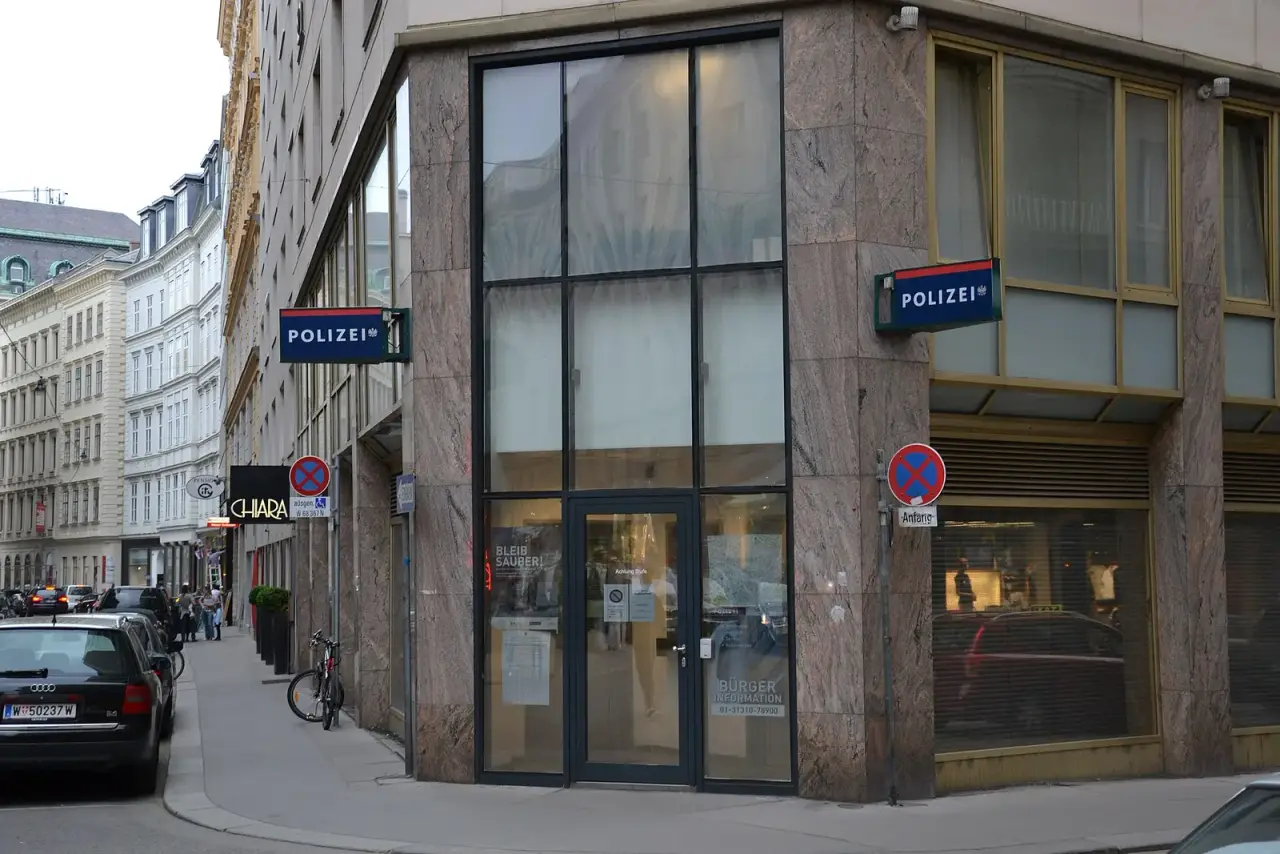
Offences can be reported at any police station; in an emergency call 133 or 112. Acting from racist or xenophobic motives is an aggravating circumstance for a court (§ 33 of the Strafgesetzbuch), and Verhetzung (§ 283) covers public incitement to violence or hatred against groups defined by, among other things, race, religion, nationality, ethnic origin or sexual orientation. According to the Interior Ministry, insults because of membership of a protected group are an Ermächtigungsdelikt: you authorise the prosecution and the police then investigate. For hate postings, the Interior Ministry points to reporting to the police and to the BanHate app, and to an NS-Meldestelle for neo-Nazi, racist or antisemitic web content. Victims of online hate can ask for psychosocial and legal support in proceedings at the state's cost. The reporting steps and victim support are in the safety guide.
Frequently asked questions
Does Austrian anti-discrimination law protect international students?
Yes, in the settings it covers. The Equal Treatment Act protects against discrimination on grounds of ethnic origin at work, in housing and public services, but it leaves untouched the rules on entry and residence of third-country nationals and treatment arising from their legal status, so a visa rule is not an equal-treatment case.
Is it illegal for a landlord to refuse me because of my ethnic origin?
Under the Equal Treatment Act, yes. Housing offered to the public falls under Part III of the Equal Treatment Act, and discriminatory flat adverts can also lead to a fine of up to €360. Religion, age and sexual orientation are not grounds there, so ask the Gleichbehandlungsanwaltschaft how your case is classified.
Where do I report discrimination at my university?
At a public university, start with its Arbeitskreis für Gleichbehandlungsfragen. Students at a Fachhochschule, private university or private teacher-training college can turn to the Gleichbehandlungsanwaltschaft, which is free and confidential. Disability cases go to the Behindertenanwaltschaft.
How long do I have to claim after being turned down for a job?
For discrimination on the grounds of ethnic origin, religion or belief, age or sexual orientation, a court claim for a failed application must be made within 6 months of the rejection. Applying to the Equal Treatment Commission suspends the deadline, so contact the Gleichbehandlungsanwaltschaft early.
Where do I report a racist attack or racist abuse?
Report it at any police station, or call 133 if you are in danger. ZARA offers free counselling for victims and witnesses of racism, and the Federal Chancellery hotline on 0800 222 666 refers you to the right body.
Is advice on discrimination free in Austria?
The Gleichbehandlungsanwaltschaft, ZARA, the Federal Chancellery hotline and the Ombudsstelle für Studierende offer free advice. Court proceedings do carry costs, which is why advice before you sue matters.
Sources
15 sources, 14 official
- Gleichbehandlungsgesetz (GlBG) — Gesamte RechtsvorschriftRIS (Rechtsinformationssystem des Bundes) (Official)
- Universitätsgesetz 2002 § 42 (Arbeitskreis für Gleichbehandlungsfragen)RIS (Rechtsinformationssystem des Bundes) (Official)
- Universitätsgesetz 2002 § 44 (Anwendung des B-GlBG)RIS (Rechtsinformationssystem des Bundes) (Official)
- Strafgesetzbuch § 33 (Besondere Erschwerungsgründe)RIS (Rechtsinformationssystem des Bundes) (Official)
- Strafgesetzbuch § 283 (Verhetzung)RIS (Rechtsinformationssystem des Bundes) (Official)
- Diskriminierung — was kann ich tun?Gleichbehandlungsanwaltschaft (Federal Equal Treatment Ombud) (Official)
- Kontakt — Beratung und Vorfall meldenGleichbehandlungsanwaltschaft (Federal Equal Treatment Ombud) (Official)
- Hotline gegen Diskriminierung und IntoleranzBundeskanzleramt Österreich (Official)
- ZARA — Zivilcourage und Anti-Rassismus-Arbeit, BeratungsstellenZARA (Institutional)
- Gleichbehandlungsgebot und Diskriminierungsverbot im Studium – Anlaufstellen und BesonderheitenOmbudsstelle für Studierende (Bundesministerium für Frauen, Wissenschaft und Forschung) (Official)
- Ombudsstelle für Studierende an Universitäten & HochschulenOmbudsstelle für Studierende (Bundesministerium für Frauen, Wissenschaft und Forschung) (Official)
- Stelle zur Bekämpfung von Diskriminierungen - AntidiskriminierungsstelleStadt Wien (Official)
- MeldestellenBundesministerium für Inneres (BMI) (Official)
- Vorurteilskriminalität – Hass im Netz bekämpfenBundesministerium für Inneres (Öffentliche Sicherheit 5-6/2022) (Official)
- Emergency numbersoesterreich.gv.at (Federal Chancellery) (Official)