What counts as a public university in Austria
Austria has 23 public universities, according to the science ministry: 22 are governed by the Universities Act (UG), and the Interdisciplinary Transformation University (IT:U) in Linz has a legal basis of its own. In winter semester 2025/26 they taught 270,587 students (degree students, each person counted once, Statistik Austria). That is the largest sector by far; the overview of Austria's university types shows how it compares with Fachhochschulen, private institutions and teacher colleges.
- Public universityUniversität (öffentliche Universität)
- A legal person under public law that largely governs itself while the state pays for it. The ministry stresses that public universities combine teaching with research, with a focus on basic research, and that they lead the training of future researchers. Article 81c of the Federal Constitution guarantees all 23 their autonomy.
About 36% of the students (98,156 students) hold a foreign citizenship. That counts passports, not arrivals: it includes EU citizens and people who grew up in Austria, so it is not a measure of how many moved here to study.
All 23 public universities by city and profile
Vienna alone hosts nine of them, Graz four, Linz three, Innsbruck and Salzburg two each, and Klagenfurt, Leoben and Krems one each. The table groups them by profile. Student numbers are Statistik Austria's degree-student counts per university, so rows overlap: someone enrolled at two universities appears in both, which is why the rows add up to more than the national total.
| University | City | Profile | Degree students |
|---|---|---|---|
| University of Vienna | Vienna | Comprehensive; by its own account the widest range of subjects in Austria | 80,119 |
| University of Graz | Graz | Comprehensive; six faculties; joint natural-science degrees with TU Graz (NAWI Graz) | 28,309 |
| University of Innsbruck | Innsbruck | Comprehensive; the main research university of western Austria | 27,257 |
| University of Salzburg | Salzburg | Comprehensive; six faculties | 15,390 |
| Johannes Kepler University (JKU) | Linz | Comprehensive; law, business, engineering, natural sciences and a medical faculty | 25,503 |
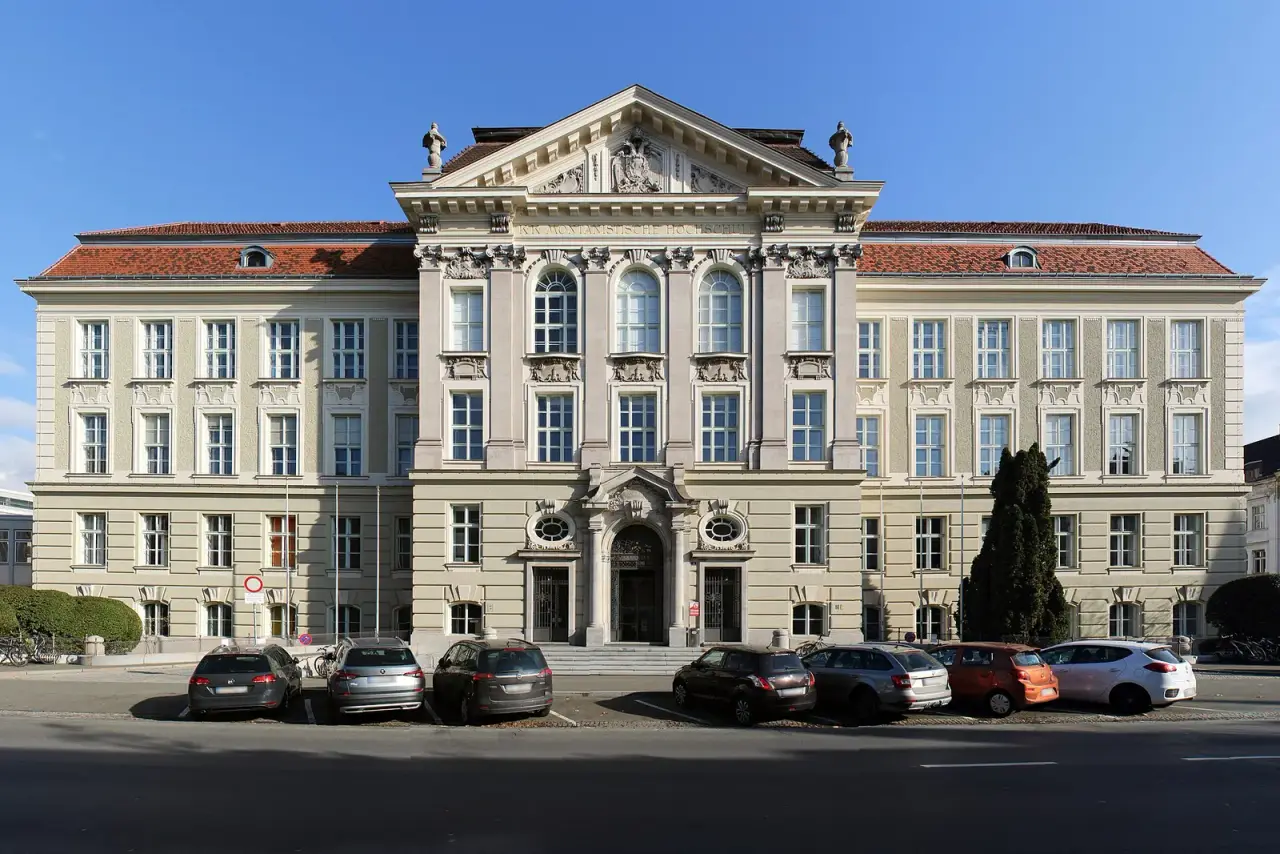
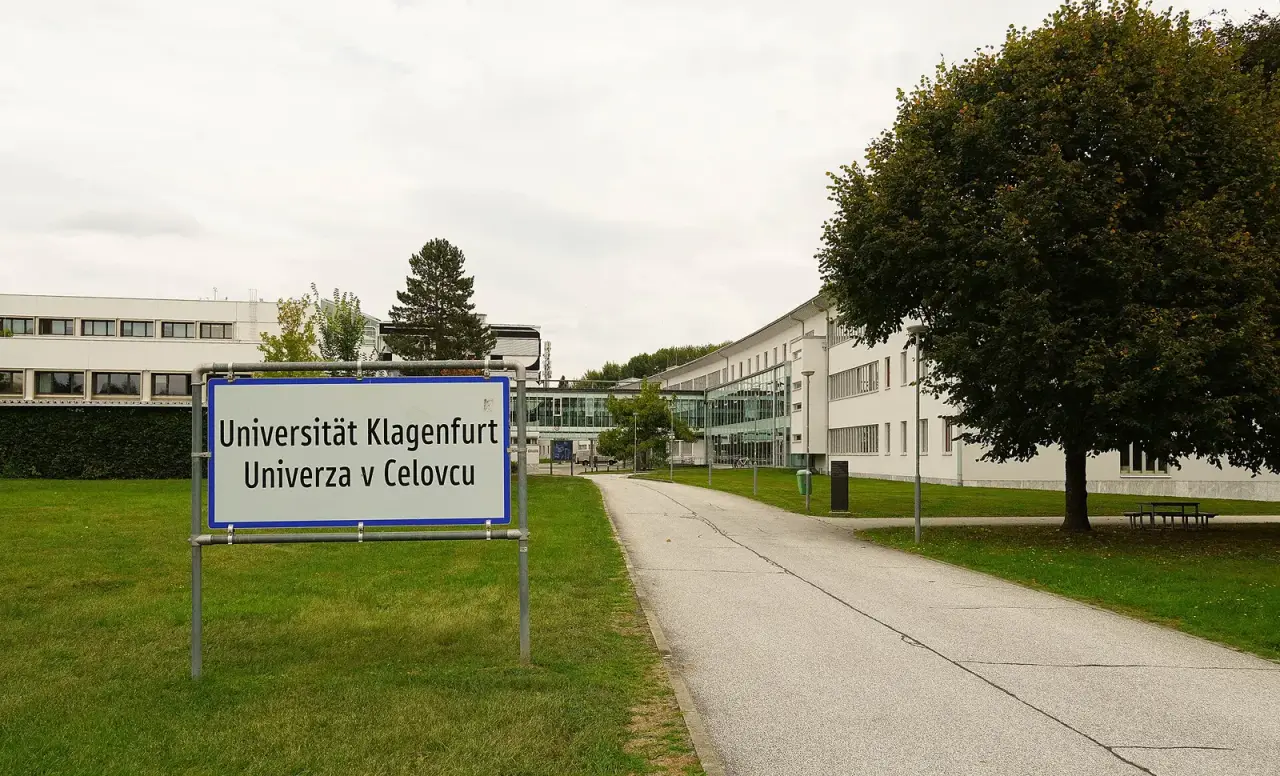
| University of Klagenfurt | Klagenfurt | Comprehensive; the only public university in Carinthia | 12,823 |
| TU Wien | Vienna | Technology and natural sciences | 26,102 |
| TU Graz | Graz | Technology and natural sciences; part of NAWI Graz | 16,819 |
| Montanuniversität Leoben | Leoben | Mining, metallurgy and materials | 2,821 |
| IT:U (Interdisciplinary Transformation University) | Linz | New institution under its own law; still building up | 70 |
| Medical University of Vienna | Vienna | Medicine and dentistry | 7,763 |
| Medical University of Graz | Graz | Medicine and dentistry | 5,246 |
| Medical University of Innsbruck | Innsbruck | Medicine and dentistry | 3,719 |
| University of Veterinary Medicine Vienna | Vienna | Veterinary medicine | 2,455 |
| WU Vienna | Vienna | Economics, business and law | 21,681 |
| BOKU (University of Natural Resources and Life Sciences) | Vienna | Natural resources and life sciences | 10,257 |
| University of Music and Performing Arts Vienna (mdw) | Vienna | Arts: music and performing arts | 2,742 |
| University of Applied Arts Vienna | Vienna | Arts: applied arts and design | 2,006 |
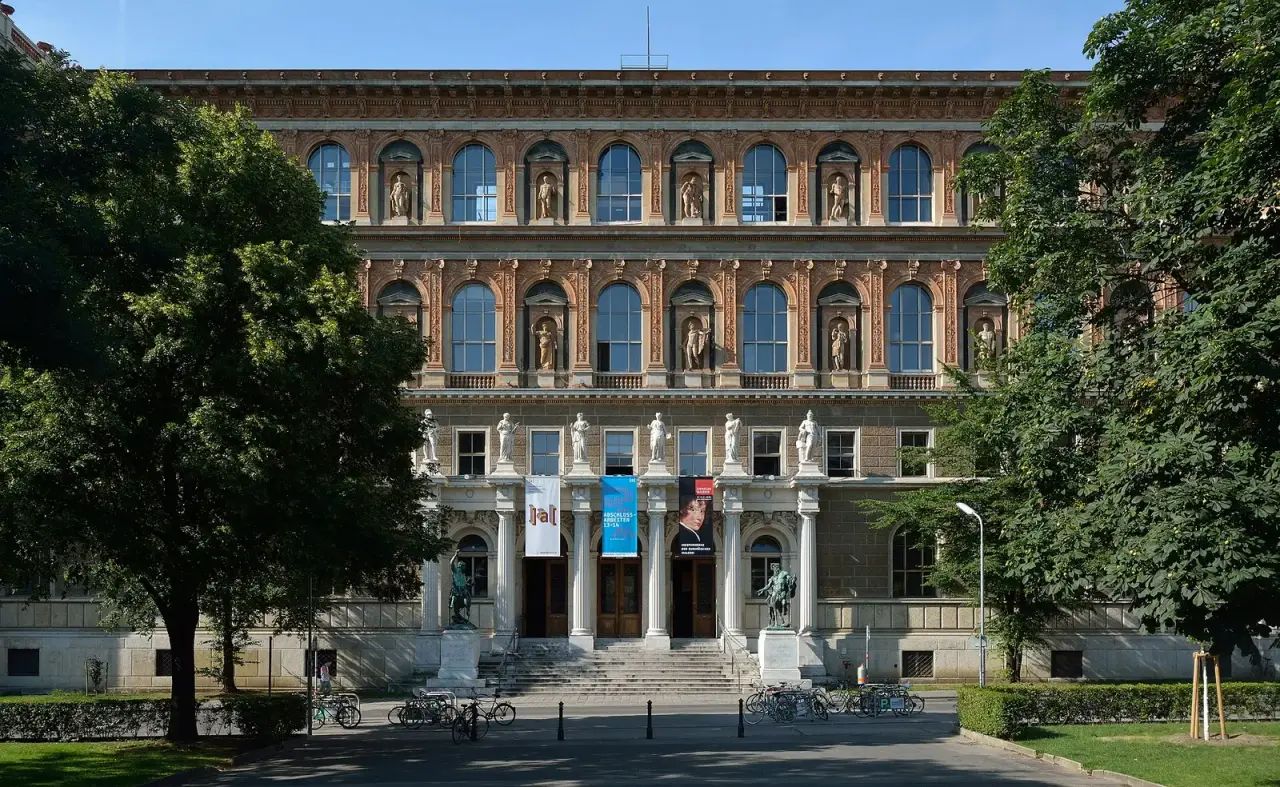
| Academy of Fine Arts Vienna | Vienna | Arts: fine arts | 1,698 |
| Mozarteum University Salzburg | Salzburg | Arts: music and performing arts | 2,122 |
| University of Music and Performing Arts Graz (KUG) | Graz | Arts: music and performing arts | 2,025 |
| University of Art and Design Linz | Linz | Arts: art and design | 1,715 |
| University for Continuing Education Krems | Krems | Continuing education; degree students are doctoral students only | 44 |
Two rows need a caution. The Krems figure is tiny because Statistik Austria counts only doctoral students there as degree students; the rest attend continuing-education courses and are counted separately. IT:U is new, and its handful of degree students says nothing about the quality of what it will become. The eight universities with their own profile in this guide are linked in the table.
Comprehensive, technical, medical, business and arts universities
The profile decides the route more than the name. The six comprehensive universities cover the broadest range of subjects, from humanities and law to natural sciences, and are where most students start. For engineering, informatics, architecture and physics, the technical universities (TU Wien, TU Graz, Leoben) are built around those fields. Medicine is taught at the three medical universities and at JKU Linz, dentistry at the medical universities; admission runs through a joint test, the MedAT, explained in the entrance exams guide. WU Vienna is the business specialist. The six arts universities typically hold entrance examinations too.
How public universities differ from Fachhochschulen and private universities
Funding and legal basis explain most of the practical differences. The ministry says public universities are financed by the state, Fachhochschulen mostly through the number of study places they offer, and private universities do not receive their regular budget from the Republic.
| Public university | Fachhochschule | Private university | |
|---|---|---|---|
| Legal basis | Universities Act (UG); IT:U has its own law | Fachhochschule Act (FHG) | Private Higher Education Act (PrivHG) |
| Funding | State budget agreed in three-year performance agreements | Mostly by the number of study places offered | No regular budget from the Republic; PrivHG § 6 rules out significant federal operating funding |
| Admission | Many programmes admit all qualified applicants; capped fields and entrance exams exist (see below) | Limited places; entrance procedure for most programmes | Each institution's own procedure |
| Tuition for a third-country student on a student permit | €726.72 per semester, set by law | Cost-covering fees permitted; the cap for regular students is €363.36 per semester | Set by each institution; verified examples in the private universities guide |
| Doctorate | Yes; the ministry says only universities lead the training of researchers | No: FH degrees are bachelor's and master's only | Only institutions accredited as Privatuniversität (PrivHG § 4 Abs. 2), not Privathochschulen |
The guide to Fachhochschulen covers the practice-oriented alternative, and private universities explains accreditation and fees.
Governance and funding in brief
Under § 20 UG the supreme bodies of a public university are the university council (Universitätsrat), the rectorate (Rektorat) with the rector, and the senate (Senat). Nobody may belong to more than one of them, and members of these collegial bodies are not bound by instructions. The rectorate drafts the organisational plan, which needs the university council's approval after the senate has commented.
- Performance agreementLeistungsvereinbarung
- A contract the ministry concludes with each public university every three years. It fixes a global budget (Globalbudget) and targets such as examination activity, supervision ratios and the research base of the academic staff. The ministry names § 12 UG, the provision on university financing, as the legal basis.
The money flows accordingly. The University of Graz reports for 2025 a federal block grant of 296 million euros out of a total budget of 350.27 million euros, roughly 84.5%; tuition fees were a small slice. For a student this means two things: tuition is not a lever universities use to compete, and differences in quality come from the programme, the department and its resources, not from a fee. Governance rarely affects an applicant directly; the senate does matter when a curriculum or study regulation changes.
Admission, language and fees at every public university
Public universities are often called open access, but only partly. In winter semester 2024, 21,593 of the 44,670 first-semester bachelor's and diploma studies at public universities were in programmes with an access regulation. The Universities Act itself caps intake in 9 fields, among them business, law, biology, informatics and architecture, and separately in medicine, dentistry, psychology and veterinary medicine; single universities may restrict further programmes. Entrance registration can close up to 6 months before the semester, so read entrance exams and admission deadlines before the general application dates.
Most programmes are taught in German, and English-taught options are concentrated at master's level; English-taught programmes and language requirements show what proof each route needs. Fees follow one national rule. A third-country student holding a student residence permit pays €726.72 per semester from the first semester; other groups pay nothing within the planned duration plus two semesters and €363.36 per semester after that. Turkey is not among the states the Studienbeitragsverordnung exempts. Everyone also pays the ÖH fee of €26.20 per semester; the full rules are in tuition fees in Austria.
In practice: registration, student cards and exam rules compared
All public universities work under the same Universities Act, but each runs its own systems and, through its Satzung, its own details. The table sets the eight universities with their own profile in this guide side by side, from each university's own pages read in October 2026; the profiles give the steps.
| University | Registration system and learning platform; attempts at a failed exam; student card |
|---|---|
| University of Vienna | u:find carries procedures and deadlines; Moodle. Failed exam: 4 attempts, the fourth before a panel. Card: u:card, also the library card. |
| TU Wien | TISS; TUWEL. Failed exam: 5 attempts, the third and fourth retake before a panel. Card: TUcard, issued by the Admission Office at enrolment. |
| WU Vienna | LPIS; Canvas. Failed exam (bachelor's): 5 attempts, 4 attempts in the STEOP. Card: student ID, activated at the LC info desk. |
| University of Graz | UNIGRAZonline; Moodle. Failed exam: 4 attempts (5 attempts in NAWI Graz). Card: UNIGRAZcard, ordered online after the fees are paid. |
| TU Graz | TUGRAZonline; TeachCenter. Failed exam: 5 attempts. Card: TU Graz card, issued at in-person registration. |
| JKU Linz | KUSSS; Moodle. Failed exam: 5 attempts, 4 attempts in the StEOP. Card: JKU Card, from the Admissions Office. |
| University of Innsbruck | LFU:online; OpenOlat. Failed exam: 5 attempts. Card: Studentcard, issued at enrolment. |
| University of Salzburg | PLUSonline; Blackboard. Failed exam: 4 attempts (2019 Satzung text). Card: student card and PIN, handed over at in-person enrolment. |
Exam attempts. UG § 77 Abs. 2 gives every student 3 retakes after a failed exam, counting all attempts at the same exam at the same university; the last exam of a degree gets one further attempt. A single-sitting exam goes before a panel from the third retake, or from the second on the student's request (§ 77 Abs. 3). A university's Satzung may allow more retakes: in the texts we read, TU Wien, WU, TU Graz, JKU and Innsbruck do, while Vienna, Graz (outside NAWI Graz) and Salzburg stay at the statutory minimum. Continuous-assessment courses are handled differently: Vienna, TU Wien, JKU and Innsbruck have you repeat the whole course rather than sit a panel exam.
Wi-Fi and food. Where we read the pages, students connect through eduroam with the university's own login, and the format differs: at WU you log in as h plus your student ID number followed by @wu.ac.at, at Salzburg with the username ending @sbg.ac.at that you also use for PLUSonline, and at Innsbruck the ZID “Datennetzzugang” service must be active. Food discounts run through the card or the student union: the WU student ID pays in the Mensa cafeteria, the UNIGRAZcard carries the ÖH mark for cheaper canteen meals, and JKU students with a monthly food budget of €170 or less can apply for the ÖH Mensa discount.
How to choose a public university
Start from the programme
Find the degree, not the university: the same subject can differ sharply in focus and language between two cities.
Check the language of instruction
A German-taught bachelor's needs German proof at admission; an English-taught master's needs an English certificate. See language requirements.
Find out whether the programme is capped
Look for an access regulation or entrance exam and note its registration window; it can close months before the general deadline.
Use the profile to narrow the list
Technology belongs to the technical universities, medicine to the medical ones, business to WU; for everything else the comprehensive universities compete.
Compare cities, not just campuses
Rent and the job market differ widely; the student cities guide compares them.
Use rankings last
Rankings measure research output at institution level and rarely tell you what a given programme is like.
Before you shortlist a university
- Programme page read: language, access regulation, entrance procedure
- Application window for your nationality noted
- Language certificate booked or in hand
- Tuition rule for your citizenship and residence title checked
- City, housing and transport costs compared
Frequently asked questions
How many public universities are there in Austria?
There are 23: 22 under the Universities Act plus IT:U in Linz, which has its own law. They include six comprehensive universities, technical, medical and arts universities, WU Vienna, BOKU and the University for Continuing Education Krems.
Which is the biggest university in Austria?
By Statistik Austria's count of degree students in winter semester 2025/26, the University of Vienna is the largest with 80,119 students, followed by the University of Graz and the University of Innsbruck. Each university counts students differently, so rankings by size can differ slightly between sources.
What is the difference between a public university and a Fachhochschule in Austria?
A public university combines teaching with basic research, admits all qualified applicants to many programmes and can award doctorates. A Fachhochschule is practice-oriented, has a fixed number of places and an entrance procedure for most programmes, and awards only bachelor's and master's degrees. Both award recognised bachelor's and master's degrees.
Are Austrian public universities free for international students?
Not for third-country students on a student residence permit, who pay €726.72 per semester at a public university. EU and EEA citizens and some other groups pay nothing within the planned duration plus two semesters. Everyone pays the ÖH fee of €26.20 per semester.
Do all public universities have entrance exams?
No. Many programmes admit every qualified applicant, but intake is capped by law in 9 heavily demanded fields and in medicine, dentistry, psychology and veterinary medicine, and medical and arts universities run their own entrance procedures. Check the specific programme page.
Sources
33 sources, all official
- UniversitätenBundesministerium für Frauen, Wissenschaft und Forschung (BMFWF) (Official)
- Liste Universitäten (Übersicht über die einzelnen 23 Universitäten)Bundesministerium für Frauen, Wissenschaft und Forschung (BMFWF) (Official)
- Ordentliche Studierende an öffentlichen Universitäten 2025/26 nach Universität (Tabellenband, Tabelle 1)Statistik Austria (Official)
- Ordentliche Studierende an öffentlichen Universitäten im Wintersemester 2025/26 (Tabellenband, Tabellen 1, 4 und 5)Statistik Austria (Official)
- Universitätsgesetz 2002 § 20 (Leitung und innere Organisation)RIS – Rechtsinformationssystem des Bundes (Official)
- Privathochschulgesetz (PrivHG), Bundesrecht konsolidiert (§§ 1–6)RIS – Rechtsinformationssystem des Bundes (Official)
- Fachhochschulgesetz (FHG) § 2 (Erhalter, Studienbeitrag), geltende FassungRIS – Rechtsinformationssystem des Bundes (Official)
- Universitätsgesetz 2002 § 71b (Zulassung zu besonders stark nachgefragten Bachelor- und Diplomstudien)RIS – Rechtsinformationssystem des Bundes (Official)
- Universitätsgesetz 2002 § 91 (Studienbeitrag), tagesaktuelle FassungRIS – Rechtsinformationssystem des Bundes (Official)
- Statistisches Taschenbuch – Hochschulen und Forschung 2025 (Tabellen 1.1, 1.16, 2.1, 2.4)Bundesministerium für Frauen, Wissenschaft und Forschung (BMFWF) (Official)
- Facts & FiguresUniversity of Graz (Official)
- Die Satzung der Universität Wien, Thema StudienrechtUniversität Wien (Official)
- Satzungsteil Studienrechtliche Bestimmungen (Mitteilungsblatt Nr. 20/2024 vom 29.05.2024)TU Wien, Senat (Official)
- Studying SuccessfullyTU Wien (Official)
- Exam Infos (Bachelor's Student Guide: German-Taught Programs)WU Vienna (Official)
- LPIS registration systemWU Vienna (Official)
- Student ID CardsWU Vienna (Official)
- Satzungsteil Studienrechtliche Bestimmungen, Mitteilungsblatt der Universität Graz, 22.a Stück (18 March 2026)Universität Graz (Official)
- IT services (Learning: UNIGRAZonline, Moodle, uniPAD, uniTUBE)Universität Graz, IT services for students (Official)
- UNIGRAZcardUniversität Graz, Studies Department (Official)
- Information for New StudentsTechnische Universität Graz (Official)
- Prüfungen: Infos, Termine & AnmeldungJohannes Kepler Universität Linz (Official)
- Get Your JKU CardJohannes Kepler Universität Linz (Official)
- Satzungsteil “Studienrechtliche Bestimmungen” in consolidated version (English)Universität Innsbruck, Zentraler Rechtsdienst (Official)
- Learning management system OpenOlatUniversität Innsbruck, eCampus (Official)
- Studienstart: Schritt für Schritt ins StudiumUniversität Innsbruck (Official)
- Satzung der Paris Lodron-Universität Salzburg, Studienrecht (Stand 12.04.2019)Universität Salzburg (Official)
- 5 steps for a successful start into your Master's programUniversität Salzburg (Official)
- Wi-Fi AccessWU Vienna, IT Services (Official)
- WLAN & VPNUniversitätsbibliothek Salzburg, Universität Salzburg (Official)
- WLAN-Zugang mit eduroamUniversität Innsbruck, Zentraler Informatikdienst (Official)
- Universitätsgesetz 2002 § 77 – Wiederholung von PrüfungenRechtsinformationssystem des Bundes (RIS) (Official)
- Satzungsteil Studienrecht (SA 92000 STSR 124-04), Mitteilungsblatt vom 16. Oktober 2024Technische Universität Graz (Official)