What an Austrian private university is
A private university in Austria is a higher education institution run by a private body but allowed to award degrees only after accreditation by AQ Austria, the national quality assurance agency. The legal basis is the Privathochschulgesetz (PrivHG). The science ministry counts 19 accredited institutions from winter semester 2023/24: 17 Privatuniversitäten and 2 Privathochschulen. AQ Austria's decisions page lists the same institutions. Together they enrol a small share of students: 6% of people starting a first degree in winter semester 2024 began at one.
- Private universityPrivatuniversität
- An accredited private institution that, under PrivHG § 4, must carry the word Privatuniversität in its name and may offer doctoral studies. A Privathochschule is the lower accreditation tier; under § 4 Abs. 2 only Privatuniversitäten may offer doctorates.
- Institutional accreditationInstitutionelle Akkreditierung
- A time-limited approval of the whole institution by AQ Austria, separate from the accreditation of each degree programme. On AQ's decisions page, renewals for the institutions we checked run for six years (Webster 2022, MODUL 2021, Sigmund Freud 2022, CEU 2025) or eight years (Anton Bruckner, 2026).
Both levels are checked. To be accredited as a Privathochschule, PrivHG § 2 requires an institution to offer at least two degree programmes and two follow-on programmes, and each programme is accredited separately. The accredited institutions range from music and arts universities to medicine, psychology and business, and the ministry describes the sector's focus areas that way. If you are weighing this sector against the others, start with the universities overview, the public universities and the Fachhochschulen.
How to check that an institution is accredited
Look for the legal name
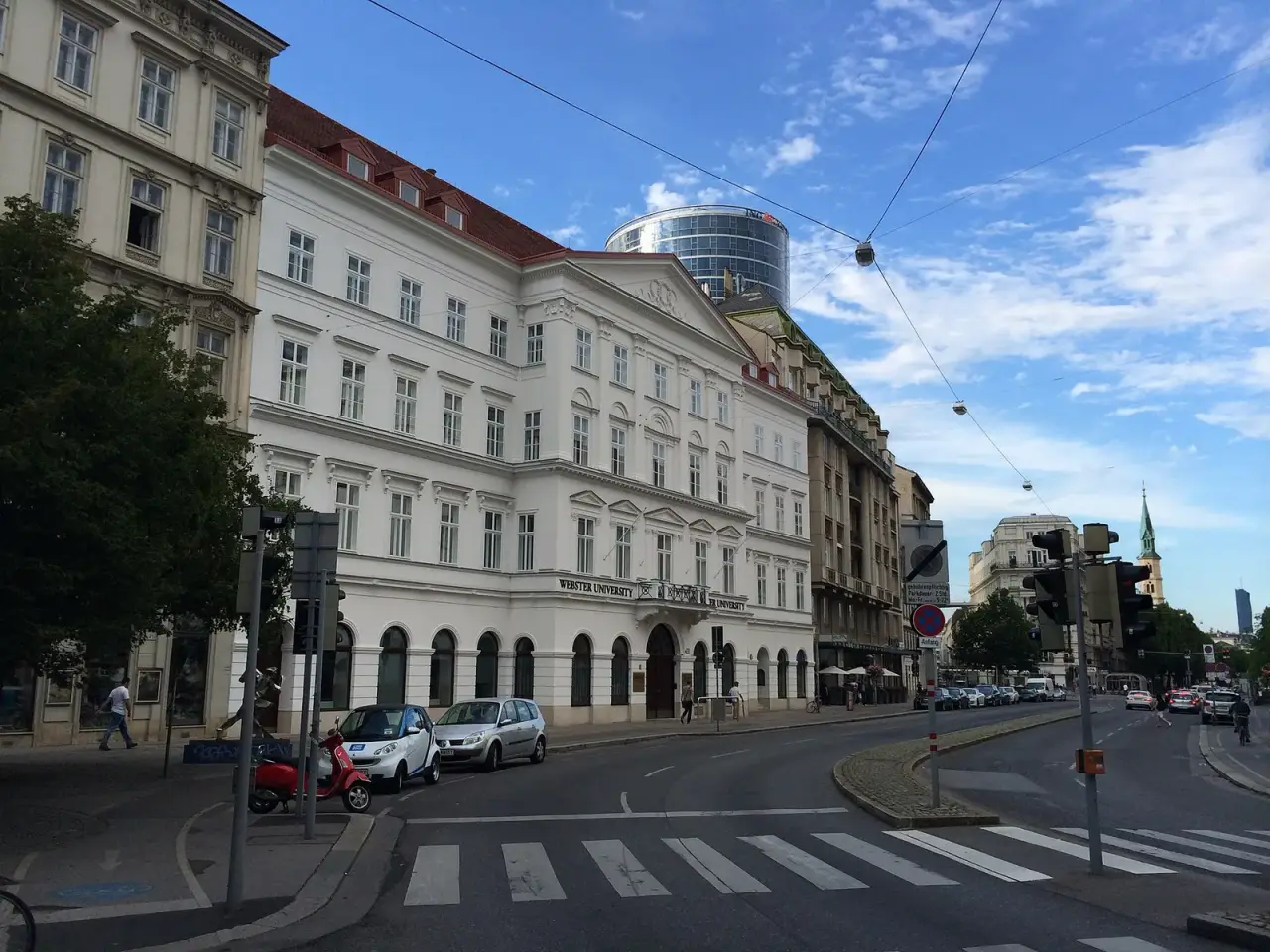
Under PrivHG § 4 Abs. 5 an institution accredited as a private university must carry the designation Privatuniversität in its name; AQ lists some under an English form, such as Webster Vienna Private University. A name that only says 'University' is not proof, so use AQ's list.
Find it on AQ Austria's decisions page
AQ Austria publishes decisions for private universities and Privathochschulen on one page, listing each institution and its decisions. As of 28 October 2026 it names 17 accredited private universities, the Joseph Haydn Privathochschule and the Stella Vorarlberg Privathochschule für Musik, and also lists the European Peace University as a case of revoked accreditation.
Check the programme as well as the institution
The programme you want should appear in the institution's decisions. A programme listed on a website but missing from AQ's decisions needs an explanation from the admissions office, in writing.
Ask what the degree is called
Confirm the degree title and the language of instruction in writing before you pay a deposit, and keep the reply for your visa file.
| Focus | Institutions |
|---|---|
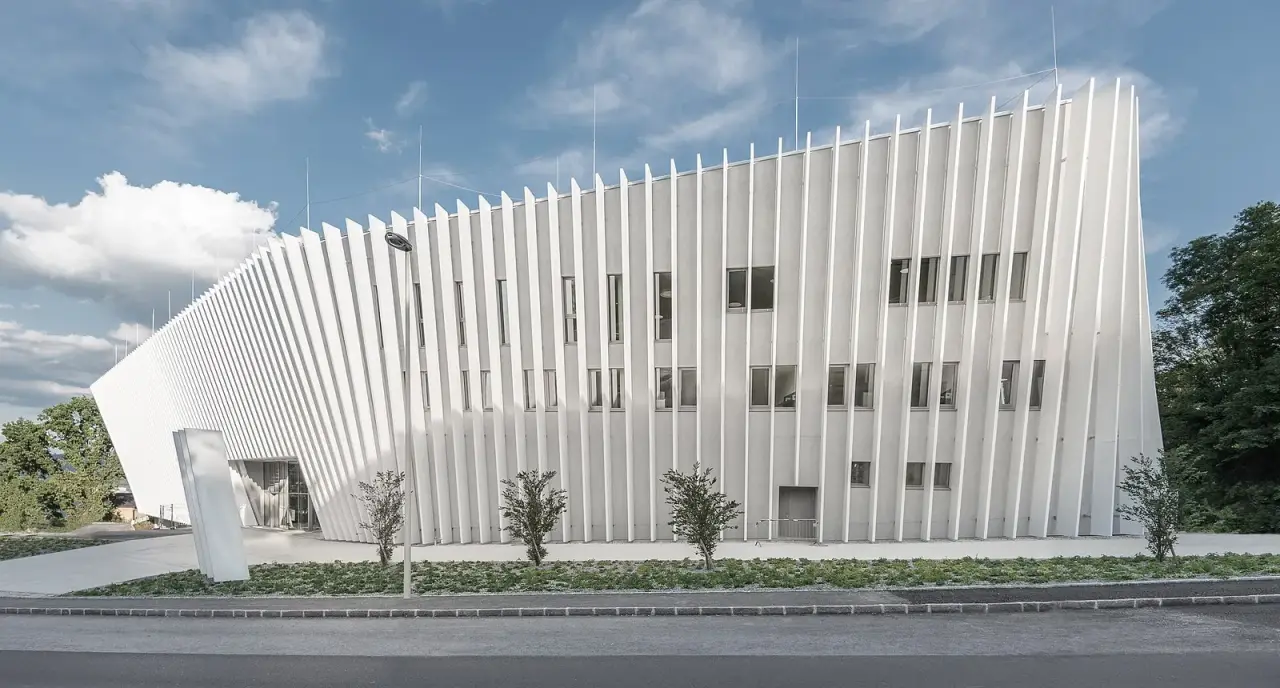
| Music, art and design | Anton Bruckner Privatuniversität; Gustav Mahler Privatuniversität für Musik; JAM MUSIC LAB; Musik und Kunst Privatuniversität der Stadt Wien; New Design University St. Pölten |
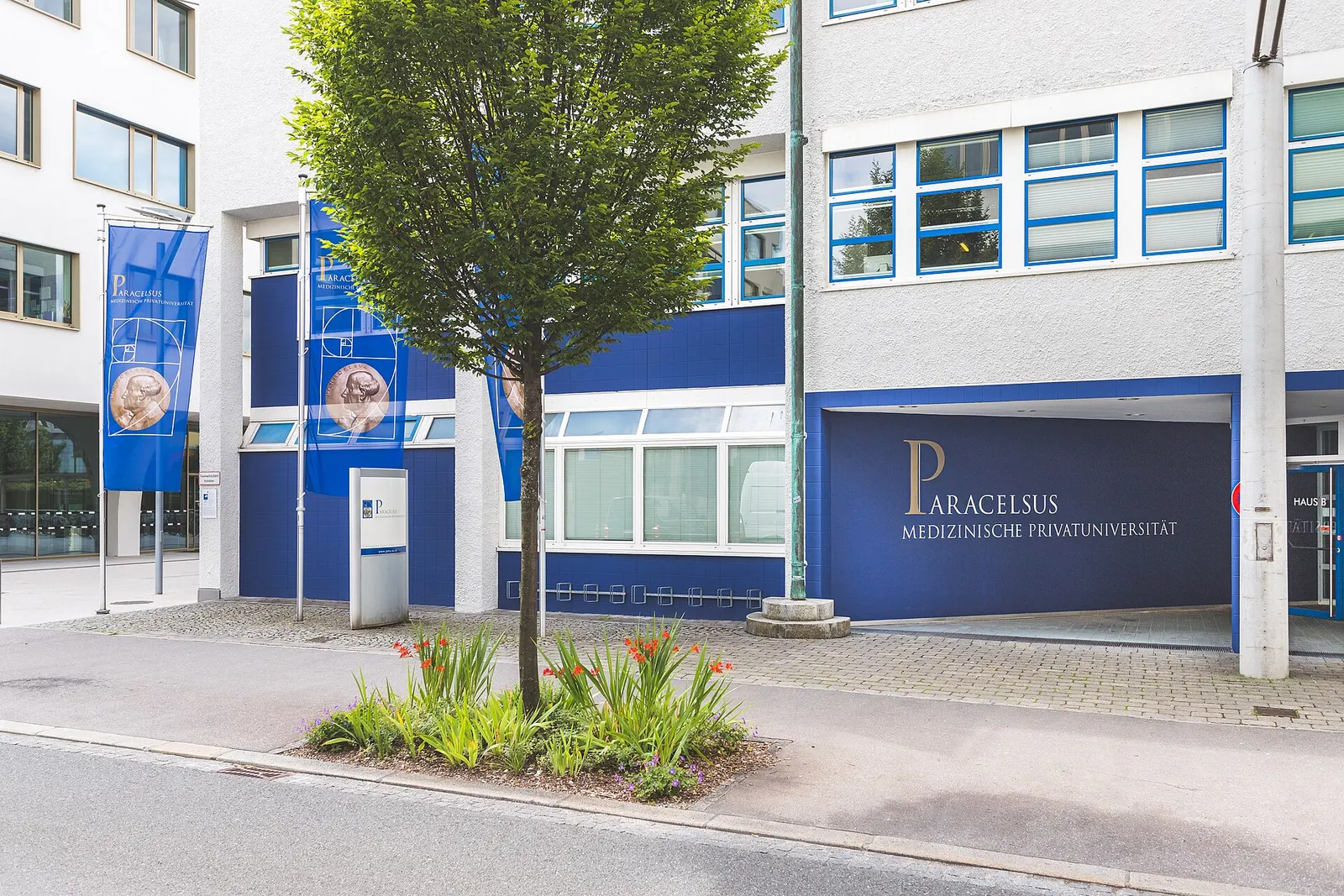
| Health, psychology and social work | Karl Landsteiner Privatuniversität; Paracelsus Medizinische Privatuniversität Salzburg; UMIT TIROL; Sigmund Freud Privatuniversität; Danube Private University; Bertha von Suttner Privatuniversität |
| Business, social science and humanities | Central European University; MODUL University Vienna; Webster Vienna Private University; Privatuniversität Schloss Seeburg; University of Sustainability - Charlotte Fresenius Privatuniversität; Katholische Privatuniversität Linz |
| Privathochschulen (not private universities) | Joseph Haydn Privathochschule; Stella Vorarlberg Privathochschule für Musik |
Residence permit eligibility
Under § 64 Abs. 1 Z 2 of the Settlement and Residence Act (NAG), as consolidated on RIS on 28 October 2026, a third-country national qualifies for the student residence permit when they take a regular degree (ordentliches Studium) at a university, a Fachhochschule, a Privathochschule or a Privatuniversität under the PrivHG, or at a public or private teacher-education college. Private universities are therefore on the same footing as public ones for this ground. The other general conditions of the permit, including financial means and health insurance, still apply, so read the student residence permit guide, the financial proof guide and, for Turkish citizens and others who need a visa before travel, the student visa (type D) guide.
- Non-degree programmes. § 64 Abs. 1 Z 3 also covers a university or higher-education course (Hochschullehrgang or Universitätslehrgang) at a private institution under § 10a PrivHG, but only if it comprises at least 40 ECTS credits and does not exclusively teach a language. A short course does not qualify.
- Renewal. § 64 Abs. 2 makes an extension depend on proof of study success from the institution, and for private universities it names the 'akkreditierte Privatuniversität'. Your progress requirements follow the rules in permit renewal.
- Your offer letter matters. A permit needs a letter confirming admission to a qualifying programme, so ask the private university what it issues and when. Webster, for example, ties its acceptance letter for immigration purposes to payment of a deposit, covered below.
What the fees look like
Private universities set their own tuition and several state that it can change, so the figures below are examples from each institution's own page, read on 28 October 2026, not a sector average. Their basis differs (per semester or per year, per programme), so compare like with like before you add up a total. For comparison, a third-country degree student with a student permit pays €726.72 per semester at a public university each semester, plus the ÖH fee of €26.20; see tuition fees in Austria.
Tuition per semester: the public fee, or many times more
Non-EU students on a student permit, € per semester, 2026/27
A public university charges non-EU students €726.72 a semester, and so do some Fachhochschulen; FH Wiener Neustadt charges €850. MCI Innsbruck (€8,250), Modul University Vienna (€9,000) and Webster Vienna (€12,034) cost more than ten times as much.
- Public university€726.72
- FH Upper Austria€726.72
- FH Wiener Neustadt€850
- MCI Innsbruck€8,250
- Modul Vienna, bachelor's€9,000
- Webster Vienna, bachelor's€12,034
| Item | Value |
|---|---|
| Public university | €726.72 |
| FH Upper Austria | €726.72 |
| FH Wiener Neustadt | €850 |
| MCI Innsbruck | €8,250 |
| Modul Vienna, bachelor's | €9,000 |
| Webster Vienna, bachelor's | €12,034 |
The FH and private rows are single institutions, not averages: Fachhochschulen may charge non-EU students up to the cost of the place, and private universities set their fees freely. The ÖH fee of €26.20 is charged on top.
Source: RIS, BMFWF, University of Vienna +8 more. Last checked:
Image (PNG)| Institution and programme | Stated tuition | Other fees stated on the same source |
|---|---|---|
| Webster Vienna Private University, full-time undergraduate, 2026-27 | €12,034 per semester (a flat fee for 12 to 18 credit hours) | Admission deposit €1,000, credited towards tuition; ÖH fee listed separately |
| MODUL University Vienna, most bachelor's programmes (fee schedule from 2 April 2026) | €9,000 per semester | One-off administration fee €500 one-off |
| Sigmund Freud Privatuniversität, BSc Psychology in English, winter semester 2026/27 | €7,719 per semester, charged for the six-semester standard duration | Non-refundable admission-procedure fee €550 one-off |
| Central European University, each bachelor's programme | €8,000 per academic year | Excludes application, enrolment and living costs; CEU lists a registration fee credited to the first instalment |
| Central European University, most master's programmes, 2025/26 as printed | €12,000 per academic year (higher for some programmes) | Excludes enrolment fee and living costs |
Read the small print on deposits. Webster says its deposit is paid before it issues the acceptance letter used for immigration purposes, and that a refund is possible only in exceptional cases such as a visa refusal confirmed by the immigration authority for reasons other than incomplete or incorrect documents, or serious illness, with request deadlines set by the university for each entry. MODUL sets the last application date for applicants who need a visa and a residence permit at 1 April for the September intake and 1 September for the February intake, earlier than the dates it sets for applicants with 90-day visa-free entry or EU/EEA status, presumably because visa processing takes time. Both are institution rules, not legal requirements, and they can change.
How admission differs from public universities
Each private institution designs its own admission procedure, deadlines and language requirements; there is no shared national calendar like the one public universities follow. The examples above show the variety: Sigmund Freud charges a fee for the admission procedure of its psychology bachelor's, MODUL staggers its final dates by applicant group, and Webster takes a deposit before the acceptance letter for immigration purposes. Read the programme's own admissions page for the language proof it accepts, the documents it wants and whether it decides on a rolling basis, and do not assume a rule from a public university applies.
The sequence is still the same as elsewhere: admission first, then the residence permit, then arrival. Work backwards from your intended start using the application timeline and prepare certificates with the documents guide, because a private university's earlier visa-applicant deadlines leave less slack for legalisation and translation.
Who studies at private universities
Private institutions have an international profile. In 2025/26 about 47% of enrolled degree studies at private universities and Privathochschulen were held by students with foreign citizenship. That is Scholway's own calculation from Statistik Austria's table, which counts enrolled studies rather than people, and foreign citizenship is not the same as 'international student'. Treat it as a rough indication that the sector is used to non-Austrian applicants, not as a quality signal.
In practice: orientation and your first documents
Private institutions run their own onboarding, so the sequence differs from the public universities. MODUL University Vienna makes its orientation week mandatory for all new students (September for the fall intake, February for spring): sessions on academic success, course registration, student support and well-being. Bring the originals of your passport, high-school leaving certificate, proof of English proficiency where needed and a postal address in Vienna, plus €20 for the student ID card. The university says you receive the ID and your study confirmation during orientation week, and it offers a buddy programme through its Student Service Center.
Webster Vienna Private University has a Student Resource Center that runs new-student orientation and helps with residence-permit questions, health-insurance sign-up and address registration. The front desk takes your photo and issues the student ID once registration has closed; the card expires every semester and is extended at reception at the start of each semester. On the first day of classes the front desk hands out a package with the student data sheet, the proof-of-performance form and the certificate of enrolment against a signature, and students on a financial or admissions hold cannot collect it. The certificate of enrolment is the paper you need for insurance, a transport pass and visa renewal.
Are they worth the fees?
Whether the fee buys something you cannot get at a public university or Fachhochschule depends on the programme, not on the sector. Weigh these points.
| It can make sense when | It usually does not when |
|---|---|
| You want an English-taught bachelor's and the public offer in your field is mainly German-taught (see the English-taught programmes guide) | A public or Fachhochschule programme in the same subject is available in your language of instruction |
| The programme is a niche, such as a specific music, arts or psychology offer, that no public university runs | You are choosing mainly because of a ranking: see how to read rankings |
| You can document the funds for tuition and living costs for the whole programme | You would rely on an agent's promise rather than the institution's published fee page |
| You need a start date or application route that fits your calendar | You cannot show how a refund works if your visa is refused |
Scholarship and study-support rules differ by scheme and funder, and some schemes are limited by nationality, so do not assume that support described for public universities applies to you. Check each scheme in scholarships for Austria before you rely on it.
Before you pay a deposit
- Institution and programme found on AQ Austria's decisions page
- Written confirmation of the degree title, language of instruction and fees for the whole programme
- Refund terms for a visa refusal read and saved
- Acceptance letter timing checked against your visa appointment
- Total cost, including living costs, covered by documented funds
Frequently asked questions
Are private universities in Austria recognised?
Yes, if they are accredited. AQ Austria accredits private universities and Privathochschulen under the PrivHG, and the ministry counts 19 accredited institutions. Check the institution and your programme on AQ Austria's decisions page before you pay.
Can I get a student residence permit for a private university in Austria?
Yes. NAG § 64 Abs. 1 Z 2 names a regular degree at a Privathochschule or Privatuniversität under the PrivHG as a qualifying study. You must still meet the other conditions, such as financial means and insurance.
How much does a private university in Austria cost?
There is no fixed price. Examples from the institutions' own pages are €12,034 per semester at Webster Vienna (2026-27), €9,000 per semester at MODUL for most bachelor's programmes, and €7,719 per semester at Sigmund Freud for the English BSc Psychology. Each institution sets and can change its fees.
Is a private university cheaper or dearer than a public one for non-EU students?
Dearer in the examples we read. A third-country student with a student permit pays €726.72 per semester at a public university, while the private institutions above charge several thousand euros per semester or per year.
Do private universities offer scholarships to international students?
Some institutions publish their own awards, but we did not read a sector-wide scheme, so check each institution's page. Do not assume Austrian public scholarship schemes apply to private universities.
Sources
12 sources, all official
- Privathochschulen und PrivatuniversitätenBundesministerium für Frauen, Wissenschaft und Forschung (BMFWF) (Official)
- Entscheidungen Privatuniversitäten und PrivathochschulenAQ Austria – Agentur für Qualitätssicherung und Akkreditierung Austria (Official)
- Privathochschulgesetz (PrivHG), Bundesrecht konsolidiert (§§ 1–6)RIS – Rechtsinformationssystem des Bundes (Official)
- Niederlassungs- und Aufenthaltsgesetz (NAG) § 64 (Studenten), Fassung gültig ab 07.08.2026RIS – Rechtsinformationssystem des Bundes (Official)
- Tuition and Fees 2026–2027Webster Vienna Private University (Official)
- MU facts pack: canonical information for admissions, tuition, programs, accreditation, deadlines, visa guidance (last updated 2 April 2026)MODUL University Vienna (Official)
- Bachelor programme Psychology (English)Sigmund Freud Privatuniversität Wien (Official)
- Tuition and Other Fees at CEUCentral European University (Official)
- Belegte ordentliche Studien an Privathochschulen 2025/26 nach Studienart und Hochschule (Tabelle 1)Statistik Austria (Official)
- Private universitiesOeAD – Study in Austria (Official)
- Welcome & Orientation WeekMODUL University Vienna (Official)
- Student Resource Center: Resources and ResponsibilitiesWebster Vienna Private University (Official)