The University of Vienna at a glance
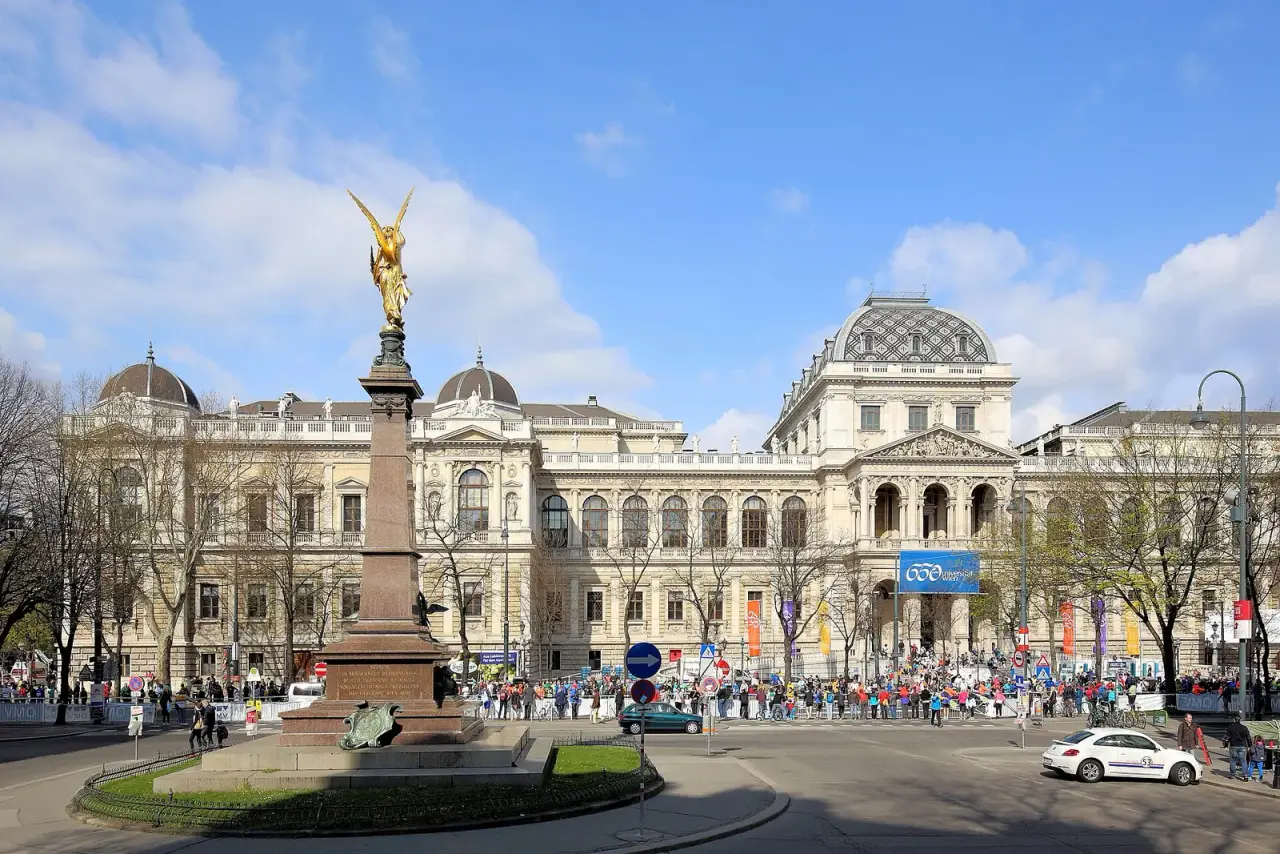
The University of Vienna is one of Austria's public universities and the one with the widest subject range: its own overview describes it as offering the widest range of degree programmes in Austria, from philosophy, history and languages to mathematics, computer science, natural sciences, psychology, sport, economics and law. It sits in the middle of Vienna, with its main building at Universitätsring 1 in the 1st district, but teaching and research are spread over many sites across the city.
| Item | What the sources say |
|---|---|
| Founded | 1365 (university's own page) |
| Students, university's description | about 87,000 students |
| Degree students, Statistik Austria, winter semester 2025/26 | 80,119 students |
| Faculties and centres | 20 faculties and centres: 15 faculties, 4 centres and the Max Perutz Labs |
| Degree programmes, university's own count | 188 programmes (a count the university does not break down; its programme page says 'more than 180') |
| Library | Vienna University Library with 40 locations in Vienna |
| English-taught offer | No single official count found; see the English-taught section for verified examples |
The two student numbers differ because they count different things. The roughly 87,000 is the university's own rounded description; the Statistik Austria figure counts regular degree students in one winter semester. Neither includes a split by nationality that we could verify, so do not read either as a count of international students.
Faculties and subject areas
The university's organisation page lists 15 faculties, four centres and the Max Perutz Labs. A faculty is the organisational unit that runs research and teaching in a field; for you, the practical contact is the study service centre of your programme.
| Area | Units |
|---|---|
| Theology | Catholic Theology; Protestant Theology |
| Law, economics, social sciences | Law; Business, Economics and Statistics; Social Sciences |
| Humanities and culture | Historical and Cultural Studies; Philological and Cultural Studies; Philosophy and Education; Centre for Translation Studies |
| Psychology | Psychology |
| Natural sciences and mathematics | Mathematics; Physics; Chemistry; Earth Sciences, Geography and Astronomy; Life Sciences; Computer Science |
| Centres and research | Centre for Sport Science and University Sports; Centre for Microbiology and Environmental Systems Science; Centre for Teacher Education; Max Perutz Labs |
Two points matter for planning. First, the university trains teachers: the Centre for Teacher Education is part of the structure, and teacher education appears among the bachelor's programmes. Second, medicine and engineering are not on its faculty list: they are taught at other Vienna universities, such as TU Wien, covered in the TU Wien profile and the public universities overview. If you are choosing between business schools, the WU Vienna profile compares well with the Faculty of Business, Economics and Statistics.
English-taught programmes
Most University of Vienna programmes are taught in German, and the university's own programme pages tag the language of instruction for each. The English-taught offer is mainly at master's level. The programme pages below, read on 25 October 2026, state English as the language or describe the programme as English-taught.
| Programme | Level | Language as stated | Admission route |
|---|---|---|---|
| Data Science | Master's | English-taught; English is an admission requirement | Selection by committee; 40 places; once per academic year; the 2027/28 deadline was still 'to be announced' |
| Computer Science | Master's | English-taught; English is an admission requirement | Programme page links to the Master Access Guide |
| Business Analytics | Master's | English-taught; English is an admission requirement | Programme page links to the Master Access Guide |
| Media Informatics | Master's | English-taught; English is an admission requirement | Programme page links to the Master Access Guide |
| Mathematical Foundations of Data Science | Bachelor's | Taught in English; no German required | Aptitude test: application 2 March to 4 May 2026 (2026 intake); written test in English on site in Vienna |
| International Legal Studies | Bachelor's | Bilingual, 'German and English'; a high proportion of English-language courses | Entrance exam; application 2 March to 4 May 2026; test in German and English on site in Vienna |
Bioinformatics is an example of a third category: its programme page gives the language of instruction as German and English, so check each curriculum rather than assuming a master's title in English means an English-only course. The university also runs continuing-education programmes through its Postgraduate Center, for instance European Studies in English, at a different (cost-covering) fee; see English-taught programmes in Austria for how those differ from regular degrees.
Admission for non-EU applicants
Admission has two layers. Programmes without an entrance procedure run an application first and then a separate admission step; programmes with an entrance exam or aptitude test run one procedure per academic year with its own registration. The university's bachelor's and diploma page splits its programmes into these two groups. The group with an entrance exam or aptitude test includes, among others, Law, Psychology, Business Administration, Economics, Computer Science, Biology, Pharmacy, Political Science, Sociology and Teacher Education.
Programmes without an entrance procedure
| Step | Dates | Who |
|---|---|---|
| Application, winter semester 2026/27 | 22 June – 3 August 2026 | Non-EU/EEA nationals |
| Application, winter semester 2026/27 | 22 June – 5 September 2026 | EU/EEA/Swiss nationals and equivalent groups |
| Application, summer semester 2027 | 16 November 2026 – 7 January 2027 | Non-EU/EEA nationals |
| Admission period, winter semester 2026/27 | 13 July – 31 October 2026 | All nationalities, once the application is accepted |
The early non-EU window exists because third-country documents need checking and legalising before admission; see admission deadlines and documents for admission for the full process, and apostille and translation for the legalisation step. The university runs its own legalisation guidance for third-country certificates. Applicants who were educated in Bangladesh, India or Pakistan must complete an in-person competence check through VFS Global before applying, at roughly €160 (the university's wording is approximate). That does not apply to other countries.
Language proof
For regular admission to German-taught bachelor's and diploma programmes and most master's programmes, the University of Vienna requires German at C1; the certificate may be no older than 3 years at application. If you lack C1 German, the options are covered in the preparatory course article and language requirements. For English-taught programmes there is no German requirement, but there is an English one. The university sets B2 or C1 depending on the programme (C1 for programmes whose subject is the English language); B2 is, for example, IELTS Academic 6.5 or TOEFL iBT 94, with certificates no older than 3 years. Check each programme page for the level it actually sets.
Entrance exams and selection procedures
Check whether your programme has a procedure
Use the bachelor's and diploma list, which sorts programmes into 'with' and 'without' entrance exam or aptitude test. Master's programmes with selection are listed in the Master Access Guide.
Register in the single yearly window
For bachelor's and diploma programmes with a procedure the application period was 2 March – 4 May 2026 (2026/27; all nationalities, once per year). For master's programmes with a procedure it was 2 March – 7 April 2026 in 2026/27.
Pay the contribution
The cost contribution (Kostenbeitrag) for bachelor's/diploma procedures was €50 euros, paid once per procedure group even if you apply to two programmes in that group.
Sit the test in person
Tests take place on site in Vienna with no alternative dates. For Psychology in 2026/27 the test was on 14 July 2026 for 485 places.
Then complete admission
A passed procedure is not yet admission: you still complete the admission step, documents and language proof, and for a residence permit, the visa process.
Dates change every year and the above are the 2026/27 cycle. For how these tests work in general, see entrance exams in Austria. Because a non-EU applicant needs a residence permit with time to spare, the test calendar is the first thing to map when you plan; see the application timeline.
Tuition and fees
Public-university tuition is set by law, not by the University of Vienna. Degree students from third countries who hold a student residence permit pay €726.72 per semester each semester; the standard rate is €363.36 per semester. Turkey is not among the states exempted by the Studienbeitragsverordnung, so Turkish students with a student permit should budget for the higher rate unless another ground for a reduction applies. On top of that, every student pays the ÖH fee of €26.20 per semester. The full rules, exemptions and refund deadlines are in tuition fees in Austria and mandatory fees. Continuing-education programmes at the Postgraduate Center are priced separately.
Campus, libraries and student life
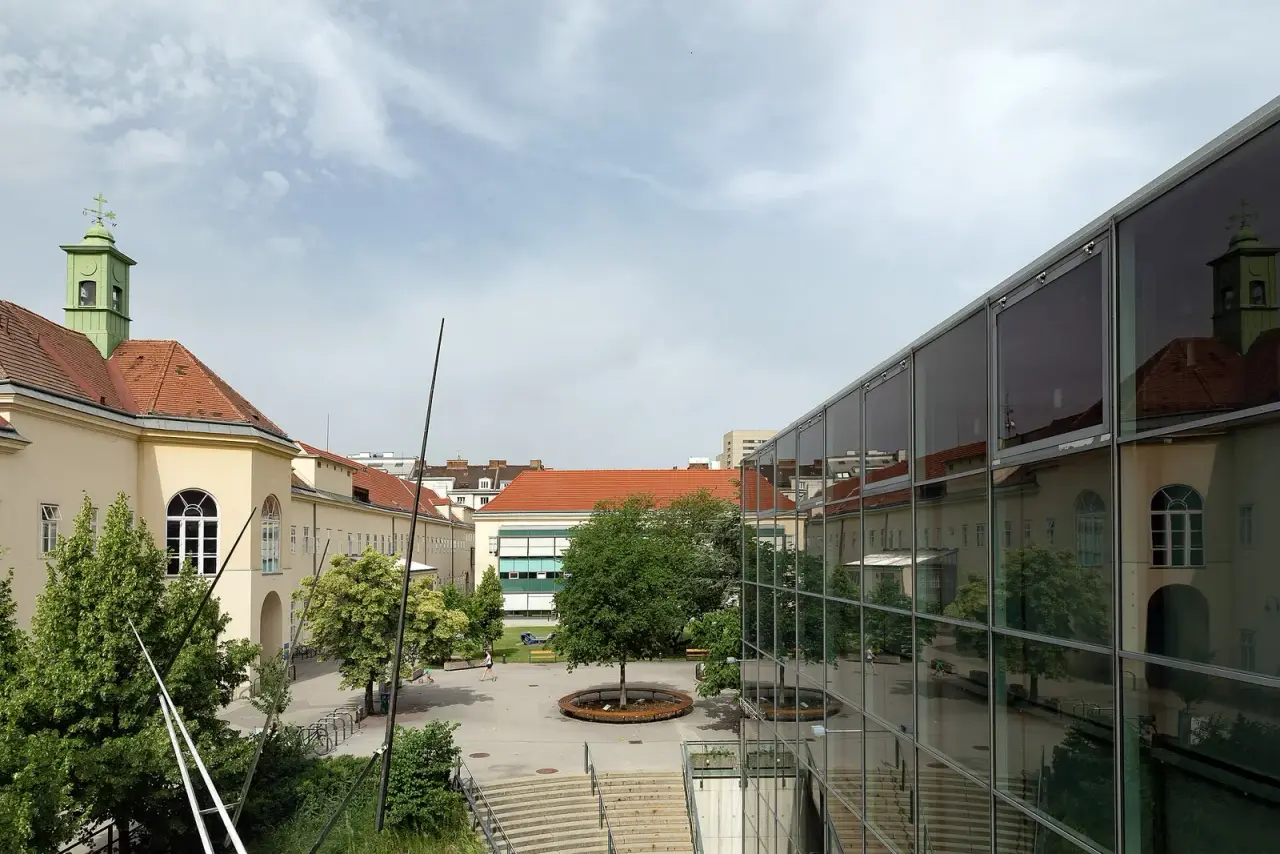
There is no single walled campus. The main building is the historic Hauptgebäude on the Ring, while faculties sit in different districts, so your timetable can involve travel between sites. A Vienna transport pass, covered in the Vienna city guide, matters more here than at campus-style universities.
- Libraries. The Vienna University Library lists 40 locations in Vienna and offers seat reservations through its website. It has announced renovation work at the main library, so check current access before relying on the main reading room.
- Student union (ÖH Uni Wien). The statutory student body, financed by the ÖH fee, runs counselling on tax, legal and housing questions, an office for international affairs, a German course project, a book exchange and a buddy project, per its own site. The programme-level student representatives (STV) handle study-plan and exam questions.
- Support for new students. The university lists first-semester support, learning and writing consultations, a peer-point drop-in centre and an international office for exchange schemes such as Erasmus+.
- Sport. The university has a Centre for Sport Science and University Sports. We could not read the University Sports Institute (USI Wien) site during research, so check its current prices and sign-up periods directly.
- Language courses. The Language Centre (Sprachenzentrum) offers German courses; one of its semester courses is already sourced in learning German in Austria. We could not load the centre's pages for a full list.
Housing is the practical constraint in Vienna rather than anything the university controls; start with accommodation in Vienna and finding housing before you arrive.
In practice: your first weeks at the University of Vienna
Orientation is organised by degree programme. The Welcome Weeks page lists orientation courses (OV), where each programme explains how it is structured, how semester planning works and how the exams of the introductory and orientation phase (STEOP) run; workshops and guided tours of the main building; the unileben education fair in the main building; and a Freshers' Help Desk. In autumn 2026 the main-building tours needed registration and were fully booked, and the Uni Wien Guides app offers a virtual tour in German and English instead. We found no event for international degree students only, so check that page and your programme's page each semester.
Card, library and Wi-Fi. The u:card is both your student ID and your library card: students who hold one already have a valid library card, which you need to borrow books or use the closed stacks. The first u:card is free; a replacement costs €15, ordered and paid online through u:space. A digital student ID has been available since 9 April 2026, but the library asks you to keep bringing the plastic u:card to borrow books or keys, and its self-checkout machines work only with it. Students use eduroam with their u:account ID and password; holders of a valid library ID can also use the university's local WiFi through the library account of their u:card, with a separate WiFi password set after logging in on the Zentraler Informatikdienst's account page.

| Topic | What the university's own pages say |
|---|---|
| Registering for courses | Each programme director publishes the sign-up procedure and the registration and withdrawal deadlines in u:find before the semester. If you are registered for a continuous-assessment course but miss its first session without good reason, the course leader deregisters you and the place is reassigned. |
| Learning platform | Moodle is the e-learning platform listed among the student quick links; u:find carries the course information, including attendance rules for continuous-assessment courses. |
| Failed exams | 4 attempts in total, following UG § 77. If the exam is a single sitting, the fourth attempt is held before a panel of at least three examiners appointed by the programme director. A failed continuous-assessment course is never examined by a panel: you repeat the whole course. The last exam of a degree carries one further attempt. |
| No-shows | If you neither withdraw in time nor show a good reason, the programme director bars you from the next sitting of that exam. |
| Master's and diploma finish | A positive thesis grade is the precondition for registering with your programme director for the final exam (Abschlussprüfung), which is held before a panel of at least three examiners and includes the thesis defence. |
Rankings
The university's own page says it ranks among the top 100 in the Times Higher Education ranking for 2027 and in the top four per cent of universities worldwide in international rankings. We did not read the ranking publishers' pages first-hand, so we do not give rank numbers here; see the rankings article for how to interpret them.
Practical tips
- Treat German and English-taught routes as separate decisions. If you choose a German-taught degree, C1 proof is a gate to admission, not a course you can start alongside.
- Work backwards from the visa. A student residence permit needs an admission letter; the early non-EU application window is designed with that in mind. See the student residence permit.
- If your programme has a selection procedure, there is one chance a year. A missed registration window usually costs a full year.
- Compare master's programmes with a selection procedure against alternatives at other Vienna universities early, because selection committees decide places, not first-come order.
- Keep certified, legalised copies of your school-leaving certificate and transcripts ready before the application opens.
Before you apply
- Programme page read: language of instruction and admission route noted
- German C1 or the required English certificate booked or in hand
- Certificates legalised and translated as the university requires
- Application and test windows for your intake in your calendar
- Tuition and ÖH fee included in your finance proof
Frequently asked questions
Can I study in English at the University of Vienna?
Yes, mostly at master's level. Programme pages for Data Science, Computer Science, Business Analytics and Media Informatics describe the programmes as English-taught, and the bachelor's Mathematical Foundations of Data Science is taught in English. Most other programmes are in German.
Do I need German to study at the University of Vienna?
For German-taught bachelor's and diploma programmes and most master's programmes, regular admission needs C1 German. English-taught programmes do not require German but do require proof of English.
When is the application deadline for non-EU students?
For programmes without an entrance procedure, the non-EU window for winter semester 2026/27 was 22 June – 3 August 2026, and for summer semester 2027 it is 16 November 2026 – 7 January 2027. Programmes with an entrance exam or aptitude test use a separate yearly window, in 2026/27 2 March – 4 May 2026.
How much does the University of Vienna cost for Turkish students?
Tuition is set by law: third-country degree students with a student residence permit pay €726.72 per semester, plus the ÖH fee of €26.20. Turkey is not on the list of exempted states. Living costs are separate; see the cost-of-living guides.
Is there an entrance exam at the University of Vienna?
For some programmes, yes. Law, Psychology, Business Administration, Economics, Computer Science and others are in the group with an entrance exam or aptitude test, and some master's programmes select by committee. Many other programmes have no entrance test.
How many students does the University of Vienna have?
The university describes itself as having about 87,000 students. Statistik Austria counted 80,119 students degree students in winter semester 2025/26. The figures differ because they count different groups.
Sources
22 sources, all official
- About us (read 25 October 2026)Universität Wien (Official)
- Organisation and structureUniversität Wien (Official)
- Our degree programmesUniversität Wien (Official)
- Bachelor's and diploma programmesUniversität Wien (Official)
- Data Science (master's programme)Universität Wien (Official)
- Computer Science (master's programme)Universität Wien (Official)
- Business Analytics (master's programme)Universität Wien (Official)
- Media Informatics (master's programme)Universität Wien (Official)
- International Legal Studies (bachelor's programme, admission)Universität Wien (Official)
- Vienna University LibraryUniversität Wien (Official)
- ÖH Uni WienÖH Uni Wien (Official)
- University of ViennaOeAD – Study in Austria (Official)
- Antrags- und ZulassungsfristenUniversität Wien (Official)
- German language proficiencyUniversität Wien (Official)
- English language proficiencyUniversität Wien (Official)
- Mathematical Foundations of Data Science (bachelor's programme)University of Vienna - Admission procedures (Official)
- Ordentliche Studierende an öffentlichen Universitäten im Wintersemester 2025/26 (Tabellenband, Tabellen 1, 4 und 5)Statistik Austria (Official)
- Welcome to the University of ViennaUniversität Wien (Official)
- Library CardVienna University Library, Universität Wien (Official)
- WiFi AccessVienna University Library, Universität Wien (Official)
- Digital Student ID and u:cardVienna University Library, Universität Wien (Official)
- Die Satzung der Universität Wien, Thema StudienrechtUniversität Wien (Official)