What rankings can and cannot tell you
Austria has no national league table, and the global tables were built to compare research universities, not to help an applicant choose a programme. Times Higher Education (THE) and ShanghaiRanking's ARWU each publish one list that blends many indicators into one number. Two Austrian universities can sit hundreds of places apart while offering an equally good degree in the subject you want, and a university that is far down a table can be the best in the country for one field. Treat a rank as one input, read the methodology before you trust it, and use the checks at the end of this page to decide.
This page covers how the two main tables are built, where Austrian institutions appear in the current editions, and what to use instead. For the sectors themselves, see the universities overview, the public universities and the Fachhochschulen.
What the THE World University Rankings measure
THE groups its indicators into five pillars. The weights below are from THE's published methodology for the 2026 edition (a PDF dated September 2025); the methodology page for the 2027 edition, published on 15 September 2026, states the same pillar weights and the same inclusion rules.
| Pillar | Weight | What sits inside it |
|---|---|---|
| Teaching | 29.5% | Teaching reputation survey 15%, student-staff ratio 4.5%, doctorate-to-bachelor ratio 2%, doctorate-to-staff ratio 5.5%, institutional income 2.5% |
| Research environment | 29% | Research reputation survey 18%, research income 5.5%, research productivity 5.5% |
| Research quality | 30% | Citation impact 15%, research strength 5%, research excellence 5%, research influence 5% |
| International outlook | 7.5% | International students, international staff and international co-authorship, 2.5% each |
| Industry | 4% | Industry income 2% and patents 2% |
Three consequences follow from that table. First, the two reputation surveys together carry 33% of the score, and they ask academics for opinions, not students for experience. Second, research pillars make up the bulk of the rest, so a university strong in teaching but modest in publications is structurally disadvantaged. Third, only one small item, the student-staff ratio, comes anywhere near how crowded your lectures will be, and it is a university-wide average rather than a figure for your programme.
Eligibility matters too. To be scored, an institution must have published more than 1,000 relevant research papers over the previous five years (2020 to 2024 for the 2026 edition, 2021 to 2025 for the 2027 edition), and one narrow subject area may not account for more than 80% of its output. Small or highly specialised institutions may therefore be absent or listed without a score, which says nothing about their quality.
What ARWU measures
ShanghaiRanking's ARWU is narrower and almost entirely research-driven. Its 2026 methodology page weights six indicators, and none of them uses surveys or a direct measure of teaching or student experience.
| Indicator | Weight | What it counts |
|---|---|---|
| Alumni | 10% | Alumni winning Nobel Prizes and Fields Medals |
| Award | 20% | Staff winning Nobel Prizes and Fields Medals |
| HiCi | 20% | Clarivate Highly Cited Researchers |
| N&S | 20% | Papers published in Nature and Science |
| PUB | 20% | Papers indexed in SCIE and SSCI |
| PCP | 10% | Per capita academic performance of the institution |
Because prize counts and citation lists favour large, old, science-heavy institutions, ARWU rewards size and history. It publishes 1,000 institutions a year, although it says more than 2,500 are actually ranked, and below the top 100 it reports bands rather than single ranks.
Where Austrian universities appear
The tables below were read on 28 October 2026 from the ranking publishers' own pages. THE's figures come from the ranking data embedded in each institution's profile page (2027 edition, published 15 September 2026); the ARWU figures come from the ranking data that ShanghaiRanking's 2026 page itself loads. THE prints exact ranks for higher-placed institutions and bands further down; ARWU prints bands from rank 101.
| Institution | THE 2027 overall rank |
|---|---|
| University of Vienna | 95 |
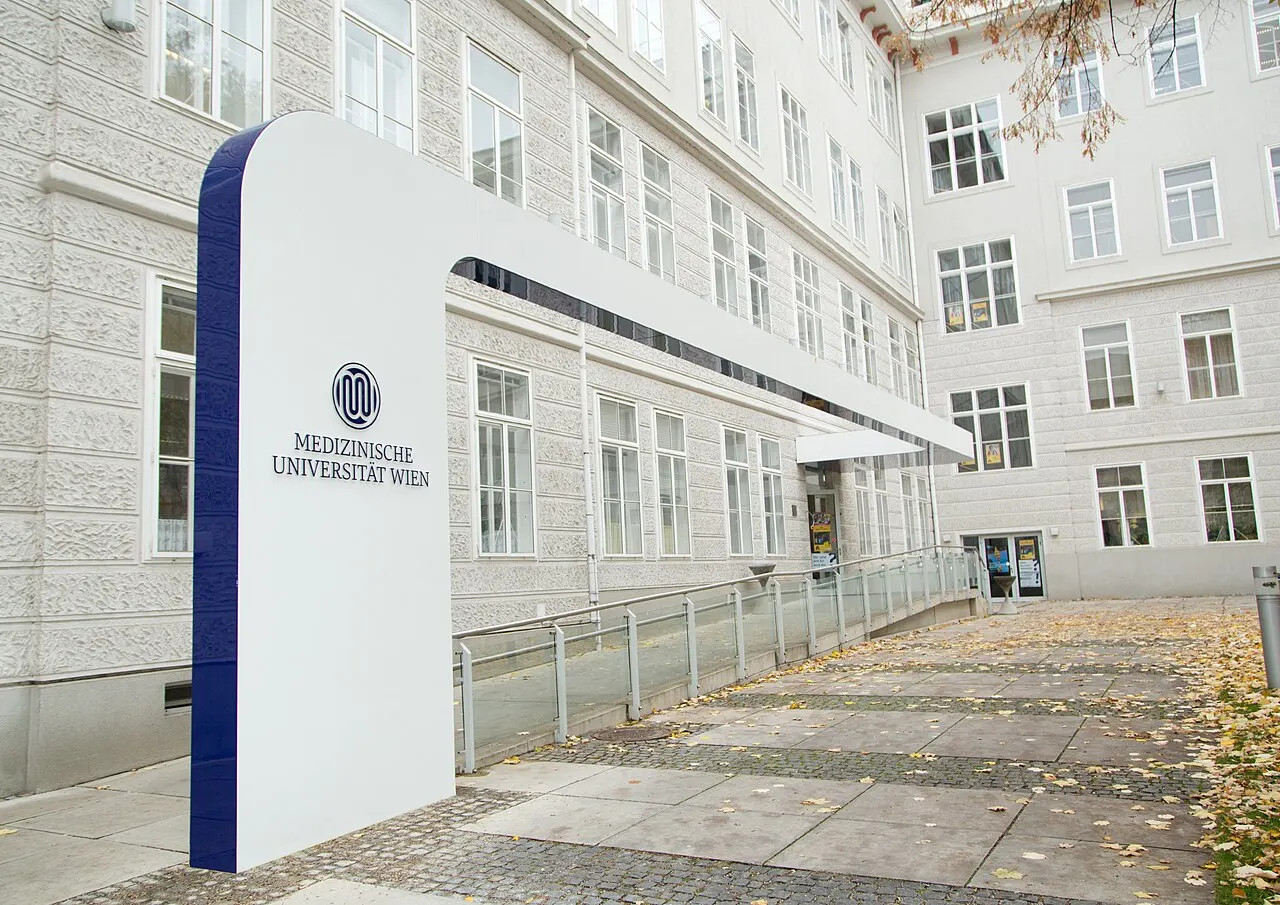
| Medical University of Vienna | =180 |
| TU Wien | 301–325 |
| University of Innsbruck | 301–325 |
| Johannes Kepler University Linz | 401–450 |
| University of Graz | 501–550 |
| Institution | ARWU 2026 rank band |
|---|---|
| University of Vienna | 101-150 |
| Medical University of Vienna | 201-300 |
| University of Innsbruck | 201-300 |
| TU Wien | 301-400 |
| University of Graz | 401-500 |
| Graz University of Technology | 601-700 |
| Johannes Kepler University Linz | 901-1000 |

We checked a selection, not every Austrian institution, and we did not read the other ranking tables or the subject rankings, so absence from these lists is not evidence of anything. Two points are worth noticing. The order differs between the tables: the Medical University of Vienna is the second-highest of the Austrian institutions we checked in THE and joint second with Innsbruck in ARWU, while TU Wien and Innsbruck share a band in THE but Innsbruck is ahead in ARWU. And the gap between the University of Vienna and the rest is large in both tables, which mainly reflects size and research volume, not the quality of teaching in a given master's programme.
How to read a ranking entry in five minutes
Do not stop at the headline number. THE's institution profile pages print the five pillar scores next to the overall result, together with context such as students per staff member, total student numbers and the share of international students. A university with a modest overall position but a high teaching or international-outlook score may suit you better than a research-heavy neighbour. Note, however, that these are institution-wide figures: they describe the whole university, including programmes you will never attend.
ARWU gives you less to work with. It reports the indicator scores in its table, but every indicator is a research measure, so a strong ARWU result tells you that an institution has prize-winning or highly cited researchers, not that its first-year classes are well taught. If you are choosing a master's programme, look at the supervisor's publications and the programme's own curriculum page; if you are choosing a bachelor's programme, look at how the first year is organised and how many places there are. The institution-level profiles linked at the end of this page do exactly that for the largest Austrian universities.
One more habit helps: when a university or an agent quotes a ranking to you, ask for the table, the year and whether it is a single rank or a band. A quote that cannot answer those three questions is marketing, and a good agent or admissions office will answer them without hesitation. The same applies to claims about the 'best' university in a city: the answer depends on the subject, and the public universities overview shows how differently sized the institutions are.
Why rankings mislead applicants
- They rank whole universities, not programmes. A strong overall result can hide a programme with limited English-language provision, and a modest result can sit beside a department that leads its field. Subject rankings exist, but they carry the same research bias.
- They reward research volume. Institutions that are small or concentrated in one field can fall outside the inclusion rules described above, so a missing entry is not a verdict.
- They do not measure access. A high-ranked public university may run an entrance procedure with a once-a-year window, while a lower-ranked one offers open admission for the same subject. See entrance exams in Austria for how this works.
- They ignore cost. Public tuition is set by law and does not vary with rank, while private institutions price themselves independently; the private universities article shows the gap.
- They do not decide your visa. The residence permit for students under NAG § 64 depends on the type of institution (university, Fachhochschule, accredited private university, teacher-education college) and on study progress, not on a ranking position. See the student residence permit guide.
- Reporter institutionInstitution without a score
- THE lists institutions that fail an inclusion criterion, such as the minimum publication count, as 'Reporters' without a score. Not appearing in a ranked list can mean an institution is too small or too specialised, not that it is poor.
Better ways to choose
Start with the programme
Find the programmes that teach your subject in your language and read their own pages: language of instruction, curriculum, admission route and deadline. The English-taught programmes guide explains how those differ from German-taught degrees.
Check the admission route
Decide early whether the programme has open admission, an entrance procedure or selection by committee, because that sets your calendar. Map it against admission deadlines and the application timeline.
Confirm the institution type
Public universities, Fachhochschulen and accredited private universities are all valid study destinations for a student residence permit; an unaccredited provider is not. The sector pages explain which type fits your plans.
Add the cost
Compare tuition, living costs and the financial-means threshold for your city using tuition fees in Austria and the financial proof guide.
Use rankings last
If two options still tie, a ranking can break the tie, ideally the subject ranking in the same publisher's table for the same year.
| Your question | Better source than a global ranking |
|---|---|
| Is the institution legally recognised? | AQ Austria's list of accredited private institutions, the ministry's lists of public universities, and the Fachhochschule register |
| Which programmes are taught in English? | The university's own programme pages, which state the language of instruction |
| How many students come from abroad? | Statistik Austria's tables by university, with the caveat that citizenship is not the same as 'international student' |
| Will I be admitted? | The programme's own admission page and the university's admission guide |
| What will it cost? | The law for public universities; the institution's own fee page for private ones |

Profiles of individual institutions give the programme-level detail that rankings leave out: University of Vienna, TU Wien, WU Vienna and University of Graz.
In practice: look at the services behind the number
A ranking will not tell you how your first weeks work. The university profiles read each institution's own pages: where the student card is issued and whether it doubles as the library card, which system you register for courses on, how many times a failed exam may be repeated and whether a welcome programme exists for degree students. The number of retakes, for example, differs between public universities. The public universities guide sets eight of them side by side in one table; use it, not a league-table position, to compare the day-to-day side of a shortlist.
Before you let a ranking influence your choice
- I know which table and which year the number comes from
- I have checked whether the number is an exact rank or a band
- I have read what the table measures, and it matches what I care about
- I have compared the programme's own page, not just the university's overall result
- I have checked admission route, language and cost for my shortlist
Frequently asked questions
Which is the highest-ranked university in Austria?
In the THE World University Rankings 2027 the University of Vienna sits at 95, the highest of the Austrian institutions we checked. In ARWU 2026 the University of Vienna is in the 101-150 band. The two tables use different formulas, so the order of the other institutions differs.
Do rankings affect my student visa for Austria?
No. The residence permit for students under NAG § 64 depends on being admitted to a regular degree at an eligible institution type and on later proof of study progress, not on rank. An unaccredited private provider would not qualify, whatever its marketing says.
Are Austrian universities good if they are not in the top 100?
Most of them are not, in the global tables, and that says little about a given programme. The tables weigh research reputation and output heavily, and many Austrian universities are mid-sized or specialised. Judge the programme, the supervision and the admission terms.
Why does a university say it is in the top 100 when its THE rank looks lower?
A university's own page may refer to a different table, edition, subject ranking or time frame. Always find the publisher's own page and read the year, the table and whether the figure is a single rank or a band.
Where can I find QS rankings for Austria?
On QS's own website. We could not read QS's methodology page during research, so this guide does not quote QS weights or positions. Apply the same questions you would ask of THE: what is surveyed, how much is reputation and which year is shown.
Sources
13 sources, 4 official
- Methodology for overall and subject rankings for the Times Higher Education World University Rankings 2026 (PDF, September 2025)Times Higher Education (THE) (Institutional)
- ShanghaiRanking's Academic Ranking of World Universities Methodology 2026ShanghaiRanking Consultancy (Institutional)
- Academic Ranking of World Universities 2026ShanghaiRanking Consultancy (Institutional)
- University of Vienna - World University Rankings 2027 profile (overall rank, read from the page's own data)Times Higher Education (THE) (Institutional)
- Medical University of Vienna - World University Rankings 2027 profile (overall rank, read from the page's own data)Times Higher Education (THE) (Institutional)
- TU Wien - World University Rankings 2027 profile (overall rank, read from the page's own data)Times Higher Education (THE) (Institutional)
- University of Innsbruck - World University Rankings 2027 profile (overall rank, read from the page's own data)Times Higher Education (THE) (Institutional)
- Johannes Kepler University Linz - World University Rankings 2027 profile (overall rank, read from the page's own data)Times Higher Education (THE) (Institutional)
- University of Graz - World University Rankings 2027 profile (overall rank, read from the page's own data)Times Higher Education (THE) (Institutional)
- Niederlassungs- und Aufenthaltsgesetz (NAG) § 64 (Studenten), Fassung gültig ab 07.08.2026RIS – Rechtsinformationssystem des Bundes (Official)
- Welcome to the University of ViennaUniversität Wien (Official)
- TUcard (student ID card)TU Wien, Admission Office (Official)
- Exam Infos (Bachelor's Student Guide: German-Taught Programs)WU Vienna (Official)