TU Graz at a glance
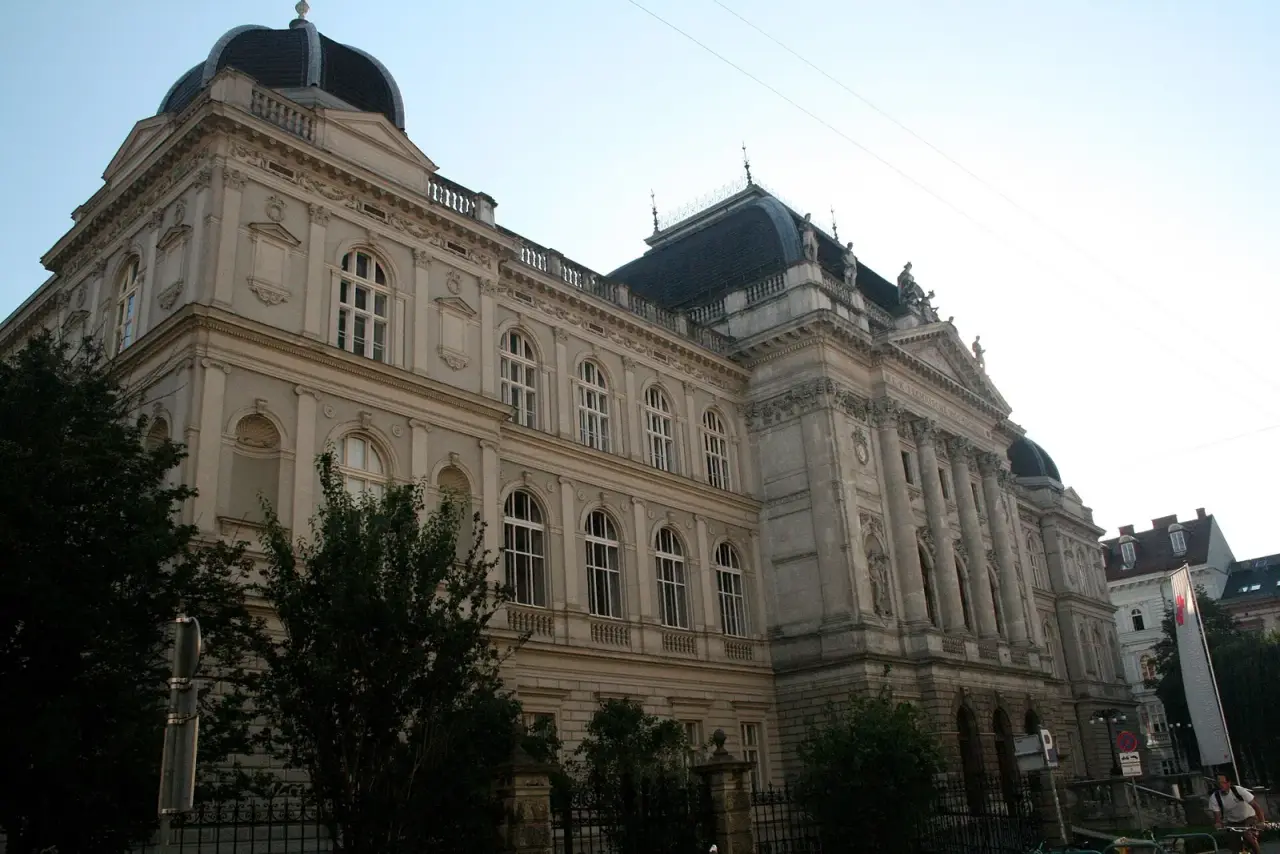
TU Graz (Technische Universität Graz) is one of Austria's public universities and one of two institutions named Technische Universität, alongside TU Wien. The university dates itself to the Joanneum, founded by Archduke Johann in 1811. It sits in the centre of Graz and shares a joint natural-science teaching structure with the University of Graz. For the city, see the Graz guide.
| Item | What the sources say |
|---|---|
| Founded | 1811 (Joanneum) |
| Students, university's own facts list | 13,529 regular students (list headed 'as of 31 December 2025') |
| Degree students, Statistik Austria, winter semester 2025/26 | 16,819 students |
| Structure | 7 faculties and 96 institutes |
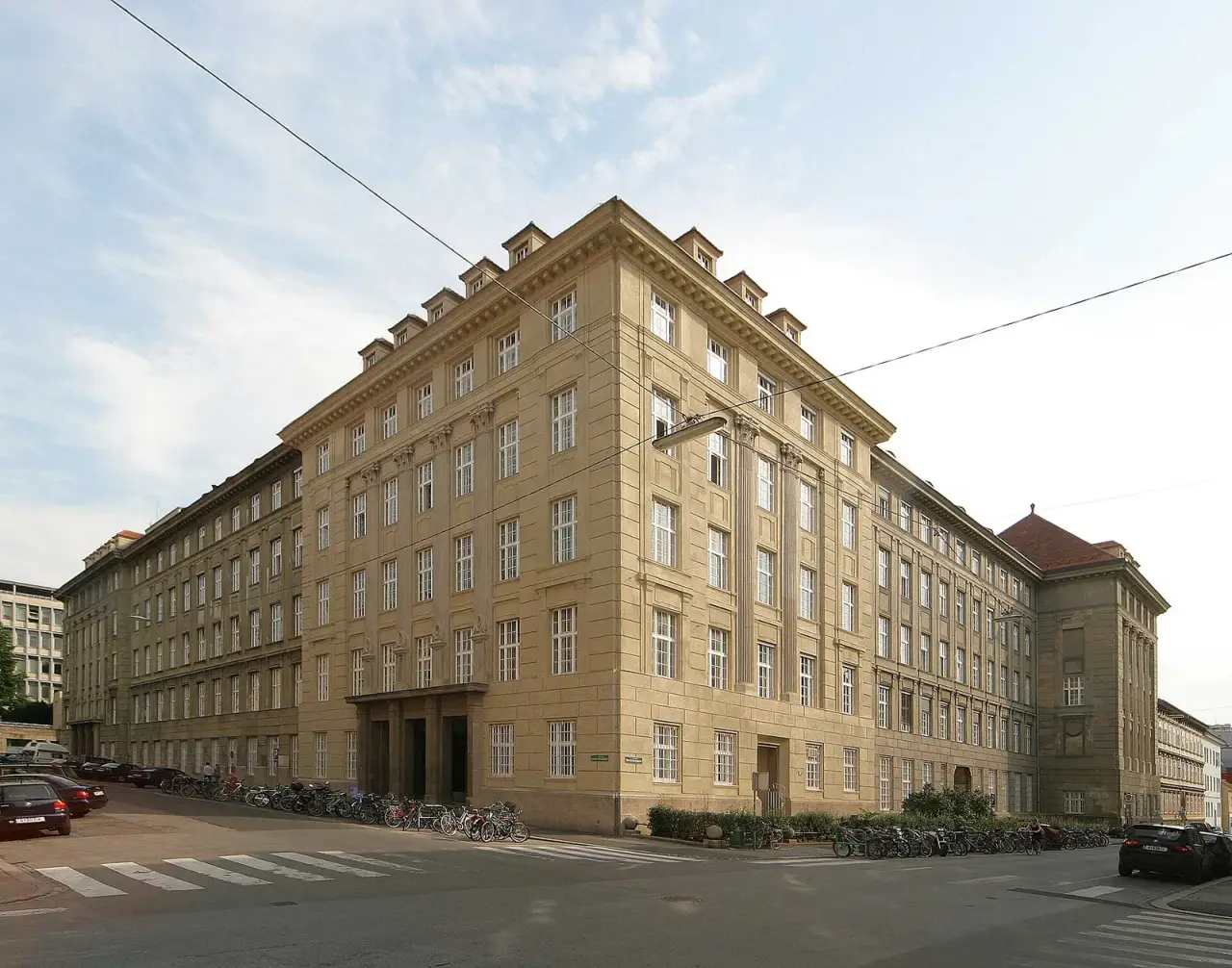
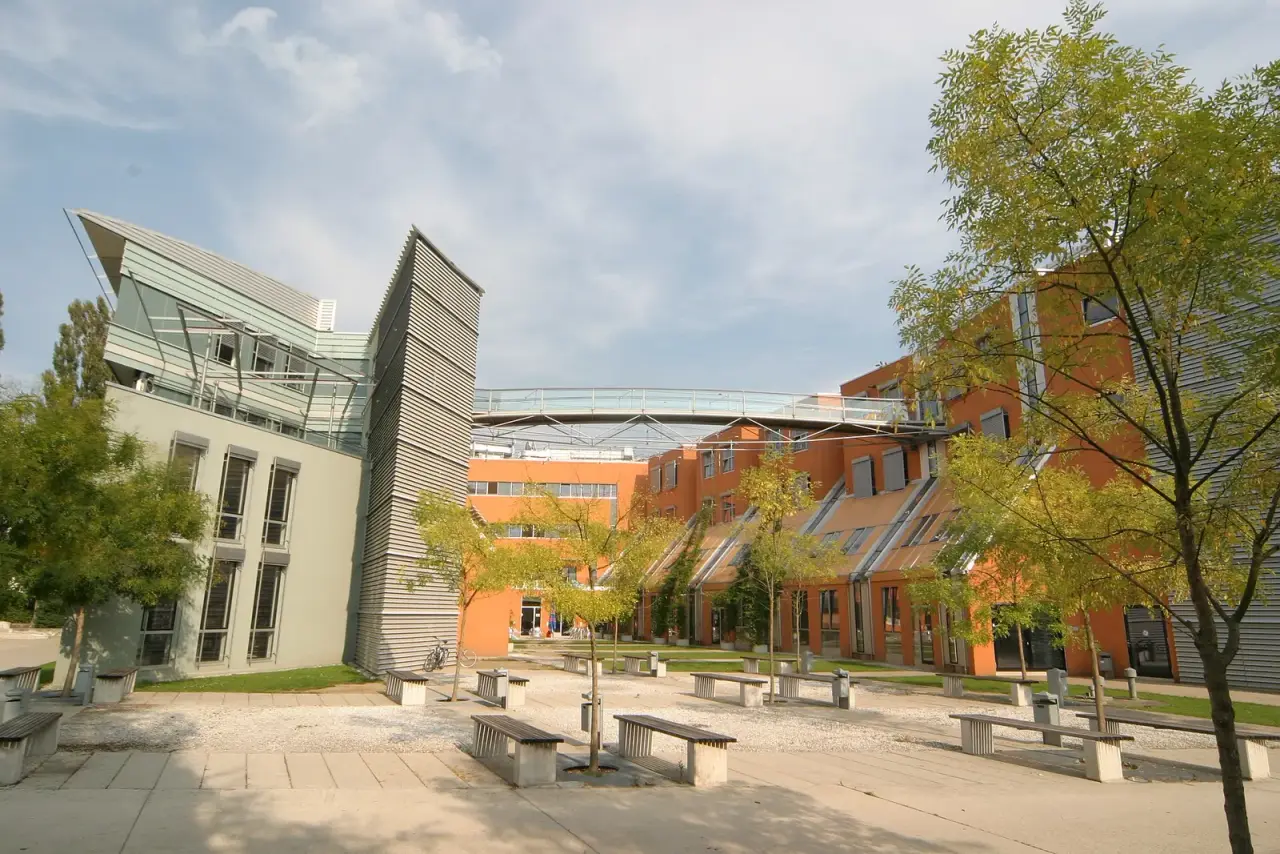
| Campus sites | Three in Graz: Alte Technik, Neue Technik and Inffeldgasse |
| Bachelor's programmes | 21 bachelor's programmes, taught in German on the pages read |
| Master's programmes | 23 master's programmes taught in English; 15 taught in German |
| Students come from | over 100 nations, according to the university |
Faculties and programme areas
Research and teaching are organised around seven faculties. The university's pages do not map each programme to a faculty, so the examples below are Scholway's grouping by programme name.
| Faculty | Programmes with matching names |
|---|---|
| Architecture | Architecture (bachelor's and master's) |
| Civil Engineering Sciences | Civil Engineering Sciences and Construction Management; Geotechnical and Hydraulic Engineering |
| Electrical and Information Engineering | Electrical and Electronics Engineering; Electrical Engineering and Audio Engineering |
| Computer Science and Biomedical Engineering | Computer Science; Biomedical Engineering |
| Mechanical Engineering and Economic Sciences | Mechanical Engineering; Mechanical Engineering and Business Economics; Production Science and Management |
| Mathematics, Physics and Geodesy | Mathematics; Physics; Technical Physics; Geodesy |
| Technical Chemistry, Chemical and Process Engineering and Biotechnology | Chemistry; Technical Chemistry; Biotechnology; Chemical and Process Engineering |
- NAWI Graz
- The natural-science teaching cooperation of TU Graz and the University of Graz. TU Graz marks these programmes with an asterisk in its lists.
Language of instruction: English at master's, German at bachelor's
TU Graz lists 23 master's programmes taught in English and 15 master's programmes taught in German, plus one extension programme, Artificial Intelligence Engineering. The bachelor's overview gives no language, so I opened the programme pages: all 19 I read (everything except the two teacher-education programmes) give German as the language of instruction. Computer Science, Information and Computer Engineering and Software Engineering and Management add that many courses are offered in English; Biomedical Engineering, Chemical and Process Engineering and Molecular Biology say some or certain courses are. The international-students page says most programmes are offered in English, which holds for the master's list but not for the bachelor's pages.
| Area (Scholway's grouping) | Programmes |
|---|---|
| Computing and data | Computer Science; Software Engineering and Management; Information and Computer Engineering; Data Science*; Computational Social Systems; Digital Engineering |
| Engineering | Biomedical Engineering; Electrical and Electronics Engineering; Production Science and Management; Civil Engineering – Sustainable Infrastructure Systems; Geotechnical and Hydraulic Engineering; Green Process Engineering; Chemical and Process Engineering |
| Natural sciences | Mathematics*; Physics*; Technical Physics*; Chemistry*; Technical Chemistry*; Geosciences*; Environmental Systems Sciences / Climate and Environmental Monitoring*; Biotechnology*; Chemical and Pharmaceutical Engineering*; Advanced Materials Science* |
For the national picture, see English-taught programmes in Austria and master's study in Austria.
Admission for non-EU applicants
TU Graz runs its own admission process, and the route depends on the level and on whether the master's programme has a selection procedure. For master's programmes without a procedure, third-country applicants use 1 May – 15 August for the winter semester and 1 December – 15 January for the summer semester; the bachelor's page gives the same dates without naming a group (the pages print no year). Late applications can only be considered for a later semester, and processing takes several weeks to months.
| Route | How you apply | Window |
|---|---|---|
| Bachelor's with an international entrance qualification | Complete documents sent by post or handed in at Rechbauerstraße 12; e-mailed applications are not considered | 1 May – 15 August (winter) / 1 December – 15 January (summer) |
| Master's without a selection procedure, international degree | Online application in TUGRAZonline plus the original documents by post; the application is complete only with both | Same dates for third-country applicants |
| English-taught master's with a selection procedure | Online registration and document upload; no originals until you are accepted | 15 October to 15 December 2026 for academic year 2027/28 |
Country rules matter. For prior education in Bangladesh, India or Pakistan you must complete a competence check at VFS Global before you apply, and Afghanistan, Nepal and Sri Lanka have their own master's conditions. For bachelor's applicants the page lists entrance examinations by country; for Türkiye it names ÖSYS (Turkish nationals) and YÖS (non-Turkish nationals) and asks for proof where a country has such an exam. It states no minimum score, so ask the Registrar's Office what it wants to see. For translation and certification see admission documents, apostille and translation and admission requirements. Applications through an agency are rejected.
- Supplementary examinationErgänzungsprüfung
- An exam you must pass before or alongside study if your school certificate is not equivalent to the Austrian Matura. TU Graz decides case by case from your documents, and the University Preparation Programme prepares applicants for it.
The English-taught master's selection procedure
Nine English-taught master's programmes are listed in a rectorate regulation of April 2026 and admit a fixed number of new students a year, ranked by a selection commission. Computational Social Systems, Data Science and the English-language NAWI Graz programmes have separate regulations, which I did not read in full; the procedure page gives one registration window. You register a year ahead, so an applicant now starts no earlier than winter semester 2027/28.
| Master's programme | Places |
|---|---|
| Computer Science | 50 places a year |
| Software Engineering and Management | 50 places a year |
| Information and Computer Engineering | 50 places a year |
| Geotechnical and Hydraulic Engineering | 40 places a year |
| Civil Engineering – Sustainable Infrastructure Systems | 40 places a year |
| Biomedical Engineering | 30 places a year |
| Production Science and Management | 30 places a year |
| Green Process Engineering | 16 places a year |
| Chemical and Process Engineering | 16 places a year |
You upload a transcript and curriculum, a form assigning your courses to the programme's knowledge areas, a motivation letter of up to two A4 pages and a CV. Scoring: up to 25 points (20 for prior studies, 5 for the motivation letter); at least 14 to qualify. The commission may offer up to half as many places again as the table shows, so it guides competition rather than setting a hard cut-off. TU Graz graduates are exempt, as are University of Graz graduates for NAWI Graz programmes. Five programmes (Computational Social Systems, Computer Science, Data Science, Information and Computer Engineering, Software Engineering and Management) also exempt applicants whose eligible prior studies were completed in the EU, EEA, Switzerland or the UK; read literally the test is where you studied, not your passport, so confirm with the Registrar's Office.
15 October to 15 December 2026
Register and upload
Online in TUGRAZonline; no extension is possible.
1 March 2027
Result at the latest
You are told by e-mail whether you have a place, with your points.
15 August (winter semester) or 15 January (summer semester)
Remaining documents
Degree certificate, English proof and required certifications, due after acceptance.
Winter semester 2027/28
Start
The winter semester usually starts on the first weekday in October.
German and English requirements
| Route | At application | Level to start |
|---|---|---|
| German-taught programme | German A2 certificate; without it the application is rejected | German C1 |
| English-taught master's | Without a selection procedure: English proof is among the documents you upload. With a selection procedure: not needed until you are accepted | English C1, for example IELTS Academic 7.0 or TOEFL iBT 95 |
| Five bachelor's programmes with English proof | English B2 proof with the application | A supplementary English exam can be set before the programme starts |
German certificates and English C1 certificates for master's programmes may be no older than 2 years at application; the English B2 certificates for bachelor's programmes may be up to 5 years old. With only A2 to B2 German you are admitted as a non-degree student under a provisional notice that requires the supplementary German exam of the University Preparation Programme. A previous degree taught in English for at least two years in a list of countries may be accepted as English proof, but native speakers still need it. The five bachelor's programmes needing English are Acoustics, Music, and Information Engineering; Computer Science; Software Engineering and Management; Information and Computer Engineering; and Chemical and Process Engineering. See language requirements and preparatory courses.
- University Preparation ProgrammeVorstudienlehrgang (VGUH)
- The pre-study programme of the Graz universities. You can attend only with a valid admission letter that requires it, and a semester fee is charged by the programme. It prepares for supplementary exams, including German.
Tuition, fees and scholarships
TU Graz charges the statutory public-university amounts: €726.72 per semester for non-EU students on a student residence permit, otherwise €363.36 per semester once the non-contributory period is exceeded, plus the ÖH fee of €26.20. Students with a residence permit other than the student permit can be exempt, and Turkey is not on the state exemption list; see tuition fees and mandatory fees. TU Graz says it offers no full-time scholarships, but its company-funded High Potentials scholarships pay up to €8,800 for bachelor's and up to €17,600 for master's students over up to two years. The master's round for winter semester 2027/28 uses the period 15 October 2026 to 15 February 2027; see university scholarships.
Campus and student support
The three campus locations are near the city centre, and many programmes mean classes at two or all three. The Welcome Center is the contact point for international students completing a full degree and covers entry and residence, housing, insurance and integration, with checklists and fact sheets. The International House at Lessingstraße 32 opens Monday to Friday, 9 am to 5 pm, with a lounge, kitchen and garden and a German Language Café.
- Welcome Days and buddies. International Welcome Days, run with the student union HTU, were held in September 2026 for English-language master's students, and a Welcome Buddy Programme pairs newcomers with higher-semester students.
- Transport. Students under 26 can buy the Styria-wide Top-Ticket at €199.50 per semester; see student tickets.
- Housing. The 2025 social survey put average housing costs for Graz students at €545 per month; see student dormitories and shared flats.
- Residence permit. Admission leads to the student residence permit; TU Graz takes no responsibility for visa appointments.
In practice: your first weeks at TU Graz
Welcome Days. The International Welcome Days are for new students in English-language master's programmes (the Welcome Center's checklist adds doctoral students) and ran 21 to 25 September 2026; a shorter edition follows in mid-February 2027 for students starting in the summer semester. New bachelor's and German-taught master's students are sent to the German-language Welcome Days. The Welcome Center also runs a pre-arrival online info session and a Welcome Buddy Programme that pairs you with a senior student.
First days and the TU Graz card. The Welcome Center's checklist puts a first orientation visit to the Welcome Center (Lessingstraße 32, 1st floor) before the in-person study registration at the Registrar's Office (Rechbauerstraße 12), where you receive your TU Graz card. If the card has not arrived, check in TUGRAZonline that your photo was uploaded and book an appointment with the Registrar's Office. Each semester you print the current expiry date on the card at a renewal station. A digital student ID in the eAusweise app works with ID Austria but, TU Graz says, does not replace all functions of the card. For the address-registration deadline use the Meldezettel guide: the checklist's own wording of it differs from the statute.
Library. The library lends books free of charge for 30 days (the textbook collection for longer), renewable online for up to six months unless someone has reserved the title. The 24-hour pick-up station at Technikerstraße 4 opens with your library card or TU Graz card. Through “Bibliotheken Steiermark” in TUGRAZonline you can register at the libraries of the Medical University of Graz, the University of Graz, the University of Music and Performing Arts and Montanuniversität Leoben, where your TU Graz card then works as a library card.
| Topic | What the university's own pages say |
|---|---|
| Registering for courses | In TUGRAZonline you register for first-semester courses; check dates, rooms and tools such as TeachCenter, TUbe or Webex in advance and attend the orientation courses required in the first semester. After activating your account, switch on two-factor authentication within seven days or you can no longer log in. |
| Learning platform | TeachCenter, used together with TUGRAZonline. |
| Failed exams | 5 attempts at a course exam (4 repeats in the statute's wording). For a single-sitting exam the third and fourth repeat are held before a panel, the second on written request, and the last exam of a degree has one more repeat. Withdraw up to 48 hours before the exam (weekends and public holidays inside that period each extend the deadline by 24 hours). |
Rankings
Times Higher Education's 2027 table places TU Graz in the 401–450 band, and ShanghaiRanking's ARWU 2026 in the 601-700 band; both were read on the publishers' own pages. Global tables weight research and reputation heavily, so treat them as a sanity check on a shortlist; see how to read Austrian university rankings.
Practical tips
- Choose the master's route if you do not speak German: the bachelor's needs German for admission and teaching.
- TU Graz says it cannot confirm receipt to every applicant, so send originals by registered post, and compare TU Wien if you are choosing between technical universities.
Before you apply to TU Graz
- Programme page open: language of instruction and selection procedure confirmed
- Window for your semester and route in your calendar
- Transcript, curriculum, CV and (for the procedure) a motivation letter prepared
- German A2 or English C1 proof as your route requires, within the certificate age limit
- Country-specific steps checked, for example the VFS Global check
Frequently asked questions
Does TU Graz teach in English?
Yes, mainly at master's level: it lists 23 master's programmes taught in English. The bachelor's programme pages I read give German as the language of instruction, although some courses in a few programmes are offered in English.
Do I need German to study at TU Graz?
For a German-taught programme you need a German A2 certificate to apply and C1 to be admitted as a regular student; with less you are admitted as a non-degree student and must pass a supplementary German exam. English-taught master's programmes ask for English instead.
When can non-EU students apply to TU Graz?
For bachelor's and master's programmes without a selection procedure the third-country windows are 1 May – 15 August for the winter semester and 1 December – 15 January for the summer semester. English-taught master's programmes with a selection procedure use 15 October to 15 December 2026 for academic year 2027/28.
How competitive is admission to TU Graz's English-taught master's programmes?
Nine programmes fix a number of places, from 16 places a year in Chemical and Process Engineering to 50 places a year in Computer Science, and rank applicants by points from prior studies and the motivation letter. The commission may admit up to half as many again, so the number is not a hard limit.
Can I apply to TU Graz by e-mail?
No. Bachelor's applications are sent by post or handed in, and e-mailed applications cannot be considered. Master's applications without a procedure are made online in TUGRAZonline and must be followed by the original documents by post.
How much is tuition at TU Graz for non-EU students?
€726.72 per semester for third-country students on a student residence permit, plus the ÖH fee of €26.20. Other residence permits and exemption rules can change this; see the tuition fee guide.
Sources
28 sources, 26 official
- TU Graz at a GlanceTechnische Universität Graz (Official)
- History of TU GrazTechnische Universität Graz (Official)
- Overview: Faculties and InstitutesTechnische Universität Graz (Official)
- Overview: Bachelor's Degree ProgrammesTechnische Universität Graz (Official)
- Overview: Master's Degree ProgrammesTechnische Universität Graz (Official)
- Proof of English Language CompetenceTechnische Universität Graz (Official)
- Proof of German Language CompetenceTechnische Universität Graz (Official)
- Verordnung des Rektorats für die Aufnahmeverfahren gemäß § 63a Abs. 8 UG für die englischsprachigen Masterstudien (VO 94000 AVME 108-08, April 2026; PDF)Technische Universität Graz (Official)
- FAQ for International StudentsTechnische Universität Graz (Official)
- Becoming an International Student at TU GrazTechnische Universität Graz (Official)
- Welcome CenterTechnische Universität Graz (Official)
- International HouseTechnische Universität Graz (Official)
- Tuition Fees and the Austrian Student Union FeeTechnische Universität Graz (Official)
- Living in GrazTechnische Universität Graz (Official)
- Graz University of TechnologyOeAD – Study in Austria (Official)
- Graz University of Technology - World University Rankings 2027 profile (overall rank, read from the page's own data)Times Higher Education (THE) (Institutional)
- Academic Ranking of World Universities 2026ShanghaiRanking Consultancy (Institutional)
- Ordentliche Studierende an öffentlichen Universitäten 2025/26 nach Universität (Tabellenband, Tabelle 1)Statistik Austria (Official)
- Admission to a Bachelor's programme with an international university entrance qualificationGraz University of Technology (Official)
- Admission to a Master's programme without admission procedure with an international degreeGraz University of Technology (Official)
- Admission PeriodsGraz University of Technology (Official)
- Admission Master’s programme with admission procedureTU Graz (Official)
- Ordentliche Studierende an öffentlichen Universitäten im Wintersemester 2025/26 (Tabellenband, Tabellen 1, 4 und 5)Statistik Austria (Official)
- Checklist for international studentsTechnische Universität Graz, International Office – Welcome Center (Official)
- International Welcome DaysTechnische Universität Graz (Official)
- Ausleihe (lending)TU Graz Bibliothek und Archiv (Official)
- Information for New StudentsTechnische Universität Graz (Official)
- Satzungsteil Studienrecht (SA 92000 STSR 124-04), Mitteilungsblatt vom 16. Oktober 2024Technische Universität Graz (Official)