JKU Linz at a glance
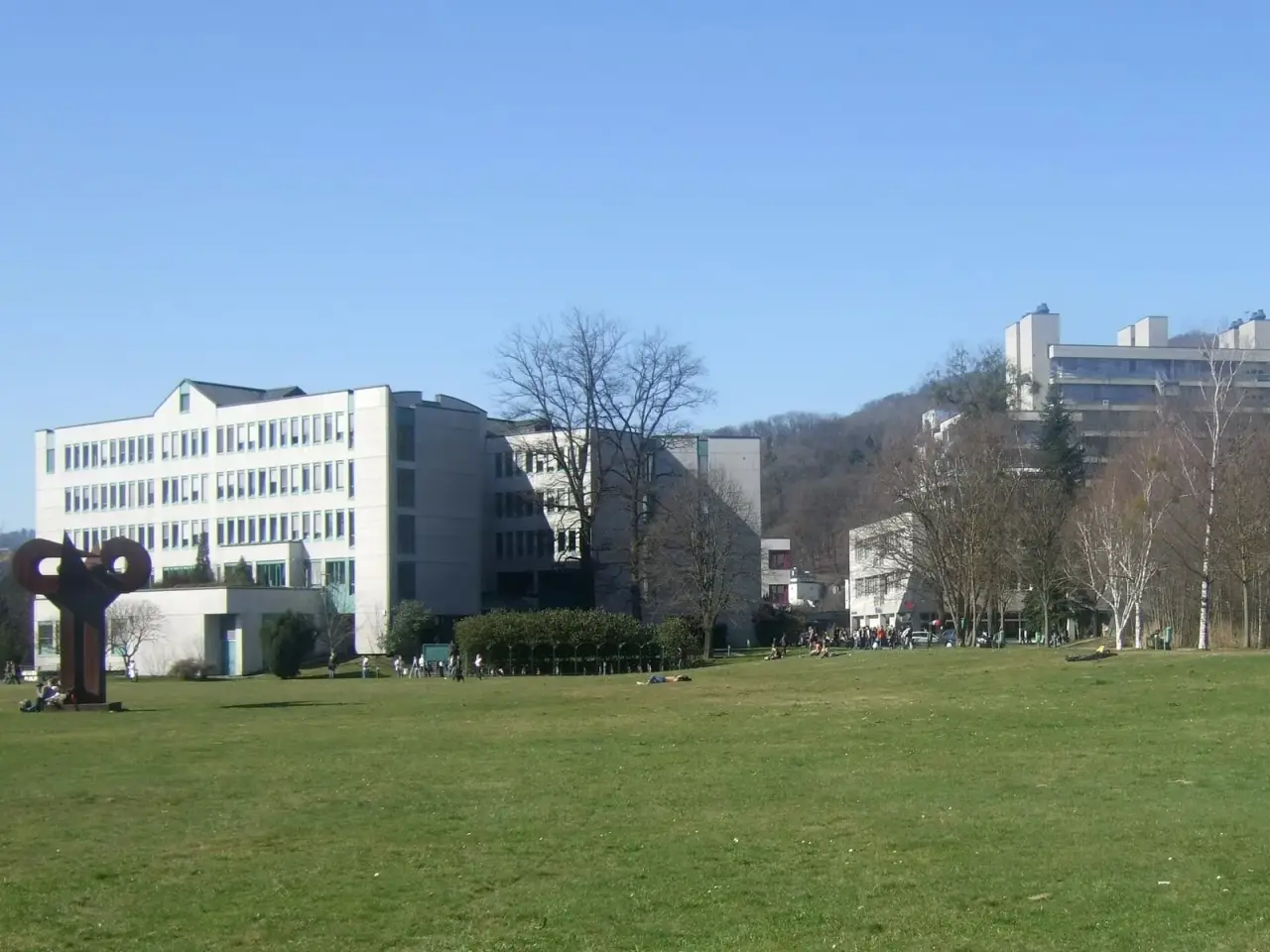
JKU, the Johannes Kepler University, is one of Austria's public universities and the university of Upper Austria's capital. Its Auhof campus is a single site where, the university says, most institutes sit together, and it added a medical faculty in 2014, which the university says made it the first in Austria to offer a medical degree in the bachelor's and master's system. For the city, see the Linz guide.
| Item | What the sources say |
|---|---|
| Founded | 1966 |
| Students, university's own wording | approximately 27,000 students |
| Degree students, Statistik Austria, winter semester 2025/26 | 25,503 students |
| International students, university's wording | over 21% (term not defined) |
| Non-EU citizens among public-university students in Linz, Statistik Austria | About 3,081 (Linz's public universities together: JKU, the University of Art and Design Linz and IT:U; EEA, Swiss and UK nationals included) |
| Structure | 4 faculties and 6 schools |
| English-language courses | more than 1,800 English-language courses a year, according to the university |
| Programmes listing English only | 6 bachelor's programmes; 19 master's programmes |
Faculties and schools
| Unit | Notes from the university's page |
|---|---|
| Faculty of Social Sciences, Economics & Business (SOWI) | Founded 1966 |
| Faculty of Engineering & Natural Sciences (TNF) | Founded 1969 |
| Faculty of Law (RE) | Founded 1975 |
| Faculty of Medicine (MED) | Founded 2014; the MED Campus opened in 2021 |
| Schools | Linz Institute of Technology; Linz School of Education; Business School; Kurt Rothschild School of Economics and Statistics; School of Social Sciences and Humanities (German only); Linz Institute for Transformative Change |
Computer science and artificial intelligence are a particular strength: the university says Austria's first computer science degree began at JKU and that in 2019 it launched what it calls Europe's first academic degree programme in Artificial Intelligence. Engineering, chemistry and polymer science, economics and business, law and sociology fill most of the rest of the list. For rankings of the whole system see how to read Austrian university rankings.
Language of instruction: English at both levels
Unlike TU Graz, Innsbruck and Salzburg, JKU lists English-only bachelor's programmes. I checked the Key Facts of each programme page (28 bachelor's and diploma pages, 38 master's pages). 6 bachelor's programmes give English as the only language, and 19 master's programmes do. Most other bachelor's programmes give German, with B2 or C1 level; several mention individual courses in English.
| Level | Programmes (required English level) |
|---|---|
| Bachelor's | Artificial Intelligence (B2); Biological Chemistry (B2); Chemistry and Chemical Technology (B2); Quantum Science and Technology (B2); Transformation Studies Art x Science (B2); International Business Administration (C1) |
| Master's, computing and maths | Artificial Intelligence; Computer Science; Computational Mathematics; Industrial Mathematics; Statistics and Data Science (all B2) |
| Master's, science and engineering | Chemistry and Chemical Technology; Management in Chemical Technologies; Molecular Biology; Physics; Polymer Engineering and Science; Sustainability and Plastics Management (all B2) |
| Master's, business and social science | Economics; Economic and Business Analytics (B2); Management; Global Business; Leadership and Innovation in Organizations; Comparative Social Policy and Welfare (C1); General Management Austria/France (C1 plus French B1); General Management Austria/Taiwan (C1) |
German remains the main language elsewhere. Human Medicine, Law, Business Administration and Sociology list German at C1; Computer Science at bachelor's level, Mechanical Engineering, Mechatronics and Technical Mathematics list German at B2. Business Informatics offers German or, if you do not speak German, English at B2, and Biophysics lists German/English. For the national picture see English-taught programmes in Austria and, for master's study, master's study in Austria.
Admission for non-EU applicants
JKU sets a separate, early window for non-EU/EEA citizens, stateless persons and third-country nationals who are not treated as nationals under the Personengruppenverordnung: you must apply about six months before the start of study, and an application after the window cannot lead to admission in that semester. The window is the same for bachelor's and master's programmes.
| Start of study | Application window |
|---|---|
| Winter semester | 6 February – 31 March |
| Summer semester | 6 September – 31 October; for a March 2027 start it ends 31 October 2026 |
Create an applicant account
Register once at the JKU to receive a guest account; it only works for the application until you are admitted.
Choose the programme and upload documents
Log in to MyAdmission, select the programme and upload your education records and a portrait photo for the JKU Card. Applying is free and you must apply yourself: applications through an agency are unlawful and not processed.
Upload the rest as PDFs
Passport, school certificate or degree with grades, any university entrance exam or preliminary studies the issuing country requires, and language proof. Documents may be uploaded without legalisation first; originals or certified copies follow only when the Admissions Office asks.
Receive the decision
The result comes as a formal notice. For master's applicants the notice can be positive, positive with a German supplementary exam, with additional courses, or both, and conditions must be met before admission.
Pay the fees
You are officially enrolled only once the ÖH fee and any tuition fee are paid.
Verification depends on the country: documents from listed Hague Convention states need an Apostille, and Türkiye is on JKU's list; documents from other countries need the foreign ministry's verification and the Austrian embassy's. See apostille and translation and admission documents. The page names no Turkish-specific rule, but its document list asks for proof of a university entrance exam or preliminary studies where the issuing country requires one, so read admission requirements and ask the Admissions Office.
Country conditions are strict. A secondary school certificate from Afghanistan or Bangladesh alone cannot get you into a bachelor's programme, and India, Nepal and Pakistan carry grade thresholds. From summer semester 2027 onward, applicants with prior education in Bangladesh, India or Pakistan must complete a VFS Global competence check. The master's page lists conditions for further countries (Algeria, Bangladesh, India, Nepal, Pakistan and others), and for those the completed bachelor's must also be in the same or a closely related subject to the master's, so read it before applying.
- Supplementary examinationErgänzungsprüfung
- An exam you must pass if your school certificate does not fully match the Austrian Matura. JKU can require German, chemistry, history, mathematics or physics; the Admissions Office tells you which after reviewing your documents.
- Pre-study programmeVorstudienlehrgang
- A fee-based programme with German modules (B1, B2, C1) and preparation courses for supplementary exams. You need a letter of admission to enrol, and you cannot yet take courses in your intended major.
German and English requirements
| Route | Level | Examples of accepted proof |
|---|---|---|
| German-taught programme, application | German A2 | ÖSD, ÖIF, Goethe or telc A2, Test DaF, or the JKU A2.2 course |
| German-taught programme, admission | German B2 or C1, set by the programme | Matura, ÖSD/Goethe/telc B2 or C1, Test DaF TDN 3 or 5, or the German supplementary exam |
| English-taught programme | English B2 or C1, set by the programme | IELTS Academic 6.5 (B2) or 7.0 (C1); TOEFL iBT, PTE or Cambridge |
Language certificates may be no older than 2 years at application, except school-leaving certificates, degrees and supplementary-exam proofs. English schooling or degrees count only from the EU, EEA, Switzerland, the UK, the US, Australia, New Zealand or Canada (at least four semesters in English for a degree), so an English-taught degree from Türkiye does not replace a test. See language requirements and preparatory courses.
Human Medicine is the exception to everything above: it is taught in German at C1 and uses the MedAT admission test, which cost €110 in 2026 and was held on 3 July 2026. See entrance exams.
Tuition and fees
JKU applies the statutory fees: €726.72 per semester for third-country degree students with a student residence permit who are not in an equal-status group, otherwise €363.36 per semester after the non-contributory period, plus the ÖH fee of €26.20. Turkey is not on the state exemption list. See tuition fees and mandatory fees.
Campus and student life
The International Welcome Center, in the Bank Building on the ground floor, is the first point of contact for organisational questions about stay and study; it does not give academic advice or take part in admissions. The University Sports Institute offers a wide range of sports classes each semester, and the university lists student residence halls, an accommodation exchange and a Welcome Week.

- Food. Under the ministry's Mensa 2030 programme, in force from 5 October 2026, JKU students get a daily subsidy of 55% on dishes up to €9.90 and 40% on dishes from €9.90 up to €14.90.
- Housing. Linz students averaged €573 per month on housing in the 2025 survey, 34% of their budget, among the lowest shares. See dormitories and shared flats.
- Transport. For students under 26 the Linz MEGA-Ticket costs €89 per semester with a main residence in Linz or Leonding and up to €269.60 per semester otherwise; see student tickets.
- Residence permit. Apply for the student residence permit once you hold the admission decision.
In practice: your first weeks at JKU
Account first, card second. JKU's start guide runs in this order: enrol and pay the ÖH fee, activate your student IT account, register for courses in KUSSS, then use myJKU. Activate the student account only once you have your matriculation number, which starts with a k (for example k12345678); the applicant account you used while applying does not open KUSSS or my.jku.at. At your first KUSSS login you are asked for an e-mail address and must click the confirmation link to activate access.
JKU Card. The Admissions Office issues the card after you have enrolled; it is in the Bank Building, at the outside entrance on the south side across from the car park. Each semester, once the ÖH fee (and any tuition) is paid, you print a new expiry date at a JKU Card terminal, for example on the ground floor of the Bank Building, in the Kepler Building near lecture hall 1 or on the ground floor of Science Park 3. The card is also your library card and works at the copy and scan machines. A replacement after a loss, reported to the Admissions Office in person or by e-mail, costs €15. The digital student ID does not replace the plastic card for computer exams, lockers, access control or printing.

Food and events. Students whose monthly food budget is €170 or less can apply for the Austrian Student Union's Mensa discount (the application is on the ÖH's site, in German); the ministry-backed Mensa 2030 subsidy described under campus life is separate. JKU also points new students to the start-of-year events it announces on its social channels, from preparation courses and info sessions before the semester to the first ÖH Mensa party.
| Topic | What the university's own pages say |
|---|---|
| Registering for courses and exams | KUSSS is where you plan your semester and register for courses; for exercises, courses and seminars, registration for the course also counts as exam registration. Subject exams (Fachprüfungen) need registration in myJKU by the deadline, and e-mail registrations are no longer accepted; withdraw by the third working day before the exam day, only through myJKU (subject exams). |
| Learning platform | Moodle, which supplements KUSSS with forums, course materials and links for submitting assignments; JKU runs several Moodle platforms. |
| Failed exams | 4 attempts for exams of the introductory and orientation phase (StEOP) and 5 attempts for all others, counted across all related programmes at JKU. From the third repetition an exam is held before a panel (not for exercises or equivalent seminars), on request already from the second, and the last repetition always. After the last negative attempt, admission to the programme lapses. |
| No-shows | If you do not withdraw and cannot show a good reason, you cannot register for the next sitting of the same exam. |
Rankings
Times Higher Education's 2027 table places JKU in the 401–450 band and ShanghaiRanking's ARWU 2026 in the 901-1000 band; both were read on the publishers' own pages. Global tables favour older, larger research universities, so use them only as a sanity check.
Practical tips
- Plan about six months ahead: the non-EU window is early, and the winter-semester window opens early in the year.
- Choose English-only programmes if you do not speak German: the Key Facts block says which, and at which level.
- Check the programme's own language level (B2 or C1) before you book a test.
Before you apply to JKU
- Programme page read: language and level confirmed
- Non-EU window for your semester in your calendar, with time to spare
- Education records, entrance-exam proof and language certificate ready as PDFs
- Country-specific conditions and the VFS Global check (if applicable) handled
- Apostille or embassy verification arranged for when the Admissions Office asks
Frequently asked questions
Can I study in English at JKU Linz?
Yes, at both levels. 6 bachelor's programmes and 19 master's programmes list English as their only language, among them Artificial Intelligence, Computer Science, Statistics and Data Science and International Business Administration. Most other bachelor's programmes are taught in German.
When is the application deadline for non-EU students at JKU Linz?
For a winter-semester start the window is 6 February – 31 March, and for a summer-semester start 6 September – 31 October. A later application cannot lead to admission in that semester. The summer-semester 2027 window ends 31 October 2026.
What English level do I need for JKU Linz?
B2 or C1, depending on the programme: for example IELTS Academic 6.5 for B2 and 7.0 for C1. Certificates may be no older than 2 years.
What German do I need for JKU Linz?
German A2 to apply to a German-taught programme, and B2 or C1 for admission depending on the programme. JKU offers fee-based German modules and supplementary exams in its pre-study programme.
Can an agency apply to JKU Linz for me?
No. JKU says applications submitted by an agency or placement organisation are unlawful and will not be processed. You must apply yourself, and applying is free.
How much is tuition at JKU Linz for international students?
€726.72 per semester for third-country students with a student residence permit who are not in an equal-status group, plus the ÖH fee of €26.20. Check the tuition fee guide for exemptions.
Sources
17 sources, 15 official
- Facts & FiguresJohannes Kepler Universität Linz (Official)
- Choose Your Academic Degree ProgramJohannes Kepler Universität Linz (Official)
- Master's Degree ProgramsJohannes Kepler Universität Linz (Official)
- International StudentsJohannes Kepler Universität Linz (Official)
- Language Proficiency in EnglishJohannes Kepler Universität Linz (Official)
- Language Proficiency in GermanJohannes Kepler Universität Linz (Official)
- Supplementary examinations with International Educational QualificationsJohannes Kepler Universität Linz (Official)
- Johannes Kepler University Linz (JKU)OeAD – Study in Austria (Official)
- Johannes Kepler University Linz - World University Rankings 2027 profile (overall rank, read from the page's own data)Times Higher Education (THE) (Institutional)
- Academic Ranking of World Universities 2026ShanghaiRanking Consultancy (Institutional)
- Ordentliche Studierende an öffentlichen Universitäten 2025/26 nach Universität (Tabellenband, Tabelle 1)Statistik Austria (Official)
- Register to Enroll: Bachelor's and diploma degree programsJohannes Kepler University Linz (Official)
- Anmeldung & Zulassung zum MasterJohannes Kepler Universität Linz (Official)
- Ordentliche Studierende an öffentlichen Universitäten im Wintersemester 2025/26 (Tabellenband, Tabellen 1, 4 und 5)Statistik Austria (Official)
- Get Your JKU CardJohannes Kepler Universität Linz (Official)
- Access the JKU's IT ServicesJohannes Kepler Universität Linz (Official)
- Prüfungen: Infos, Termine & AnmeldungJohannes Kepler Universität Linz (Official)