The University of Graz at a glance
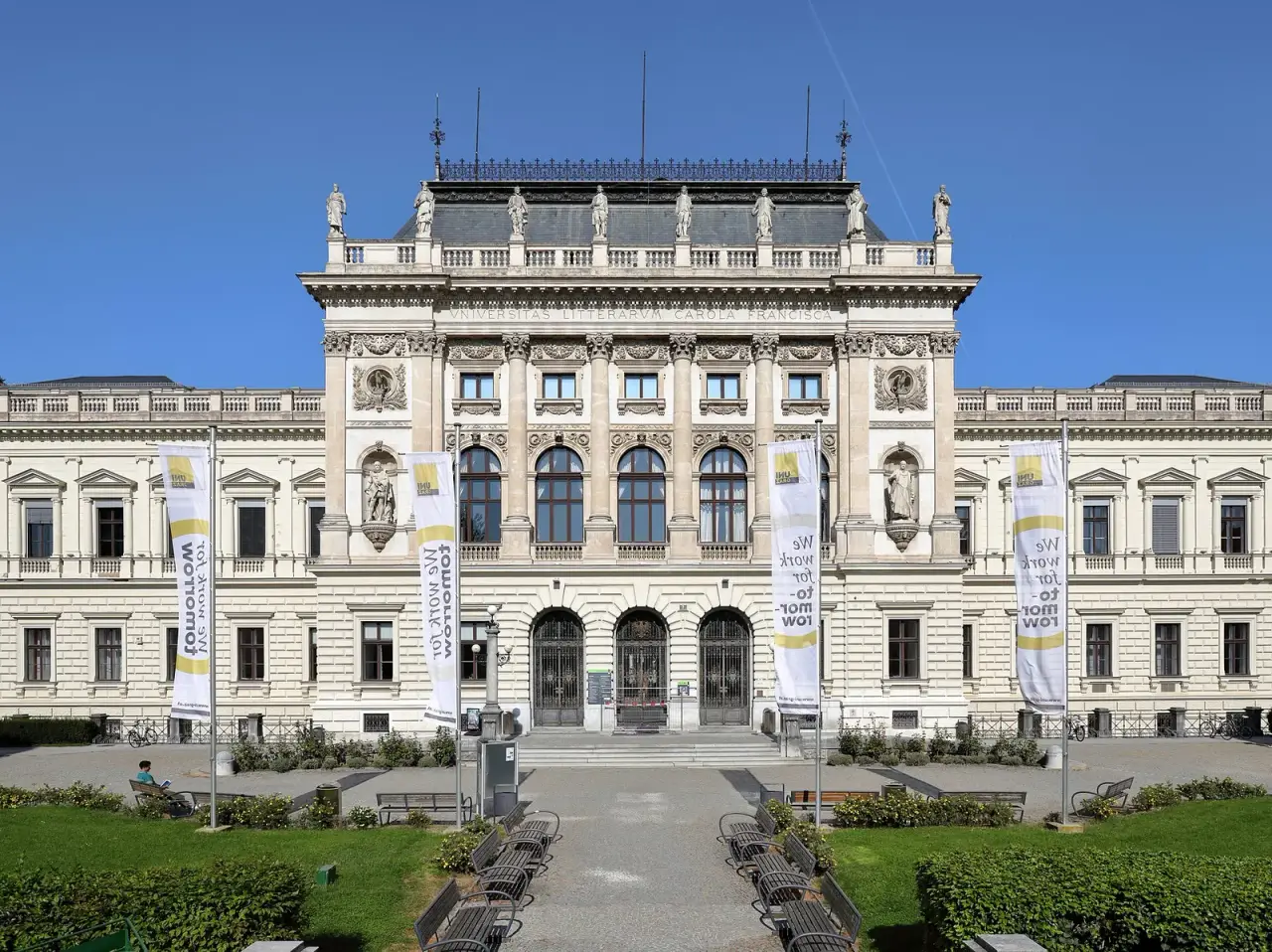
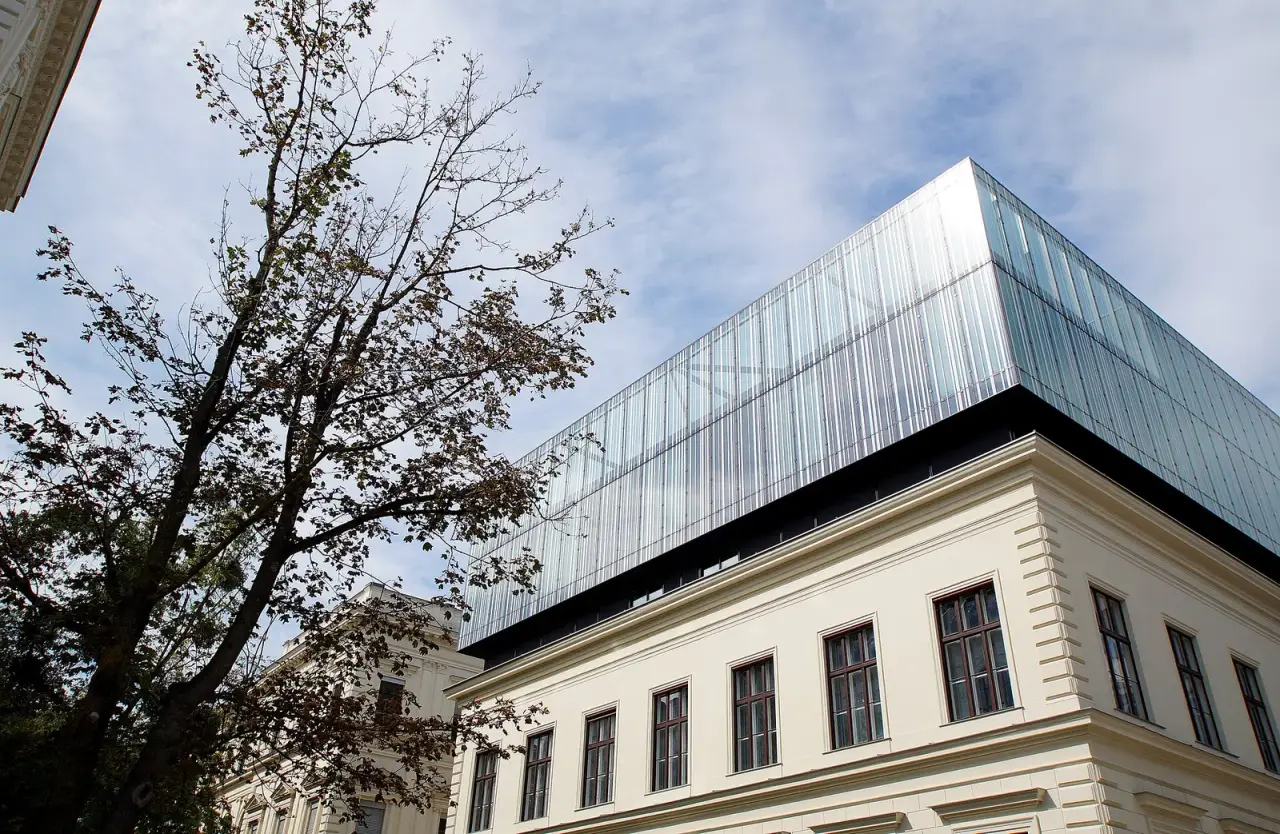
The University of Graz is one of Austria's public universities and describes itself as taking responsibility for the whole region in the south of Austria. It sits near the centre of Graz, Austria's second city, and its campus is a mix of old buildings and modern additions; the library reopened in 2019 after a major remodelling. For city life, see the Graz city guide; Graz also has other universities, among them Graz University of Technology, covered in the TU Graz profile.
| Item | What the sources say |
|---|---|
| Founded | 1585 |
| Students, university's own count, winter semester 2025/26 | over 30,000 students |
| Degree students, Statistik Austria, winter semester 2025/26 | 28,309 students |
| Beginners (first-time students), winter semester 2025/26 | 4,928 students |
| 'International' share, all students (university's definition not stated) | 20.8% |
| 'International' share among beginners | 31.8% |
| Degree programmes (bachelor's, master's, PhD) | more than 120 degree programmes |
| Partner universities | more than 500 partner universities |
The 'international' percentages come from the university's facts page, which does not define the term; it is likely based on citizenship, but that is not stated, so do not read it as a count of students who moved to Austria to study. Public funding dominates the budget: the federal block grant was about 84.5% of the university's 2025 budget (a Scholway calculation from the university's own table).
Faculties and subject areas
The university has six faculties, plus university-wide and cross-faculty service areas. Its facts page adds an interdisciplinary grouping to the faculty rows. The rows overlap and add up to more than the headline total, and the page does not say why, so read each number as a size indication only.
| Faculty or grouping | Students | 'International' share |
|---|---|---|
| Humanities (GEWI) | 7,907 students | 15.1% |
| Natural Sciences (NAWI) | 9,674 students | 20.5% |
| Environmental, Regional and Educational Sciences (URBI) | 5,971 students | 15.6% |
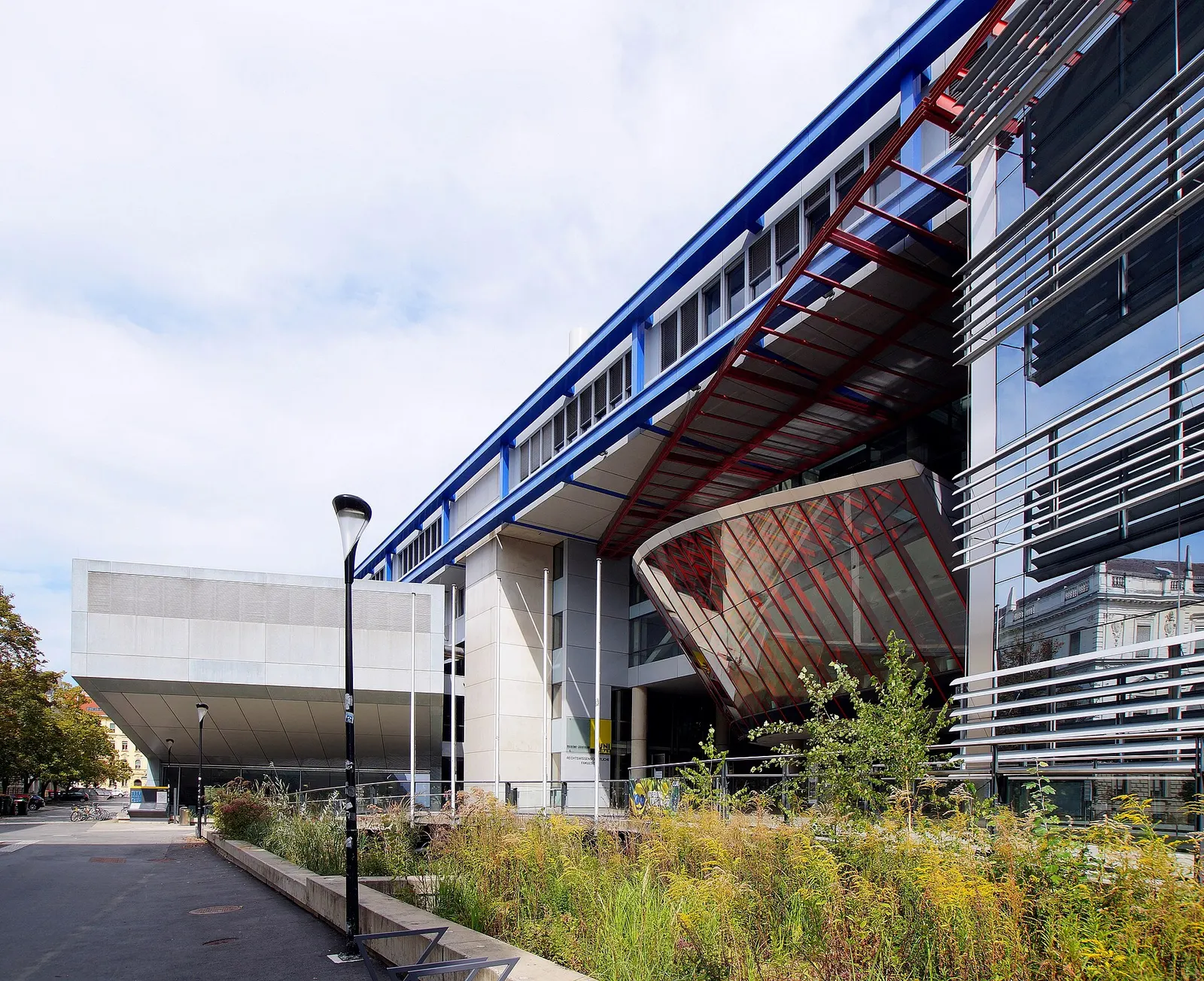
| Law (REWI) | 3,710 students | 11.1% |
| Social and Economic Sciences (SOWI) | 3,553 students | 21% |
| Catholic Theology (THEOL) | 452 students | 12.8% |
| Interdisciplinary studies (ÜBER) | 2,731 students | 22.7% |
Engineering is the domain of Graz University of Technology. The two universities cooperate in NAWI Graz, a joint structure in the natural sciences, so several science master's programmes run across both. Medicine is taught at a separate institution, the Medical University of Graz. If you are choosing between Graz and Vienna for a broad subject range, compare with the University of Vienna profile.
Language of instruction
The admission page is plain: most programmes are taught in German, and all of the bachelor's and diploma programmes are. English-taught study starts at master's level. That settles the first decision for a non-EU applicant: a German-taught degree means German proof with your application, while an English-taught master's means English proof and no German.
| Programme | Degree and size | Start | Notes |
|---|---|---|---|
| Mathematics | Dipl.-Ing., 120 ECTS, 4 semesters, full-time | Summer term 2027 | Taught in English; part of NAWI Graz; needs a subject-relevant first degree |
| English Studies / American Studies | MA, 120 ECTS, 4 semesters, full-time | Summer term 2027 | Taught in English; needs a subject-relevant bachelor's; includes 'Master's Plus' modules |
| Data Science | Dipl.-Ing., 120 ECTS, 4 semesters, full-time | Summer term 2027 | Taught in English; NAWI Graz with Graz University of Technology; builds on bachelor's degrees in mathematics, computer science or listed related subjects |
The admission page lists further English-language NAWI Graz master's programmes: Advanced Materials Science, Biotechnology, Chemical and Pharmaceutical Engineering, Chemistry, Technical Chemistry and Data Science. It also lists several joint master's programmes with their own application processes, including the Arqus joint master's in European Studies and a joint international master's in Sustainable Development. A programme offered in both German and English requires you to state your preferred language in the application form; otherwise the university checks for German proof automatically. For how English-taught degrees differ in general, see English-taught programmes in Austria.
German and English requirements
| Route | Needed with the application | Needed to start |
|---|---|---|
| German-taught degree | German at least A2; applications without it are rejected immediately and cannot be repaired | German C1 |
| German-taught degree with A2-B2 only | A2 to B2 certificate no older than 2 years | Admission to the preparatory programme and the supplementary German exam (EPD), then C1 |
| English-taught master's | English C1, for example IELTS Academic 7.0 | English C1 |
A German C1 certificate may be no older than 5 years for the dated test certificates, and the same limit applies to the dated English certificates. The university offers no language courses itself, so you must obtain the A2 certificate that allows you to apply from an outside provider. If your previous education was in English and your official Diploma Supplement confirms English as the language of instruction, no separate English certificate is needed; a confirmation letter from your university does not count. If the Diploma Supplement does not say so, submit one of the accepted tests. The language requirements article and the preparatory course article explain the wider rules.
- Preparatory programmeVorstudienlehrgang (VGUH)
- The pre-study programme of the Graz universities. Applicants admitted with only A2 to B2 German attend it to prepare for the supplementary German exam (EPD); the university's page also mentions courses in subjects such as biology or mathematics for applicants whose prior education is judged insufficient.
How to apply as an international applicant
If you did not complete your school-leaving certificate or degree in Austria you count as an international prospective student, even if you hold Austrian citizenship. Your qualification must be checked, which takes longer than for Austrian certificates, and the university may need translations and certifications; see documents for admission and apostille and translation.
| Applicant group | Window |
|---|---|
| Non-EU/EEA nationals, bachelor's, diploma and master's without admission procedure | 16 November to 14 December 2026 |
| EU/EEA nationals, bachelor's/diploma | 1 December 2026 to 18 January 2027 |
| EU/EEA nationals, master's | 7 January to 15 March 2027 |
| English-language NAWI Graz master's (admission procedure, academic year 2027/28) | 15 October to 15 December 2026 |
The page does not name the intake the first three windows belong to; it notes that the summer semester starts on 1 March 2027 and urges applicants to submit as soon as possible. Another university page still showed 2026 windows for non-EU applicants that had already closed, so use the admission page and confirm dates before you plan. Doctoral programmes each set their own deadlines.
Create a basic account
Register with name, date of birth and e-mail address at the university's online portal. If you completed school or university abroad, choose the matching foreign qualification code in the form.
Create your application
Select the degree programme, enter personal data including citizenship, and upload documents. Leave the matriculation number blank if you have never studied at an Austrian university.
Wait for the decision
The review can take several weeks to months. The outcome may be an acceptance letter, a request for missing documents within a deadline, admission to the preparatory programme, or a refusal.
Send the enrolment application
After acceptance, download the application for enrolment, sign it (mobile signature or handwritten) and e-mail it to the study department.
Pay the fees
Enrolment is completed when the ÖH contribution or tuition fee has been paid. Students from outside the EU/EEA/Switzerland pay a different tuition rate; see tuition fees in Austria and mandatory fees.
Activate your student account and card
Use the PIN code you receive to activate the student account and set up multi-factor authentication, then apply for the UNIGRAZcard student ID.
A non-EU applicant still needs a residence permit for study, and the admission decision is part of that process, so read the student residence permit guide and the application timeline together. The university's Welcome Center offers help with residence planning (residence permit, visa), admission and starting your studies.
Programmes with an admission procedure
Some programmes have limited places or require particular knowledge or skills, and they run a separate admission procedure once a year. For bachelor's and diploma study these are Biology, Molecular Biology, Pharmaceutical Sciences, Psychology and Law; for the 2026/27 cycle the registration window was 2 March (9 am) to 4 May 2026 (6 pm). The procedure costs €50 per degree course, is held in German and applies for the whole academic year. Teacher training has an aptitude procedure with an online part and an exam in July, sports science requires a motor-skills exam, and language programmes such as Romance Studies or Slavic Languages and the bachelor's in English/American Studies use placement tests at the start of the semester. Dates change every year, and a missed window usually means waiting for the next one.
Tuition and fees
Tuition at public universities is set by law and applies the same way in Graz. Third-country degree students with a student residence permit pay €726.72 per semester, the standard rate is €363.36 per semester, and every student pays the ÖH contribution of €26.20 each semester. Turkey is not among the states exempted by the Studienbeitragsverordnung. The university's own wording says that students from outside the EU/EEA/Switzerland pay comparatively low fees. Costs of living in the city are covered in the Graz guide and the cost-of-living guide.
Student life and support
- International network. The university says it has more than 500 partner universities, and Erasmus+ can fund a semester or internship abroad. Its career centre supports the transition into work.
- Welcome Center. It supports international students with residence planning, admission and the start of study.
- Campus. The campus is near the city centre and reachable on foot, by bike or by bus, according to the university.
- Housing. The university does not set housing; start with finding housing before you arrive.
In practice: your first weeks at the University of Graz
Before you arrive. The Welcome Center offers online info sessions for international (master's) students in English on Zoom, with no registration needed: “Studying & living in Graz” (about an hour, on course registration, key contact points, finding accommodation, health insurance and registering your place of residence), “Residence permit for students” and “Course registration for international students”. When we read the page, new dates were still to be announced.
UNIGRAZcard. Order the card in your UNIGRAZonline account (“Apply for student ID card”) only after your tuition and ÖH membership fee have been paid, and upload a high-resolution passport-format photo first. You can choose kiosk pick-up, which gives you a QR code to issue the card yourself in the University Library foyer, or collect it from the office by appointment with an official photo ID (passport, ID card or driving licence). The card is your student ID and your library card. To activate it, extend its validity, use the copying function and have the ÖH mark printed on it, which gives low-priced meals at the canteen, you need the Service-Point at the ÖH-Servicecenter, Schubertstraße 6. Only the first issue is free: a replacement costs €15.
Wi-Fi. The university takes part in eduroam, which you use with your UNIGRAZonline access data. Its IT service recommends installing the connection with the geteduroam or eduroamCAT tools rather than typing the settings by hand; if you do configure it manually, connect only when one of the authentication servers listed on its Wi-Fi page appears at first connection.
| Topic | What the university's own pages say |
|---|---|
| Registering for courses | In UNIGRAZonline you plan under “Mein Studium” and “Meine Planung”, then register during the registration period; depending on the course you get a fixed place at once or a waiting-list place. The university tells first-semester students to check that they have registered for all STEOP courses. |
| Learning platform | Moodle, listed with UNIGRAZonline under Learning on the IT services page. |
| Failed exams | 4 attempts in total (5 attempts in NAWI Graz cooperation degrees with TU Graz), plus one further repetition for the last exam of the degree. A single-sitting exam is held before a panel from the second repetition on request and always from the third. |
Rankings
In THE's 2027 World University Rankings the University of Graz is placed at 501–550, and in ShanghaiRanking's ARWU 2026 in the 401-500 band; both figures were read on the publishers' own pages. Global tables weight research output and reputation, so use them only to sanity-check a shortlist; see how to read Austrian university rankings.
Practical tips
- Decide the language route first. A German-taught degree needs German certificates before you can even submit an application.
- For English-taught science masters, check whether the programme belongs to NAWI Graz; the admission procedure for those is handled by Graz University of Technology and has its own window.
- If your programme is one with a once-a-year admission procedure, register in that window; a missed registration usually costs a year.
- Allow time for document checks. Review of an international application can take several weeks to months.
Before you apply
- Programme page read: language of instruction and admission route noted
- German A2 or higher certificate in hand for German-taught programmes, or C1 English proof for English-taught master's
- Certificates legalised and translated as required
- Application window and any admission-procedure window in your calendar
- Tuition, ÖH contribution and living costs covered in your financial proof
Frequently asked questions
Can I study in English at the University of Graz?
Yes, from master's level. Programmes such as Mathematics, English Studies/American Studies and Data Science are taught in English, and you need English proof at C1 level (IELTS Academic 7.0, for example). The bachelor's and diploma programmes are all taught in German.
What German level do I need for the University of Graz?
To apply to a German-taught programme you need a certificate showing at least A2; to start you need C1. If you only have A2 to B2, you are admitted to the preparatory programme and must pass the supplementary German exam first.
When is the application deadline for non-EU students at the University of Graz?
The admission page showed 16 November to 14 December 2026 for non-EU/EEA applicants to programmes without an admission procedure, and notes that the summer semester starts on 1 March 2027. Programmes with an admission procedure use a separate yearly window, so check the page for your programme.
How many students does the University of Graz have?
The university says it has over 30,000 students. Statistik Austria counted 28,309 students degree students in winter semester 2025/26. The numbers differ because they count different groups.
Is there an entrance exam at the University of Graz?
For some programmes. Biology, Molecular Biology, Pharmaceutical Sciences, Psychology and Law have an admission procedure, as do teacher training and sports science. The procedure fee is €50 per degree course, and it is held in German.
Sources
20 sources, 18 official
- About the UniversityUniversity of Graz (Official)
- Facts & FiguresUniversity of Graz (Official)
- FacultiesUniversity of Graz (Official)
- Internationals (admission and deadlines)University of Graz (Official)
- Language Certificates – International StudentsUniversity of Graz (Official)
- Study international – Welcome CenterUniversity of Graz (Official)
- Master programme MathematicsUniversity of Graz (Official)
- Master programme English Studies/American StudiesUniversity of Graz (Official)
- Master programme Data ScienceUniversity of Graz (Official)
- University of GrazOeAD – Study in Austria (Official)
- Ordentliche Studierende an öffentlichen Universitäten 2025/26 nach Universität (Tabellenband, Tabelle 1)Statistik Austria (Official)
- University of Graz - World University Rankings 2027 profile (overall rank, read from the page's own data)Times Higher Education (THE) (Institutional)
- Academic Ranking of World Universities 2026ShanghaiRanking Consultancy (Institutional)
- UNIGRAZcardUniversität Graz, Studies Department (Official)
- UNIGRAZcard: General informationUniversität Graz, Studies Department (Official)
- WIFI (eduroam)Universität Graz, IT services for students (Official)
- Information for new international students: online sessions before the arrivalUniversität Graz, Welcome Center (Official)
- Satzungsteil Studienrechtliche Bestimmungen, Mitteilungsblatt der Universität Graz, 22.a Stück (18 March 2026)Universität Graz (Official)
- Lehrveranstaltungsanmeldung (Erstes Semester)Universität Graz (Official)
- IT services (Learning: UNIGRAZonline, Moodle, uniPAD, uniTUBE)Universität Graz, IT services for students (Official)