TU Wien at a glance
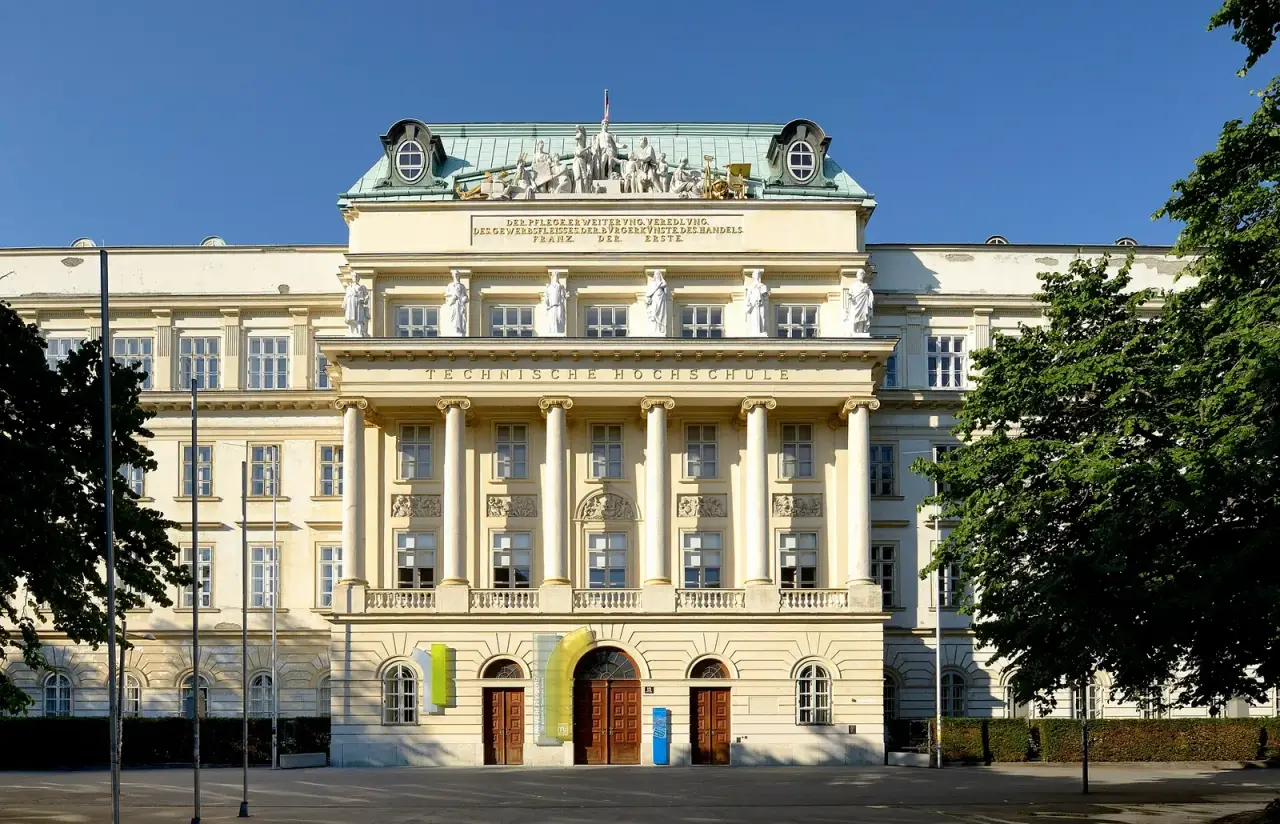
TU Wien (Technische Universität Wien) is one of Austria's public universities and one of two institutions named Technische Universität in the ministry's list, alongside TU Graz. It is organised into eight faculties covering architecture, engineering, informatics, mathematics, physics and chemistry. It opened in 1815 as a polytechnic institute and became a technical university in 1872, according to its own history page.
| Item | What the sources say |
|---|---|
| Founded | 1815 (Imperial and Royal Polytechnic Institute; technical university from 1872) |
| Students, university's description | more than 26,000 students in 62 degree programmes |
| Degree students, Statistik Austria, winter semester 2025/26 | 26,102 students |
| Faculties | 8 faculties |
| Campus sites | Six sites named on the campus page: Karlsplatz, Freihaus, Getreidemarkt, Gußhaus, the Atominstitut and the Science Center at the Arsenal |
| English-taught master's programmes | 26 programmes on the university's own list (read 24 October 2026) |
| Bachelor's programmes listed | 13 programmes, generally taught in German |
Faculties and programme areas
| Faculty | Examples from TU Wien's programme lists (Scholway's grouping by name) |
|---|---|
| Architecture and Planning | Architecture and spatial planning |
| Civil and Environmental Engineering | Civil Engineering; Environmental Engineering; Digital Civil Engineering Science |
| Electrical Engineering and Information Technology | Electrical Engineering; Information and Communication Engineering |
| Informatics | Computer Science; Business Informatics; Data Science; Software Engineering |
| Mechanical and Industrial Engineering | Mechanical Engineering; Manufacturing and Robotics; Aeronautical Engineering |
| Mathematics and Geoinformation | Technical Mathematics; Geodesy and Geoinformation; Financial and Actuarial Mathematics |
| Physics | Technical Physics |
| Technical Chemistry | Technical Chemistry; Chemical and Process Engineering |
The bachelor's page lists 13 programmes, from Architecture, Informatics and Spatial Planning (marked limited places) to Civil, Electrical and Mechanical Engineering, Technical Chemistry, Technical Mathematics and Technical Physics, Environmental Engineering, and Chemical and Process Engineering. It states that bachelor's programmes are generally taught in German and names no English-taught bachelor's.
English-taught programmes
English is the route into TU Wien for most non-EU applicants without German. On the university's page of English-taught master's programmes, read on 25 October 2026, there were 26 programmes. Examples from the list:
| Programme | Field (Scholway's grouping) or note on the list |
|---|---|
| Data Science | Informatics |
| Software Engineering | Informatics |
| Visual Computing | Informatics |
| Business Informatics | Informatics |
| Logic and Artificial Intelligence | Informatics |
| Aeronautical Engineering | Mechanical engineering |
| Manufacturing and Robotics | Mechanical engineering |
| Information and Communication Engineering | Electrical engineering |
| Technical Physics; Technical Chemistry | Natural sciences |
| Building Sciences and Environment | Marked on the list as a selection procedure |
| Double Degree Logic and Computation | With Leibniz University Hannover |
| Double Degree IT Security | With TU Darmstadt |
Three programmes on the list require a selection procedure: Building Sciences and Environment, Digital Civil Engineering Science and Green Chemistry. Several are interfaculty or interuniversity, and two are double degrees with partner universities. Cartography is an Erasmus Mundus programme and Interdisciplinary Mathematics is linked to Erasmus+. Because the list moves, always open the programme page itself to confirm the language and the admission route; see English-taught programmes in Austria for the national picture and master's study in Austria for how master's admission works.
Admission for non-EU applicants
TU Wien runs its own admission process rather than a central portal. Electronic applications are not accepted: you send certified copies by post (not originals), and documents not in German or English need official translations. The Admission Office accepts a maximum of 2 applications per person, and states a processing time of 10–12 weeks for applications with an international school-leaving certificate, with no status updates before that time has passed.
| Semester | Non-EU/EEA application window | Master's admission period, enrolment |
|---|---|---|
| Winter semester 2026/27 | 16 January – 15 July 2026 | 6 July to 31 October 2026 |
| Summer semester 2027 | 16 July 2026 – 15 January 2027 | 7 January to 31 March 2027 |
Late or incomplete applications may only be admitted for the following semester, so the application window is the date to work to, not the enrolment deadline. The window is the university's recommendation for submitting a complete application. If you hold a foreign school-leaving certificate, the bachelor's route is described in admission documents and deadlines; legalisation is explained in apostille and translation.
Master's with a bachelor's from another university
A master's applicant needs a relevant bachelor's degree or equivalent from a recognised institution comprising at least 180 ECTS. Documents are the signed application form, a legalised copy of the degree document with official translation, the diploma supplement and transcript, and a passport copy. English-taught programmes require B2 English as a legalised copy; German-taught ones require A2 and/or C1 German. Some programmes add items, for example a portfolio of up to 15 pages for Architecture. If TU Wien finds subject differences, admission can be conditional on supplementary exams; its published practice is that it will cover differences of up to 30 ECTS credits ECTS, and above that admission is not possible. Prescribed supplementary exams such as German must be passed before admission as a degree student and can be taken at the University Preparation Programme (VWU); see the preparatory course article.
Entrance exams and selection
Create a TISS guest account
Pre-registration for bachelor's programmes is done online through TISS, TU Wien's system. For entrance-exam programmes you also register for the exam at this step.
Know which programmes have an exam
Computer Science, Architecture and Spatial Planning have limited places and require an entrance exam. For other bachelor's programmes the university describes a 'Programme PRe-Phase' instead. Both must be completed in addition to the application and before personal enrolment.
Submit your application documents by post
Applicants with an international certificate send the application within the window above; the university may require supplementary exams in mathematics, chemistry or physics for some programmes.
Enrol
After passing the exam, enrolment for entrance-exam programmes is online only. For programmes without an exam you enrol in person at the Admission Office during the admission period.
Some programmes also require descriptive geometry: for certain programmes (for example Architecture, Civil Engineering and Mechanical Engineering) the university asks you to prove at least four hours per week of descriptive geometry after the eighth school year, and geometric drawing does not substitute. Check entrance exams in Austria and admission requirements for the general rules.
Tuition and fees
As a public university TU Wien charges the statutory fee: €726.72 per semester for third-country degree students holding a student residence permit, otherwise €363.36 per semester. Turkey is not on the state list exempting citizens from tuition. The ÖH fee of €26.20 per semester is added for everyone. See tuition fees for exemptions and refunds. The VWU preparatory courses carry a separate course fee.
Campus and student support
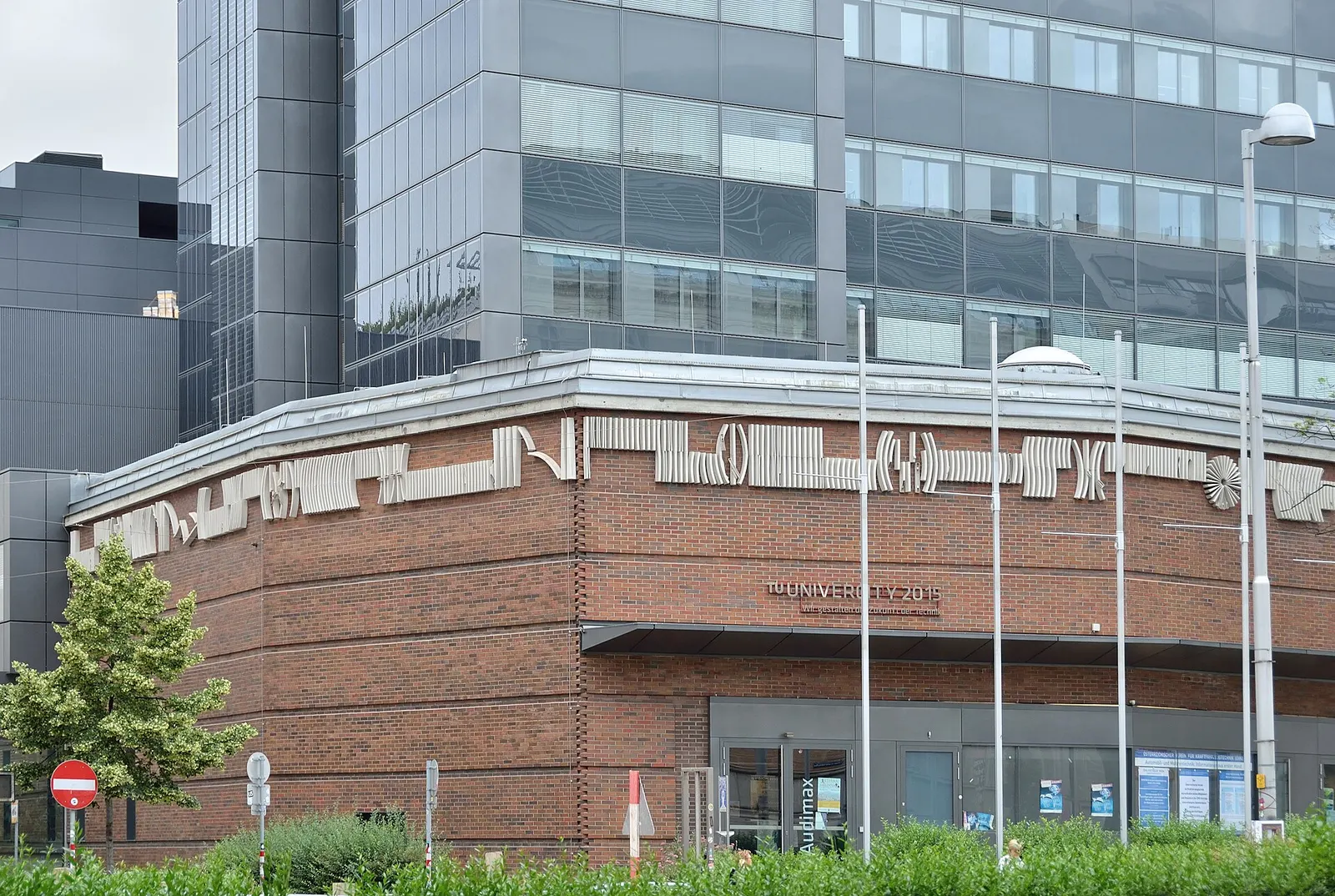
TU Wien is an inner-city university rather than a single campus. The main building is at Karlsplatz 13 (1040), with Campus Freihaus at Wiedner Hauptstraße 8-10 (1040), Campus Getreidemarkt at Getreidemarkt 9 (1060) and Campus Gußhaus at Gußhausstraße 25-27 and Favoritenstraße 9 (1040). The Atominstitut is at Stadionallee 2 (1020) and the Science Center is at the Arsenal in the 3rd district. Its calendar of lecture-free periods for 2026/27 is in the academic calendar guide.

- International Welcome and Engagement Center (IWEC). Provides advising and programming for international degree-seeking students; the university's page gives a contact address but no detailed list of services.
- HTU (student union). The official student representation. Its department for international students (AuRef) helps third-country students with fees, visas and housing.
- Support for new students. A mathematics adjustment course (AK MATH), a mentoring programme, first-year tutorials, a monthly coffee hour for international students and a TU Career Center.
- Study support. An ombudsperson's office, psychological counselling, barrier-free studying services and roomTUlearn study rooms at TU Wien locations.
- Sport. The support page mentions sports at the TU; we did not read details of the sports offer, so check that page before arriving. The library is covered under In practice below.
For housing see accommodation in Vienna and the Vienna city guide.
In practice: your first weeks at TU Wien
Orientation for international degree students. The International Welcome and Engagement Center (IWEC) runs an in-person orientation at the start of term. The winter semester 2026/27 session was 7 October 2026, 17:00–19:00, Repräsentationsraum Getreidemarkt, Getreidemarkt 9, 1060 Vienna; registration was required. It covered IWEC's advising appointments, how to complete enrolment, the main university services and tips for everyday life in Vienna, with time to meet other international students. IWEC's events list adds workshops and excursions through the semester.
Getting your TUcard. The Admission Office issues the TUcard during your personal enrolment at Karlsplatz 13, Stiege 1, ground floor; its front office is open Monday, Tuesday and Thursday 9:30–12:00; Wednesday 13:30–16:00. Upload your photo during the online registration, because the office cannot take or upload one; TU Wien recommends doing the registration on a personal computer. Once the semester's fee is paid, the validity date on the back runs to 31 March for the winter semester and 31 October for the summer semester, and you extend it yourself at a TUcard kiosk. The TUcard is an official photo ID but does not show nationality, so not every authority accepts it as proof of identity. A replacement for a lost card costs €15 (no fee if it was faulty, illegible or issued with wrong details) and needs a loss report to the Magistrat or a theft report to the police.
Library and Wi-Fi. Your valid TUcard becomes your library card once you accept the library regulations in TISS (Organisation tab, then Library). It also opens the lockers where coats and bags must be left; food and open drinks may not be taken into the library. Most media are lent for 4 weeks, up to 30 items at once, and silent-study desks are on the 2nd to 4th floors. Students have WLAN throughout the library via eduroam or TUnet.
| Topic | What the university's own pages say |
|---|---|
| Registering for courses and exams | TISS is where you register for courses and exams and plan your studies. Exam sign-up works only within the set deadlines; withdraw at least two working days before the exam day, in writing or electronically to the examiner (to the Studiendekan for commission exams). |
| Learning platform | TUWEL, which TU Wien calls its central e-learning platform. |
| Failed exams | 5 attempts in total (four retakes). For a single-sitting exam the third and fourth retake are held before a panel. Exams of the introductory and orientation phase (StEOP) allow three retakes, and the last exam of a degree one further attempt. |
| No-shows | Missing an exam without withdrawing can bar you from the next sitting unless you show a good reason. |
| Final exam | Where the curriculum prescribes a commission final exam (Abschlussprüfung), you register within the set deadline, and the examiners and exam days must be announced at least three weeks before. |
Rankings
We did not read any ranking publisher's page first-hand for TU Wien, so we state no ranks. See the rankings article for how to read them.
Practical tips
- Choose master's first if you do not speak German. The bachelor's route needs German for the programme and, for limited-place programmes, for the entrance exam.
- Post time counts: documents travel by post and processing is quoted at 10–12 weeks, so submit at the start of the window, not the end.
- Check descriptive geometry and maths, physics or chemistry requirements for your school-leaving certificate early; they can lead to required supplementary exams.
- Weigh TU Wien against Fachhochschulen if you want a fixed timetable and compulsory internship rather than a research-oriented technical university.
- Start the residence-permit process as soon as you have an admission decision; see the student residence permit.
Before you apply to TU Wien
- Programme page open: language of instruction and selection procedure confirmed
- Non-EU application window for your semester in your calendar
- Legalised and translated degree documents ready for posting
- English B2 (English-taught) or German A2/C1 (German-taught) proof in hand
- Supplementary subject requirements checked against your certificate or bachelor's
Frequently asked questions
Does TU Wien teach in English?
Yes, mainly at master's level: the university lists 26 programmes English-taught master's programmes. Its bachelor's programmes are generally taught in German, and no English-taught bachelor's is named on its bachelor's page.
What German level does TU Wien require?
For regular admission to German-taught bachelor's and master's programmes TU Wien requires C1, with the certificate no older than 2 years from the exam date. English-taught master's programmes require B2 English instead.
When can non-EU students apply to TU Wien?
For winter semester 2026/27 the window was 16 January – 15 July 2026, and for summer semester 2027 it is 16 July 2026 – 15 January 2027. Late or incomplete applications may only be admitted for the following semester.
Can I apply to TU Wien online?
No: TU Wien does not consider electronic applications. You send certified copies by post, and the Admission Office quotes about 10–12 weeks for processing. Bachelor's pre-registration, however, goes through its TISS system.
Is there an entrance exam at TU Wien?
For bachelor's programmes with limited places (Computer Science, Architecture, Spatial Planning) yes, and the tests are in German. Three English-taught master's programmes require a selection procedure: Building Sciences and Environment, Digital Civil Engineering Science and Green Chemistry.
How much is tuition at TU Wien for international students?
The statutory fee is €726.72 per semester for third-country students with a student residence permit, plus the ÖH fee of €26.20. Turkey is not on the exemption list. Check the tuition fee guide for reductions.
Sources
21 sources, all official
- About TU Wien (read 25 October 2026)TU Wien (Official)
- History of TU Wien (read 25 October 2026)TU Wien (Official)
- CampusTU Wien (Official)
- Bachelor's programmesTU Wien (Official)
- Student SupportTU Wien (Official)
- International Welcome and Engagement Center (IWEC)TU Wien (Official)
- Admission to a master's programme with another (inter)national bachelor's degreeTU Wien (Official)
- Admission with an international school-leaving certificate (read 25 October 2026)TU Wien (Official)
- Vienna University of Technology (TU Wien)OeAD – Study in Austria (Official)
- English-taught Master's ProgrammesTU Wien (Official)
- Zulassung mit Bachelorabschluss einer anderen nationalen oder internationalen Universität/FHTU Wien (Official)
- Admission with an International School Leaving CertificateTU Wien (Official)
- Academic Calendar (Admission Periods for the Academic Year 2026/27)TU Wien (Official)
- Deutschkenntnisse (Zulassung mit internationalem Reifezeugnis)TU Wien (Official)
- Ordentliche Studierende an öffentlichen Universitäten im Wintersemester 2025/26 (Tabellenband, Tabellen 1, 4 und 5)Statistik Austria (Official)
- In-Person Orientation for International Degree-Seeking Students (7 October 2026)TU Wien, International Welcome and Engagement Center (IWEC) (Official)
- TUcard (student ID card)TU Wien, Admission Office (Official)
- Library card and library accountTU Wien Bibliothek (Official)
- Using the library: 10 basicsTU Wien Bibliothek (Official)
- Studying SuccessfullyTU Wien (Official)
- Satzungsteil Studienrechtliche Bestimmungen (Mitteilungsblatt Nr. 20/2024 vom 29.05.2024)TU Wien, Senat (Official)