Graz is the main alternative to Vienna: after Vienna it has the most public-university students of any Austrian city, 41,604 students in winter semester 2025/26, spread over the University of Graz, TU Graz, the Medical University of Graz and the University of Music and Performing Arts. Two Fachhochschulen add to that. It is far smaller than Vienna (306,971 residents against 2,040,914) and, on the survey's housing figures, cheaper. This page covers what is specific to Graz; the comparison of all student cities is in the city comparison.
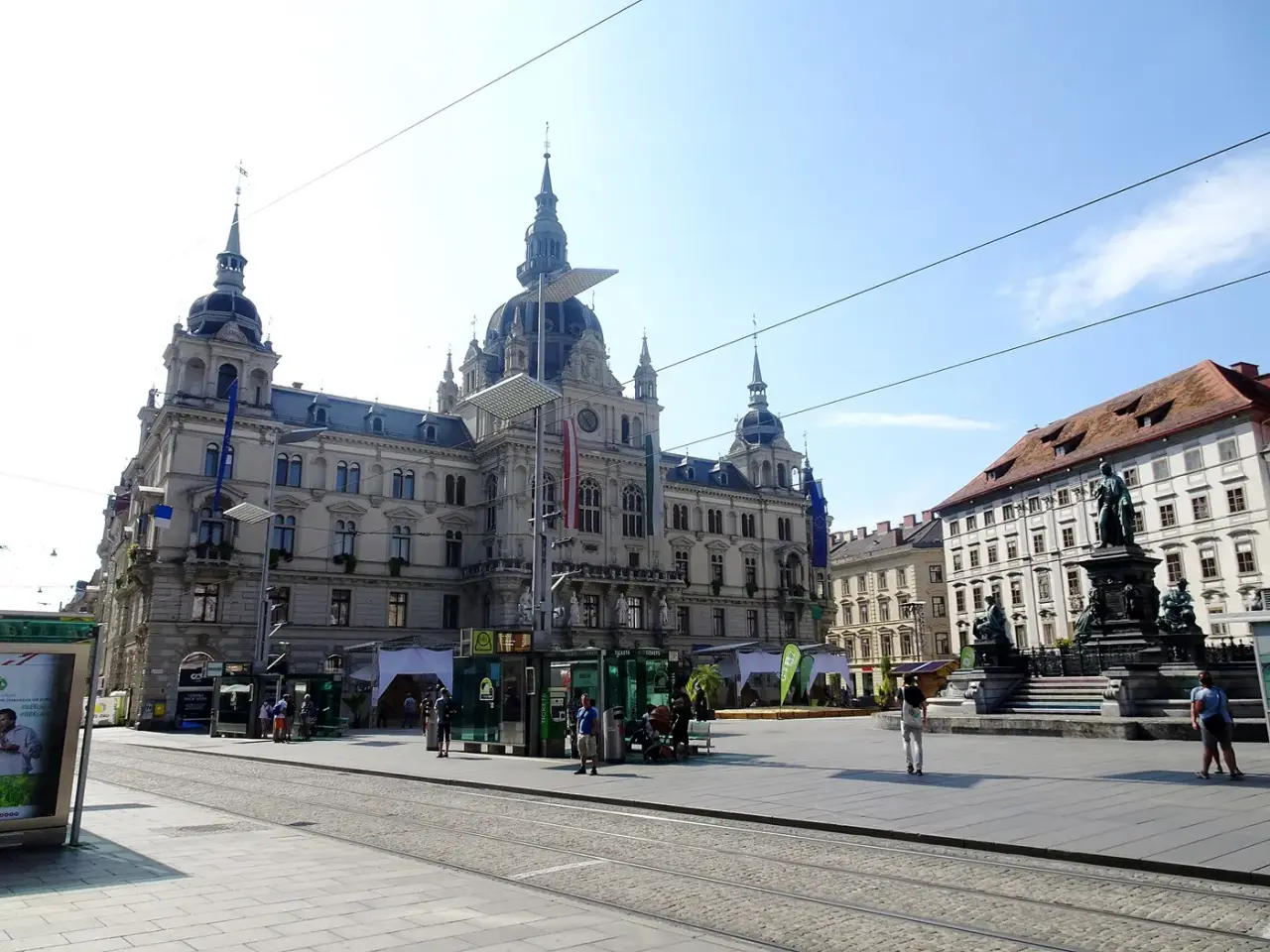
Universities and Fachhochschulen in Graz
Study in Austria describes the University of Graz as Austria's second oldest and second largest university and says almost 20% of Graz's inhabitants are students. The table gives the size of each institution; public-university figures are degree students in winter semester 2025/26 (Statistik Austria) counted by university, so they add up to more than the 41,604 place-of-study total, which counts each student once.
| Institution | Type | Students | What it is known for |
|---|---|---|---|
| University of Graz | Public university | 28,309 students | Six faculties: humanities, business and social sciences, Catholic theology, environmental, regional and educational sciences, law, natural sciences |
| TU Graz | Public technical university | 16,819 students | Seven faculties from architecture and civil engineering to computer science; research-oriented master's programmes, some taught in English |
| Medical University of Graz | Public university | 5,246 students | Medicine, dentistry, nursing science and interprofessional health studies |
| University of Music and Performing Arts Graz (KUG) | Public arts university | 2,025 students | Music, jazz, opera, drama and stage design; a second campus at Oberschützen |
| FH JOANNEUM | Fachhochschule | 5,673 students across Graz, Kapfenberg and Bad Gleichenberg | Engineering, health studies, media and design, applied computer science, management, building and energy |
| FH CAMPUS 02 | Fachhochschule | 1,462 students | Business and technical programmes, mostly in German, with an English-language bachelor's in Smart Automation |
- NAWI GrazNAWI Graz (Naturwissenschaften Graz)
- A cooperation between the University of Graz and TU Graz with joint degree programmes in chemistry, molecular and technical biosciences, mathematics, physics and geosciences. Statistik Austria counts a student enrolled at more than one university once in the city total, so the institution rows above add up to more than that total.
- FachhochschuleFachhochschule (FH, university of applied sciences)
- A higher education institution that offers practice-based professional education at university level and awards bachelor's and master's degrees, but no doctorates. Fachhochschulen set their own application procedures and, for third-country students on a Student permit, their own fees.
Of the 41,604 public-university students, 4,144 hold a citizenship outside the EU (Scholway's subtraction from Statistik Austria's tables; Turkey is among those countries). Public universities are the largest group, but FH JOANNEUM and CAMPUS 02 matter if you want a practice-oriented vocational programme; the sector is explained in the guide to Fachhochschulen, and the two big universities have their own pages: University of Graz and TU Graz.
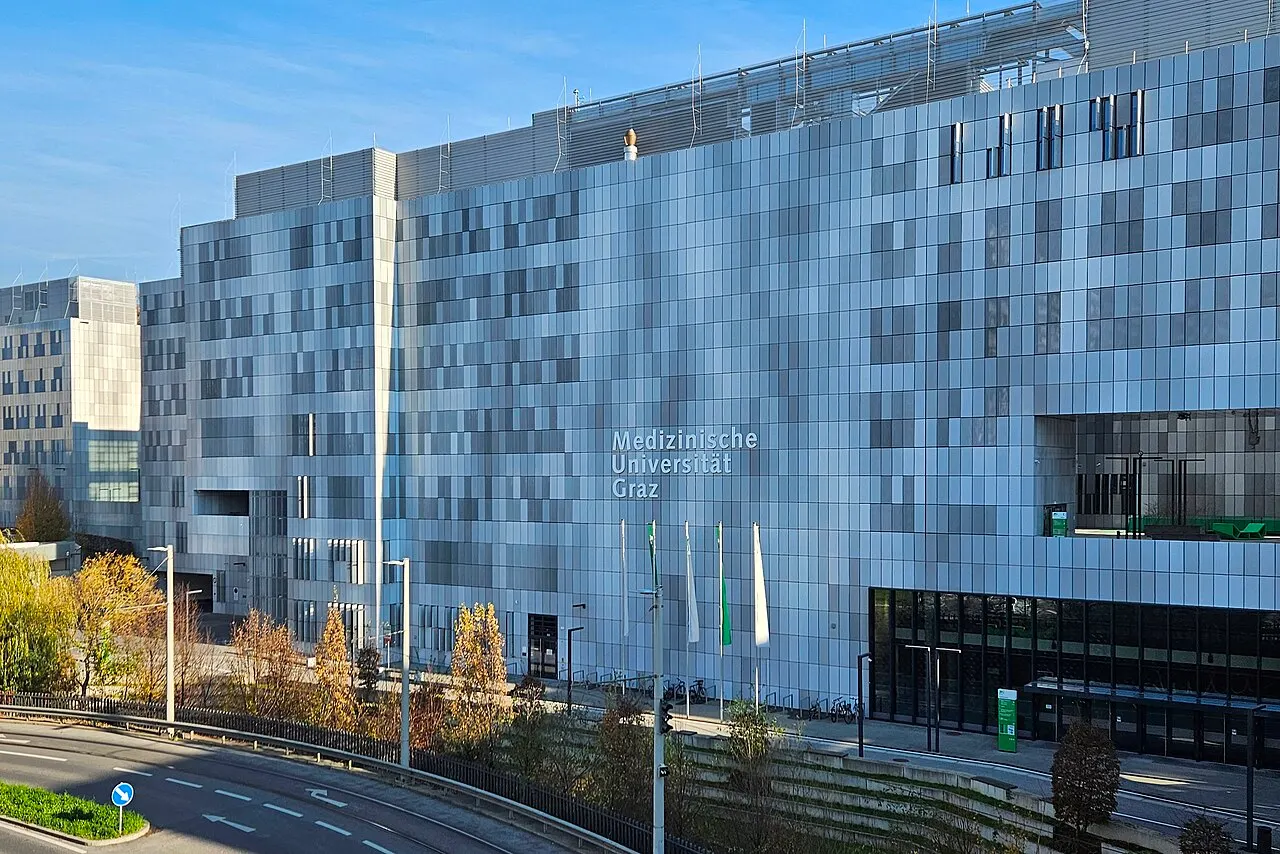
Applying to Graz institutions: windows and fees
Each institution sets its own application period for applicants from outside the EU, and it is earlier than the EU window. The table shows what the institutions publish for third-country applicants and what they charge a student with a Student residence permit; programme pages can differ, so check yours. The general rules are in admission deadlines and tuition fees for international students.
| Institution | Application window for non-EU applicants | Tuition for a third-country student on a Student permit |
|---|---|---|
| University of Graz | Summer semester 2027: 16 November – 14 December 2026. For winter 2026/27 it was 15 June – 13 July 2026 for bachelor's and 11 May – 8 June 2026 for master's programmes without an entrance exam; programmes with an exam have their own dates | €752.92 per semester including the ÖH fee |
| TU Graz | 1 May – 15 August for the winter semester and 1 December – 15 January for the summer semester; applications go by post | €752.92 per semester including the ÖH fee |
| Medical University of Graz | Human medicine and dentistry run through the MedAT; registration was 2–31 March 2026 for 2026 | Same public-university fee; third-country applicants without an Austrian certificate can take at most 5% of the human-medicine places |
| KUG | Proof of artistic aptitude is required at the art universities (UG § 63 Abs. 1) | Same public-university fee |
| FH JOANNEUM | Set per programme | €726.72 per semester, plus an application deposit of €363.36 that is deducted from tuition if you are accepted; exempt groups, such as people covered by the Personengruppenverordnung, pay the standard €363.36 per semester, the statutory ceiling for regular students |
| FH CAMPUS 02 | Set per programme | from €726.72 up to a ceiling of €5,500 (business bachelor's), €6,500 (technical-business) or €7,500 (technical) per semester |
The TU Graz dates are for master's programmes without an admission procedure and, with the same dates, bachelor's programmes for applicants with an international qualification; the university's pages do not name a nationality for the bachelor's window. The University of Graz warns that an application outside the correct window is cancelled and can block reapplying for two semesters, so find your own window before preparing documents. Entrance exams and the MedAT are covered in the entrance exams guide. Turkish nationals need a visa, and the permit process is in the Visa D guide.
Housing: costs by type and where to look
The 2025 survey records the location of the institution, not of the student's home, and excludes students who live with parents or pay no housing contribution. For Graz it gives averages by housing type as well as one overall figure, which is more useful than a rent per district, and the report singles out Graz and Innsbruck as the two locations with the lowest hall costs.
| Housing type | Graz institutions | All Austria |
|---|---|---|
| Student hall | €468 | €501 |
| Shared flat | €450 | €498 |
| Living alone | €636 | €664 |
| All types | €545 | €586 |
For context, Statistik Austria's 2025 average rent for all main-tenancy flats in Styria was €9.80 per m² per month, against €10.60 per m² per month in Vienna; that figure covers every tenancy in the province, including long-running ones, and is not an asking rent. No official source ranks Graz's districts by student population or publishes student rents per district, so this guide does not either. As guidance, not data: choose by the route to your faculty, check the last evening connection if you work late, and compare the same flat type across several areas on the listing portals. Halls, shared flats and private rentals are compared in student halls, shared flats and private rental.
Transport: the Top-Ticket and where it is valid
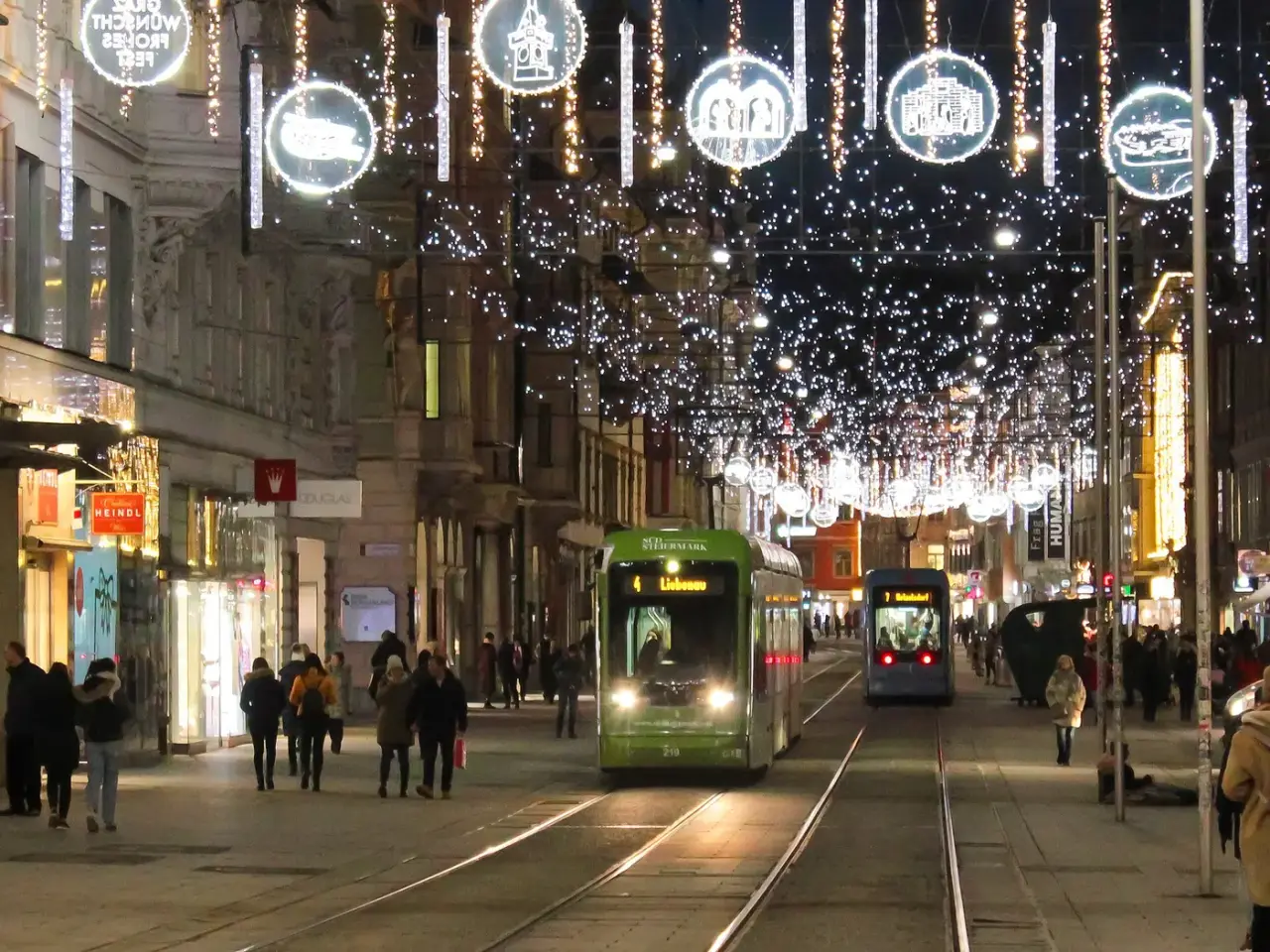
Graz students use the Top-Ticket Studierende, a semester pass from the Verbundlinie transport association at €199.50 per semester. It is valid across the whole of Styria on all Verbundlinien services, not only in the city. Winter-semester tickets run from 1 September to the end of February and summer-semester tickets from 1 March to 31 August, and the operator does not allow a return before the validity ends, so buy it only for a semester you will spend in Styria. Two tickets cover a year at €399 for twelve months.
- InskriptionsbestätigungInskriptionsbestätigung (proof of enrolment)
- The document your institution issues to confirm that you are enrolled in the current semester. Transport operators ask for it before they sell a student pass.
In practice: buying tickets, night buses and the campus
Verbundlinie's page lists where the Top-Ticket Studierende is sold: online in the ÖBB ticket shop, in the ÖBB app and the GrazMobil app, at the Graz Linien service centre and at stations with a ticket counter (it also names the MVG service centre in Kapfenberg and the Stadtwerke Leoben service centre). Whichever route you use, you need proof of enrolment: an Inskriptionsbestätigung, or your institution's confirmation on the order form. The ticket cannot be returned before it expires, so buy it only once your timetable is settled.
For single trips, the free GrazMobil app sells all common tickets for the whole of Styria without cash (Holding Graz names credit card, instant bank transfer, Apple Pay and debit card) and shows real-time departures. Trams carry ticket machines on board, which you reach through the marked door (the one with the ticket symbol), and stationary machines stand at Hauptbahnhof, Hauptplatz, Jakominiplatz, Hasnerplatz and other stops; the operator also counts about 100 kiosks that sell hourly to monthly tickets. Its FAQ is not clear about buying from a bus driver, so buy before you board.
Night buses N1 to N8 run on Friday-to-Saturday and Saturday-to-Sunday nights and on the nights before public holidays, starting at 00:30 from Jakominiplatz; the operator's March 2022 notice listed departures at 00:30, 01:30 and 02:30, so confirm the current times in the app. The FAQ lists no night buses on other nights, so plan a late return on a weekday around the last tram.
The University of Graz's campus is compact but not a single block. The main building is at Universitätsplatz 3, the Faculty of Law and the Faculty of Business, Economics and Social Sciences are in the RESOWI complex at Universitätsstraße 15, and the Wall building at Merangasse 70 is, in the university's words, around a 10-minute walk or 5-minute bike ride from the main campus. Check which building your first lectures are in before choosing a flat. For registration, the Welcome Center says you book online with the Servicestellen der Stadt Graz, usually at relatively short notice, and bring the Meldezettel signed by you and your landlord plus an official photo ID (a passport works for everyone). Registration is free and each person in a household needs a separate form.
A realistic monthly budget for Graz
Only the housing line is Graz-specific in the national survey; the other lines are national averages across all students. Treat the total as a starting point and compare it with cost of living and the worked budgets.
| Item | Per month | Basis |
|---|---|---|
| Housing (rent, utilities) | €545 | Survey average, Graz institutions, all housing types |
| Food | €273 | National student average |
| Public transport | €33.25 | Two Top-Tickets spread over twelve months |
| Phone and internet | €33 | National student average |
| Health | €54 | National average; student self-insurance is €78.84 per month if you need it |
| Clothing | €59 | National student average |
| Leisure | €109 | National student average |
| Other | €120 | National student average |
| Total | €1,226 | Scholway's arithmetic on the lines above |
Semester fees come on top: a third-country student at a public university pays €752.92 per semester (tuition plus the ÖH fee), and an address with an adult registered in Styria owes an ORF-Beitrag of €20.00 per month because of the Land levy; flatmates at one address share one bill. The worked example in budget examples prices a Graz shared flat at €1,375 per month all-in; it uses the national shared-flat average of €498 per month, whereas the survey's own Graz figure for shared flats is €450 per month. None of this is the legal floor: the means you must prove for the residence permit are €722.58 per month if you are under 24 and €1,308.39 per month from age 24, assessed over the whole permit period (proof of financial means).
City offices: residence permit, registration and health insurance
Graz is not Vienna: your residence permit is not handled by MA 35 but by the Styrian provincial government. No official source compares processing speed between authorities, so plan with the general guidance in processing times. OeAD's regional office lists the offices below; confirm opening hours and appointment rules on each office's own website before you go.
| Office | What it handles | Address |
|---|---|---|
| Amt der Steiermärkischen Landesregierung, Abteilung 3 | Residence permit (first application and renewal) and the registration certificate for EU citizens | Paulustorgasse 4, 8010 Graz |
| Zentrale Meldebehörde (Amtshaus) | Registering and deregistering your address | Schmiedgasse 26, 8010 Graz |
| ÖGK Kundenservice Graz | Health insurance, including student self-insurance | Josef-Pongratz-Platz 1, 8010 Graz |
Move in, then register
You must register within 3 days of moving in; the signed Meldezettel and photo ID are the core documents, as in the Meldezettel guide.
Book an appointment
The University of Graz's Welcome Center says registrations in Graz go through the city's service centres (Servicestellen der Stadt Graz) and that appointments can be booked online.
Use the confirmation
You need the registration for the bank, the insurer and the permit; see opening a bank account and your first 30 days.
Safety in Graz
The Federal Criminal Police Office publishes reported offences by province, not by city, so there is no official Graz-only figure. For the whole of Styria it recorded 61,372 reported offences in 2025 with 58.7% solved, against a national clearance rate of 53.6%. Counts include tourists and commuters and are not a personal-risk rate. Emergency numbers: police 133, ambulance 144, and 112 for any emergency. More in safety in Austria and student health insurance. For German courses, work and daily life see learning German and working alongside your studies: the rules are national, and no source gives Graz-specific job-market data.
Before you arrive in Graz
- Your application window: the dates above differ by institution and nationality
- A first address and a plan for the Meldezettel within 3 days of moving in
- An Inskriptionsbestätigung for the Top-Ticket, and a check that you will be under 26 on its first day
- A budget that covers the monthly total, semester fees and the ORF-Beitrag
- Your permit documents for the Styrian provincial government, if you need a Student permit
Frequently asked questions
Is Graz cheaper than Vienna for international students?
On housing, slightly: students at Graz institutions averaged €545 a month in the 2025 national survey against €596 per month in Vienna. Tuition is the same at public universities everywhere, and the Graz student pass costs €199.50 a semester, so the saving comes mostly from rent.
Which universities are in Graz?
Four public universities: the University of Graz, TU Graz, the Medical University of Graz and the University of Music and Performing Arts Graz. There are two Fachhochschulen, FH JOANNEUM and FH CAMPUS 02, with 41,604 public-university degree students in the city in winter semester 2025/26.
Do I need to live in Graz to get the Top-Ticket Studierende?
No. The ticket is priced on where you study: ordinary student status, under 26 on the first day of validity and a place of study in Styria. It costs €199.50 per semester and is valid across Styria, but it cannot be returned before it expires.
Which authority decides my student residence permit in Graz?
The Styrian provincial government (Amt der Steiermärkischen Landesregierung, Abteilung 3), not MA 35. OeAD lists it at Paulustorgasse 4 in Graz for first applications and renewals; check the office's own page for appointment rules.
What do FH JOANNEUM and FH CAMPUS 02 charge non-EU students?
FH JOANNEUM states €726.72 per semester for third-country students, with an application deposit of €363.36. FH CAMPUS 02's policy sets a fee from €726.72 up to a ceiling of €5,500 (business bachelor's), €6,500 (technical-business) or €7,500 (technical) per semester for students on a Student permit. Each Fachhochschule sets its own fee, so check the programme page.
Can I study in English in Graz?
Partly. TU Graz offers master's programmes taught in English, the University of Graz runs joint master's programmes with international partners, and FH CAMPUS 02 has an English-language bachelor's in Smart Automation. Daily life, housing and most bachelor's programmes still run in German, so plan for German lessons.
Sources
23 sources, 22 official
- Ordentliche Studierende an öffentlichen Universitäten im Wintersemester 2025/26 (Tabellenband, Tabellen 1, 4 und 5)Statistik Austria (Official)
- Ordentliche Studierende an Fachhochschulen im Wintersemester 2025/26 (Tabellenband, Tabellen 1 und 2)Statistik Austria (Official)
- Kriminalpolizeiliche Anzeigenstatistik – Kriminalitätsbericht 2025Bundesministerium für Inneres, Bundeskriminalamt (Official)
- Ämter und Behörden (Regionalbüro Graz)OeAD – Österreichs Agentur für Bildung und Internationalisierung (Official)
- Medical University of GrazOeAD – Study in Austria (Official)
- University of Music and Performing Arts Graz (KUG)OeAD – Study in Austria (Official)
- FH JOANNEUM – University of Applied SciencesOeAD – Study in Austria (Official)
- Campus 02 University of Applied SciencesOeAD – Study in Austria (Official)
- Standorte / LocationsFH JOANNEUM (Official)
- International applicants: Bachelor's degree programmeFH JOANNEUM (Official)
- Richtlinie zur Einhebung der Studienbeiträge (September 2025)FH CAMPUS 02 – Fachhochschule der Wirtschaft (Official)
- Registration processes (Meldezettel/residence registration, EU-registration)University of Graz – Welcome Center (Official)
- FAQs on Graz Linien (tickets, ticket machines, GrazMobil app, night buses N1 to N8)Holding Graz (operator of the Graz Linien) (Institutional)
- Campus (University of Graz: locations of the main building, RESOWI, Wall and other sites)University of Graz (Official)
- University of GrazOeAD – Study in Austria (Official)
- Graz University of TechnologyOeAD – Study in Austria (Official)
- Studierenden-Sozialerhebung 2025 – Kernbericht (Dibiasi et al., IHS, March 2026; updated version of 24 April 2026 published by the ministry)Federal Ministry of Women, Science and Research (BMFWF) / Institut für Höhere Studien (IHS) (Official)
- ORF-Beitrag & Zahlung (Höhe, Landesabgaben je Bundesland, Zahlungsintervalle)ORF-Beitrags Service GmbH (OBS), the statutory collection body (Official)
- Top-Ticket StudierendeVerbundlinie (Verkehrsverbund Steiermark) (Official)
- Ergebnisse im Überblick: Wohnkosten für Hauptmietwohnungen – Mikrozensus (Tabellen 1–4)Statistik Austria (Official)
- Submission Deadlines International StudentsUniversity of Graz (Official)
- Admission to a Master's programme without admission procedure with an international degreeGraz University of Technology (Official)
- Admission to a Bachelor's programme with an international university entrance qualificationGraz University of Technology (Official)