The numbers that matter are short and free of area codes. 144 reaches the ambulance service and 112 the European emergency number; both are for situations where life or health is in danger. The federal health portal lists the full set, and the sections below sort them by what you actually need. How cover and doctors work in ordinary times is in the healthcare overview and the guide to finding a doctor.
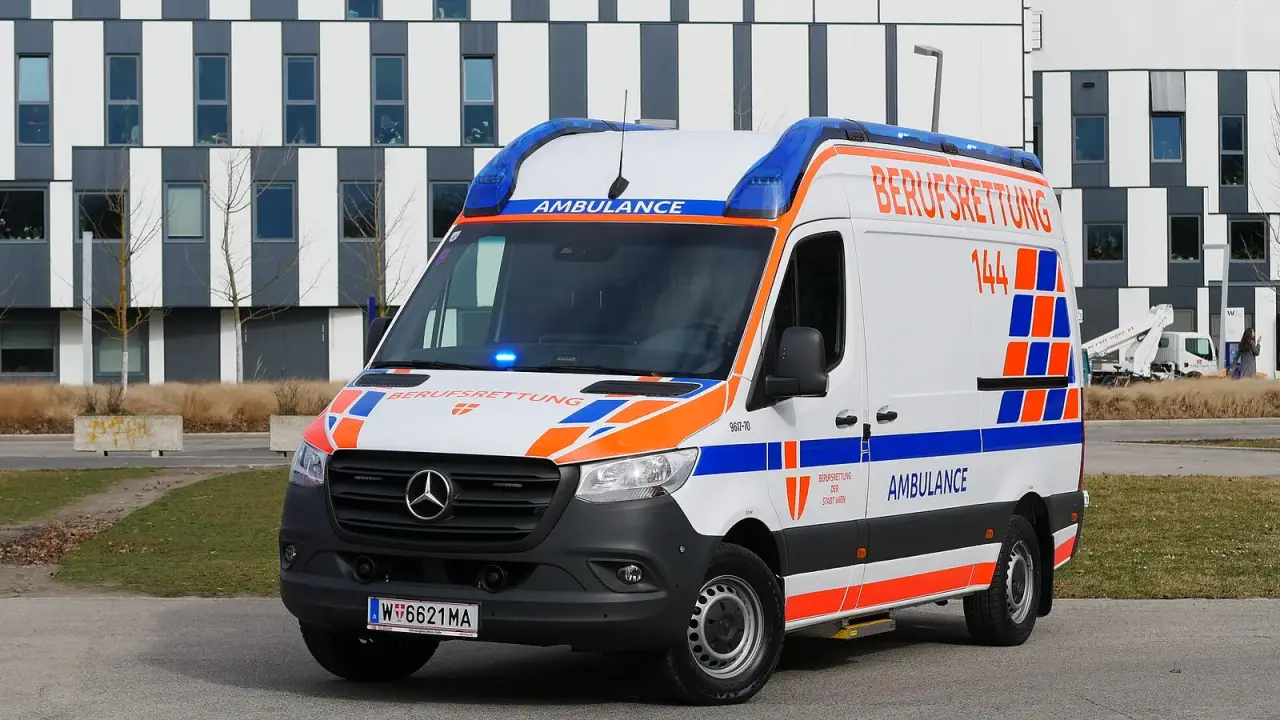
The numbers to save in your phone
| Number | Service | Use it for |
|---|---|---|
| 112 | European emergency number | Any emergency |
| 144 | Ambulance (Rettung) | Accidents, unconsciousness, breathing difficulty, life-threatening situations. Vienna's city page says it is staffed round the clock, 365 days a year, and to call it if unsure whether something is an emergency |
| 133 | Police | Crime, threats, road accidents |
| 122 | Fire brigade | Fire and rescue |
| 140 | Mountain rescue (Bergrettung) | Accidents in the mountains |
| 1450 | Health advice line | Ill but not in danger: nurses assess your symptoms and say where to go. Nationwide, around the clock |
| 141 | On-call doctor service (Ärztefunkdienst / Ärztenotdienst) | A GP outside surgery hours: advice, prescriptions or a home visit. In Vienna, calls on weekdays 19:00–07:00 and all day at weekends are forwarded to 1450 (see below) |
| 01 406 43 43 | Poison information centre (Vergiftungsinformationszentrale), Vienna | Swallowed or inhaled something harmful; ask what to do while you wait |
| 142 | Telefonseelsorge | Emotional crisis; see mental health support |
| 0800 133 133 | Emergency number for deaf people (fax or SMS only) | Emergencies if you cannot call |
| 0800 112 112 | Victim emergency line (Opfer-Notruf) | Support after a crime |
Vienna's page gives the 141 service hours as weekdays 19:00 to 07:00, weekends from Friday 19:00 until Monday 07:00 and all day on public holidays; those are the Vienna hours, so check the regional ones elsewhere. A City of Vienna press release of 22 June 2026 adds that since early May calls to 141 on weekdays 19:00–07:00 and all day at weekends go directly to 1450, where nurses assess urgency and, if needed, arrange a video consultation, phone advice or an on-call doctor's visit. It does not say whether 141 is discontinued, so in Vienna treat 1450 as the front door. If you cannot tell whether to ring 144 or 1450, the 1450 page says that serious accidents, acute breathlessness or unconsciousness mean calling the emergency number at once. The official number pages are in German and none promises English-speaking operators, so be ready to give your address in German and to speak slowly.
What happens when you go to hospital
Hospital outpatient departments (Spitalsambulanzen) are listed by the ÖGK among its contracted facilities, and a referral is required there except for first aid. In an emergency you therefore need no referral slip. As in hospitals elsewhere, urgent cases are treated first, so a minor complaint can mean a long wait. For a problem that is not urgent, a contracted GP or an on-call doctor is the better route, as the overview explains.
Call 144 or go to the outpatient department
For a life-threatening emergency call 144. For something urgent but not critical, such as a deep cut or a suspected fracture, 1450 can tell you where to go.
Registration and first assessment
You give your details and your insurance. First aid (Erstversorgung) is the case the ÖGK exempts from the referral rule.
Treatment or admission
You may be treated and sent home, or admitted. For an outpatient visit the hospital's outpatient card is not a sick note; if you have a job, a contracted doctor certifies the incapacity.
Afterwards
Keep the discharge papers. The daily contribution for an inpatient stay is described in public vs private cover.
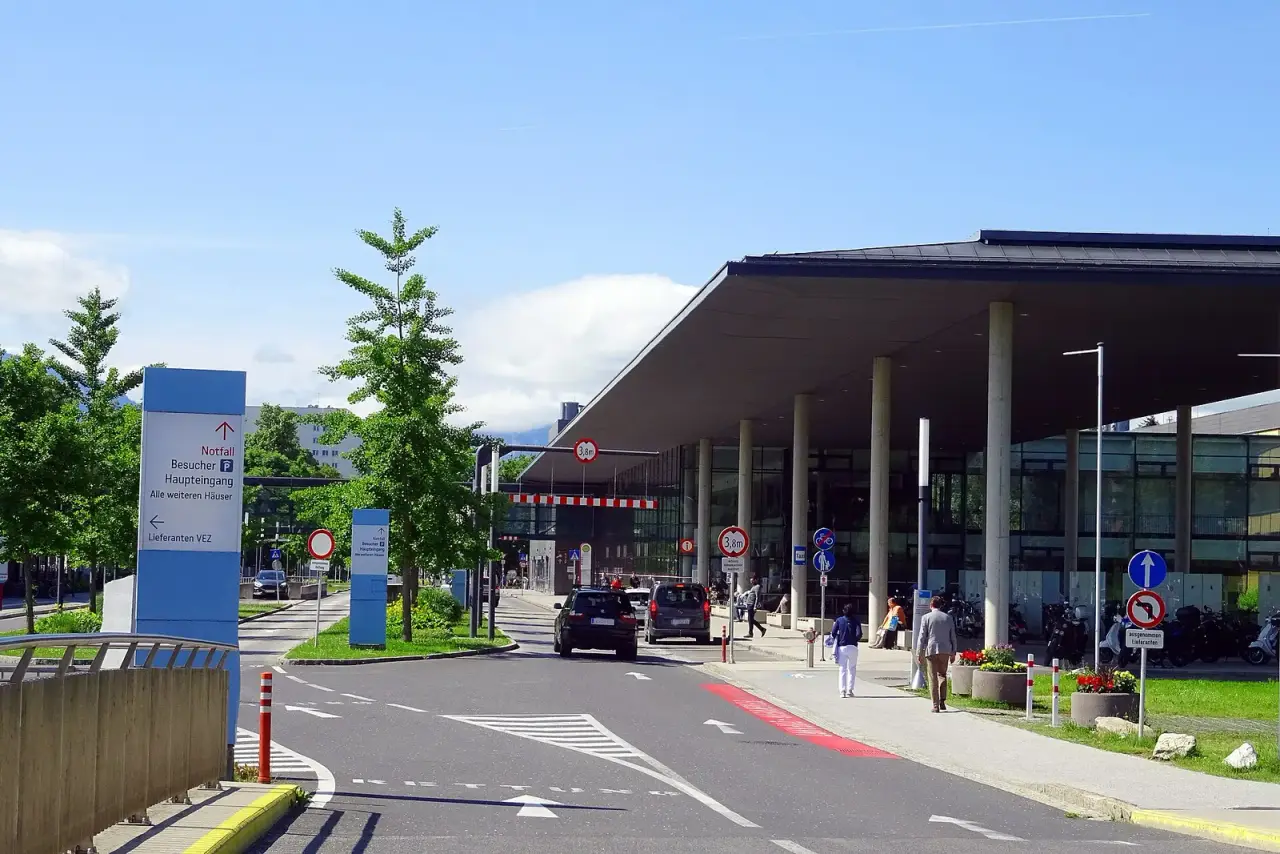
In practice: how the waiting room is ordered
You are not seen in the order you arrived. At the LKH-Univ. Klinikum Graz's emergency admission unit, trained nurses make a first assessment (Ersteinschätzung) with the Manchester Triage System: they note your main symptom, check indicators such as danger to life, blood loss, consciousness, temperature and pain, and place you in one of five urgency levels, each with a target time to the first doctor contact. The figures below come from a 2015 article by that hospital's own staff, so read them as one hospital's example, not a national rule. Upper Austria's hospital operator describes the same five colours and warns that green and blue patients wait longer when the department is busy.
| Colour | Meaning | Target time to first doctor contact |
|---|---|---|
| Red | Emergency needing immediate treatment | Immediately |
| Orange | Very urgent | Not given in the article |
| Yellow | Urgent | 30 minutes |
| Green | Normal complaint | 90 minutes |
| Blue | Not urgent | 120 minutes |
The Graz article says nurses keep watching patients while they wait and reassess if symptoms change or the target time passes, so tell staff at once if you get worse; for acute pain, relief comes first. If unsure whether your complaint belongs in an emergency department, the social insurance's wobinichrichtig.at overview sets out when to call 1450, see a GP or go to a hospital outpatient department, with pages in English and Turkish.
Vienna's hospital group also runs first-care outpatient clinics (Erstversorgungsambulanzen), staffed by the on-call doctor service, for acute but not life-threatening problems such as infections, pain or cuts and grazes. The city's page gives no locations or opening hours, so ask 1450 where to go.
Insurance proof: e-card and EHIC
Show your e-card; the European Health Insurance Card is printed on its back. If you are an EU, EEA or Swiss student who relies on the EHIC from home, show that. Treatment under the EHIC covers medically necessary care from providers contracted to the statutory system, as the overview sets out. Do not delay a call to look for a card. If you have no cover at all, you will be billed, and what uninsured treatment costs is set out separately. Self-insured students are covered by ÖGK student insurance once it has started.
Who pays for the ambulance
Where the ÖGK covers the transport, time-critical ambulance and emergency-doctor transports (Rettungs- und Notarzttransporte) carry no co-payment. A co-payment equal to the prescription charge, €7.55 per item per leg, applies to taxi and ordinary patient transports; the ÖGK takes over transport costs where a doctor's transport order certifies that the patient cannot walk. Air transport within Austria is covered to the nearest suitable hospital where the need is certified and recognised by the ÖGK.
If the insurer does not approve a transport, the provider bills you. The Red Cross in Vorarlberg, as one regional example, charged a base fee of €155 base charge plus €6.40 per km per kilometre in 2026, with both outward and return legs counted. It is not a national tariff.
Out of hours: on-call doctors and pharmacies
Outside normal surgery hours, 141 reaches the on-call doctor service and 1450 can direct you to open practices. Pharmacies provide night, weekend and holiday on-call service, which the Austrian Chamber of Pharmacists says the pharmacies finance themselves; its website has a pharmacy search, and 1450 can help find one that is open. Ordinary prescriptions and the prescription charge are covered in finding a doctor.
Emergency phrases in German
| English | German |
|---|---|
| I need an ambulance. | Ich brauche einen Rettungswagen. |
| There has been an accident. | Es gab einen Unfall. |
| He or she is unconscious. | Er / Sie ist bewusstlos. |
| He or she is not breathing. | Er / Sie atmet nicht. |
| I have chest pain. | Ich habe Brustschmerzen. |
| I am allergic to ... | Ich bin allergisch gegen ... |
| I do not speak German. Do you speak English? | Ich spreche kein Deutsch. Sprechen Sie Englisch? |
| The address is ... | Die Adresse ist ... |
| I am insured with the ÖGK. | Ich bin bei der ÖGK versichert. |
Prepare before you need it
- Save 144, 112, 1450 and 141 in your phone
- Learn your address in German: street, house number, staircase (Stiege) and door (Tür)
- Keep your e-card or EHIC with your ID, and note your allergies and medicines (the health portal's admission checklist also asks for a photo ID)
- Know the nearest hospital outpatient department to your accommodation
- Check whether your cover includes mountain rescue before outdoor sport
Frequently asked questions
What is the emergency number in Austria?
112 is the European emergency number, and 144 is the ambulance. Police are on 133 and the fire brigade on 122. For illness that is not life-threatening, 1450 is the health advice line.
Does an ambulance cost money in Austria?
Where the ÖGK covers it, time-critical ambulance and emergency-doctor transports carry no co-payment, while taxi and ordinary patient transports carry a co-payment of €7.55 per item per leg. If the insurer does not approve the transport, the provider invoices you; one regional example is €155 base charge plus €6.40 per km per kilometre.
What is the difference between 144 and 1450?
144 is for life-threatening situations such as accidents, unconsciousness and acute breathlessness. 1450 is a nationwide advice line staffed by trained nurses, who assess your symptoms and recommend where to go, including nearby doctors; it does not diagnose.
Can I go to a hospital emergency department without a referral?
For first aid, yes: the ÖGK states that hospital outpatient departments require a referral except for first aid. For a routine problem, a contracted GP is the better route.
What is the poison information number in Austria?
The poison information centre in Vienna is 01 406 43 43, as listed on the federal health portal. Call it if someone has swallowed or inhaled something harmful, and call 144 if they are unconscious or struggling to breathe.
Is mountain rescue covered by my health insurance?
Not by the ÖGK after sport and tourism accidents: it does not reimburse salvage costs or transport down to the valley and recommends separate cover. Check your own policy before hiking, climbing or skiing.
Sources
15 sources, 11 official
- NotrufnummernGesundheitsportal (gesundheit.gv.at), Bundesministerium (Official)
- Wer kann mir helfen? Rufnummern bei medizinischen NotfällenStadt Wien (Official)
- Gesundheitsberatung 1450Bundesministerium für Arbeit, Soziales, Gesundheit, Pflege und Konsumentenschutz (Official)
- Die ÖGK im Überblick – Leistungen und Services 2026Österreichische Gesundheitskasse (ÖGK) (Official)
- Vertragsärztinnen und VertragsärzteÖsterreichische Gesundheitskasse (ÖGK) (Official)
- Informationsblatt bei Transporten, die nicht über die gesetzliche Krankenkasse verrechnet werden können (Tarife 2026)Österreichisches Rotes Kreuz, Landesverband Vorarlberg (Institutional)
- Wussten Sie? (Apothekerkammer)Österreichische Apothekerkammer (Institutional)
- Rezeptgebühr und RezeptgebührenbefreiungDachverband der Sozialversicherungsträger (sozialversicherung.gv.at) (Official)
- Wartezeiten in Akut- und NotfallambulanzenOberösterreichische Gesundheitsholding (OÖG) (Institutional)
- Fünf Farben für mehr Patientensicherheit – Das Manchester-Triage-System am LKH-Universitätsklinikum GrazDas österreichische Gesundheitswesen – ÖKZ 56 (11), 2015 (Kovacevic, Lueger, Haring, LKH-Univ. Klinikum Graz) (Institutional)
- Klinik Landstraße bekommt neue ErstversorgungsambulanzStadt Wien (wien.gv.at) (Official)
- Wo bin ich richtig? – Krank? Da geht's lang!Social insurance portal (sozialversicherung.at) (Official)
- Im KrankenhausÖffentliches Gesundheitsportal Österreichs (Federal Ministry of Labour, Social Affairs, Health, Care and Consumer Protection) (Official)
- 1450 und Ärztefunkdienst bündeln Kräfte: Mehr Effizienz und noch bessere Patient:innenlenkung in WienStadt Wien, Rathauskorrespondenz (Presse-Service) (Official)
- 24 Stunden-Beratung bei Schmerzen – Telefonnummer 1450Stadt Wien (wien.gv.at) (Official)