Austria runs on statutory social insurance, and private insurance sits on top of it. For most international students the real choice is therefore not public versus private, but how to get into the public system and whether to add anything extra later. This page explains what the public cover pays for, how public hospitals differ from private clinics, when a supplementary policy earns its premium, and what treatment costs if you have no cover. How to obtain the ÖGK cover is in the student insurance guide, and the wider picture is in the healthcare overview.

What public student insurance pays for
ÖGK student self-insurance buys the same medical treatment, hospital care and medicines as an employee's compulsory insurance, but benefits in kind only: there is no entitlement to the cash benefits Krankengeld (sickness benefit) or Wochengeld (maternity allowance). Contracted doctors treat you for no charge on the e-card; finding a doctor explains how to use that and what happens at a private-practice doctor.
| Care | What the ÖGK pays | What you pay |
|---|---|---|
| Contracted doctor | The whole bill | Nothing; show the e-card |
| Private-practice doctor (Wahlarzt) | 80% of the contract tariff, capped at your actual cost | The rest of the invoice. Across all ÖGK Wahlarzt claims in 2023 only 37.9% of the amount billed came back |
| Medicines | The medicine, if reimbursable | €7.55 per item per prescribed package, or the price if it is lower |
| Public hospital, general class | The costs, for as long as the illness requires | A daily contribution of €12 to €16 per day, charged for at most 28 days per calendar year in a calendar year |
| Dental work beyond basics, glasses | Much less than students expect | See dental and eye care |
| e-card service fee | Not applicable | €26.85 for the year for 2027, due 15 November 2026 |
The hospital contribution is set by each federal state, which is why it is a range. Under-18s, maternity admissions and patients exempt from the prescription charge pay nothing, and after the 28 days per calendar year limit social insurance bears the cost in full.
Public hospitals and private clinics
Not every private clinic is outside the public system. The ÖGK pays in full for care in the general class of a hospital funded by the provincial health funds, such as a state hospital (Landeskrankenhaus) or a church-run hospital (Ordensspital), and also in a private hospital that is contracted through the private-hospital funding scheme. The question to ask any hospital is therefore whether it is contracted with the social insurance for your treatment.
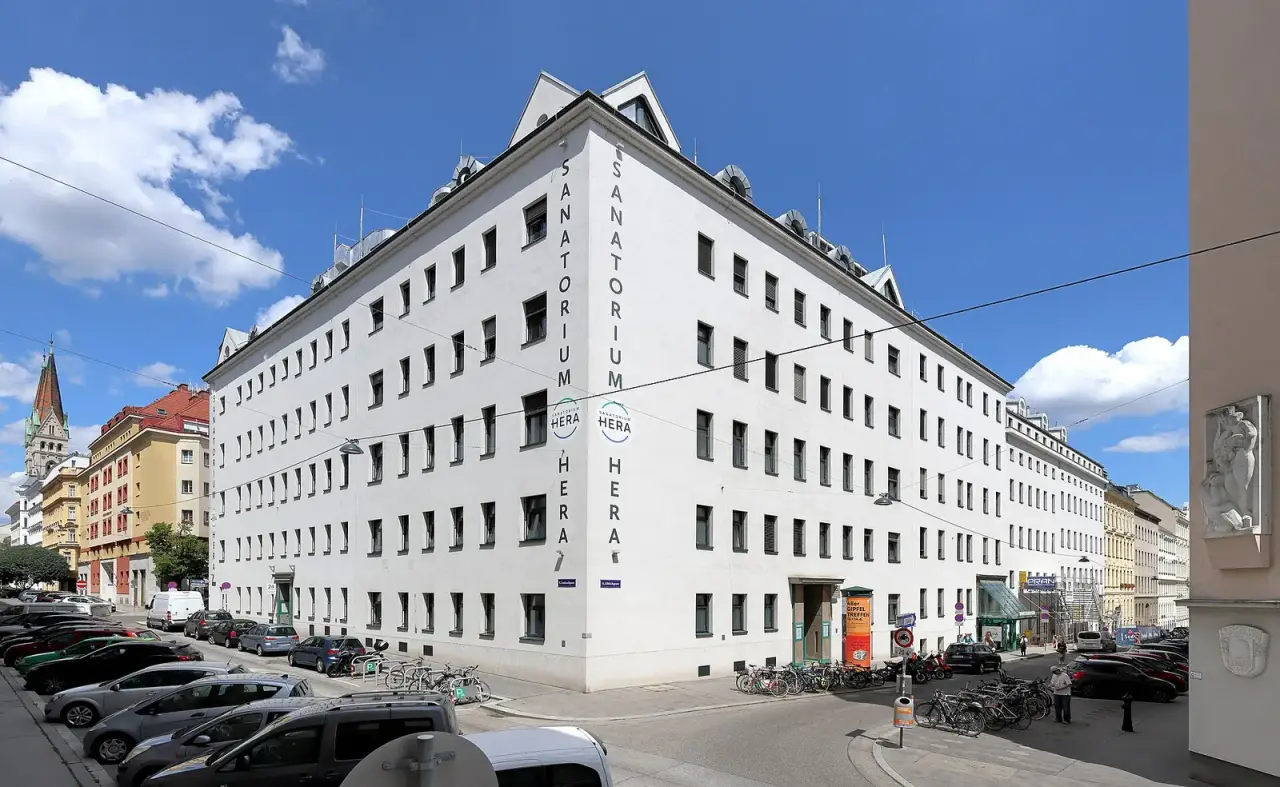
| Hospital type | ÖGK pays | You pay |
|---|---|---|
| State or church-run hospital funded by the provincial health fund (general class) | The costs in full while medically necessary | The daily contribution, up to 28 days per calendar year a year |
| Private clinic contracted through the private-hospital funding scheme (general class) | The costs in full while medically necessary | The cost contribution the hospital's operator fixes (the ÖGK page gives no separate figure for private clinics) |
| Hospital with no funding or contract, including most hospitals abroad | A daily care subsidy of €435.81 per day, never more than the actual costs | Everything above the subsidy |
| Special class (Sonderklasse) anywhere | The general-class costs only | The extra charges, unless a private policy covers them |
Zusatzversicherung: what a private policy adds
- Supplementary private health insuranceZusatzversicherung / private Krankenversicherung
- A voluntary policy that sits on top of statutory cover. Hospital tariffs pay for Sonderklasse; outpatient tariffs pay for doctor visits, prescribed medicines, aids such as glasses and treatments such as physiotherapy, including at private-practice doctors.
- Waiting periodWartezeit
- A period after the policy starts during which benefits are not yet payable. The Arbeiterkammer gives the general waiting period in individual policies as 3 months, usually one month in group insurance. It does not apply to accidents or acute infectious diseases, and known conditions and pregnancy can carry longer ones.
- DeductibleSelbstbehalt
- The amount you carry yourself each year before the insurer pays. The Arbeiterkammer calls €800 a typical figure the usual figure; a deductible lowers the premium.
The main hospital-and-outpatient products are the hospital policy (Sonderklasse) and the outpatient policy that reimburses private-practice doctor fees. The Arbeiterkammer is sceptical of dental policies, citing high premiums, low caps and high deductibles. Read the conditions before buying, because insurers can exclude conditions that are recognisable when the contract starts, and the Arbeiterkammer stresses that the health questions must be answered truthfully and completely: wrong or incomplete answers often lead to a refused claim and the insurer withdrawing from the contract. It also notes that a waiver of the right to cancel is permitted only for the first two insurance years, and that you can otherwise cancel at the end of any insurance year, with a notice period of one to three months depending on the insurer.
Health insurance: ÖGK student cover or private?
Main differences for degree students, 2026
| ÖGK student self-insuranceUsual choice | Private supplementary | |
|---|---|---|
| Monthly contribution | €78.84 | Depends on age and tariff |
| Waiting period | None on the student rate | 3 monthsindividual contracts |
| Annual deductible | Nobut €7.55 per prescription item | €800a typical figure |
| Doctors, hospital, medicines | Yes | Partlyon top of public cover |
| Sick pay and maternity pay | Nobenefits in kind only | Depends on the contract |
Monthly contribution
- ÖGK student self-insurance (Usual choice)
- €78.84
- Private supplementary
- Depends on age and tariff
Waiting period
- ÖGK student self-insurance (Usual choice)
- None on the student rate
- Private supplementary
- 3 monthsindividual contracts
Annual deductible
- ÖGK student self-insurance (Usual choice)
- Nobut €7.55 per prescription item
- Private supplementary
- €800a typical figure
Doctors, hospital, medicines
- ÖGK student self-insurance (Usual choice)
- Yes
- Private supplementary
- Partlyon top of public cover
Sick pay and maternity pay
- ÖGK student self-insurance (Usual choice)
- Nobenefits in kind only
- Private supplementary
- Depends on the contract
Source: ÖGK, Arbeiterkammer Oberösterreich, Dachverband der Sozialversicherungsträger +2 more. Last checked:
Image (PNG)When a supplementary policy is worth considering
This is a judgement, not a rule, and no official source tells students to buy one. On public cover you already receive the medically necessary treatment, so the case for a supplementary policy rests on three things: how often you expect to use private-practice doctors, how much a private room or choice of surgeon matters to you, and how much the premium and deductible would cost you against your budget. A student who mainly needs a GP, occasional prescriptions and an emergency backstop is usually well served by the ÖGK alone. Someone who knows they will see Wahlärzte regularly, perhaps because contracted appointments are scarce in their city, could compare an outpatient tariff with what they would otherwise pay out of pocket.
- Get the public cover running first, because that is what the permit and the e-card depend on.
- Compare offers from several insurers and ask each for the written conditions, waiting periods and exclusions.
- Declare every known condition: insurers can exclude conditions that are recognisable when the contract starts.
- Check whether a policy ends when you leave Austria, and what the notice period is, before you sign.
- Ask how an outpatient tariff treats the refund you already get from the ÖGK for a Wahlarzt invoice, since the policy terms decide what it adds.
In practice: a planned hospital stay, from admission to the bill
A planned admission starts with a referral: your doctor gives you an admission or referral slip (Aufnahme- or Einweisungsschein). The health portal lists what to bring: the slip, your e-card or at least your social insurance number, a photo ID, your supplementary-insurance card if you have one, earlier findings such as X-rays, lab or CT results and doctors' letters, and a written list of your allergies, conditions and all medicines, prescription or not. It also says not to bring valuables, because a hospital is not liable for lost items unless they are in its safe.
Register first
On the day, registration (Anmeldung) is the first step. Staff explain what happens next, and nursing staff then take you to your room.
The doctor's information talk
The doctor on duty explains the possible examinations and the planned therapy. You may ask every question, refuse any treatment or take time to decide.
Daily rounds
At least one doctor's visit a day (the Visite) is usual, and it is where your progress is discussed.
The bill
Patients pay the daily contribution to the hospital itself. The health portal does not say whether this is settled by invoice or at a cashier, and refers you to the hospital's billing department (Verrechnung) for the amount and how to pay. Special-class surcharges and accompanying persons' costs are paid privately.
The portal's pages do not mention students, so whether you qualify for one of the exemptions is a question for the insurer or the billing department. An emergency admission works differently, and the emergency care guide covers it.
What treatment costs without any cover
Charges for patients without social insurance are fixed at provincial level, so expect them to differ between hospitals and provinces. The Klinikum Klagenfurt's 2026 notice for non-insured patients, for instance, says the provincial government set them by ordinance and that they are calculated from points valued by the province. As a dated order-of-magnitude example, Vienna's AKH set the care fee for a self-paying patient without statutory insurance at €1,397 per day of care for the day of care in its 2021 bulletin; later versions exist, so ask for the current tariff. The same bulletin says the public hospital may collect the fees in advance for the expected stay, up to 28 days, under the Vienna Hospitals Act, and that both the admission and the discharge day count as days of care.
Ambulances are billed separately. The ÖGK charges no co-payment for time-critical ambulance and emergency-doctor transports it covers. Where the insurer does not approve the transport, providers invoice the patient directly: the Red Cross in Vorarlberg, as one regional example, charged a base fee of €155 base charge plus €6.40 per km per kilometre in 2026, for outward and return legs. Private clinics and private-practice doctors set their own prices, so for anything that is not urgent, ask for a written estimate before treatment. If you are a student without cover, the better route is the ÖGK student scheme, which, at €78.84 per month, costs far less than one hospital day.
Frequently asked questions
Is private health insurance necessary for students in Austria?
No. A student on ÖGK student self-insurance receives medically necessary treatment, including a stay in the general class of a public hospital, without a private policy. A supplementary policy is optional and mainly buys comfort, choice and refunds for private-practice doctors.
What does a student pay for a hospital stay in Austria?
On public cover, a daily cost contribution of €12 to €16 per day in the general class, set by each federal state and charged for at most 28 days per calendar year a year. Under-18s, maternity admissions and people exempt from the prescription charge pay nothing.
What does Sonderklasse mean in an Austrian hospital?
It is the upgraded class, with a smaller room and free choice of doctor, paid for by a private hospital policy rather than by the ÖGK. The ÖGK covers the general class; the extras are charged separately.
Is a private clinic covered by the ÖGK?
Only if it is contracted through the private-hospital funding scheme; then general-class care is covered in full. For a hospital with no funding or contract, the ÖGK pays a daily subsidy of €435.81 per day, never more than the actual costs.
How long is the waiting period for a private supplementary policy?
The Arbeiterkammer gives the general waiting period in individual policies as 3 months, usually one month in group insurance. It does not apply to accidents or acute infectious diseases, and pre-existing conditions and pregnancy can carry longer ones.
What happens if I am treated in Austria with no insurance at all?
You are billed the hospital's self-pay tariff, which each province sets by ordinance. Vienna's AKH charged €1,397 per day of care in its 2021 bulletin, and ambulance transports are invoiced separately, so being uninsured is far more expensive than the student scheme.
Sources
12 sources, 11 official
- Die ÖGK im Überblick – Leistungen und Services 2026Österreichische Gesundheitskasse (ÖGK) (Official)
- Selbstversicherung für StudierendeÖsterreichische Gesundheitskasse (ÖGK) (Official)
- Wahlärztinnen und WahlärzteÖsterreichische Gesundheitskasse (ÖGK) (Official)
- Was kostet der Spitalsaufenthalt?Gesundheitsportal (gesundheit.gv.at), Bundesministerium (Official)
- Ärztliche Versorgung im niedergelassenen Bereich 2018 bis 2023 (Bund 2025/43)Rechnungshof Österreich (Official)
- Rezeptgebühr und RezeptgebührenbefreiungDachverband der Sozialversicherungsträger (sozialversicherung.gv.at) (Official)
- Private KrankenversicherungArbeiterkammer Oberösterreich (Official)
- Merkblatt über Pflege- und Sondergebühren (English), valid from 1 January 2021Wiener Gesundheitsverbund, AKH Wien (Official)
- Patienteninformation Nicht-sozialversicherte Patienten & Selbstzahler-Leistungen, Gebühren gültig ab 1.1.2026Klinikum Klagenfurt (KABEG) (Official)
- Informationsblatt bei Transporten, die nicht über die gesetzliche Krankenkasse verrechnet werden können (Tarife 2026)Österreichisches Rotes Kreuz, Landesverband Vorarlberg (Institutional)
- e-card Service-EntgeltDachverband der Sozialversicherungsträger (chipkarte.at) (Official)
- Im KrankenhausÖffentliches Gesundheitsportal Österreichs (Federal Ministry of Labour, Social Affairs, Health, Care and Consumer Protection) (Official)