Germany's framework for applicants with foreign certificates, agreed by the education ministers of the states (KMK), is simple at its core: if the ZAB's evaluation of your certificate does not give you direct access to a degree programme, you must pass the Feststellungsprüfung (FSP) before you start, and you normally prepare for it at a Studienkolleg. The Studienkolleg's task, in the framework's words, is to prepare applicants so that their German and their subject knowledge are comparable to those of students with a German school-leaving certificate. The course is not part of a degree: time spent there does not count towards your studies.
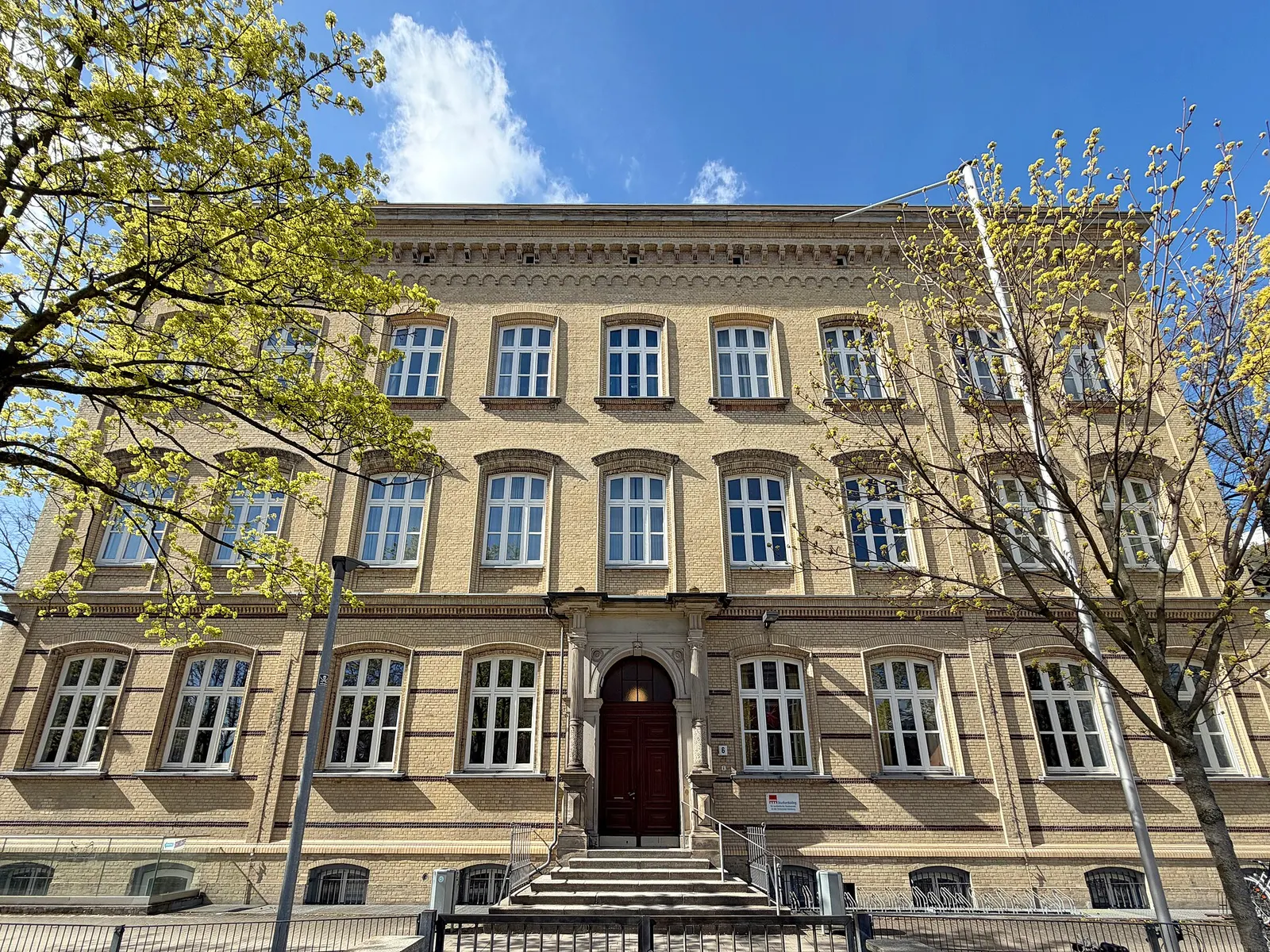
- StudienkollegStudienkolleg
- A one-year preparatory college attached to a university or a university of applied sciences (or run by a state), for international applicants whose certificate qualifies only for preparation. Under state rules participants are usually students of the host institution, with the rights and duties of enrolled students unless the college's rules say otherwise. There is no legal right to a place.
- Feststellungsprüfung (FSP)Feststellungsprüfung
- The final "assessment exam" that proves you meet the language, subject and method requirements for degree programmes in your course's subject group. It can also be taken without attending a Studienkolleg, as an external candidate.
Who has to attend a Studienkolleg?
The ZAB's evaluation recommendations, published in anabin, decide this for each certificate and country. uni-assist sums the situation up: sometimes a school-leaving certificate is not enough for direct entry, and in many cases attending a Studienkolleg and passing the FSP resolves this. You must already have a certificate that gives university access in your home country, and for some countries additional study time is required. If you are unsure, uni-assist's "Check: university admission" tool gives a first answer, and uni-assist determines it when it processes your application.
- Turkish applicants. The twelve-year Lise Diploması gives direct, subject-bound access with a qualifying YKS placement, so Turkish school leavers with such a placement do not need a Studienkolleg. anabin opens the Studienkolleg to Turkish applicants only in particular cases, for example an eleven-year lise or a vocational (meslek) lise diploma with a qualifying YKS score, or a twelve-year lise diploma plus a year in a two-year vocational (MYO) programme, which then leads to universities of applied sciences only. A twelve-year lise diploma without a placement does not open the Studienkolleg route. See the YKS requirement.
- Eleven years of schooling. The University of Stuttgart likewise states that Turkish citizens with an eleven-year school certificate must complete an additional Studienkolleg year.
- Others. Applicants from many countries outside the EU are placed on the Studienkolleg route by the ZAB's evaluation. The general logic is in university entrance qualification (HZB) and the anabin database in anabin and ZAB.
Course types: which Studienkolleg course leads where
Each Studienkolleg runs focus courses (Schwerpunktkurse) linked to groups of degree subjects. The course you take decides which programmes your FSP opens, so pick it according to the degree you want, not the college you like. Not every college offers every course: the list of colleges and their courses is on the Studienkolleg directors' website, studienkollegs.de.
- Focus courseSchwerpunktkurs (T-Kurs, M-Kurs, W-Kurs …)
- The track you follow at a Studienkolleg, named by letter. Each is assigned to a group of degree subjects by the state, and your FSP qualifies you for that group; a passed FSP is also accepted in another state where your chosen programme belongs to a different course.
| Course | Prepares for | Written FSP subjects |
|---|---|---|
| T (university) | Technical, mathematical and science programmes (except biology) | German; mathematics (incl. computer science); physics or chemistry |
| M (university) | Medical and biological programmes, including pharmacy | German; biology and/or chemistry; physics or mathematics |
| W (university) | Economics and social sciences | German; mathematics; economics/business studies |
| G and S (university) | Humanities, arts, German studies (G); language programmes (S) | G: German; history; a third subject such as German literature. S: German; a second foreign language; a third subject such as history |
| TI (university of applied sciences) | Technical and engineering programmes at universities of applied sciences | German; mathematics incl. computer science; physics or chemistry |
| WW (university of applied sciences) | Business programmes at universities of applied sciences | German; mathematics incl. computer science; economics and business |
| GD and SW (university of applied sciences) | Design and art (GD); social sciences (SW) at universities of applied sciences | GD: German; mathematics or physics; design or computer-aided design. SW: German; mathematics; social sciences |
Getting in: German level, entrance test and deadlines
The Studienkolleg directors' association states that you must prove German at least at level B1 of the European framework when you apply, and that individual colleges set their exact requirements. Because colleges have more applicants than places, they usually rank applicants with an entrance test (Aufnahmetest), mostly in German and mathematics, sometimes German only. Many colleges publish sample tests. In some countries colleges run the test locally, but normally you must travel to Germany to take it at the college. There is no entitlement to a place: admission follows the number of places available.
The Studienkolleg route, step by step
For applicants whose certificate gives no direct access to a degree
Check your certificate
The ZAB's evaluation in anabin, or uni-assist's check tool, shows whether you have direct access or need the Studienkolleg.
German to B1 at least
The minimum to apply; colleges teach in German, and the entrance test and the course go well beyond it.
Apply to a college
Directly, through uni-assist or through a university, as each college says; deadlines are often earlier than the universities'.
Visa and entrance test
A visa for study preparation from the German mission at home; the test is usually held in Germany, and your ranking decides the place.
The course
28–32 hours per week, attendance compulsory; no tuition at a state college, only the semester contribution (€100–400 per semester).
2 semesters
Feststellungsprüfung (FSP)
Written exams in German and two subjects of your course, plus orals; 2 attempts under the national framework.
Apply for your degree
As a new applicant with the FSP certificate, valid nationwide (some NRW exams only in NRW); a pass gives no right to a place.
Turkish school leavers with a qualifying YKS placement normally have direct, subject-bound access and need no Studienkolleg. An FSP passed at a university-of-applied-sciences college does not open research universities.
Source: Arbeitsgemeinschaft der Leiterinnen und Leiter der Studienkollegs an deutschen Hochschulen, uni-assist e.V., KMK. Last checked:
Image (PNG)Confirm you are on the Studienkolleg route
Check the ZAB evaluation of your certificate (anabin) or use uni-assist's check tool.
Choose the course, then the college
Pick the focus course for your target degree; then find colleges offering it on studienkollegs.de. Note whether the college is state-run or private.
Find out how that college takes applications
Some take applications directly, others only through uni-assist, and some through a university. With uni-assist you apply for the degree programme you want afterwards and answer "Yes" to the Studienkolleg question; the normal handling fee of €75 applies. uni-assist warns that it is not automatically responsible for a member university's Studienkolleg.
Apply early
uni-assist notes that Studienkolleg deadlines are often earlier than university deadlines. TUM's Studienkolleg, for example, takes applications 15 May – 15 July for the winter semester and 15 November – 15 January for the summer semester.
Apply for the visa
The directors' association lists the visa for study preparation, applied for at the German mission in your home country, as the step before the entrance test, because the test is normally held in Germany. Which visa fits your situation is explained in the visa guide (links below).
Prepare for and sit the entrance test
Use the college's sample tests. Your ranking in the test decides whether you get a place on the one-year course; then you enrol at the host institution.
How long it lasts and how the year is organised
The KMK framework sets the course at 2 semesters. In justified cases it can be extended by at most two semesters, or shortened to one semester by passing an entrance test into the second semester or by sitting the whole FSP after the first semester. Each semester can be repeated only once, and changing from one Studienkolleg to another is normally not possible; the directors' association adds that exceptions are decided by the heads of both colleges. Teaching in compulsory and additional subjects should normally total 28–32 hours per week, which colleges may spread across the two semesters. Joining a Studienkolleg obliges you to attend regularly, and the framework says leave from classes to take up a job or an internship is normally not granted, so plan any job around a full school-style timetable.
| Rule | What it means for you |
|---|---|
| Standard length | 2 semesters; at most two extra semesters in justified cases |
| Shortening | Entrance test into the second semester, or the whole FSP after one semester |
| Repeating | Each semester at most once |
| Changing college | Normally not possible |
| Teaching load | 28–32 hours per week in compulsory and additional subjects |
| Credit towards the degree | None: time at a Studienkolleg is not counted towards your studies |
| Status | Usually enrolled at the host institution, with students' rights and duties |
Is Studienkolleg free?
At a state Studienkolleg there is normally no tuition. You pay the host institution's semester contribution, which the directors' association puts at €100–400 per semester depending on the college, plus books and materials, and you need health insurance. Private Studienkollegs charge fees; before paying one, check that its FSP is state-recognised, because an FSP is what universities accept. Living costs are the same as for any student: for the visa, the federal government's minimum for study and the Studienkolleg is €992 per month in 2026 (see blocked account). The directors' association also notes that Studienkolleg students normally receive no scholarships, so plan the year from your own funds.
The Feststellungsprüfung: format, attempts and validity
The FSP has written exams in German and two further compulsory subjects of your course, each normally lasting at least three hours, plus oral exams in subjects the examining board selects. You pass if every subject is at least "ausreichend" (sufficient); if you fail only one subject, state law may allow compensation or a re-sit in that subject. Holders of certain German certificates can be exempted from the German exam in the T, M, TI or GD courses.
- Attempts. The framework allows 2 attempts (the first sitting and one repeat), normally before the same college's board; state law may allow one more. If you fail twice, no other Studienkolleg may admit you to a further attempt.
- Early sitting. First-semester students whose results suggest success can take the FSP early in single subjects or in full. Subjects failed at an early sitting count as not taken ("Freischuss").
- Where it is valid. nationwide (some NRW exams only in NRW). It covers the subject group of your course; to study a subject assigned to a different course, you take a supplementary exam (Ergänzungsprüfung) in that course's subjects.
- German proof. The German part of the FSP is itself a full proof of German for admission under the national rules on language exams (RO-DT).
- External candidates. You may sit the FSP without attending a college ("Externenprüfung"), registering with the body responsible under state law; uni-assist notes that different deadlines may apply.
After passing, you apply for a degree programme as a new applicant with your FSP certificate; passing gives you no entitlement to a place: the University of Stuttgart, for example, describes the FSP as the certificate "with which you can apply again" to it. The certificate shows your grade in each subject and an average grade.
Where Studienkollegs are, and what to do in states without one
There is no state Studienkolleg in every state. According to the directors' association list: Brandenburg, Bremen, Saarland (none); North Rhine-Westphalia (only non-state colleges). uni-assist likewise says there are generally no state-sponsored Studienkollegs in Brandenburg and North Rhine-Westphalia. If you want to study in NRW, two options exist: a Studienkolleg in another state (an FSP is generally valid nationwide), or a university's own access exam under the NRW Higher Education Act. Bielefeld, for example, admits applicants whom the ZAB places on the Studienkolleg route with digital TestAS standard score ≥ 50 (paper ≥ 90) in core and subject module, plus German proof. Universities without a college of their own often cooperate with one elsewhere: through the University of Stuttgart, applicants can apply to the Studienkollegs in Heidelberg or Karlsruhe.
Visa, health insurance and work during the Studienkolleg
The Residence Act counts attending a Studienkolleg as part of the study purpose once the college's acceptance is proven (§ 16b(1)), so the visa follows the same process as for degree students: see the national student visa and, if you plan to come before you have a place, student applicant and language-course visas. Berlin's immigration authority, for example, expects all study-preparation measures together normally to take no more than 2 years, and ends the permit if you do not start or you drop out. For health insurance the Federal Foreign Office treats Studienkolleg participants differently from enrolled degree students: they need private (incoming) cover for the whole visa period that reimburses outpatient and inpatient treatment and is not limited to emergencies; see student health insurance. Work rules are in how much students can work.
In practice: a Studienkolleg year from application to degree
About a year before you want to start
German to B1 and beyond
B1 is the minimum to apply; the entrance test and the course itself go well beyond it.
Application window (TUM: 15 May – 15 July for winter)
Apply to one or more colleges
Directly, via uni-assist or via a university, as each college specifies.
After applying
Visa for study preparation
Applied for at the German mission at home, before you travel for the entrance test (studienkollegs.de sequence).
Before the semester
Entrance test in Germany
Usually in person at the college; your ranking decides whether you get a place.
After passing the test
Enrol, housing, insurance
Enrol at the host institution and sort out housing and health insurance before teaching starts.
Semesters one and two
Course
28–32 hours per week; regular attendance is compulsory; an early FSP is possible for strong students.
End of the second semester
Feststellungsprüfung
Written and oral exams; one repeat if needed.
After the FSP
Apply for the degree
As a new applicant, before the university's deadline for the following semester.
Mistakes to avoid
- Choosing a university-of-applied-sciences course when you may want a research university.
- Choosing a course that does not match your degree subject (switching later needs a supplementary exam).
- Applying with less than the college's German requirement or without preparing for the maths test.
- Paying a private college without checking that its FSP is state-recognised.
- Missing the earlier Studienkolleg deadlines while working to university dates.
- Planning to work long hours: the timetable and attendance rules leave little room.
The Studienkolleg is one stage in a longer route: check entry qualification first, apply through uni-assist where required, prove German as described in language requirements, and plan the visa with the student visa guide.
Frequently asked questions
Who has to attend a Studienkolleg?
Applicants whose school-leaving certificate does not give direct access to a German degree programme under the ZAB's evaluation in anabin, but does qualify them for the Feststellungsprüfung route. uni-assist's check tool gives a first answer, and uni-assist determines it when it evaluates your application.
Is Studienkolleg free?
State Studienkollegs charge no tuition; you pay the semester contribution, which the Studienkolleg directors put at €100–400 per semester, and your living costs. Private Studienkollegs charge fees, and you should check that their Feststellungsprüfung is state-recognised.
What German level do you need for Studienkolleg?
At least B1 when you apply, according to the Studienkolleg directors' association, and individual colleges may ask for more. Places are then ranked by an entrance test, usually in German and often mathematics.
What is the Feststellungsprüfung?
It is the exam at the end of the Studienkolleg that proves you can study the subjects of your course's group in German, with written exams in German and two core subjects plus orals. You have 2 attempts under the KMK framework, and the certificate is generally valid throughout Germany, although some FSPs in North Rhine-Westphalia are valid only there.
Can I do a Studienkolleg in English?
No. uni-assist states that teaching at Studienkollegs is in German, so you need German proof to be admitted even if you later want an English-taught bachelor's programme.
Can I take the Feststellungsprüfung without attending a Studienkolleg?
Yes. The KMK framework allows external candidates to sit the exam by registering with the body responsible under state law, and uni-assist notes that different deadlines apply for this external exam.
Sources
17 sources, all official
- Rahmenordnung für den Hochschulzugang mit ausländischen Bildungsnachweisen, für die Ausbildung an den Studienkollegs und für die Feststellungsprüfung (KMK-Beschluss vom 15.04.1994 i.d.F. vom 21.09.2006)Kultusministerkonferenz (KMK) (Official)
- Bewerbungsablauf (Wer darf ein Studienkolleg besuchen? Aufnahmetest, Dauer und Abschluss)Arbeitsgemeinschaft der Leiterinnen und Leiter der Studienkollegs an deutschen Hochschulen (studienkollegs.de, run by Studienkolleg Hamburg) (Official)
- Welche Arten von Studienkollegs gibt es? (Schwerpunktkurse)Arbeitsgemeinschaft der Leiterinnen und Leiter der Studienkollegs an deutschen Hochschulen (studienkollegs.de) (Official)
- KostenArbeitsgemeinschaft der Leiterinnen und Leiter der Studienkollegs an deutschen Hochschulen (studienkollegs.de) (Official)
- Liste der Arbeitsgemeinschaft bundesweiter StudienkollegsArbeitsgemeinschaft der Leiterinnen und Leiter der Studienkollegs an deutschen Hochschulen (studienkollegs.de) (Official)
- FAQArbeitsgemeinschaft der Leiterinnen und Leiter der Studienkollegs an deutschen Hochschulen (studienkollegs.de) (Official)
- Studienkolleg – preparatory courseuni-assist e.V. (Official)
- FAQs – Apply onlineuni-assist e.V. (Official)
- FAQs – Get informationuni-assist e.V. (Official)
- Zugangsberechtigungen zum Studium an der Universität StuttgartUniversität Stuttgart (Official)
- Dates, Periods and DeadlinesTechnische Universität München (TUM) (Official)
- Gesetz über die Hochschulen des Landes Nordrhein-Westfalen (Hochschulgesetz – HG), Fassung gültig ab 04.08.2026Land Nordrhein-Westfalen (recht.nrw.de) (Official)
- Ordnung über den Zugang internationaler Studienbewerber*innen zum Studium an der Universität Bielefeld vom 30. November 2020 i.V.m. den Änderungen vom 2. Mai 2022 und vom 26. Juli 2024 (Lesefassung)Universität Bielefeld (Official)
- Rahmenordnung über deutsche Sprachprüfungen für das deutschsprachige Studium an deutschen Hochschulen (RO-DT), Beschluss der HRK vom 08.06.2004 und der KMK vom 25.06.2004 i. d. F. der HRK vom 04.11.2025 und der KMK vom 27.11.2025HRK / KMK (PDF hosted by g.a.s.t. – TestDaF-Institut) (Official)
- Aufenthaltsgesetz § 16b StudiumBundesministerium der Justiz / gesetze-im-internet.de (Official)
- Krankenversicherungsschutz bei Anträgen auf nationale VisaAuswärtiges Amt (Official)
- anabin – Türkei: Lise Diplomasi einer 12-jährigen allgemeinbildenden Sekundarschule (Bewertung mit Fallgruppen TUR-BV05 bis TUR-BV08 und TUR-BV14)Kultusministerkonferenz – Zentralstelle für ausländisches Bildungswesen (anabin) (Official)