A German student visa is a national visa (category D) for a stay of more than 90 days. It covers only the start: the visa lets you enter, and the immigration office (Ausländerbehörde) of the town where you live then issues the residence permit for study that carries you through your degree. Both rest on § 16b of the Residence Act (AufenthG), which gives anyone admitted to full-time study at a state or state-recognised university a right to the permit once the general conditions are met: secured living costs, health insurance and a valid passport.
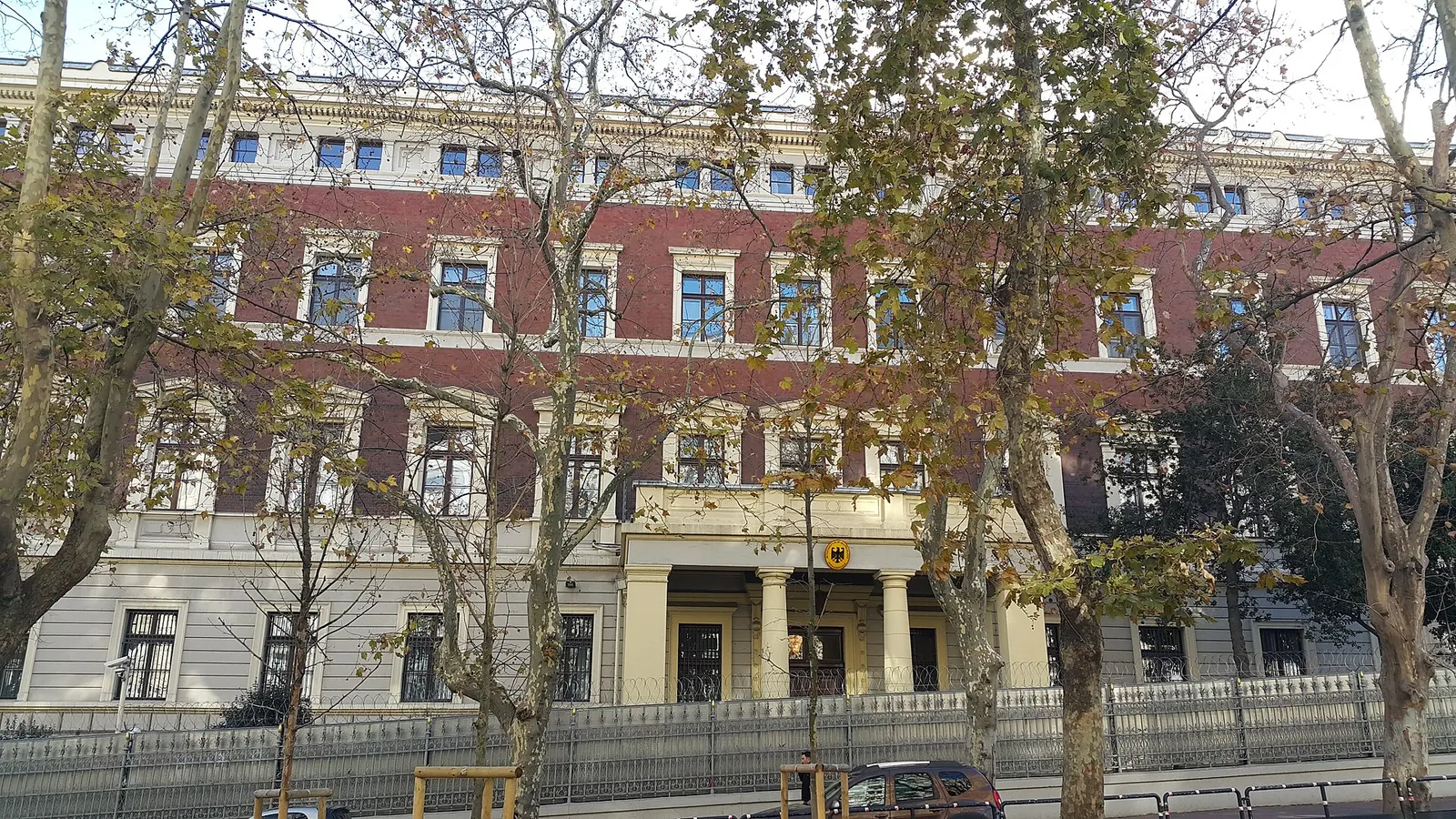
This page maps the whole process for 2026: which visa fits your plan, what you must prove, how applications from Türkiye work through iDATA and the Federal Foreign Office's online portal, how long it takes and what happens after you arrive. Each step has its own detailed guide, linked where it comes up. If you are still choosing where and what to study, start with the Germany study guide and the admissions hub: your admission letter is the foundation of everything below.
Who needs a German student visa
Whether you need a visa before travelling depends on your nationality. The Federal Foreign Office's answers sort students into these groups:
| Your nationality or status | What you need | Where it is handled |
|---|---|---|
| EU, EEA or Swiss citizen | No visa and no residence permit; you only register your address like every resident | The registration office after moving in |
| Australia, Canada, Israel, Japan, New Zealand, South Korea, the United Kingdom or the USA | No visa to enter; you apply for the student residence permit in Germany soon after entry (§ 41 AufenthV sets the deadline) | The Ausländerbehörde of your new place of residence |
| Andorra, Brazil, El Salvador, Honduras, Monaco or San Marino | The same as the row above if you do not plan to take up a job; ask the mission if you do | The Ausländerbehörde |
| Holder of a study permit from another EU country | EU mobility rules may let you enter without a visa and apply in Germany (Berlin excludes permits from Denmark and Ireland) | The Ausländerbehörde |
| Türkiye and every other nationality | A national (D) visa for study, applied for before entry | The German mission responsible for the place where you live |
- National visa (D visa)nationales Visum (Kategorie D)
- A visa for a stay of more than 90 days, issued by a German mission abroad before entry under the rules for the residence permit it leads to (§ 6 Abs. 3 AufenthG). Time spent on it counts towards later residence periods. For study it is followed by a residence permit issued in Germany.
- Immigration officeAusländerbehörde
- The local authority for residence matters in the district or city of your main residence. It issues and renews residence permits, records conditions such as your work allowance, and becomes the beneficiary of your blocked account once you have arrived. In Berlin it is called the Landesamt für Einwanderung (LEA).
Which visa for which plan
The visa purpose must match what you will actually do in Germany. Five routes matter to students; the first is by far the most common:
| Your plan | Legal basis | Main conditions | Work allowed |
|---|---|---|---|
| Full-time degree with admission, including a preparatory German course the admission requires, or a confirmed Studienkolleg place | § 16b Abs. 1 AufenthG – a right to the permit | Admission; €992 per month; health insurance | Up to 140 days of work per calendar year, plus student-assistant jobs at the university |
| Conditional admission (for example a certificate still missing), part-time study, or a preparatory German course without admission | § 16b Abs. 5 – at the authority's discretion | As above | As above |
| Looking for a study place from inside Germany | § 17 Abs. 2 – for up to 9 months | School and language prerequisites met or to be gained during the stay; €1,091 per month | 20 hours per week, plus short trial jobs |
| A German course that does not prepare for a degree | § 16f Abs. 1 | Intensive course of at least 18 teaching units per week; €1,091 per month | 20 hours per week |
| Joining a spouse or parent who studies in Germany | §§ 30 and 32 – family reunification | The family's living costs secured; a spouse normally needs German at level A1 | See the family section below |
The Studienkolleg, the preparatory German course and the two pre-admission permits are explained in applicant, Studienkolleg and language-course visas. For Turkish school leavers the choice is usually made by the admission rules rather than the visa: the basic condition DAAD Türkiye names for applying directly to a bachelor's programme with a lise diploma is a YKS placement in a four-year, face-to-face (örgün) lisans programme; without such a placement the lise diploma opens neither direct access nor a Studienkolleg place (see the YKS rule). The details are in the YKS rule for Turkish applicants.
What you must prove: the core requirements
Whatever the route, the mission checks the same core conditions before it issues a study visa. Your exact document list is generated for your case in the online portal; the full list, with notes on Turkish documents and translations, is in the German student visa documents checklist.
The four pillars of a study visa application
- Admission: a letter of admission (Zulassungsbescheid) from a state or state-recognised university, or acceptance by a Studienkolleg. A mere confirmation that you have applied supports a study-applicant permit, not a study permit (Berlin's guidance).
- Money: €992 per month for 2026, usually €11,904 per year for the first year, shown through a blocked account, a German sponsor's formal declaration or a scholarship.
- Health insurance valid in Germany from the day you arrive, of the type that fits your age and course.
- A valid passport and clarified identity, and no reason for expulsion such as serious offences (the general conditions of § 5 AufenthG).
Language certificates are not a general visa requirement. The law asks for proof of the language of instruction only if the university did not check it when admitting you and you will not acquire it on a preparatory course (§ 16b Abs. 1 AufenthG); Berlin does not ask for it at all, because its universities already check it. The university's own requirements are a different matter: see language requirements for admission.
Proof of funds in 2026
The amount follows the maximum BAföG student grant and is announced for each calendar year by the Federal Ministry of the Interior. For 2026 it is €992 per month, so a blocked account for a first year holds €11,904 per year; German courses that do not prepare for study and the study-applicant permit require €1,091 per month. For education stays the missions in Türkiye name two ways to prove it: a blocked account with a provider of your choice, or a formal declaration of commitment (Verpflichtungserklärung) by a person in Germany. How the account works, what providers charge and how the money comes back is in the blocked account guide; sponsors, scholarships and combinations are covered in proof of financial means.
What the €992 a month on a blocked account is made of
Proof of funds for a student visa, 2026 · €11,904 for a first year
The monthly amount to prove, €992, is the BAföG need: €475 basic need, €380 for housing and €137 for health and care insurance — €11,904 for a year.
- Basic need€47548%
- Housing€38038%
- Health and care insurance€13714%
| Item | Value | Share |
|---|---|---|
| Basic need | €475 | 48% |
| Housing | €380 | 38% |
| Health and care insurance | €137 | 14% |
| Total | €992 | 100% |
If your documented rent including utilities is below the housing part, the amount to prove falls by the difference — whether the mission accepts that is its decision.
Source: Bundesministerium des Innern, Bundesministerium der Justiz / gesetze-im-internet.de, Land Berlin +5 more. Last checked:
Image (PNG)- Blocked accountSperrkonto
- An account in Germany into which you pay your first year's living costs before applying. Only a fixed amount can be withdrawn each month, and the block is registered in favour of the mission until you arrive and of the immigration office after that; neither can touch the money. Provider fees come on top of the blocked sum.
Health insurance for the visa
The Federal Foreign Office distinguishes by age and course. Students up to the age of 30 enrolled at a state or state-recognised university are normally insured in the statutory system from enrolment, so for the visa they only need incoming or travel insurance valid in Germany for the first 3 months. Students from 30, Studienkolleg participants and language-course students need private (incoming) cover for the whole visa period that reimburses outpatient and inpatient treatment and is not limited to emergencies; ordinary travel insurance is generally not enough. For the residence permit later, the immigration office expects German statutory insurance or equivalent private cover, and Berlin states that a foreign policy is generally not sufficient. Student insurance itself is explained in student health insurance in Germany and the wider healthcare hub.
Applying from Türkiye: iDATA, the portal and the missions
In Türkiye the German missions run the visa procedure for study and for the study-place search exclusively through the Auslandsportal, the Federal Foreign Office's online application platform (their Turkish pages call it the 'Konsolosluk hizmet portalı'). Their national-visa page asks applicants to start in the online appointment system of iDATA, the missions' external service provider, which either books an appointment or, depending on what you enter, refers you to the portal to register. Registering is not yet a legally valid application: you upload your documents, the mission pre-checks them and comments, and only then do you book the on-site appointment for fingerprints, photo, originals and the fee.
From student visa to residence permit
Applying from Türkiye, step by step
Blocked account and documents
Prove €992 per month; the visa needs the blocking confirmation.
Apply online
Study visas from Türkiye go through the Federal Foreign Office's portal.
Appointment
Biometrics, originals, visa fee €75; iDATA may add its own fee, depending on the route.
Enter Germany
Travel health insurance bridges the first months until student insurance starts.
3 months
Register your address
Anmeldung at the Bürgeramt, within this period after moving in.
2 weeks
Residence permit
At the immigration office before the visa runs out; card fee €100. Berlin: card ready in about this time.
4 to 6 weeks
Source: Bundesministerium des Innern, Bundesministerium der Justiz / gesetze-im-internet.de, Land Berlin +3 more. Last checked:
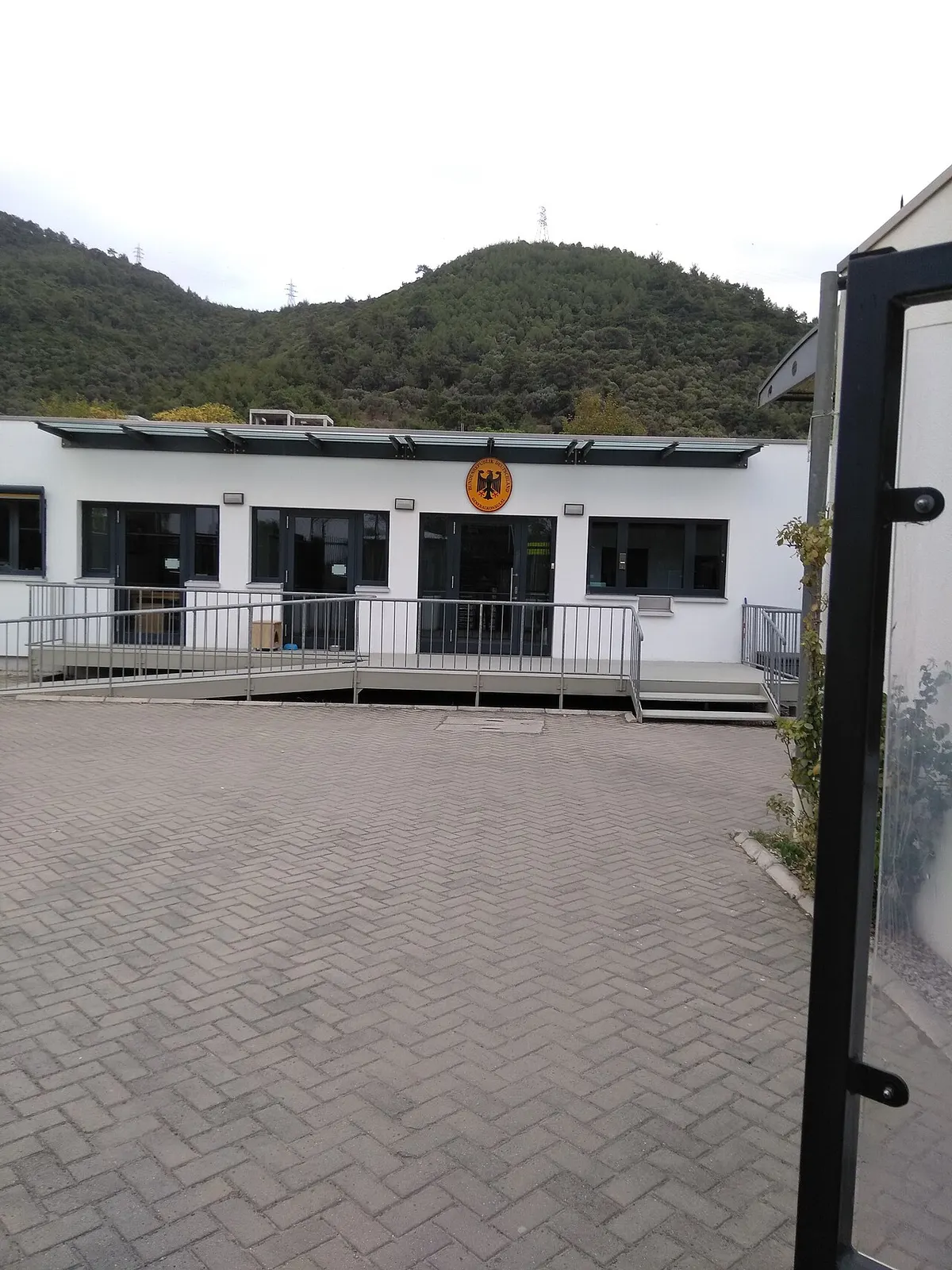
Image (PNG)The German missions in Türkiye are the Embassy in Ankara, Consulates General in Istanbul and Izmir, Consulate in Antalya (no visa section); which visa section handles your file depends on the province you live in. Turkish and non-Turkish nationals use separate appointment systems, and a family travelling together must register in the same one even if its members hold different nationalities. Consular districts, iDATA's fees and the Turkish-document details are in applying for a German student visa from Türkiye; the portal procedure, which works the same way at every German mission, is described in where and how to apply.
What it costs
| Item | Fee | Notes |
|---|---|---|
| National (D) visa | €75 | Waived for holders of a scholarship from public funds (§ 52 Abs. 5 AufenthV) |
| iDATA service fee / appointment-booking fee (Türkiye) | €39.92 / €12 | Charged 'depending on the case', payable in Turkish lira |
| Residence permit card (eAT), first issue | €100 | Berlin: €56 if issued as a passport sticker |
| Residence permit for Turkish nationals in Berlin | €46 from age 24; €27.60 under 24 | Reduced fee under the EU–Turkey association rule (§ 52a AufenthV); ask your own office whether it applies it |
| Extension of the permit | €93 | €96 if it covers only a short further stay (§ 45 AufenthV) |
| Fiktionsbescheinigung | €13 | Certificate that you remain legal while an application is pending; persons covered by EU–Turkey association law are exempt from this fee (§ 52a Abs. 3 AufenthV) |
| Verpflichtungserklärung | €29 | Paid by the sponsor at their immigration office in Germany |
| Blocked account, provider fees | €227 to €277.80 for twelve months | Two providers' own published prices; on top of the blocked amount |
How long it takes, and when to start
No German mission in Türkiye publishes a processing time for Turkish citizens. The only official benchmark comes from the Consulate General in Istanbul, which states for applicants who live in Türkiye without Turkish citizenship a processing period of 5 weeks for a study visa without a scholarship (4 weeks with one), counted from the moment the documents are complete. Two features of the procedure work in your favour: the immigration office in Germany no longer has to approve an ordinary study visa (§ 31 AufenthV), and the portal's pre-check catches gaps before your appointment. What takes time is everything around it: the admission letter, the blocked-account transfer, sworn translations and the wait for an appointment. Where and how to apply covers processing and delays in detail.
In practice: a realistic sequence from admission to arrival
While you apply to universities
Prepare the slow documents
Check that your passport stays valid well beyond your planned arrival, order sworn German translations of your diploma and transcripts, and settle the financing. If a relative in Germany will sign a Verpflichtungserklärung, they need an appointment at their own immigration office. Winter-semester applications typically run 15 April – 15 July (DAAD Türkiye).
Admission letter in hand
Fund the money and insurance
Open the blocked account and transfer the money: one provider says a transfer takes 1–5 business days to arrive, and the blocking confirmation is issued only after it lands. Buy the insurance the visa needs, starting on your planned entry date. A sponsor's declaration should normally be no more than 6 months old when the visa is issued.
The same week
Register in the portal and upload
Start in iDATA's appointment system, which refers study applicants to the Auslandsportal. Upload everything, then watch your account: the mission's pre-check may ask for corrections before it lets you book.
Pre-check passed
Attend the appointment
At the mission or at iDATA's centre, as the portal tells you: fingerprints, photo, the originals named in the confirmation and the €75 fee.
Decision
Collect the visa
The portal shows the status. Avoid non-refundable travel bookings until the visa is in your passport.
First weeks in Germany
Register, enrol, insure
Register your address within 2 weeks of moving in, enrol, and join a statutory health fund or arrange equivalent cover. The order is explained in the arrival guide.
Before the visa expires
Apply for the residence permit
The application must reach the immigration office before the visa's end date. Berlin, for example, accepts it online from 4 months before expiry and recommends applying 8 weeks ahead.
After arrival: from visa to residence permit
Whatever validity your visa shows, the residence permit is what covers your degree. Apply to the Ausländerbehörde of your main residence before the visa expires: a timely application keeps the visa valid until the office decides (§ 81 Abs. 4 AufenthG), so you can keep studying while you wait; Berlin's guidance adds that with your passport, the expired title and a valid Fiktionsbescheinigung you can travel and re-enter. Most offices issue the permit as an electronic card (eAT); Berlin says the card can be collected 4 to 6 weeks after the appointment. Documents, fees and the reduced fee for Turkish nationals are in your residence permit after arrival. If your visa or permit runs out while the office is still processing, the Fiktionsbescheinigung is the paper that proves you are still legal.
Keeping and renewing the permit
The permit is normally issued for 2 years and renewed for as long as your degree is not finished and can still be finished in a reasonable time (§ 16b Abs. 2 AufenthG). Offices judge that by your progress: Berlin treats it as sufficient while you exceed the average length of your programme by no more than 3 semesters, and beyond that asks for a study prognosis from your university. Three rules catch students out. Dropping out ends the permit under the condition Berlin writes into it; you must tell the office within 2 weeks if your studies end early (§ 82 Abs. 6); and staying outside Germany for more than 6 months makes the permit expire unless the office has allowed a longer absence (§ 51 Abs. 1 Nr. 7). Changing course and switching to another permit are allowed under conditions explained in renewing your student residence permit; after graduating you can stay to look for work, as described in the after-graduation hub.
Extending a student permit: when to file
Berlin immigration office practice, around the permit's expiry date
4 months before
4 months before
Earliest online application
Order your transcript, and a study prognosis if you are more than 3 semesters beyond the average study duration.
8 weeks before
8 weeks before
Recommended: apply with every document
Pay the fee online (€93 for a card) and keep the confirmation.
Permit expires
Permit expires
Latest safe filing
An application filed in time keeps the permit in force until the office decides.
Up to 1 month after
Up to 1 month after
Late: a hardship case at best
Berlin usually still continues the permit if the delay was mere negligence and the permit could otherwise be extended.
Other immigration offices set their own lead times. In Berlin the new card takes about 4 to 6 weeks after the appointment; until then the old permit continues.
Source: Land Berlin, Bundesministerium der Justiz / gesetze-im-internet.de. Last checked:
Image (PNG)Working while you study
A student permit allows up to 140 days of work per calendar year (280 half days if you only work short days) without approval from the Federal Employment Agency, plus unlimited student-assistant jobs at universities and research institutes. A day of up to 4 hours counts as half a day; alternatively a whole calendar week counts as 2.5 days if you work no more than 20 hours during the lecture period, or whatever your hours outside it. Since 1 March 2024 the allowance also applies in the first year of a Studienkolleg or preparatory course, and many older guides still print the previous 120 full or 240 half days. Counting examples and internships are in student working hours and the working while studying hub.
140 full or 280 half days: the student work rule
Non-EU students on a study residence permit, per calendar year
- Full working days a year
- 140 days
- full and half days can be mixed
- Half days instead
- 280
- Or less in a day counts as half
- 4 hours
- Days counted per week
- 2.5
- for a job of up to 20 hours in the lecture period
Student jobs at the university don't count. Working beyond the allowance can be fined up to €5,000.
Source: Bundesministerium der Justiz / Bundesamt für Justiz, Bundesagentur für Arbeit, Stadt Leipzig, Ordnungsamt +3 more. Last checked:
Image (PNG)Turkish citizens have no extra student work rights. The Federal Employment Agency's guidance does say that a Turkish student who has worked for the same employer for 1 year can rely on Decision 1/80 of the EEC–Turkey Association Council to continue that job. Treat it as a point to raise individually with the Ausländerbehörde, not as a general extension of the allowance.
Bringing your spouse or children
A spouse can join a student if both are at least 18 years old, the student's stay is expected to last more than 1 year and the marriage already existed when the student's permit was issued; the office may waive the last two conditions (§ 30 AufenthG). The spouse normally has to show German at level A1 before arriving, because students' spouses are not on the exemption list that covers, for example, Blue Card holders. In Türkiye only the Goethe-Institut's 'Start Deutsch 1' and the ÖSD's 'Grundstufe Deutsch 1' are accepted, as originals no older than 12 months. Minor unmarried children have a claim where both parents, or the parent with sole custody, hold a German residence title, for example your study permit and your spouse's family permit (§ 32 Abs. 1).
In every case the family's living costs and insurance must be covered on top of your own, and Berlin warns that spouses and children of students receive a visa or permit only in individual cases. Family life as a student is covered in studying in Germany with a family; the Turkish civil-status documents the missions ask for are listed in the Türkiye application guide.
If your visa is refused
Since 1 July 2025 a refused German visa can no longer be challenged by remonstration at the mission; letters sent anyway have no legal effect and are not answered. You now have two options: a new, normally fee-bearing application with all documents again, or an action at the Administrative Court of Berlin within 1 month of notification, conducted in German, with a court fee of about €480 due in advance. The refusal notice also lets you release your blocked account. Why study visas are refused and which route makes sense is in German visa refusal: reasons and your options.
Recent changes: what is new in 2025–26
Several rules changed recently, and many older guides have not caught up. The first row is an earlier reform that is still widely misreported:
| When | What changed | What it means for you |
|---|---|---|
| 1 March 2024 (earlier reform) | Work allowance of 140 days replaced 120 full or 240 half days; switching to another residence purpose allowed during study and language courses | Ignore guides that still print the old limits |
| 1 January 2025 | Every German visa section connected to the Auslandsportal | You apply online; the appointment is only for biometrics, originals and the fee |
| 1 July 2025 | Remonstration abolished | After a refusal: a new application or a lawsuit in Berlin |
| November 2025 | Group applications through one portal account | Families can apply together |
| Now (no start date published) | Missions in Türkiye: study and study-place-search visas only through the portal | Start at iDATA, finish in the portal |
| 2026 | Proof-of-funds amount stays at €992 per month | Same as 2025; a regional immigration authority reports it unchanged for 2027, but the federal notice itself could not yet be retrieved |
| 29 July 2026 | Verpflichtungserklärung can be given in writing or electronically; benefit offices must now report students who receive Bürgergeld or social assistance (before, the duty attached to the application) | Drawing these benefits is reported to the immigration office; a study permit requires living costs secured without public funds (§ 2 Abs. 3 AufenthG) |
In practice: the mistakes that cost students a semester
- Travelling on a visit visa and hoping to switch. As a rule it cannot be done; apply for the national visa from home.
- Letting the visa expire before applying for the residence permit. Only an application made before the end date keeps you legal while you wait.
- Using last year's amount. The proof-of-funds figure is re-set for each calendar year; check the current one before you transfer.
- Buying travel insurance where the visa needs full private cover, which applies to Studienkolleg participants, language-course students and students from 30.
- Opting out of statutory insurance without checking that the private policy meets the immigration office's standard; the exemption cannot be undone.
- Paying intermediaries for appointments. The missions in Türkiye work only with iDATA and IOM, and their page for non-Turkish applicants explicitly warns against visa agencies and unofficial websites.
- Spending a long thesis or internship period abroad without asking the office: after 6 months outside Germany the permit can expire.
More pitfalls beyond the visa, from housing scams to missed enrolment deadlines, are collected in common mistakes when moving to Germany, and the costs that come with the visa are set out in the costs hub.
Frequently asked questions
What are the requirements for a German student visa?
You need admission to a full-time programme at a state or state-recognised university (or a Studienkolleg place), proof of €992 per month for 2026, usually €11,904 per year in a blocked account for the first year, health insurance valid in Germany and a valid passport. A language certificate is needed for the visa only if your university did not check your language skills when admitting you. The exact checklist for your case is generated in the Federal Foreign Office's Auslandsportal.
How long is a German student visa valid?
The missions do not publish a standard validity for study visas, so check the dates printed on yours. What matters is that you apply for the residence permit at your local Ausländerbehörde before the visa expires. The permit is normally issued and renewed for 2 years at a time (§ 16b AufenthG).
Can I work on a German student visa?
With the student residence permit you may work up to 140 days of work per calendar year without approval, plus unlimited student-assistant jobs at your university. The allowance runs per calendar year and applies in full even in the year you arrive. Whether you may already work on the visa itself is shown in its remarks, because every residence title must state it (§ 4a AufenthG).
Do I need to speak German to get a German student visa?
Not for the visa as such. The Residence Act asks for proof of the language of instruction only if your university did not check it and you will not learn it on a preparatory course, and English-taught programmes set their own English requirements. A Studienkolleg place usually requires German at level B1, and a spouse joining you normally needs A1.
Can I enter Germany on a tourist visa and apply for a student permit there?
As a rule, no. The Residence Ordinance does not let a Turkish citizen obtain a student permit in Germany after entering on a Schengen visa, and the automatic continuation of a pending application does not cover Schengen visas. Apply for the national (D) visa for study from Türkiye before you travel.
Can I still appeal a German visa refusal by remonstration?
No. Since 1 July 2025 remonstrations against visa refusals have no legal effect and the missions do not answer them. You can apply again at any time, normally paying the fee again, or sue at the Administrative Court of Berlin within 1 month of notification of the refusal.
Sources
49 sources, 46 official
- Aufenthaltsgesetz § 16b StudiumBundesministerium der Justiz / gesetze-im-internet.de (Official)
- Aufenthaltsgesetz § 2 Begriffsbestimmungen (Abs. 3: Sicherung des Lebensunterhalts; Abs. 9–12: Sprachniveaus)Bundesministerium der Justiz / gesetze-im-internet.de (Official)
- Aufenthaltsgesetz § 5 Allgemeine ErteilungsvoraussetzungenBundesministerium der Justiz / gesetze-im-internet.de (Official)
- Aufenthaltsgesetz § 6 VisumBundesministerium der Justiz / gesetze-im-internet.de (Official)
- Aufenthaltsgesetz § 4a Zugang zur ErwerbstätigkeitBundesministerium der Justiz / gesetze-im-internet.de (Official)
- Aufenthaltsgesetz § 16f Sprachkurse und SchulbesuchBundesministerium der Justiz / gesetze-im-internet.de (Official)
- Aufenthaltsgesetz § 17 Suche eines Ausbildungs- oder StudienplatzesBundesministerium der Justiz / gesetze-im-internet.de (Official)
- Aufenthaltsgesetz § 30 EhegattennachzugBundesministerium der Justiz / gesetze-im-internet.de (Official)
- Aufenthaltsgesetz § 32 KindernachzugBundesministerium der Justiz / gesetze-im-internet.de (Official)
- Aufenthaltsgesetz § 51 Beendigung der Rechtmäßigkeit des AufenthaltsBundesministerium der Justiz / gesetze-im-internet.de (Official)
- Aufenthaltsgesetz § 81 Beantragung des Aufenthaltstitels (Fiktionswirkung, Fiktionsbescheinigung)Bundesministerium der Justiz / gesetze-im-internet.de (Official)
- Aufenthaltsgesetz § 82 Mitwirkung des Ausländers (Abs. 6: Mitteilung der vorzeitigen Beendigung)Bundesministerium der Justiz / gesetze-im-internet.de (Official)
- Aufenthaltsgesetz § 87 Übermittlungen an AusländerbehördenBundesministerium der Justiz / gesetze-im-internet.de (Official)
- Aufenthaltsverordnung § 41 Vergünstigung für Angehörige bestimmter StaatenBundesministerium der Justiz / gesetze-im-internet.de (Official)
- Abschaffung des Remonstrationsverfahrens zum 1. Juli 2025Auswärtiges Amt (Official)
- Aufenthaltsverordnung § 31 Zustimmung der Ausländerbehörde zur VisumerteilungBundesministerium der Justiz / gesetze-im-internet.de (Official)
- Aufenthaltsverordnung § 39 Verlängerung eines Aufenthalts im Bundesgebiet für längerfristige ZweckeBundesministerium der Justiz / gesetze-im-internet.de (Official)
- Aufenthaltsverordnung § 45 Gebühren für die Aufenthaltserlaubnis, die Blaue Karte EU, die ICT-Karte und die Mobiler-ICT-KarteBundesministerium der Justiz / gesetze-im-internet.de (Official)
- Aufenthaltsverordnung § 46 Gebühren für das VisumBundesministerium der Justiz / gesetze-im-internet.de (Official)
- Aufenthaltsverordnung § 47 Gebühren für sonstige aufenthaltsrechtliche AmtshandlungenBundesministerium der Justiz / gesetze-im-internet.de (Official)
- Aufenthaltsverordnung § 52 Befreiungen und ErmäßigungenBundesministerium der Justiz / gesetze-im-internet.de (Official)
- Aufenthaltsverordnung § 52a Befreiung und Ermäßigung bei Assoziationsberechtigung (EU–Türkei)Bundesministerium der Justiz / gesetze-im-internet.de (Official)
- Bekanntmachung zu § 2 Absatz 3 des Aufenthaltsgesetzes über den Mindestbetrag zur Sicherung des Lebensunterhalts (für das Jahr 2026), vom 13. August 2025, BAnz AT 29.08.2025 B1Bundesministerium des Innern (Bundesanzeiger) (Official)
- Bekanntmachung der Mindestbeträge zum Lebensunterhalt (für 2027; Meldung vom 23.09.2026)Servicestelle Arbeit und Migration Mittelsachsen (Landratsamt Mittelsachsen) (Institutional)
- Gesetz zur Weiterentwicklung der Digitalisierung in der Migrationsverwaltung (MDWG) vom 22. Juli 2026, BGBl. 2026 I Nr. 222 (ausgegeben 28. Juli 2026)Bundesgesetzblatt (recht.bund.de), Bundesministerium der Justiz (Official)
- Auslandsportal: Visa schnell, einfach und sicher online beantragen (Artikel vom 15.06.2026)Auswärtiges Amt (Official)
- Ein Sperrkonto eröffnen und schließen (Artikel vom 21.10.2024)Auswärtiges Amt (Official)
- Häufig gestellte Fragen: Studium – Wie erhalte ich ein Studentenvisum für Deutschland? (FAQ, Stand 13.11.2017)Auswärtiges Amt (Official)
- Häufig gestellte Fragen: Visum für Deutschland (FAQ, Stand 05.02.2024)Auswärtiges Amt (Official)
- Visa und Einreise (overview page of the German missions in Türkiye)Deutsche Vertretungen in der Türkei (Auswärtiges Amt) (Official)
- Nationale Visa für türkische Staatsangehörige – Aufenthalte über 90 Tage (Auslandsportal und iDATA-Terminsystem; Stand 15.06.2026)Deutsche Vertretungen in der Türkei (Auswärtiges Amt) (Official)
- Türk Vatandaşları için Ulusal Vize – Uzun süreli ziyaretler (90 günden fazla)Almanya'nın Türkiye'deki Temsilcilikleri (Auswärtiges Amt) (Official)
- Studium und Studienplatzsuche (Visumverfahren ausschließlich über das Auslandsportal)Deutsche Vertretungen in der Türkei (Auswärtiges Amt) (Official)
- Bildungsaufenthalte (Sperrkonto oder Verpflichtungserklärung als Finanzierungsnachweis)Deutsche Vertretungen in der Türkei (Auswärtiges Amt) (Official)
- National visas for non-Turkish citizens (long-term visas for stays of more than 90 days)German Missions in Türkiye (Federal Foreign Office) (Official)
- Was tun nach Ablehnung des Visumsantrages? (Remonstration seit 01.07.2025 abgeschafft)Deutsche Vertretungen in der Türkei (Auswärtiges Amt) (Official)
- Familiennachzug (Auslandsportal digital.diplo.de/visa-fz; A1-Nachweis bei Ehegattennachzug)Deutsche Vertretungen in der Türkei (Auswärtiges Amt) (Official)
- Merkblatt 44F – SprachkursDeutsche Vertretungen in der Türkei (Auswärtiges Amt) (Official)
- Aufenthaltserlaubnis zum Studium beantragen (Landesamt für Einwanderung Berlin, Dienstleistung 305244)Land Berlin – Landesamt für Einwanderung (ServicePortal Berlin) (Official)
- Studium (Landesamt für Einwanderung Berlin: Arbeiten, Praktika, Arbeitsplatzsuche, Familie)Land Berlin – Landesamt für Einwanderung (Official)
- Verfahrenshinweise zum Aufenthalt in Berlin (VAB), PDF erstellt am 31.08.2026 — A.16b Studium, A.20 Arbeitsplatzsuche, A.30 EhegattennachzugLand Berlin – Landesamt für Einwanderung (Official)
- Krankenversicherungsschutz bei Anträgen auf nationale VisaAuswärtiges Amt (Official)
- § 8 SGB V – Befreiung von der VersicherungspflichtBundesministerium der Justiz / Bundesamt für Justiz (gesetze-im-internet.de) (Official)
- § 16b AufenthG – Studium (Arbeitstagekonto, Absatz 3)Bundesministerium der Justiz / Bundesamt für Justiz (gesetze-im-internet.de) (Official)
- Fachliche Weisungen Aufenthaltsgesetz und Beschäftigungsverordnung (Stand 12/2024) – § 16b AufenthG (16b.0.1–16b.0.7) and ARB 1/80 (4.0.2)Bundesagentur für Arbeit (BA Zentrale) (Official)
- German Blocked Account for your VisaExpatrio Global Services GmbH (Institutional)
- Blocked Account GermanyFintiba GmbH (Institutional)
- Deutsche Vertretungen in der Türkei (start page, mission list)Auswärtiges Amt (Official)
- Almanya'da yükseköğrenim (lisans ve master başvurusu)DAAD Türkiye (DAAD Information Centres Istanbul/Ankara) (Official)