There is no single German university system, and that is the first thing to understand. Higher education is run by the sixteen Länder, and every university sets its own admission rules, deadlines and, within state law, fees. What the institutions share is a structure: research universities (Universitäten, including the technical universities), universities of applied sciences (Hochschulen für angewandte Wissenschaften, still often called Fachhochschulen) and art and music colleges, plus a private sector. This hub explains how the landscape fits together, what it costs, how you apply as an international student, and how to narrow it down to five or six programmes worth an application. For the wider picture of studying in Germany, start from the Germany guide.
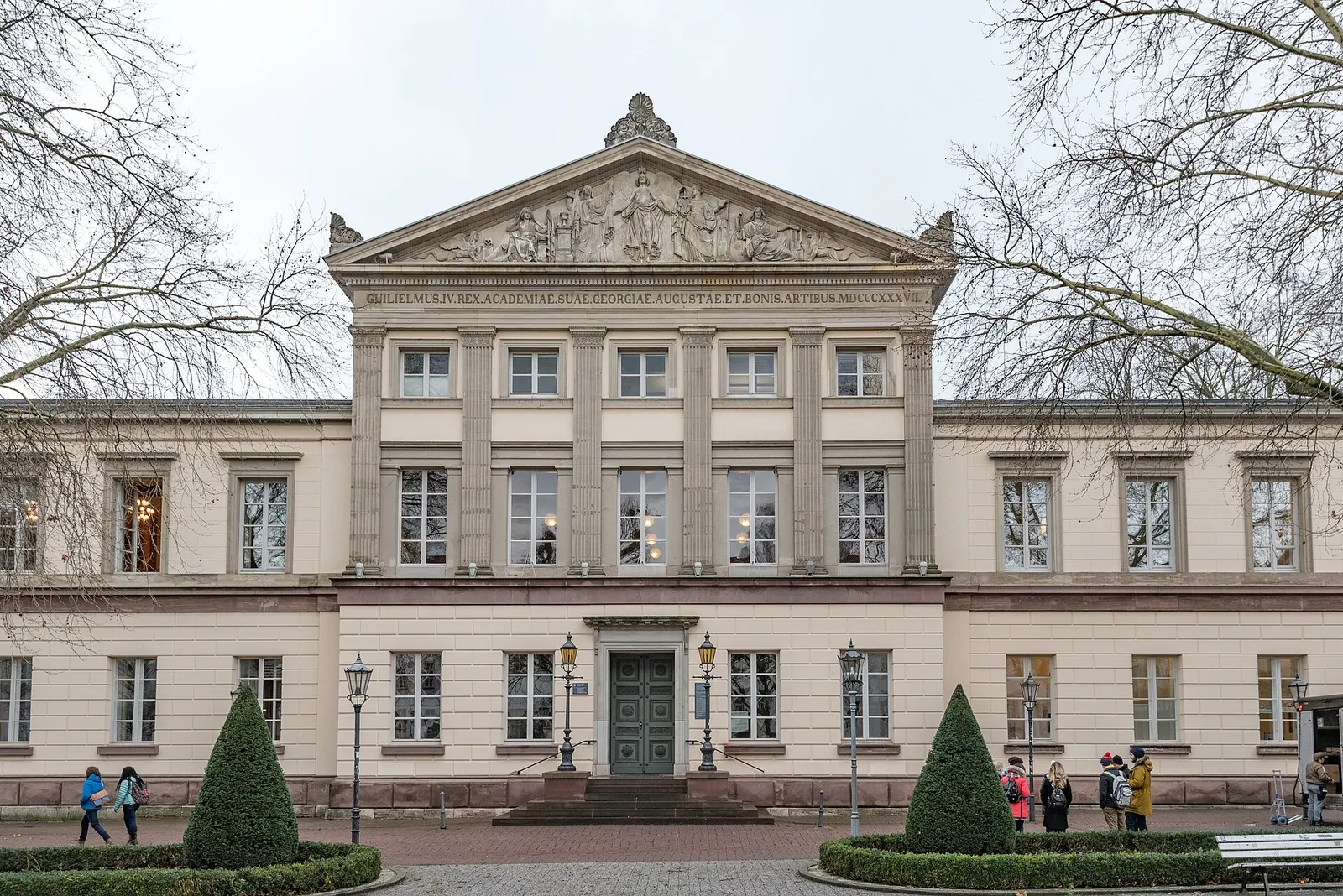
How many universities Germany has
The Federal Statistical Office (Destatis) counted 421 higher education institutions in winter semester 2025/26, a few fewer than two years earlier. The table separates the main types. Destatis counts each institution once, at its head office, so a university with campuses in several cities appears only once; the Rectors' Conference (HRK) uses a different count, so never mix the two series.
| Type | Number | Semester counted |
|---|---|---|
| All higher education institutions | 421 | Winter semester 2025/26 |
| Universities, including technical universities and private and church-run universities | 112 | Winter semester 2025/26 |
| Universities of applied sciences (Fachhochschulen/HAW), excluding administrative colleges | 206 | Winter semester 2025/26 |
| Art and music colleges (Kunst- und Musikhochschulen) | 52 | Winter semester 2025/26 |
| Private institutions of all types (church-run excluded) | 112 | Winter semester 2024/25 |
The rest of the total is made up of colleges of education, theological colleges and colleges for public administration, which matter little to international applicants. Students are concentrated at the large public universities: 2,864,160 students were enrolled in winter semester 2025/26, 426,179 of them international in the statistical sense (foreign citizens who earned their school-leaving qualification abroad). Turkish citizens formed the third-largest group, with 24,171 students. The 272 members of the HRK, the voluntary association of state and state-recognised institutions, teach the large majority of them.
Universität, TU or HAW: which type fits you
The type of institution shapes how you study more than its name or rank. Universities are research-led and are normally where doctorates are awarded; the technical universities are universities with an engineering and science core. Universities of applied sciences are oriented to professional practice: 62.6% of their bachelor's programmes run seven or eight semesters, usually because a practical semester is built in. Both award the same bachelor's and master's degree titles, and the KMK's model rules no longer distinguish university and HAW master's programmes. The full comparison, including what each type means for a later doctorate, is in Universität, TU or HAW compared.
| Type | What it is | Typical route in for a Turkish school leaver | Read more |
|---|---|---|---|
| Universität / Technische Universität (TU) | Research universities; doctorates; the nine leading TUs form TU9 | A YKS placement in a four-year lisans programme at a faculty, with the required score, for the same or a related subject; the Lise Diploması alone opens no Studienkolleg route | TU9 explained |
| Hochschule für angewandte Wissenschaften (HAW) / Fachhochschule | Applied, practice-oriented degrees; practical semesters common | As for universities; some Turkish routes, such as a placement at a yüksekokul instead of a faculty, open only HAWs | institution types |
| Kunst- und Musikhochschule | Art, music, design and film | Artistic aptitude test or portfolio dominates | institution types |
| Private university (staatlich anerkannt) | Fee-charging; must be state-recognised to award recognised degrees | Admission rules vary; check recognition before paying | private universities |
- HochschuleHochschule
- The umbrella word for any higher education institution. A Universität is a Hochschule, but so is a university of applied sciences or an art college, which is why many HAWs simply call themselves 'Hochschule' plus a city name.
- University of applied sciencesHochschule für angewandte Wissenschaften (HAW) / Fachhochschule (FH)
- A higher education institution focused on applied teaching and research. HAWs award bachelor's and master's degrees at the same level as universities; most do not award doctorates themselves.
What German universities cost
Most public universities charge no tuition for a first degree, but there are exceptions for non-EU students. Every state institution in Baden-Württemberg, including Heidelberg University and KIT, charges €1,500 per semester to non-EU students who came to Germany to study. In Bavaria each institution decides: TUM charges new non-EU students €4,000 or €6,000 per semester for a master's, TH Nürnberg €1,000 per semester from winter semester 2026/27, and FAU Erlangen-Nürnberg €1,000 to €6,000 per semester for new students from summer semester 2027, while LMU was not among the fee-charging institutions the Bavarian science ministry listed in August 2025 and its fee pages read for this guide show only the Studierendenwerk fee. Individual institutions elsewhere charge too, such as the Leipzig university of music and theatre (€1,800 per semester). Everyone pays a semester contribution (Semesterbeitrag) every semester. The details, exemptions and the rules for Turkish citizens are in tuition fees in Germany and where non-EU students pay tuition.
| University | Semester contribution | Tuition for non-EU students |
|---|---|---|
| TUM | Munich Student Union fee, the same as at LMU (€97 in summer semester 2026) | Master's €4,000 or €6,000 per semester, by programme |
| LMU Munich | €97 per semester | None on LMU's fee pages; not among the fee-charging institutions the Bavarian ministry listed in August 2025 |
| Heidelberg University | €189.80 per semester | €1,500 per semester |
| KIT Karlsruhe | €184 per semester | €1,500 per semester |
| RWTH Aachen | €358.34 per semester (summer semester 2026) | None, by RWTH's own statement |
| TU Berlin | €379.06 per semester | No tuition component in the fee schedule |
| FU Berlin | €376.80 per semester | None: FU charges tuition only for continuing-education programmes |
Where the semester contribution includes the Deutschlandsemesterticket, as in Berlin and Aachen, it buys a semester of local and regional public transport across Germany; in Munich it does not. Living costs dwarf all of this: for the visa you must prove €11,904 for the first year, normally through a blocked account. City-by-city budgets are in the city cost comparison.
How you apply: uni-assist, VPD or directly
There is no central application system for international students. Each university decides whether it checks foreign certificates itself or uses uni-assist, a service association that evaluates international applications for its member universities. uni-assist works in two ways. In the standard procedure it checks your documents and forwards the whole application to the university. In the VPD procedure it issues a preliminary review documentation (Vorprüfungsdokumentation), which you then upload in the university's own portal. The full process, fees and Turkish document rules are in uni-assist and the VPD.
- VPD (preliminary review documentation)Vorprüfungsdokumentation
- uni-assist's assessment of your foreign certificates, with your grades converted to the German scale. It is not an application: with it you apply to the university yourself, before the university's deadline.
| University | Route for applicants with a foreign degree | English-taught master's (university's own list) |
|---|---|---|
| TUM | VPD from uni-assist plus an application in TUMonline | 71 master's programmes |
| LMU Munich | Programme's own application plus the LMU application portal; VPD for undergraduate programmes from summer semester 2027 | 38 programmes |
| Heidelberg University | Directly in Heidelberg's heiCO portal | 18 master's programmes |
| RWTH Aachen | Directly in RWTH's online portal | 17 master's programmes |
| KIT Karlsruhe | Directly in KIT's application portal | 19 master's programmes |
| TU Berlin | VPD from uni-assist plus an application in TU Berlin's portal (tuPORT) | 19 master's programmes |
| FU Berlin | VPD from uni-assist plus an application in FU's portal | 25 master's programmes |
| HU Berlin | uni-assist standard procedure (uni-assist forwards the application) | Not verified (see the HU page) |
The counts are not comparable one to one: each university defines its own list, some include fee-charging continuing-education programmes, and some programmes are taught in German and English. Treat them as a sense of scale, then check the programme page itself. Detailed routes, deadlines and costs are on the profile pages for TUM, LMU Munich, Heidelberg, RWTH Aachen, KIT, TU Berlin, Freie Universität Berlin and Humboldt-Universität.
English-taught programmes: mostly at master's level
Of the 22,426 degree programmes listed for winter semester 2025/26, 2,383 programmes were taught mainly in English. The split is lopsided: 1,944 postgraduate programmes against only 439 undergraduate programmes. In practice an English-taught degree in Germany means a master's; a bachelor's usually means studying in German and proving it with a certificate such as the DSH at DSH-2 or TestDaF with TDN 4 in all four parts. The national picture and search strategies are in English-taught programmes in Germany.
English-taught degrees in Germany: mostly at master's level
Programmes mainly taught in English, winter semester 2025/26
- English-taught degree programmes
- 2,383
- 10.6% of all programmes
- At postgraduate level
- 1,944
- 18.2% of postgraduate programmes
- At undergraduate level
- 439
- 3.7% of undergraduate programmes
Counts from the HRK's Hochschulkompass. The language of instruction is set per programme: check it on the programme page.
Source: HRK. Last checked:
Image (PNG)Rankings, TU9, U15 and 'excellence'
In the Times Higher Education (THE) World University Rankings 2027, published on 30 September 2026 and checked on 30 October 2026, TUM is the highest-placed German university at 25, followed by LMU Munich at 41, Heidelberg at =45 (the '=' marks a joint rank), RWTH Aachen at 90 and HU Berlin at 91. These tables weight research and reputation heavily and say little about teaching in one master's programme; German university rankings in context explains how to read them and covers subject rankings and the German CHE ranking.
Two alliances appear on many university pages. TU9 groups nine leading technical universities (RWTH Aachen, TU Berlin, TU Braunschweig, TU Darmstadt, TU Dresden, Leibniz Universität Hannover, KIT (Karlsruhe), TU München, Universität Stuttgart), and German U15 groups fifteen large research-intensive comprehensive universities. A third label is changing right now: under the federal and state Excellence Strategy, 15 excellence sites (single universities and university alliances) will be funded from 1 January 2027. The sites continued after the evaluation of 11 March 2026 are RWTH Aachen, Berlin University Alliance (FU, HU, TU Berlin), Bonn, TU Dresden, Hamburg, Heidelberg, KIT, LMU München, TU München, Tübingen; the new ones, chosen on 2 October 2026, are Freiburg, Jena, Köln, Rhein-Main Universities (TU Darmstadt, Goethe-Universität Frankfurt, Mainz), Ruhr Innovation Lab (Ruhr-Universität Bochum, TU Dortmund). Konstanz lost its status, so older lists of 'Universities of Excellence' that still include it are out of date.
What Turkish applicants should check first
- Bachelor's: anabin, the German recognition database, and DAAD Türkiye give a Lise Diploması direct access only with a YKS placement in a four-year, face-to-face (örgün) lisans programme and more than 180 points (170 for the 2020 exam) in score type SAY, SÖZ, EA or DİL, and then only to the same or a related subject. anabin lists no Studienkolleg route for a Lise Diploması without a placement or Turkish university study; see the YKS requirement and, for the routes that do lead there, Studienkolleg.
- Master's: your Turkish university should carry the status H+ in the anabin database (on 30 October 2026 that applied to all 231 listed Turkish institutions), your bachelor's must fit the programme, and your grade is converted with the modified Bavarian formula. See recognition of foreign degrees.
- English: an English-medium Turkish degree does not by itself replace IELTS or TOEFL; each university and programme decides. TUM, for example, asks for IELTS 6.5 or TOEFL iBT 88. See language requirements.
- Translations: uni-assist accepts translations made in Turkey only from a sworn translator (yeminli tercüman); universities applying their own rules, such as TUM, also ask for sworn translations.
- Visa: Turkish citizens need a national (D) visa to study, applied for at the German missions in Türkiye. See applying for the visa from Türkiye.
How to choose a German university
Start from the programme, not the university
Search programmes by subject and language first. A university with a famous name may not offer your subject in English at all, while a smaller one may run exactly the master's you need.
Check the admission route and requirements
Read the programme page: required bachelor's subjects and credits, minimum grade if any, language certificates, and whether the programme is restricted (zulassungsbeschränkt, limited places) or open (zulassungsfrei).
Check the money
Add tuition (Baden-Württemberg, TUM and a few other institutions), the semester contribution and the city's rent level, and compare it with the €992 per month the visa assumes. Munich and Heidelberg sit far above that figure; see the cost of living.
Check the deadline and the paperwork time
Deadlines differ by university and sometimes by nationality. If you need a VPD, uni-assist's processing comes first. Plan backwards from the earliest deadline on your list; see application deadlines.
Check the city
Housing is the hardest part of arriving. A dormitory waiting list or a tight rental market can decide between two otherwise equal offers; see choosing a city.
Only then compare reputation
Rankings, TU9 and excellence status can break a tie between two programmes you would genuinely accept. They should not decide where you apply in the first place.
In practice: building a shortlist
Two official databases do most of the work. The HRK's Hochschulkompass lists the study and doctoral programmes of all state and state-recognised institutions, with entries authorised by the universities themselves; if a 'university' is missing there, check its recognition before going further. DAAD's 'International Programmes in Germany' database, which filters by course language, degree, subject, location and tuition fees, is the better starting point for English-taught programmes. Then open each programme page and note five things in a spreadsheet: language of instruction, admission restriction, deadline for non-EU applicants, VPD or direct application, and the documents list.
Prepare your CV (Lebenslauf) early, because most applications ask for one, usually in tabular form with month and year for each stage. TUM, for example, asks for a current CV without gaps and accepts unexplained gaps of no more than 3 months after school; RWTH asks for a resume in list format. Name gaps honestly ('military service', 'language course', 'gap year') rather than leaving them blank.
Before you send your first application
- Shortlist of programmes with language, restriction and non-EU deadline noted for each
- Route per university confirmed: uni-assist standard, VPD, or direct
- Anabin status of your Turkish university checked (master's) or YKS placement documents ready (bachelor's)
- Sworn translations of diploma and transcript; certified copies only where a university asks for paper
- Language certificate valid at the deadline (IELTS/TOEFL for English, TestDaF/DSH for German)
- Tabular CV with month/year dates and no unexplained gaps
- Budget for tuition, semester contribution and the blocked account
Frequently asked questions
How many universities are there in Germany?
Destatis counted 421 higher education institutions in winter semester 2025/26. Of these, 112 are universities (including technical, private and church-run universities) and 206 are universities of applied sciences; the rest are art and music colleges and specialist colleges.
Are public universities in Germany free for international students?
Most public universities charge no tuition for a first degree, only a semester contribution. The exceptions for non-EU students are Baden-Württemberg, where state institutions charge €1,500 per semester, individual Bavarian institutions such as TUM and TH Nürnberg, and a few others such as HMT Leipzig. Living costs, which you must prove for the visa, are the larger expense.
How do I choose a German university?
Start from programmes taught in a language you can study in, then check each programme's admission requirements, deadline and application route. Add tuition, the semester contribution and the city's rent level, and only then use rankings to break ties.
Where can I find a list of German degree programmes?
The HRK's Hochschulkompass lists the programmes of all state and state-recognised higher education institutions. For English-taught programmes, DAAD's International Programmes database lets you filter by course language, degree, subject, location and fees.
Do all German universities use uni-assist?
No. TUM, TU Berlin and FU Berlin use uni-assist's VPD, HU Berlin its standard procedure, and RWTH Aachen, KIT and Heidelberg University take applications directly in their own portals. Check each university's page, because the route can differ by degree type.
Which German universities are best for Turkish students?
There is no official list, and the right choice depends on your subject, budget and language. Turkish applicants usually weigh three things: whether the programme is taught in English or German, whether the Land charges non-EU tuition (Baden-Württemberg and some Bavarian institutions do), and rent in the city. Large Turkish communities live in Berlin, Cologne, Hamburg and Munich; see the guide for Turkish students and choosing a city.
Sources
48 sources, 47 official
- Hochschulen nach Hochschularten (Wintersemester 2023/24 – 2025/26)Statistisches Bundesamt (Destatis) (Official)
- Private Hochschulen nach Hochschularten (Wintersemester 2022/23 – 2024/25)Statistisches Bundesamt (Destatis) (Official)
- Hochschulrektorenkonferenz – Aufgaben und Struktur (Stand: März 2026)Hochschulrektorenkonferenz (HRK) (Official)
- TU9 – Allianz führender Technischer Universitäten in DeutschlandTU9 German Universities of Technology e.V. (Official)
- German U15 – Unsere MitgliedsuniversitätenGerman U15 e.V. (Official)
- Zehn Exzellenzstandorte werden weitergefördert (Gemeinsame Pressemitteilung von WR und DFG, 11. März 2026)Wissenschaftsrat / Deutsche Forschungsgemeinschaft (Official)
- Entscheidungen über neue Exzellenzstandorte getroffen (Gemeinsame Pressemitteilung von WR und DFG, 2. Oktober 2026)Wissenschaftsrat / Deutsche Forschungsgemeinschaft (Official)
- World University Rankings 2027Times Higher Education (THE) (Institutional)
- uni-assist universities (list of member universities)uni-assist e.V. (Official)
- Humboldt-Universität zu Berlin (HU Berlin) – uni-assist university entryuni-assist e.V. (Official)
- Preliminary Documentation (VPD) by uni-assistTechnische Universität München (TUM) (Official)
- Degree programs – filter: Master, required language proficiency EnglishTechnische Universität München (TUM) (Official)
- Applications for admission (international degree students)Ludwig-Maximilians-Universität München (LMU) (Official)
- International degree programs (English-taught master's degree programs)Ludwig-Maximilians-Universität München (LMU) (Official)
- Master's Degree Programme: Starting your Degree Course in the First Academic SemesterUniversität Heidelberg (Official)
- Course offering: Degree programmes taught in EnglishUniversität Heidelberg (Official)
- International Applicants – MasterRWTH Aachen University (Official)
- International Master's Degree Programs (English-taught master's programs)RWTH Aachen University (Official)
- Financing Your Studies (International Students) – Important Information: Tuition Policy UpdateRWTH Aachen University (Official)
- Finance – Semester fee (tables per semester)AStA (student government) of RWTH Aachen (Official)
- Application and AdmissionKarlsruher Institut für Technologie (KIT) – Studying and Teaching (Official)
- Degree Programs (overview with deadlines and language of instruction)Karlsruher Institut für Technologie (KIT) – Studying and Teaching (Official)
- Charges and FeesKarlsruher Institut für Technologie (KIT) – Studying and Teaching (Official)
- Applying with a primary university degree from a foreign universityTechnische Universität Berlin (Official)
- All Programs Offered – filters: Master, language of instruction EnglishTechnische Universität Berlin (Official)
- Semester FeesTechnische Universität Berlin (Official)
- Consecutive master's programs: application with a VPD from uni-assistFreie Universität Berlin (Official)
- Programs in English: Bachelor and Master's Programs taught in EnglishFreie Universität Berlin (Official)
- Fees (semester fees for new enrollments and re-registrations)Freie Universität Berlin (Official)
- Almanya'da yükseköğrenim (lisans ve master başvurusu)DAAD Türkiye (DAAD Information Centres Istanbul/Ankara) (Official)
- VPD – preliminary review documentationuni-assist e.V. (Official)
- Standard procedureuni-assist e.V. (Official)
- Document requirements for application and enrollment at TUMTechnische Universität München (TUM) (Official)
- Merkblatt für türkische StudienbewerberGerman diplomatic missions in Türkiye (Auswärtiges Amt) (Official)
- Gesetz über die Hochschulen des Landes Nordrhein-Westfalen (Hochschulgesetz – HG), Fassung gültig ab 04.08.2026Land Nordrhein-Westfalen (recht.nrw.de) (Official)
- Musterrechtsverordnung gemäß Artikel 4 Absätze 1–4 Studienakkreditierungsstaatsvertrag (Beschluss der Kultusministerkonferenz vom 07.12.2017)Kultusministerkonferenz (KMK) (Official)
- Tuition Fees for International StudentsMinisterium für Wissenschaft, Forschung und Kunst Baden-Württemberg (MWK) (Official)
- Tuition Fees for Students from Non-EU CountriesTechnical University of Munich (TUM) (Official)
- Studium und Studien- bzw. Servicegebühren von Nicht-EU-Ausländern an bayerischen Hochschulen und Universitäten — Schriftliche Anfrage und Antwort des Staatsministeriums für Wissenschaft und Kunst (Drucksache 19/7884)Bayerischer Landtag / Bayerisches Staatsministerium für Wissenschaft und Kunst (Official)
- Semester fees for the Munich Student Union (Studierendenwerk)LMU Munich (Office of the University Registrar) (Official)
- International Programmes in Germany 2026/2027 (database)DAAD (Official)
- Statistische Daten zu Studienangeboten an Hochschulen in Deutschland – Wintersemester 2025/2026 (Statistiken zur Hochschulpolitik 1/2025)Hochschulrektorenkonferenz (HRK) (Official)
- Statistischer Bericht – Statistik der Studierenden – Wintersemester 2025/2026 (Tabellen 21311-01, -12, -21, -22, -23, -24)Statistisches Bundesamt (Destatis) (Official)
- Internationale SemesterbeiträgeTechnische Hochschule Nürnberg Georg Simon Ohm (Official)
- Studiengebühren für Studierende aus Nicht-EU-StaatenFriedrich-Alexander-Universität Erlangen-Nürnberg (FAU) (Official)
- StudiengebührenHochschule für Musik und Theater 'Felix Mendelssohn Bartholdy' Leipzig (Official)
- anabin – Türkei: Lise Diplomasi einer 12-jährigen allgemeinbildenden Sekundarschule (Bewertung mit Fallgruppen TUR-BV05 bis TUR-BV08 und TUR-BV14)Kultusministerkonferenz – Zentralstelle für ausländisches Bildungswesen (anabin) (Official)
- anabin – Institutionen: TürkeiKultusministerkonferenz – Zentralstelle für ausländisches Bildungswesen (anabin) (Official)