What TU9 is
TU9 German Universities of Technology e.V. is an alliance of nine technical universities that, in the alliance's own words, work from basic to applied research, cooperate with industry and promote 'German Engineering' abroad. The presidents of the nine formed an informal group in 2003 while the Bologna reform was being implemented, founded the association in 2006 with an office in Berlin, and renamed it in 2018. The founding nine are still the only members. TU9 runs joint projects, from STEM orientation weeks for school students to 'sneak peek' events for prospective bachelor's and master's students, and speaks for its members on research policy.
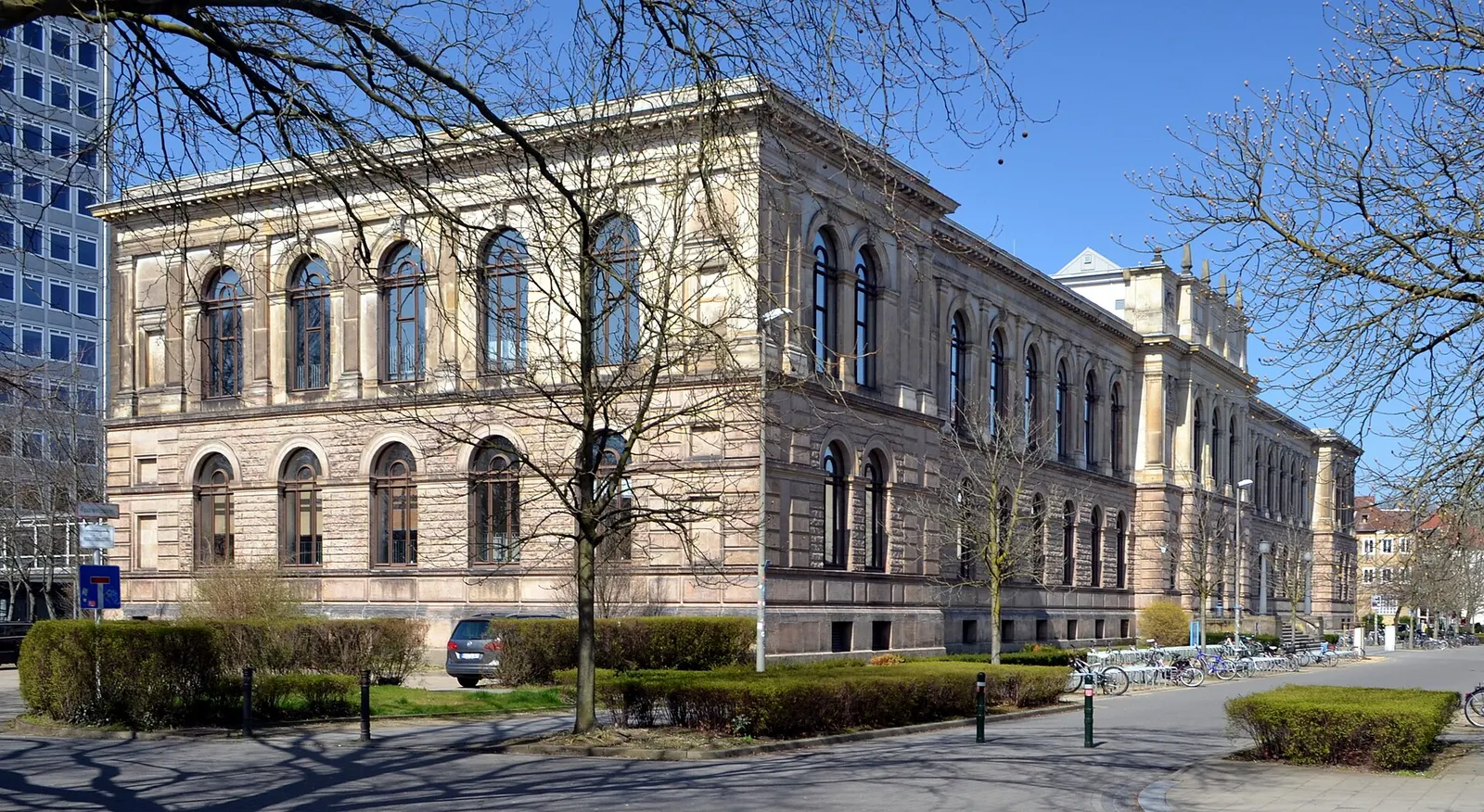
| University | City and Land | THE 2027 rank | Non-EU tuition | Application route for a foreign degree |
|---|---|---|---|---|
| Technical University of Munich (TUM) | Munich, Bavaria | 25 | Yes, since winter 2024/25 | VPD from uni-assist plus TUMonline |
| RWTH Aachen | Aachen, North Rhine-Westphalia | 90 | No | Directly in RWTHonline |
| KIT | Karlsruhe, Baden-Württemberg | =143 | Yes, the state fee | Directly in KIT's portal |
| TU Dresden | Dresden, Saxony | =168 | Not verified | uni-assist standard procedure |
| TU Berlin | Berlin | =171 | No tuition in its fee schedule | VPD from uni-assist plus tuPORT |
| University of Stuttgart | Stuttgart, Baden-Württemberg | Not read | Yes, the state fee | Not on uni-assist's list |
| TU Darmstadt | Darmstadt, Hesse | Not read | Not verified | Not on uni-assist's list |
| Leibniz Universität Hannover | Hannover, Lower Saxony | Not read | Not verified | VPD from uni-assist |
| TU Braunschweig | Braunschweig, Lower Saxony | Not read | Not verified | Not on uni-assist's list |
'Not read' and 'not verified' mean exactly that: this guide profiles five of the nine in depth and verified the others only through TU9's and uni-assist's lists. Baden-Württemberg's fee is statewide, so Stuttgart charges it like KIT; the other 'not verified' cells should be checked on the university's own fee page. Which German universities use which route, and why, is explained on the universities hub.
What membership means, and what it does not
TU9 membership tells you that a university is a large, research-intensive technical university that cooperates closely with industry. It does not tell you how hard a given master's is to get into, how it is taught, or what it costs. Admission at every member is decided programme by programme in the programme's own admission regulations: TUM scores applicants in a two-stage aptitude assessment with a 20 minutes interview for borderline cases, RWTH's examination boards check your bachelor's module by module, and KIT and TU Berlin run open and restricted programmes side by side. Excellence Strategy funding is a separate label again: six TU9 members (TUM, RWTH, KIT, TU Dresden, TU Berlin within the Berlin University Alliance, and TU Darmstadt within the Rhein-Main Universities) will hold it from 2027, while Hannover's application was unsuccessful.
- Technische UniversitätTechnische Universität (TU)
- A research university with an engineering and natural-science core and full doctoral rights. All TU9 members are of this type, even where the name differs (KIT, RWTH, Leibniz Universität Hannover). Most institutions called 'Technische Hochschule' today, such as TH Köln or TH Nürnberg, are universities of applied sciences, although RWTH Aachen keeps the old name as a university; see institution types compared.
Fees at TU9 universities
Tuition is where the nine diverge most, because it is set by Land law or, in Bavaria, by each institution. The two Baden-Württemberg members, KIT and Stuttgart, charge non-EU students €1,500 per semester. TUM charges new non-EU master's students €4,000 or €6,000 per semester and raises its rates for intakes from winter 2027/28. RWTH states that it charges no tuition to non-EU students, and TU Berlin's fee schedule contains none. Semester contributions differ too, mainly because of the Deutschlandsemesterticket.
Tuition for non-EU students: mostly in Baden-Württemberg and Bavaria
€ per semester for new non-EU students, on top of the semester contribution · 2026/27
Most public universities charge no tuition, but non-EU students pay €1,500 a semester at every state institution in Baden-Württemberg, from €2,000 (bachelor's) and €4,000 (master's) at TUM, €1,800 at HMT Leipzig, and €500 to €1,500 at several other Bavarian institutions.
- TUM, master's€4,000
- TUM, bachelor's€2,000
- HMT Leipzig€1,800
- Baden-Württemberg (all)€1,500
- Hochschule Coburg€1,500
- TH Ingolstadt, master's€1,200
- TH Nürnberg€1,000
- Hochschule Ansbach€1,000
- FAU Erlangen-Nürnberg€1,000
- Bavarian HAW service fee€500
| Item | Value |
|---|---|
| TUM, master's | €4,000 |
| TUM, bachelor's | €2,000 |
| HMT Leipzig | €1,800 |
| Baden-Württemberg (all) | €1,500 |
| Hochschule Coburg | €1,500 |
| TH Ingolstadt, master's | €1,200 |
| TH Nürnberg | €1,000 |
| Hochschule Ansbach | €1,000 |
| FAU Erlangen-Nürnberg | €1,000 |
| Bavarian HAW service fee | €500 |
TUM: the lower of its two usual rates, which depend on the programme and rise for intakes from winter semester 2027/28. FAU charges from summer semester 2027, depending on the programme (lowest rate shown). Exemptions exist everywhere: check the institution's own fee page.
Source: MWK, HTWG Hochschule Konstanz, DAAD +7 more. Last checked:
Image (PNG)| University | Semester contribution | Includes a transport ticket? |
|---|---|---|
| TUM (Munich campuses) | €97 per semester (summer semester 2026; same Munich fee as LMU) | No; Bavarian student Deutschlandticket bought separately |
| RWTH Aachen | €358.34 per semester (summer semester 2026) | Yes, Deutschlandsemesterticket plus a Dutch add-on |
| KIT | €184 per semester | No |
| TU Dresden | €361 per semester (winter semester 2026/27) | Yes, semester ticket and bike sharing |
| TU Berlin | €379.06 per semester (winter semester 2026/27) | Yes, Deutschlandsemesterticket |
| Leibniz Universität Hannover | €453.16 per semester (winter semester 2026/27) | Yes, Deutschlandsemesterticket; includes Lower Saxony's administrative fee |
Lower Saxony also charges a long-term study fee of €500 per semester once the study credit is used up, which for a master's after a foreign bachelor's is twice the standard period. The full picture, including TUM's 2027 increase and the Baden-Württemberg exemptions, is in tuition fees in Germany and where non-EU students pay tuition.
English-taught master's at TU9 members
The alliance publishes no joint list, and the members define 'English-taught' differently. On the members' own lists read for this guide, TUM showed 71 master's programmes, KIT 19 master's programmes taught only in English, TU Berlin 19 master's programmes and RWTH 17 tuition-free ones. The pattern is the same everywhere: computing, data, electrical engineering and specialised engineering master's are available in English; mechanical engineering, the classical engineering degree, is German-taught or offered in German or English at all four. Bachelor's programmes are overwhelmingly in German. See English-taught programmes in Germany.
TU9 members in the rankings
In the Times Higher Education World University Rankings 2027 (published 30 September 2026, checked 30 October 2026) TUM leads the German table at 25, with RWTH at 90, KIT at =143, TU Dresden at =168 and TU Berlin at =171; the other four members' positions were not read. TUM also reports a QS 2027 position of 25. These are institution-wide research-heavy tables; a subject ranking will separate the nine far better for engineering. See German university rankings in context.
The four members this guide does not profile
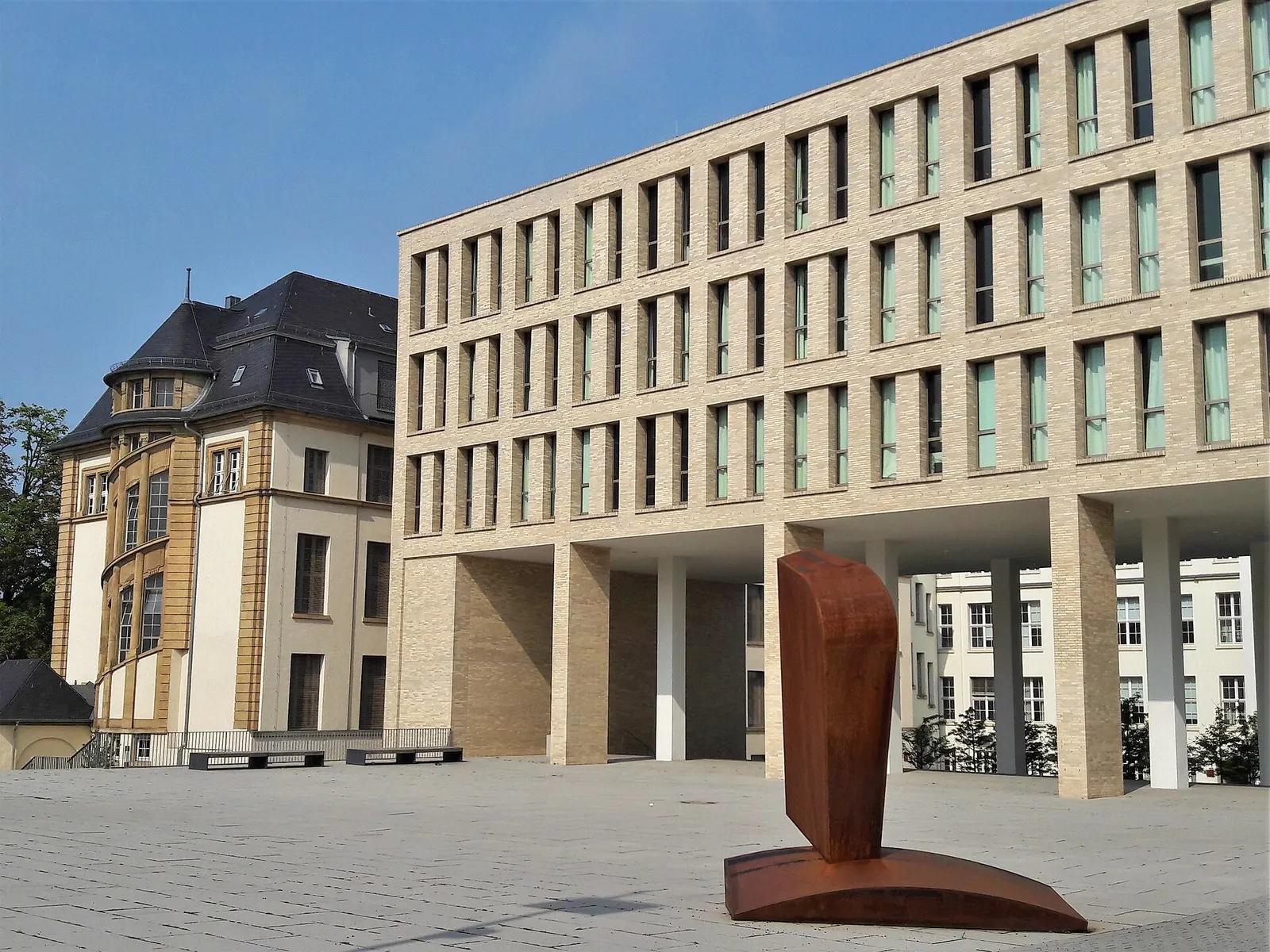
Stuttgart, Darmstadt, Hannover and Braunschweig get less attention from international applicants than Munich, Aachen or Berlin, yet they are full TU9 members with the same doctoral rights and industry ties. They are also, in several cases, cheaper places to live and less crowded in the housing market. What this guide verified about their fees and procedures is collected below; everything else should be read on the university's own pages before you apply.
| University | Semester payment verified | Tuition for non-EU students | How you apply with a foreign degree |
|---|---|---|---|
| TU Darmstadt (Hesse) | €402.68 per semester for winter 2026/27, including the Deutschlandsemesterticket and Hesse's €50 administrative fee | None listed on its fee page | Directly to the university |
| Leibniz Universität Hannover (Lower Saxony) | €453.16 per semester for winter 2026/27 | None listed; Lower Saxony's long-term fee applies once study credit is used up | VPD from uni-assist |
| TU Braunschweig (Lower Saxony) | €472.50 per semester re-registration contribution for winter 2026/27 | Not verified | Directly to the university |
| University of Stuttgart (Baden-Württemberg) | Not verified | Yes: €1,500 per semester, with the state's exemptions | Directly to the university |
Two details in that table are easy to misread. First, the figure for Darmstadt is the total due for a regular student; exchange students pay less because they are exempt from the administrative fee, so do not budget from an exchange page. Darmstadt also charges a €30 late fee if the winter payment arrives in the second half of September, and after 30 September re-registration is no longer possible at all, which ends enrolment. Second, Braunschweig's admissions office explains that the rise in its contribution comes mainly from the Studierendenwerk share; the binding individual amount is shown in its TUconnect portal. Payment rules like these are covered in general terms under the semester contribution, and the rhythm of re-registration in the academic calendar.

Applying to several TU9 universities at once
Many applicants target three or four members in the same cycle, which is sensible because each decides independently. The work multiplies, though, because the routes differ. A VPD requested from uni-assist is issued for a specific university, so TUM, TU Berlin and Hannover each need their own; uni-assist charges €75 for the first university and €30 for each further one in the same semester. RWTH, KIT, Darmstadt, Stuttgart and Braunschweig take documents in their own portals, each with its own rules on uploads and certified copies. TU Berlin adds a rule of its own: one master's application per semester, and a second application is not considered even after a rejection.
- One spreadsheet with each programme's language, deadline for non-EU applicants, route (VPD, uni-assist or direct) and fee status
- Module descriptions of your bachelor's in English or German, reused for every engineering examination board
- A language certificate valid for every target (IELTS/TOEFL for English-taught, TestDaF or DSH for German-taught)
- The anabin status of your home university printed or saved as PDF (H+)
- A blocked account or other proof of means that covers the most expensive city on your list
- A separate motivation letter per programme; see the German motivation letter
Admission letters from different universities arrive weeks apart, and German universities do not coordinate offers. You may accept one, enrol, and later withdraw if a better offer arrives, but each enrolment triggers a semester payment; read each university's refund rule before paying twice. Your visa application needs one admission letter, and the city on that letter is the one where you register. Compare the full sequence in application deadlines in Germany and the student visa.
What Turkish applicants should know
- Bachelor's: the access rule for a Turkish school certificate is national, from anabin: direct access only with a YKS placement in a four-year, face-to-face (örgün) lisans programme and more than 180 points (170 for the 2020 exam) in score type SAY, SÖZ, EA or DİL, for the same or a related subject; anabin lists no Studienkolleg route for the Lise Diploması alone. See the YKS requirement.
- Master's: engineering boards check your Turkish bachelor's content, so have module descriptions in English; your university's anabin status should be H+.
- Tuition: at TUM, Turkish citizens are exempt only under at least one parent lives in Germany, has been legally employed there for at least one year (now, or for one continuous year in the past; self-employment does not count), and the applicant lives with that parent and is registered at that address; at KIT and Stuttgart the Baden-Württemberg exemptions apply, and a Studienkolleg qualification does not count as a German one.
- Routes: TUM, TU Berlin and Hannover need a VPD from uni-assist, TU Dresden takes uni-assist's standard procedure, and RWTH, KIT, Stuttgart, Darmstadt and Braunschweig take applications directly, according to uni-assist's list. See uni-assist and the VPD.
In practice: choosing among the nine
Shortlist by programme language
Open each member's own English-taught list. If your specialisation is only German-taught at one TU, that TU is off the list unless you have German at university level.
Price the Land
Bavaria (TUM) and Baden-Württemberg (KIT, Stuttgart) cost thousands of euros a year more than RWTH or TU Berlin before you count rent.
Map the deadlines
Non-EU deadlines come early: RWTH's open-admission master's close on 1 March (winter semester) / 1 September (summer semester), KIT's on 15 July (winter semester) / 15 January (summer semester), and TU Berlin's VPD must be in hand before its window closes.
Compare cities, not labels
Munich's median shared-flat room cost €850 per month in winter 2026/27 against a national €510 per month; Aachen and Dresden are far cheaper. See choosing a city.
Frequently asked questions
Which universities are in TU9?
RWTH Aachen, TU Berlin, TU Braunschweig, TU Darmstadt, TU Dresden, Leibniz Universität Hannover, KIT (Karlsruhe), TU München, Universität Stuttgart. The alliance was formed informally in 2003 and registered as an association in 2006; the nine founding members are still its only members.
Is a TU9 degree better than other German degrees?
Legally no: every state and state-recognised German university awards the same bachelor's and master's degrees. TU9 membership signals a large, research-intensive technical university with strong industry links and, in most cases, Excellence Strategy funding, which matters most if you aim at research or a doctorate.
Is it harder to get into a TU9 university?
Not because of the label. Each programme sets its own admission regulations: TUM runs an aptitude assessment, RWTH's examination boards check your bachelor's modules, and restricted programmes everywhere select among qualified applicants. Open-admission master's at RWTH or KIT admit everyone who meets the requirements and applies on time.
Do TU9 universities charge tuition fees?
At least three do for non-EU students: KIT and the University of Stuttgart charge Baden-Württemberg's €1,500 per semester, and TUM charges €4,000 or €6,000 per semester for a master's. RWTH states it charges none, and TU Berlin's fee schedule has no tuition; the others were not verified for this guide.
Do all TU9 universities use uni-assist?
No. According to uni-assist's list, TUM, TU Berlin and Leibniz Universität Hannover use its VPD procedure, TU Dresden its standard procedure, and RWTH Aachen, KIT, Stuttgart, TU Darmstadt and TU Braunschweig are not members, so you apply to them directly.
Which TU9 university is cheapest for a non-EU student?
On tuition, the members without a non-EU fee: RWTH Aachen, TU Berlin, and on the pages read for this guide also TU Darmstadt and Leibniz Universität Hannover, where you pay only the semester contribution. TUM, KIT and Stuttgart charge tuition. Rent then decides the rest: Munich is far above the national median for a shared-flat room, while Aachen, Dresden and Braunschweig are cheaper; compare living costs before choosing.
Sources
26 sources, 20 official
- TU9 – Allianz führender Technischer Universitäten in DeutschlandTU9 German Universities of Technology e.V. (Official)
- About usTU9 German Universities of Technology e.V. (Official)
- uni-assist universities (list of member universities)uni-assist e.V. (Official)
- Technical University of Munich (TUM) – uni-assist university entryuni-assist e.V. (Official)
- Technische Universität Berlin (TU Berlin) – uni-assist university entryuni-assist e.V. (Official)
- Technische Universität Dresden (TU Dresden) – uni-assist university entryuni-assist e.V. (Official)
- Leibniz Universität Hannover – uni-assist university entryuni-assist e.V. (Official)
- Zehn Exzellenzstandorte werden weitergefördert (Gemeinsame Pressemitteilung von WR und DFG, 11. März 2026)Wissenschaftsrat / Deutsche Forschungsgemeinschaft (Official)
- Entscheidungen über neue Exzellenzstandorte getroffen (Gemeinsame Pressemitteilung von WR und DFG, 2. Oktober 2026)Wissenschaftsrat / Deutsche Forschungsgemeinschaft (Official)
- Technical University of Munich – World University Rankings profileTimes Higher Education (THE) (Institutional)
- RWTH Aachen University – World University Rankings profileTimes Higher Education (THE) (Institutional)
- Karlsruhe Institute of Technology – World University Rankings profileTimes Higher Education (THE) (Institutional)
- TU Dresden – World University Rankings profileTimes Higher Education (THE) (Institutional)
- Technical University of Berlin – World University Rankings profileTimes Higher Education (THE) (Institutional)
- QS Ranking: TUM once again named the best university in the EU (press release, 18 June 2026)Technische Universität München (TUM) (Institutional)
- Financing Your Studies (International Students) – Important Information: Tuition Policy UpdateRWTH Aachen University (Official)
- Semester FeesTechnische Universität Berlin (Official)
- Charges and FeesKarlsruher Institut für Technologie (KIT) – Studying and Teaching (Official)
- Tuition Fees for Students from Non-EU CountriesTechnical University of Munich (TUM) (Official)
- Tuition Fees for International StudentsMinisterium für Wissenschaft, Forschung und Kunst Baden-Württemberg (MWK) (Official)
- Studienkosten (Semesterbeitrag, Langzeitstudiengebühren)Leibniz Universität Hannover (Official)
- Rückmeldung zum SemesterTechnische Universität Dresden (Official)
- anabin – Türkei: Lise Diplomasi einer 12-jährigen allgemeinbildenden Sekundarschule (Bewertung mit Fallgruppen TUR-BV05 bis TUR-BV08 und TUR-BV14)Kultusministerkonferenz – Zentralstelle für ausländisches Bildungswesen (anabin) (Official)
- Semesterbeiträge und RückmeldungTechnische Universität Darmstadt (Official)
- Newsletter Rückmeldung Wintersemester 2026/2027 (Immatrikulationsamt)Technische Universität Braunschweig (Official)
- Kleine Anfrage: Deutschlandsemesterticket in Niedersachsen — Preisentwicklung, Akzeptanz und Möglichkeiten einer freiwilligen Alternative (Drucksache 19/11321)Niedersächsischer Landtag (Official)