Most of what a Turkish applicant needs is on the general pages of this guide: the Germany study guide for the overview and the step-by-step timeline for the order of events. This page covers only the points where a Turkish passport changes the rule, the office or the document. Where Turkey is treated exactly like every other non-EU country, it says so, because agencies and forums tend to invent exceptions in both directions.
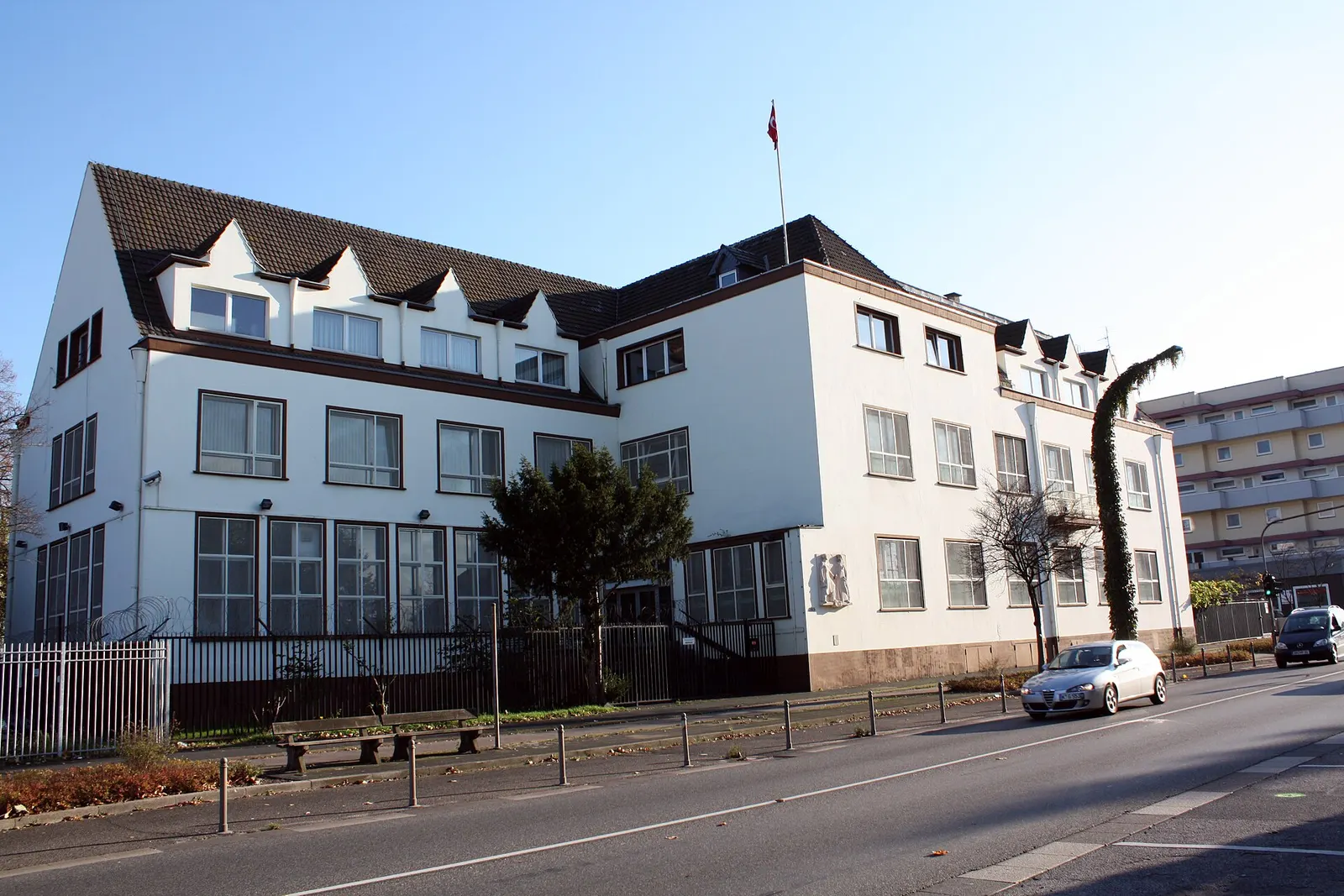
How many Turkish students are in Germany, and who is counted
Germany's statistics count three separate groups, and none of them is 'Turkish students' as a whole. The headline figure is the number of international students with Turkish citizenship who gained their entrance qualification abroad or at a Studienkolleg: 24,171 students in winter semester 2025/26, third after India and China, up from 20,900 students the year before. DAAD's Wissenschaft weltoffen report records a rise of 121% between winter semesters 2019/20 and 2024/25, and 12,500 applicants came from Turkey through uni-assist in 2025, second only to India.
| What | Figure | Source and definition |
|---|---|---|
| International students from Turkey | 24,171 students (winter semester 2025/26) | Destatis; Turkish citizens with a foreign entrance qualification. Third-largest group |
| Turkish citizens who went to school in Germany | 12,636 students | Destatis; counted separately as Bildungsinländer, not as international students |
| German–Turkish dual nationals studying | 14,296 students | Destatis; counted as German students in every other table |
| uni-assist applicants from Turkey, 2025 | 12,500 applicants | Wissenschaft weltoffen 2026; only universities that use uni-assist |
| People with a Turkish migration background | about 3,062,000 | Mikrozensus 2024; the largest group from any single country |
| Residents with Turkish citizenship | 1,298,963 residents, of them 82,146 in Berlin and 44,133 in Cologne | Zensus 2022; citizenship only, so naturalised Germans are not included |
Two practical consequences follow. You will have Turkish-speaking classmates in most large universities, and a Turkish grocer, doctor or lawyer within reach in most cities; Turkish and halal food shops and the student cities compared have the detail. And the growth has consequences for appointments: demand at the German missions in Turkey and at uni-assist rises with it, which is why every deadline on this page should be treated as earlier than it looks.
Admission: the YKS rule, translations and the master's route
The biggest difference sits at the bachelor's level. A Turkish Lise Diploması alone does not open German universities. DAAD Türkiye states the basic condition for direct access as a YKS placement in a four-year, face-to-face (örgün) lisans programme, and uni-assist asks for exactly that evidence: the diploma plus the placement part of the YKS result. Access is also subject-bound: you may apply to the same or related programmes as your Turkish placement. Without a placement there is no shortcut: anabin, the binding evaluation, lists no Studienkolleg route for a lise diploma alone, so the usual path runs through study in Turkey first. DAAD Türkiye says Germany sets no federal upper limit on the age of a YKS result, though a university may set its own. The YKS rule explained goes through every case, including IB and vocational school certificates, and Studienkolleg and the Feststellungsprüfung covers the preparatory year.
Documents follow Turkey-specific rules too. uni-assist accepts translations made in Turkey only from a sworn translator (yeminli tercüman), with that Turkish phrase in the stamp; stamps in English or German alone are refused. Turkish certificates need no APS certificate, which uni-assist requires only for China, India, Vietnam. Both countries are parties to the Hague Apostille Convention (in force for Türkiye since 29 September 1985), so where a German authority asks for authentication it is a Turkish apostille, not consular legalisation, and it is rarely needed for admission itself. uni-assist's current processing time for certificates from the region that includes Turkey was 2–3 weeks on 26 October 2026, against a usual 4–6 weeks; do not plan on the faster figure. See certified copies and sworn translations and uni-assist step by step.
For a master's with a Turkish bachelor's, the test is whether your university is listed as H+ in the anabin database and whether your degree matches the German bachelor's length the programme requires. Grades are converted with the modified Bavarian formula, and for Turkish transcripts uni-assist takes the minimum passing grade from the Diploma Supplement rather than the course pass mark. There is no Germany-wide minimum GPA. anabin and ZAB and the German grading system explain the mechanics. One more rule that is not Turkey-specific but catches Turkish applicants: an English-taught Turkish degree does not by itself exempt you from IELTS or TOEFL. Each university decides, as language requirements sets out.
The visa from Turkey: the portal, iDATA and which mission
The German missions in Turkey run study and study-place-search visas exclusively through the Federal Foreign Office's online portal, with iDATA as their external service provider for appointments and, in some cases, applications. The national visa costs €75; iDATA charges a service fee of €39.92 and a booking fee of €12 depending on the case, payable in Turkish lira. Registering in the portal is not yet a legally effective application; the appointment at the mission or provider is where fingerprints are taken, originals checked and the fee paid. Turkish and non-Turkish nationals use separate appointment systems, and a mixed-nationality family must register in one of them. Applying for the visa from Turkey walks through the portal and iDATA; the national student visa lists the documents.
From student visa to residence permit
Applying from Türkiye, step by step
Blocked account and documents
Prove €992 per month; the visa needs the blocking confirmation.
Apply online
Study visas from Türkiye go through the Federal Foreign Office's portal.
Appointment
Biometrics, originals, visa fee €75; iDATA may add its own fee, depending on the route.
Enter Germany
Travel health insurance bridges the first months until student insurance starts.
3 months
Register your address
Anmeldung at the Bürgeramt, within this period after moving in.
2 weeks
Residence permit
At the immigration office before the visa runs out; card fee €100. Berlin: card ready in about this time.
4 to 6 weeks
Source: Bundesministerium des Innern, Bundesministerium der Justiz / gesetze-im-internet.de, Land Berlin +3 more. Last checked:
Image (PNG)| Mission | Provinces | Note |
|---|---|---|
| Consulate General Istanbul | Balıkesir, Bilecik, Bolu, Bursa, Çanakkale, Düzce, Edirne, Eskişehir, İstanbul, Kırklareli, Kocaeli, Sakarya, Tekirdağ, Yalova | The Marmara region and the north-west |
| Consulate General Izmir | Afyonkarahisar, Antalya, Aydın, Burdur, Denizli, Isparta, İzmir, Kütahya, Manisa, Muğla, Uşak | The Aegean and the Mediterranean west; residence-law matters for Antalya go here |
| Embassy Ankara | The other 56 provinces | Everything from the capital east and south, including Adana, Gaziantep, Kayseri, Konya, Samsun and Trabzon |
| Consulate Antalya | Antalya, Burdur and Isparta for passports only | Has no visa section |
Money: the blocked account and transfers from Turkey
The proof of funds is the same for everyone: €992 per month, usually €11,904 in a blocked account for the first year, or a formal declaration of commitment from a sponsor in Germany. The Turkey-specific part is getting the money there. Wise stopped letting customers with a Turkish address top up from lira on 31 May 2023, so most students pay the blocked-account provider by bank transfer from a Turkish bank, which charges SWIFT fees and can take days; the provider's own transfer times come on top. Release of the block after a refusal needs only the refusal notice; in other cases the mission where you applied issues a release certificate on request by e-mail. See the blocked account, proof of financial means and sending money to Germany.
Blocked account fees: what the first year costs
Two common providers, their own prices, 2026
| Expatrio | Fintiba | |
|---|---|---|
| Set-up fee (one-off) | €119 | €159 |
| Monthly fee | €9 | €9.90 |
| Fees for twelve months | €227 | €277.80 |
Set-up fee (one-off)
- Expatrio
- €119
- Fintiba
- €159
Monthly fee
- Expatrio
- €9
- Fintiba
- €9.90
Fees for twelve months
- Expatrio
- €227
- Fintiba
- €277.80
Transfer costs from Türkiye come on top. The Federal Foreign Office recommends no provider; DAAD puts set-up fees at €70–€150.
Source: Expatrio Global Services GmbH, Fintiba GmbH, DAAD +1 more. Last checked:
Image (PNG)Health insurance: the SGK A/T 11 route and its limits
Germany and Turkey have a social-security agreement, and it creates one genuinely Turkish option. According to the DVKA, the German liaison body for statutory health insurance, a student whose centre of life stays in Turkey, who comes only to study, who does not work in Germany and who proves a continuing Turkish entitlement with SGK's form A/T 11 need not insure with a German statutory fund. The Turkish Ministry of National Education's Germany guide describes who gets the form: students insured through their family with SGK, that is female students and male students up to 25 years, who apply at an SGK provincial directorate. The same guide says the form covers acute conditions only and advises students with chronic conditions to join German insurance directly.
The limit is work. Any employment or self-employment in Germany, even a minijob, usually ends the A/T 11 route, and a Werkstudent job certainly does. For most students who plan to work at all, the German student rate, €141.16–€146.29 per month at TK for example, is the robust choice. Whichever you choose, you still register with a German fund, which reports your status to the university. Student health insurance has the procedure, and the healthcare guide explains how care works once you are covered.
Work and residence: what EU–Turkey association law does and does not do
The student work allowance is the same for Turkish citizens as for everyone else: 140 full or 280 half days a calendar year, plus student-assistant jobs, with no approval from the Federal Employment Agency. Two association-law points sit on top. First, the Federal Employment Agency's guidance states that Turkish nationals who work on a study permit can rely on Article 6(1) of Association Council Decision 1/80 and, after 1 year of regular employment with the same employer, are entitled to have that job's permission renewed. That is a lead for individual advice, not a general extension of the day limit. Second, Berlin's immigration office charges Turkish nationals the German identity-card fee instead of the standard €100 for a residence permit: €46 from age 24 and €27.60 below it, under § 52a of the Residence Ordinance. Whether other immigration offices apply the reduction to students was not verified; ask when you book the appointment. Working as a student and the residence permit cover the general rules.
After graduation, the same guidance gives Turkish workers a claim to the same occupation with any employer after 3 years and free access to employment after 4 years; national law is often more generous sooner, so the association rules matter mostly where a permit decision is in doubt. Staying in Germany after graduation sets out the job-search permit, the Blue Card and the skilled-worker permit that most graduates actually use.
Military-service deferral (askerlik tecili) while you study
This is a question of Turkish law, decided by Turkish authorities, and the German side plays no part in it. Under Article 20 of the Askeralma Kanunu (Law 7179), a man enrolled at a higher-education institution abroad is deferred until graduation or leaving, at most to the end of the year in which he turns 28, once the competent Turkish authorities have recognised his studentship. After graduating, deferral on request is available for up to 2 years after a degree of four years or more, or 1 year after a master's, plus up to 1 more year to complete recognition (denklik) of a foreign degree — never beyond the end of the year in which he turns 32. The Ministry of National Education's summary for students in Germany adds that for graduates of foreign institutions the deferral can never exceed three years after a bachelor's or two years after a master's, counted from the graduation date, and that the extra year is granted only with proof that the recognition procedure is still running.
Get your studentship recognised
The deferral under Article 20(2)(ç) follows the recognition of your studies by the competent Turkish authorities. The Ministry's guidance for distance students names a YÖK 'Okul/Kurum Tanıma Belgesi' obtainable through e-Devlet; ask your askerlik şubesi or consulate which document they require for a student enrolled in Germany.
File before you become 'yoklama kaçağı'
The law withholds the student deferral from men who enrol only after missing their call-up, so start the deferral before your military-age processing falls due. Military age begins on 1 January of the year you turn 20.
After graduation, file again with the diploma
The Ministry's summary lists the diploma, its sworn Turkish translation and a notarised copy, submitted to the askerlik şubesi; the additional year for recognition (denklik) needs proof that the YÖK procedure is pending.
Travelling between the two countries: the exit fee and flights
Turkish citizens pay an exit fee of ₺1,250 per departure from Turkey; the amount is revalued every January and was last raised on 1 January 2026. The exemption that matters to students: anyone who holds a residence permit abroad on the day of departure pays nothing. The law does not say that a national visa counts, so expect to pay on your first journey on the visa; once you hold a German residence permit, show it to claim the exemption. Flights are not a worry. Turkey was the second-largest destination country for flights from Germany's main airports in January to August 2026, with 7,254,221 passengers, and in August 2026 at least 24 Turkish airports were served from them, from Istanbul and Ankara to Trabzon and Diyarbakır. Germany keeps CET (UTC+1); CEST (UTC+2) from the last Sunday in March to the last Sunday in October; getting from the airport to the city covers the arrival end.
After graduation: citizenship, the Mavi Kart and your pension contributions
Since 27 June 2024 Germany no longer requires anyone to give up their previous nationality on naturalisation, and Germans no longer lose German citizenship by acquiring another. Naturalisation needs 5 years of lawful habitual residence, B1 German, a naturalisation test and a residence title that is not a student, job-search or Opportunity Card permit at the time of the decision; the three-year fast track ended on 30 October 2025. On the Turkish side, Law 5901 records the acquisition of another citizenship as multiple citizenship in the civil register, so a graduate who naturalises today keeps Turkish citizenship. Turkish citizens by birth who gave up their citizenship with permission earlier can hold the Mavi Kart, which keeps most of a citizen's rights except voting, duty-free imports and permanent civil-service posts, carries no military-service duty, and can apply to regain citizenship by ministerial decision. Whether study years count in full towards the five years was not confirmed by a tier-1 source; ask your naturalisation authority. German citizenship after the 2024 reform has the detail.
If you leave Germany instead, your pension contributions are not simply refundable. A refund requires that 24 months have passed without new compulsory insurance and that you have no right to voluntary German insurance; under the German–Turkish agreement, compulsory insurance in Turkey counts as German compulsory insurance, so working under SGK blocks a refund while it lasts, and German and Turkish periods are added together for the 5 years qualifying period for a German pension. Reclaiming pension contributions explains when a refund is possible and why advice first is worth it.
Scholarships that exist for Turkish students
DAAD's database returned 148 scholarship options for applicants from Turkey across all target groups, most of them postgraduate. The one programme built for Turkish graduates is the TEV–DAAD master's scholarship: about 45 new scholars a year; on average about €25,000 over two years, half from DAAD and half from TEV; €992 a month for 9–24 months; tuition fees not covered. Applications for studies starting in winter semester 2027/28 are open 12 October 2026, 10:00 – 8 February 2027, 17:00 (for studies starting in winter semester 2027/28). Turkish state funding carries conditions: YLSY scholars owe compulsory service in Türkiye of twice the time spent abroad; costs repaid in foreign currency if broken, and TÜBİTAK's 2213-A programme supports doctoral studies abroad at US$1,900 a month in every country; total support up to US$60,000 a year (living costs, tuition, health insurance) for two years of the doctorate. The EU-funded Jean Monnet scholarship pays €1,450 per month for a host university in Germany. Scholarships and funding and DAAD scholarships explained have eligibility and deadlines.
| Programme | Who | What |
|---|---|---|
| TEV–DAAD master's scholarship | Turkish citizen under 35 on 1 January; bachelor's from a YÖK university in Türkiye; GPA at least 3.0/4.0 or 76.5/100; English (TOEFL iBT 4 on the new scale / 79 old, IELTS Academic 6.5, TOEIC 800, PTE Academic 58) or German | €992 per month for 9–24 months plus insurance, travel and a German course; tuition not covered |
| YLSY (MEB Law 1416) | Selected by the Ministry of National Education for a list of fields and universities | Full funding against compulsory service in Türkiye of twice the time spent abroad; costs repaid in foreign currency if broken |
| TÜBİTAK 2213-A | Doctoral candidates | US$1,900 a month in every country; total support up to US$60,000 a year (living costs, tuition, health insurance) for two years of the doctorate |
| Jean Monnet Scholarship | Graduates and professionals in EU-related fields | €1,450 per month for a stay in Germany, plus tuition up to a cap |
| Deutschlandstipendium | Students of all nationalities at participating universities | €300 per month, merit-based; see the Deutschlandstipendium |
In practice: everyday differences worth knowing
A Turkish driving licence stays valid for 6 months after you establish ordinary residence in Germany; converting it is not a simple exchange (theory and practical test required), because Türkiye is not on the list of states whose licences are swapped without tests. Driving with a Turkish licence has the procedure. If your spouse wants to join you, the German missions in Turkey accept only Goethe-Institut and ÖSD certificates for the required A1 German, no older than 12 months; studying with a partner or children covers family reunification. And for the rules that apply to everyone, from the broadcasting fee to Sunday closing, daily life in Germany is the place to start.
Frequently asked questions
Can Turkish students study in Germany for free?
At most public universities, yes: DAAD states there are generally no fees for bachelor's or most master's courses at state institutions, and Turkish citizens pay the same as other students. Every student pays a semester contribution, and non-EU students pay tuition in Baden-Württemberg (€1,500 per semester) and at some Bavarian institutions such as TUM. Living costs and the €992 per month proof of funds are the real expense; see tuition fees.
Do Turkish citizens need a visa to study in Germany?
Yes. Turkish citizens need a national visa for study before entering Germany, applied for through the Federal Foreign Office's online portal with an appointment via iDATA, and then a residence permit from the immigration office after arrival. The visa fee is €75; see applying from Turkey.
What is different for Turkish applicants?
The YKS placement rule for direct bachelor's access, sworn-translator stamps on Turkish documents, the portal-plus-iDATA visa procedure with separate consular districts, SGK's A/T 11 insurance option for students who do not work, a reduced permit fee that Berlin applies under EU–Turkey association law, and Turkish-law matters such as military deferral and the exit fee. Everything else, from the work limit to the blocked account, is the same as for other non-EU students.
How many Turkish students are there in Germany?
24,171 students with Turkish citizenship and a foreign entrance qualification were enrolled in winter semester 2025/26, the third-largest group after India and China. A further 12,636 Turkish citizens went to school in Germany, and 14,296 students hold both citizenships; official statistics never add the three groups together.
Is military service deferred while studying in Germany?
Yes, under Turkish law. A student at bachelor's level at a recognised higher-education institution abroad is deferred until graduation, at most to the end of the year he turns 28, once Turkish authorities have recognised the studentship; the limits for master's and doctoral students were not established here; after graduating, further deferral of up to two years after a bachelor's or one year after a master's is possible within age 32, with an extra year for recognition of the degree. Confirm the current procedure with your askerlik şubesi or consulate.
Are there scholarships for Turkish students in Germany?
Yes, but few cover a whole degree. The TEV–DAAD master's scholarship is designed for Turkish graduates and pays €992 per month; the Deutschlandstipendium is open to all nationalities; YLSY and TÜBİTAK fund selected fields under Turkish-law conditions; and DAAD's database lists 148 scholarship options for Turkey. Scholarships and funding sets out what is realistic.
Do Turkish students have visa problems in Germany?
The procedure is the same, but demand for appointments is high and an application can stall on a single missing document. Applications run through the Federal Foreign Office's portal and iDATA; the missions publish no fixed processing time, so apply early. After a refusal there is no remonstration any more: what remains is a new application or an action at the Administrative Court in Berlin; see visa refusal and remedies.
Sources
36 sources, 35 official
- Statistischer Bericht – Statistik der Studierenden – Wintersemester 2025/2026 (Tabellen 21311-01, -12, -21, -22, -23, -24)Statistisches Bundesamt (Destatis) (Official)
- Wissenschaft weltoffen 2026 – Daten und Fakten zur Internationalisierung von Studium und Forschung in Deutschland und weltweitDAAD / DZHW (Official)
- Statistischer Bericht – Bevölkerung nach Migrationshintergrund – Endergebnisse 2024 (Tabelle 12211-05)Statistisches Bundesamt (Destatis) (Official)
- Deutsche Vertretungen in der Türkei (start page, mission list)Auswärtiges Amt (Official)
- Deutsches Generalkonsulat IstanbulAuswärtiges Amt (Official)
- Deutsches Generalkonsulat IzmirAuswärtiges Amt (Official)
- Botschaft der Bundesrepublik Deutschland AnkaraAuswärtiges Amt (Official)
- Deutsches Konsulat AntalyaAuswärtiges Amt (Official)
- Statistischer Bericht – Luftverkehr auf Hauptverkehrsflughäfen – August 2026 (Tabellen 46421-04 und 46421-08)Statistisches Bundesamt (Destatis) (Official)
- Askeralma Kanunu (Kanun No. 7179) — Madde 20 ErtelemeT.C. Cumhurbaşkanlığı Mevzuat Bilgi Sistemi (mevzuat.gov.tr) (Official)
- Askerlik Tecil İşlemleriT.C. Millî Eğitim Bakanlığı – Essen Eğitim Ataşeliği (Official)
- Yurt Dışına Çıkış Harcı Hakkında Kanun ile Çeşitli Kanunlarda Değişiklik Yapılması Hakkında Kanun (Kanun No. 5597), Madde 1T.C. Cumhurbaşkanlığı Mevzuat Bilgi Sistemi (mevzuat.gov.tr) (Official)
- Yurt Dışına Çıkış Harcı Uygulama Genel Tebliğinde Değişiklik Yapılmasına Dair Tebliğ (Seri No: 1)T.C. Hazine ve Maliye Bakanlığı (Gelir İdaresi Başkanlığı), Resmî Gazete 31 Aralık 2025, Sayı 33124 (5. Mükerrer) (Official)
- Almanya'da yükseköğrenim (lisans ve master başvurusu)DAAD Türkiye (DAAD Information Centres Istanbul/Ankara) (Official)
- Info country by country – Turkeyuni-assist e.V. (Official)
- Status table – Convention of 5 October 1961 Abolishing the Requirement of Legalisation for Foreign Public DocumentsHague Conference on Private International Law (HCCH) (Official)
- Studium und Studienplatzsuche (Visumverfahren ausschließlich über das Auslandsportal)Deutsche Vertretungen in der Türkei (Auswärtiges Amt) (Official)
- Nationale Visa für türkische Staatsangehörige – Aufenthalte über 90 Tage (Auslandsportal und iDATA-Terminsystem; Stand 15.06.2026)Deutsche Vertretungen in der Türkei (Auswärtiges Amt) (Official)
- Was tun nach Ablehnung des Visumsantrages? (Remonstration seit 01.07.2025 abgeschafft)Deutsche Vertretungen in der Türkei (Auswärtiges Amt) (Official)
- Familiennachzug (Auslandsportal digital.diplo.de/visa-fz; A1-Nachweis bei Ehegattennachzug)Deutsche Vertretungen in der Türkei (Auswärtiges Amt) (Official)
- Aufenthaltsverordnung § 52a Befreiung und Ermäßigung bei Assoziationsberechtigung (EU–Türkei)Bundesministerium der Justiz / gesetze-im-internet.de (Official)
- Aufenthaltserlaubnis zum Studium beantragen (Landesamt für Einwanderung Berlin, Dienstleistung 305244)Land Berlin – Landesamt für Einwanderung (ServicePortal Berlin) (Official)
- Ein Sperrkonto eröffnen und schließen (Artikel vom 21.10.2024)Auswärtiges Amt (Official)
- Studierende und Praktikanten (Studium in Deutschland)GKV-Spitzenverband, Deutsche Verbindungsstelle Krankenversicherung – Ausland (DVKA) (Official)
- Almanya Federal Cumhuriyeti Öğrenci Rehberi (Sağlık; AT Belgesi)T.C. Milli Eğitim Bakanlığı, Yükseköğretim ve Yurt Dışı Eğitim Genel Müdürlüğü / Berlin Eğitim Müşavirliği (Official)
- Fachliche Weisungen Aufenthaltsgesetz und Beschäftigungsverordnung (Stand 12/2024) – § 16b AufenthG (16b.0.1–16b.0.7) and ARB 1/80 (4.0.2)Bundesagentur für Arbeit (BA Zentrale) (Official)
- Staatsangehörigkeitsgesetz § 10 (Anspruchseinbürgerung)Bundesministerium der Justiz / gesetze-im-internet.de (Official)
- Gesetz zur Modernisierung des Staatsangehörigkeitsrechts (StARModG) vom 22. März 2024, BGBl. 2024 I Nr. 104 (ausgegeben 26. März 2024)Bundesgesetzblatt (recht.bund.de), Bundesministerium der Justiz (Official)
- Türk Vatandaşlığı Kanunu (Kanun No. 5901), md. 13, 28, 44T.C. Cumhurbaşkanlığı Mevzuat Bilgi Sistemi (mevzuat.gov.tr) (Official)
- Ausland: Arbeit und Rente in Deutschland und in der Türkei (5. Auflage 5/2024, Nr. 769)Deutsche Rentenversicherung (Official)
- TEV-DAAD (Deutscher Akademischer Austauschdienst) Almanya Yüksek Lisans BursuTürk Eğitim Vakfı (TEV) (Official)
- 2213-A Yurt Dışı Doktora Burs ProgramıTÜBİTAK – Bilim İnsanı Destek Programları Başkanlığı (BİDEB) (Official)
- 657 sayılı Devlet Memurları Kanunu, Ek Madde 34 (Yurtdışı Eğitim Masraflarının Tahsili)T.C. Cumhurbaşkanlığı Mevzuat Bilgi Sistemi (mevzuat.gov.tr) (Official)
- Restrictions for customers based in TürkiyeWise (Institutional)
- Fahrerlaubnis-Verordnung (FeV) § 29 — Ausländische FahrerlaubnisseBundesministerium der Justiz / gesetze-im-internet.de (Official)
- Fahrerlaubnis-Verordnung (FeV) § 31 and Anlage 11 (Staatenliste zu den Sonderbestimmungen für Inhaber einer ausländischen Fahrerlaubnis)Bundesministerium der Justiz / gesetze-im-internet.de (Official)