Germany rewrote its citizenship law twice in eighteen months. The reform of 27 June 2024 cut the residence requirement from eight years to 5 years, allowed dual nationality for everyone and created a three-year route for people with C1 German and special integration achievements. An amending act in October 2025 then removed that three-year route again, with effect from 30 October 2025, while leaving the five-year rule and dual nationality in place. For a graduate who stays on after a German degree, the practical questions are when the 5 years are complete, which residence title you need to hold when you apply, and what a second passport means for the first one. The place of citizenship in the longer sequence is set out in staying in Germany after graduation.
What changed in 2024 and what was reversed in 2025
| Rule | Until 26 June 2024 | 27 June 2024 to 29 October 2025 | From 30 October 2025 |
|---|---|---|---|
| Residence required for naturalisation as of right (§ 10 Abs. 1) | Eight years | 5 years | 5 years |
| Fast track for special integration (§ 10 Abs. 3) | A shorter period for special integration achievements | Three years with C1 German | Abolished |
| Giving up the previous nationality | Required, with exceptions | Not required | Not required |
| German who acquires another nationality on application | Lost German citizenship unless a Beibehaltungsgenehmigung was granted first | Keeps it; procedure abolished | Keeps it |
| German by birth for a child of foreign parents (§ 4 Abs. 3) | Parent needed a longer residence | Parent with 5 years of lawful residence and an unlimited right of residence | Unchanged |
The Federal Office of Administration (BVA) summarised the 2024 change for Germans abroad: since 27 June 2024, acquiring another nationality on application no longer costs German citizenship, for every country, and the old retention-permit procedure has ended. That matters in the other direction too, as the Turkish section below explains.
The requirements for naturalisation in 2026
§ 10 Abs. 1 StAG gives a legal claim to naturalisation: once every condition is met and none of the exclusion grounds in § 11 applies, the authority has no discretion to refuse. The conditions, in the order the statute lists them:
| Condition | Detail | Statute |
|---|---|---|
| Residence | 5 years of lawful habitual residence in Germany, with identity and current nationality clarified | § 10 Abs. 1 Satz 1 |
| Declarations | A commitment to the free democratic basic order, a declaration that you do not and did not pursue anti-constitutional aims, and an acknowledgement of Germany's special historical responsibility for the Nazi regime and its consequences, in particular the protection of Jewish life | § 10 Abs. 1 Nr. 1 and 1a |
| Residence title | A permanent right of residence, an EU Blue Card or a residence permit for a purpose not on the exclusion list; the student permit (§ 16b), the post-study job-search permit (§ 20) and the Opportunity Card (§ 20a) are on that list | § 10 Abs. 1 Nr. 2 |
| Livelihood | You support yourself and your dependants without basic income support under SGB II or XII. Exception: you work full time and did so for 20 months of the last 24 months, or you live with such a person and a minor child | § 10 Abs. 1 Nr. 3 |
| Clean record | No criminal conviction; fines up to 90 daily rates and suspended sentences of up to 3 months are disregarded unless the offence was antisemitic, racist or similarly motivated | § 10 Abs. 1 Nr. 5; § 12a |
| German | Sufficient knowledge, proved by a B1 language examination | § 10 Abs. 1 Nr. 6, Abs. 4 |
| Civic knowledge | Knowledge of the legal and social order and living conditions in Germany, normally proved by the naturalisation test | § 10 Abs. 1 Nr. 7, Abs. 5 |
- Naturalisation as of rightAnspruchseinbürgerung (§ 10 StAG)
- The standard route: meet every condition and the authority must naturalise you. § 8 StAG is the discretionary alternative (Ermessenseinbürgerung) for people with lawful habitual residence who can support themselves and have a home; it has no fixed residence period but gives no claim. § 11 lists the grounds that exclude naturalisation altogether, among them anti-constitutional activity, a particularly serious expulsion interest and polygamy.
Which residence title you must hold when you apply
This is the condition that stops most recent graduates. § 10 Abs. 1 Nr. 2 lists the residence purposes that do not qualify, and it names §§ 16a, 16b, 16d, 16e, 16f, 17, 18f, 19, 19b, 19e, 20 and 20a among others. So you cannot be naturalised while you hold a student permit, the post-study job-search permit or an Opportunity Card, however long you have lived in Germany. A skilled-worker permit (§ 18b), an EU Blue Card, a self-employment permit (§ 21), a family permit or a settlement permit all qualify. For a graduate the usual order is therefore degree, work title, then naturalisation; the permanent residence guide sets out how quickly the work title turns into an unlimited one.
From graduate to settled: the usual sequence
Non-EU graduates of a German university, 2026
Job-search permit
A claim once you graduate; any work is allowed while you search, and it cannot be extended.
18 months
Blue Card or skilled-worker permit
Blue Card from €45,934.20 a year for recent graduates; the skilled-worker permit for academics has no salary threshold below age 45.
Settlement permit
As a German graduate after 2 years on a work title with 24 months of pension contributions; on a Blue Card with B1 German after 21 months.
Citizenship
After 5 years of lawful residence, with B1 German and the naturalisation test; dual nationality is allowed since 27 June 2024.
Time on the job-search permit does not count towards the skilled-worker settlement routes, and you cannot be naturalised while holding it.
Source: Bundesministerium der Justiz / gesetze-im-internet.de, Bundesagentur für Arbeit, Land Berlin +6 more. Last checked:
Image (PNG)Do your student years count towards the five?
The statute counts "rechtmäßiger gewöhnlicher Aufenthalt", lawful habitual residence, and does not exclude years spent on a student permit from that count; the exclusion list in Nr. 2 concerns only the title you hold at the moment of naturalisation. Munich's naturalisation page likewise lists the required years without carving out study. What no official source we read states is how the authorities treat a stay that began as a temporary, study-related one when they assess whether it was "habitual". The Federal Ministry of the Interior's application guidance could not be read for this article, and practice reportedly varies, so ask your naturalisation authority early how it counts your student years rather than assuming either answer.
Absences, gaps and the five-year clock
- Up to 6 months abroad at a time does not interrupt habitual residence (§ 12b Abs. 1 StAG).
- Longer absences keep it alive only if you return within the period the immigration office set beforehand, or if the overrun was caused by compulsory military service in your home country and you return within 3 months of discharge.
- After a real break, up to 3 years of earlier residence can still be credited (§ 12b Abs. 2).
- A late renewal of your residence permit does not count as an interruption of lawful residence (§ 12b Abs. 3), although it can cause other problems with the immigration office.
The naturalisation test and the B1 proof
The test is federal and multiple-choice: 33 questions with four possible answers each, three of them about the Land you live in, to be answered within 60 minutes under supervision; you pass with 17 correct answers (§ 1 EinbTestV). Where a Land uses the Federal Office for Migration's test centres, the BAMF charges €25 per participant and you book the date with a test centre your naturalisation authority names (§ 2 EinbTestV). The certificate remains valid if you move to another Land. Munich accepts instead a completed degree at a German university in law, social sciences or political science, a completed apprenticeship, or a German school-leaving certificate (Mittelschulabschluss or higher), and also the test "Leben in Deutschland" taken at the end of an integration course.
Dual citizenship: the German side
Since 27 June 2024 the requirement to give up your previous nationality (the old § 10 Abs. 1 Nr. 4) and the rule that a German loses citizenship by acquiring another on application (the old § 25) are gone, and the Beibehaltungsgenehmigung procedure with them. Munich's page puts it simply: you can keep your previous nationality, but you may lose it under the law of that country, because some states withdraw their nationality automatically when a citizen naturalises abroad. Whether you stay a dual citizen is therefore decided by your other country's law, not by Germany's.
Dual citizenship: the Turkish side under Law No. 5901
Turkish law does not take citizenship away from someone who acquires another nationality. Article 44 of the Turkish Citizenship Law (Kanun No. 5901) provides that a person who acquires a foreign citizenship for any reason has a note of multiple citizenship (çok vatandaşlık) entered in the civil register once they present the documents and their identity is confirmed. A Turkish graduate who is naturalised in Germany today therefore remains Turkish; Law No. 5901 does not list acquiring another nationality among the grounds for losing Turkish citizenship (Art. 29), and the German citizenship should be registered so that the civil register records the multiple citizenship. The Turkish consular portal lists this as "Çok Vatandaşlık Tescili Başvurusu", filed in person at a Turkish mission after booking an appointment.
- Blue Card (Turkish)Mavi Kart (Art. 28, Kanun No. 5901)
- Not the EU Blue Card. Turkey's Mavi Kart is a document for people who were Turkish citizens by birth and gave up Turkish citizenship with official permission (çıkma izni), and for their descendants to the third degree. Holders keep the rights of Turkish citizens except voting and standing for election, duty-free import of vehicles and household goods, and the duty to perform military service; social-security rights already acquired are preserved; they cannot hold permanent civil-service posts but can work in public bodies as employees or contract staff. Issued on request, it is shown instead of a Turkish identity document.
| Situation | Turkish side | German side | What to do |
|---|---|---|---|
| You naturalise in Germany now and keep Turkish citizenship | Art. 44: multiple citizenship is entered in the civil register on presentation of the documents | No renunciation required since 27 June 2024 | Register the German naturalisation at a Turkish mission ("Çok Vatandaşlık Tescili"); keep both passports valid |
| You gave up Turkish citizenship to naturalise under the old rules and hold a Mavi Kart | Art. 13: those who left with permission can regain Turkish citizenship by ministry decision, without any residence in Turkey, barring national-security grounds | A German who acquires another nationality on application no longer loses German citizenship (BVA) | Apply at a Turkish mission ("Yeniden Türk Vatandaşlığını Kazanma Başvurusu"); the decision is Turkey's, so treat it as an application, not a formality |
| Your child is born in Germany | Turkish citizenship by descent is a matter of Turkish law; register the birth with the consulate | German by birth if one parent has 5 years of lawful residence and an unlimited right of residence (§ 4 Abs. 3 StAG) | Register the birth with both authorities |
What naturalisation costs
| Item | Amount | Note |
|---|---|---|
| Naturalisation, per adult | €255 | § 38 Abs. 2 Nr. 1 StAG; Munich charges it per application |
| Minor child naturalised with a parent, without own income | €51 | § 38 Abs. 2 Satz 2 StAG |
| Naturalisation test at a BAMF test centre | €25 | § 2 Abs. 1 EinbTestV; the ordinance sets no amount where a Land runs the test itself |
| B1 language examination | Set by the examination provider | Not a state fee |
| Rejection or withdrawal after processing has begun | From €25 up to the full fee | § 38 Abs. 2 Satz 3 StAG |
In practice: the application, Munich as the example
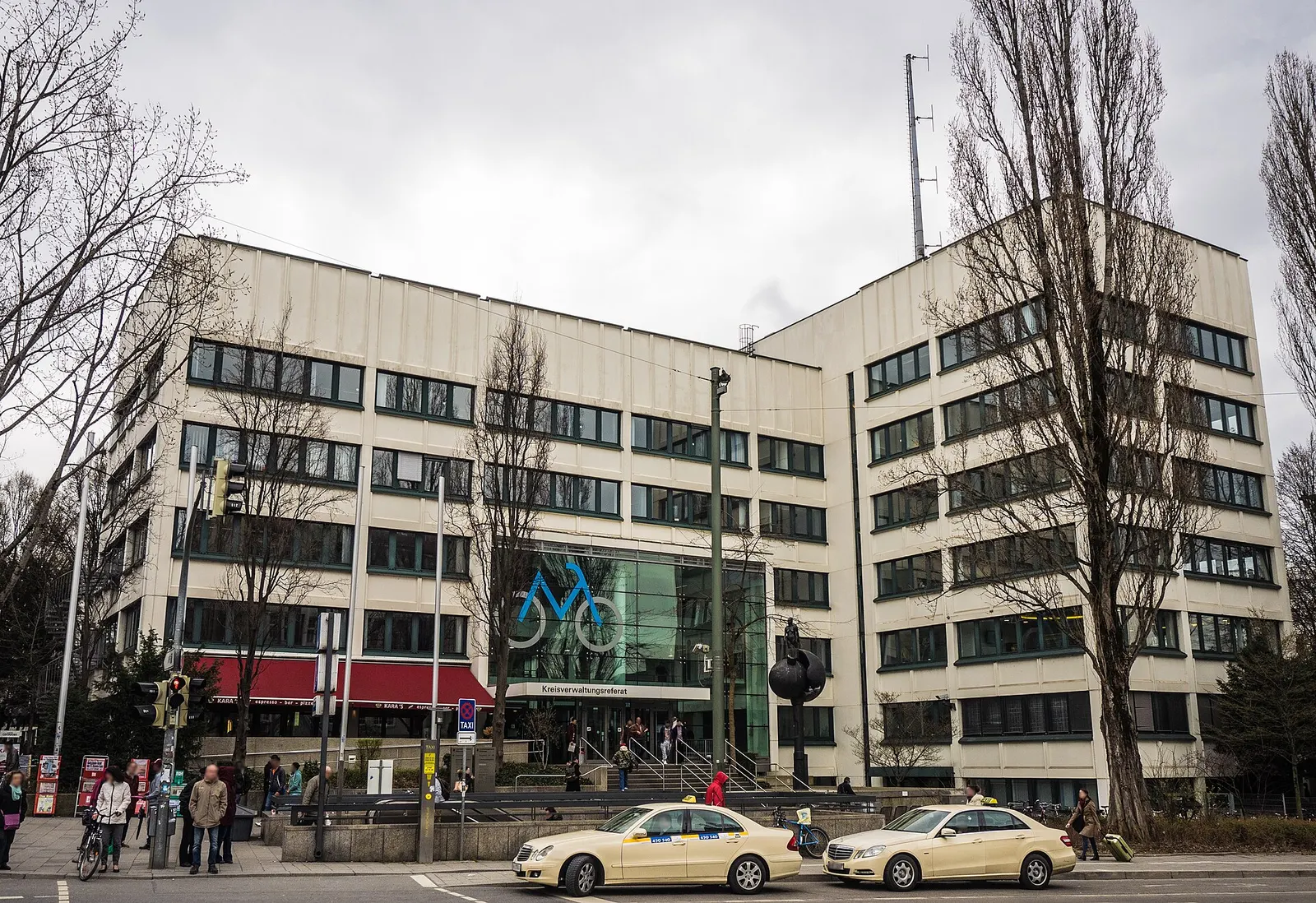
Naturalisation is handled by the Land or city authority where you live, and each publishes its own procedure. Munich's Einbürgerungsbehörde runs an online application with a quick check at the start, identification through BundID or BayernID, and states a processing time of 18 months or longer, shorter only in documented exceptional cases. Expect the same order of steps elsewhere, with different forms.
Check the five conditions you can influence
Five years of lawful residence, a qualifying residence title, a livelihood without SGB II or XII benefits, a B1 certificate and the naturalisation test certificate. Book the test and the language examination early; both can be done before the 5 years are complete.
Clarify identity and nationality
A valid Turkish passport and civil-register extract; the statute requires identity and current nationality to be clarified before naturalisation.
File the application
Online in Munich, with the fee of €255 per adult. Declare any foreign convictions or pending proceedings (§ 12a Abs. 4 StAG); a pending investigation suspends the decision.
Wait, and keep the conditions met
Processing in Munich runs 18 months or longer. Keep your residence title valid, stay off basic income support and avoid absences over 6 months without the immigration office's agreement.
Receive the certificate
Naturalisation takes effect when the certificate is handed over, after the solemn declaration to respect the Basic Law; the law says this should happen at a public naturalisation ceremony (§ 16 StAG).
Register in Turkey
Book an appointment at a Turkish mission for the registration of multiple citizenship, then apply for a German passport and identity card.
Documents to assemble
- Valid passport and current residence title (not § 16b, § 20 or § 20a)
- Proof of 5 years of lawful residence (registration history, earlier permits)
- B1 certificate or integration-course certificate
- Naturalisation test certificate, or a qualifying German degree or school certificate
- Employment contract and recent pay slips, or other proof of livelihood
- Declarations on the free democratic basic order and on Germany's historical responsibility (signed as part of the application)
- Birth and, where relevant, marriage certificates with translations
- Fee of €255 per adult, €51 per co-naturalised child
Citizenship is the last step of a longer path, and the earlier steps decide when you reach it. Your study years, the job-seeker permit and a work permit such as the EU Blue Card all count as lawful residence in different ways, and most people first hold permanent residence. Keep your pay slips and tax assessments, because a secured livelihood is checked; see taxes for filing returns.
Timeline: a graduate's path to citizenship
Arrival
Lawful residence begins
The statute counts lawful habitual residence; ask the authority how it treats your student years.
Graduation and first job
Move to a qualifying title
A Blue Card or skilled-worker permit qualifies; the job-search permit does not.
Any time
B1 and the test
Both certificates keep; take them while you are still in study mode.
5 years of residence
Apply
Online in Munich; in person or by post elsewhere.
After 18 months or longer (Munich)
Certificate and ceremony
German citizenship takes effect on handover.
Afterwards
Turkish registration
Multiple citizenship entered in the Turkish civil register under Art. 44.
Frequently asked questions
How many years until I can get German citizenship?
5 years of lawful habitual residence, down from eight before 27 June 2024. The three-year route for people with C1 German existed only from June 2024 to October 2025 and no longer applies. You must also hold a qualifying residence title at the time, which rules out applying while on a student or job-search permit.
Can Turkish citizens keep dual nationality in Germany?
Yes. Germany stopped requiring renunciation on 27 June 2024, and Turkish Citizenship Law No. 5901 provides in Article 44 that a Turkish citizen who acquires another nationality has multiple citizenship entered in the civil register on presenting the documents. Register the German naturalisation at a Turkish mission; the appointment is booked online and the application made in person.
How much does German citizenship cost?
€255 per adult and €51 per minor child naturalised with a parent and without own income (§ 38 StAG). The naturalisation test at a BAMF test centre costs €25, and the B1 examination is charged by the provider.
Can I apply for citizenship while on a student visa in Germany?
No. § 10 Abs. 1 Nr. 2 StAG excludes applicants who hold a residence permit for study (§ 16b), for the post-study job search (§ 20) or an Opportunity Card (§ 20a) at the time of naturalisation. You need a work title such as a skilled-worker permit or EU Blue Card, a family permit or a settlement permit.
What is the German citizenship test like?
33 questions, multiple choice with four answers each, three of them about your Land, in 60 minutes; 17 correct answers pass. Munich accepts a German degree in law, social sciences or political science, a completed apprenticeship or a German school-leaving certificate instead of the test.
I gave up Turkish citizenship to become German years ago. Can I get it back?
Article 13 of Law No. 5901 lets former citizens who left with permission regain Turkish citizenship by ministry decision without living in Turkey, barring national-security grounds, and since June 2024 a German no longer loses German citizenship by acquiring another on application. The Turkish decision is discretionary, so treat it as an application made at a Turkish mission.
Sources
17 sources, all official
- Staatsangehörigkeitsgesetz § 10 (Anspruchseinbürgerung)Bundesministerium der Justiz / gesetze-im-internet.de (Official)
- Gesetz zur Änderung des Staatsangehörigkeitsgesetzes sowie weiterer Vorschriften vom 27. Oktober 2025, BGBl. 2025 I Nr. 256 (ausgegeben 29. Oktober 2025)Bundesgesetzblatt (recht.bund.de), Bundesministerium der Justiz (Official)
- Gesetz zur Modernisierung des Staatsangehörigkeitsrechts (StARModG) vom 22. März 2024, BGBl. 2024 I Nr. 104 (ausgegeben 26. März 2024)Bundesgesetzblatt (recht.bund.de), Bundesministerium der Justiz (Official)
- Modernisierung des Staatsangehörigkeitsrechts in Kraft getretenBundesverwaltungsamt (BVA) (Official)
- Staatsangehörigkeitsgesetz § 12b (Unterbrechung des gewöhnlichen Aufenthalts)Bundesministerium der Justiz / gesetze-im-internet.de (Official)
- Staatsangehörigkeitsgesetz § 12a (Unbeachtliche Verurteilungen)Bundesministerium der Justiz / gesetze-im-internet.de (Official)
- Staatsangehörigkeitsgesetz § 8 (Ermessenseinbürgerung)Bundesministerium der Justiz / gesetze-im-internet.de (Official)
- Staatsangehörigkeitsgesetz § 11 (Ausschlussgründe)Bundesministerium der Justiz / gesetze-im-internet.de (Official)
- Staatsangehörigkeitsgesetz § 16 (Wirksamkeit der Einbürgerung)Bundesministerium der Justiz / gesetze-im-internet.de (Official)
- Staatsangehörigkeitsgesetz § 38 (Gebühren)Bundesministerium der Justiz / gesetze-im-internet.de (Official)
- Staatsangehörigkeitsgesetz § 4 (Erwerb durch Geburt)Bundesministerium der Justiz / gesetze-im-internet.de (Official)
- Einbürgerungstestverordnung § 1 Einbürgerungstest und EinbürgerungskursBundesministerium der Justiz / gesetze-im-internet.de (Official)
- Einbürgerungstestverordnung § 2 Verfahren des Einbürgerungstests unter Mitnutzung von Prüfstellen des BundesamtesBundesministerium der Justiz / gesetze-im-internet.de (Official)
- Einbürgerung (Landeshauptstadt München, Einbürgerungsbehörde)Landeshauptstadt München (Official)
- Türk Vatandaşlığı Kanunu (Kanun No. 5901), md. 13, 28, 44T.C. Cumhurbaşkanlığı Mevzuat Bilgi Sistemi (mevzuat.gov.tr) (Official)
- T.C. Vatandaşlık işlemleri (Konsolosluk İşlemleri Portalı)T.C. Dışişleri Bakanlığı – Konsolosluk İşlemleri (Official)
- Niederlassungserlaubnis für Fachkräfte beantragen (Dienstleistung 326558)Land Berlin – Landesamt für Einwanderung (ServicePortal Berlin) (Official)