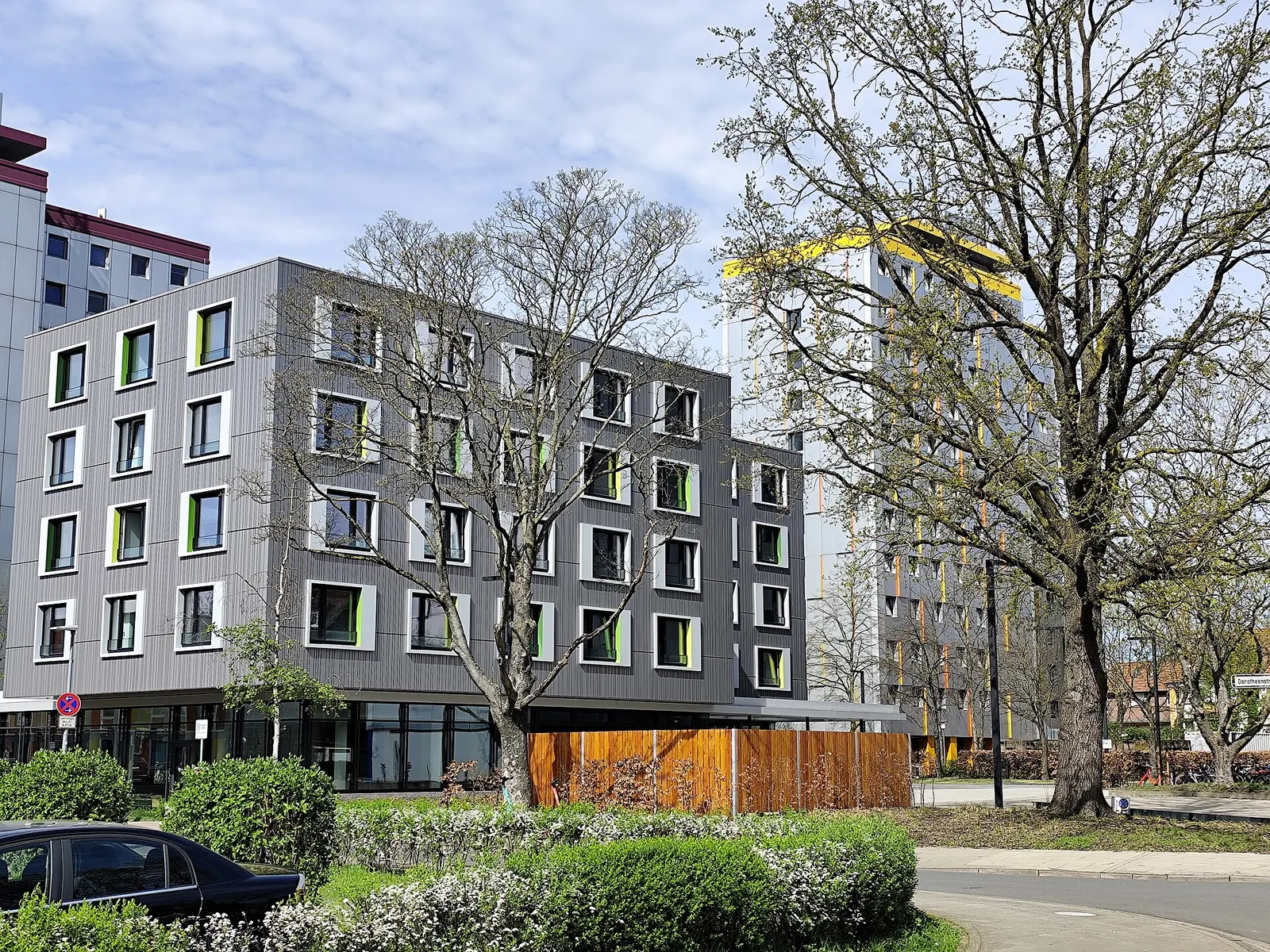
Students moving to Germany choose between three kinds of housing: a place in a student hall of residence (Wohnheim), a room in a shared flat (WG) or a privately rented flat. None of them comes with your admission letter. Most publicly funded halls belong to the Studierendenwerke — public, non-profit student-services organisations that are separate from the universities — and you apply to them directly, usually online. They run 196,749 of the 241,732 publicly funded hall places that the Deutsches Studierendenwerk counted at the start of 2025. Everything else is the private market, where you compete with every other tenant in town.
- StudierendenwerkStudierendenwerk (also Studentenwerk)
- The public, non-profit student-services organisation for the universities of a city or region. It runs halls of residence and canteens — in Munich and Berlin, for example, also the BAföG office. Some still use the older name Studentenwerk; their umbrella organisation is the Deutsches Studierendenwerk (DSW).
This hub gives the overview: what each option costs, why the market is so tight, the rules that apply to every tenancy and when to start. Each housing type has its own detailed guide, linked below, and the wider picture of studying here starts at the Germany study guide.
Student accommodation in Germany: the options compared
| Type | What it costs | Contract | Advantages | Drawbacks |
|---|---|---|---|---|
| Studierendenwerk hall (Wohnheim) | €318.18 per month on average including all running costs; Munich €400.60 per month; Berlin €336.56 per month (2024) | Fixed-term lease with the Studierendenwerk; deposit set by each hall, e.g. 1.5 monthly rents in Berlin | The cheapest option; running costs included; applications and offers run online, so it can be arranged from abroad | Waiting lists, eligibility rules and maximum residence periods; places for about one student in ten |
| Room in a shared flat (WG) | Median asking rent €510 per month for a room in a 2–3-person WG, usually a warm rent that mostly includes electricity and internet | A sublease from the main tenant, a lease signed by all flatmates, or a room let by a flatmate who lives in the flat | Costs shared; many offers on flatshare platforms; a social way to live | Strong competition and WG-Castings; weaker protection in some furnished sublets |
| Private flat or studio | Set by the local market and the size of the flat; the city's Mietspiegel shows typical rents | Normally an open-ended lease under the Civil Code (BGB); deposit capped at 3 months' net cold rent | Privacy and the strongest tenant protection | Landlords check income and often ask for a SCHUFA report; deposit; electricity and internet contracts of your own |
| Temporary stay | For example €630 per month at the Studierendenwerk Frankfurt's student hostel (three-month student rate) | Nightly, weekly or monthly booking, or a temporary sublet (Zwischenmiete) | Bridges the gap until a hall place or lease starts | A hotel or hostel stay does not give you an early address registration; an unapproved sublet often cannot be used for one |
Halls of residence run by the Studierendenwerk
Halls are the cheapest housing a student can rent, and the rent normally covers heating, water and other running costs. The catch is supply. The publicly funded places counted by the DSW equal about 10.12% of the student population nationally and only 5.09% in Berlin. Waiting times are long where they are published at all — 1 to 7 semesters in Munich, depending on the residence — and the moment you may apply differs from city to city: Frankfurt takes applications before you are admitted, Hamburg up to 3 months before you move in, Berlin only once you are admitted and have paid the semester fee.
Hall places per student: most in Heidelberg, fewest in Berlin
Publicly funded places on 1 January 2025, per student in 2024/25
Publicly funded student halls have a place for 20.57% of students in Heidelberg and 16.44% in Stuttgart, but only 7.47% in Hamburg and 5.09% in Berlin; across Germany the rate is 10.12%.
- Heidelberg20.57%
- Stuttgart16.44%
- Dresden16.03%
- Leipzig12.96%
- Germany10.12%
- Munich10.03%
- Frankfurt9.86%
- Aachen9.66%
- Hamburg7.47%
- Cologne7.25%
- Berlin5.09%
| Item | Value |
|---|---|
| Heidelberg | 20.57% |
| Stuttgart | 16.44% |
| Dresden | 16.03% |
| Leipzig | 12.96% |
| Germany | 10.12% |
| Munich | 10.03% |
| Frankfurt | 9.86% |
| Aachen | 9.66% |
| Hamburg | 7.47% |
| Cologne | 7.25% |
| Berlin | 5.09% |
The Unterbringungsquote of the Deutsches Studierendenwerk: places in halls run by the Studierendenwerke and other publicly funded operators. Private student residences are not counted.
Source: DSW. Last checked:
Image (PNG)Hall leases also follow their own legal rules. The Civil Code's rent brake, its termination protection and its limits on fixed-term leases do not apply to student halls (BGB § 549(3)), so a lease that ends after a set number of semesters is normal there, and the landlord owes no interest on a hall deposit (§ 551(3)). How to apply in Munich, Berlin, Hamburg and Frankfurt, what a room includes and how to shorten the wait are covered in our guide to student dormitories in Germany.
Rooms in shared flats (WG)
- WGWohngemeinschaft
- A shared flat in which each person has a private room and shares the kitchen, bathroom and often a living room. Rooms are advertised as "WG-Zimmer"; the flatmates usually choose the new person themselves.
WG rooms are the backbone of the private student market. They are advertised on flatshare platforms and in social-media groups, and the current flatmates usually pick a newcomer after meeting several candidates, a meeting known as a WG-Casting. The legal set-up varies. In many WGs one person holds the lease and sublets rooms with the landlord's permission; sometimes all flatmates sign the lease; and a furnished room in a flat that the letting person lives in carries weaker protection (notice by the 15th of a month, to the end of that month) and is outside the rent brake. Whoever lets you the room is also the person who must confirm your move-in for your address registration. Shared flats (WG) in Germany covers prices city by city, the casting and the contract types.
Renting a flat privately
Your own flat brings the full protection of German tenancy law: leases are normally open-ended, the deposit is capped at 3 months' net cold rent and can be paid in 3 equal monthly instalments, and a tenant with an open-ended lease can normally leave with 3 months' notice. Getting the flat is the hard part. Landlords expect a complete application — studierendenWERK BERLIN and the Berliner Mieterverein recommend a folder with proof of income, a SCHUFA credit report, a few sentences about yourself, the move-in date and the number of people — and a newcomer has no German credit history to show. Agents' fees, by contrast, are rarely your problem: under the Bestellerprinzip the party that commissions the agent pays, which for an advertised flat is the landlord. Renting privately in Germany as a student covers listing sites, documents, the SCHUFA question and viewings, and German rental contracts explains deposits, fixed terms and notice in detail.
Temporary housing for the first weeks
If nothing is confirmed by the time you travel, you need a bridge. Some Studierendenwerke offer one: the Studierendenwerk Frankfurt runs a student hostel with a three-month student rate of €630 per month, and Munich's Studierendenwerk runs a free agency for private rooms. Berlin's halls, on the other hand, let rooms for a minimum of 3 months and take no short stays. Hotels and hostels are easy to book but come with a registration catch: someone not registered anywhere in Germany has to register from a hotel only once the stay exceeds 3 months, so a hotel does not give you the early registration certificate that the residence permit, many banks and the automatic tax-ID letter depend on. Finding housing before you arrive sets out a booking order that avoids this trap.
Why finding housing in Germany is hard
Three numbers explain most of it. First, supply: publicly funded hall places have grown more slowly than student numbers since 2007, and the ratio of places to students fell to 10.12%. Second, price: according to the Moses Mendelssohn Institut's analysis of WG-Gesucht listings, the median asking rent for a WG room in winter semester 2026/27 was €510 per month nationally, and in Munich, Berlin, Hamburg and Frankfurt even the first quartile — the level below which the cheapest quarter of offers fell — was above that national median. Third, timing: WG-Gesucht reported that in several university cities offers at the start of the 2026/27 winter semester were drawing more than three times as many contact requests as in June.
| City | WG room: median asking rent | A quarter of WG offers were below | Hall places as a share of students |
|---|---|---|---|
| Germany | €510 per month | — | 10.12% |
| Munich | €850 per month | €550 per month | 10.03% |
| Berlin | €650 per month | €530 per month | 5.09% |
| Hamburg | €650 per month | €560 per month | 7.47% |
| Frankfurt am Main | €630 per month | €550 per month | 9.86% |
The WG figures are asking rents for rooms in existing two- and three-person flats, compiled by a research institute from a commercial platform's listings; they describe what is offered, not what sitting tenants pay. The consequence shows in official statistics: in Destatis's 2025 survey, students running their own household spent 54% of their disposable income on housing, and 65% of them were overburdened by housing costs. Munich is the extreme case — see finding student accommodation in Munich — and the city cost comparison and guide to choosing a university city show how much a different city can save.
What student rent costs, and what comes on top
The most recent national survey of what students actually pay is the 22nd Social Survey, whose average of €410 per month including utilities dates from fieldwork in summer 2021 — treat it as a floor, not a current price. Current figures come from operators and listings: Studierendenwerk halls averaged €318.18 per month all-in at the end of 2024, and the WG median ranged from €305 per month in Chemnitz, the cheapest of the 90 towns analysed, to €850 per month in Munich. A private flat's rent depends on its size and location; the local Mietspiegel, the comparative-rent table that cities publish, is the best yardstick.
What a room in a shared flat (WG) costs
Median asking rent, € per month · winter semester 2026/27
A WG room costs a median €850 in Munich, €650 in Berlin and Hamburg and €630 in Frankfurt, against €510 across all university towns.
- Munich€850
- Berlin€650
- Hamburg€650
- Frankfurt€630
- All university towns€510
| Item | Value |
|---|---|
| Munich | €850 |
| Berlin | €650 |
| Hamburg | €650 |
| Frankfurt | €630 |
| All university towns | €510 |
Asking rents for rooms in existing 2–3-person flats, mostly warm. A Studierendenwerk hall place averaged €318.18 per month (end of 2024).
Source: Moses Mendelssohn Institut, DSW. Last checked:
Image (PNG)- Kaltmiete, Warmmiete and NebenkostenKaltmiete / Warmmiete / Nebenkosten
- Kaltmiete (net cold rent) is the rent for the flat alone. Nebenkosten or Betriebskosten are the building's operating costs passed on to tenants — water, waste collection, cleaning, insurance and the like — usually as monthly advance payments settled once a year. Warmmiete adds heating and hot water. Electricity for the flat and internet are normally separate contracts unless the rent is all-inclusive, as it is in most WG offers.
Two costs surprise many newcomers. The broadcasting fee (Rundfunkbeitrag) of €18.36 per month is charged per dwelling, not per person: a WG pays it once, but each hall room off a shared public corridor counts as its own dwelling — see the broadcasting fee explained. And the annual operating-cost statement can bring a back-payment if the advance payments were set too low. The full monthly budget is in the cost of living for students in Germany, and less obvious charges are collected in hidden costs of studying in Germany.
Rules that apply wherever you live
- KautionMietkaution
- The rental deposit. By law it may be at most 3 months' net cold rent — the rent without operating costs — and a tenant may pay a cash deposit in 3 equal monthly instalments: the first at the start of the tenancy, the others with the next two rent payments (BGB § 551). The landlord must keep it separate from their own money at a bank, with the interest going to the tenant — except in student halls, where no interest is owed. A deposit is due only once the lease is signed and the tenancy begins.
- WohnungsgeberbestätigungWohnungsgeberbestätigung
- The landlord's written confirmation that you have moved in, which you need for your address registration. The person who lets you the dwelling — the landlord, the Studierendenwerk or, in a sublet, the main tenant — must give it within your registration period, on paper or electronically to the registration office (Federal Registration Act, BMG § 19). Refusing or giving it late can cost the landlord a fine of up to €1,000. Berlin and Munich both state that a lease is not a substitute.
With that confirmation you register your address (Anmeldung) at the citizens' office within 2 weeks of moving in; registration is free of charge in Berlin and Munich. The registration certificate you receive opens the next doors — bank account, residence permit, tax ID. The procedure is explained in how to register your address in Germany, and the confirmation itself in the Wohnungsgeberbestätigung explained.
When to start looking
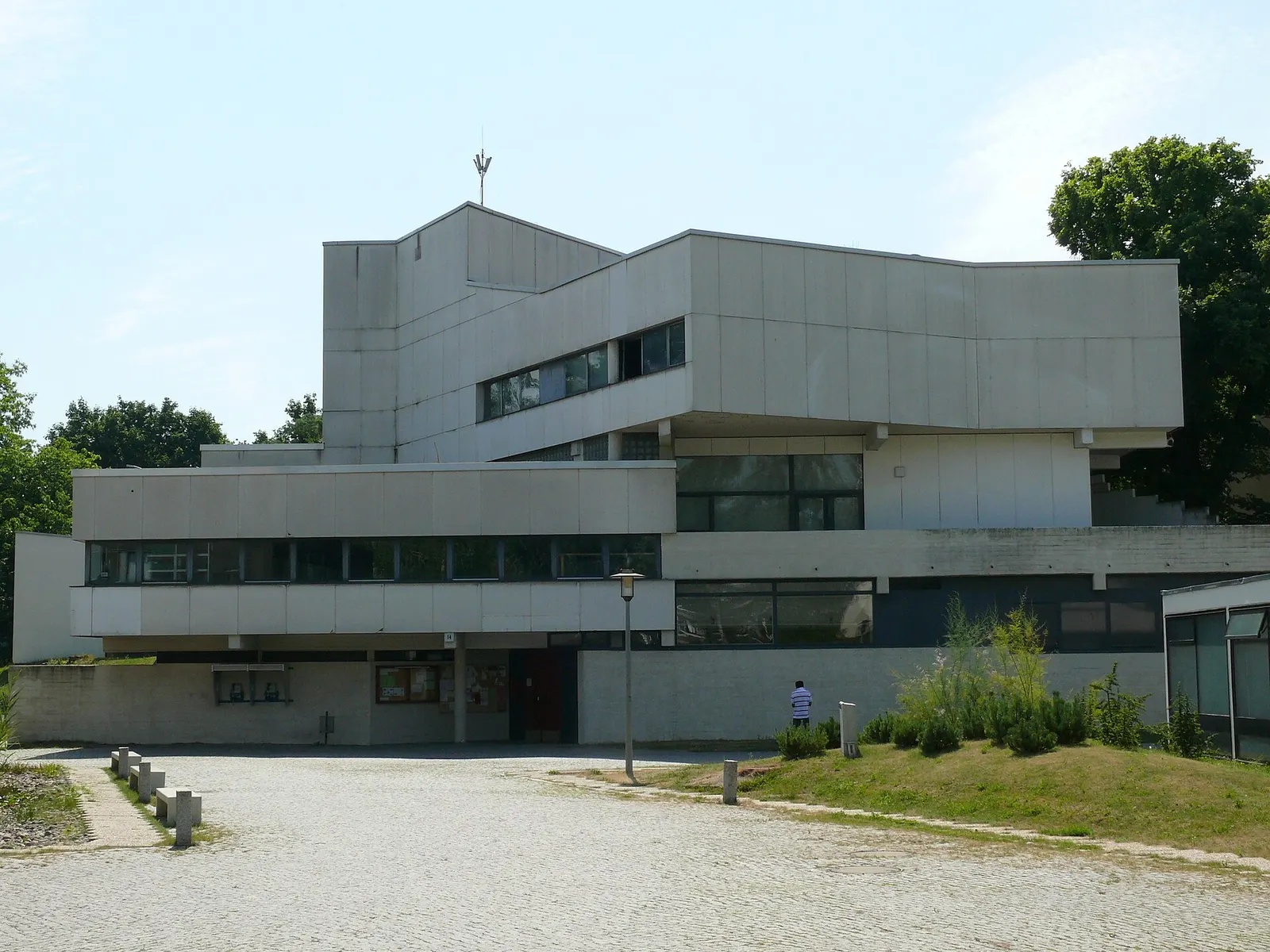
There is no single deadline, but the hall system sets the pace: waiting lists are sorted by application date, so the earlier you apply, the earlier your turn. The private market works on a much shorter horizon — Berlin's Welcome Centre notes that viewings often take place at short notice and during the day — which is why many students secure a hall place or a bridge from abroad and look for a WG room or flat after arriving.
As soon as each Studierendenwerk allows
Apply for a hall place
Frankfurt accepts applications before admission; Munich from 15 May for a winter-semester start, from 15 November of the previous year for a summer-semester start; Hamburg up to 3 months before move-in; Berlin once you are admitted and have paid the semester fee. Choose every hall you could accept — narrowing the choice lengthens the wait.
While you prepare your visa
Plan the money
Your proof of funds of €992 per month assumes a housing component of €380 per month. Budget the first rent, the first deposit instalment and a bridge on top; see proof of financial resources.
Weeks before the semester
Answer hall offers immediately
Munich sends offers about 3 to 8 weeks before the planned move-in, Berlin 4 to 6 weeks before move-in, where possible. Each comes with a deadline; in Munich, missing it cancels your application and the wait starts again.
Before you fly
Book a bridge
If no lease starts on your arrival date, book temporary housing for the first weeks and check whether it lets you register.
Within 2 weeks of moving in
Register your address
Collect the Wohnungsgeberbestätigung when you receive your keys, book a citizens' office appointment and register.
First weeks in Germany
Search on site
View WG rooms and flats in person, apply quickly and widely, and keep your hall application alive until you have a lease you are happy with.
In practice: what you sign and pay in the first month
The paperwork differs between a hall and the private market, and knowing the normal sequence is the best protection against paying the wrong person at the wrong moment.
| Step | Studierendenwerk hall | WG room or private flat |
|---|---|---|
| Contract | Offer by e-mail; in Munich you return the signed lease and a SEPA direct-debit mandate by the stated deadline, and the lease exists once the Studierendenwerk has signed too | A written lease or sublease, signed before you transfer any money |
| Deposit | Set by the hall: 1.5 monthly rents in Berlin, 2 monthly rents in Frankfurt, €400 (monthly rent up to €300) to €800 (monthly rent from €601) in Hamburg; Munich collects it by direct debit after you move in | Up to 3 months' net cold rent, payable in 3 equal monthly instalments; the first is due at the start of the tenancy |
| Rent | All running costs included; in Munich collected monthly by direct debit | A warm rent, or a cold rent plus advance payments for operating costs |
| Move-in confirmation | Issued by the Studierendenwerk | Issued by the landlord, or by the main tenant if you sublet |
| Broadcasting fee | €18.36 per month for each room off a shared public corridor | €18.36 per month once per flat, shared in a WG |
At the handover, write a report of the flat's condition with photos and have it signed — Berlin's Welcome Centre recommends this so that the deposit comes back without a dispute — and keep the lease, receipts and messages together. In Munich's halls, the Studierendenwerk sends a move-in form on which you report damage that is already there.
Housing scams: the pattern to recognise
The police crime-prevention service describes the classic fraud: an attractive flat, a "landlord" who is abroad and promises to send the key by courier once you have transferred the deposit or first rent — often several thousand euros, which the police say is extremely hard to get back. Variants include fees for viewings, deposits demanded before a lease is signed, and requests for a copy of your ID that criminals reuse for fake adverts or accounts. The police call the scheme particularly perfidious because it exploits the often desperate situation of people looking for a home.
The full list of warning signs, checks and what to do if money has gone is in housing scams in Germany and how to avoid them.
Key German housing terms
| Term | Meaning |
|---|---|
| Wohnheim / Studierendenwohnheim | Student hall of residence |
| WG / WG-Zimmer | Shared flat / a room in one |
| WG-Casting | Meeting at which flatmates choose a new person |
| Hauptmieter / Untermieter | Main tenant with the lease / subtenant renting from the main tenant |
| Zwischenmiete | Temporary sublet, typically while the tenant is away |
| Kaltmiete / Warmmiete | Rent without / with heating and hot water |
| Nebenkosten (Betriebskosten) | Operating costs passed on to tenants |
| Kaution | Rental deposit |
| Wohnungsgeberbestätigung | Landlord's confirmation of your move-in, needed for registration |
| Anmeldung / Meldebestätigung | Address registration / the certificate you receive |
| SCHUFA | Germany's largest private credit bureau, whose reports landlords often request |
| Mietspiegel | The city's table of typical local rents |
| Makler | Estate agent |
Once you have a key, the arrival hub takes you through registration, banking and your residence permit, and the daily-life hub covers what comes next.
Frequently asked questions
Why is it so hard to find housing in Germany?
Supply and price. Publicly funded halls have places for only about one student in ten (10.12%), and on the private market the median asking rent for a WG room was €510 per month in winter semester 2026/27, rising to €850 per month in Munich. Demand also peaks at semester start: WG-Gesucht reported that offers in several cities were drawing more than three times as many contact requests as in June.
How much is student rent in Germany?
A Studierendenwerk hall cost €318.18 per month on average including all running costs at the end of 2024. A room in a shared flat had a median asking rent of €510 per month in winter semester 2026/27, from €305 per month in Chemnitz to €850 per month in Munich. Add the broadcasting fee of €18.36 per month per dwelling and, in a private flat, electricity and internet.
When should I start looking for accommodation in Germany?
Apply for a hall place as soon as the local Studierendenwerk allows — Frankfurt even before admission, Munich from 15 May for a winter-semester start, from 15 November of the previous year for a summer-semester start, Hamburg up to 3 months before move-in. Private rooms and flats are let after a viewing, often arranged at short notice, so many students arrange a hall place or temporary housing first and search on site.
Do German universities provide accommodation for international students?
Not as part of admission. Most halls are run by the Studierendenwerke, which are separate from the universities, and you apply to them yourself; a place is not guaranteed. Exchange students should ask their host university's international office, which Munich's Studierendenwerk names as the contact for programme students.
How much deposit can a landlord ask for in Germany?
At most 3 months' net cold rent, and you may pay a cash deposit in 3 equal monthly instalments, the first at the start of the tenancy. Halls set lower amounts, for example 1.5 monthly rents in Berlin. A demand for the whole deposit before you have a signed lease and the keys is a classic scam signal.
Can I register my address if I sublet a room?
Yes, if the person who lets you the room — usually the main tenant — gives you the Wohnungsgeberbestätigung. Berlin's Welcome Centre warns that sublets not approved by the landlord often cannot be used for registration, so ask about the landlord's permission before you agree to anything.
Sources
32 sources, 31 official
- Wohnraum für Studierende — Statistische Übersicht 2025 / Student Housing in Germany — Statistical OverviewDeutsches Studierendenwerk (DSW) (Official)
- Pressemitteilung: Studentische Wohnkosten Wintersemester 2026/2027 (19 September 2026)Moses Mendelssohn Institut (with WG-Gesucht.de) (Institutional)
- Wohnheime für Studierende — Wohnen beim StudierendenwerkStudierendenwerk München Oberbayern (Official)
- FAQ — Wohnplatzbewerbung und WohnplatzStudierendenwerk München Oberbayern (Official)
- FAQ Wohnen (Kaution; Wann weiß ich, ob es mit einem Platz klappt?; Wohnberechtigung; Mindestwohnzeit; Wie bewerbe ich mich um einen Wohnplatz?)studierendenWERK BERLIN (Official)
- Wie bewerbe ich mich um einen Wohnplatz? / Wann weiß ich, ob es mit einem Platz klappt?studierendenWERK BERLIN (Official)
- FAQ für Bewerber*innen (Wohnen)Studierendenwerk Frankfurt am Main (Official)
- Hostel HOME — StudierendenhostelStudierendenwerk Frankfurt am Main (Official)
- Wohnen für Studierende und AuszubildendeStudierendenwerk Hamburg (Official)
- Die erste eigene Wohnung! (Top 9 questions, compiled with the Berliner Mieterverein)studierendenWERK BERLIN (Official)
- Housing search (Willkommenszentrum Berlin)Willkommenszentrum Berlin (Land Berlin) (Official)
- Rental contract (Willkommenszentrum Berlin)Willkommenszentrum Berlin (Land Berlin) (Official)
- Bürgerliches Gesetzbuch (BGB) § 551 — Begrenzung und Anlage von MietsicherheitenBundesministerium der Justiz / gesetze-im-internet.de (Official)
- BGB § 575 — Zeitmietvertrag; § 549 — Auf Wohnraummietverhältnisse anwendbare VorschriftenBundesministerium der Justiz / gesetze-im-internet.de (Official)
- BGB § 573c — Fristen der ordentlichen Kündigung; § 568 — Form der KündigungBundesministerium der Justiz / gesetze-im-internet.de (Official)
- Betriebskostenverordnung (BetrKV) § 2 — Aufstellung der BetriebskostenBundesministerium der Justiz / gesetze-im-internet.de (Official)
- Bundesmeldegesetz (BMG) § 19 — Mitwirkung des Wohnungsgebers; § 54 — BußgeldvorschriftenBundesministerium der Justiz / gesetze-im-internet.de (Official)
- Gesetz zur Regelung der Wohnungsvermittlung (WoVermRG) §§ 2, 3, 4a, 6Bundesministerium der Justiz / gesetze-im-internet.de (Official)
- Online-Betrug: Schütze dich vor Vorkassebetrug (section 'Auch bei der Wohnungssuche lauern Gefahren')Polizeiliche Kriminalprävention der Länder und des Bundes (polizei-beratung.de) (Official)
- Fake-Wohnungen im Internet: So erkennen Sie falsche Immobilienanzeigen (Stand: 07. August 2026)Verbraucherzentrale (verbraucherzentrale.de) (Official)
- Augen auf bei der Kautionsüberweisung (Kaution — Wohnungen für Studierende)Georg-August-Universität Göttingen (Accommodation Service) (Official)
- Wohnraum für Studierende — Statistische Übersicht 2025Deutsches Studierendenwerk (DSW) (Official)
- Schriftliche Anfrage Drucksache 19/22916: Studentisches Wohnen in Berlin (Antwort vom 26. Juni 2025)Abgeordnetenhaus Berlin / Senatsverwaltung für Wissenschaft, Gesundheit und Pflege (Official)
- Knapp zwei Drittel der Studierendenhaushalte durch Wohnkosten überbelastet (Pressemitteilung Nr. N048 vom 15. Juli 2026)Statistisches Bundesamt (Destatis) (Official)
- Costs of education and livingDAAD (German Academic Exchange Service) (Official)
- Informationen für StudierendeARD ZDF Deutschlandradio Beitragsservice (rundfunkbeitrag.de) (Official)
- Bekanntmachung zu § 2 Absatz 3 des Aufenthaltsgesetzes über den Mindestbetrag zur Sicherung des Lebensunterhalts vom 13. August 2025 (BAnz AT 29.08.2025 B1)Bundesministerium des Innern (BMI), Bundesanzeiger (Official)
- Bundesmeldegesetz (BMG), consolidated text (last amended by Art. 10 G v. 22.7.2026, BGBl. 2026 I Nr. 222)Bundesministerium der Justiz / gesetze-im-internet.de (Official)
- Bundesmeldegesetz § 29 — Besondere Meldepflicht in BeherbergungsstättenBundesministerium der Justiz / gesetze-im-internet.de (Official)
- Wohnsitz — Alleinige Wohnung oder Hauptwohnung anmeldenLand Berlin (Service Berlin) (Official)
- Wohn-Sitz anmelden (Leichte Sprache)Landeshauptstadt München (Official)
- Anmeldung (residence registration)Willkommenszentrum Berlin (Land Berlin) (Official)