A hall place is the closest thing Germany has to campus housing, and it is booked separately from your studies. Most publicly funded halls are run by the Studierendenwerke, the non-profit public student-services bodies of each university town: the Deutsches Studierendenwerk (DSW) counted 241,732 publicly funded hall places at the start of 2025, 196,749 of them run by Studierendenwerke. The DSW calls a hall place the cheapest way for a student to live apart from the parental home. It is also scarce: places equal about 10.12% of the student population, a ratio that has fallen since 2007 because places grew more slowly than student numbers.
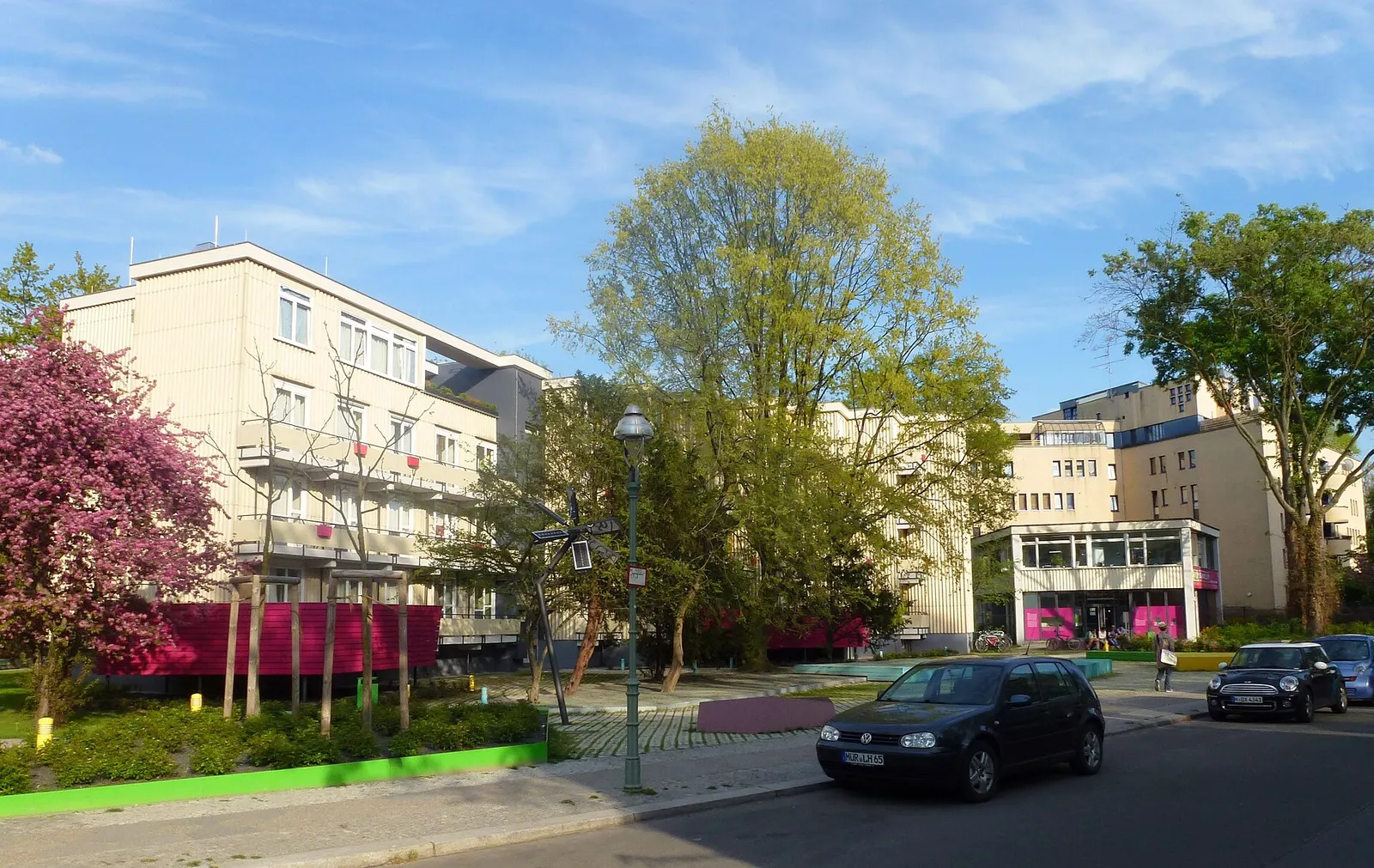
- WohnheimStudierendenwohnheim / Wohnanlage
- A student hall of residence. Rooms range from a single room whose kitchen and bathroom you share with a group to a self-contained apartment. The rent normally includes heating, water and the other running costs; the contract is a fixed-term lease with the operator.
This guide explains who runs halls, what they cost, how applications work in Munich, Berlin, Hamburg and Frankfurt, how waiting lists behave and what happens between an offer and your first night. If you still need the overall picture of housing types, start at the student accommodation hub.
Who runs student halls, and how many places there are
Each Studierendenwerk serves the universities of its city or region, and its halls are open to students of those institutions — in Munich, for example, LMU, TUM (except its Straubing site), Hochschule München and a dozen others; in Hamburg, students of the cooperating universities; in Berlin, students of Berlin universities that pay the Studierendenwerk contribution. None of the eligibility rules published by these three Studierendenwerke depends on nationality: Hamburg explicitly offers its halls to German and international students. The table shows how far the stock goes in the four largest cities.
- WohnberechtigungWohnberechtigung
- Eligibility for a hall place. Each Studierendenwerk sets its own conditions — typically enrolment in a regular degree programme at a university it serves, kept up for the whole tenancy. Munich adds an income limit (30% above the current BAföG maximum rate) and excludes doctoral candidates, second undergraduate degrees and anyone with less than a year of residence time left.
| City | Publicly funded places | Places as a share of students | Rent | Deposit | Waiting time |
|---|---|---|---|---|---|
| Munich | 11,459 places | 10.03% | Average €400.60 per month, from €283.20 per month | Not stated on the pages read | 1 to 7 semesters, by residence |
| Berlin | 9,120 places | 5.09% | Average €336.56 per month (2024) | 1.5 monthly rents | Shown per hall in the Wohnheimportal |
| Hamburg | 5,465 places | 7.47% | All-inclusive rents; no average published | €400 (monthly rent up to €300) to €800 (monthly rent from €601) | No figure given; applying for all halls is fastest |
| Frankfurt am Main | 5,599 places | 9.86% | No average published | 2 monthly rents | Depends on demand; longer if you restrict your choice |
| Germany | 241,732 places | 10.12% | €318.18 per month in Studierendenwerk halls (end of 2024) | Set by each hall | — |
Berlin's figure needs one qualification. The DSW counts only the Studierendenwerk's halls there, but Berlin's state-owned housing companies, including berlinovo, let further student places — berlinovo at an average of €463 per month gross warm rent, against €336.56 per month at studierendenWERK BERLIN. Beyond the public sector, churches, associations and private companies run halls too; how they compare is covered further down.
Hall places per student: most in Heidelberg, fewest in Berlin
Publicly funded places on 1 January 2025, per student in 2024/25
Publicly funded student halls have a place for 20.57% of students in Heidelberg and 16.44% in Stuttgart, but only 7.47% in Hamburg and 5.09% in Berlin; across Germany the rate is 10.12%.
- Heidelberg20.57%
- Stuttgart16.44%
- Dresden16.03%
- Leipzig12.96%
- Germany10.12%
- Munich10.03%
- Frankfurt9.86%
- Aachen9.66%
- Hamburg7.47%
- Cologne7.25%
- Berlin5.09%
| Item | Value |
|---|---|
| Heidelberg | 20.57% |
| Stuttgart | 16.44% |
| Dresden | 16.03% |
| Leipzig | 12.96% |
| Germany | 10.12% |
| Munich | 10.03% |
| Frankfurt | 9.86% |
| Aachen | 9.66% |
| Hamburg | 7.47% |
| Cologne | 7.25% |
| Berlin | 5.09% |
The Unterbringungsquote of the Deutsches Studierendenwerk: places in halls run by the Studierendenwerke and other publicly funded operators. Private student residences are not counted.
Source: DSW. Last checked:
Image (PNG)What a hall costs and what the rent includes
Studierendenwerk rents are cost rents: they have to cover the building's running costs, and Munich, for instance, states that it receives no subsidy towards running its halls. The rent is a warm rent that includes heating, water and the other operating costs; in Munich the operating costs are charged as a monthly advance and settled after the billing period. In Munich the October 2026 list runs from €283.20 per month for a WG room at the Studentenstadt upwards, with an average of €400.60 per month for a single place; LMU's own guide for international students budgets €400–€600 per month for a room in student housing. What you get for the money depends on the room type. Munich's categories are typical of the terms you will meet:
| Room type | What it means |
|---|---|
| Einzelzimmer | Single room; shower, toilet and kitchen are shared within your group (Wohngruppe) |
| Teilapartment | Own shower and toilet; the kitchen is shared with the group |
| Doublette | Single room in a hall WG where two people share a bathroom and the whole WG shares the kitchen |
| Einzelapartment | Own shower, toilet and kitchenette |
| Family flat / single-parent apartment | Larger apartments for couples with a child (both enrolled) and for single parents |
| Accessible room or apartment | Equipped for students with disabilities |
Two extras are easy to overlook. Internet may or may not be included: Hamburg's Studierendenwerk provides internet and cable connections free, while Munich's lease template lists a fixed charge for internet access as a line of the monthly total. And the broadcasting fee is not part of any hall rent. Every room off a generally accessible corridor counts as a dwelling of its own and pays the full €18.36 per month, even if it has its own bathroom or kitchen; rooms behind a shared apartment door, used like a WG, share one fee — see the broadcasting fee explained. Rent is collected by direct debit in Munich, so you need an account the Studierendenwerk can debit by SEPA mandate before you sign; opening a bank account in Germany explains the options.
Hall leases: what tenancy law does and does not cover
A hall lease is a residential lease, but the Civil Code switches several tenant protections off for student and youth halls (BGB § 549(3)). Know the differences before you sign.
| Rule | Ordinary private lease | Student hall |
|---|---|---|
| Rent brake when the lease starts | Applies in areas a Land has designated: at most 10% above the local comparative rent | Does not apply |
| Rent increases | Capped at 20% within three years (15% in designated areas) | The statutory rent-increase rules do not apply; the operator sets the rent |
| Fixed term | Only with a statutory reason stated in writing; otherwise the lease is open-ended | Normal and lawful; leases follow the course of study |
| Protection against the landlord's notice | Statutory protection (BGB §§ 573 ff.) | Excluded for halls by § 549(3) |
| Deposit | Up to 3 months' net cold rent, kept with interest for the tenant | Set by the hall within the same cap; no interest owed |
Halls add rules of their own. In Munich the maximum residence period is 7 semesters for a bachelor's (or similar first degree), 4 semesters for a master's; the periods cannot be combined, and extensions are granted only semester by semester in defined cases such as a final exam semester or serious hardship. You must stay eligible the whole time, which in practice means proving continued enrolment every semester. Notice periods are set by the lease: Hamburg needs written notice with an original signature at the latest 6 weeks before the end of the month you move out, and Munich's first leases usually run for at least 1 year.
Going abroad for a semester does not have to cost you the room. studierendenWERK BERLIN allows subletting for a semester abroad or an internship for up to 6 months, with its approval, to a subtenant who is eligible for a hall place, at the same rent — you remain the tenant and liable for everything. Munich does not arrange sublets and takes no applications for stays shorter than a semester.
How to apply: Munich, Berlin, Hamburg and Frankfurt
Every Studierendenwerk runs its own online application, and the timing rules differ more than anything else. The safest rule is to apply on the first day you are allowed to.
| City | When you can apply | What you provide | Halls you choose | Keeping the application alive |
|---|---|---|---|---|
| Munich | Applications open from 15 May for a winter-semester start, from 15 November of the previous year for a summer-semester start; enrolled students any time | Admission letter or enrolment certificate, uploaded in "Mein Account" | Up to 3 residences at your main study location — not a ranking | Upload a current enrolment certificate every semester by 1 November (winter semester) and 1 May (summer semester); the FAQ names the 14th of those months, so the earlier date is the safe one |
| Berlin | Once you are admitted and have paid the semester fee | Admission or enrolment letter, semester-fee receipt and passport, scanned and uploaded to the Wohnheimportal | 3 preferred halls | Answer the regular e-mail asking whether you are still interested within 5 days |
| Hamburg | Up to 3 months before the move-in date you want or the start of your studies | Online application; by post only in hardship cases | All halls — the Studierendenwerk says this gives the shortest wait | No interest check described; regular online information sessions in German and English explain the procedure |
| Frankfurt am Main | At any time, even before admission; the admission letter is needed when you sign | Online form; a new application replaces the old one | The whole range — restricting yourself to apartments can mean a much longer wait | A monthly e-mail checks that you are still interested |
Identify your Studierendenwerk
It is the one responsible for your university, not necessarily the one in the city centre. Munich's, for example, also runs halls in Freising and Rosenheim for the universities there.
Apply on the first permitted day
Waiting lists are sorted by application date — Munich allocates free places in that order, apart from quotas — so every day counts.
Choose widely
Tick every hall you could accept. Frankfurt and Hamburg both say that narrowing your choice is what lengthens the wait.
Upload complete documents
Use clear scans and keep the confirmation e-mail with your application date. Munich warns that a second application is deleted without comment and allows one change within the first year by e-mail.
Keep the application alive
Upload enrolment certificates on time, answer interest checks, and keep the e-mail address you applied with working — check your spam folder.
Plan a bridge for semester one
Unless an offer is already in hand, arrange temporary housing for your first weeks; see finding housing before you arrive.
Waiting lists: how long, and what shortens them
Munich publishes the most detail: waiting times of 1 to 7 semesters depending on the residence, where a semester means six months, so a four-semester wait is roughly two years from your application date. In its October 2026 list the shortest waits were at residences away from the centre, such as Oberschleißheim, Felsennelkenanger and Stiftsbogen, and the longest at central ones such as Agnes-/Adelheidstraße. The figures are averages from experience, and the Studierendenwerk does not tell applicants their position on the list. Hamburg gives no waiting time at all, and Berlin shows waiting-time bands for each hall in its online overview.
When an application stalls, Munich names the usual reasons: no current enrolment certificate uploaded, a binding offer not accepted in time, unanswered questions about the application, or an e-mail address that no longer works. Exchange students face a harder truth: Munich's Studierendenwerk says it is "nahezu ausgeschlossen" — almost impossible — for programme students to get a room through it, and refers them to their host university's international office.
In practice: from the offer to your first night
Munich's Studierendenwerk describes its sequence step by step, and Berlin's follows the same logic. Knowing it in advance matters most when you are abroad and the offer arrives with a short deadline.
- Festanschreiben and SchnellanschreibenFestanschreiben / Schnellanschreiben
- Munich's two kinds of hall offer. A Festanschreiben is a binding offer to you alone, with a deadline: accept in time or your application lapses. A Schnellanschreiben is a short-notice offer of a place that has suddenly become free, sent to several people on the list; it is not binding, and the first to reply gets the room.
The offer arrives by e-mail
Munich sends regular offers about 3 to 8 weeks before the planned move-in, with the lease, an additional agreement and the cancellation notice as PDFs; Berlin aims to tell you 4 to 6 weeks before move-in, where possible. If you are bound by an existing lease, tell Berlin through the portal so the offer can be timed.
Accept before the deadline
In Munich you return the signed lease and a SEPA direct-debit mandate signed by the account holder by the stated date. Short-notice offers come about 1 to 2 weeks before move-in to several people at once: the first to reply gets the place, the others keep their position.
Expect no viewing
Munich organises no viewings because its rooms are continuously occupied; photos and descriptions are on its website. The lease exists only once the Studierendenwerk has signed it too.
Pay by direct debit, not by transfer
Munich's FAQ says the deposit is not transferred before moving in: it is debited after an e-mailed SEPA pre-notification, and rent follows monthly. The Studierendenwerk warns never to transfer money in advance, so a request to wire a 'hall deposit' to someone's account is a warning sign.
Collect your keys and report existing damage
Key pick-up instructions come with the countersigned lease. Munich also sends a move-in form on which you record damage already present, so it is not charged to you later.
Register your address
The Studierendenwerk confirms your move-in as your landlord. Register at the citizens' office within 2 weeks — see address registration in Germany.
Private and church-run halls, and other routes
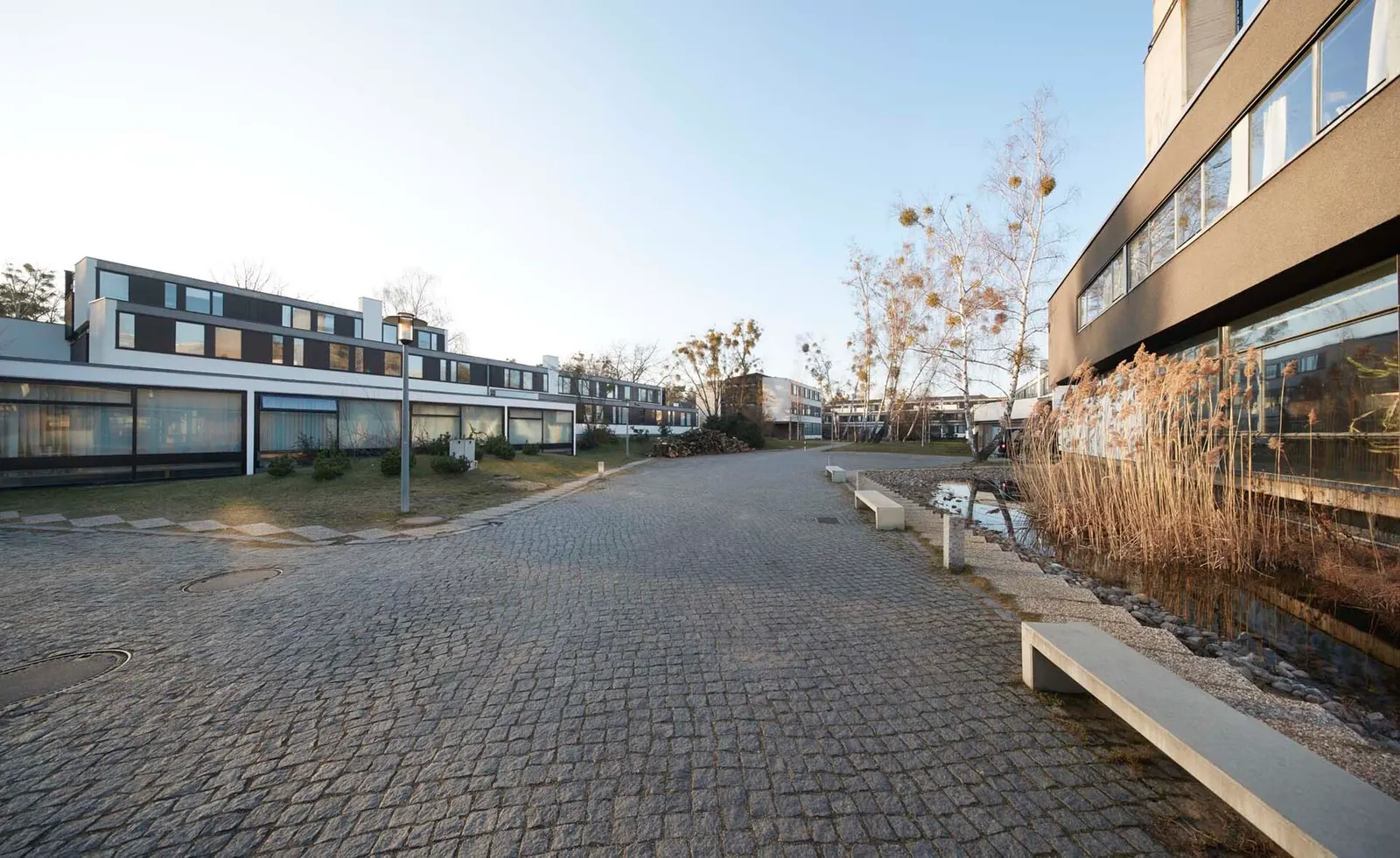
Halls outside the Studierendenwerke are a separate market with separate applications. Munich's Studierendenwerk publishes a list of other operators — among them the Archdiocese of Munich and Freising, IN VIA, the CVJM and several associations — but stresses that it only provides the platform and is not responsible for them; you apply to each one directly, and some take only men or only women or have a Catholic or Protestant profile. Commercial student residences can cost considerably more per square metre: research for the Berlin Senate put the average rent of private and commercial student-housing providers there at about €29 per m² a month. Read their contracts as carefully as any private lease — German rental contracts explains what to look for.
Munich's Studierendenwerk also runs two alternatives: a free agency where private landlords offer rooms to students, and "Wohnen für Hilfe", in which students live rent-free with older people in exchange for help — details in student accommodation in Munich. If no hall place comes through, most students move on to a room in a shared flat: shared flats (WG) in Germany.
A hall place also shapes the rest of your first semester. Because the rent is a warm rent, your monthly budget is easier to plan than in a private flat, but the broadcasting fee usually comes on top for a room off a corridor. The hall operator signs your landlord confirmation, and most Studierendenwerke ask for proof of enrolment by a set date. Many halls are financed in part through the semester contribution, which is one reason they are reserved for enrolled students. In Berlin, the city guide shows where the main hall locations are.
Applying from abroad as an international student
Everything can be done online, and nothing in the rules read for this guide treats international applicants differently once they are admitted. Three practical points matter more for students coming from outside the EU. If your visa application asks for proof of accommodation, Munich's Studierendenwerk will confirm on request that you are on its waiting list. Hall payments run by SEPA direct debit, so arrange an account that can be debited before you sign. And because offers arrive only weeks before move-in, plan your first weeks with a fallback rather than a promise.
Have this ready before you apply
- Passport scan and your admission letter or enrolment certificate
- In Berlin: the receipt for your paid semester fee
- An e-mail address you check daily, with the Studierendenwerk whitelisted
- A list of every hall you could accept, not just your favourite
- An account that accepts SEPA direct debits, for rent and deposit
- Money for the deposit: 1.5 monthly rents in Berlin, 2 monthly rents in Frankfurt, €400 (monthly rent up to €300) to €800 (monthly rent from €601) in Hamburg
- A temporary place to stay if the offer comes late
Frequently asked questions
How do I apply for a student dorm in Germany?
Apply online to the Studierendenwerk responsible for your university, on the first day its rules allow, and choose every hall you could accept. Berlin requires your admission letter and the paid semester fee first; Frankfurt accepts applications before admission; Munich accepts them from 15 May for a winter-semester start, from 15 November of the previous year for a summer-semester start. Then keep the application alive by uploading enrolment certificates and answering interest e-mails.
How much does a student dorm cost in Germany?
Studierendenwerk halls averaged €318.18 per month including all running costs at the end of 2024. In Munich the average single place costs €400.60 per month, and in Berlin the 2024 average was €336.56 per month. The broadcasting fee of €18.36 per month comes on top for a room off a shared public corridor.
How long are dorm waiting lists?
It depends on the city and the residence. Munich gives 1 to 7 semesters, with the shortest waits at outer residences; Hamburg and Frankfurt publish no figure but say that applying for all halls gives the shortest wait. Apply as early as possible and arrange temporary housing for your first semester.
Can I apply for a dorm before I am admitted?
In Frankfurt, yes: you can join the waiting list at any time and show the admission letter when you sign. Berlin accepts applications only once you are admitted and have paid the semester fee. Hamburg takes applications up to 3 months before move-in, and Munich from 15 May for a winter-semester start, from 15 November of the previous year for a summer-semester start, asking for an admission letter or enrolment certificate to keep the application active.
Do I have to pay the broadcasting fee in a student dorm?
Usually yes. A hall room that opens onto a generally accessible corridor counts as its own dwelling and pays the full €18.36 per month, even with its own bathroom or kitchen. Rooms behind a shared apartment door, used like a WG, share one fee between them.
Can I sublet my dorm room during a semester abroad?
In Berlin, yes: studierendenWERK BERLIN allows a sublet for a semester abroad or an internship for up to 6 months, with its approval, to an eligible student at the same rent, and you stay liable as the tenant. Other Studierendenwerke set their own rules, so ask yours before you leave.
Sources
24 sources, all official
- Wohnraum für Studierende — Statistische Übersicht 2025 / Student Housing in Germany — Statistical OverviewDeutsches Studierendenwerk (DSW) (Official)
- Wohnheime für Studierende — Wohnen beim StudierendenwerkStudierendenwerk München Oberbayern (Official)
- Wartezeit und Miete (Stand: Oktober 2026)Studierendenwerk München Oberbayern (Official)
- FAQ — Wohnplatzbewerbung und WohnplatzStudierendenwerk München Oberbayern (Official)
- Was geschieht von der Bewerbung bis zum Einzug? (Bewerbungsprozess)Studierendenwerk München Oberbayern (Official)
- Miete, Betriebskosten und Wartezeiten (Wohnformen)Studierendenwerk München Oberbayern (Official)
- PrivatzimmervermittlungStudierendenwerk München Oberbayern (Official)
- Wohnanlagen privater TrägerStudierendenwerk München Oberbayern (Official)
- FAQ Wohnen (Kaution; Wann weiß ich, ob es mit einem Platz klappt?; Wohnberechtigung; Mindestwohnzeit; Wie bewerbe ich mich um einen Wohnplatz?)studierendenWERK BERLIN (Official)
- Wie bewerbe ich mich um einen Wohnplatz? / Wann weiß ich, ob es mit einem Platz klappt?studierendenWERK BERLIN (Official)
- Untervermietung — Ist das möglich?studierendenWERK BERLIN (Official)
- Die erste eigene Wohnung! (Top 9 questions, compiled with the Berliner Mieterverein)studierendenWERK BERLIN (Official)
- FAQ für Bewerber*innen (Wohnen)Studierendenwerk Frankfurt am Main (Official)
- Wohnen für Studierende und AuszubildendeStudierendenwerk Hamburg (Official)
- Schriftliche Anfrage Drucksache 19/22916: Studentisches Wohnen in Berlin (Antwort vom 26. Juni 2025)Abgeordnetenhaus Berlin / Senatsverwaltung für Wissenschaft, Gesundheit und Pflege (Official)
- BGB § 575 — Zeitmietvertrag; § 549 — Auf Wohnraummietverhältnisse anwendbare VorschriftenBundesministerium der Justiz / gesetze-im-internet.de (Official)
- Bürgerliches Gesetzbuch (BGB) § 551 — Begrenzung und Anlage von MietsicherheitenBundesministerium der Justiz / gesetze-im-internet.de (Official)
- BGB § 553 — Gestattung der Gebrauchsüberlassung an Dritte (subletting); § 558 — Mieterhöhung bis zur ortsüblichen Vergleichsmiete; § 557b — IndexmieteBundesministerium der Justiz / gesetze-im-internet.de (Official)
- Bundesmeldegesetz (BMG) § 19 — Mitwirkung des Wohnungsgebers; § 54 — BußgeldvorschriftenBundesministerium der Justiz / gesetze-im-internet.de (Official)
- Wohnraum für Studierende — Statistische Übersicht 2025Deutsches Studierendenwerk (DSW) (Official)
- Schriftliche Anfrage Drucksache 19/22916: Studentisches Wohnen in Berlin (Antwort vom 26. Juni 2025)Abgeordnetenhaus Berlin / Senatsverwaltung für Wissenschaft, Gesundheit und Pflege (Official)
- Living costs (International Student Guide)LMU Munich (Official)
- Informationen für StudierendeARD ZDF Deutschlandradio Beitragsservice (rundfunkbeitrag.de) (Official)
- Bundesmeldegesetz (BMG), consolidated text (last amended by Art. 10 G v. 22.7.2026, BGBl. 2026 I Nr. 222)Bundesministerium der Justiz / gesetze-im-internet.de (Official)