Whether and how much you may work while studying in Germany depends first on your citizenship and residence permit, then on the type of job. Citizens of the EU, the EEA and Switzerland have unrestricted access to the labour market, as the DAAD puts it. Everyone else who studies on a residence permit under § 16b of the Residence Act (AufenthG) may also work, without a separate work permit, within a yearly allowance of working days. Insurance, tax and labour law then apply to all students alike.
This hub gives the overview and links to the detailed guides. It is part of Scholway's guide to studying in Germany. If you are still planning your finances, read it together with the cost of living in Germany, because a student job alone rarely pays for a degree.
Working as a student in Germany: who may work and how much
For students from outside the EU the rules sit in residence law. § 16b (3) AufenthG lets you work 140 days of work per calendar year, which can be taken as 280 half days per calendar year: a day of up to 4 hours counts as half a day. Any calendar week can instead count as 2.5 working days per calendar week, if you work no more than 20 hours per calendar week in the lecture period or any number of hours in the semester break, whichever is better for you. No approval from the Federal Employment Agency is needed within that allowance. The guide to how many hours students can work shows how the days are counted on real contracts.
140 full or 280 half days: the student work rule
Non-EU students on a study residence permit, per calendar year
- Full working days a year
- 140 days
- full and half days can be mixed
- Half days instead
- 280
- Or less in a day counts as half
- 4 hours
- Days counted per week
- 2.5
- for a job of up to 20 hours in the lecture period
Student jobs at the university don't count. Working beyond the allowance can be fined up to €5,000.
Source: Bundesministerium der Justiz / Bundesamt für Justiz, Bundesagentur für Arbeit, Stadt Leipzig, Ordnungsamt +3 more. Last checked:
Image (PNG)- Working-day accountArbeitstagekonto
- The yearly allowance of working days on a German student permit (§ 16b (3) AufenthG). It runs per calendar year, holiday and sick days are not deducted, and study-related side jobs at universities are not counted.
| Your status | Work allowed | Notes |
|---|---|---|
| EU, EEA or Swiss citizen | No residence-law limit | The DAAD notes that working more than 20 hours a week during term brings social-insurance contributions. |
| Student permit (§ 16b AufenthG), including Studienkolleg or a German course tied to your admission | 140 days of work per calendar year or 280 half days per calendar year, plus unlimited study-related side jobs | Self-employment only if your foreigners authority allows it. See freelancing on a student permit. |
| Language course that does not prepare for study (§ 16f) | 20 hours per week | A separate weekly rule, not the working-day account. |
| Permit to look for a study place (§ 17) | 20 hours per week | Plus limited trial employment. |
| Graduate job-search permit (§ 20) | Any work | Valid up to 18 months. See the job-seeker permit. |
Look at the condition (Nebenbestimmung) printed on your residence permit: § 4a (3) AufenthG requires every title to show whether you may work and with what restrictions. Some authorities, such as Leipzig and Dresden, add "Selbständige Tätigkeit nicht erlaubt" (self-employment not allowed); Berlin allows self-employment as a side activity as long as your studies come first. The condition written by your own authority is the one that binds you.
Minijob, Werkstudent, HiWi or internship: the main job types
Three separate systems look at every student job. Residence law asks how many days it uses from your account. Social-insurance law decides which contributions come off your pay, and that depends on the job type. Tax law decides how much wage tax is withheld and whether you get it back. A job can be fine under one system and a problem under another, so settle the job type before you sign.
Minijob, Werkstudent, short-term job or HiWi?
The main student job types for non-EU students, 2026
| Minijob | Werkstudent | Short-term job | Student assistant (HiWi) | |
|---|---|---|---|---|
| The limit | On average up to €603 per month | 20 hours a week in term | 3 months or 70 days a year | From €15.20 per hour (TdL) |
| Your social insurance | 3.6% pension, opt-out possible | Pension only | None | Like a minijob or Werkstudent |
| Wage tax | Flat 2%, usually paid by the employer | By tax class | By tax class | Like a minijob or Werkstudent |
| Counts against the 140 days a year | Yesexcept study-related uni jobs | Yes2.5 days a week in term | Yesevery working day | No |
The limit
- Minijob
- On average up to €603 per month
- Werkstudent
- 20 hours a week in term
- Short-term job
- 3 months or 70 days a year
- Student assistant (HiWi)
- From €15.20 per hour (TdL)
Your social insurance
- Minijob
- 3.6% pension, opt-out possible
- Werkstudent
- Pension only
- Short-term job
- None
- Student assistant (HiWi)
- Like a minijob or Werkstudent
Wage tax
- Minijob
- Flat 2%, usually paid by the employer
- Werkstudent
- By tax class
- Short-term job
- By tax class
- Student assistant (HiWi)
- Like a minijob or Werkstudent
Counts against the 140 days a year
- Minijob
- Yesexcept study-related uni jobs
- Werkstudent
- Yes2.5 days a week in term
- Short-term job
- Yesevery working day
- Student assistant (HiWi)
- No
EU, EEA and Swiss citizens have no day allowance. The condition printed on your residence permit says what you may do.
Source: Minijob-Zentrale, Bundesministerium der Justiz / Bundesamt für Justiz, AOK +6 more. Last checked:
Image (PNG)
- Minijobgeringfügig entlohnte Beschäftigung
- A job paying on average no more than €603 per month. A student pays no health, care or unemployment contributions on it and only a small pension share; the employer pays flat-rate contributions and usually the tax.
- WerkstudentWerkstudentenprivileg
- An enrolled student whose job leaves study as the main occupation, which the insurance carriers take to mean no more than 20 hours per week in the lecture period. The job is then free of health, care and unemployment insurance; only pension contributions are paid.
| Job type | Pay or time rule | Your deductions | Counts against the account? |
|---|---|---|---|
| Minijob | On average up to €603 per month (€7,236 per year) | Only a 3.6% pension share, which you can opt out of; tax is usually paid by the employer as a flat 2% | Yes, unless it is a study-related side job. See minijobs for students. |
| Werkstudent | Above the minijob limit, no more than 20 hours per week in the lecture period | Pension contributions only (reduced up to €2,000 a month); wage tax by tax class | Yes, usually 2.5 working days per calendar week. See Werkstudent jobs. |
| Short-term job | Limited in advance to 3 months or 70 days of work in a calendar year | No social-insurance contributions; wage tax by tax class (a flat rate only for very short jobs) | Yes, every working day counts |
| Student assistant (HiWi) | At least €15.20 per hour for assistants without a degree at universities of the Länder in the TdL employers' association | As a minijob or a Werkstudent job, depending on pay and hours | No. See HiWi jobs at German universities. |
| Internship | Compulsory placements may be unpaid; voluntary ones longer than 3 months owe the minimum wage | Compulsory placements during enrolment: none | Compulsory: no. Voluntary: yes. See internships in Germany. |
| Freelance work | Needs your foreigners authority's permission unless your permit already allows it | Your own tax and, in some trades, pension insurance | Not employment, so not on the account, but permission is needed |
For Turkish students: the A/T 11 trap and ARB 1/80
Turkish citizens work under the same student rules as everyone else from outside the EU. Two points, however, apply only to them, and both are easy to get wrong.
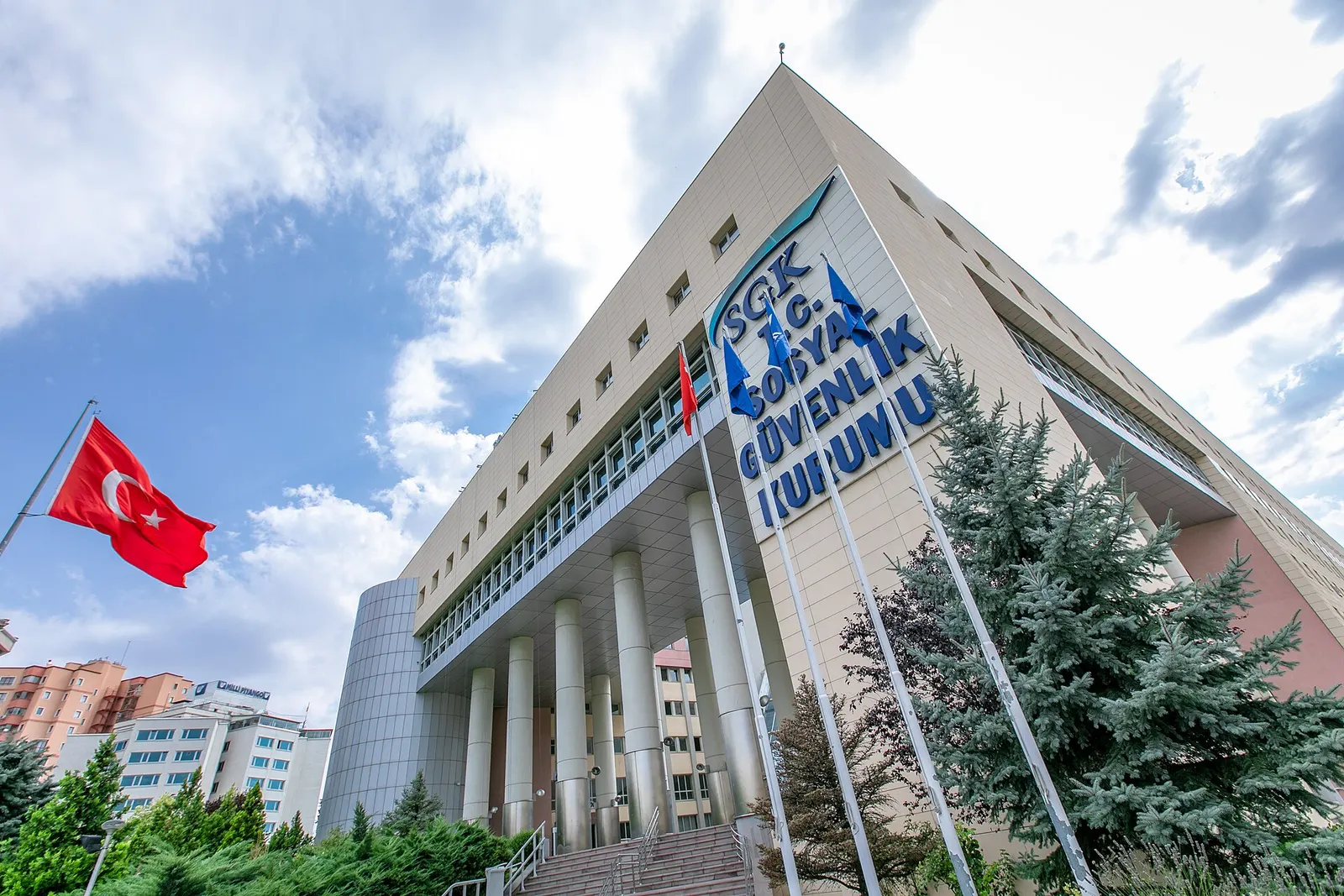
Any job usually ends Turkish SGK cover
Under the German–Turkish social security agreement, a student whose centre of life stays in Turkey can use Turkish health cover in Germany with the SGK form A/T 11 instead of joining German student insurance. The German liaison office for health insurance abroad (DVKA) sets a condition that many students miss: you must not work in Germany. In its words, if you take up employment or self-employment, "auch z.B. einen Minijob" (even a minijob, for example), cover through your home country is usually no longer possible. You then have to ask a German statutory health insurance fund to check whether you must insure in Germany, and inform your Turkish insurer about the job.
Plan this before your first shift, not after. German student insurance costs, for example, €141.16 per month or €146.29 per month at TK, depending on your age and whether you have children, which can absorb a good part of a minijob's pay. The student health insurance guide explains the switch.
Association law: a right to keep the same job
The Federal Employment Agency's binding guidance states that Turkish nationals who work on a student permit can rely on Article 6 (1) of Decision 1/80 of the EEC–Turkey Association Council (ARB 1/80), following the Court of Justice's Payir judgment. After 1 year of legal employment they are entitled to have their permission renewed to continue with the same employer, and they claim this at the foreigners authority. For Turkish workers in general, the same article continues after 3 years (same occupation, any employer) and 4 years (free access to paid employment), but the BA notes that the national rules of the Employment Ordinance are in part more favourable than these steps, which has to be checked case by case.
No official source explains how this interacts with the yearly working-day account, so it is a right to raise with advice, not a licence for unlimited hours. The federally funded Faire Integration advice centres advise workers from outside the EU on employment and social-law questions free of charge, anonymously and in several languages. Turkish-specific practicalities beyond work are collected in the guide for Turkish students.
How much students earn: minimum wage and typical pay
Every employee, including minijobbers and Werkstudents, is owed the statutory minimum wage: €13.90 gross per hour in 2026 and €14.60 gross per hour from 1 January 2027. The main exceptions are internships required by your studies and short voluntary ones, covered in the internships guide. Student assistants without a degree at universities of the Länder in the TdL employers' association get at least €15.20 per hour from the 2026 summer semester. Beyond those floors, pay is agreed individually or set by a collective agreement. The DAAD says pay depends heavily on your skills and the industry and that the average hourly wage is often somewhat above the minimum wage. No official statistic of student pay was found for this guide.
| Pattern | Gross per month | What applies |
|---|---|---|
| Minijob at the limit | €603 per month, about 43.38 hours per month at the minimum wage | Pension share only, opt-out possible |
| 20 hours a week all month | About €1,205 gross per month | Werkstudent rules: pension contributions, wage tax by tax class |
| For comparison: monthly means a student must show | €992 per month | The amount residence law treats as a secure livelihood for study |
Your rights to written terms, paid holiday and sick pay are the same as a full-time employee's. They are set out in student pay and worker rights in Germany.
Can a job pay for your studies? A realistic budget
Not at the start. For the visa and first residence permit you must prove that your livelihood is secured before you arrive, usually with €11,904 per year in a blocked account. Expected earnings are not a substitute at that stage. § 2 (3) AufenthG treats a student's livelihood as secured with monthly means equal to the BAföG need, currently €992 per month, and that test is repeated whenever your permit is renewed.
Later, a job can carry part of the load. A minijob at the limit pays €603 per month; a Werkstudent job of 20 hours a week at the minimum wage pays about €1,205 gross per month, before pension contributions and before your own health insurance. The DAAD's own verdict is blunt: it is virtually impossible to fund your entire cost of living through side jobs. If you plan to rely on earnings at a renewal, ask your foreigners authority which proof it accepts, such as payslips and the employment contract.
Tax: Steuer-ID, tax class and getting money back
Your employer needs your tax identification number (Steuer-ID), which the Federal Central Tax Office sends by post after you register your address; see getting your Steuer-ID. As a single person you are in tax class I. If you fail to provide the number through your own fault, the employer must withhold at the much higher class VI; if it simply has not arrived yet, the employer may use your expected class for up to 3 months. A second job taxed by tax class at the same time always runs in class VI (§ 38b EStG).
For an unmarried employee whose only income is wages, no income tax is due on up to €13,614 per year in 2026: the basic allowance of €12,348 plus two lump sums. Employers still withhold wage tax in months when your pay is high, for example in a full-time summer job, because they treat each month's pay as if you earned it all year. A voluntary tax return gets that money back; the student tax guide walks through a worked refund example. Tax paid at the flat 2% minijob rate is final and never comes back.
Finding a student job
The main channels are university job boards and career services, postings for student assistant posts at institutes, the Federal Employment Agency's free job search and commercial platforms. Many jobs that involve customers expect German, so improving your language skills widens your options; see learning German in Germany. The guide to finding student jobs covers where to look, what to send and the documents you need before your first shift.
In practice: from job offer to first payslip
Check your permit and your insurance
Read the work condition on your residence permit. If you are a Turkish student using an A/T 11 form, sort out German health insurance before you start.
Settle the job type in writing
Ask whether the job is a minijob, a Werkstudent job, a short-term job or a study-related side job. It decides your deductions and how the days are counted.
Hand over your numbers
Give the employer your Steuer-ID and date of birth, your bank details and, if you have one, your pension insurance number. The Deutsche Rentenversicherung issues a pension insurance number record (Versicherungsnummernachweis) when you take up your first job.
Collect your written terms
The employer must give you the essential terms in writing: names, pay and working time on the first working day, the rest within set deadlines (Nachweisgesetz).
Keep a working-day log
Record the date and hours of every shift and score each week with the cheaper counting method. Your log is your evidence if your account is ever checked.
Check the first payslip
You are entitled to a pay statement with each payment (§ 108 GewO). Check that the deductions match your job type, and keep the statements for your tax return.
After graduation
Once you have graduated, the student work rules no longer apply. The job-search permit for graduates is valid for up to 18 months, and Berlin's immigration office states that it allows any work, employed or self-employed. Your Werkstudent status also ends with your studies, because it depends on being enrolled. The options are in staying in Germany after graduation.
Before you accept a student job
- Read the work condition on your residence permit, including whether self-employment is excluded
- Ask in writing which job type it is: minijob, Werkstudent, short-term or student assistant
- Count how many days the job will use from your yearly account, week by week
- If you use Turkish SGK cover with an A/T 11, arrange German health insurance first
- Make sure your address is registered so that your Steuer-ID can reach you
- Check that the pay is at least €13.90 gross per hour unless it is a compulsory or short internship
- Keep your studies on track for the next permit renewal
Frequently asked questions
Can international students work in Germany?
Yes. EU, EEA and Swiss students have unrestricted access to the labour market. Students from other countries can work on their student residence permit without a separate work permit, up to 140 days of work per calendar year or 280 half days per calendar year, plus unlimited study-related side jobs such as student assistant posts at universities.
Do I need a work permit as a student in Germany?
No separate work permit is needed within the yearly allowance: the student residence permit already allows the work, and the Federal Employment Agency does not have to approve it. You need permission only for work beyond the allowance and, unless your permit already allows it, for self-employment.
Can I support myself by working while studying in Germany?
Only partly. You must prove secured means before the visa, usually with €11,904 per year in a blocked account, and a minijob pays at most €603 per month. The DAAD says it is virtually impossible to fund your entire cost of living through side jobs.
Do Turkish students have extra work rights in Germany?
Not at the start: Turkish students work under the same allowance as other non-EU students. The Federal Employment Agency's guidance says that after 1 year of legal employment, a Turkish national on a student permit can claim renewal of the permission to keep working for the same employer under ARB 1/80. How that interacts with the yearly allowance is not set out officially, so get advice before relying on it.
Do EU students have any work limits in Germany?
Not under residence law. The DAAD points out, however, that EU, EEA and Swiss students who work more than 20 hours a week during term must pay certain insurance contributions, as the Werkstudent rules set out for every student.
What kinds of jobs can international students do in Germany?
Most students work in a minijob, as a Werkstudent in a company, as a student assistant (HiWi) at the university, or in an internship. Each has its own rules on pay, social insurance and how it counts against the 140 days of work per calendar year; compare them in finding a student job and working-hour rules.
Sources
32 sources, 31 official
- § 16b AufenthG – Studium (Arbeitstagekonto, Absatz 3)Bundesministerium der Justiz / Bundesamt für Justiz (gesetze-im-internet.de) (Official)
- Fachliche Weisungen Aufenthaltsgesetz und Beschäftigungsverordnung (Stand 12/2024) – § 16b AufenthG (16b.0.1–16b.0.7) and ARB 1/80 (4.0.2)Bundesagentur für Arbeit (BA Zentrale) (Official)
- Arbeitstagekonto für Studierende aus Nicht-EU-Staaten (information sheet)Stadt Leipzig, Ordnungsamt (Ausländerbehörde) (Official)
- Information: Arbeitstagekonto für Studierende aus Nicht-EU-Staaten (Stand April 2024)Landeshauptstadt Dresden, Welcome Center (Official)
- Studium (Landesamt für Einwanderung Berlin: Arbeiten, Praktika, Arbeitsplatzsuche, Familie)Land Berlin – Landesamt für Einwanderung (Official)
- Side jobs (Studying in Germany – Work & career)DAAD – Deutscher Akademischer Austauschdienst (Official)
- § 4a AufenthG – Zugang zur ErwerbstätigkeitBundesministerium der Justiz / Bundesamt für Justiz (gesetze-im-internet.de) (Official)
- § 2 AufenthG – Begriffsbestimmungen (Absatz 2 Erwerbstätigkeit, Absatz 3 Lebensunterhalt)Bundesministerium der Justiz / Bundesamt für Justiz (gesetze-im-internet.de) (Official)
- § 52 AufenthG – Widerruf (Absatz 3: student residence permits)Bundesministerium der Justiz / Bundesamt für Justiz (gesetze-im-internet.de) (Official)
- § 404 SGB III – BußgeldvorschriftenBundesministerium der Justiz / Bundesamt für Justiz (gesetze-im-internet.de) (Official)
- Aufenthaltsgesetz § 16f Sprachkurse und SchulbesuchBundesministerium der Justiz / gesetze-im-internet.de (Official)
- Aufenthaltsgesetz § 17 Suche eines Ausbildungs- oder StudienplatzesBundesministerium der Justiz / gesetze-im-internet.de (Official)
- Aufenthaltsgesetz § 20 Arbeitsplatzsuche im Anschluss an Aufenthalte im BundesgebietBundesministerium der Justiz / gesetze-im-internet.de (Official)
- Fachliche Weisungen Aufenthaltsgesetz und Beschäftigungsverordnung (Stand 12/2024)Bundesagentur für Arbeit (BA Zentrale) (Official)
- Studierende und Praktikanten (Studium in Deutschland)GKV-Spitzenverband, Deutsche Verbindungsstelle Krankenversicherung – Ausland (DVKA) (Official)
- Beitrag für Studierende (Monatlicher Beitrag ab 01.01.2026)Techniker Krankenkasse (TK) (Official)
- Studenten (Minijob, kurzfristige Beschäftigung, Werkstudent)Minijob-Zentrale (Deutsche Rentenversicherung Knappschaft-Bahn-See) (Official)
- Minijob mit VerdienstgrenzeMinijob-Zentrale (Deutsche Rentenversicherung Knappschaft-Bahn-See) (Official)
- Beschäftigung von Werkstudenten (AOK-Arbeitgeberservice)AOK – Die Gesundheitskasse (Official)
- Fünfte Verordnung zur Anpassung der Höhe des Mindestlohns (MiLoV5) vom 5. November 2025Bundesministerium der Justiz / Bundesamt für Justiz (gesetze-im-internet.de) (Official)
- § 22 MiLoG – Persönlicher Anwendungsbereich (interns)Bundesministerium der Justiz / Bundesamt für Justiz (gesetze-im-internet.de) (Official)
- Tarifeinigung für die Beschäftigten der Länder vom 14. Februar 2026 (Einigungspapier)Tarifgemeinschaft deutscher Länder (TdL) (Official)
- § 39b EStG – Einbehaltung der Lohnsteuer (Absatz 2: laufender Arbeitslohn, Vorsorgepauschale)Bundesministerium der Justiz / Bundesamt für Justiz (gesetze-im-internet.de) (Official)
- § 39c EStG – Lohnsteuerabzug ohne LohnsteuerabzugsmerkmaleBundesministerium der Justiz / Bundesamt für Justiz (gesetze-im-internet.de) (Official)
- § 38b EStG – LohnsteuerklassenBundesministerium der Justiz / Bundesamt für Justiz (gesetze-im-internet.de) (Official)
- Arbeitslohngrenzen 2026 (Lohn- und Einkommensteuerrechner)Bundesministerium der Finanzen (bmf-steuerrechner.de) (Official)
- § 40a EStG – Pauschalierung der Lohnsteuer für Teilzeitbeschäftigte und geringfügig BeschäftigteBundesministerium der Justiz / Bundesamt für Justiz (gesetze-im-internet.de) (Official)
- § 2 SGB VI – Selbständig Tätige (compulsory pension insurance of some self-employed groups)Bundesministerium der Justiz / Bundesamt für Justiz (gesetze-im-internet.de) (Official)
- Versicherungsnummernachweis (Sozialversicherungsausweis)Deutsche Rentenversicherung (Official)
- § 2 NachwG – Nachweispflicht (written statement of terms; Absatz 1a: interns)Bundesministerium der Justiz / Bundesamt für Justiz (gesetze-im-internet.de) (Official)
- § 108 GewO – Abrechnung des ArbeitsentgeltsBundesministerium der Justiz / Bundesamt für Justiz (gesetze-im-internet.de) (Official)
- Faire Integration – Beratung zu arbeits- und sozialrechtlichen Fragen für DrittstaatsangehörigeFaire Integration (funded by the Federal Ministry of Labour and Social Affairs, BMAS) (Institutional)