A student residence permit is normally issued for 2 years, and most degrees take longer, so almost every international student extends it at least once. The legal test is short: the permit is extended if the purpose of the stay, your degree, has not yet been reached and can still be reached in a reasonable period (§ 16b Abs. 2 Satz 4 AufenthG). The office may involve your university to judge that. What 'reasonable' means in practice, what you must show and what happens when you change course, switch to another permit or stop studying is the subject of this page. The first permit after arrival is covered in the student residence permit.
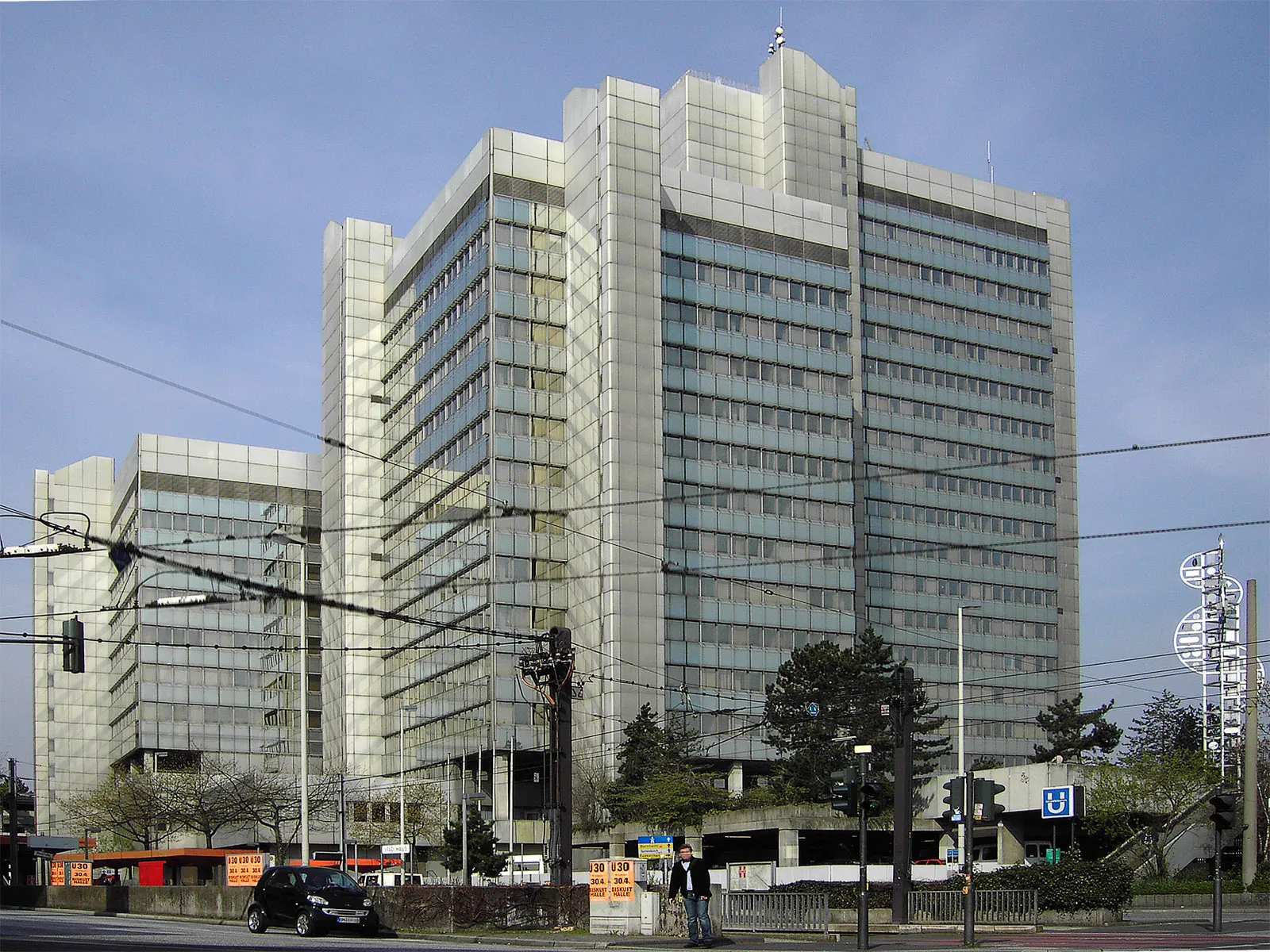
Berlin's immigration office is used as the worked example throughout, because it publishes its procedure and its internal guidance. Other offices apply the same statute with their own benchmarks; treat Berlin's figures as one authority's practice.
When to apply
Apply before your permit expires. A timely application keeps the old permit in force, with all its rights, until the office decides (§ 81 Abs. 4 AufenthG); an application made after expiry does not, and the office only exceptionally orders the continuation to avoid hardship. Berlin accepts the online extension application at the earliest 4 months before expiry, recommends filing 8 weeks ahead, and gives you a PDF confirmation of continued validity at the end of the online application. If you miss the date, Berlin's guidance treats an application filed at most 1 month late through mere negligence as a hardship case as a rule, but you lose the certainty, and other offices may be stricter.
Extending a student permit: when to file
Berlin immigration office practice, around the permit's expiry date
4 months before
4 months before
Earliest online application
Order your transcript, and a study prognosis if you are more than 3 semesters beyond the average study duration.
8 weeks before
8 weeks before
Recommended: apply with every document
Pay the fee online (€93 for a card) and keep the confirmation.
Permit expires
Permit expires
Latest safe filing
An application filed in time keeps the permit in force until the office decides.
Up to 1 month after
Up to 1 month after
Late: a hardship case at best
Berlin usually still continues the permit if the delay was mere negligence and the permit could otherwise be extended.
Other immigration offices set their own lead times. In Berlin the new card takes about 4 to 6 weeks after the appointment; until then the old permit continues.
Source: Land Berlin, Bundesministerium der Justiz / gesetze-im-internet.de. Last checked:
Image (PNG)Documents for the extension
Extension of a student permit: Berlin's document list
- The online application, filed at the earliest 4 months before expiry.
- Colour copies of your passport's data page and a copy of your current residence permit.
- Proof of German health insurance: health card or confirmation from a statutory fund, or for private cover the insurer's certificate under § 257 Abs. 2a SGB V.
- Proof of your main residence in Berlin: registration certificate, or lease with the landlord's move-in confirmation.
- Proof of means: a blocked account, a Verpflichtungserklärung, a scholarship certificate, a parental declaration, a side-job contract, or, at extension, bank statements for the last 6 months and proof of other income.
- Your current enrolment certificate.
- Your transcript (Leistungsübersicht) or a study prognosis (Studienprognose) from your university.
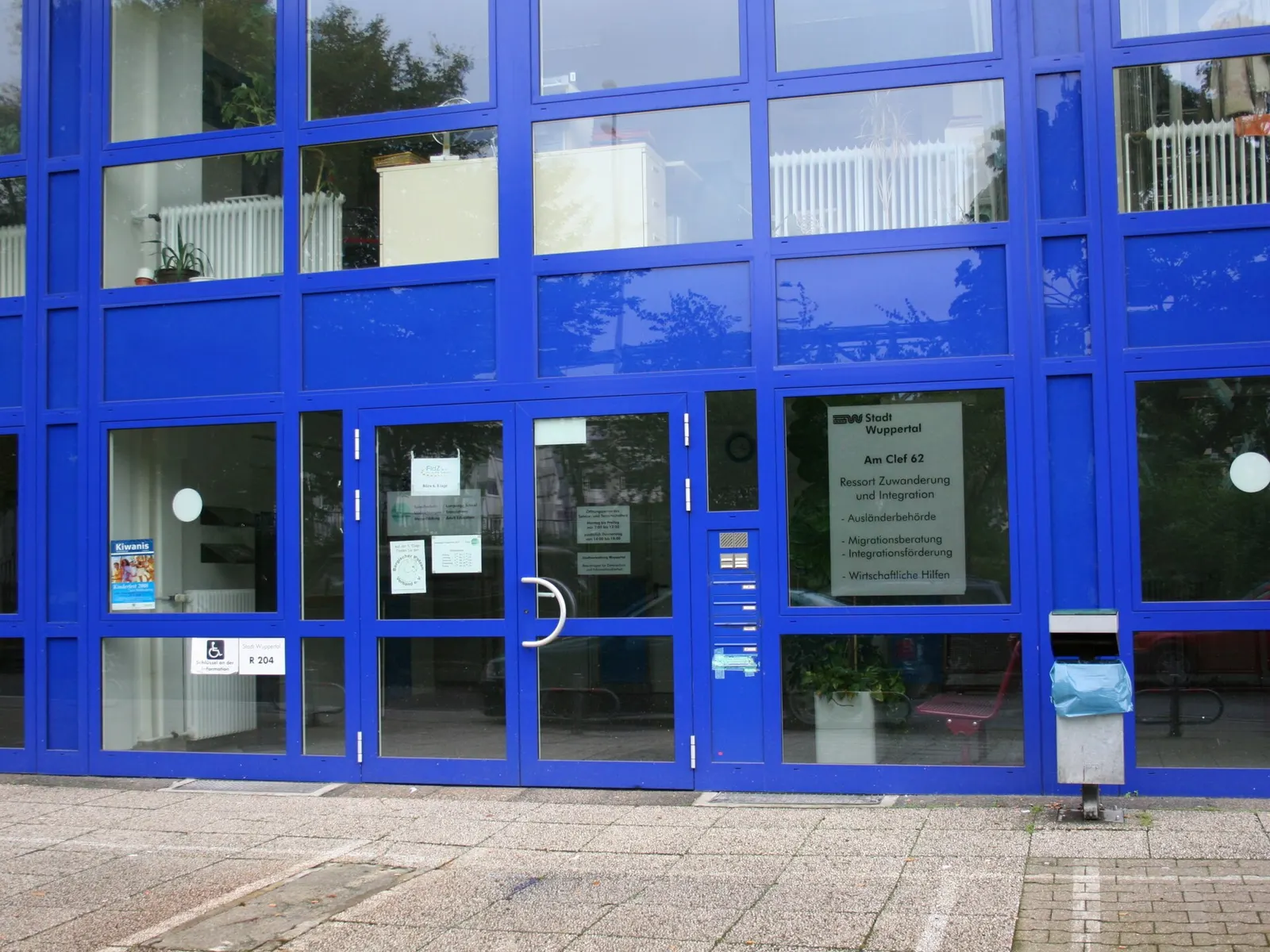
Two things differ from the first application. Your means can now be shown from real life: Berlin accepts the last 6 months of bank statements and income from a job, so the blocked account is not required again if you can prove your money another way. And your insurance history is examined: Berlin's guidance asks for proof that cover was continuous since the last permit, and says the extension can be refused if it was not, to stop people cancelling a policy between permits.
- Transcript of recordsLeistungsübersicht
- The university's list of the modules and credits you have completed so far. Berlin asks for it with every extension; it is the document the office uses to judge whether you are making adequate progress.
The progress test: how long is 'reasonable'?
The statute does not define a reasonable period. Berlin's guidance fills it in: progress counts as sufficient as long as you exceed the average duration of your programme by no more than 3 semesters. The university tells the office the average duration on request, and time spent in preparatory measures (language course, Studienkolleg, preparatory internship) is left out of the count. When an extension would carry you past that limit, Berlin prints a note on the supplementary sheet that a study prognosis is required for the next extension, and it may demand one earlier if your record raises doubts.
| Your situation | What Berlin expects | Likely outcome |
|---|---|---|
| Within the average study duration plus 3 semesters | Transcript showing progress | Extension, normally for 2 years |
| Beyond that, or doubts about your record | A study prognosis from the university confirming proper study despite the delay and estimating the remaining semesters | Extension if the prognosis is positive and credible |
| Prognosis requested but not provided, or it shows no proper course of study | – | Usually refused: the condition of finishing in a reasonable time is unproven |
| No visible progress, but graduation is concretely expected within one year | Evidence of the current study behaviour | Extension possible |
| No visible progress, special public interest or particular hardship | Evidence of the interest or hardship | Extension possible at the office's discretion |
- Study prognosisStudienprognose
- A statement by your university that your studies are proceeding properly despite the time taken, with evidence such as credits earned and exams and compulsory internships attended, and an estimate of how many semesters remain. Berlin offers universities a form for it (LABO 4328) but accepts any prognosis that covers those points. Because universities are not obliged to report to immigration offices, you normally have to obtain and submit it yourself.
Earlier extensions give you no protection: Berlin's guidance says a previous extension does not justify trust in a further one beyond a proper study duration, and cites the Berlin-Brandenburg higher administrative court for the principle that someone admitted only to study can be expected to return home if they do not finish in a reasonable time. Doctoral students and students in a second degree are judged by the same rules.
Writing your thesis without re-registering
Some bachelor's and master's students stop re-registering for the final semester once all modules are complete, to save the semester contribution while writing the thesis. Berlin's guidance treats them as still pursuing the study purpose, because the degree is not yet finished, but requires, before any extension, a certificate, for example from the supervising professor, that the thesis has been registered. Check with your university whether exmatriculation affects your statutory student insurance before you take this route.
What the extension costs
| Case | Fee | Notes |
|---|---|---|
| Extension as an eAT card | €93 | § 45 Nr. 2 AufenthV; the same in Berlin |
| Extension for a short further stay of up to three months | €96 | § 45 Nr. 2 lit. a AufenthV |
| Extension as a passport sticker (Berlin) | €49 | Issued on the spot |
| Change of purpose including extension | €98 | § 45 Nr. 3 AufenthV |
| Turkish nationals (Berlin) | €46 from age 24; €27.60 under 24 | German identity-card fee under § 52a AufenthV, for extensions too |
Berlin takes the fee online before you can submit, and does not refund it once processing has begun. Scholarship holders from public funds are exempt (§ 52 Abs. 5 AufenthV), and Berlin refunds the fee for scholarships from German public funds, a German foundation or an EU-funded programme after processing.
Changing course or university
A change of programme (Studiengangwechsel) does not need a new visa, but the office checks that you are still studying properly. Berlin allows it where your record as a whole shows a proper course of study, including a move between types of institution in the same field, such as from a university to a university of applied sciences. Some changes do not even count as a change of subject in Berlin's eyes: if the programmes were identical up to the switch, if the semesters you completed are mostly credited to the new programme, or if you bridge a one-semester gap before a winter-only start with another programme. In every case the only question for the extension is whether a degree can still be reached in a reasonable time.
- Change of programmeStudiengangwechsel
- Moving to a different degree programme or a different type of institution before finishing the first one. It needs no new visa, but at the next extension the office asks whether your overall record still shows proper study and whether a degree remains achievable in a reasonable time; an unexplained change can count against you.
A master's after your bachelor's, a doctorate after your master's, or another postgraduate programme stays within the study purpose: Berlin issues a permit for the further degree if you studied properly and the extension conditions are met. Only a second, unrelated first degree or professional training after finishing counts as a change of purpose. Preparatory time has its own ceiling: Berlin expects language courses, Studienkolleg and similar measures to take no more than 2 years in total.
Switching to another permit
Since 1 March 2024 a student may switch at any time to any other residence title whose conditions they meet; the only exclusion is a permit under § 19c Abs. 1 for temporary work regulated in the Employment Ordinance (§ 16b Abs. 4 AufenthG). A settlement permit cannot be issued while you hold a student permit; after a switch, for example to a skilled-worker permit, Berlin counts the study time within the settlement rules (§ 9 AufenthG). Apply before your current permit expires so that it continues meanwhile; the office books the switch either as a change of purpose (€98) or as a new permit (€100), depending on its practice. The usual routes are in the after-graduation hub: the job-search permit of up to 18 months after graduating, the skilled worker permit and the EU Blue Card.
If you graduate while your student permit is still valid, Berlin's permits already carry the condition 'Nach erfolgreichem Abschluss: Erwerbstätigkeit erlaubt', so you may take any job immediately; the time between graduation and the job-search permit is then counted against its 18 months.
Dropping out, being exmatriculated, or your university closing
Stopping without a degree ends the permit automatically where, as in Berlin, it carries a condition to that effect, and your stay then has no basis; otherwise the office can shorten the permit (§ 16b Abs. 6 refers to § 7 Abs. 2 AufenthG). You must also tell the office within 2 weeks of learning that your studies have ended early (§ 82 Abs. 6 AufenthG). The way out is to switch purpose first: with § 16b Abs. 4 you can move to vocational training, a job for which you qualify or another permit, as long as you apply while the student permit is still valid. If the permit is revoked or shortened for reasons you are not responsible for, for example because your university closes, the office must give you up to 9 months to apply for admission elsewhere (§ 16b Abs. 6).
Claiming basic income support is not a solution: benefit offices must tell the immigration office when a student receives SGB II or SGB XII benefits (§ 87 Abs. 2 AufenthG; since 29 July 2026 the duty attaches to receiving rather than applying), and secured living costs are a condition of every extension. If you are struggling academically, your university's advice services, described in exams, retakes and failing, are the first stop.
Work and the renewal
The office does not keep a count of your working days: Berlin's guidance says the extent of your work is checked only on concrete signs of abuse, and employers must document the days worked. But a transcript that shows no progress next to a full-time job tells its own story, and the permit allows work only on up to 140 days of work per calendar year. Keep your own record of days and hours worked; the counting rules are in student working hours.
The renewal draws on documents from several parts of your life in Germany. Keep the current enrolment certificate and transcript, proof of health insurance, and the bank statements or blocked-account confirmation showing your means. If your address changed, register the new one first under the Anmeldung rules, because the office for your new address is then responsible. Students on SGK cover should check that their A/T 11 is still valid; see the guide for Turkish students.
In practice: a renewal timeline and the classic mistakes
4 months before expiry
Earliest filing in Berlin
Order your transcript, and a prognosis if you will exceed the average duration plus 3 semesters; ask your fund for a confirmation of continuous insurance.
8 weeks before expiry
Recommended filing
Submit the online application with all documents and pay the fee; save the PDF confirmation.
Before the expiry date
Latest safe filing
After this date you depend on the office's hardship discretion.
After the online check
Appointment
Bring the originals named in the invitation; fingerprints and photo for the new card.
4 to 6 weeks later (Berlin)
Collect the new card
Until then the old permit continues under § 81 Abs. 4.
- Applying after the expiry date. The automatic continuation of your status is lost, and you depend on the office ordering it as a hardship case.
- No transcript or prognosis when the office expects one; the extension is then usually refused.
- A gap in health insurance between permits.
- Exmatriculating before the new enrolment when changing course.
- Graduating and waiting: apply for the job-search or work permit before the student permit expires.
- Long absences of more than 6 months without the office's agreement, which end the permit regardless of any application.
Frequently asked questions
How do I extend my student residence permit in Germany?
Apply to your Ausländerbehörde before the current permit expires, with your passport, proof of health insurance and residence, proof of means, your enrolment certificate and your transcript or a study prognosis. In Berlin the application is online, at the earliest 4 months before expiry, and an appointment follows. The fee is €93 for an eAT card.
How many semesters can I take before my permit is not extended?
The law only says the degree must still be achievable in a reasonable time. Berlin treats progress as sufficient while you exceed your programme's average study duration by no more than 3 semesters; beyond that it requires a study prognosis from your university, and without visible progress the extension is usually refused unless graduation is expected within a year.
Can I change my course of study on a student residence permit?
Yes, without a new visa, if your overall record shows proper study and a degree can still be reached in a reasonable time; Berlin also allows moves between university types in the same field. Secure the new admission before you leave the old programme, because stopping without a degree can end the permit.
What happens to my residence permit if I drop out?
The permit ends under the condition attached to it, and you must inform the office within 2 weeks of learning that your studies ended early. Since 1 March 2024 you can instead switch to another permit whose conditions you meet, such as vocational training or a job, provided you apply while the student permit is still valid.
How much does it cost to extend a student residence permit?
€93 for an extension issued as an eAT card (€96 for a further stay of up to three months). Berlin charges Turkish nationals €46, or €27.60 under 24, and scholarship holders from public funds are exempt.
Can I extend my permit if I am only writing my thesis and no longer enrolled?
In Berlin, yes: students who stop re-registering for the final semester while writing the thesis are still treated as pursuing their degree, but the office requires a certificate, for example from the supervising professor, that the thesis has been registered. Check the effect on your student health insurance first.
Sources
16 sources, all official
- Aufenthaltsgesetz § 16b StudiumBundesministerium der Justiz / gesetze-im-internet.de (Official)
- Aufenthaltsgesetz § 19f Ablehnungsgründe bei Aufenthaltstiteln nach den §§ 16b, 16c, 16e, 16f, 17, 18d, 18e, 18f, 18g und 19eBundesministerium der Justiz / gesetze-im-internet.de (Official)
- Aufenthaltsgesetz § 51 Beendigung der Rechtmäßigkeit des AufenthaltsBundesministerium der Justiz / gesetze-im-internet.de (Official)
- Aufenthaltsgesetz § 81 Beantragung des Aufenthaltstitels (Fiktionswirkung, Fiktionsbescheinigung)Bundesministerium der Justiz / gesetze-im-internet.de (Official)
- Aufenthaltsgesetz § 82 Mitwirkung des Ausländers (Abs. 6: Mitteilung der vorzeitigen Beendigung)Bundesministerium der Justiz / gesetze-im-internet.de (Official)
- Aufenthaltsverordnung § 45 Gebühren für die Aufenthaltserlaubnis, die Blaue Karte EU, die ICT-Karte und die Mobiler-ICT-KarteBundesministerium der Justiz / gesetze-im-internet.de (Official)
- Aufenthaltsverordnung § 52 Befreiungen und ErmäßigungenBundesministerium der Justiz / gesetze-im-internet.de (Official)
- Aufenthaltsverordnung § 52a Befreiung und Ermäßigung bei Assoziationsberechtigung (EU–Türkei)Bundesministerium der Justiz / gesetze-im-internet.de (Official)
- Aufenthaltserlaubnis zum Studium beantragen (Landesamt für Einwanderung Berlin, Dienstleistung 305244)Land Berlin – Landesamt für Einwanderung (ServicePortal Berlin) (Official)
- Studium (Landesamt für Einwanderung Berlin: Arbeiten, Praktika, Arbeitsplatzsuche, Familie)Land Berlin – Landesamt für Einwanderung (Official)
- Verfahrenshinweise zum Aufenthalt in Berlin (VAB), PDF erstellt am 31.08.2026 — A.16b Studium, A.20 Arbeitsplatzsuche, A.30 EhegattennachzugLand Berlin – Landesamt für Einwanderung (Official)
- Gesetz zur Weiterentwicklung der Digitalisierung in der Migrationsverwaltung (MDWG) vom 22. Juli 2026, BGBl. 2026 I Nr. 222 (ausgegeben 28. Juli 2026)Bundesgesetzblatt (recht.bund.de), Bundesministerium der Justiz (Official)
- Aufenthaltsgesetz § 87 Übermittlungen an AusländerbehördenBundesministerium der Justiz / gesetze-im-internet.de (Official)
- § 16b AufenthG – Studium (Arbeitstagekonto, Absatz 3)Bundesministerium der Justiz / Bundesamt für Justiz (gesetze-im-internet.de) (Official)
- Fachliche Weisungen Aufenthaltsgesetz und Beschäftigungsverordnung (Stand 12/2024) – § 16b AufenthG (16b.0.1–16b.0.7) and ARB 1/80 (4.0.2)Bundesagentur für Arbeit (BA Zentrale) (Official)
- Aufenthaltsgesetz § 20 Arbeitsplatzsuche im Anschluss an Aufenthalte im BundesgebietBundesministerium der Justiz / gesetze-im-internet.de (Official)