Germany's framework for disabled students is a set of duties on institutions rather than a single benefit. The Basic Law states that no one may be disadvantaged because of disability. The Higher Education Framework Act obliges universities to ensure that disabled students are not disadvantaged and can use the university's services as far as possible without outside help, and it obliges examination regulations to take account of their needs. The Social Code defines disability and severe disability and provides for the ID that proves it. What this adds up to for an international student, and where the limits are, is set out below; for the wider map of anti-discrimination law, see your rights as a student in Germany.

The legal basis, in one table
| Law | What it says | What it means for you |
|---|---|---|
| Basic Law, Art. 3(3) | No one may be disadvantaged because of disability | A constitutional guarantee binding every public authority, including state universities |
| SGB IX § 2 | Disability: a long-term (likely more than six months) impairment that, with barriers, hinders equal participation; severely disabled from a degree of disability of 50 with lawful residence or employment in Germany; equal status possible from 30 | The definitions behind every entitlement; residence on a student permit satisfies the lawful-residence condition |
| SGB IX § 152 | The degree of disability (GdB) is determined on application, in steps of ten, and an ID is issued from severely disabled status | The Schwerbehindertenausweis is the proof most offices and discounts ask for; it is applied for in Germany, at the Versorgungsamt or the body your Land designates |
| HRG § 2(4) and § 16 | HRG § 16: examination regulations must take account of the special needs of disabled students to preserve equal opportunities; universities must ensure disabled students are not disadvantaged | The basis of the Nachteilsausgleich; the commissioner for disabled students and the procedural details come from Land law and each university's examination regulations |
| AGG § 1 | Disability is one of the six protected grounds (ethnic origin ('race'), sex, religion or belief, disability, age, sexual identity); claims within 2 months | Covers employers, landlords and businesses, not state universities; the Federal Anti-Discrimination Agency advises but cannot act against public universities |
| Berlin LADG § 2 (Berlin only) | Disability and chronic illness are protected grounds in public-law action since 21 June 2020 | A route against Berlin's public bodies; limitation one year, counted from the end of the year in which the claim arose and the person knew or should have known of it |
- Compensation for disadvantageNachteilsausgleich
- The adjustment of study and examination conditions so that a disability or chronic illness does not distort the result: extra time, breaks, a separate room, assistive technology, a different form of assessment or a longer deadline for a paper. It compensates the conditions, never the content: the academic requirement stays the same, and LMU, for example, states that the adjustment does not appear in grade records or certificates.
- Degree of disabilityGrad der Behinderung (GdB)
- The measure, in steps of ten from 20 to 100, of how far impairments affect participation in society, determined on application by the authority responsible for social compensation law. Several impairments are assessed together. From 50 the person is severely disabled and can apply for the Schwerbehindertenausweis.
The Nachteilsausgleich in practice
The federal law sets the principle; each university's examination regulations set the procedure, so the deadlines, forms and evidence differ. LMU Munich's rules are a representative example, read here because they are public and detailed. Who may apply: enrolled students with a long-term impairment in the form of a disability or a chronic or mental illness that affects their examination performance. When: at the latest when registering for the exam, or one month before it for module exams, six weeks before the written exam in state law examinations. Evidence: a medical certificate or a statement by a licensed psychotherapist; a copy of a severely-disabled ID can help; students with foreign certificates are told to ask the examination office whether they are accepted and what translation is needed. What can be granted: up to 25% or up to 50% extra time for time-limited exams, breaks, longer deadlines for papers, writing with a laptop or with personal assistance, a separate room, modified forms of assessment or substitutes for practical parts. Who decides: the examination board of the programme, where possible after hearing the student, in writing and in good time.
Talk to the disability commissioner first
Universities have a commissioner or advice centre for students with disabilities and chronic illnesses (Beauftragte für Studierende mit Behinderung); in North Rhine-Westphalia, for example, § 62b of the Higher Education Act requires every university to appoint one, with a say in exam adjustments. They know what the examination board usually grants, which certificate wording works and whether your foreign evidence will be accepted.
Get the evidence in the right form
A current medical certificate or a psychotherapist's statement that names the impairment's effect on examinations and justifies each adjustment you ask for; the adjustment must follow from the evidence. Have a foreign certificate translated if the examination office requires it.
Apply in writing, by the deadline
Submit the application to the examination board or office of your programme, at the latest when you register for the exam or by the lead time your regulations set. Late applications are usually deferred to the next exam.
Keep the decision and renew it when required
Decisions may be limited to a semester or a type of exam; a permanent impairment can often be granted for the whole programme. Re-apply if your situation changes.
Money, insurance and the residence permit
Here the rules for international students are narrower than for residents, and it is better to know it in advance. Integration assistance (Eingliederungshilfe), which can fund help with a degree including aids and assistance (SGB IX § 112), is granted to foreign nationals only at the authority's discretion where the individual case justifies it; the limitation does not apply to holders of a settlement permit or a temporary title with an expected permanent stay, and anyone who entered Germany in order to obtain the assistance has no claim (SGB IX § 100). A student on a § 16b permit should therefore not plan on it. BAföG, which has disability-related extensions for residents, is closed to non-EU students on a study permit alone. The proof of funds for the visa, €992 per month, is the same whatever your needs. What does apply equally: statutory health insurance at the student rate, with its cover for treatment, aids and therapy under the usual rules, which the healthcare guide explains, and the Nachteilsausgleich itself, which costs nothing.
The residence permit is issued for full-time study. Berlin's immigration office allows part-time study on a student permit at a minimum of half the full load where there is a reason such as a disability, and other offices follow their own guidance; ask before you reduce your course load, because an unapproved part-time status can affect renewal. Renewal itself is tied to study progress; a documented disability is a reason an office can take into account when progress is slower than the average, so keep the examination board's decisions. Extending your student residence permit covers the progress test.
| Support | Available on a student permit? | Where |
|---|---|---|
| Nachteilsausgleich in exams | Yes, on application with evidence | Examination board, via the disability commissioner |
| Schwerbehindertenausweis (GdB from 50) | Yes, with lawful residence in Germany | Versorgungsamt or the body your Land designates; see SGB IX § 152 |
| Statutory health insurance cover for treatment and aids | Yes, at the student rate | Your Krankenkasse; see student health insurance |
| Eingliederungshilfe (assistance, study aids) | Discretionary only; not for people who entered to obtain it | Local Eingliederungshilfe authority; see SGB IX §§ 99, 100, 112 |
| BAföG with disability extensions | No, on a study permit alone | not on a student residence permit alone: non-EU students qualify only under special residence titles or after five years' lawful residence and work in Germany, or if a parent lived and worked lawfully in Germany for three of the last six years |
| Baden-Württemberg tuition waiver | Yes, for a disability that impedes study, on application before the semester | Your university's fee office; see where non-EU students pay tuition |
| Part-time study on a student permit | Possible with a reason, at the immigration office's discretion | Ask your Ausländerbehörde before changing your load |
Housing, transport and daily access
Many Studierendenwerke have some barrier-free or wheelchair-accessible rooms, sometimes only a handful (the Studierendenwerk Würzburg has two wheelchair-accessible places in Bamberg, according to the university), and students who depend on them are usually considered first, as the University of Duisburg-Essen describes for its Studierendenwerk. What you must show differs by Studierendenwerk, so apply as soon as you are admitted and say what you need. Student halls and the Studierendenwerk explains the procedure. On public transport, tactile guidance strips on platforms, as in the photo above, and lifts are common but not universal. A Deutschlandsemesterticket, where your university has one, covers local and regional transport nationwide; getting around Germany has the ticket rules. Whether a station is step-free is something to check for your own route rather than assume.
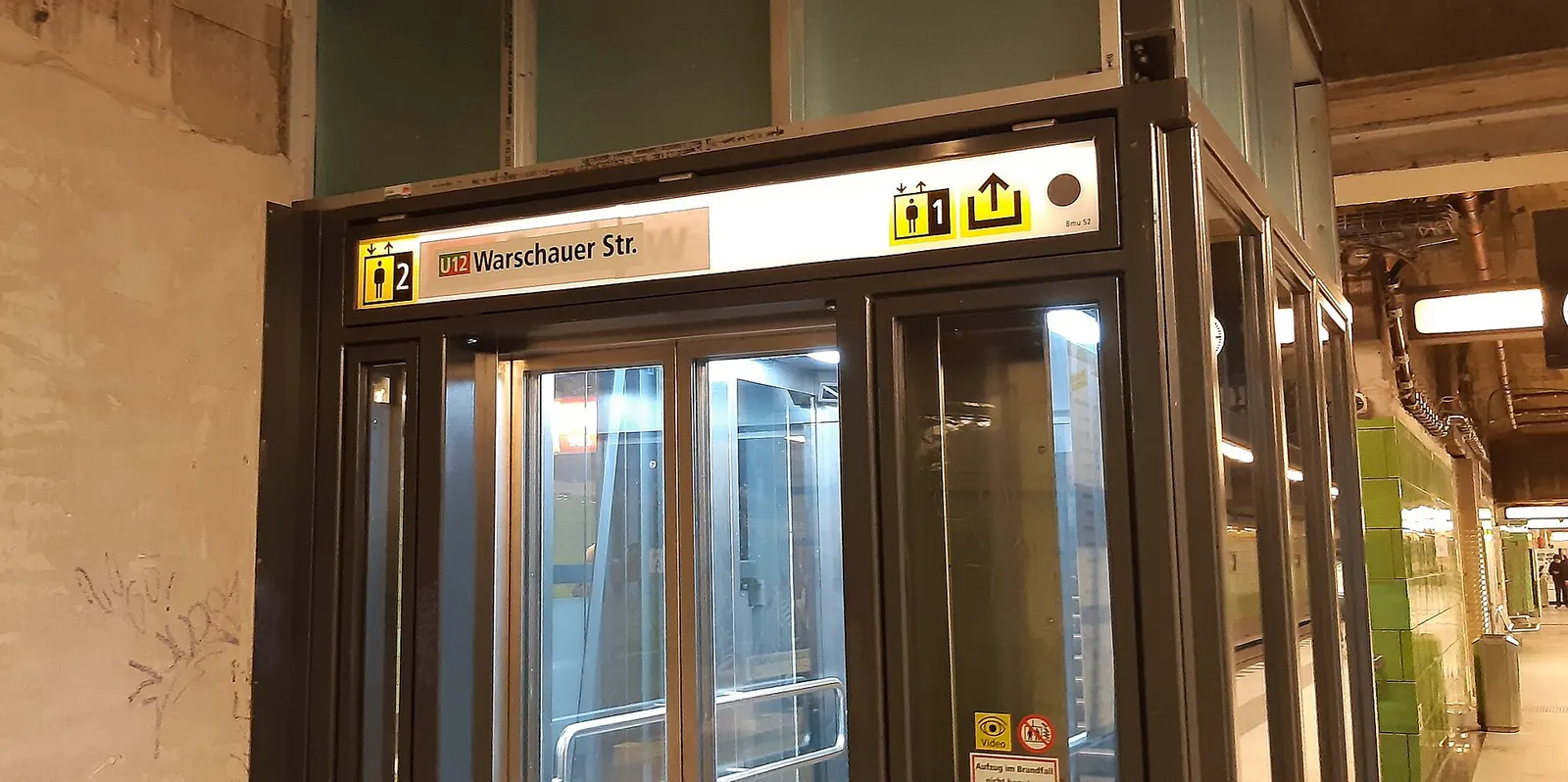
If you are refused a service or a flat because of a disability, the General Equal Treatment Act applies to businesses and landlords, with a claim to be asserted within 2 months; the Federal Anti-Discrimination Agency gives free first advice by online form and refers you to a local advice centre, though it cannot take on discrimination by public universities or authorities. In 2025 it received 3,015 requests concerning disability or chronic illness, about 28% of all requests with an AGG ground. Racism and discrimination in Germany has the procedure.
Chronic and mental illness count too
The Nachteilsausgleich is not only for visible disabilities. LMU's rules name chronic and mental illness alongside disability, and a statement by a licensed psychotherapist is accepted as evidence; universities' psychological counselling services and the Studierendenwerk's advice centres are the first stop, and treatment under statutory insurance follows the usual referral rules. Mental health support for students covers counselling, therapy waiting times and emergency help, and exams, retakes and the final attempt explains how illness during an exam period is handled, which is a different procedure from a standing adjustment.
In practice: what to bring and whom to ask
For a Nachteilsausgleich application
- A current medical certificate or psychotherapist's statement that explains how the impairment affects examinations and justifies each requested adjustment
- A translation where the examination office requires one; ask before paying for it
- A copy of your Schwerbehindertenausweis if you have one, or of a comparable foreign document
- The programme's examination regulations, with the section on the Nachteilsausgleich marked, and the deadline noted
- A written list of the adjustments you request, matched to the evidence
Nationally, the Deutsches Studierendenwerk runs an information and advice centre for studying with a disability (IBS), which publishes guidance and surveys; its current contact details could not be verified for this page, so ask your Studierendenwerk for the referral. Locally, three people cover most questions: the university's disability commissioner, the examination office of your programme and the Studierendenwerk's social counselling. For anything that involves your residence status, the immigration office is the only authority whose answer counts.
Disability-related support also runs through other parts of this guide: finding a doctor for the medical evidence, student halls for accessible rooms, and exam rules for the procedures a Nachteilsausgleich adjusts.
Frequently asked questions
What support do disabled students get in Germany?
Adjusted examination conditions (Nachteilsausgleich) on application with medical evidence, advice from the university's disability commissioner, accessible rooms in Studierendenwerk halls where they exist, usually with priority for students who need them, and the general anti-discrimination protection of the Basic Law and the AGG. Financial assistance such as Eingliederungshilfe and BAföG is largely closed to students on a study permit, so health insurance and the university's own services are the practical supports.
What is a Nachteilsausgleich?
A compensation for disadvantage in examinations: extra time (at LMU, for example, up to 25% or up to 50% extra time), breaks, a separate room, assistive technology, a different form of assessment or a longer deadline, granted by the examination board on application with a medical certificate. It changes the conditions, not the requirements; LMU, for example, does not record it in grade records or certificates.
Should I disclose a disability when applying to a German university?
You do not have to. Admission does not require it, and the Nachteilsausgleich is applied for after enrolment; at universities such as LMU it does not appear on transcripts. Disclosure helps where it brings an advantage: hardship quotas in restricted programmes and tuition exemptions such as Baden-Württemberg's waiver for a disability that impedes study.
Can an international student get a Schwerbehindertenausweis in Germany?
Yes. Severely disabled status under SGB IX requires a degree of disability of at least 50 and lawful residence, habitual abode or employment in Germany, which a student residence permit satisfies. The degree is determined on application by the authority your Land designates, usually the Versorgungsamt, which then issues the ID.
Can I study part-time in Germany on a student visa because of a disability?
The permit is issued for full-time study, but Berlin's immigration office allows part-time study at a minimum of half the full load for reasons including disability, and other offices have their own practice. Ask your Ausländerbehörde before reducing your load, and keep the examination board's decisions as evidence for the renewal.
Does a chronic illness count as a disability at a German university?
Often, yes. For exam adjustments (Nachteilsausgleich) what matters is whether a long-term impairment, including a chronic or mental illness, makes it harder to take an exam under standard conditions; you do not need official 'severely disabled' status, which requires a degree of disability of at least 50 degree of disability (GdB). Ask your university's disability adviser which medical evidence it accepts, and see mental health support.
Sources
19 sources, all official
- Grundgesetz für die Bundesrepublik Deutschland, Art. 3 (Gleichheit vor dem Gesetz)Bundesministerium der Justiz / gesetze-im-internet.de (Official)
- Sozialgesetzbuch IX § 2 BegriffsbestimmungenBundesministerium der Justiz / gesetze-im-internet.de (Official)
- Sozialgesetzbuch IX § 152 Feststellung der Behinderung, AusweiseBundesministerium der Justiz / gesetze-im-internet.de (Official)
- Sozialgesetzbuch IX § 100 Eingliederungshilfe für AusländerBundesministerium der Justiz / gesetze-im-internet.de (Official)
- Sozialgesetzbuch IX § 112 Leistungen zur Teilhabe an BildungBundesministerium der Justiz / gesetze-im-internet.de (Official)
- Hochschulrahmengesetz (HRG) § 2 AufgabenBundesministerium der Justiz / gesetze-im-internet.de (Official)
- Hochschulrahmengesetz (HRG) § 16 PrüfungsordnungenBundesministerium der Justiz / gesetze-im-internet.de (Official)
- Nachteilsausgleich bei PrüfungenLudwig-Maximilians-Universität München (LMU) (Official)
- Das Berliner Landesantidiskriminierungsgesetz (LADG) – Gesetzestext sowie Fragen und AntwortenLand Berlin – Landesstelle für Gleichbehandlung – gegen Diskriminierung (LADS) (Official)
- Gesetz über die Hochschulen des Landes Nordrhein-Westfalen (Hochschulgesetz – HG), Fassung gültig ab 4. August 2026, § 24 und § 62bLand Nordrhein-Westfalen – recht.nrw.de (Official)
- Informationen zum barrierefreien Wohnen (Inklusionsportal)Universität Duisburg-Essen (Official)
- Barrierefreies Wohnen in BambergOtto-Friedrich-Universität Bamberg – Beratung für Studierende mit Behinderung (Official)
- Verfahrenshinweise zum Aufenthalt in Berlin (VAB), PDF erstellt am 31.08.2026 — A.4a.1.1 (Erwerbstätigkeit), A.16b.5 (Teilzeitstudium), A.30.2.2 (Ehegattennachzug zu Studierenden)Land Berlin – Landesamt für Einwanderung (Official)
- Allgemeines Gleichbehandlungsgesetz (AGG)Bundesministerium der Justiz / gesetze-im-internet.de (Official)
- Unser Beratungsangebot / Jetzt Kontakt aufnehmenAntidiskriminierungsstelle des Bundes (Official)
- Jahresbericht 2025 der Antidiskriminierungsstelle des BundesAntidiskriminierungsstelle des Bundes (Official)
- Tuition Fees for International StudentsMinisterium für Wissenschaft, Forschung und Kunst Baden-Württemberg (MWK) (Official)
- Verfahrenshinweise zum Aufenthalt in Berlin (VAB), PDF erstellt am 31.08.2026 — A.16b Studium, A.20 Arbeitsplatzsuche, A.30 EhegattennachzugLand Berlin – Landesamt für Einwanderung (Official)
- Gesetz über die Zulassung zum Hochschulstudium im Freistaat Sachsen (Sächsisches Hochschulzulassungsgesetz – SächsHZG), Fassung gültig ab 22. Juni 2023Freistaat Sachsen (REVOSax, Sächsische Staatskanzlei) (Official)