Seeing a doctor in Germany is straightforward once you know the order of things: a family doctor first, specialists either directly or with a referral, your health card at every visit and, if you cannot find an appointment, the 116117 appointment service. This page explains each step, how to find a doctor who speaks Turkish through the search run by the associations of public-system doctors, and what you pay at the pharmacy. For nights, weekends and emergencies, see emergency and out-of-hours care; for which insurance you need in the first place, the healthcare overview.
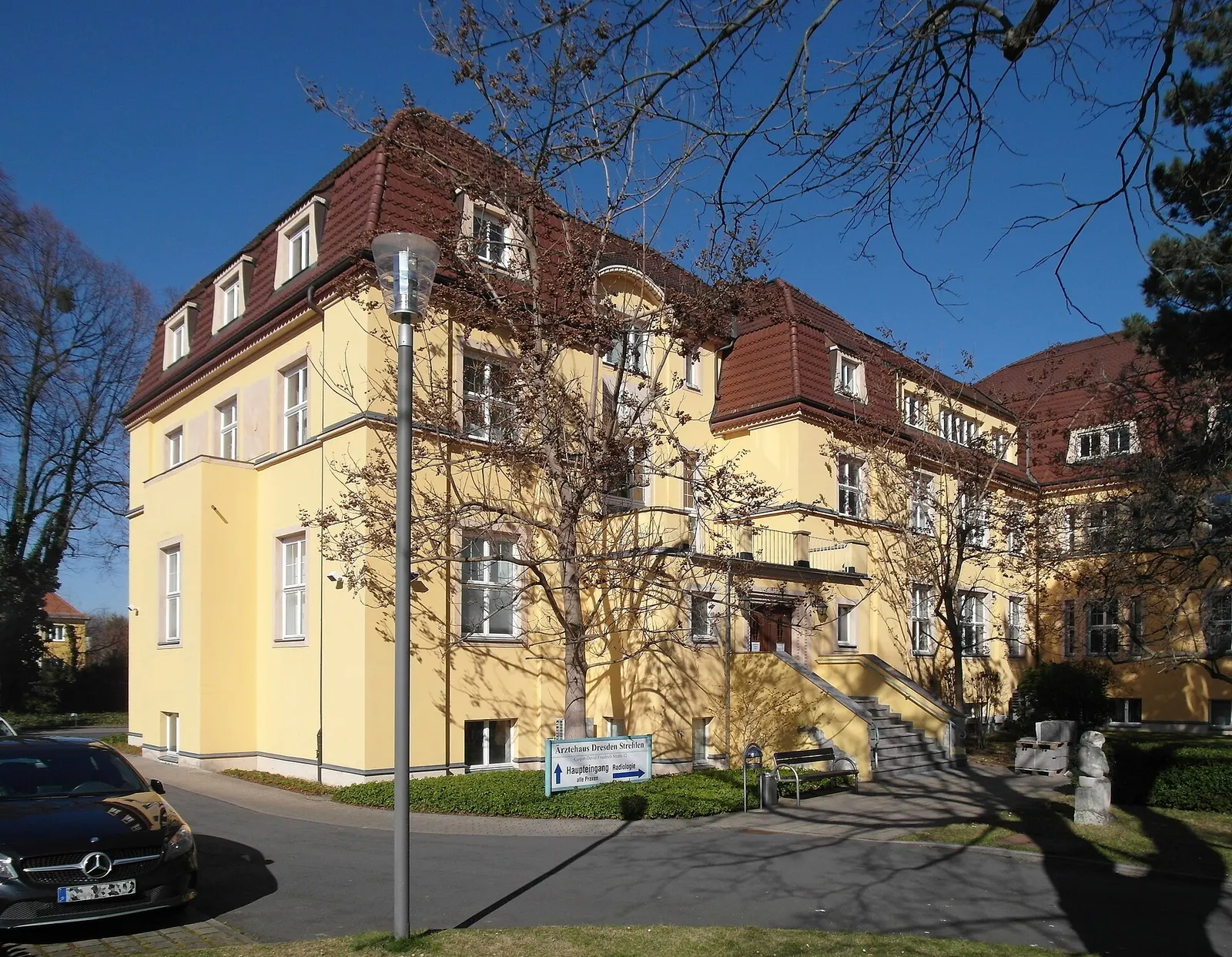
How seeing a doctor works with public insurance
Public patients choose freely among the doctors, medical care centres and other providers contracted to the public system (SGB V § 76 (1)); other doctors may be used only in emergencies. The same section expects you to choose a family doctor and not to switch doctors within a calendar quarter without good reason. Turkey's Ministry of National Education gives Turkish students the same advice in its guide for Germany: pick a family doctor, go there first, and let the family doctor refer you on.
- Family doctorHausarzt / Hausärztin
- A general practitioner or internist who is your first point of contact, treats common illnesses, issues sick notes and refers you to specialists. A doctor taking part in family-doctor care must say so on the practice sign (SGB V § 76 (3)).
- ReferralÜberweisung
- A family doctor's (or other doctor's) note sending you to a specialist. The law lets public patients choose a contracted specialist directly, but the 116117 appointment service needs a referral for most specialists.
| Need | Where to go | Referral needed? |
|---|---|---|
| Common illness, check-ups, a sick note for work | Family doctor (Hausarzt, Allgemeinmedizin) | No |
| Eye problems | Eye doctor (Augenarzt) | No, also not for an appointment through 116117 |
| Gynaecology, contraception, screening | Gynaecologist (Frauenarzt); see women's health | No, also not through 116117 |
| Psychological problems | A psychotherapist's consultation (Sprechstunde); see mental health support | No |
| Other specialists: skin, ear-nose-throat, orthopaedics and so on | Specialist (Facharzt) | You may book directly; the 116117 service needs a referral, except in acute cases |
| Teeth | Dentist (Zahnarzt), a separate system | No |
| Ill at night or at the weekend, not life-threatening | 116117 or an on-call practice (Bereitschaftspraxis) | No |
| Life-threatening emergency | Call 112 | No |
To find a family doctor, look near where you live, using the doctors' search described below or recommendations, and phone to ask whether the practice accepts new patients. If you fall ill before you have one, any contracted practice can treat you, and outside surgery hours the 116117 service takes over.
In practice: booking through the 116117 appointment service
Every region has an appointment service (Terminservicestelle) run by the associations of public-system doctors, reachable around the clock on 116117 and online (SGB V § 75 (1a)). It is useful when practices tell you they have no appointments for months.
Choose the channel
Book online through the 116117 Terminservice, in the 116117 app, or by calling 116117. The appointment service is for people insured with a public fund, not for private patients (KBV).
Have a referral ready if you need one
For specialists the service needs a referral, except for eye doctors and gynaecologists, acute cases, and cases where a hospital emergency department assessed you as needing treatment but not immediately. A psychotherapy consultation needs no referral (SGB V § 75 (1a)).
Know what the service must deliver
An appointment within 1 week, with a wait of no more than 4 weeks, at a practice within reasonable distance. If no practice can offer one in time, it must offer an outpatient appointment at a hospital, except for postponable routine check-ups and trivial illnesses.
Be ready for German on the phone
The KBV's own Turkish-language page states that the 116117 phone service is provided only in German. Booking online avoids the phone conversation.
Call from a German number
The call is free from landlines, mobiles and internet telephony, but the KBV makes this conditional on a domestic connection, so use a German SIM (getting a German SIM card).
Cancel if you cannot go
Cancel through the 116117 Terminservice website or app, using the booking code you received, or by phone on 116117, so the slot goes to someone else.
In practice: finding a Turkish-speaking doctor through the KV search
The associations of public-system doctors (Kassenärztliche Vereinigungen, KVs) and their federal body, the KBV, publish searchable registers of every contracted practice, and these registers record the foreign languages a practice offers. The KBV's national search on 116117.de has a foreign-language filter; regional searches such as those of the KV Baden-Württemberg and the KV Westfalen-Lippe offer the same criterion ("Fremdsprachenkenntnisse"). The quickest route for Turkish speakers starts on the Turkish page of 116117.de.
Open 116117.de in Turkish
Choose "Türkçe" in the site's language menu. The Turkish page explains the out-of-hours service and has a section on Turkish-speaking practices ("Türkçe konuşulan muayenehaneler").
Pick the specialty
The page lists specialties in Turkish, among them Aile Hekimi (family doctor), Kadın Doktoru (gynaecologist), Göz Doktoru (eye doctor), Çocuk ve Ergen Doktoru (paediatrician) and Psikoterapist. Each link opens the national doctor search already filtered for practices that speak Turkish.
Enter your town or postcode
Type it into the field "Ort und PLZ eingeben" and click "Suchen". The results show practices near you; open an entry to see its details, including the foreign languages listed for it.
Or filter yourself
In the national search, or a regional one such as the KV Baden-Württemberg's, open the extended search and choose Turkish under the foreign-language criterion.
Phone to book
The KBV's Turkish page recommends booking by phone and warns that if you turn up without an appointment you should expect a longer wait. When you call, ask whether the Turkish-speaking doctor will be the one seeing you.
- Association of public-system doctorsKassenärztliche Vereinigung (KV)
- The regional body of all doctors and psychotherapists contracted to the public system. KVs run the 116117 appointment and out-of-hours services in their region and keep the searchable registers of practices; the KBV is their federal umbrella.
At the practice: what to bring and what happens
Take to every appointment
- Your electronic health card (eGK); if you are covered through form A/T 11, whatever document the German fund that registered it gave you
- A referral, if you have one
- A list of the medicines you take, and earlier findings or reports if you have them
- If you work: your employer's rules on sick notes, so you know from which day you need one
The practice reads your card and bills your fund. There is no fee for the consultation itself: the quarterly practice fee public patients once paid was abolished at the end of 2012, and today's co-payments apply to prescriptions, hospital days and similar services. If a doctor finds you unfit for work, the certificate goes to your employer electronically: for public patients, the doctor records the incapacity and your employer retrieves it from the fund, and you must tell your employer you are ill straight away. A certificate is due if the illness lasts more than 3 days, or earlier if your employer asks (EntgFG § 5). Students insured at the student rate receive no sickness benefit from their fund (SGB V § 44 (2)), so after the employer's 6 weeks of continued pay nothing replaces your wages. Your rights as an employee are in labour rights for students.
Prescriptions and the pharmacy
Prescriptions for public patients are electronic. Since 1 January 2024 the e-prescription (E-Rezept) has been mandatory for prescription medicines, and the Federal Ministry of Health describes three ways to redeem it: insert your health card into the pharmacy's card terminal; use the gematik E-Rezept app, which needs an NFC-enabled health card and the PIN your fund gives you; or ask the practice for a paper printout of the access code.

| Item | In 2026 | From 1 January 2027 |
|---|---|---|
| Prescription medicine (aged 18 or over) | 10% of the price, at least €5, at most €10, never more than the medicine costs | At least €7.50, at most €15 |
| Non-prescription medicine | Full price: excluded from public insurance for adults (SGB V § 34) | Unchanged |
| Cold and flu remedies, throat remedies, laxatives, travel-sickness medicines for adults | Full price even if prescribed (SGB V § 34) | Unchanged |
| Pharmacy at night, on Sundays or public holidays | Extra €2.50; the fund pays it if the doctor marked the prescription as urgent ("noctu") | Unchanged |
| All co-payments in a calendar year | Capped at 2% of gross household income (1% for the chronically ill) | Cap unchanged |
Keep the receipts for your co-payments: once they reach the cap, your fund issues a certificate that frees you from further co-payments for the rest of the calendar year (SGB V § 62).
- E-prescriptionE-Rezept
- The electronic prescription that replaced the paper form for public patients. The pharmacy retrieves it with your health card; no paper changes hands unless you ask for a printout.
Dentists and eye doctors
Dentists work in their own system with their own associations. You can see any dentist contracted to the public system with your health card; the KZBV, their federal association, runs a dentist search linked from 116117.de, and the 116117 site also links the out-of-hours dental service of each state, because 116117 itself does not handle toothache. Have a check-up at least once a year and keep it documented in a bonus booklet (Bonusheft): it raises the subsidy if you ever need a crown or a bridge. Eye doctors need no referral, but glasses are usually your own expense: adults get lenses paid only above 6 dioptres of short- or long-sightedness or 4 dioptres of astigmatism, and never the frames. The full rules for both are in the healthcare overview.
A few situations come up for almost every international student. For a sick note to give your employer or university, see the doctor on the first day you are ill: your employer's rules are covered in labour rights, and exam illness in exams and retakes. Language is less of a barrier than many expect: the KV search described above filters by language, and the German language guide lists the basic phrases worth knowing for a consultation. Keep your insurance card with you from the day it arrives; until then, ask your fund for a written confirmation of cover. For costs that are not covered, see hidden costs.
If you are covered privately or through form A/T 11
Privately insured students can see the same doctors, but they cannot use the 116117 appointment service, which is reserved for public patients; the out-of-hours service on 116117 is open to both. What you pay up front and what your insurer reimburses depends on your policy. Students covered by the Turkish SGK through form A/T 11 use doctors through the German fund that registered the form; TK says agreement-country patients can go straight to a doctor with their entitlement document. Ask that fund what to show at the practice, and remember that Turkey's education ministry describes the form as covering acute conditions only. Which cover you need is set out in the student insurance guide.
Frequently asked questions
How do I find a GP in Germany?
Look for a family doctor (Hausarzt) near your home with the doctors' associations' search on 116117.de, which also filters by language, or ask other students. Phone the practice to ask whether it takes new patients. If you cannot get an appointment, the 116117 appointment service must find you one within 1 week.
Do I need a referral to see a specialist?
Not by law: public patients may choose a contracted specialist directly. You do need one if you want the 116117 appointment service to book a specialist for you, except for eye doctors, gynaecologists and acute cases; a psychotherapy consultation needs no referral.
What should I bring to a doctor's appointment?
Your electronic health card, any referral, a list of the medicines you take and earlier reports if you have them. If you are covered through form A/T 11, bring the document the German fund that registered it gave you.
How can I find a doctor who speaks Turkish in Germany?
Open 116117.de, switch to Türkçe and use the section on Turkish-speaking practices: each specialty link opens the national doctor search filtered for Turkish. Enter your town or postcode in "Ort und PLZ eingeben", click "Suchen", then phone the practice to book.
How do e-prescriptions work in Germany?
Since 1 January 2024 prescriptions for public patients are electronic. At the pharmacy you insert your health card and the pharmacist retrieves the prescription; alternatively use the E-Rezept app with an NFC-enabled card and PIN, or a paper printout from the practice.
Can I see a doctor before my insurance card arrives?
Yes. Your cover starts with your insurance, not with the plastic card. Ask your fund for a written confirmation of insurance and take it to the practice; if you pay privately in an urgent case, ask whether the fund will reimburse you. See student health insurance for when cover starts.
Sources
24 sources, 23 official
- § 76 SGB V – Freie ArztwahlBundesministerium der Justiz / Bundesamt für Justiz (gesetze-im-internet.de) (Official)
- § 75 SGB V – Inhalt und Umfang der Sicherstellung (Absatz 1a: Terminservicestellen)Bundesministerium der Justiz / Bundesamt für Justiz (gesetze-im-internet.de) (Official)
- Almanya Federal Cumhuriyeti Öğrenci Rehberi (Sağlık; AT Belgesi)T.C. Milli Eğitim Bakanlığı, Yükseköğretim ve Yurt Dışı Eğitim Genel Müdürlüğü / Berlin Eğitim Müşavirliği (Official)
- 116117.de – Der Patientenservice (ärztlicher Notdienst)Kassenärztliche Bundesvereinigung (KBV) (Official)
- 116117.de – Fragen und Antworten zum PatientenserviceKassenärztliche Bundesvereinigung (KBV) (Official)
- 116117.de – Türkçe (Nöbetçi Sağlık Hizmeti; Türkçe konuşulan muayenehaneler)Kassenärztliche Bundesvereinigung (KBV) (Official)
- Arztsuche Baden-Württemberg – Ärzte und Psychotherapeuten findenKassenärztliche Vereinigung Baden-Württemberg (KVBW) (Official)
- Arztsuche der KVWLKassenärztliche Vereinigung Westfalen-Lippe (KVWL) (Official)
- 116117.de – PsychotherapieKassenärztliche Bundesvereinigung (KBV) (Official)
- Die elektronische Gesundheitskarte (eGK)GKV-Spitzenverband (Official)
- § 44 SGB V – Krankengeld (Absatz 2: no sickness benefit for insured students)Bundesministerium der Justiz / Bundesamt für Justiz (gesetze-im-internet.de) (Official)
- Elektronisches Rezept (E-Rezept)Bundesministerium für Gesundheit (BMG) (Official)
- §§ 61 and 62 SGB V – Zuzahlungen, BelastungsgrenzeBundesministerium der Justiz / Bundesamt für Justiz (gesetze-im-internet.de) (Official)
- § 31 SGB V – Arznei- und Verbandmittel (Absatz 3: co-payment from age 18)Bundesministerium der Justiz / Bundesamt für Justiz (gesetze-im-internet.de) (Official)
- § 34 SGB V – Ausgeschlossene Arznei-, Heil- und HilfsmittelBundesministerium der Justiz / Bundesamt für Justiz (gesetze-im-internet.de) (Official)
- Gesetz zur Stabilisierung der Beitragssätze in der gesetzlichen Krankenversicherung (GKV-Beitragssatzstabilisierungsgesetz) vom 24. Juli 2026Bundesgesetzblatt Teil I 2026 Nr. 228 (Bundesministerium der Justiz und für Verbraucherschutz) (Official)
- § 6 Arzneimittelpreisverordnung (AMPreisV) – NotdienstBundesministerium der Justiz / Bundesamt für Justiz (gesetze-im-internet.de) (Official)
- Apotheken-Notdienstsucheaponet.de (ABDA – Bundesvereinigung Deutscher Apothekerverbände) (Institutional)
- § 33 SGB V – Hilfsmittel (Absatz 2: Sehhilfen for adults)Bundesministerium der Justiz / Bundesamt für Justiz (gesetze-im-internet.de) (Official)
- § 55 SGB V – Leistungsanspruch Zahnersatz (Festzuschüsse, Bonus, Härtefall)Bundesministerium der Justiz / Bundesamt für Justiz (gesetze-im-internet.de) (Official)
- Ich komme aus dem Ausland und studiere in Deutschland. Wie bin ich krankenversichert?Techniker Krankenkasse (TK) (Official)
- Bundestag schafft einstimmig die Praxisgebühr ab (Textarchiv, 9. November 2012)Deutscher Bundestag (Official)
- § 5 EntgFG – Anzeige- und Nachweispflichten (sick note, eAU)Bundesministerium der Justiz / Bundesamt für Justiz (gesetze-im-internet.de) (Official)
- § 3 EntgFG – Anspruch auf Entgeltfortzahlung im KrankheitsfallBundesministerium der Justiz / Bundesamt für Justiz (gesetze-im-internet.de) (Official)