Health insurance is not optional for students in Germany, and it is not something you sort out once you have settled in. If you enrol at a state or state-recognised university before you turn 30, the law makes you a member of the public (statutory) system; the university will not enrol you until a public fund has sent it an electronic report of your status; and the immigration office asks for proof of cover for your residence permit. This page is the health chapter of our guide to studying in Germany: it explains which cover applies to you, what it costs and how the system works once you are in it, and it points to the page that covers each step in depth.
Who has to be insured, and how
The rule is in the Social Code (SGB V § 5 (1) no. 9): students enrolled at state or state-recognised higher-education institutions are compulsorily insured, whether or not they live in Germany, until the end of the semester in which they turn 30. Two exceptions matter for international students. If supranational or intergovernmental law already gives you a right to treatment, as the German–Turkish social security agreement can for students insured with Turkey's SGK, the compulsory insurance does not apply. And if you hold other cover, you can ask to be exempted, a decision that binds you for the rest of your studies.
| Your situation | Normal route | Monthly cost | Watch out for |
|---|---|---|---|
| Enrolled at a state or recognised university, under 30 | Public student insurance with a fund of your choice | €141.16 per month under 23, €146.29 per month from 23 without children (TK) | The fund's electronic report to the university is a condition of enrolment |
| Insured in Turkey with SGK (usually through a parent), centre of life still in Turkey, not working in Germany | Form A/T 11, registered with a German public fund | No German contribution | Acute care only, according to Turkey's education ministry; any job, even a minijob, usually ends this route |
| Prefers private insurance | Exemption from the public student insurance (Befreiung) | The private insurer's premium | Must be requested within 3 months and cannot be revoked for the rest of your studies |
| Studienkolleg or study-preparation language course | Private (incoming) insurance for the whole visa period | The insurer's premium | No student rate; the policy must meet the Federal Foreign Office's conditions |
| Starting a degree at 30 or older | Private insurance for the whole visa period | The insurer's premium | No student rate, and joining a public fund voluntarily requires earlier German insurance |
| Turning 30 during your studies | Automatic voluntary membership of your fund | At TK at least €220.03 per month plus €55.37 per month for care | You may leave within 2 weeks of the fund's notice only if you prove other cover |
| Doctoral candidate after a completed degree | Not the student rate (TK): cover through a job, voluntary membership or private insurance | Depends on the route | Clarify it with a fund before you enrol |
The details of each route, the sign-up and the report to your university are in our guide to the public student insurance. If you are still applying for your visa, note that the German missions look at cover too: the student visa guide sets out the documents.
What the public student rate costs in 2026
The student contribution is set by law, not by the fund. It is charged on a fixed notional income of €855 per month, the BAföG need of a student living away from home, at a reduced rate of 10.22%. That gives €87.38 per month at every fund. Each fund then adds its own additional contribution on the same basis, and long-term care insurance comes on top. You pay the whole amount yourself, monthly by direct debit; there is no employer or university share.
| Part | Under 23, or with a child | 23 or over, no children |
|---|---|---|
| Health insurance, uniform part | €87.38 per month | €87.38 per month |
| Fund's additional contribution | The fund's rate on €855 (TK: 2.69%) | The fund's rate on €855 (TK: 2.69%) |
| Long-term care insurance | €30.78 per month | €35.91 per month |
| Total at TK | €141.16 per month | €146.29 per month |
The childless surcharge in care insurance (0.6% of the basis in 2026) starts in the month after your 23rd birthday; a care-insurance bill the federal cabinet adopted in September 2026 would raise it from 1 January 2027, but it was not yet law at the end of October 2026. The Federal Ministry of Health set the benchmark additional rate at 2.9% for 2026 and again at 2.9% for 2027, but the funds actually charged 3.13% on average at the end of June 2026, so look up your own fund's rate. Why the gap between funds is small, and which large funds charge what, is in the student insurance guide. For your overall budget, see the costs chapter.
Student health insurance at TK, by age
Health and care contribution, € per month, 2026
At TK a student pays €141.16 a month under 23 and €146.29 from 23 without children; once the student rate ends, a voluntary member without income pays far more.
- Student, under 23€141.16
- Student, 23+ without children€146.29
- After the student rate, no income€275.40
| Item | Value |
|---|---|
| Student, under 23 | €141.16 |
| Student, 23+ without children | €146.29 |
| After the student rate, no income | €275.40 |
The student rate normally ends with the semester in which you turn 30; membership then continues as voluntary, at a minimum contribution.
Source: TK, Bundesministerium der Justiz / Bundesamt für Justiz. Last checked:
Image (PNG)Public or private: a decision you make once
Private insurance is not something you can switch to whenever it looks cheaper. A compulsorily insured student leaves the public system only by applying to a public fund for an exemption within 3 months of the start of the compulsory insurance, with proof of other cover. The statute says the exemption cannot be revoked (SGB V § 8 (2)), and AOK NordWest spells out what that means: it holds for the entire course of study. You return to public insurance only if something else makes you compulsorily insured again, and a typical student job does not, because students working up to 20 hours per week in the lecture period stay free of health contributions on that job.
- Exemption from compulsory insuranceBefreiung von der Versicherungspflicht
- A public fund's decision that you are not compulsorily insured as a student because you have other cover. You apply within 3 months of the start of the compulsory insurance; it applies to your whole studies and cannot be withdrawn.
Two more points belong in the decision. Berlin's immigration office notes in its procedural guidance that the public funds do not check what kind of private cover you present when they grant the exemption, so it asks students of every age for proof of adequate cover, including pregnancy, for the residence permit. And the Federal Foreign Office's conditions for private cover at the visa stage are strict. The full comparison, including what happens if you start at a Studienkolleg, is in public versus private insurance for students.
Turkish students: SGK cover and form A/T 11
Germany and Turkey have a social security agreement, and it can replace the German student insurance. The German liaison office for health insurance abroad (DVKA) sets the conditions: your centre of life stays in Turkey and you are in Germany only to study (which it presumes even for a whole degree), you do not work in Germany, and you prove a continuing Turkish entitlement with form A/T 11. You still register the form with a German public fund, which reports to your university that you are not compulsorily insured.
Turkey's Ministry of National Education adds the Turkish side in its 2023 guide for students in Germany: students insured through their family with SGK (female students, and male students up to 25) obtain the form from the foreign-affairs service of an SGK provincial directorate, and it is valid only for acute conditions. The guide also warns that consulates may ask for private insurance for the visa and that acceptance for permit renewals varies by state and city. AOK tells students from agreement countries to obtain the form before leaving home.
Turning 30, graduating or starting older
The student rate ends at the end of the semester in which you turn 30, or at the end of the last semester for which you were enrolled. It runs longer only if the type of training, or family or personal reasons, justify it (SGB V § 5 (1) no. 9). The old limit of 14 subject semesters no longer exists: it was removed with effect from 1 January 2020, although some brochures still mention it. When the student rate ends, your membership continues as a voluntary one at a much higher minimum contribution, and anyone starting a degree at 30 or older needs private cover from the outset. Health insurance after the student rate explains the costs and the options, including the switch to private insurance.
Using the system: card, doctors and prescriptions
Once you are a member, your fund sends you an electronic health card with your photo; the European Health Insurance Card is printed on its back. You choose freely among the doctors and medical centres contracted to the public system (SGB V § 76), and the law expects you to pick a family doctor as your first port of call. You can book specialists yourself, or have the 116117 appointment service find you an appointment within 1 week. Prescriptions are electronic: since 1 January 2024 the pharmacy reads them from your card. Finding a doctor in Germany covers referrals, booking and how to find doctors who speak Turkish.
- Public health insurance fundKrankenkasse (gesetzliche Krankenversicherung, GKV)
- A statutory insurer such as TK, one of the regional AOKs, BARMER or DAK-Gesundheit. The benefits are largely set by law (SGB V), so the funds differ mainly in their additional contribution rate and their service.
- Electronic health cardelektronische Gesundheitskarte (eGK)
- The chip card your fund issues to every insured person, with your photo on the front and the European Health Insurance Card on the back. Practices ask for it, and pharmacies use it to retrieve e-prescriptions.
| Service | Your share in 2026 | From 1 January 2027 |
|---|---|---|
| Prescription medicine | 10% of the price, at least €5, at most €10 per item | 10%, at least €7.50, at most €15 |
| Non-prescription medicine | Full price; for adults also cold and flu remedies, even when prescribed (SGB V § 34) | Unchanged |
| Hospital stay (aged 18 or over) | €10 per day, for at most 28 days a year | €15 per day, same day limit |
| Ambulance trip to hospital | 10% of the cost, at most €10 per trip | At most €15 per trip |
| All co-payments in a calendar year | Capped at 2% of gross household income (1% for the chronically ill) | Cap unchanged |
The 2027 amounts come from the GKV-Beitragssatzstabilisierungsgesetz of 24 July 2026, which replaces the co-payment rule in SGB V § 61 from 1 January 2027. Once your co-payments reach the cap, keep the receipts and ask your fund for an exemption certificate for the rest of the year.
Dental and eye care: what is covered
Dental care is part of the public insurance, but it is where students most often pay extra. Check-ups and ordinary treatment are covered (SGB V § 28 (2)); if you choose a more elaborate filling than the one the fund pays for, you pay the difference, and the dentist must agree this with you in writing before treatment. Crowns, bridges and dentures are paid as a fixed subsidy, which the 2026 reform cuts for treatment approved from 1 January 2027.
| Treatment | What the fund pays | What it means for you |
|---|---|---|
| Check-ups and ordinary dental treatment | Covered | Have a check-up at least once a year and keep it documented in a bonus booklet (Bonusheft) |
| Crowns, bridges, dentures | A fixed subsidy of 60% of the standard-care cost, 70% after five and 75% after ten years of annual check-ups; for subsidies approved from 1 January 2027: 50%, 60% and 65% | Ask your fund before treatment; you pay the rest |
| Crowns and dentures on a low income | A top-up to the full standard-care cost if your monthly gross income is no more than 40% of the reference value of €3,955 per month, or if you receive BAföG (SGB V § 55 (2)) | Household members' income counts too |
| Implants; orthodontics for adults | Only in rare exceptions or for severe jaw anomalies | Normally paid yourself |
| Glasses (adults) | Lenses only above 6 dioptres of short- or long-sightedness, above 4 dioptres of astigmatism, or with severe visual impairment; frames never (SGB V § 33 (2)) | Ordinary glasses are paid yourself |
| Contact lenses | Only in medically compelling cases | Normally paid yourself |
Emergencies, mental health and women's health
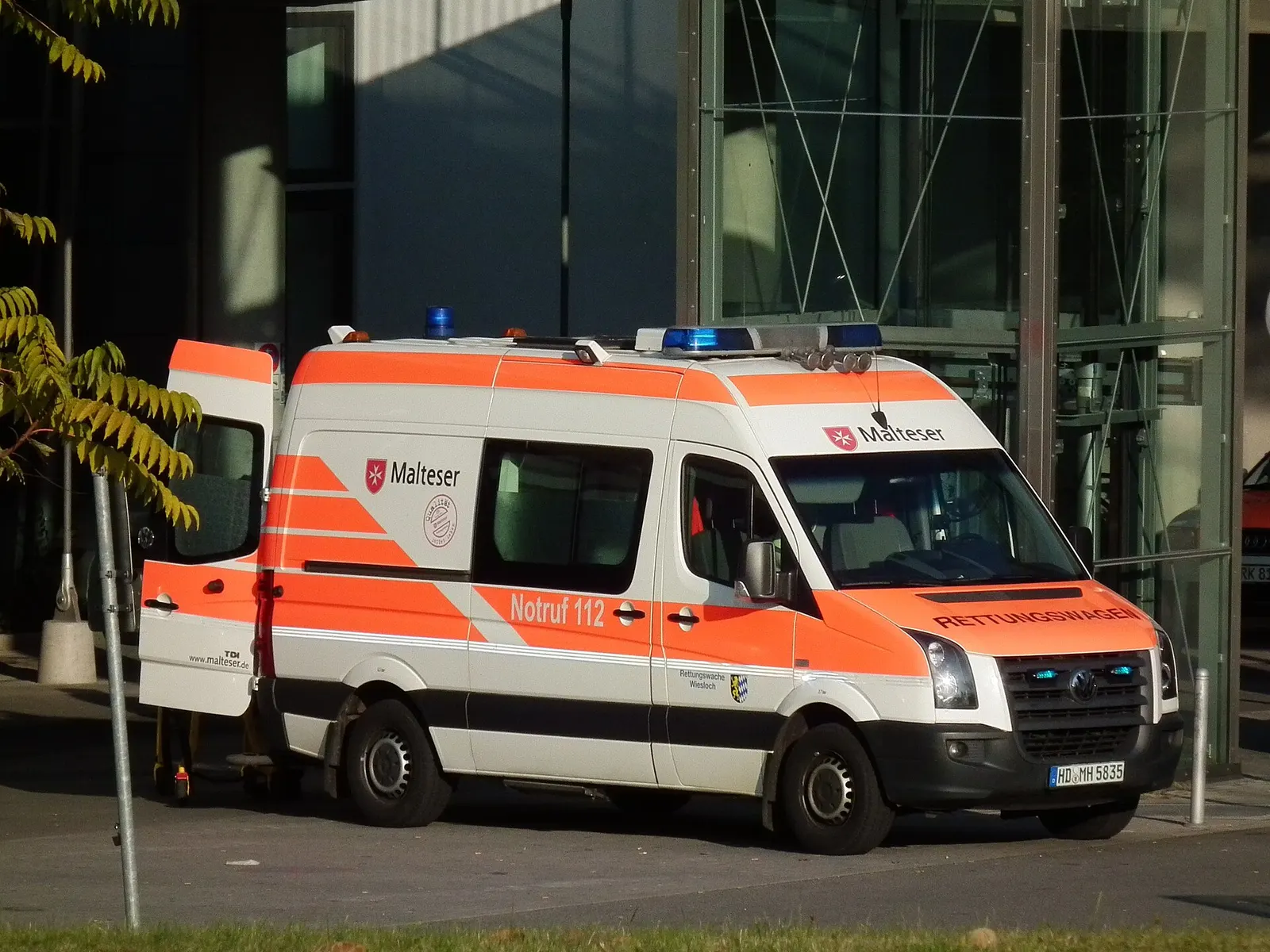
In a life-threatening emergency, call 112. If you are ill outside surgery hours and it cannot wait until the next day, call 116117, the free nationwide on-call medical service, or go to an on-call practice; emergency and out-of-hours care explains both, along with night pharmacies and what an ambulance costs. For psychological strain, free counselling at a Studierendenwerk or university and psychotherapy paid by public insurance are the two main routes; mental health support for students sets out the waiting times and the shortcuts. Gynaecology, contraception, screening and maternity protection during your studies are covered in women's health and contraception.
Travelling: EU countries, Turkey and the way home
The European Health Insurance Card on the back of your health card lets you use public healthcare in the EU, Iceland, Liechtenstein, Norway and Switzerland. Turkey works differently. TK tells members travelling there to take a certificate of entitlement for treatment abroad (Auslandskrankenschein) from their fund, which the Turkish social security institution SGK exchanges and registers in its YUPASS system; only care that cannot wait is covered, which TK defines as treatment needed within 24 hours, and planned treatment during a visit home is not. No public fund pays to bring you back to Germany after an illness abroad (SGB V § 60 (4)), which is why TK recommends travel insurance for every stay abroad.
Before you enrol
- Decide on your route: public student insurance, form A/T 11 from SGK, or private cover with an exemption
- Turkish SGK route: obtain the form before you leave Turkey and keep in mind that a job in Germany usually ends it
- Bridge the first weeks: for the visa, an incoming or travel policy valid in Germany for the first 3 months is accepted if you are under 30 and enrolling at a state or recognised university
- Find your university's sender number (Absendernummer) and ask your fund to report your status to the university
- Set up the monthly direct debit and keep it running: funds report unpaid contributions to the university
- Save 112 and 116117 in your phone and keep your health card with you
The order of these steps within your first weeks, alongside address registration and banking, is in the arrival chapter.
Frequently asked questions
Is health insurance mandatory for students in Germany?
Yes. Students enrolled at a state or state-recognised university are compulsorily insured in the public system until the end of the semester in which they turn 30, and the university needs a public fund's electronic report before it can enrol you. The exceptions are an exemption for students with other cover and an entitlement under a social security agreement, such as form A/T 11 for students insured in Turkey.
Does German student insurance cover me abroad?
In the EU, Iceland, Liechtenstein, Norway and Switzerland you use the European Health Insurance Card printed on the back of your health card. In Turkey, TK says you need a certificate of entitlement from your fund and are covered only for treatment needed within 24 hours. Return transport to Germany is never paid by a public fund, so consider travel insurance.
How does healthcare work in Germany?
You are insured with a public fund (or privately), receive a health card and choose freely among doctors contracted to the public system, usually starting with a family doctor. The practice bills your fund; you pay co-payments on prescriptions, hospital days and some other services, capped at 2% of gross household income a year.
Can I use my Turkish insurance in Germany instead of German student insurance?
Possibly, if you are insured with SGK, your centre of life stays in Turkey and you do not work in Germany. You prove it with form A/T 11, register it with a German public fund, and that fund reports to your university. Turkey's education ministry says the form covers acute conditions only, and any job, even a minijob, usually ends the route.
Does German student health insurance pay for the dentist?
Yes for check-ups and ordinary treatment; more elaborate fillings cost extra. Crowns, bridges and dentures get a fixed subsidy of 60% of the standard-care cost in 2026, more with years of documented check-ups, falling to 50% for treatment approved from 1 January 2027. Implants and orthodontics for adults are normally not covered.
How do I get health insurance as an international student in Germany?
Choose a statutory fund before enrolment, apply online with your admission letter and passport, and ask the fund to send the electronic insurance notification to your university. Before you enrol, the travel or incoming policy accepted for the visa covers your first weeks; it is valid for up to 3 months. See student health insurance and enrolment.
Sources
33 sources, all official
- § 5 SGB V – Versicherungspflicht (Absatz 1 Nr. 9: Studenten)Bundesministerium der Justiz / Bundesamt für Justiz (gesetze-im-internet.de) (Official)
- § 8 SGB V – Befreiung von der VersicherungspflichtBundesministerium der Justiz / Bundesamt für Justiz (gesetze-im-internet.de) (Official)
- §§ 186 (7) and 190 (9) SGB V – start and end of a student's membershipBundesministerium der Justiz / Bundesamt für Justiz (gesetze-im-internet.de) (Official)
- § 199a SGB V – Informationspflichten bei krankenversicherten Studenten (electronic proof for enrolment)Bundesministerium der Justiz / Bundesamt für Justiz (gesetze-im-internet.de) (Official)
- §§ 236 and 245 SGB V – contribution basis and rate for studentsBundesministerium der Justiz / Bundesamt für Justiz (gesetze-im-internet.de) (Official)
- Kosten & Beitrag zur studentischen KrankenversicherungAOK-Bundesverband (aok.de/pp) (Official)
- Beitrag für Studierende (Monatlicher Beitrag ab 01.01.2026)Techniker Krankenkasse (TK) (Official)
- Wie bin ich als Studentin oder Student krankenversichert? (KVdS)Techniker Krankenkasse (TK) (Official)
- Beitragshöhe für Absolventen und freiwillig versicherte Studierende (ab 01.01.2026)Techniker Krankenkasse (TK) (Official)
- Die wichtigsten Fragen zur studentischen Krankenversicherung für EinsteigerAOK NordWest (Official)
- Bekanntmachung des durchschnittlichen Zusatzbeitragssatzes nach § 242a Absatz 2 SGB V für das Jahr 2026 (BAnz AT 10.11.2025 B7)Bundesministerium für Gesundheit (Bundesanzeiger) (Official)
- BMG legt durchschnittlichen Zusatzbeitragssatz auf 2,9 Prozent fest (Zusatzbeitragssatz bleibt auch 2027 stabil)Bundesministerium für Gesundheit (Official)
- Kabinett beschließt PflegeneuordnungsgesetzBundesministerium für Gesundheit (Official)
- Studierende und Praktikanten (Studium in Deutschland)GKV-Spitzenverband, Deutsche Verbindungsstelle Krankenversicherung – Ausland (DVKA) (Official)
- Almanya Federal Cumhuriyeti Öğrenci Rehberi (Sağlık; AT Belgesi)T.C. Milli Eğitim Bakanlığı, Yükseköğretim ve Yurt Dışı Eğitim Genel Müdürlüğü / Berlin Eğitim Müşavirliği (Official)
- Health insurance for international studentsAOK – Die Gesundheitskasse (Official)
- Krankenversicherungsschutz bei Anträgen auf nationale VisaAuswärtiges Amt (Official)
- § 44 SGB V – Krankengeld (Absatz 2: no sickness benefit for insured students)Bundesministerium der Justiz / Bundesamt für Justiz (gesetze-im-internet.de) (Official)
- § 76 SGB V – Freie ArztwahlBundesministerium der Justiz / Bundesamt für Justiz (gesetze-im-internet.de) (Official)
- Die elektronische Gesundheitskarte (eGK)GKV-Spitzenverband (Official)
- Elektronisches Rezept (E-Rezept)Bundesministerium für Gesundheit (BMG) (Official)
- §§ 61 and 62 SGB V – Zuzahlungen, BelastungsgrenzeBundesministerium der Justiz / Bundesamt für Justiz (gesetze-im-internet.de) (Official)
- § 34 SGB V – Ausgeschlossene Arznei-, Heil- und HilfsmittelBundesministerium der Justiz / Bundesamt für Justiz (gesetze-im-internet.de) (Official)
- § 60 SGB V – Fahrkosten (ambulance and patient transport)Bundesministerium der Justiz / Bundesamt für Justiz (gesetze-im-internet.de) (Official)
- Gesetz zur Stabilisierung der Beitragssätze in der gesetzlichen Krankenversicherung (GKV-Beitragssatzstabilisierungsgesetz) vom 24. Juli 2026Bundesgesetzblatt Teil I 2026 Nr. 228 (Bundesministerium der Justiz und für Verbraucherschutz) (Official)
- § 28 SGB V – Ärztliche und zahnärztliche BehandlungBundesministerium der Justiz / Bundesamt für Justiz (gesetze-im-internet.de) (Official)
- § 55 SGB V – Leistungsanspruch Zahnersatz (Festzuschüsse, Bonus, Härtefall)Bundesministerium der Justiz / Bundesamt für Justiz (gesetze-im-internet.de) (Official)
- § 33 SGB V – Hilfsmittel (Absatz 2: Sehhilfen for adults)Bundesministerium der Justiz / Bundesamt für Justiz (gesetze-im-internet.de) (Official)
- Ich fahre nach Bosnien-Herzegowina, Tunesien oder in die Türkei in den Urlaub. Was muss ich tun, wenn ich vor Ort krank werde?Techniker Krankenkasse (TK) (Official)
- 116117.de – Fragen und Antworten zum PatientenserviceKassenärztliche Bundesvereinigung (KBV) (Official)
- Verfahrenshinweise zum Aufenthalt in Berlin (VAB), PDF erstellt am 31.08.2026 — A.16b Studium, A.20 Arbeitsplatzsuche, A.30 EhegattennachzugLand Berlin – Landesamt für Einwanderung (Official)
- Beschäftigung von Werkstudenten (AOK-Arbeitgeberservice)AOK – Die Gesundheitskasse (Official)
- § 3 EntgFG – Anspruch auf Entgeltfortzahlung im KrankheitsfallBundesministerium der Justiz / Bundesamt für Justiz (gesetze-im-internet.de) (Official)