There is no single cost of living for students in Germany, but there is a reliable range. DAAD, the German Academic Exchange Service, puts it at €900–€1,200 per month depending on the city. Munich's universities go higher: LMU says to calculate with about €1,500 per month, and TUM gives €1,300–€2,000 per month for greater Munich. Official statistics show how tight this is in practice. Destatis found that half of the students who run their own household have less than €963 per month available, and that housing takes 54% of their income on average.

This page goes through each item with the most recent official figure, then combines them into budget examples you can compare with the monthly blocked-account payout of €992 per month. Tuition and one-off costs are covered on the cost of studying in Germany hub. City-by-city figures are in cost of living compared across German cities.
A student's monthly budget, item by item
| Item | Amount | Source and date | What to know |
|---|---|---|---|
| Rent: Studierendenwerk hall | €318.18 per month | Deutsches Studierendenwerk, 31 December 2024 | All utilities included; places for only 10.12% of students |
| Rent: room in a shared flat (WG) | €510 per month | Moses Mendelssohn Institut, winter semester 2026/27 | Median asking rent, warm, mostly including electricity and internet |
| Health and care insurance | €148.09 per month | Our calculation from the 2026 statutory rates | Childless, aged 23 or over, at the 2.9% average add-on; a little less under 23 |
| Transport | €37.80 per month | Deutschlandsemesterticket, 2026/27 | Paid with the semester contribution where included; otherwise a Deutschlandticket costs €63 per month |
| Food | €198 per month | 22nd Social Survey, 2021 | A floor, not today's price; canteen meals keep it down |
| Phone | €9.99 per 4 weeks | Discount prepaid example, October 2026 | Billed every four weeks |
| Broadcasting fee | €18.36 per month | rundfunkbeitrag.de, 2026 | Per dwelling; €6.12 per month each when three flatmates split it |
| Clothing | €46 per month | 22nd Social Survey, 2021 | Average among students with this expense |
| Leisure, culture, sport | €65 per month | 22nd Social Survey, 2021 | Average among students with this expense |
| Study materials | €31 per month | 22nd Social Survey, 2021 | Average among students with this expense |
Where German students' money goes each month
Average € per month · 22nd Social Survey, fieldwork summer 2021
Rent is the biggest monthly cost at €410, then food at €198 and health at €100; DAAD puts total living costs at €900–€1,200 a month.
- Rent incl. utilities€410
- Food€198
- Health€100
- Transport€89
- Leisure€65
- Clothing€46
- Phone, internet, TV fee€32
- Books and materials€31
| Item | Value |
|---|---|
| Rent incl. utilities | €410 |
| Food | €198 |
| Health | €100 |
| Transport | €89 |
| Leisure | €65 |
| Clothing | €46 |
| Phone, internet, TV fee | €32 |
| Books and materials | €31 |
| These items together | €971 |
The newest national survey; rents have risen since 2021, so read these as a floor. DAAD estimates €900–€1,200 a month in total, depending on the city.
Source: DAAD. Last checked:
Image (PNG)Rent: the item that decides everything
- Warm rent and cold rentWarmmiete / Kaltmiete
- Cold rent (Kaltmiete, or Nettokaltmiete) is the rent for the space alone. Warm rent adds the operating costs and heating, paid as monthly advances. Hall rents and WG asking rents are usually quoted warm. For a flat of your own, check whether a quoted rent is cold or warm, and whether electricity and internet are included. Compare like with like.
Halls of residence are the cheapest option by far. The national average at a Studierendenwerk was €318.18 per month with all utilities at the end of 2024. In Berlin, studierendenWERK BERLIN charged €336.56 per month on average, while the state-owned berlinovo charged €463 per month. In Munich the Studierendenwerk's single places average €400.60 per month, and in Chemnitz rooms cost €264.50–€344.50 per month. The catch is supply: publicly funded halls have places for 10.12% of students nationally, and for only 5.09% in Berlin. Apply as early as you are allowed.
Rooms in shared flats are where most newcomers end up. The median asking rent for a WG room was €510 per month in winter semester 2026/27, ranging from €305 per month in Chemnitz to €850 per month in Munich. Even the cheaper quarter of Munich offers starts at €550 per month. These are asking rents for new contracts, compiled by an institute together with a listing platform. They are not what sitting tenants pay, which is why the consumer price index for actual net cold rents rose only 2.3% in the year to September 2026. A private room or flat in Munich costs €700–€1,000 per month with utilities, according to LMU.
What a room in a shared flat (WG) costs
Median asking rent, € per month · winter semester 2026/27
A WG room costs a median €850 in Munich, €650 in Berlin and Hamburg and €630 in Frankfurt, against €510 across all university towns.
- Munich€850
- Berlin€650
- Hamburg€650
- Frankfurt€630
- All university towns€510
| Item | Value |
|---|---|
| Munich | €850 |
| Berlin | €650 |
| Hamburg | €650 |
| Frankfurt | €630 |
| All university towns | €510 |
Asking rents for rooms in existing 2–3-person flats, mostly warm. A Studierendenwerk hall place averaged €318.18 per month (end of 2024).
Source: Moses Mendelssohn Institut, DSW. Last checked:
Image (PNG)Housing is also where students are most stretched. In Destatis's 2025 figures, students living alone spent 56% of their income on housing and students sharing with other students 49%. Overall, 65% of students with their own household were overburdened by housing costs. How to find a room and what to check in a contract is in the student accommodation guide, and the deposit is explained in hidden costs of studying in Germany.
Health insurance: fixed by law, except for one part
- Add-on contributionZusatzbeitrag
- The part of the health-insurance contribution that each statutory insurer (Krankenkasse) sets for itself, as a percentage on top of the uniform rate. For students it is the only part of the contribution that differs between insurers, so it is the figure to compare.
Students at state or state-recognised universities are normally compulsorily insured at the student rate until the end of the semester in which they turn 30. The base contribution is the same at every statutory insurer, €87.38 per month in 2026, because it is calculated from a fixed amount set by law. Two items come on top: the insurer's own add-on, and long-term care insurance of €35.91 per month if you are 23 or over and childless, or €30.78 per month under 23. At an insurer charging the 2.9% benchmark add-on, the total is about €148.09 per month. TK, for example, charges €146.29 per month at 23 or over and €141.16 per month under 23.
Insurers actually charged an add-on of 3.13% on average at the end of June 2026, above the benchmark, so compare add-ons when you choose. Nothing else in the student contribution differs. After the student rate ends, a voluntary member without income pays far more, from €220.03 per month at TK before care insurance. Plan for that if your degree will run past the age limit. Choosing an insurer and the exemption rules are covered in health insurance for students.
Transport
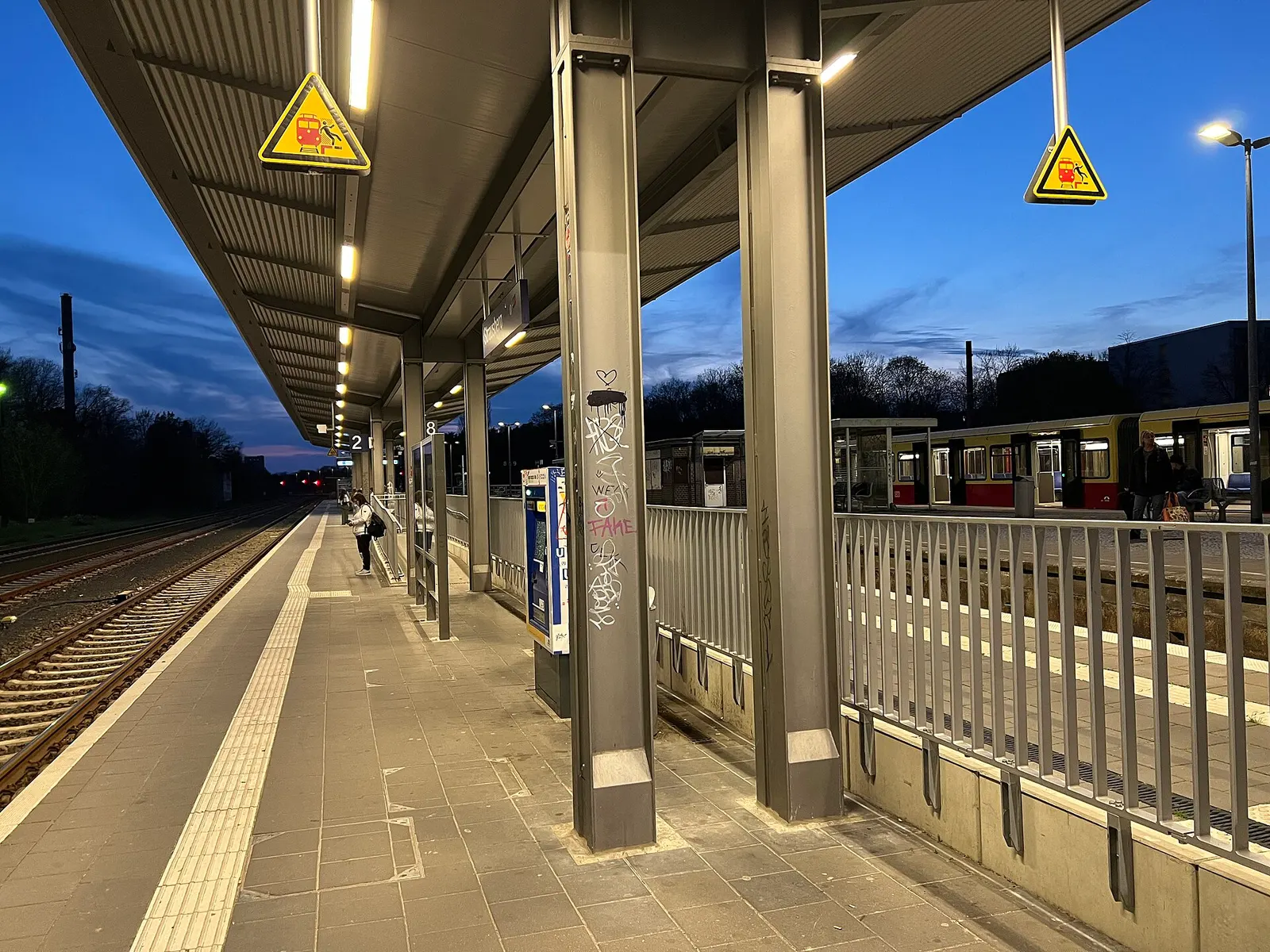
If your semester contribution includes the Deutschlandsemesterticket, your transport is already paid at €37.80 per month, collected twice a year with the contribution, and valid on local and regional transport throughout Germany. Without it, the Deutschlandticket costs €63 per month in 2026 and €66.80 per month from January 2027. Munich's universities include no ticket, and students there buy Bavaria's discounted student ticket for €43 per month. Long-distance trains are extra; see the transport guide.
Food: supermarket and Mensa
- University canteenMensa
- The subsidised canteen run by the local Studierendenwerk on or near campus. Students pay less than staff and guests; in Munich, for example, students of the main universities pay with their student card or the Studierendenwerk's payment card, and most of its canteens charge by weight.
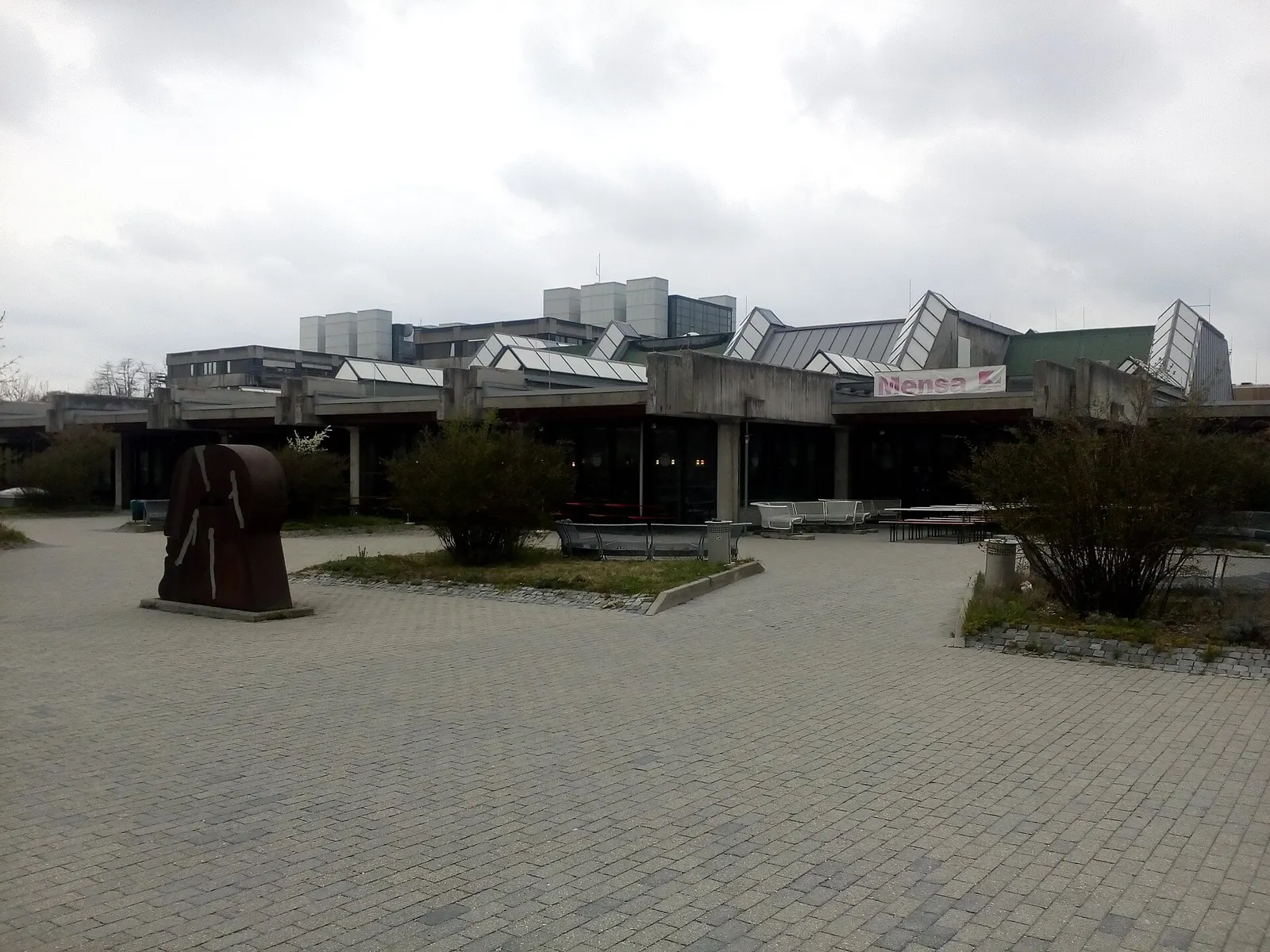
The 2021 student survey found average food spending of €198 per month, and food prices have since risen. Recently the rise has been small: food was only 0.4% dearer in September 2026 than a year earlier, while overall inflation reached 3.3%, driven by energy. The biggest lever is the university canteen. At the Studierendenwerk München Oberbayern, students pay €0.90 per 100 g in the pay-by-weight canteens, plus a small surcharge for meat and fish dishes, and €2.95–€5.25 per dish where prices are fixed. Shopping tips are in supermarkets in Germany.
Phone, internet and the broadcasting fee
A discount prepaid tariff costs around €9.99 per 4 weeks in the example our arrival guide uses. Such tariffs bill every four weeks, so you pay thirteen times a year, not twelve. WG asking rents mostly include electricity and internet; in a flat of your own you arrange them yourself. Every dwelling owes the broadcasting fee of €18.36 per month, billed €55.08 per quarter. Flatmates register one person and share the cost, while a hall room off a public corridor pays it in full. See getting a SIM card and the broadcasting fee explained.
Budget examples: four ways to live
The table combines the fixed costs you cannot avoid: rent, health and care insurance, the transport ticket and the broadcasting fee. It compares them with the monthly blocked-account payout. All four examples assume a childless student aged 23 or over. Outside Munich they assume a university whose semester contribution includes the Deutschlandsemesterticket, and in a WG a three-way split of the broadcasting fee.
| Hall, national average | WG, national median | Hall, Munich | WG, Munich median | |
|---|---|---|---|---|
| Rent | €318.18 per month | €510 per month | €400.60 per month | €850 per month |
| Health and care insurance | €148.09 per month | €148.09 per month | €148.09 per month | €148.09 per month |
| Transport | €37.80 per month | €37.80 per month | €43 per month | €43 per month |
| Broadcasting fee | €18.36 per month | €6.12 per month | €18.36 per month | €6.12 per month |
| Fixed costs | €522.43 per month | €702.01 per month | €610.05 per month | €1,047.21 per month |
| Left from a €992 payout | €469.57 per month | €289.99 per month | Enough for food and more | Nothing: €55.21 short |
Read the last row against the food figure. In a hall at the national average, €469.57 per month remains for food, phone and everything else, which is workable. In a WG room at the national median, €289.99 per month remains, and the 2021 food average alone was €198 per month. That budget works only with canteen meals and few extras. In a Munich WG at the median, the fixed costs exceed the payout before you have eaten anything, which is why LMU tells students to plan for about €1,500 per month. A Munich hall place changes the picture, but the Studierendenwerk's waiting time is 1 to 7 semesters. The rest of the semester contribution, beyond the ticket, comes on top in every column.
Fixed costs of a WG room, city by city
Rent, health insurance, ticket and a share of the broadcasting fee, € per month · winter semester 2026/27
Before food, a student in a median-priced WG room pays about €1,047.21 a month in fixed costs in Munich, €842.01 in Berlin and Hamburg and €702.01 at the national median, against a blocked-account payout of €992; in Chemnitz it is €497.01.
- Munich€1,047.21
- Berlin€842.01
- Hamburg€842.01
- Cologne€832.01
- Frankfurt€822.01
- National median€702.01
- Chemnitz€497.01
| Item | Value |
|---|---|
| Munich | €1,047.21 |
| Berlin | €842.01 |
| Hamburg | €842.01 |
| Cologne | €832.01 |
| Frankfurt | €822.01 |
| National median | €702.01 |
| Chemnitz | €497.01 |
Scholway's calculation: median WG asking rent (Chemnitz: average), student health and care insurance for a childless student aged 23 or over at the average add-on, the semester ticket (Munich: Bavaria's student Deutschlandticket) and a third of the broadcasting fee. Food, phone and the rest of the semester contribution come on top of these figures; the blocked account pays out €992 per month.
Source: Moses Mendelssohn Institut, AOK-Bundesverband, LMU Munich +11 more. Last checked:
Image (PNG)Is the blocked account enough to live on?
The blocked-account amount equals the BAföG maximum for a student living away from home, so it is the state's own estimate of a minimum student budget. It is generous in some places and short in others. It covers a hall room at the national average with money to spare. It covers a WG room at the national median only on a tight budget. In the most expensive cities it does not cover a typical room at all. The figure also includes €380 per month for housing, which is less than the WG median in most university towns; Chemnitz, at €305 per month, is one of the exceptions.
What the €992 a month on a blocked account is made of
Proof of funds for a student visa, 2026 · €11,904 for a first year
The monthly amount to prove, €992, is the BAföG need: €475 basic need, €380 for housing and €137 for health and care insurance — €11,904 for a year.
- Basic need€47548%
- Housing€38038%
- Health and care insurance€13714%
| Item | Value | Share |
|---|---|---|
| Basic need | €475 | 48% |
| Housing | €380 | 38% |
| Health and care insurance | €137 | 14% |
| Total | €992 | 100% |
If your documented rent including utilities is below the housing part, the amount to prove falls by the difference — whether the mission accepts that is its decision.
Source: Bundesministerium des Innern, Bundesministerium der Justiz / gesetze-im-internet.de, Land Berlin +5 more. Last checked:
Image (PNG)In practice: running your monthly budget
Activate the payouts
After arrival, open a German current account and connect it to your blocked account; the provider then releases one monthly amount at a time. Until the first payout arrives, live on separate savings. See opening a bank account.
Automate the fixed costs
Set up a standing order for rent and direct debits for insurance and the broadcasting fee. The fee is due every three months, €55.08 per quarter, so it is easy to forget if you pay by hand.
Set money aside for the semester contribution
It falls due before each semester as one sum. Put a sixth of it aside every month so the next re-registration does not empty your account.
Count your phone bill thirteen times
Four-weekly tariffs charge thirteen times a year. Budget for that, or choose a monthly contract.
Check your insurer when its add-on changes
If your insurer raises its add-on, you have a special right to switch. Otherwise you are bound for 12 months.
- Eat at the Mensa on campus days; it is the cheapest hot meal available.
- Live in a hall or a larger WG: in a WG the broadcasting fee is shared, and hall rents include all utilities.
- Do not pay twice for transport: check whether your semester contribution includes the ticket.
- Pick the cheapest add-on among the statutory insurers; the rest of the student contribution is identical everywhere.
- Apply for a hall place early and widely: Saxony has places for 15.79% of its students, North Rhine-Westphalia for 8.47%.
Frequently asked questions
How much does it cost to live in Germany as a student?
DAAD puts monthly living costs at €900–€1,200 per month, depending on the city; LMU says about €1,500 per month for Munich. In our examples, rent, health insurance, a transport ticket and the broadcasting fee alone come to €522.43 per month in a hall room and €702.01 per month in a WG room at the national median, before food.
What is the average rent for students in Germany?
A Studierendenwerk hall room cost €318.18 per month on average, all utilities included, at the end of 2024. The median asking rent for a room in a shared flat was €510 per month in winter semester 2026/27, and €850 per month in Munich.
Is the blocked account enough to cover living costs?
It depends on your housing. The monthly payout of €992 covers a hall room with room to spare and a WG room at the national median only tightly. In Munich, the fixed costs of a median WG room already exceed it. Treat it as the legal minimum and plan additional money for expensive cities.
How much is health insurance for students in Germany?
At the statutory student rate the base is €87.38 per month at every insurer, plus the insurer's add-on and care insurance. In total that is about €148.09 per month for a childless student aged 23 or over at the average add-on; TK charges €146.29 per month. The student rate normally ends with the semester in which you turn 30.
Can I live on the blocked-account payout alone?
In a hall room, yes: our national example leaves €469.57 per month after rent, insurance, transport and the broadcasting fee. In a WG room at the national median, €289.99 per month remains for food and everything else, which is tight. In a Munich WG room at the median, it is not enough.
How much do students spend on food per month in Germany?
In the 22nd Social Survey, students spent about €198 per month on food on average. Cooking with discount-supermarket staples and eating lunch in the Mensa keep the figure down; at the Studierendenwerk München Oberbayern a main dish costs students from €2.95. See supermarkets in Germany and halal and Turkish shops.
Sources
18 sources, 17 official
- Costs of education and livingDAAD (German Academic Exchange Service) (Official)
- Living costs (International Student Guide)LMU Munich (Official)
- Study fees and costsTechnical University of Munich (TUM) (Official)
- Studienkosten (Semesterbeitrag, Langzeitstudiengebühren)Leibniz Universität Hannover (Official)
- Knapp zwei Drittel der Studierendenhaushalte durch Wohnkosten überbelastet (Pressemitteilung Nr. N048 vom 15. Juli 2026)Statistisches Bundesamt (Destatis) (Official)
- Inflationsrate im September 2026 bei +3,3 % (Pressemitteilung Nr. 364 vom 13. Oktober 2026)Statistisches Bundesamt (Destatis) (Official)
- Wohnraum für Studierende — Statistische Übersicht 2025Deutsches Studierendenwerk (DSW) (Official)
- Schriftliche Anfrage Drucksache 19/22916: Studentisches Wohnen in Berlin (Antwort vom 26. Juni 2025)Abgeordnetenhaus Berlin / Senatsverwaltung für Wissenschaft, Gesundheit und Pflege (Official)
- Chemnitz bietet im bundesweiten Vergleich die günstigsten Studierenden-WGs (Pressemitteilung, 21.09.2026)Technische Universität Chemnitz (Official)
- Studentische Wohnkosten im Wintersemester 2026/27: WG-Zimmer kosten durchschnittlich 510 EuroWG-Gesucht.de with the Moses Mendelssohn Institut (MMI) (Secondary)
- Kosten & Beitrag zur studentischen KrankenversicherungAOK-Bundesverband (statutory health insurance) (Official)
- §§ 236 and 245 SGB V — Beitragspflichtige Einnahmen und Beitragssatz der StudentenBundesministerium der Justiz (gesetze-im-internet.de) (Official)
- Finanzentwicklung der GKV im 1. Halbjahr 2026 (Pressemitteilung, 4. September 2026)Bundesministerium für Gesundheit (BMG) (Official)
- Informationen für StudierendeARD ZDF Deutschlandradio Beitragsservice (rundfunkbeitrag.de) (Official)
- Zahlung des RundfunkbeitragsARD ZDF Deutschlandradio Beitragsservice (rundfunkbeitrag.de) (Official)
- Preise und BezahlungStudierendenwerk München Oberbayern (Official)
- Bekanntmachung zu § 2 Absatz 3 des Aufenthaltsgesetzes über den Mindestbetrag zur Sicherung des Lebensunterhalts vom 13. August 2025 (BAnz AT 29.08.2025 B1)Bundesministerium des Innern (BMI), Bundesanzeiger (Official)
- § 13 BAföG — Bedarf für StudierendeBundesministerium der Justiz (gesetze-im-internet.de) (Official)