Germany has a large Muslim population, an estimated 6.6 to 7.0 million Muslims with a migration background from Muslim-majority countries, and about 3,062,000 people people with a Turkish migration background, the largest such group. That is why many Turkish students find familiar food quickly in Berlin and the western cities, where Turkish supermarkets, butchers and bakeries are common. But availability follows the community, and the community is very unevenly spread. Ordinary supermarkets carry vegetarian and vegan products that help when you cannot check the meat. Supermarket types and prices in general are in the supermarkets guide; this page is about eating halal.
Is it easy to find halal food in Germany? It depends on the city
The best official proxy for how many Turkish shops a city has is how many Turkish citizens live there. The 2022 census counts residents with Turkish citizenship only, so naturalised Turkish-Germans and dual citizens are missing and every community is larger than the figure, but the ranking between cities is telling.
| City | Turkish citizens | What to expect |
|---|---|---|
| Duisburg (for comparison) | 30,598 residents | A higher share than any of the ten guide cities |
| Berlin | 82,146 residents | The largest number of any German city |
| Cologne | 44,133 residents | The highest share of the ten guide cities |
| Hamburg | 36,815 residents | A share slightly below Berlin's |
| Munich | 33,631 residents | A share about the same as Berlin's |
| Frankfurt | 22,447 residents | The second-highest share of the ten |
| Stuttgart | 16,854 residents | The third-highest share of the ten |
| Aachen | 5,885 residents | A share about the same as Berlin's; Cologne is within reach by train |
| Heidelberg | 2,312 residents | A lower share than the big western cities |
| Leipzig | 1,705 residents | Very small; expect only a few Turkish shops |
| Dresden | 1,279 residents | The smallest of the ten; plan your shopping |
In practice, expect Turkish grocers to be easy to reach in the cities at the top of the table, while in Leipzig or Dresden you may need to plan a regular trip, freeze meat or cook more vegetarian food. The city guides cover each community in more detail, for example Cologne, Berlin, Leipzig and Dresden.
What 'halal' on a German label means, and what it does not
There is no legal definition of halal in German or EU food law: the term is not protected, and there is no uniform standard that a certification checks. The seals you see on packaging come from private certifiers, traditional or close to the manufacturers, and each sets its own rules. Some accept meat from animals stunned before slaughter, for example by a short electric stun or a captive bolt; others require slaughter without stunning. Certifiers may also check the production process, such as cleaning agents without alcohol or forbidden fats. Germany's consumer advice centres (Verbraucherzentralen) call the variety of seals confusing and have asked for binding minimum criteria agreed between Islamic scholars, producers, retailers and lawmakers.
- Halal sealHalal-Siegel / Halal-Zertifikat
- A private certification mark on a product. It tells you that a particular certifier, applying its own criteria, has approved the product; it does not tell you which criteria, and two seals can mean different things about stunning or the production line. If the difference matters to you, look up the certifier or ask the shop.
Meat and the stunning rule
German animal-protection law requires a warm-blooded animal to be stunned before it is bled. The authorities may grant an exemption for slaughter without stunning (Schächten), but only as far as needed to meet the needs of members of religious communities whose mandatory rules require it or forbid eating meat from animals not slaughtered that way. As a result, halal slaughter in Germany must either use stunning or rely on such an exemption. Meat from animals slaughtered without stunning may be imported from other countries and sold without any special label.
- Slaughter without stunningSchächten
- Ritual slaughter by cutting the throat without prior stunning. It is banned in Germany in principle (Tierschutzgesetz § 4a) and allowed only with an exemption from the competent authority for religious communities that require it. Whether stunned meat is acceptable is a question on which Muslim scholars and certifiers differ.
For the everyday question 'is the chicken halal?', the answer is that ordinary supermarket meat, chicken included, is not certified or labelled as halal unless the pack says so. The consumer advice centres note that Muslims prefer to buy halal meat at ethnic supermarkets or from a regional butcher they trust. Ask the butcher how and where the animals were slaughtered and which certifier, if any, the shop follows.
Ingredients to check in an ordinary supermarket
Outside the meat counter, the issues are hidden animal products and alcohol. The consumer advice centres list the typical cases; German ingredient lists name the substance, but often not its origin, so the manufacturer is the only reliable source for the details. A 'vegan' label settles most questions for juices, sweets and snacks.
| On the label (German) | Meaning | Why it matters |
|---|---|---|
| Schwein, Schweinefleisch, Speck, Schinken, Schmalz | Pork, bacon, ham, lard | Haram; also in dishes such as Zwiebelkuchen with bacon or Mettbrötchen (raw minced pork) |
| Gelatine | Gelatine, which may come from pigs or cattle | Found in yoghurts, cakes and gummy sweets; pork gelatine is haram, beef gelatine acceptable only from permissible slaughter |
| Blut, Blutwurst | Blood, blood sausage | Haram |
| Alkohol, Weingeist, Aroma | Alcohol; flavourings may use alcohol as a carrier | Can be present in traces in ice cream, pralines and flavourings |
| Mono- und Diglyceride von Speisefettsäuren (E 471) | Emulsifiers that may be of plant or animal origin | The label does not say which; ask the manufacturer |
| Fruchtsaft | Fruit juice | Some juices are clarified with gelatine; only the manufacturer can say which, so look for 'vegan' |
| Vegan | No animal ingredients | The simplest shortcut for juices, sweets and crisps |
Where to buy Turkish groceries
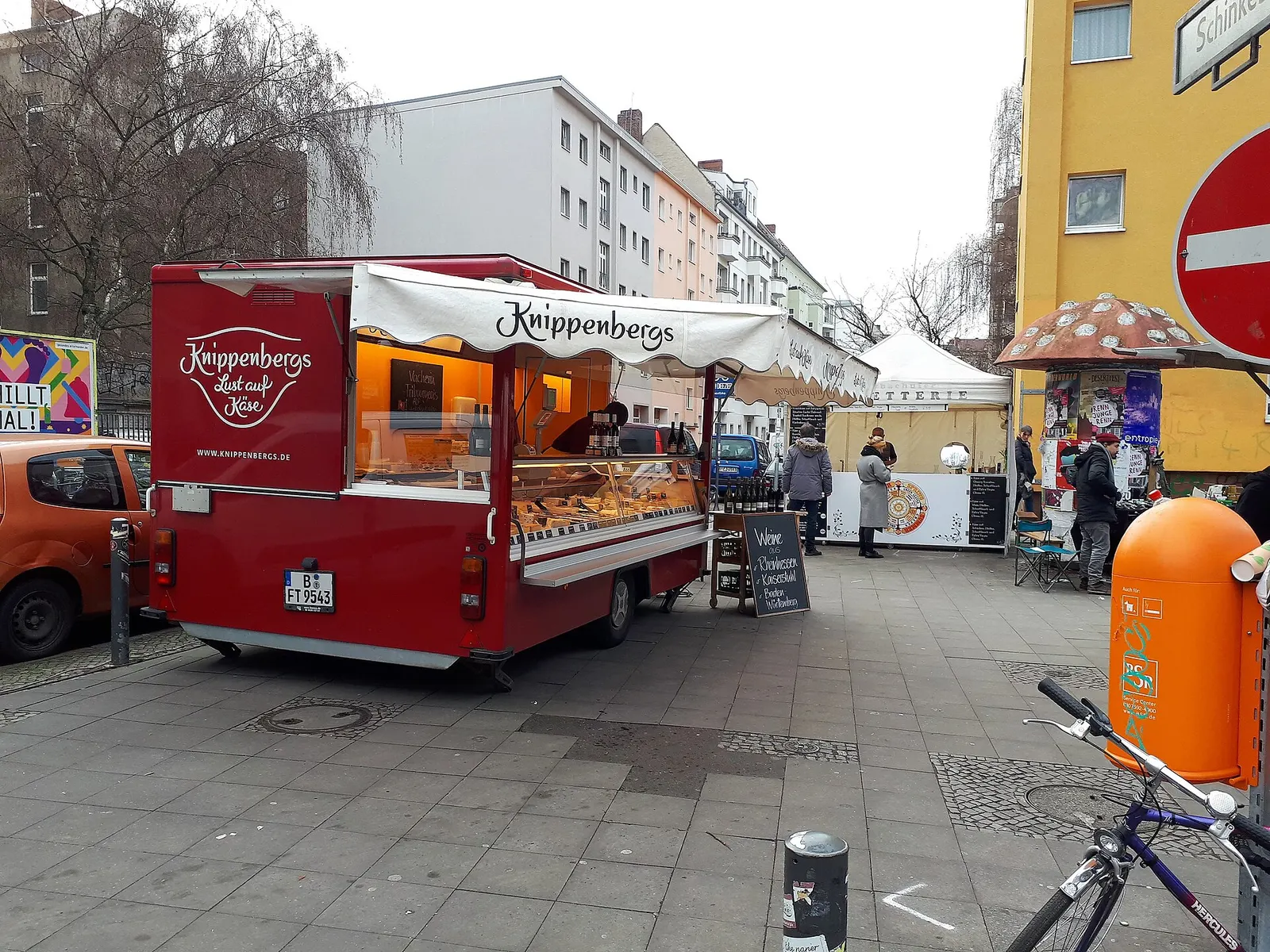
Turkish supermarkets (türkischer Supermarkt, or 'Türk marketi') typically sell halal meat and sausages such as sucuk, cheeses, olives, pulses, spices, bread and Turkish brands you know from home, some with a butcher's counter. They follow the same shop-hours law as other shops, so they are closed on Sunday; see the Sunday-closing guide. Arab and other international grocers may also sell halal meat and are worth knowing in cities where Turkish shops are scarce.
Search the map
Search for 'türkischer Supermarkt', 'Türk marketi', 'Halal Metzgerei' or 'orientalischer Supermarkt' in a maps app; read recent reviews for the butcher's counter.
Ask other students
A Turkish student association, if your university has one, or the international office's buddy programme can point you to the nearest shops and the butchers people trust.
Ask at the counter
Ask where the meat comes from, whether the animals were stunned and which certifier, if any, the shop follows.
Stock up if you live far away
In Leipzig, Dresden or a small town, a monthly trip with a freezer bag and a well-stocked freezer compartment saves time.
- Butcher's shopMetzgerei / Fleischerei
- A butcher. 'Halal Metzgerei' or 'Helal Kasap' on the sign means the shop advertises halal meat; which slaughter standard it follows is a question to ask, not something the sign guarantees.
Mosques and prayer near German universities
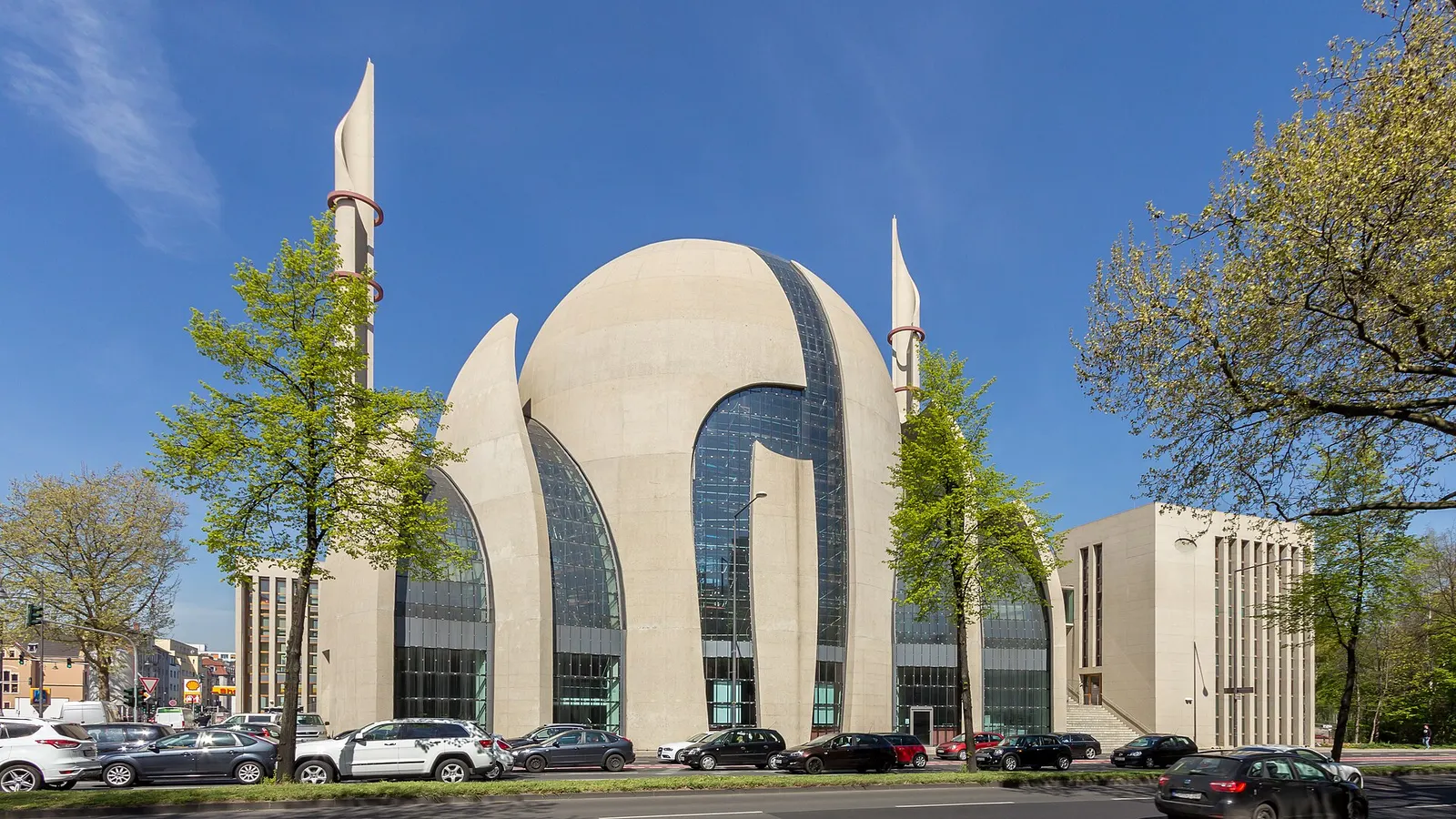
No official count of mosques in Germany was found for this guide; the federal migration office's 2025 estimate of the Muslim population gives none. Cities with large Turkish and Muslim communities have mosques run by different associations, from purpose-built ones such as Cologne's central mosque in Ehrenfeld to prayer rooms in ordinary buildings; where the communities are small, the choice is narrower. The quickest way to find the nearest one is a maps search for 'Moschee' or 'Cami', or the Turkish student association.
Some universities provide an interreligious quiet room (Raum der Stille) open to students of all faiths for prayer and meditation; Universität Hamburg's, for example, is in the middle of its main campus. Not every university has one, and the rules on prayer mats, ablution and opening hours vary, so ask the international office or the student union. Turkish students looking for the consulates and other Turkey-side services will find them on the page for Turkish students.
- Quiet roomRaum der Stille
- A room at a university, hospital or station set aside for prayer, meditation or rest, open to people of any religion. It is not a mosque and usually has no separate areas or ablution facilities unless stated.
Ramadan as a student
Ramadan moves about eleven days earlier each year through the solar calendar, so over a degree it can fall in the lecture period, the exam period or the semester break. Exam dates are set by the faculties, and this guide found no general rule on adjustments for fasting students. If Ramadan coincides with your exams, talk to the examiner or the examination office early about what is possible, for example the time of an oral exam. Long summer days in northern Europe mean long fasts in June and July; the Mensa's lunch opening hours will not fit, so plan suhoor and iftar at home or with friends.
For the bigger picture of food spending, the Mensa and discounters, see supermarkets in Germany and the cost of living. Turkish shops are also useful beyond food: many sell Turkish phone cards, offer money-transfer services and post notices for rooms, but treat any room offer that asks for money before a contract with the caution described in rental scams. Students arriving with food from home should check what customs allows first, in bringing goods into Germany.
In practice: your first weekly shop
Food is one part of settling in; bins, deposit bottles, quiet hours and the other everyday rules are in the daily-life hub, and a full first-month plan in your first 30 days.
In your first week
- Find the nearest Turkish or other halal butcher and grocer, and check their Saturday hours
- Learn the label words: Schwein, Gelatine, Speck, Schmalz, Alkohol, vegan
- Choose the vegetarian or vegan line in the Mensa when you cannot check the meat
- Ask the Turkish student association about the nearest mosque and any Ramadan iftars
- In a city with few Turkish shops, plan one bigger trip a month and use the freezer
- Do the weekly shop on Saturday; most shops are closed on Sunday
Frequently asked questions
Is it easy to find halal food in Germany?
In Berlin, the western cities and the Ruhr, yes: Turkish and other ethnic supermarkets and butchers are common, reflecting a Turkish-origin population of about 3,062,000 people. In eastern cities such as Leipzig and Dresden, where the Turkish communities are very small, there are only a few shops and you will need to plan.
Where can I buy Turkish groceries in Germany?
At Turkish supermarkets, which typically sell Turkish brands, halal meat and sucuk, some with a butcher's counter. Search a maps app for 'türkischer Supermarkt' or 'Türk marketi', or ask the Turkish student association at your university.
Are there mosques near German universities?
There is no official count, but cities with large Turkish and Muslim communities have mosques run by different associations, and the choice is narrower where the communities are small. Some universities, such as Universität Hamburg, also have an interreligious quiet room on campus for prayer. Search a maps app for 'Moschee' or 'Cami', or ask the Turkish student association.
Is chicken in German supermarkets halal?
Not unless the pack says so. Ordinary supermarket meat is not certified halal, and animals slaughtered in Germany must be stunned unless an authority grants a religious exemption. The consumer advice centres note that Muslims prefer to buy halal meat at ethnic supermarkets or from a butcher they trust.
Can I trust a halal label in Germany?
It tells you that a private certifier approved the product under its own rules. 'Halal' is not a protected term in EU food law and there is no uniform standard, so seals differ, for example on whether stunning is accepted. Check the certifier or ask the shop if the difference matters to you.
Can I bring Turkish food with me to Germany?
Only within customs rules. Meat and milk products from Türkiye are generally not allowed in personal luggage, while many plant-based and packaged foods are, within the travel allowances. Check the details before you pack in bringing goods into Germany; the same products are usually sold in Turkish shops here.
Sources
7 sources, 6 official
- Halal essen: Wann ist ein Produkt "halal"?Verbraucherzentrale Bundesverband / Verbraucherzentralen (Institutional)
- Tierschutzgesetz § 4a SchlachtenBundesministerium der Justiz (gesetze-im-internet.de) (Official)
- Forschungsbericht 55: Zahl der Musliminnen und Muslime in Deutschland 2025 (Meldung vom 18.06.2026)Bundesamt für Migration und Flüchtlinge (BAMF), Forschungszentrum (Official)
- Interreligiöser Raum der StilleUniversität Hamburg, Stabsstelle Gleichstellung / Chancengerechtigkeit (Official)
- Grundgesetz Art. 140 in Verbindung mit Art. 139 der Weimarer Reichsverfassung (Sonn- und Feiertagsschutz)Bundesministerium der Justiz / gesetze-im-internet.de (Official)
- Statistischer Bericht – Bevölkerung nach Migrationshintergrund – Endergebnisse 2024 (Tabelle 12211-05)Statistisches Bundesamt (Destatis) (Official)
- Zensus 2022, Tabelle 1000A-1021: Personen – Staatsangehörigkeit (Häufigste Länder), Gemeinden, Stichtag 15.05.2022Statistische Ämter des Bundes und der Länder (Zensusdatenbank) (Official)