Pfand is the first German word most students learn at a supermarket till, usually by noticing that the bottle of water cost more than the shelf said. The extra €0.25 is a deposit, and you only get it back by returning the container. This page explains which drinks carry it, how the return machine and the receipt work, what to do with a bottle that has no deposit logo, and how the rest of household waste is sorted. The wider picture of everyday rules is in the daily-life hub; prices and shop types are in the supermarkets guide.
Two deposit systems: single-use and reusable
- EinwegpfandEinwegpfand (DPG-Pfand)
- The statutory deposit on single-use beverage containers: at least €0.25 per container including VAT on single-use cans and bottles, plastic or glass, of 0.1–3.0 litres unless an exemption applies, marked with the DPG deposit logo and sold from a shelf signed 'EINWEG'. Set by VerpackDG § 46(1); the same amount for a 0.33-litre can and a 3-litre bottle.
- MehrwegpfandMehrwegpfand
- The deposit on reusable bottles, glass or PET, which are washed and refilled rather than shredded; the Federal Environment Ministry says a reusable glass bottle can be refilled up to 50 times. The amount is set by the drinks industry, not by law, and is usually 8 or 15 cents. Shelves must be signed 'MEHRWEG', and the bottle carries a Mehrweg logo or the Blauer Engel rather than the DPG logo.
What decides whether a drink carries the single-use deposit is the packaging, not the drink. The law exempts wine, sparkling wine, spirits, milk and milk drinks with at least half milk, other drinkable dairy products, fruit and vegetable juices and still nectars, but only when they come in glass or a carton. The moment any of those drinks is sold in a single-use plastic bottle or a can, the exemption falls away and the €0.25 applies, so a milk drink, drinkable yoghurt or juice in a plastic bottle carries the deposit. Cartons, pouches and stand-up bags never carry a deposit, nor do containers under 0.1 or over 3 litres.
| Container | Deposit |
|---|---|
| Single-use plastic bottle or can, 0.1–3.0 litres, with the DPG logo (water, soft drinks, beer, energy drinks) | €0.25 per container |
| Juice, milk drink, drinkable yoghurt or kefir in a single-use plastic bottle or can | €0.25 per container — the drink-type exemption does not apply to plastic bottles and cans |
| Reusable glass or PET bottle (shelf sign 'MEHRWEG') | usually 8 or 15 cents |
| Wine, spirits, juice or milk in glass; any drink in a carton, pouch or bag | None; glass to the glass container, cartons to the packaging bin |
| Containers under 0.1 litre or over 3 litres (miniatures, 5-litre canisters) | None |
| Bottles and cans bought abroad without the German deposit logo | None, and the machine will reject them; packaging bin |
In practice: the return machine, step by step
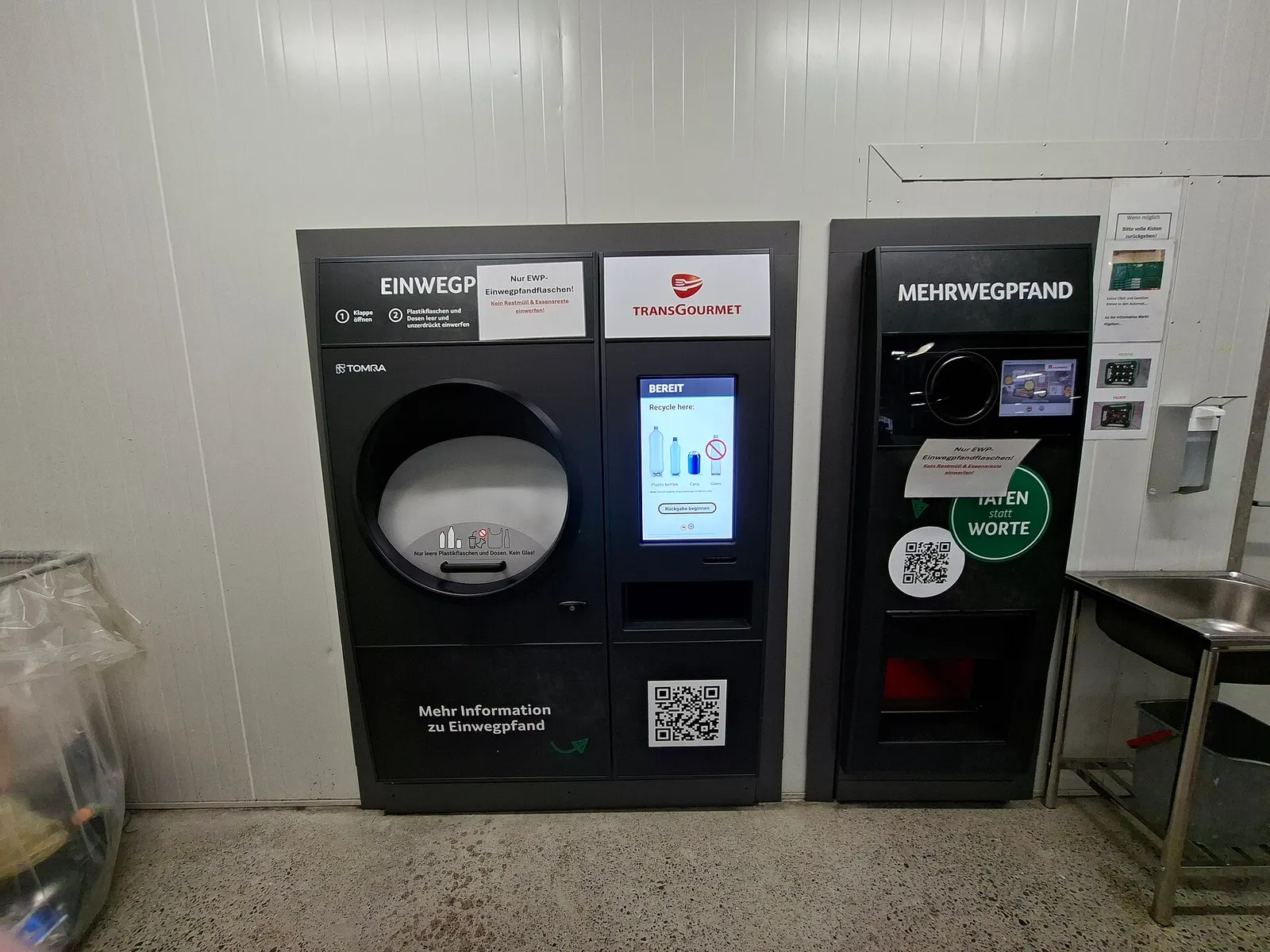
Return machines (Pfandautomat or Leergutautomat) stand in most supermarkets and discounters, usually near the entrance. They read the deposit logo and the barcode of each container, so keep the bottle whole and the label legible.
Collect uncrushed
Keep a bag for empties in the kitchen and do not flatten cans or bottles: the machine reads only uncrushed containers. A damaged container still carries its deposit, but you will have to hand it in at the till, and one with no legible logo and barcode is hard to prove.
Feed them in one at a time
The machine reads the logo and barcode of each container and shows the running total on the screen.
Take the receipt
When you finish, the machine prints a receipt, the Pfandbon, with the total.
Hand the receipt in at the till
The cashier scans it and deducts the amount from your shopping, or pays it out in cash if you are not buying anything. You do not have to buy anything to redeem it.
If the machine rejects a genuine deposit container
Go to the till or the information desk. The Verbraucherzentrale's reading of the law is that staff must take a deposit container the machine does not recognise back by hand and refund the deposit, damaged containers included.
Where you can return bottles and cans
Any shop that sells single-use deposit drinks must take back containers of the materials it sells, in any brand, free of charge and during its normal opening hours, and it may not refund a deposit without receiving the container. The one limit is size: a shop with less than 200 m² of sales area only has to take back the brands it stocks itself.
| Where | What they must accept |
|---|---|
| Supermarket or discounter of 200 m² or more | Every single-use deposit container of the material types it sells (plastic, metal, glass), any brand, during opening hours |
| Kiosk, bakery or corner shop under 200 m² of sales area | Only the brands it sells itself; a kiosk that sells one brand of cola need not take another |
| Shop that sells only plastic bottles | Any brand of plastic deposit bottle, but no cans or glass |
| Reusable bottles (Mehrweg) | Shops may limit the return to the kinds of reusable bottle they sell |
| Any shop outside opening hours | No duty, so a machine inside a shop closed on Sunday is of no use; see the Sunday-closing guide |
What changed on 12 August 2026
On 12 August 2026 the Verpackungsgesetz was repealed and replaced by the Verpackungsrecht-Durchführungsgesetz (VerpackDG), the German act implementing the EU Packaging and Packaging Waste Regulation, which started to apply the same day. For shoppers nothing changed: the deposit of €0.25 per container, the size range, the take-back duties and the exemptions were carried over from the old § 31 into the new § 46. What did change is the legal citation, so any page, leaflet or university welcome guide that still quotes 'VerpackG § 31' is describing the same rules under a repealed law. The new act also sets the collection target behind the system: under § 46(5), single-use plastic bottles must reach a separate-collection rate of 77 per cent, rising to 90 per cent from 2029.
Sorting household waste: your city decides
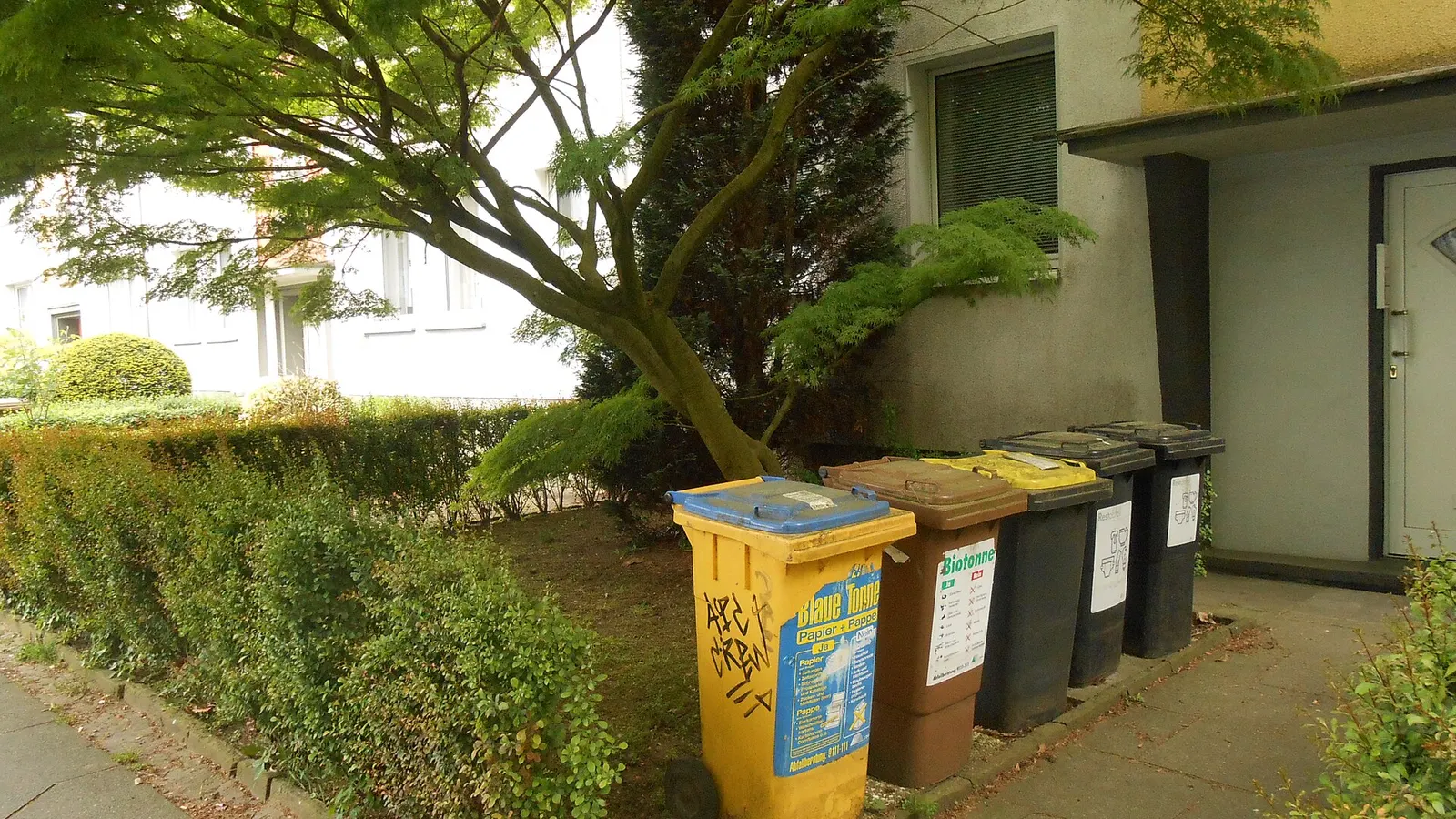
Pfand is federal law; bins are municipal. The colours, the number of bins at the building and whether packaging goes into a bin or a yellow sack (Gelber Sack) are decided by each city's waste company, so what you learned in one city can be wrong in the next. Two examples, read on the cities' own pages:
| What | Berlin (BSR) | Munich (AWM) |
|---|---|---|
| Packaging: plastic, metal, drinks cartons | Yellow Wertstofftonne, which in Berlin also takes non-packaging items of plastic and metal | Wertstoffinseln (street collection points) until the end of 2026; a yellow bin for plastic and metal packaging from early 2027 |
| Paper and cardboard | Blue Papiertonne: newspapers, cardboard, books, catalogues | Blue Papiertonne at the building |
| Food and plant waste | Biogut-Tonne: food remains including cooked food (wrapped in newspaper), coffee grounds, tea bags, eggshells; no plastic, not even compostable bags | Brown Biomüll bin at the building |
| Residual waste | Grey bin: nappies, cat litter, crockery, mirror and window glass, ash, anything that cannot be recycled | Grey Restmüll bin at the building |
| Glass | Street containers by colour: white, green and brown must not be mixed; a Buntglas container takes green and brown together. Bottles and jars only, lids may stay on | Wertstoffinseln near your home |
Other cities differ again: in some, packaging goes into a yellow sack collected from the kerb on fixed days instead of a bin. The reliable sources are the waste company's own sorting page and collection calendar (Abfuhrkalender): Hamburg's Stadtreinigung, Cologne's AWB, Frankfurt's FES and so on, and many publish sorting help in other languages. In a shared flat, ask which bins the building has and where the keys to the bin shed are kept; wrongly filled bins cause trouble with the neighbours and the building management.
In practice: glass containers and quiet hours
Only bottles and jars
Drinking glasses, window panes, mirrors, crockery and light bulbs are not container glass; Berlin's BSR puts crockery and window and mirror glass in the residual bin. Jars should be empty, and lids may stay on.
Sort by colour
White glass into the white container, green and brown into their own or into a shared Buntglas container where the city provides one. In Berlin, red and blue glass go with green.
Mind the hours
Glass containers are listed in the federal machine-noise regulation alongside lawnmowers and leaf blowers, so in residential areas they may be used only on working days (Monday–Saturday) 07:00–20:00; never on Sundays or public holidays. In German law Saturday counts as a working day. The sticker on the container can be stricter, and it wins.
Do not leave bags beside a full container
Cities treat rubbish left beside containers as littering and can fine it; find the next container or come back after the next emptying.
Deposit glass is different
A reusable beer or water bottle with a Mehrweg deposit goes back to the shop, not into the container; you paid for it.
Bulky waste, electricals and moving out
Furniture, mattresses and large appliances are bulky waste (Sperrmüll) and never go in or beside the household bins. Every city waste company offers a recycling centre (Wertstoffhof or Recyclinghof) where residents can bring household quantities, and most also run a collection from the door, booked online or by phone; whether and what it costs differs by city and was not researched for this page, so check the price list before you book. Small electrical appliances and batteries never go in the household bins: recycling centres take them, and many shops that sell them must take them back. Furniture that still works can go to a new owner through a classified-ad platform; the rules for buying and selling second-hand are in the daily-life hub.
Waste rules connect to other parts of moving in. Your rental contract and house rules (Hausordnung) usually say where the bins stand and who cleans the bin area, see rental contracts; when you move out, unwanted furniture must go through the city's bulky-waste service, not the street, which matters for getting your deposit back. In a hall of residence the operator sets the sorting rules for shared kitchens. Pfand refunds are a small but real part of the grocery budget, and the cultural norms guide explains why neighbours take sorting and glass-container hours seriously. For your overall first-month routine, see the daily-life overview and the first 30 days.
A routine for a shared flat
In your first week
- Ask where the bins are, which ones the building has and when the paper and packaging collections come.
- Find your city's sorting page, in a language you read if it offers one.
- Put a bag for deposit bottles and cans next to the kitchen bin, and agree who keeps the money from the returns.
- Return empties with the weekly shop, before Saturday evening; the machine inside a closed shop is no use on Sunday.
- Take glass to the container only on working days (Monday–Saturday) 07:00–20:00; never on Sundays or public holidays, never on Sunday, unless the sticker on the container is stricter.
- Find the nearest recycling centre for anything that does not fit a bin.
Frequently asked questions
What is Pfand in Germany?
Pfand is a refundable deposit on drinks containers. Most single-use bottles and cans of 0.1–3.0 litres carry at least €0.25 per container, reusable bottles usually 8 or 15 cents. You pay it at the till and get it back when you return the empty container to a shop, usually through a return machine.
Where can I return Pfand bottles?
At any shop that sells single-use deposit drinks, during its opening hours: supermarkets and discounters have return machines at the entrance and must accept every brand of the materials they sell. Shops under 200 m² of sales area only have to take the brands they stock. The printed receipt is redeemed at the till, in cash or against your shopping.
How do you sort rubbish in Germany?
Into bins defined by your city: typically packaging (yellow bin or sack), paper (blue), organic waste (brown or green), residual waste (grey or black) and glass in street containers sorted by colour. Berlin and Munich differ in detail, and Munich introduces a yellow bin for packaging from January 2027, so follow your own waste company's sorting page.
What do I do if the Pfand machine rejects my bottle?
Check for the German deposit logo: a bottle without it (foreign bottles, cartons, juice in glass) carries no deposit. If the logo and barcode are there, ask at the till: according to the Verbraucherzentrale, staff must take a deposit container back by hand and refund the deposit, even if it is damaged. A container with no legible logo or barcode is hard to prove as a deposit container.
Does milk or juice in a plastic bottle have Pfand?
Yes. The exemptions for milk drinks, juices and nectars apply only to glass and cartons; in a single-use plastic bottle or a can they carry the €0.25 deposit.
Did the Pfand rules change in 2026?
Only the law's name. On 12 August 2026 the Verpackungsgesetz was replaced by the Verpackungsrecht-Durchführungsgesetz (VerpackDG), whose § 46 carries over the same deposit amount, container sizes, exemptions and take-back duties. Pages citing 'VerpackG § 31' describe the same rules under a repealed law.
Sources
7 sources, 6 official
- Verpackungsrecht-Durchführungsgesetz (VerpackDG) vom 13. Juli 2026, §§ 46–47 (Pfand- und Rücknahmepflichten; Hinweispflichten)Bundesministerium der Justiz / gesetze-im-internet.de (Official)
- Pfandflasche = Mehrwegflasche???Bundesministerium für Umwelt, Klimaschutz, Naturschutz und nukleare Sicherheit (BMUKN) (Official)
- Fragen und Antworten: Alles zum Einwegpfand und DosenpfandVerbraucherzentrale Bundesverband / Verbraucherzentralen (Institutional)
- Bürgerliches Gesetzbuch § 195 Regelmäßige Verjährungsfrist und § 199 Beginn der regelmäßigen VerjährungsfristBundesministerium der Justiz / gesetze-im-internet.de (Official)
- Geräte- und Maschinenlärmschutzverordnung (32. BImSchV), § 7 Betrieb in Wohngebieten, and Anhang (Nr. 22 Altglassammelbehälter)Bundesministerium der Justiz / gesetze-im-internet.de (Official)
- Abfalltrennung: Was gehört in welche Tonne?Berliner Stadtreinigung (BSR) (Official)
- Neues aus der Münchner AbfallwirtschaftLandeshauptstadt München (stadt.muenchen.de) (Official)